Dask Python(對開發者的工作原理)

Python 是一種功能強大的資料分析和機器學習語言,但處理大型資料集對資料分析來說可能具有挑戰性。 這時Dask就派上用場了。 Dask 是一個開源函式庫,它為分析提供進階並行化功能,能夠有效率地處理超出單一機器記憶體容量的大型資料集。本文將介紹 Dask 庫的基本用法,以及Iron Software開發的另一個非常有趣的 PDF 生成庫IronPDF ,用於生成 PDF 文件。
為什麼要使用 Dask?
Dask 的設計目標是將您的 Python 程式碼從單一筆記型電腦擴展到大型叢集。 它與流行的 Python 庫(如 NumPy、pandas 和 scikit-learn)無縫集成,無需進行重大程式碼變更即可並行執行。
Dask 的主要特點
1.並行計算: Dask 允許您同時執行多個任務,從而顯著加快計算速度。 2.可擴展性:它可以將大於記憶體的資料集分成更小的區塊並並行處理,從而處理這些資料集。 3.相容性:與現有的 Python 庫配合良好,可以輕鬆整合到您目前的工作流程中。 4.靈活性:提供高階集合,如 Dask DataFrame、任務圖、Dask Array、Dask Cluster 和 Dask Bag,分別模擬 pandas、NumPy 和清單。
Dask入門指南
安裝
您可以使用 pip 安裝 Dask:
pip install dask[complete]pip install dask[complete]基本用法
以下是一個簡單的範例,示範 Dask 如何並行化計算:
import dask.array as da

# Create a large Dask array
x = da.random.random((10, 10), chunks=(10, 10))
print('Generated Input')
print(x.compute())

# Perform a computation
result = x.mean().compute()
print('Generated Mean')
print(result)
import dask.array as da
# Create a large Dask array
x = da.random.random((10, 10), chunks=(10, 10))
print('Generated Input')
print(x.compute())
# Perform a computation
result = x.mean().compute()
print('Generated Mean')
print(result)在這個範例中,Dask 會建立一個大數組並將其分割成更小的區塊。 compute() 方法觸發並行計算並傳回結果。 Python Dask 內部使用任務圖來實現平行運算。
輸出
Dask Python(開發者使用方法):圖 1
Dask 資料幀
Dask DataFrames 與 pandas DataFrames 類似,但其設計目的是處理大於記憶體的資料集。 舉個例子:
import dask

# Generate a synthetic timeseries DataFrame
df = dask.datasets.timeseries()
print('\nGenerated DataFrame')
print(df.head(10))

# Compute mean hourly resampled DataFrame
print('\nComputed Mean Hourly DataFrame')
print(df[["x", "y"]].resample("1h").mean().head(10))
import dask
# Generate a synthetic timeseries DataFrame
df = dask.datasets.timeseries()
print('\nGenerated DataFrame')
print(df.head(10))
# Compute mean hourly resampled DataFrame
print('\nComputed Mean Hourly DataFrame')
print(df[["x", "y"]].resample("1h").mean().head(10))該程式碼展示了 Dask 處理時間序列資料、生成合成資料集以及利用其平行處理能力(使用多個 Python 進程、分散式調度程序和多核心計算資源)高效計算聚合(例如小時平均值)的能力。
輸出
Dask Python(開發者使用方法):圖 2
最佳實踐
1.從小規模開始:先從小資料集入手,了解 Dask 的工作原理,再逐步擴大規模。 2.使用儀錶板: Dask 提供了一個儀錶板來監控計算的進度和效能。 3.優化區塊大小:選擇合適的區塊大小,以平衡記憶體使用和計算速度。
IronPDF簡介
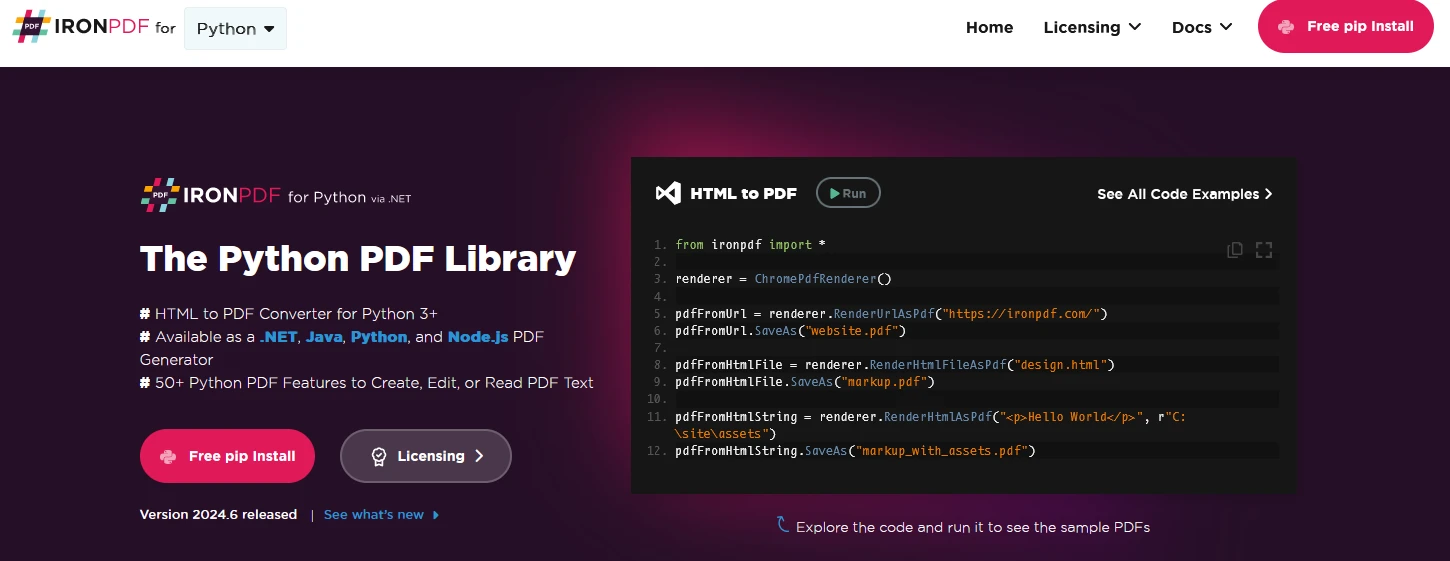
IronPDF是一個強大的 Python 庫,旨在利用 HTML、CSS、圖像和JavaScript創建、編輯和簽署 PDF 文件。 它注重效能效率,同時最大限度地減少記憶體佔用。 主要特點包括:
- HTML 轉 PDF 轉換:利用 Chrome 的 PDF 渲染功能,輕鬆將 HTML 檔案、字串和 URL 轉換為 PDF 文件。 *跨平台支援:*可在 Windows、Mac、Linux 和各種雲端平台上的 Python 3+ 無縫運作。 它也相容於.NET、Java、Python 和Node.js環境。 編輯和簽名:自訂 PDF 屬性,應用密碼和權限等安全措施,並無縫添加數位簽名。 頁面範本和設定:透過頁首、頁尾、頁碼、可調邊距、自訂紙張尺寸和響應式設計來客製化 PDF 版面。 標準符合性:**嚴格遵守 PDF/A 和 PDF/UA 等 PDF 標準,確保與 UTF-8 字元編碼相容。 它還支援對圖像、CSS樣式表和字體等資源進行高效管理。
安裝
pip install ironpdf
pip install dask
pip install ironpdf
pip install dask使用IronPDF和 Dask 產生 PDF 文件
先決條件
- 確保已安裝 Visual Studio Code。
- 已安裝 Python 版本 3。
首先,讓我們建立一個 Python 檔案來加入我們的腳本。
開啟 Visual Studio Code 並建立一個文件,daskDemo.py。
安裝必要的庫:
pip install dask
pip install ironpdf
pip install dask
pip install ironpdf然後加入以下 Python 程式碼來示範IronPDF和 Dask Python 套件的用法:
import dask
from ironpdf import *

# Apply your license key
License.LicenseKey = "key"

# Generate a synthetic timeseries DataFrame
df = dask.datasets.timeseries()
print('\nGenerated DataFrame')
print(df.head(10))

# Compute the mean hourly DataFrame
dfmean = df[["x", "y"]].resample("1h").mean().head(10)
print('\nComputed Mean Hourly DataFrame')
print(dfmean)

# Initialize the PDF renderer
renderer = ChromePdfRenderer()

# Create HTML content for the PDF
content = "<h1>Awesome Iron PDF with Dask</h1>"

# Add generated DataFrame to the content
content += "<h2>Generated DataFrame (First 10)</h2>"
rows = df.head(10)
for i in range(10):
    row = rows.iloc[i]
    content += f"<p>{str(row[0])}, {str(row[2])}, {str(row[3])}</p>"

# Add computed mean DataFrame to the content
content += "<h2>Computed Mean Hourly DataFrame (First 10)</h2>"
for i in range(10):
    row = dfmean.iloc[i]
    content += f"<p>{str(row[0])}</p>"

# Render the HTML content as PDF
pdf = renderer.RenderHtmlAsPdf(content)

# Save the PDF to a file
pdf.SaveAs("DemoIronPDF-Dask.pdf")
import dask
from ironpdf import *
# Apply your license key
License.LicenseKey = "key"
# Generate a synthetic timeseries DataFrame
df = dask.datasets.timeseries()
print('\nGenerated DataFrame')
print(df.head(10))
# Compute the mean hourly DataFrame
dfmean = df[["x", "y"]].resample("1h").mean().head(10)
print('\nComputed Mean Hourly DataFrame')
print(dfmean)
# Initialize the PDF renderer
renderer = ChromePdfRenderer()
# Create HTML content for the PDF
content = "<h1>Awesome Iron PDF with Dask</h1>"
# Add generated DataFrame to the content
content += "<h2>Generated DataFrame (First 10)</h2>"
rows = df.head(10)
for i in range(10):
row = rows.iloc[i]
content += f"<p>{str(row[0])}, {str(row[2])}, {str(row[3])}</p>"
# Add computed mean DataFrame to the content
content += "<h2>Computed Mean Hourly DataFrame (First 10)</h2>"
for i in range(10):
row = dfmean.iloc[i]
content += f"<p>{str(row[0])}</p>"
# Render the HTML content as PDF
pdf = renderer.RenderHtmlAsPdf(content)
# Save the PDF to a file
pdf.SaveAs("DemoIronPDF-Dask.pdf")程式碼解釋
這段程式碼片段整合了 Dask 用於資料處理和IronPDF用於 PDF 生成。 它表明:
- Dask 整合:使用
dask.datasets.timeseries()產生合成時間序列 DataFrame (df)。 列印前 10 行 (df.head(10)),並根據列"x"和"y"計算平均小時資料幀 (dfmean)。 - IronPDF用法:使用
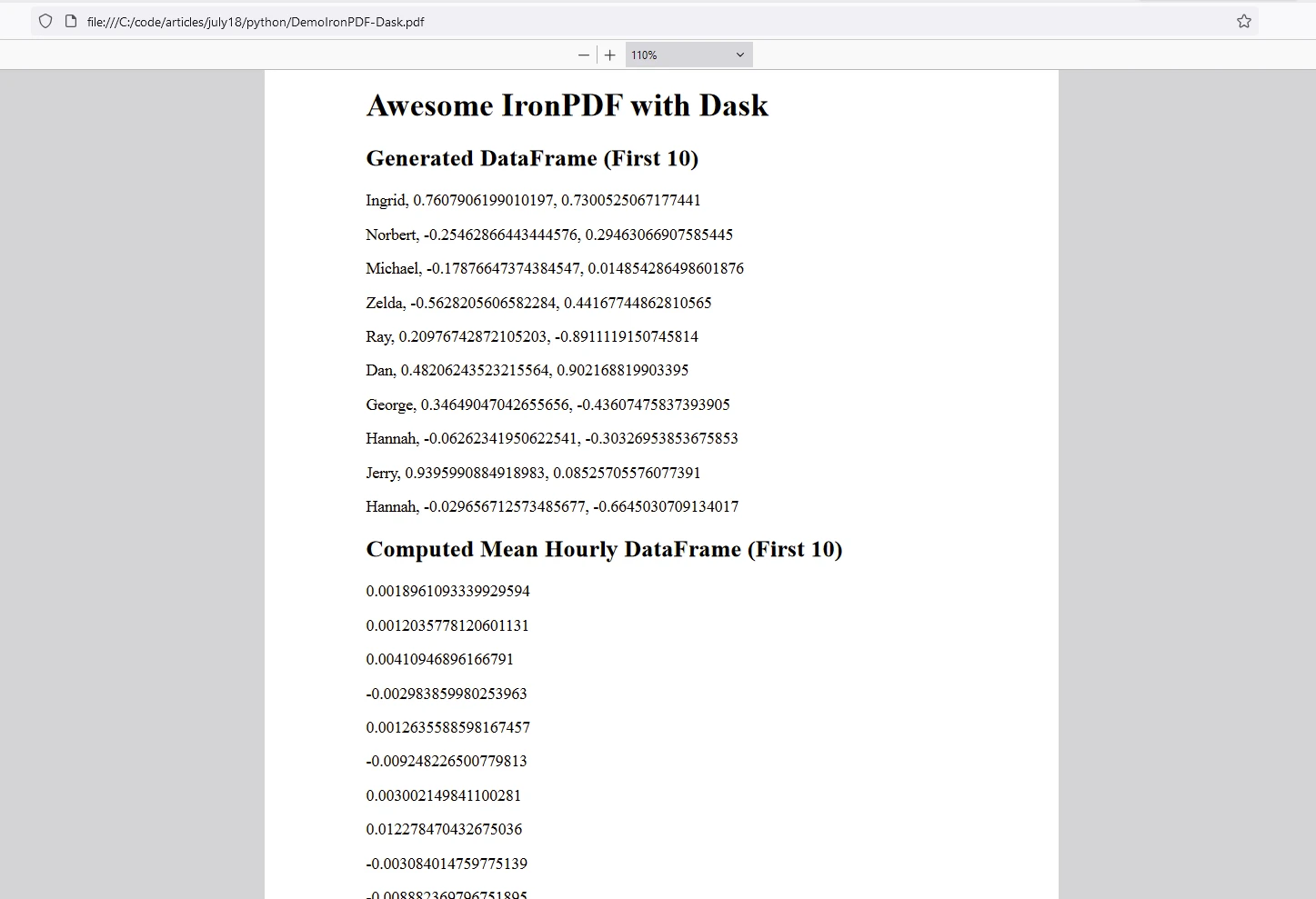
License.LicenseKey設定IronPDF許可證金鑰。 建立一個包含來自已產生和已計算 DataFrame 的標題和資料的 HTML 字串 (content),然後使用ChromePdfRenderer()將此 HTML 內容渲染成 PDF (pdf),最後將 PDF 儲存為"DemoIronPDF-Dask.pdf"。
程式碼結合了 Dask 的大規模資料處理功能和 IronPDF 的將 HTML 內容轉換為 PDF 文件的功能。
輸出
Dask Python(開發者使用方法):圖 4
IronPDF許可
IronPDF許可證密鑰可讓使用者在購買前體驗其豐富的功能。
在使用IronPDF軟體包之前,請將許可證密鑰放在腳本的開頭:
from ironpdf import *
# Apply your license key
License.LicenseKey = "key"from ironpdf import *
# Apply your license key
License.LicenseKey = "key"結論
Dask是一款功能強大的工具,可顯著增強您在 Python 中的資料處理能力。 透過啟用平行和分散式運算,它能夠有效地處理大型資料集,並與您現有的 Python 生態系統無縫整合。 IronPDF是一個功能強大的 Python 庫,用於使用 HTML、CSS、圖像和JavaScript建立和操作 PDF 文件。 它提供 HTML 轉 PDF、PDF 編輯、數位簽章和跨平台支援等功能,使其適用於 Python 應用程式中的各種文件生成和管理任務。
這兩個庫結合起來,可以讓資料科學家執行高級資料分析和科學操作,然後使用IronPDF將輸出結果以標準 PDF 格式儲存。








 免費開始
免費開始 免費開始
免費開始 預訂免費直播演示



 無需信用卡或建立帳號