from ironpdf import *

# Instantiate Renderer
renderer = ChromePdfRenderer()

# Create a PDF from a HTML string using Python
pdf = renderer.RenderHtmlAsPdf("<h1>Hello World</h1>")

# Export to a file or Stream
pdf.SaveAs("output.pdf")

# Advanced Example with HTML Assets
# Load external html assets: Images, CSS and JavaScript.
# An optional BasePath 'C:\site\assets\' is set as the file location to load assets from
myAdvancedPdf = renderer.RenderHtmlAsPdf("<img src='icons/iron.png'>", r"C:\site\assets")
myAdvancedPdf.SaveAs("html-with-assets.pdf")
from ironpdf import *# Instantiate Rendererrenderer = ChromePdfRenderer()# Create a PDF from a HTML string using Pythonpdf = renderer.RenderHtmlAsPdf("<h1>Hello World</h1>")# Export to a file or Streampdf.SaveAs("output.pdf")# Advanced Example with HTML Assets# Load external html assets: Images, CSS and JavaScript.# An optional BasePath 'C:\site\assets\' is set as the file location to load assets frommyAdvancedPdf = renderer.RenderHtmlAsPdf("<img src='icons/iron.png'>", r"C:\site\assets")myAdvancedPdf.SaveAs("html-with-assets.pdf")
COMPARACIONES DE PRODUCTOS
Una Comparación Entre IronPDF Para Python & PDFium Python
Los PDF son un estándar universal para los documentos, y su fiabilidad y coherencia en diferentes plataformas los convierten en la opción preferida en todos los campos. Por lo tanto, las herramientas, los componentes de terceros y las bibliotecas que utilizan los desarrolladores para gestionar archivos PDF pueden influir significativamente en la eficiencia y la eficacia de una aplicación.
Esta entrada del blog profundiza en una comparación exhaustiva entre dos destacadas bibliotecas de archivos PDF: [IronPDF for Python](/python/) y [PDFium Python](https://pypi.org/project/pypdfium2/). Estas bibliotecas ofrecen a los desarrolladores potentes herramientas para crear, editar y convertir documentos PDF de una sola página dentro de sus aplicaciones de árbol de código fuente. Sin embargo, elegir la biblioteca adecuada puede resultar a menudo una tarea abrumadora. A través de esta comparación, nuestro objetivo es destacar las características únicas, el rendimiento y los casos de uso de cada biblioteca de renderización de PDF, proporcionando información que le ayudará a tomar una decisión informada para sus necesidades de desarrollo.
## Descripción general de IronPDF for Python
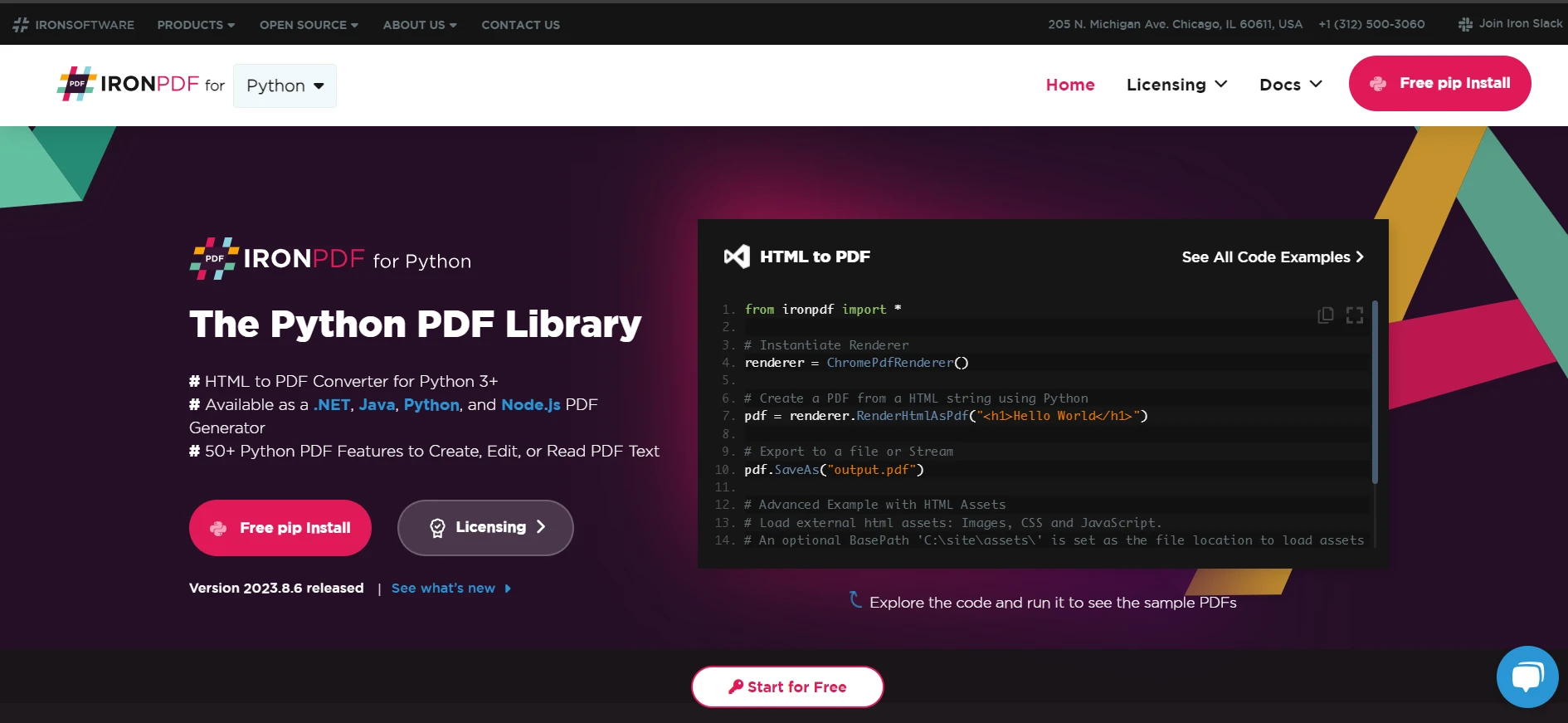
[IronPDF for Python](/python/) es una biblioteca PDF diseñada para aplicaciones Python, que permite a los desarrolladores crear, editar y extraer contenido de archivos PDF. Ofrece una amplia gama de funcionalidades, incluida la [generación de documentos PDF](/python/examples/using-html-to-create-a-pdf/) a partir de diversas fuentes, como HTML, URL, JavaScript, CSS y numerosos formatos de imagen. Los usuarios también pueden mejorar sus archivos PDF añadiendo elementos como encabezados, pies de página, firmas y archivos adjuntos, e implementando contraseñas y funciones de seguridad. A continuación se presentan las características más destacadas de IronPDF for Python.
### Características y ventajas
**Generación de PDF:** IronPDF puede generar un archivo PDF a partir de diversas fuentes, como HTML, URL, JavaScript, CSS y múltiples formatos de imagen. Aquí tienes el código de ejemplo:
```python
from ironpdf import ChromePdfRenderer, PdfDocument

# Instantiate the renderer to convert URLs into PDFs
renderer = ChromePdfRenderer()

# Render a URL into a PDF document
pdf = renderer.RenderUrlAsPdf("https://ironpdf.com/python/")

# Save the generated PDF document to a file
pdf.SaveAs("url.pdf")
```
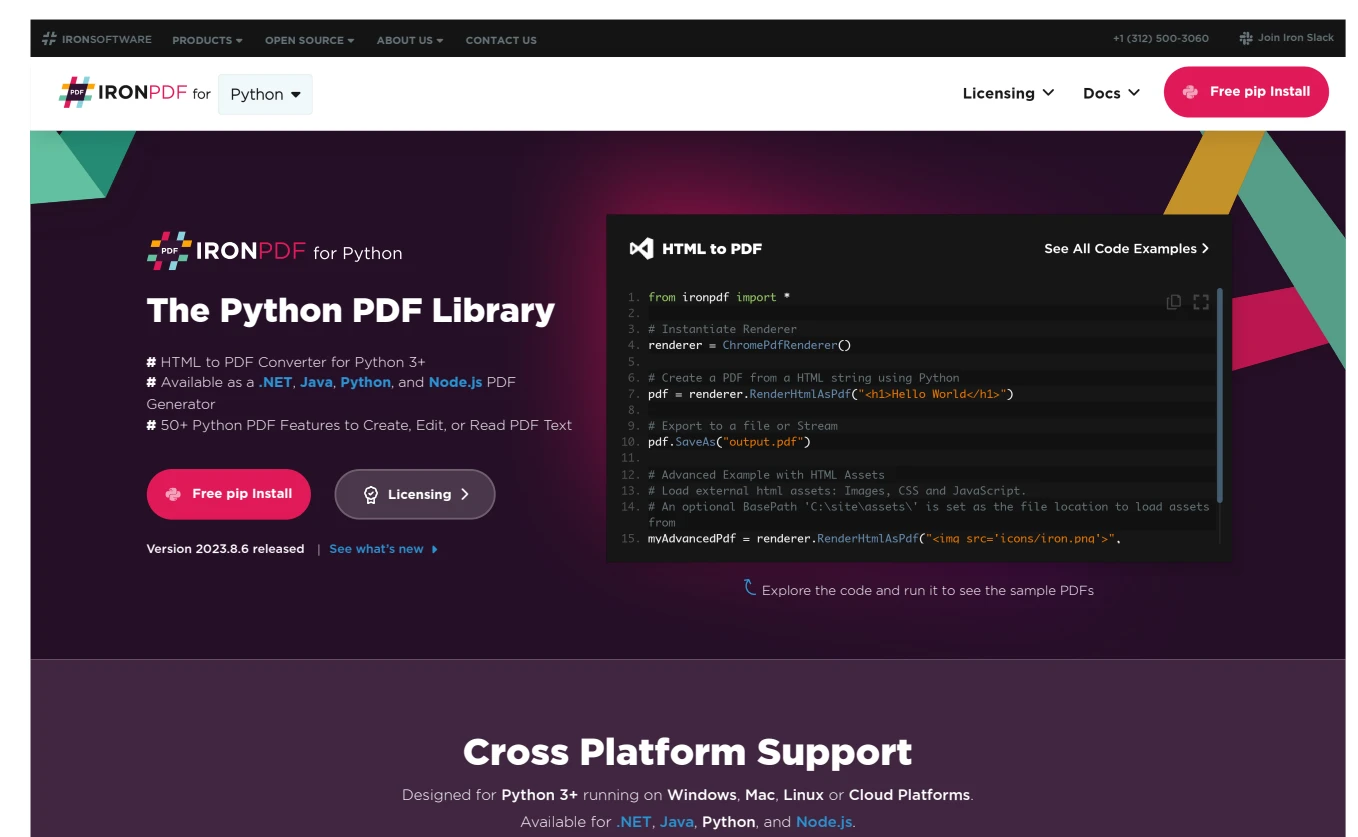
Aquí están las imágenes resultantes:
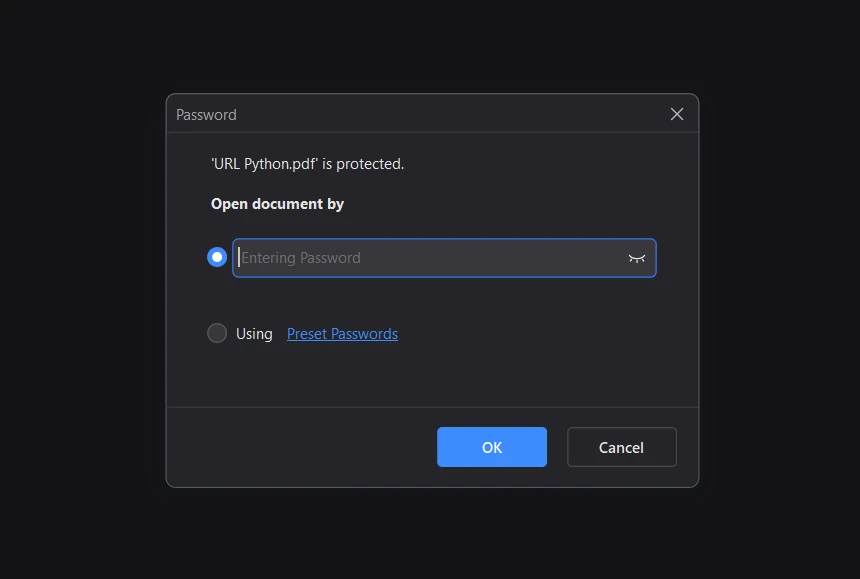
**Amplio conjunto de funciones:** IronPDF for Python ofrece múltiples funciones, incluida la posibilidad de añadir encabezados y pies de página, firmas y archivos adjuntos, así como [implementar la protección con contraseña](/python/examples/encryption-and-decryption/) para salvaguardar la información confidencial dentro de un documento PDF.
```python
from ironpdf import PdfDocument
# Load the existing PDF document
pdf = PdfDocument.FromFile("url.pdf")
# Set a password for the PDF document to restrict access
pdf.Password = "my-password"
# Save the updated PDF document with encryption enabled
pdf.SaveAs("url_protected.pdf")
```
**Optimización del rendimiento:** Con soporte completo para multihilo y operaciones asíncronas, IronPDF for Python garantiza un rendimiento óptimo, lo que lo hace adecuado para gestionar operaciones con PDF a gran escala en entornos de alta demanda.
**Compatibilidad multiplataforma:** Los desarrolladores pueden implementar IronPDF for Python en diversas plataformas. Es compatible con Python 3.7+ y con Windows, macOS, Linux, Docker, Azure y AWS, lo que ofrece flexibilidad y escalabilidad.
### Facilidad de instalación y uso
IronPDF for Python simplifica el proceso del desarrollador, desde la instalación hasta la implementación. Se basa en .NET 6.0, por lo que es necesario instalar el tiempo de ejecución de .NET 6.0. Una vez configurado el tiempo de ejecución, los desarrolladores pueden instalar fácilmente [IronPDF for Python](https://pypi.org/project/IronPdf/) utilizando `pip` e integrarlo rápidamente en sus proyectos.
```shell
:ProductInstall
```
Tras ejecutar este comando en una herramienta de línea de comandos, IronPDF se instalará automáticamente.
La sintaxis sencilla de la biblioteca y su amplia documentación permiten a los desarrolladores empezar a convertir HTML a PDF y URL a PDF con una configuración mínima.
### Manipulación avanzada de PDF
Además de las funcionalidades básicas, IronPDF for Python destaca en la manipulación avanzada de archivos PDF. Esto incluye configurar encabezados y pies de página personalizados, especificar tamaños de papel, extraer texto, gestionar márgenes y mucho más, satisfaciendo los requisitos avanzados de la generación y edición de PDF. También puede comprimir las imágenes del PDF para reducir el tamaño del archivo.
### Documentación y asistencia
IronPDF for Python cuenta con una completa documentación de la API, ejemplos de código, tutoriales y Soporte de chat en vivo. Este amplio conjunto de recursos garantiza que los desarrolladores tengan acceso a toda la información y la asistencia que necesitan, lo que hace que la integración y el uso de IronPDF for Python sea una experiencia fluida.
## Descripción general de PDFium Python
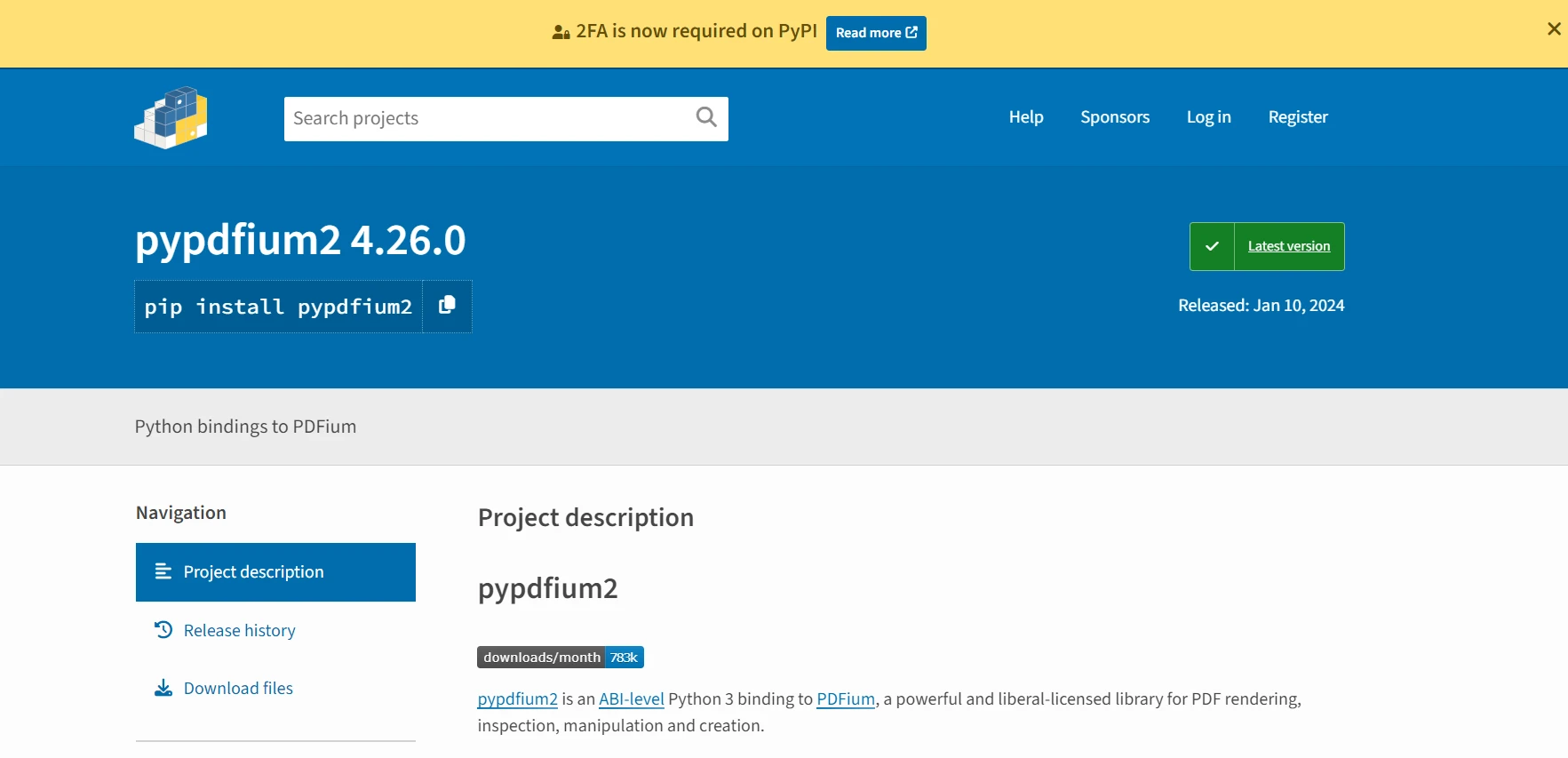
PDFium Python es una biblioteca versátil que ofrece un conjunto completo de funcionalidades para la representación y manipulación de archivos PDF. Está diseñada para satisfacer las necesidades de los desarrolladores que requieren una solución fiable y eficiente para gestionar archivos PDF en sus aplicaciones. A continuación, se ofrece una descripción detallada de las características y capacidades de PDFium Python.
### Características y capacidades principales
**Representación y manipulación de PDF:** En esencia, Pypdfium2 destaca en la representación de archivos PDF y ofrece un amplio conjunto de funciones para inspeccionar, manipular y crear documentos PDF utilizando la interfaz pública de PDFium.
**Sin dependencias de tiempo de ejecución obligatorias:** Uno de los aspectos más destacados de Pypdfium2 es que sus requisitos de dependencia son mínimos. Aparte del propio Python, no hay dependencias de tiempo de ejecución obligatorias. Las funciones opcionales pueden requerir paquetes adicionales, como Pillow para el manejo de imágenes y NumPy para la computación científica.
Para ver ejemplos de código, visita la [página de PyPI de pypdfium2](https://pypi.org/project/pypdfium2/).
## Comparación de características: IronPDF for Python frente a PDFium Python
A la hora de seleccionar una biblioteca de PDF para su proyecto de desarrollo, es fundamental comprender las características y ventajas distintivas de cada opción. En esta sección, comparamos IronPDF for Python y PDFium Python en varios aspectos clave para ayudarte a tomar una decisión informada.
### Amplio conjunto de características
**IronPDF for Python:** IronPDF cuenta con más de 50 funciones, lo que la convierte en una de las bibliotecas PDF más completas del mercado. Destaca en áreas como la conversión de HTML a PDF, la manipulación de PDF, la seguridad de los PDF y el manejo de contenido enriquecido, incluyendo encabezados, pies de página y archivos adjuntos.
**PDFium Python (Pypdfium2):** se centra más en las capacidades de renderizado y las interacciones básicas con PDF, con características adicionales disponibles a través de dependencias opcionales.
### Rendimiento y escalabilidad
**IronPDF for Python:** Con soporte completo para multihilo y operaciones asíncronas, IronPDF for Python está diseñado para ofrecer un alto rendimiento, adaptándose a entornos de alta carga y garantizando un uso eficiente de los recursos.
**PDFium Python (Pypdfium2):** Ofrece una base de rendimiento sólida, centrada en una gestión eficiente de la memoria y en la capacidad de manejar archivos PDF de gran tamaño. Sin embargo, puede requerir una configuración adicional para un rendimiento óptimo en escenarios de alta demanda.
### Documentación y asistencia de la comunidad
**IronPDF for Python:** Destaca por su completa documentación, su chat en vivo y una gran cantidad de ejemplos de código y tutoriales. Esta amplia red de asistencia es de un valor incalculable tanto para desarrolladores principiantes como para los más experimentados.
**PDFium Python (Pypdfium2):** Ofrece documentación detallada, especialmente en torno a sus capas de API y funciones de gestión de memoria. Sin embargo, es posible que no ofrezca el mismo nivel de asistencia directa o recursos impulsados por la comunidad que IronPDF for Python.
## Casos de uso: cuándo elegir IronPDF for Python
La elección de una biblioteca de PDF suele depender de los requisitos específicos del proyecto y de los casos de uso. En esta sección, describiremos situaciones en las que IronPDF for Python se perfila como la mejor opción, destacando su adaptabilidad y solidez en diversos contextos de desarrollo.
### Requisitos de alto rendimiento
Para aplicaciones que exigen un procesamiento de PDF de alto rendimiento, IronPDF for Python es una opción excepcional. Su compatibilidad con multihilos y asincronía garantiza que las operaciones con PDF no supongan un cuello de botella para su aplicación, lo que la hace ideal para escenarios con alta concurrencia o grandes requisitos de gestión de documentos.
### Necesidades complejas de manipulación de PDF
Cuando su proyecto implique una manipulación compleja de archivos PDF, como añadir encabezados, pies de página y marcas de agua sofisticados, o gestionar funciones de seguridad como el cifrado y los permisos de acceso, el amplio conjunto de funciones de IronPDF for Python resulta inestimable. Su completa API proporciona a los desarrolladores las herramientas necesarias para implementar requisitos complejos con relativa facilidad.
### Implementación multiplataforma
Los proyectos dirigidos a diversos entornos operativos, incluidas plataformas en la nube como Azure y AWS o la contenedorización con Docker, encontrarán muy beneficiosa la compatibilidad multiplataforma de IronPDF for Python. Esta biblioteca garantiza un rendimiento y una funcionalidad uniformes en diferentes plataformas, lo que simplifica la implementación y el mantenimiento.
### Documentación y asistencia completas
Para los equipos que dan prioridad a un soporte técnico fiable y una amplia documentación, IronPDF for Python destaca por encima del resto. La disponibilidad de Soporte de chat en vivo, documentación detallada y una gran cantidad de ejemplos de código significa que la ayuda está siempre a mano, lo que garantiza que su equipo pueda resolver problemas e implementar funciones sin retrasos innecesarios.
Al elegir IronPDF for Python, los desarrolladores no solo obtienen acceso a una potente biblioteca de PDF, sino también la garantía de un soporte continuo y una gran cantidad de recursos para facilitar el éxito de sus proyectos.
## Conclusión
A lo largo de esta comparativa exhaustiva, hemos analizado las características, ventajas y casos de uso de IronPDF for Python y PDFium Python. Aunque ambas bibliotecas aportan un valor significativo, IronPDF for Python destaca por su amplio conjunto de funciones, su sólido rendimiento y su soporte técnico sin igual. PDFium se utiliza principalmente para renderizar documentos PDF en Google Chrome. Sin embargo, carece de las funciones de edición; su complejo código base, utilizado para crear PDFium, hace que sea muy difícil utilizarlo en aplicaciones de Python. Se requiere una formación adecuada para utilizar PDFium en proyectos de Python.
Por otro lado, IronPDF está diseñado para simplificar tareas complejas, ofreciendo una amplia gama de funciones, como la conversión de HTML a PDF, la edición de PDF y la gestión de documentos, todo ello dentro de una única biblioteca. Lo que realmente distingue a IronPDF for Python es su atención al detalle en lo que respecta a las necesidades de los desarrolladores.
A diferencia de PDFium, IronPDF for Python cuenta con una documentación fácil de seguir y un excelente sistema de asistencia. También incluye un chat en vivo, que te ayuda a resolver tus problemas y consultas rápidamente. Garantiza una integración fluida y ofrece un rendimiento constante, lo que la convierte en la opción preferida para los profesionales que desean mejorar sus proyectos con funcionalidades PDF fiables.
IronPDF for Python ofrece una [prueba gratuita](trial-license) para que los usuarios exploren sus capacidades antes de realizar una compra. Para aquellos que deseen integrar IronPDF en sus proyectos, hay disponibles opciones de licencia, con precios a partir de `$liteLicense`.
[[i:(PDFium Python es una marca registrada de su respectivo propietario. Este sitio no está afiliado, respaldado ni patrocinado por PDFium Python. Todos los nombres de productos, logotipos y marcas son propiedad de sus respectivos propietarios. Las comparaciones se ofrecen únicamente con fines informativos y reflejan la información disponible públicamente en el momento de la redacción.)]]
Los PDF son un estándar universal para los documentos, y su fiabilidad y coherencia en diferentes plataformas los convierten en la opción preferida en todos los campos. Por lo tanto, las herramientas, los componentes de terceros y las bibliotecas que utilizan los desarrolladores para gestionar archivos PDF pueden influir significativamente en la eficiencia y la eficacia de una aplicación.
Esta entrada del blog profundiza en una comparación exhaustiva entre dos destacadas bibliotecas de archivos PDF: IronPDF for Python y PDFium Python. Estas bibliotecas ofrecen a los desarrolladores potentes herramientas para crear, editar y convertir documentos PDF de una sola página dentro de sus aplicaciones de árbol de código fuente. Sin embargo, elegir la biblioteca adecuada puede resultar a menudo una tarea abrumadora. A través de esta comparación, nuestro objetivo es destacar las características únicas, el rendimiento y los casos de uso de cada biblioteca de renderización de PDF, proporcionando información que le ayudará a tomar una decisión informada para sus necesidades de desarrollo.
Descripción general de IronPDF for Python
IronPDF for Python es una biblioteca PDF diseñada para aplicaciones Python, que permite a los desarrolladores crear, editar y extraer contenido de archivos PDF. Ofrece una amplia gama de funcionalidades, incluida la generación de documentos PDF a partir de diversas fuentes, como HTML, URL, JavaScript, CSS y numerosos formatos de imagen. Los usuarios también pueden mejorar sus archivos PDF añadiendo elementos como encabezados, pies de página, firmas y archivos adjuntos, e implementando contraseñas y funciones de seguridad. A continuación se presentan las características más destacadas de IronPDF for Python.
Características y ventajas
Generación de PDF: IronPDF puede generar un archivo PDF a partir de diversas fuentes, como HTML, URL, JavaScript, CSS y múltiples formatos de imagen. Aquí tienes el código de ejemplo:
from ironpdf importChromePdfRenderer, PdfDocument# Instantiate the renderer to convert URLs into PDFsrenderer = ChromePdfRenderer()# Render a URL into a PDF documentpdf = renderer.RenderUrlAsPdf("https://ironpdf.com/python/")# Save the generated PDF document to a filepdf.SaveAs("url.pdf")
from ironpdf import ChromePdfRenderer, PdfDocument

# Instantiate the renderer to convert URLs into PDFs
renderer = ChromePdfRenderer()

# Render a URL into a PDF document
pdf = renderer.RenderUrlAsPdf("https://ironpdf.com/python/")

# Save the generated PDF document to a file
pdf.SaveAs("url.pdf")
Python
Aquí están las imágenes resultantes:
Amplio conjunto de funciones: IronPDF for Python ofrece múltiples funciones, incluida la posibilidad de añadir encabezados y pies de página, firmas y archivos adjuntos, así como implementar la protección con contraseña para salvaguardar la información confidencial dentro de un documento PDF.
from ironpdf importPdfDocument# Load the existing PDF documentpdf = PdfDocument.FromFile("url.pdf")# Set a password for the PDF document to restrict accesspdf.Password = "my-password"# Save the updated PDF document with encryption enabledpdf.SaveAs("url_protected.pdf")
from ironpdf import PdfDocument

# Load the existing PDF document
pdf = PdfDocument.FromFile("url.pdf")

# Set a password for the PDF document to restrict access
pdf.Password = "my-password"

# Save the updated PDF document with encryption enabled
pdf.SaveAs("url_protected.pdf")
Python
Optimización del rendimiento: Con soporte completo para multihilo y operaciones asíncronas, IronPDF for Python garantiza un rendimiento óptimo, lo que lo hace adecuado para gestionar operaciones con PDF a gran escala en entornos de alta demanda.
Compatibilidad multiplataforma: Los desarrolladores pueden implementar IronPDF for Python en diversas plataformas. Es compatible con Python 3.7+ y con Windows, macOS, Linux, Docker, Azure y AWS, lo que ofrece flexibilidad y escalabilidad.
Facilidad de instalación y uso
IronPDF for Python simplifica el proceso del desarrollador, desde la instalación hasta la implementación. Se basa en .NET 6.0, por lo que es necesario instalar el tiempo de ejecución de .NET 6.0. Una vez configurado el tiempo de ejecución, los desarrolladores pueden instalar fácilmente IronPDF for Python utilizando pip e integrarlo rápidamente en sus proyectos.
> pip install ironpdf
pip install ironpdf
Tras ejecutar este comando en una herramienta de línea de comandos, IronPDF se instalará automáticamente.
La sintaxis sencilla de la biblioteca y su amplia documentación permiten a los desarrolladores empezar a convertir HTML a PDF y URL a PDF con una configuración mínima.
Manipulación avanzada de PDF
Además de las funcionalidades básicas, IronPDF for Python destaca en la manipulación avanzada de archivos PDF. Esto incluye configurar encabezados y pies de página personalizados, especificar tamaños de papel, extraer texto, gestionar márgenes y mucho más, satisfaciendo los requisitos avanzados de la generación y edición de PDF. También puede comprimir las imágenes del PDF para reducir el tamaño del archivo.
Documentación y asistencia
IronPDF for Python cuenta con una completa documentación de la API, ejemplos de código, tutoriales y Soporte de chat en vivo. Este amplio conjunto de recursos garantiza que los desarrolladores tengan acceso a toda la información y la asistencia que necesitan, lo que hace que la integración y el uso de IronPDF for Python sea una experiencia fluida.
Descripción general de PDFium Python
PDFium Python es una biblioteca versátil que ofrece un conjunto completo de funcionalidades para la representación y manipulación de archivos PDF. Está diseñada para satisfacer las necesidades de los desarrolladores que requieren una solución fiable y eficiente para gestionar archivos PDF en sus aplicaciones. A continuación, se ofrece una descripción detallada de las características y capacidades de PDFium Python.
Características y capacidades principales
Representación y manipulación de PDF: En esencia, Pypdfium2 destaca en la representación de archivos PDF y ofrece un amplio conjunto de funciones para inspeccionar, manipular y crear documentos PDF utilizando la interfaz pública de PDFium.
Sin dependencias de tiempo de ejecución obligatorias: Uno de los aspectos más destacados de Pypdfium2 es que sus requisitos de dependencia son mínimos. Aparte del propio Python, no hay dependencias de tiempo de ejecución obligatorias. Las funciones opcionales pueden requerir paquetes adicionales, como Pillow para el manejo de imágenes y NumPy para la computación científica.
Comparación de características: IronPDF for Python frente a PDFium Python
A la hora de seleccionar una biblioteca de PDF para su proyecto de desarrollo, es fundamental comprender las características y ventajas distintivas de cada opción. En esta sección, comparamos IronPDF for Python y PDFium Python en varios aspectos clave para ayudarte a tomar una decisión informada.
Amplio conjunto de características
IronPDF for Python: IronPDF cuenta con más de 50 funciones, lo que la convierte en una de las bibliotecas PDF más completas del mercado. Destaca en áreas como la conversión de HTML a PDF, la manipulación de PDF, la seguridad de los PDF y el manejo de contenido enriquecido, incluyendo encabezados, pies de página y archivos adjuntos.
PDFium Python (Pypdfium2): se centra más en las capacidades de renderizado y las interacciones básicas con PDF, con características adicionales disponibles a través de dependencias opcionales.
Rendimiento y escalabilidad
IronPDF for Python: Con soporte completo para multihilo y operaciones asíncronas, IronPDF for Python está diseñado para ofrecer un alto rendimiento, adaptándose a entornos de alta carga y garantizando un uso eficiente de los recursos.
PDFium Python (Pypdfium2): Ofrece una base de rendimiento sólida, centrada en una gestión eficiente de la memoria y en la capacidad de manejar archivos PDF de gran tamaño. Sin embargo, puede requerir una configuración adicional para un rendimiento óptimo en escenarios de alta demanda.
Documentación y asistencia de la comunidad
IronPDF for Python: Destaca por su completa documentación, su chat en vivo y una gran cantidad de ejemplos de código y tutoriales. Esta amplia red de asistencia es de un valor incalculable tanto para desarrolladores principiantes como para los más experimentados.
PDFium Python (Pypdfium2): Ofrece documentación detallada, especialmente en torno a sus capas de API y funciones de gestión de memoria. Sin embargo, es posible que no ofrezca el mismo nivel de asistencia directa o recursos impulsados por la comunidad que IronPDF for Python.
Casos de uso: cuándo elegir IronPDF for Python
La elección de una biblioteca de PDF suele depender de los requisitos específicos del proyecto y de los casos de uso. En esta sección, describiremos situaciones en las que IronPDF for Python se perfila como la mejor opción, destacando su adaptabilidad y solidez en diversos contextos de desarrollo.
Requisitos de alto rendimiento
Para aplicaciones que exigen un procesamiento de PDF de alto rendimiento, IronPDF for Python es una opción excepcional. Su compatibilidad con multihilos y asincronía garantiza que las operaciones con PDF no supongan un cuello de botella para su aplicación, lo que la hace ideal para escenarios con alta concurrencia o grandes requisitos de gestión de documentos.
Necesidades complejas de manipulación de PDF
Cuando su proyecto implique una manipulación compleja de archivos PDF, como añadir encabezados, pies de página y marcas de agua sofisticados, o gestionar funciones de seguridad como el cifrado y los permisos de acceso, el amplio conjunto de funciones de IronPDF for Python resulta inestimable. Su completa API proporciona a los desarrolladores las herramientas necesarias para implementar requisitos complejos con relativa facilidad.
Implementación multiplataforma
Los proyectos dirigidos a diversos entornos operativos, incluidas plataformas en la nube como Azure y AWS o la contenedorización con Docker, encontrarán muy beneficiosa la compatibilidad multiplataforma de IronPDF for Python. Esta biblioteca garantiza un rendimiento y una funcionalidad uniformes en diferentes plataformas, lo que simplifica la implementación y el mantenimiento.
Documentación y asistencia completas
Para los equipos que dan prioridad a un soporte técnico fiable y una amplia documentación, IronPDF for Python destaca por encima del resto. La disponibilidad de Soporte de chat en vivo, documentación detallada y una gran cantidad de ejemplos de código significa que la ayuda está siempre a mano, lo que garantiza que su equipo pueda resolver problemas e implementar funciones sin retrasos innecesarios.
Al elegir IronPDF for Python, los desarrolladores no solo obtienen acceso a una potente biblioteca de PDF, sino también la garantía de un soporte continuo y una gran cantidad de recursos para facilitar el éxito de sus proyectos.
Conclusión
A lo largo de esta comparativa exhaustiva, hemos analizado las características, ventajas y casos de uso de IronPDF for Python y PDFium Python. Aunque ambas bibliotecas aportan un valor significativo, IronPDF for Python destaca por su amplio conjunto de funciones, su sólido rendimiento y su soporte técnico sin igual. PDFium se utiliza principalmente para renderizar documentos PDF en Google Chrome. Sin embargo, carece de las funciones de edición; su complejo código base, utilizado para crear PDFium, hace que sea muy difícil utilizarlo en aplicaciones de Python. Se requiere una formación adecuada para utilizar PDFium en proyectos de Python.
Por otro lado, IronPDF está diseñado para simplificar tareas complejas, ofreciendo una amplia gama de funciones, como la conversión de HTML a PDF, la edición de PDF y la gestión de documentos, todo ello dentro de una única biblioteca. Lo que realmente distingue a IronPDF for Python es su atención al detalle en lo que respecta a las necesidades de los desarrolladores.
A diferencia de PDFium, IronPDF for Python cuenta con una documentación fácil de seguir y un excelente sistema de asistencia. También incluye un chat en vivo, que te ayuda a resolver tus problemas y consultas rápidamente. Garantiza una integración fluida y ofrece un rendimiento constante, lo que la convierte en la opción preferida para los profesionales que desean mejorar sus proyectos con funcionalidades PDF fiables.
IronPDF for Python ofrece una prueba gratuita para que los usuarios exploren sus capacidades antes de realizar una compra. Para aquellos que deseen integrar IronPDF en sus proyectos, hay disponibles opciones de licencia, con precios a partir de $999.
Por favor nota: PDFium Python es una marca registrada de su respectivo propietario. Este sitio no está afiliado, respaldado ni patrocinado por PDFium Python. Todos los nombres de productos, logotipos y marcas son propiedad de sus respectivos propietarios. Las comparaciones se ofrecen únicamente con fines informativos y reflejan la información disponible públicamente en el momento de la redacción.
Curtis Chau tiene una licenciatura en Ciencias de la Computación (Carleton University) y se especializa en el desarrollo front-end con experiencia en Node.js, TypeScript, JavaScript y React. Apasionado por crear interfaces de usuario intuitivas y estéticamente agradables, disfruta trabajando con frameworks modernos y creando manuales bien estructurados y visualmente atractivos.