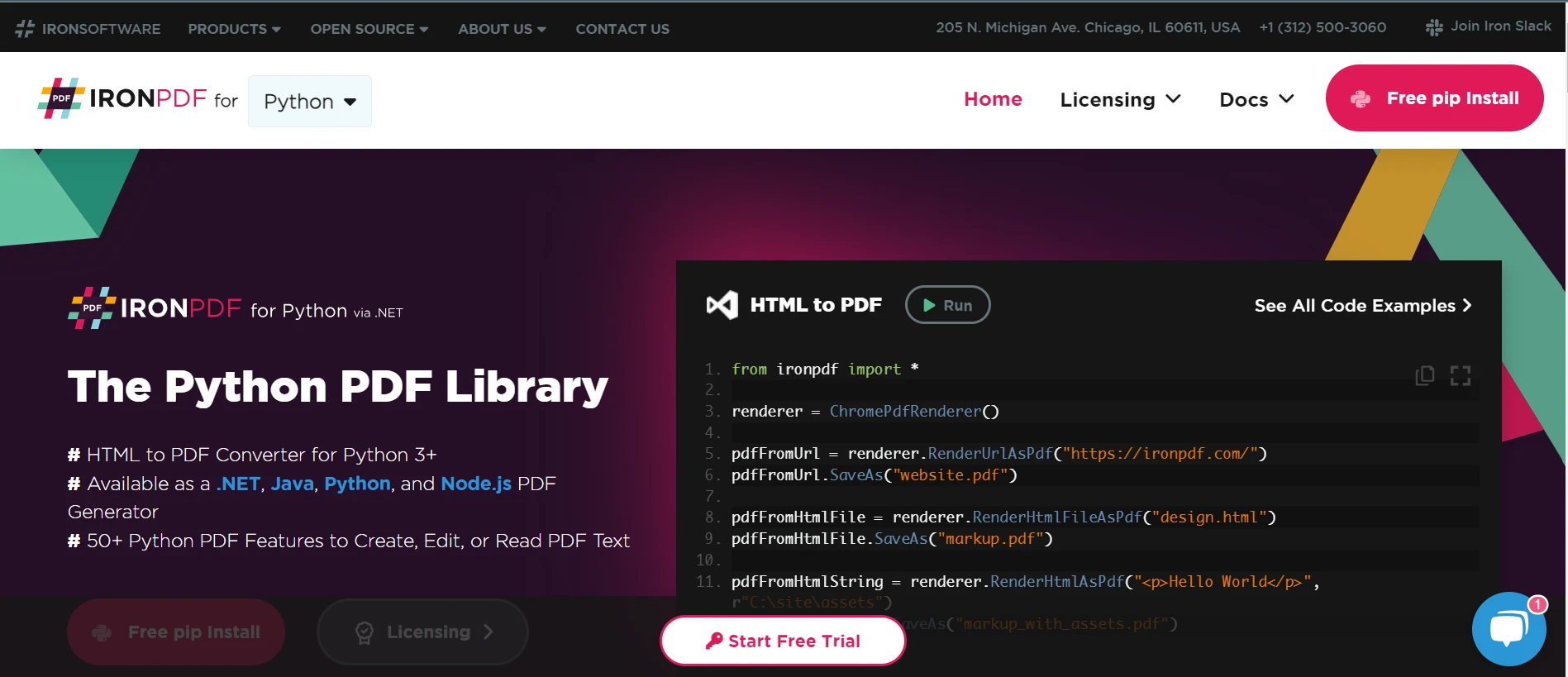
from ironpdf import *

# Instantiate Renderer
renderer = ChromePdfRenderer()

# Create a PDF from a HTML string using Python
pdf = renderer.RenderHtmlAsPdf("<h1>Hello World</h1>")

# Export to a file or Stream
pdf.SaveAs("output.pdf")

# Advanced Example with HTML Assets
# Load external html assets: Images, CSS and JavaScript.
# An optional BasePath 'C:\site\assets\' is set as the file location to load assets from
myAdvancedPdf = renderer.RenderHtmlAsPdf("<img src='icons/iron.png'>", r"C:\site\assets")
myAdvancedPdf.SaveAs("html-with-assets.pdf")
from ironpdf import *# Instantiate Rendererrenderer = ChromePdfRenderer()# Create a PDF from a HTML string using Pythonpdf = renderer.RenderHtmlAsPdf("<h1>Hello World</h1>")# Export to a file or Streampdf.SaveAs("output.pdf")# Advanced Example with HTML Assets# Load external html assets: Images, CSS and JavaScript.# An optional BasePath 'C:\site\assets\' is set as the file location to load assets frommyAdvancedPdf = renderer.RenderHtmlAsPdf("<img src='icons/iron.png'>", r"C:\site\assets")myAdvancedPdf.SaveAs("html-with-assets.pdf")
Los archivos PDF se encuentran entre los formatos más populares de documentos digitales. Son preferidos por su compatibilidad en diferentes sistemas y su capacidad para preservar el formato de documentos complejos.
En la gestión de datos, convertir documentos PDF a formatos editables o extraer texto para análisis es invaluable. Este proceso de conversión permite a las empresas e individuos extraer y aprovechar datos que de otra manera estarían bloqueados dentro de documentos estáticos.
Python, con su extenso ecosistema de bibliotecas, ofrece una forma accesible y poderosa de manipular archivos PDF. Ya sea extrayendo datos, convirtiendo archivos PDF o automatizando la generación de informes, la simplicidad de Python y sus amplias herramientas lo convierten en un lenguaje de referencia para tareas de procesamiento de PDF.
## ¿Qué es IronPDF?
[IronPDF](/) es una biblioteca integral de [renderizado de PDF para desarrolladores de Python](/python/) que facilita la interacción con archivos PDF. Proporciona un robusto conjunto de herramientas que permite la creación, manipulación y conversión de documentos PDF dentro del entorno de programación de Python.
IronPDF une la facilidad de los scripts de Python y las capacidades de gestión de documentos necesarias para el procesamiento de PDF, permitiendo así a los desarrolladores incorporar funcionalidades PDF directamente en sus aplicaciones.
## Requisitos del sistema y guía de instalación
Antes de instalar IronPDF, asegúrate de que tu sistema cumpla con los siguientes requisitos:
* Python 3.x instalado en tu sistema.
* Acceso a pip (instalador de paquetes de Python) para una fácil instalación.
* .NET framework si usas un sistema Windows, ya que IronPDF depende de .NET para funcionar.
Una vez que has confirmado que tu sistema cumple con estos requisitos, puedes instalar IronPDF usando pip. Abre tu línea de comandos o terminal y ejecuta el siguiente comando:
```shell
:ProductInstall
```
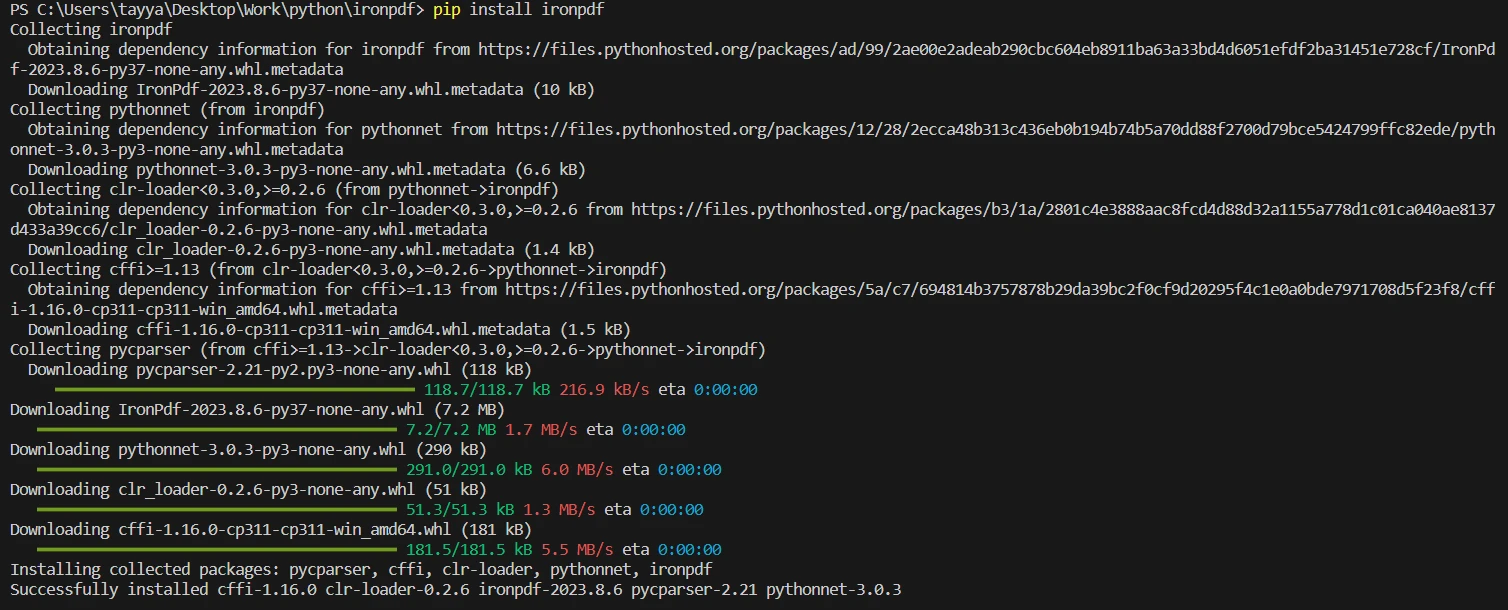
Asegúrate de estar usando la última versión de la biblioteca IronPDF for Python. Este comando descargará e instalará la biblioteca IronPDF y todas las dependencias necesarias en tu entorno Python.
## Convertir PDF en texto: Un tutorial paso a paso
### Paso 1: Importar IronPDF
```python
from ironpdf import *
```
Este fragmento de código comienza con una declaración de importación que trae todos los componentes necesarios de la biblioteca IronPDF a tu script de Python. Es esencial para acceder a las clases y métodos proporcionados por IronPDF que te permiten trabajar con archivos PDF.
### Paso 2: Configurar el registro
```python
# Enable debugging for IronPDF
Logger.EnableDebugging = True

# Specify the log file path
Logger.LogFilePath = "Custom.log"

# Set logging mode to log all events
Logger.LoggingMode = Logger.LoggingModes.All
```
- **Logger.EnableDebugging = True:** habilita la función de depuración dentro de la biblioteca IronPDF para rastrear operaciones, lo cual es crucial para la resolución de problemas.
- **Logger.LogFilePath = "Custom.log":** Especifica la ruta y el nombre del archivo de registro donde se escribirá la información de depuración. Asegúrate de que el directorio sea escribible.
- **Logger.LoggingMode = Logger.LoggingModes.All:** establece el modo de registro para registrar todos los eventos, incluidos registros de nivel de información, advertencias y errores. Este registro integral ayuda en la depuración.
### Paso 3: Cargar el documento PDF
```python
# Load an existing PDF document
pdf = PdfDocument.FromFile("content.pdf")
```
- **`PdfDocument.FromFile("content.pdf")`:** carga el archivo PDF llamado "content.pdf" en el entorno creando un objeto **PdfDocument** .
- La variable **pdf** ahora contiene tu documento PDF y te permite realizar varias operaciones.
### Paso 4: Extracción de texto de todo el documento
```python
# Extract all text from the PDF document
all_text = pdf.ExtractAllText()
# Print the extracted text
print(all_text)
```
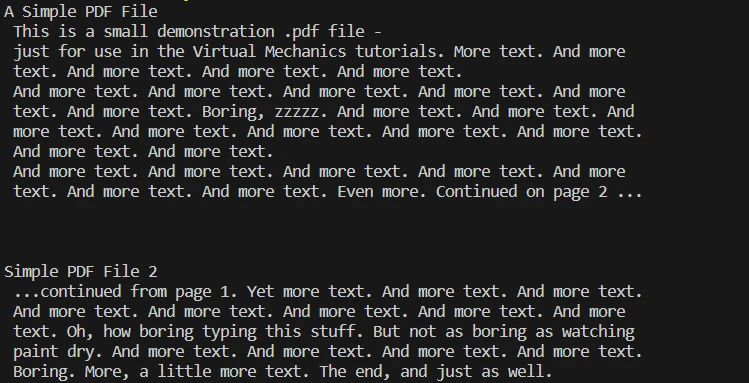
- **`pdf.ExtractAllText()`:** extrae todo el contenido textual del documento. El texto se almacena luego en la variable **all_text**.
- **print(all_text):** imprime el texto extraído en la consola, verificando el proceso de extracción de texto.
### Paso 5: Extracción de texto de una página específica
```python
# Load an existing PDF document (already loaded, but shown for clarity)
pdf = PdfDocument.FromFile("content.pdf")
# Extract text from a specific page in the document
page_text = pdf.ExtractTextFromPage(1)
# Print the extracted text from the specific page
print(page_text)
```
- **`PdfDocument.FromFile("content.pdf")`:** demuestra la necesidad de un objeto de archivo PDF (el objeto **PdfDocument** ) para extraer texto. Esta línea no es necesaria si el documento ya ha sido cargado en un script continuo.
- **`pdf.ExtractTextFromPage(1)`:** extrae texto de la segunda página (índice 1) del PDF.
- El ejemplo asume que imprimirías el texto extraído para verificar la operación: **print(page_text)**.
Este tutorial ofrece una vía clara para que los desarrolladores conviertan el contenido de archivos PDF en texto, ya sea que necesites procesar el documento completo o solo páginas individuales, usando la biblioteca IronPDF en Python.
### Raspado de código completo
Aquí está el código completo que puedes usar:
```python
from ironpdf import *
# Add your License key here
License.LicenseKey = "License-Code"
# Enable debugging for IronPDF
Logger.EnableDebugging = True

# Specify the log file path
Logger.LogFilePath = "Custom.log"

# Set logging mode to log all events
Logger.LoggingMode = Logger.LoggingModes.All
# Load an existing PDF document
pdf = PdfDocument.FromFile("sample.pdf")
# Extract all text from the PDF document
all_text = pdf.ExtractAllText()
# Print the extracted text
print(all_text)
```
## Funciones avanzadas para archivos PDF
### Convertir archivos PDF a otros formatos
IronPDF no solo se encarga de la extracción de texto. Una de sus características clave es la capacidad de convertir archivos PDF a otros formatos, lo cual puede ser particularmente útil para compartir y presentar información en diferentes medios.
### Imprimir y gestionar documentos PDF
Gestionar un trabajo de impresión de un archivo PDF directamente desde Python es inestimable en cuanto a documentación física. IronPDF proporciona esta capacidad, agilizando el proceso de digital a físico con solo unos pocos comandos.
### Manejo de archivos PDF escaneados
Para archivos PDF escaneados, IronPDF ofrece métodos especializados para extraer texto, lo cual puede ser una tarea desafiante debido a la naturaleza del contenido que es una imagen en lugar de texto seleccionable. Esto extiende la utilidad de la biblioteca a tareas más amplias de gestión de documentos.
## La evolución de las tecnologías de procesamiento de PDF
Las tecnologías de procesamiento de PDF han evolucionado rápidamente, desde la simple extracción de texto hasta el manejo de datos complejos y la manipulación de documentos más interactivos. El enfoque se está desplazando hacia la automatización, la inteligencia artificial y los servicios basados en la nube, permitiendo soluciones de procesamiento de documentos más dinámicas e inteligentes.
Es probable que IronPDF evolucione en paralelo, incorporando estas tecnologías de vanguardia para mantenerse relevante y robusto.
## Conclusión: Agilice su flujo de trabajo con IronPDF
IronPDF simplifica la conversión de PDF a texto y optimiza los flujos de trabajo, convirtiéndolo en un activo valioso para desarrolladores y empresas.
IronPDF se destaca por su capacidad de integrarse sin problemas en entornos Python, su robusta extracción de texto tanto de PDFs estándar como escaneados, y su alta fidelidad para mantener el formato original del documento.
Las capacidades de registro y depuración de la biblioteca también ayudan en el desarrollo de aplicaciones confiables para la manipulación de PDF.
Después de convertir un PDF a texto, los pasos siguientes implican aprovechar los datos extraídos. Esto podría significar integrar el texto en bases de datos, realizar análisis de datos, alimentarlo en herramientas de informes o usarlo para el aprendizaje automático.
Con los datos textuales en un formato más accesible, las posibilidades para procesar y usar esta información se expanden significativamente, abriendo puertas a nuevas ideas y eficiencias operativas.
IronPDF ofrece una [prueba gratuita de 30 días](trial-license), permitiéndote explorar y evaluar todas sus funcionalidades antes de comprometerte. Este período de prueba es una excelente oportunidad para que los desarrolladores experimenten de primera mano cómo IronPDF puede optimizar sus flujos de trabajo con PDF.
Los archivos PDF se encuentran entre los formatos más populares de documentos digitales. Son preferidos por su compatibilidad en diferentes sistemas y su capacidad para preservar el formato de documentos complejos.
En la gestión de datos, convertir documentos PDF a formatos editables o extraer texto para análisis es invaluable. Este proceso de conversión permite a las empresas e individuos extraer y aprovechar datos que de otra manera estarían bloqueados dentro de documentos estáticos.
Python, con su extenso ecosistema de bibliotecas, ofrece una forma accesible y poderosa de manipular archivos PDF. Ya sea extrayendo datos, convirtiendo archivos PDF o automatizando la generación de informes, la simplicidad de Python y sus amplias herramientas lo convierten en un lenguaje de referencia para tareas de procesamiento de PDF.
¿Qué es IronPDF?
IronPDF es una biblioteca integral de renderizado de PDF para desarrolladores de Python que facilita la interacción con archivos PDF. Proporciona un robusto conjunto de herramientas que permite la creación, manipulación y conversión de documentos PDF dentro del entorno de programación de Python.
IronPDF une la facilidad de los scripts de Python y las capacidades de gestión de documentos necesarias para el procesamiento de PDF, permitiendo así a los desarrolladores incorporar funcionalidades PDF directamente en sus aplicaciones.
Requisitos del sistema y guía de instalación
Antes de instalar IronPDF, asegúrate de que tu sistema cumpla con los siguientes requisitos:
Python 3.x instalado en tu sistema.
Acceso a pip (instalador de paquetes de Python) para una fácil instalación.
.NET framework si usas un sistema Windows, ya que IronPDF depende de .NET para funcionar.
Una vez que has confirmado que tu sistema cumple con estos requisitos, puedes instalar IronPDF usando pip. Abre tu línea de comandos o terminal y ejecuta el siguiente comando:
> pip install ironpdf
pip install ironpdf
Asegúrate de estar usando la última versión de la biblioteca IronPDF for Python. Este comando descargará e instalará la biblioteca IronPDF y todas las dependencias necesarias en tu entorno Python.
Convertir PDF en texto: Un tutorial paso a paso
Paso 1: Importar IronPDF
from ironpdf import *
from ironpdf import *
Python
Este fragmento de código comienza con una declaración de importación que trae todos los componentes necesarios de la biblioteca IronPDF a tu script de Python. Es esencial para acceder a las clases y métodos proporcionados por IronPDF que te permiten trabajar con archivos PDF.
Paso 2: Configurar el registro
# Enable debugging for IronPDFLogger.EnableDebugging = True# Specify the log file pathLogger.LogFilePath = "Custom.log"# Set logging mode to log all eventsLogger.LoggingMode = Logger.LoggingModes.All
# Enable debugging for IronPDF
Logger.EnableDebugging = True
# Specify the log file path
Logger.LogFilePath = "Custom.log"
# Set logging mode to log all events
Logger.LoggingMode = Logger.LoggingModes.All
Python
Logger.EnableDebugging = True: habilita la función de depuración dentro de la biblioteca IronPDF para rastrear operaciones, lo cual es crucial para la resolución de problemas.
Logger.LogFilePath = "Custom.log": Especifica la ruta y el nombre del archivo de registro donde se escribirá la información de depuración. Asegúrate de que el directorio sea escribible.
Logger.LoggingMode = Logger.LoggingModes.All: establece el modo de registro para registrar todos los eventos, incluidos registros de nivel de información, advertencias y errores. Este registro integral ayuda en la depuración.
Paso 3: Cargar el documento PDF
# Load an existing PDF documentpdf = PdfDocument.FromFile("content.pdf")
# Load an existing PDF document
pdf = PdfDocument.FromFile("content.pdf")
Python
PdfDocument.FromFile("content.pdf"): carga el archivo PDF llamado "content.pdf" en el entorno creando un objeto PdfDocument .
La variable pdf ahora contiene tu documento PDF y te permite realizar varias operaciones.
Paso 4: Extracción de texto de todo el documento
# Extract all text from the PDF documentall_text = pdf.ExtractAllText()# Print the extracted textprint(all_text)
# Extract all text from the PDF document
all_text = pdf.ExtractAllText()

# Print the extracted text
print(all_text)
Python
pdf.ExtractAllText(): extrae todo el contenido textual del documento. El texto se almacena luego en la variable all_text.
print(all_text): imprime el texto extraído en la consola, verificando el proceso de extracción de texto.
Paso 5: Extracción de texto de una página específica
# Load an existing PDF document (already loaded, but shown for clarity)pdf = PdfDocument.FromFile("content.pdf")# Extract text from a specific page in the documentpage_text = pdf.ExtractTextFromPage(1)# Print the extracted text from the specific pageprint(page_text)
# Load an existing PDF document (already loaded, but shown for clarity)
pdf = PdfDocument.FromFile("content.pdf")
# Extract text from a specific page in the document
page_text = pdf.ExtractTextFromPage(1)
# Print the extracted text from the specific page
print(page_text)
Python
PdfDocument.FromFile("content.pdf"): demuestra la necesidad de un objeto de archivo PDF (el objeto PdfDocument ) para extraer texto. Esta línea no es necesaria si el documento ya ha sido cargado en un script continuo.
pdf.ExtractTextFromPage(1): extrae texto de la segunda página (índice 1) del PDF.
El ejemplo asume que imprimirías el texto extraído para verificar la operación: print(page_text).
Este tutorial ofrece una vía clara para que los desarrolladores conviertan el contenido de archivos PDF en texto, ya sea que necesites procesar el documento completo o solo páginas individuales, usando la biblioteca IronPDF en Python.
Raspado de código completo
Aquí está el código completo que puedes usar:
from ironpdf import *# Add your License key hereLicense.LicenseKey = "License-Code"# Enable debugging for IronPDFLogger.EnableDebugging = True# Specify the log file pathLogger.LogFilePath = "Custom.log"# Set logging mode to log all eventsLogger.LoggingMode = Logger.LoggingModes.All# Load an existing PDF documentpdf = PdfDocument.FromFile("sample.pdf")# Extract all text from the PDF documentall_text = pdf.ExtractAllText()# Print the extracted textprint(all_text)
from ironpdf import *
# Add your License key here
License.LicenseKey = "License-Code"
# Enable debugging for IronPDF
Logger.EnableDebugging = True
# Specify the log file path
Logger.LogFilePath = "Custom.log"
# Set logging mode to log all events
Logger.LoggingMode = Logger.LoggingModes.All
# Load an existing PDF document
pdf = PdfDocument.FromFile("sample.pdf")
# Extract all text from the PDF document
all_text = pdf.ExtractAllText()

# Print the extracted text
print(all_text)
Python
Funciones avanzadas para archivos PDF
Convertir archivos PDF a otros formatos
IronPDF no solo se encarga de la extracción de texto. Una de sus características clave es la capacidad de convertir archivos PDF a otros formatos, lo cual puede ser particularmente útil para compartir y presentar información en diferentes medios.
Imprimir y gestionar documentos PDF
Gestionar un trabajo de impresión de un archivo PDF directamente desde Python es inestimable en cuanto a documentación física. IronPDF proporciona esta capacidad, agilizando el proceso de digital a físico con solo unos pocos comandos.
Manejo de archivos PDF escaneados
Para archivos PDF escaneados, IronPDF ofrece métodos especializados para extraer texto, lo cual puede ser una tarea desafiante debido a la naturaleza del contenido que es una imagen en lugar de texto seleccionable. Esto extiende la utilidad de la biblioteca a tareas más amplias de gestión de documentos.
La evolución de las tecnologías de procesamiento de PDF
Las tecnologías de procesamiento de PDF han evolucionado rápidamente, desde la simple extracción de texto hasta el manejo de datos complejos y la manipulación de documentos más interactivos. El enfoque se está desplazando hacia la automatización, la inteligencia artificial y los servicios basados en la nube, permitiendo soluciones de procesamiento de documentos más dinámicas e inteligentes.
Es probable que IronPDF evolucione en paralelo, incorporando estas tecnologías de vanguardia para mantenerse relevante y robusto.
Conclusión: Agilice su flujo de trabajo con IronPDF
IronPDF simplifica la conversión de PDF a texto y optimiza los flujos de trabajo, convirtiéndolo en un activo valioso para desarrolladores y empresas.
IronPDF se destaca por su capacidad de integrarse sin problemas en entornos Python, su robusta extracción de texto tanto de PDFs estándar como escaneados, y su alta fidelidad para mantener el formato original del documento.
Las capacidades de registro y depuración de la biblioteca también ayudan en el desarrollo de aplicaciones confiables para la manipulación de PDF.
Después de convertir un PDF a texto, los pasos siguientes implican aprovechar los datos extraídos. Esto podría significar integrar el texto en bases de datos, realizar análisis de datos, alimentarlo en herramientas de informes o usarlo para el aprendizaje automático.
Con los datos textuales en un formato más accesible, las posibilidades para procesar y usar esta información se expanden significativamente, abriendo puertas a nuevas ideas y eficiencias operativas.
IronPDF ofrece una prueba gratuita de 30 días, permitiéndote explorar y evaluar todas sus funcionalidades antes de comprometerte. Este período de prueba es una excelente oportunidad para que los desarrolladores experimenten de primera mano cómo IronPDF puede optimizar sus flujos de trabajo con PDF.
Curtis Chau tiene una licenciatura en Ciencias de la Computación (Carleton University) y se especializa en el desarrollo front-end con experiencia en Node.js, TypeScript, JavaScript y React. Apasionado por crear interfaces de usuario intuitivas y estéticamente agradables, disfruta trabajando con frameworks modernos y creando manuales bien estructurados y visualmente atractivos.