


업데이트됨 2026년 4월 21일
Java 스캐너 (개발자를 위한 작동 방식)
이 글에서는 Java Scanner 클래스의 작동 원리를 자세히 살펴보고 예제를 통해 사용법을 알아보겠습니다.
더 읽어보기

이 글에서는 자바 커뮤니티에서 자주 혼란을 야기하는 주제인 값 전달과 참조 전달의 차이점을 명확히 설명하겠습니다. 또한 IronPDF PDF 작업을 할 때 Java 애플리케이션의 성능을 어떻게 향상시킬 수 있는지 살펴보겠습니다. 잠시만 기다려 주세요. 곧 흔히 잘못 알려진 사실들을 바로잡고 코딩 작업을 훨씬 수월하게 만들어 줄 유용한 도구를 소개해 드리겠습니다.
자바의 매개변수 전달 메커니즘은 겉보기처럼 간단하지 않습니다. 많은 개발자들이 자바에서는 객체에 대한 전달 방식이 참조 방식이라고 생각하지만, 이는 사실이 아닙니다. 자, 이제 PDF에 대해 이야기해 봅시다. 보고서 생성부터 송장 작성에 이르기까지 최신 애플리케이션 어디에나 있습니다. 하지만 솔직히 말해서, 적절한 도구 없이 자바에서 PDF 파일을 다루는 것은 정말 골치 아픈 일입니다. 바로 이 부분에서 IronPDF 등장하는데, 자세한 내용은 나중에 설명하겠습니다.
자바 프로그래밍 언어에서 매개변수 전달은 항상 값에 의한 전달입니다. 객체를 다룰 때 참조 변수는 값으로 전달됩니다. 이는 해당 메서드가 동일한 객체 참조 값을 받지만, 객체 자체는 받지 않는다는 것을 의미합니다.
자바 언어 명세는 메서드 선언의 형식 매개변수는 항상 변수이며 참조가 아니라고 명확히 규정하고 있습니다. 메서드가 호출되면 실제 매개변수 값은 스택 메모리에 있는 메서드의 형식 매개변수의 초기값이 됩니다. 이 메서드 매개변수 값은 원래 참조 값의 복사본이며, 원래 참조와 동일한 객체를 가리킵니다.
일반적인 오해는 public static void swap 메서드로 입증됩니다:
public static void swap(Object a, Object b) {
    Object temp = a; // Store the reference of object 'a' in 'temp'
    a = b;           // Assign reference of object 'b' to 'a'
    b = temp;        // Assign reference of 'temp' (original 'a') to 'b'
}이는 호출 코드의 실제 객체나 원래 참조 변수에 영향을 미치지 않습니다. 이는 참조 값의 로컬 복사본만 교환합니다. 마찬가지로 객체 참조를 매개변수로 받는 메서드는 동일한 실제 객체를 수정할 수 있지만, 원래 참조 변수가 다른 객체를 참조하도록 만들 수는 없습니다.
Java는 기본 데이터 유형이든 객체 참조이든 항상 값으로 전달합니다. 호출 코드의 동일한 변수는 메서드 호출 후에도 동일한 값을 유지하며 동일한 실제 객체를 계속 참조합니다. 메서드에 전달되는 참조 값은 해당 메서드가 동일한 객체를 사용할 수 있도록 하지만, 메서드 내에서의 재할당은 원본 참조 변수가 아닌 참조의 로컬 복사본에만 영향을 미칩니다. 메서드 매개변수를 통해 동일한 객체의 상태를 수정할 수는 있지만, 원래 참조가 가리키는 객체를 변경할 수는 없습니다.
이 개념을 이해하는 것은 안정적인 코드를 작성하는 데 중요합니다. 흔히 저지르는 실수 중 하나는 매개변수를 수정하면 원래 객체에 영향을 미칠 것이라고 가정하는 것입니다. 객체의 상태는 수정할 수 있지만, 원래 참조가 가리키는 객체는 변경할 수 없습니다. 유용한 팁 하나 드리자면, 객체의 여러 부분을 수정해야 할 경우 객체 클래스 자체 내에 메서드를 만드는 것을 고려해 보세요.
자, 그럼 IronPDF 에 대해 이야기해 봅시다. 이 라이브러리는 자바 애플리케이션에 강력한 PDF 기능을 제공합니다. Java SE를 사용하든 Jakarta EE를 사용하든 IronPDF 모든 것을 지원합니다.
IronPDF PDF 생성 및 편집에 있어 최고의 기능을 제공합니다. 단 몇 줄의 코드로 HTML에서 PDF를 생성하거나, 기존 PDF를 병합하거나, 텍스트와 이미지를 추출할 수 있습니다. 가장 좋은 점은? 이 제품은 자바 프로젝트와 완벽하게 통합됩니다.
IronPDF 의 핵심 기능은 HTML을 PDF로 변환하는 기능입니다. 예전에 고객을 위해 보고서 생성기를 만들어야 했던 적이 있는데, IronPDF 덕분에 아주 쉽게 만들 수 있었습니다. 복잡한 PDF 라이브러리와 씨름하는 대신, HTML과 CSS 기술을 활용하여 보고서를 디자인한 다음 IronPDF 변환을 처리하도록 할 수 있습니다.
자바의 매개변수 전달에 대한 우리 논의를 기억하시나요? IronPDF Java에서 PDF를 다룰 때 발생할 수 있는 많은 복잡성을 추상화합니다. 대용량 PDF 파일의 경우 객체 참조 관리나 메모리 할당에 대해 걱정할 필요가 없습니다.
예를 들어, 여러 가지 방법으로 PDF 파일을 수정해야 한다고 가정해 보겠습니다. IronPDF 사용하면 PDF 파일을 한 번만 불러와도 의도치 않은 수정에 대한 걱정 없이 공유할 수 있습니다.
package IronPDF.ironpdf_java;

import com.ironsoftware.ironpdf.PdfDocument;
import java.io.IOException;
import java.nio.file.Paths;

public class App {
    public static void main(String[] args) {
        // Retrieve license key from environment variable
        String licenseKey = System.getenv("IRONPDF_LICENSE_KEY");
        if (licenseKey == null || licenseKey.isEmpty()) {
            throw new IllegalStateException("Environment variable IRONPDF_LICENSE_KEY not set");
        }
        License.setLicenseKey(licenseKey);

        // Load existing PDF document
        String src = "assets/Image based PDF.pdf";
        PdfDocument pdf = PdfDocument.fromFile(Paths.get(src));

        // Apply watermark to the PDF
        pdf.applyWatermark("<h1>Watermark</h1>");

        // Extract all text from the PDF
        String extractedText = pdf.extractAllText();

        // Save the modified PDF
        String dest = "assets/Compressed.pdf";
        pdf.saveAs(Paths.get(dest));
    }
}각 메서드는 여러 사본을 생성하거나 변경 사항을 잃을 위험 없이 동일한 PdfDocument 객체에서 작동할 수 있습니다.
실제 사례를 하나 공유해 드리겠습니다. 저는 법률 사무소에서 법률 문서를 PDF 파일로 생성하는 자바 애플리케이션을 개발하고 있었습니다. 기존 솔루션은 속도가 느리고 서식 오류가 발생하기 쉬웠습니다. 다음은 이러한 문제를 해결하기 위해 IronPDF 구현한 방법입니다.
import com.ironsoftware.ironpdf.PdfDocument;
import java.io.IOException;
import java.time.LocalDate;
import java.time.format.DateTimeFormatter;

public class LegalDocumentGenerator {

    public static void main(String[] args) {
        // Retrieve license key from the environment
        String licenseKey = System.getenv("IRONPDF_LICENSE_KEY");
        if (licenseKey == null || licenseKey.isEmpty()) {
            throw new IllegalStateException("Environment variable IRONPDF_LICENSE_KEY not set");
        }
        License.setLicenseKey(licenseKey);

        // Create HTML content for the legal document
        String clientName = "Iron Dev";
        String caseNumber = "2024-001";
        String currentDate = LocalDate.now().format(DateTimeFormatter.ISO_LOCAL_DATE);
        String html = "<html><body>" +
                      "<h1>Legal Document</h1>" +
                      "<p>This is a sample legal document generated using IronPDF for Java.</p>" +
                      "<p>Client: " + clientName + "</p>" +
                      "<p>Date: " + currentDate + "</p>" +
                      "<p>Case Number: " + caseNumber + "</p>" +
                      "<h2>Terms and Conditions</h2>" +
                      "<p>Lorem ipsum dolor sit amet, consectetur adipiscing elit. Sed do eiusmod tempor incididunt ut labore et dolore magna aliqua. Ut enim ad minim veniam, quis nostrud exercitation ullamco laboris nisi ut aliquip ex ea commodo consequat.</p>" +
                      "</body></html>";

        try {
            // Convert HTML content to PDF
            PdfDocument pdf = PdfDocument.renderHtmlAsPdf(html);
            pdf.saveAs("legalDocument.pdf");
            System.out.println("PDF generated successfully: legalDocument.pdf");
        } catch (IOException e) {
            System.err.println("Error saving PDF: " + e.getMessage());
        }
    }
}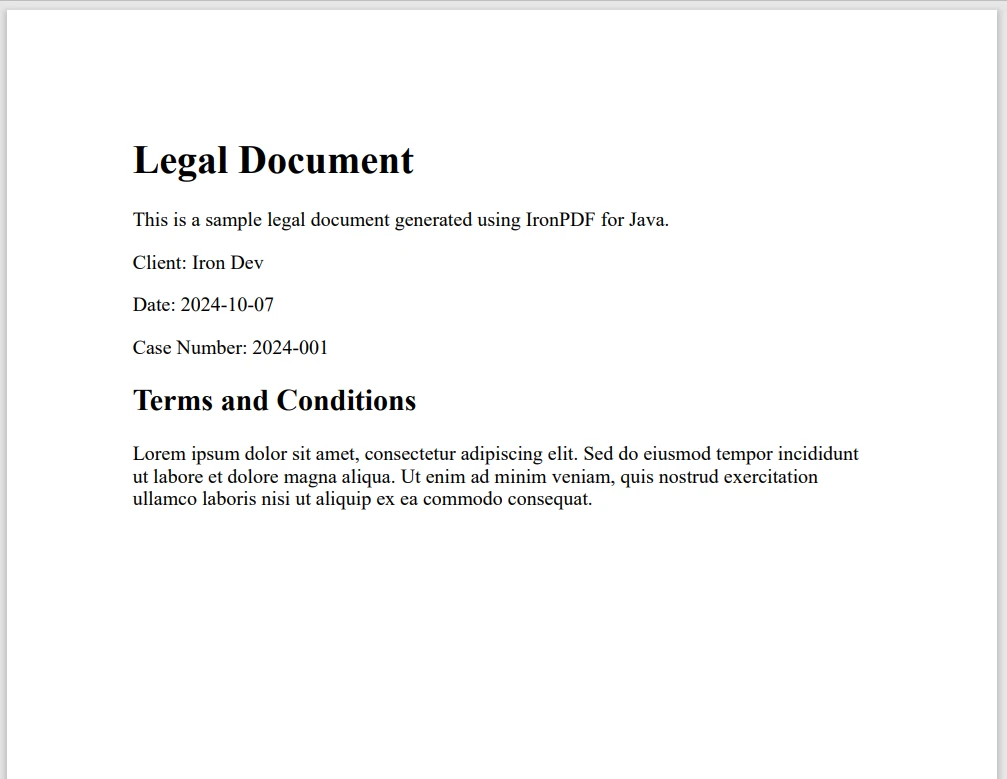
결과는 놀라웠습니다. 문서 생성 시간이 60% 단축되었고, 서식도 항상 완벽했습니다. 변호사들은 매우 기뻐했고, 우리 개발팀은 PDF 문제 해결에 매달리는 대신 다른 기능 개발에 집중할 수 있었습니다.
오늘 우리는 자바의 참조 전달 방식에 대한 오해를 바로잡는 것부터 IronPDF 의 강력한 기능을 살펴보는 것까지 많은 내용을 다뤘습니다. 자바의 진정한 매개변수 전달 메커니즘을 이해하면 더 나은 개발자가 되어 예측 가능하고 유지 관리하기 쉬운 코드를 작성할 수 있습니다.
IronPDF 는 PDF를 다루는 자바 개발자들에게 혁신적인 변화를 가져다 줄 것입니다. 이 도구는 복잡한 작업을 단순화하고 성능을 향상시키며 기존 Java 지식과 완벽하게 통합됩니다. 그러니 한번 시도해 보는 건 어떨까요? IronPDF 무료 체험판을 제공하므로 직접 기능을 경험해 볼 수 있습니다. 그 라이선스는 $999에서 시작됩니다.

커티스 차우는 칼턴 대학교에서 컴퓨터 과학 학사 학위를 취득했으며, Node.js, TypeScript, JavaScript, React를 전문으로 하는 프론트엔드 개발자입니다. 직관적이고 미적으로 뛰어난 사용자 인터페이스를 만드는 데 열정을 가진 그는 최신 프레임워크를 활용하고, 잘 구성되고 시각적으로 매력적인 매뉴얼을 제작하는 것을 즐깁니다.

IronPDF는 IRON SUITE 의 일부입니다.
10개의 .NET API 제품, 당신의 사무 문서를 위해

PDF 파일을 HTML처럼 빠르게 변환해야 할 때.

