El método NewGuid() en una clase Guid se utiliza comúnmente para crear un identificador único global (GUID). Un GUID es un entero de 128 bits que se puede usar en todas las computadoras y redes para identificar la información de manera única sin el riesgo de duplicados. Este artículo proporcionará una guía detallada sobre cómo trabajar con GUIDs (Identificadores Únicos Globales) en C#, centrándose en usos prácticos, ejemplos y fragmentos de código. También exploraremos la biblioteca IronPDF.
¿Qué es un GUID?
Un GUID (Identificador Único Global) es un identificador único utilizado en el desarrollo de software. En el marco de .NET, los GUIDs se representan como una estructura Guid dentro del espacio de nombres System. Los GUIDs se utilizan a menudo como claves primarias en bases de datos, así como para otros fines en otros sistemas donde se necesitan identificadores únicos en todo el sistema.
Generating GUIDs in C#
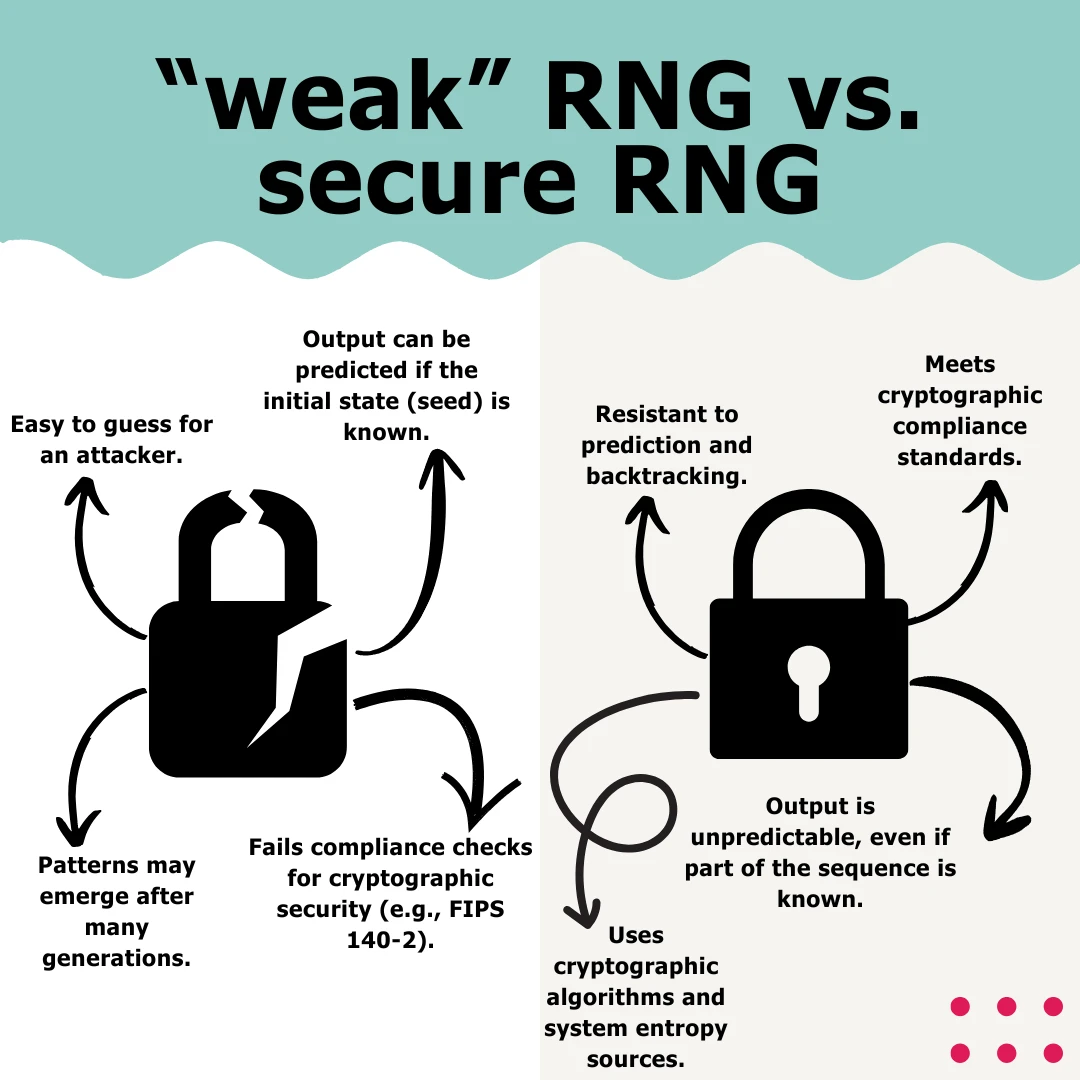
Para generar un nuevo GUID en C#, se utiliza la función Guid.NewGuid(). Este método crea una nueva instancia de un objeto GUID y garantiza que cada GUID generado sea único. Internamente, los GUIDs se generan usando un generador de números aleatorios para asegurar que no haya dos GUIDs con el mismo valor.
Aquí hay un ejemplo de código simple para generar un nuevo GUID:
using System;

class Program
{
    static void Main()
    {
        // Generate a new GUID
        Guid newGuid = Guid.NewGuid();

        // Output the newly generated GUID to the console
        Console.WriteLine(newGuid);
    }
}
using System;

class Program
{
    static void Main()
    {
        // Generate a new GUID
        Guid newGuid = Guid.NewGuid();

        // Output the newly generated GUID to the console
        Console.WriteLine(newGuid);
    }
}
Imports System
Module Program
Sub Main()
' Generate a new GUID
Dim newGuid As Guid = Guid.NewGuid()
' Output the newly generated GUID to the console
Console.WriteLine(newGuid)
End Sub
End Module
Imports System

Module Program
    Sub Main()
        ' Generate a new GUID
        Dim newGuid As Guid = Guid.NewGuid()

        ' Output the newly generated GUID to the console
        Console.WriteLine(newGuid)
    End Sub
End Module
En este código, el método Guid.NewGuid() crea un nuevo GUID utilizando un generador de números aleatorios internamente, y Console.WriteLine muestra el GUID recién generado en la consola.
Un GUID consta de 32 dígitos hexadecimales, generalmente se muestra en un formato de 8-4-4-4-12 (por ejemplo, e02fd0e4-00fd-090A-ca30-0d00a0038ba0). Cuando se convierte a una cadena usando el método ToString(), el GUID se representa en este formato. Esta representación facilita el almacenamiento de GUIDs en formatos basados en texto, como JSON, XML o bases de datos.
El siguiente ejemplo de código muestra cómo convertir un GUID a una cadena:
using System;

class Example
{
    static void Main()
    {
        // Generate a new GUID
        Guid newGuid = Guid.NewGuid();

        // Convert the GUID to a string
        string guidString = newGuid.ToString();

        // Output the GUID string
        Console.WriteLine(guidString);
    }
}
using System;

class Example
{
    static void Main()
    {
        // Generate a new GUID
        Guid newGuid = Guid.NewGuid();

        // Convert the GUID to a string
        string guidString = newGuid.ToString();

        // Output the GUID string
        Console.WriteLine(guidString);
    }
}
Imports System
Module Example
Sub Main()
' Generate a new GUID
Dim newGuid As Guid = Guid.NewGuid()
' Convert the GUID to a string
Dim guidString As String = newGuid.ToString()
' Output the GUID string
Console.WriteLine(guidString)
End Sub
End Module
Imports System

Module Example
    Sub Main()
        ' Generate a new GUID
        Dim newGuid As Guid = Guid.NewGuid()

        ' Convert the GUID to a string
        Dim guidString As String = newGuid.ToString()

        ' Output the GUID string
        Console.WriteLine(guidString)
    End Sub
End Module
Este código convierte el GUID a una cadena y lo muestra.
Parar cadenas GUID
A veces, puede necesitar convertir una cadena de nuevo a un objeto GUID. Esto se hace usando el método Guid.Parse(). Si la cadena está en el formato correcto, se analizará en una instancia de GUID. Si el formato es incorrecto, se generará una excepción.
Aquí hay un ejemplo de código:
using System;

class ParseExample
{
    static void Main()
    {
        // Define a GUID string
        string guidString = "e02fd0e4-00fd-090A-ca30-0d00a0038ba0";

        // Convert the string back into a GUID object
        Guid parsedGuid = Guid.Parse(guidString);

        // Output the parsed GUID
        Console.WriteLine(parsedGuid);
    }
}
using System;

class ParseExample
{
    static void Main()
    {
        // Define a GUID string
        string guidString = "e02fd0e4-00fd-090A-ca30-0d00a0038ba0";

        // Convert the string back into a GUID object
        Guid parsedGuid = Guid.Parse(guidString);

        // Output the parsed GUID
        Console.WriteLine(parsedGuid);
    }
}
Imports System
Module ParseExample
Sub Main()
' Define a GUID string
Dim guidString As String = "e02fd0e4-00fd-090A-ca30-0d00a0038ba0"
' Convert the string back into a GUID object
Dim parsedGuid As Guid = Guid.Parse(guidString)
' Output the parsed GUID
Console.WriteLine(parsedGuid)
End Sub
End Module
Imports System

Module ParseExample
    Sub Main()
        ' Define a GUID string
        Dim guidString As String = "e02fd0e4-00fd-090A-ca30-0d00a0038ba0"

        ' Convert the string back into a GUID object
        Dim parsedGuid As Guid = Guid.Parse(guidString)

        ' Output the parsed GUID
        Console.WriteLine(parsedGuid)
    End Sub
End Module
En este código, el método Guid.Parse() convierte la cadena de nuevo a un objeto GUID.
Comparación de dos GUID
Los GUIDs pueden compararse para ver si son iguales o no. La estructura Guid implementa el operador de igualdad (==), por lo que puedes comparar dos objetos GUID directamente.
Aquí hay un ejemplo:
using System;

class CompareExample
{
    static void Main()
    {
        // Generate two new GUIDs
        Guid guid1 = Guid.NewGuid();
        Guid guid2 = Guid.NewGuid();

        // Compare the two GUIDs
        if (guid1 == guid2)
        {
            Console.WriteLine("The two GUIDs are the same.");
        }
        else
        {
            Console.WriteLine("The two GUIDs are different.");
        }
    }
}
using System;

class CompareExample
{
    static void Main()
    {
        // Generate two new GUIDs
        Guid guid1 = Guid.NewGuid();
        Guid guid2 = Guid.NewGuid();

        // Compare the two GUIDs
        if (guid1 == guid2)
        {
            Console.WriteLine("The two GUIDs are the same.");
        }
        else
        {
            Console.WriteLine("The two GUIDs are different.");
        }
    }
}
Imports System
Class CompareExample
Shared Sub Main()
' Generate two new GUIDs
Dim guid1 As Guid = Guid.NewGuid()
Dim guid2 As Guid = Guid.NewGuid()
' Compare the two GUIDs
If guid1 = guid2 Then
Console.WriteLine("The two GUIDs are the same.")
Else
Console.WriteLine("The two GUIDs are different.")
End If
End Sub
End Class
Imports System

Class CompareExample
    Shared Sub Main()
        ' Generate two new GUIDs
        Dim guid1 As Guid = Guid.NewGuid()
        Dim guid2 As Guid = Guid.NewGuid()

        ' Compare the two GUIDs
        If guid1 = guid2 Then
            Console.WriteLine("The two GUIDs are the same.")
        Else
            Console.WriteLine("The two GUIDs are different.")
        End If
    End Sub
End Class
En este código, se comparan los dos GUIDs. Dado que cada GUID generado por Guid.NewGuid() es único, el resultado será típicamente "Los dos GUID son diferentes".
Errores comunes al utilizar GUID
-
Suponer que los GUID son secuenciales: Los GUID son aleatorios, y el método NewGuid() no genera valores secuenciales. Por lo tanto, no debe suponer que los GUIDs mantendrán algún tipo de orden.
-
Comparaciones de cadenas en lugar de comparaciones de GUID: Comparar GUIDs como cadenas puede ser ineficiente. Siempre compare objetos GUID directamente en lugar de convertirlos a cadenas y comparar los valores de cadena.
-
Uso de GUIDs en grandes bases de datos sin indexar: Los GUIDs pueden ser grandes y pueden afectar el rendimiento en grandes bases de datos si no están indexados adecuadamente. Asegúrese de que sus columnas de GUID estén indexadas cuando los use como claves primarias.
GUIDs en .NET Core y Framework
Los GUIDs son compatibles tanto con el .NET Framework como con .NET Core. El uso de la clase Guid sigue siendo consistente en diferentes versiones de la plataforma .NET. Por lo tanto, los desarrolladores que trabajen con cualquier versión de .NET pueden generar fácilmente GUIDs usando el método Guid.NewGuid().
GUID frente a UUID
Los GUIDs son similares a los UUIDs (Identificadores Universales Únicos), y los términos se usan a menudo de manera intercambiable. Aunque hay algunas diferencias menores en la especificación, cumplen el mismo propósito de generar identificadores únicos.
Uso de IronPDF con GUID
IronPDF es una biblioteca PDF para generar PDFs desde HTML y otras operaciones PDF en aplicaciones .NET. Puedes combinar IronPDF con GUIDs cuando necesites generar nombres de archivo únicos para tus documentos PDF. Esto asegura que cada PDF generado tenga un nombre único, evitando sobrescribir archivos o conflictos en los nombres. Aquí hay un ejemplo simple de uso de IronPDF con un nuevo GUID:
using System;
using IronPdf;

class Program
{
    static void Main()
    {
        // Generate a new GUID object for the PDF filename
        Guid pdfId = Guid.NewGuid();
        string filename = $"{pdfId}.pdf";

        // Create a PDF document using IronPDF
        var renderer = new ChromePdfRenderer();
        var pdfDocument = renderer.RenderHtmlAsPdf("<h1>Hello, World!</h1>");

        // Save the PDF with the unique filename
        pdfDocument.SaveAs(filename);
        Console.WriteLine($"PDF saved as: {filename}");
    }
}
using System;
using IronPdf;

class Program
{
    static void Main()
    {
        // Generate a new GUID object for the PDF filename
        Guid pdfId = Guid.NewGuid();
        string filename = $"{pdfId}.pdf";

        // Create a PDF document using IronPDF
        var renderer = new ChromePdfRenderer();
        var pdfDocument = renderer.RenderHtmlAsPdf("<h1>Hello, World!</h1>");

        // Save the PDF with the unique filename
        pdfDocument.SaveAs(filename);
        Console.WriteLine($"PDF saved as: {filename}");
    }
}
Imports System
Imports IronPdf
Module Program
Sub Main()
' Generate a new GUID object for the PDF filename
Dim pdfId As Guid = Guid.NewGuid()
Dim filename As String = $"{pdfId}.pdf"
' Create a PDF document using IronPDF
Dim renderer As New ChromePdfRenderer()
Dim pdfDocument = renderer.RenderHtmlAsPdf("<h1>Hello, World!</h1>")
' Save the PDF with the unique filename
pdfDocument.SaveAs(filename)
Console.WriteLine($"PDF saved as: {filename}")
End Sub
End Module
Imports System
Imports IronPdf

Module Program
    Sub Main()
        ' Generate a new GUID object for the PDF filename
        Dim pdfId As Guid = Guid.NewGuid()
        Dim filename As String = $"{pdfId}.pdf"

        ' Create a PDF document using IronPDF
        Dim renderer As New ChromePdfRenderer()
        Dim pdfDocument = renderer.RenderHtmlAsPdf("<h1>Hello, World!</h1>")

        ' Save the PDF with the unique filename
        pdfDocument.SaveAs(filename)
        Console.WriteLine($"PDF saved as: {filename}")
    End Sub
End Module
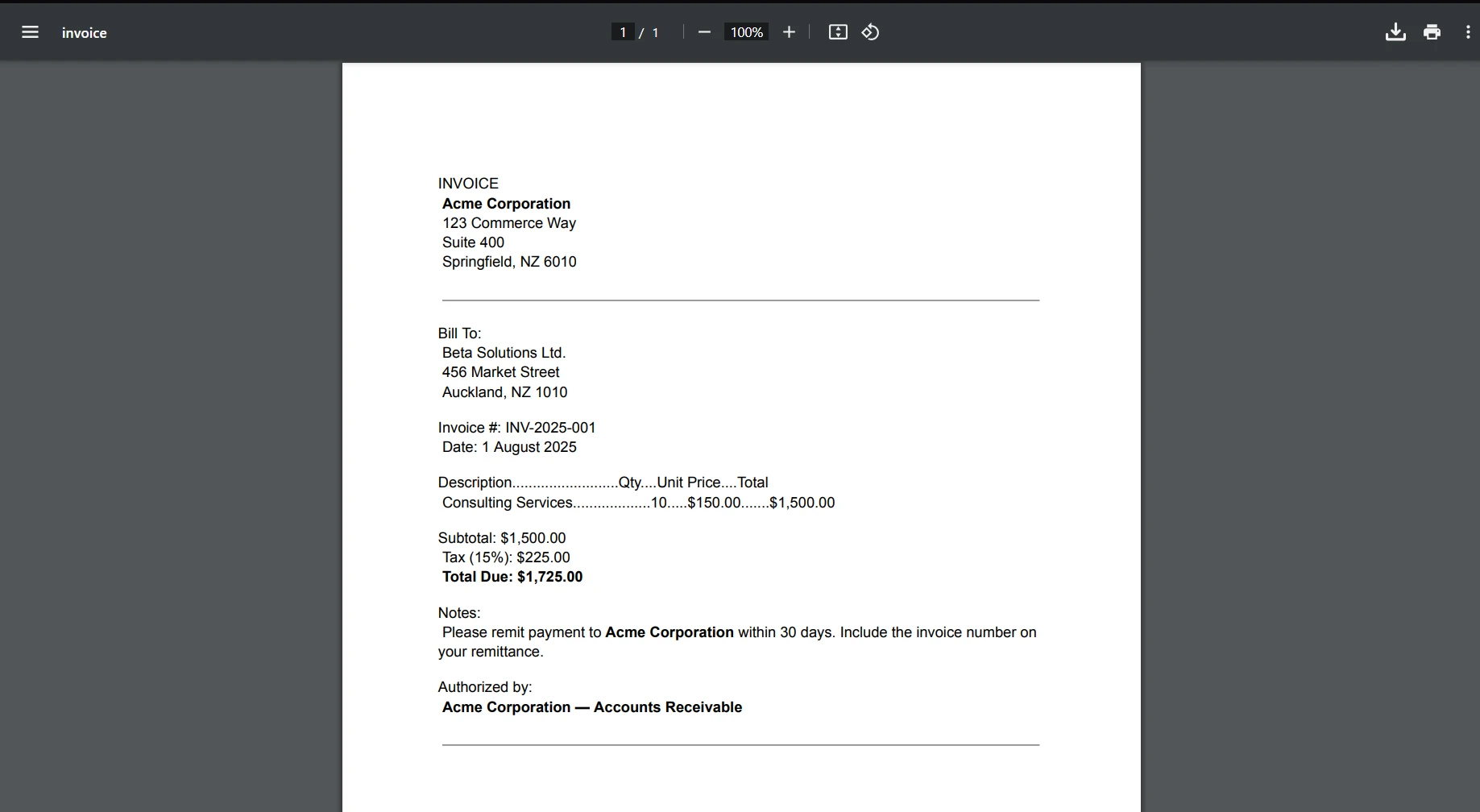
Ejecuta el código anterior en Visual Studio y observa el resultado.
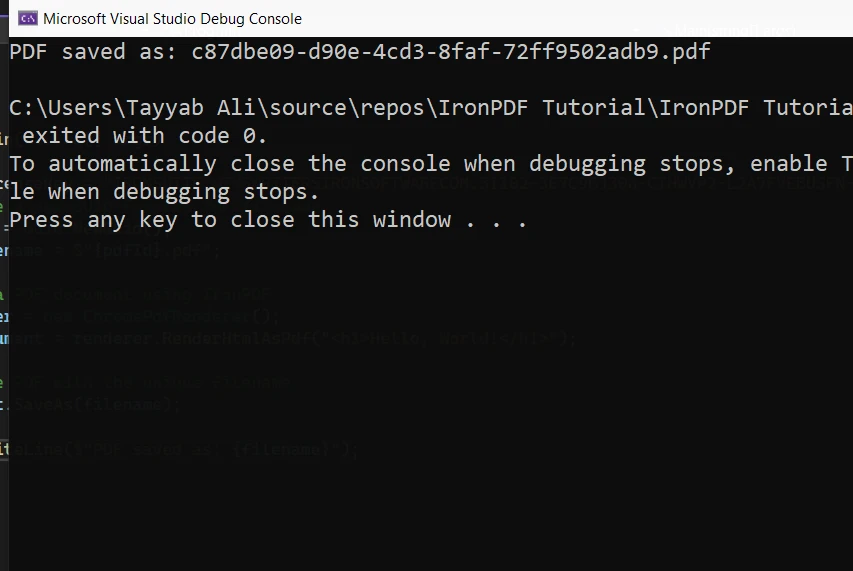
Usamos Guid.NewGuid() para crear un GUID aleatorio único para cada archivo PDF. Este GUID se convierte a una cadena y se utiliza como el nombre del archivo.
Conclusión
En este artículo, hemos cubierto los fundamentos de los GUIDs en C#. Has visto cómo generar nuevos GUIDs, compararlos, analizarlos desde cadenas y usarlos en escenarios prácticos como bases de datos. El método Guid.NewGuid() facilita la generación de una nueva instancia de un GUID, asegurando que cada identificador sea único en todos los sistemas. Los desarrolladores que trabajan en .NET pueden confiar en los GUIDs para proporcionar aleatoriedad y unicidad en sus aplicaciones.
IronPDF entiende la importancia de probar antes de invertir, por eso ofrecemos una prueba gratuita. Puedes evaluar la eficiencia del software sin costo alguno. Si lo encuentras beneficioso, las licencias comienzan en $999.