using IronPdf;

// Disable local disk access or cross-origin requests
Installation.EnableWebSecurity = true;

// Instantiate Renderer
var renderer = new ChromePdfRenderer();

// Create a PDF from a HTML string using C#
var pdf = renderer.RenderHtmlAsPdf("<h1>Hello World</h1>");

// Export to a file or Stream
pdf.SaveAs("output.pdf");

// Advanced Example with HTML Assets
// Load external html assets: Images, CSS and JavaScript.
// An optional BasePath 'C:\site\assets\' is set as the file location to load assets from
var myAdvancedPdf = renderer.RenderHtmlAsPdf("<img src='icons/iron.png'>", @"C:\site\assets\");
myAdvancedPdf.SaveAs("html-with-assets.pdf");
using IronPdf;// Disable local disk access or cross-origin requestsInstallation.EnableWebSecurity = true;// Instantiate Renderervar renderer = new ChromePdfRenderer();// Create a PDF from a HTML string using C#var pdf = renderer.RenderHtmlAsPdf("<h1>Hello World</h1>");// Export to a file or Streampdf.SaveAs("output.pdf");// Advanced Example with HTML Assets// Load external html assets: Images, CSS and JavaScript.// An optional BasePath 'C:\site\assets\' is set as the file location to load assets fromvar myAdvancedPdf = renderer.RenderHtmlAsPdf("<img src='icons/iron.png'>", @"C:\site\assets\");myAdvancedPdf.SaveAs("html-with-assets.pdf");
PM >Install-Package IronPdf
Install-Package IronPdf
ACTUALIZACIONES PARA DESARROLLADORES
Sendgrid .NET (Cómo Funciona para Desarrolladores)
[SendGrid](https://sendgrid.com/en-us), parte de Twilio SendGrid, ofrece un servicio basado en la nube para ayudar a los clientes a enviar correos electrónicos fácilmente, agilizando los procesos de comunicación. Al crear una cuenta de SendGrid, obtienes acceso a características como el relé SMTP y las claves API, haciendo que el envío de mensajes de correo electrónico sea eficiente. El relé SMTP es el núcleo de este proceso, ya que permite que tus correos sean enviados desde tu servidor a través del sistema de SendGrid. La función de dominio autenticado verifica tu dominio. Dado que SendGrid es de código abierto, puedes acceder a su repositorio en GitHub y ayudar a modificarlo.
En esta guía, pretendemos desglosar las características y funcionalidades de SendGrid .NET, guiándote a través de la configuración inicial, operaciones básicas y características más avanzadas. Ya sea que estés buscando enviar tu primer correo electrónico mediante código u optimizar tus campañas de correo electrónico, este artículo es tu punto de partida para dominar SendGrid .NET y su integración con [IronPDF para la manipulación de PDF](http://ironpdf.com).
## Cómo empezar con SendGrid .NET
Primero, necesitas configurar SendGrid .NET en tu proyecto. Comienza instalando el paquete de SendGrid .NET. Utiliza NuGet para esto. Abre Visual Studio, luego abre la Consola del Administrador de Paquetes. Escribe el siguiente comando:
```shell
:InstallCmd Install-Package SendGrid
```

Este comando añade SendGrid a tu proyecto. Después de la instalación, configura tu cuenta de SendGrid. Necesitas una clave API. Ve al [sitio web de SendGrid](https://sendgrid.com/en-us). Crea una cuenta si no tienes una. Una vez que inicies sesión, navega a Configuración. Encuentra **Claves API**. Haz clic en **Crear Clave API**. Dale un nombre y selecciona el nivel de acceso. Copia la clave API. Usarás esto en tu aplicación.
### Ejemplo de código básico
Ahora, enviemos un correo. Crea una nueva instancia de **SendGridClient**. Pasa tu clave API al constructor. Luego, crea un **SendGridMessage**. Establece los correos del remitente y destinatario. Añade un asunto y el contenido del correo electrónico. Finalmente, utiliza **SendGridClient** para enviar el mensaje. Aquí hay un ejemplo básico:
```csharp
using SendGrid;
using SendGrid.Helpers.Mail;
using System.Threading.Tasks;

// Asynchronous method to send an email using SendGrid
static async Task SendEmailAsync()
{
    // Initialize a SendGrid client with your API key
    var client = new SendGridClient("your_api_key");

    // Create a new email message
    var message = new SendGridMessage()
    {
        From = new EmailAddress("your_email@example.com", "Your Name"),
        Subject = "Hello World from SendGrid",
        PlainTextContent = "This is a test email.",
        HtmlContent = "<strong>This is a test email.</strong>"
    };

    // Add a recipient to your email message
    message.AddTo(new EmailAddress("recipient_email@example.com", "Recipient Name"));

    // Send the email and retrieve the response
    var response = await client.SendEmailAsync(message);
}
```
Este código envía un correo simple. Muestra los conceptos básicos de usar SendGrid .NET. Puedes expandir desde aquí para usar más características.
## Implementar características de SendGrid .NET
### Enviar correos electrónicos con contenido HTML personalizado
Para enviar un correo electrónico con contenido HTML, primero crea tu HTML. Luego, utiliza **SendGridMessage** para establecer **HtmlContent**. Esto te permite diseñar correos enriquecidos. Así es como:
```csharp
using SendGrid;
using SendGrid.Helpers.Mail;
using System.Threading.Tasks;
// Asynchronous method to send an email with custom HTML content
static async Task SendCustomHtmlEmailAsync()
{
// Initialize a SendGrid client with your API key
var client = new SendGridClient("your_api_key");
// Create a new email message with rich HTML content
var message = new SendGridMessage()
{
From = new EmailAddress("your_email@example.com", "Your Name"),
Subject = "Custom HTML Content",
HtmlContent = "<html><body><h1>This is a Heading</h1><p>This is a paragraph.</p></body></html>"
};
// Add a recipient to your email message
message.AddTo(new EmailAddress("recipient_email@example.com", "Recipient Name"));
// Send the email and retrieve the response
var response = await client.SendEmailAsync(message);
}
```
### Uso del servicio SMTP de SendGrid
A veces, puede que prefieras SMTP para enviar correos electrónicos. SendGrid también admite esto. Configura tus ajustes SMTP en SendGrid. Luego, utiliza estos ajustes en tu aplicación. Este método requiere configurar un cliente SMTP con los detalles del servidor de SendGrid. Configuración básica:
```csharp
using System.Net;
using System.Net.Mail;
// Method to send an email using SendGrid's SMTP service
void SendSmtpEmail()
{
// Configure SMTP client with SendGrid's server details
using (var client = new SmtpClient("smtp.sendgrid.net")
{
Port = 587,
Credentials = new NetworkCredential("apikey", "your_sendgrid_apikey"),
EnableSsl = true,
})
{
// Create a new mail message
var mailMessage = new MailMessage
{
From = new MailAddress("your_email@example.com"),
Subject = "Test SMTP Email",
Body = "This is a test email sent via SMTP.",
IsBodyHtml = true,
};
// Add a recipient to the mail message
mailMessage.To.Add("recipient_email@example.com");
// Send the email
client.Send(mailMessage);
}
}
```
### Gestión de campañas de correo electrónico
SendGrid .NET permite gestionar campañas de correo electrónico. Crear, enviar y seguir campañas a través de la API. Para una gestión detallada de campañas, consulta la documentación de la API de SendGrid. Esta función va más allá del envío básico de correos electrónicos, pero es valiosa para los esfuerzos de marketing.
### Manejo de correos electrónicos rebotados e informes de spam
Manejar rebotes e informes de spam es crucial. SendGrid .NET proporciona webhooks para estos eventos. Configura webhooks en tu panel de SendGrid. Luego, procesa estos eventos en tu aplicación. Esto mantiene tu lista de correo limpia y mejora la entregabilidad.
### Autenticación de dominios
La autenticación de dominio es importante para la entregabilidad del correo electrónico. Verifica la propiedad de tu dominio. En SendGrid, configura la autenticación de dominio a través del panel. Esto implica añadir registros DNS. Una vez verificado, los correos son más confiables para destinatarios y proveedores.
## Integre IronPDF con SendGrid
### Presentación de IronPDF
[Explorar las capacidades de IronPDF](/) es una biblioteca que permite a los desarrolladores crear, editar y extraer contenido PDF dentro de aplicaciones .NET. Proporciona un enfoque sencillo para tratar con archivos PDF de manera programática. Facilita el trabajo con archivos PDF sin necesitar un conocimiento profundo de las especificaciones PDF. Con IronPDF, los desarrolladores pueden [convertir HTML a PDF usando anclas de IronPDF](/examples/using-html-to-create-a-pdf/), editar PDFs existentes y extraer contenido.
### Use Case of Merging IronPDF with SendGrid C#
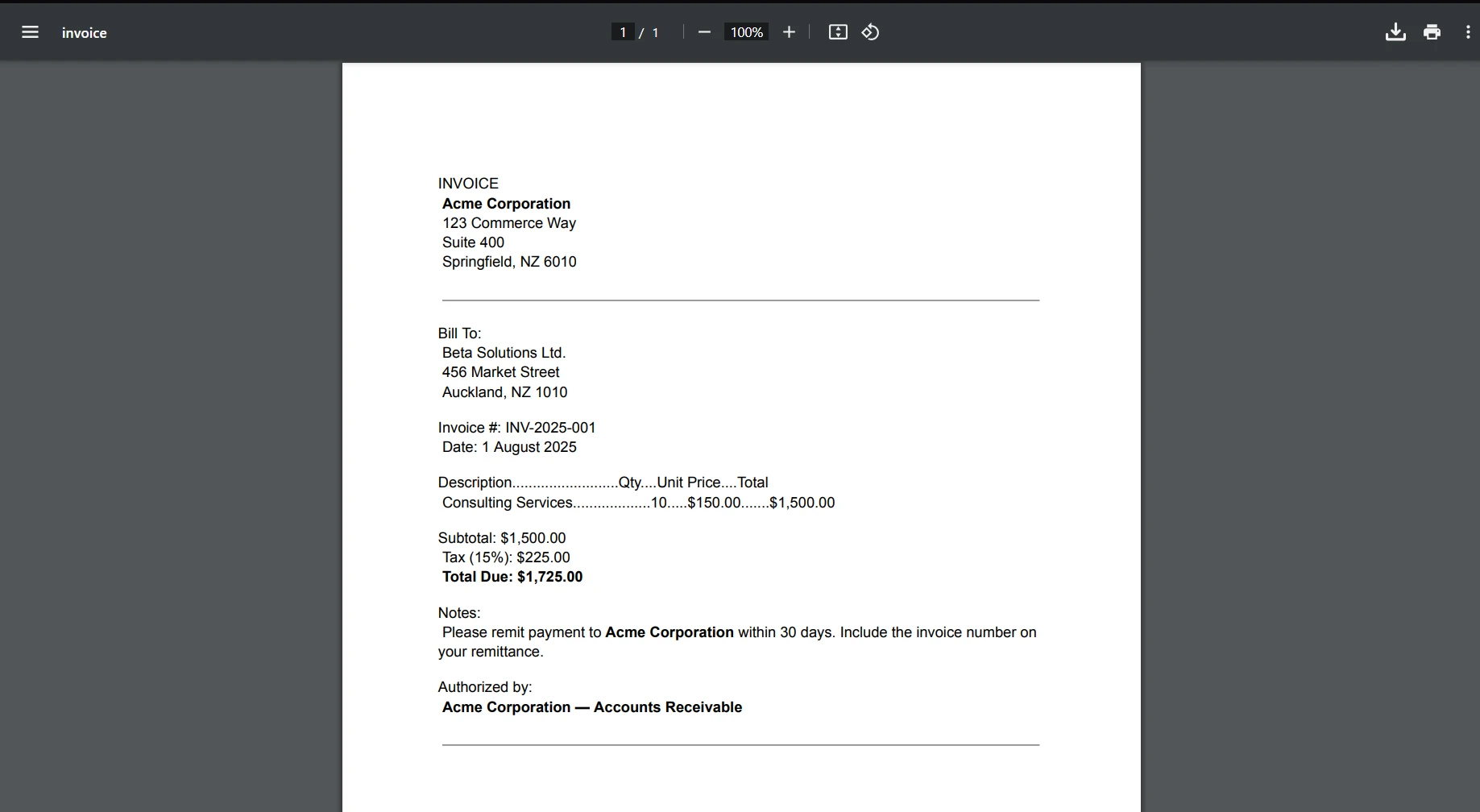
En una aplicación empresarial, se necesitan generar dinámicamente informes financieros, facturas o documentos personalizados y enviarlos por correo a clientes o partes interesadas. IronPDF puede ser utilizado para crear estos documentos a partir de plantillas o fuentes de datos, convirtiéndolos en formato PDF. Posteriormente, usando el cliente C# de SendGrid, estos documentos PDF pueden ser adjuntados a correos electrónicos y enviados automáticamente a los destinatarios previstos.
IronPDF se destaca en la conversión de [HTML a PDF](/tutorials/html-to-pdf/), asegurando la preservación precisa de los diseños y estilos originales. Es perfecto para crear PDFs a partir de contenido basado en la web como informes, facturas y documentación. Con soporte para archivos HTML, URLs y cadenas HTML en bruto, IronPDF produce fácilmente documentos PDF de alta calidad.
```csharp
using IronPdf;
class Program
{
static void Main(string[] args)
{
var renderer = new ChromePdfRenderer();
// 1. Convert HTML String to PDF
var htmlContent = "<h1>Hello, IronPDF!</h1><p>This is a PDF from an HTML string.</p>";
var pdfFromHtmlString = renderer.RenderHtmlAsPdf(htmlContent);
pdfFromHtmlString.SaveAs("HTMLStringToPDF.pdf");
// 2. Convert HTML File to PDF
var htmlFilePath = "path_to_your_html_file.html"; // Specify the path to your HTML file
var pdfFromHtmlFile = renderer.RenderHtmlFileAsPdf(htmlFilePath);
pdfFromHtmlFile.SaveAs("HTMLFileToPDF.pdf");
// 3. Convert URL to PDF
var url = "http://ironpdf.com"; // Specify the URL
var pdfFromUrl = renderer.RenderUrlAsPdf(url);
pdfFromUrl.SaveAs("URLToPDF.pdf");
}
}
```
### Instalar la biblioteca IronPDF
Para usar IronPDF, primero necesitas instalar el paquete NuGet. Primero, abre la consola del Administrador de Paquetes NuGet, luego ejecuta este comando:
```shell
:ProductInstall
```
### Ejemplo de código de caso de uso con detalles y pasos
#### Paso 1: Generar PDF con IronPDF
Primero, generamos un documento PDF. Crearemos un PDF simple a partir de una cadena HTML como ejemplo.
```csharp
using IronPdf;
// Instantiates a new HtmlToPdf object
var Renderer = new HtmlToPdf();
// Constructs a PDF from an HTML string
var PDF = Renderer.RenderHtmlAsPdf("<h1>Hello World</h1>");
// Define the output path for the PDF file
var outputPath = "example.pdf";
// Saves the generated PDF to the specified path
PDF.SaveAs(outputPath);
```
#### Paso 2: Configurar SendGrid
Asegúrate de tener el paquete NuGet de SendGrid instalado:
```shell
:InstallCmd Install-Package SendGrid
```
Luego, configura SendGrid en tu aplicación. Necesitarás una clave API de tu cuenta de SendGrid.
```csharp
using SendGrid;
using SendGrid.Helpers.Mail;
// Initialize SendGrid client with your API key
var apiKey = "your_sendgrid_api_key";
var client = new SendGridClient(apiKey);
```
### Paso 3: Crear y enviar correo electrónico con PDF adjunto
Ahora, crea un mensaje de correo electrónico y adjunta el PDF generado previamente. Finalmente, envía el correo electrónico a través de SendGrid.
```csharp
using System;
using System.IO;
using System.Threading.Tasks;
using SendGrid;
using SendGrid.Helpers.Mail;
// Asynchronous method to create and send an email with a PDF attachment
async Task SendEmailWithPdfAttachmentAsync()
{
// Define sender and recipient email addresses
var from = new EmailAddress("your_email@example.com", "Your Name");
var subject = "Sending with SendGrid is Fun";
var to = new EmailAddress("recipient_email@example.com", "Recipient Name");
var plainTextContent = "Hello, Email!";
var htmlContent = "<strong>Hello, Email!</strong>";
// Create a new email message
var msg = MailHelper.CreateSingleEmail(from, to, subject, plainTextContent, htmlContent);
// Attach the PDF
var bytes = File.ReadAllBytes("example.pdf");
var file = Convert.ToBase64String(bytes);
msg.AddAttachment("example.pdf", file);
// Send the email and retrieve the response
var response = await client.SendEmailAsync(msg);
}
```
Este ejemplo de código ilustra la generación de un documento PDF simple, adjuntándolo a un correo electrónico y enviándolo a través de SendGrid. Es un proceso sencillo que integra la generación de documentos y las capacidades de correo electrónico de IronPDF y SendGrid, respectivamente, en una aplicación .NET.
## Conclusión
En conclusión, esta guía proporciona una visión completa de la integración de SendGrid .NET para servicios de correo electrónico e IronPDF para la gestión de documentos PDF dentro de aplicaciones .NET. Siguiendo los pasos descritos, los desarrolladores pueden implementar funcionalidades de envío de correos electrónicos de manera eficiente con contenido HTML personalizable y opciones de servicio SMTP, y gestionar campañas de correo electrónico.
Además, la integración de IronPDF permite la generación dinámica y envío de documentos PDF, como informes financieros o facturas, mostrando un caso práctico de fusión de estas bibliotecas poderosas. Los desarrolladores interesados en explorar estas funcionalidades pueden aprovechar la [prueba gratuita de IronPDF](trial-license) antes de comprometerse con una licencia. [Detalles de la licencia de IronPDF y opciones de precios](licensing) comienzan desde `$liteLicense`.
SendGrid, parte de Twilio SendGrid, ofrece un servicio basado en la nube para ayudar a los clientes a enviar correos electrónicos fácilmente, agilizando los procesos de comunicación. Al crear una cuenta de SendGrid, obtienes acceso a características como el relé SMTP y las claves API, haciendo que el envío de mensajes de correo electrónico sea eficiente. El relé SMTP es el núcleo de este proceso, ya que permite que tus correos sean enviados desde tu servidor a través del sistema de SendGrid. La función de dominio autenticado verifica tu dominio. Dado que SendGrid es de código abierto, puedes acceder a su repositorio en GitHub y ayudar a modificarlo.
En esta guía, pretendemos desglosar las características y funcionalidades de SendGrid .NET, guiándote a través de la configuración inicial, operaciones básicas y características más avanzadas. Ya sea que estés buscando enviar tu primer correo electrónico mediante código u optimizar tus campañas de correo electrónico, este artículo es tu punto de partida para dominar SendGrid .NET y su integración con IronPDF para la manipulación de PDF.
Cómo empezar con SendGrid .NET
Primero, necesitas configurar SendGrid .NET en tu proyecto. Comienza instalando el paquete de SendGrid .NET. Utiliza NuGet para esto. Abre Visual Studio, luego abre la Consola del Administrador de Paquetes. Escribe el siguiente comando:
PM > Install-Package SendGrid
Install-Package SendGrid
Este comando añade SendGrid a tu proyecto. Después de la instalación, configura tu cuenta de SendGrid. Necesitas una clave API. Ve al sitio web de SendGrid. Crea una cuenta si no tienes una. Una vez que inicies sesión, navega a Configuración. Encuentra Claves API. Haz clic en Crear Clave API. Dale un nombre y selecciona el nivel de acceso. Copia la clave API. Usarás esto en tu aplicación.
Ejemplo de código básico
Ahora, enviemos un correo. Crea una nueva instancia de SendGridClient. Pasa tu clave API al constructor. Luego, crea un SendGridMessage. Establece los correos del remitente y destinatario. Añade un asunto y el contenido del correo electrónico. Finalmente, utiliza SendGridClient para enviar el mensaje. Aquí hay un ejemplo básico:
using SendGrid;using SendGrid.Helpers.Mail;using System.Threading.Tasks;// Asynchronous method to send an email using SendGridstatic async TaskSendEmailAsync(){ // Initialize a SendGrid client with your API key var client = new SendGridClient("your_api_key"); // Create a new email message var message = new SendGridMessage() {From = new EmailAddress("your_email@example.com", "Your Name"),Subject = "Hello World from SendGrid",PlainTextContent = "This is a test email.",HtmlContent = "<strong>This is a test email.</strong>" }; // Add a recipient to your email message message.AddTo(new EmailAddress("recipient_email@example.com", "Recipient Name")); // Send the email and retrieve the response var response = await client.SendEmailAsync(message);}
using SendGrid;
using SendGrid.Helpers.Mail;
using System.Threading.Tasks;

// Asynchronous method to send an email using SendGrid
static async Task SendEmailAsync()
{
    // Initialize a SendGrid client with your API key
    var client = new SendGridClient("your_api_key");

    // Create a new email message
    var message = new SendGridMessage()
    {
        From = new EmailAddress("your_email@example.com", "Your Name"),
        Subject = "Hello World from SendGrid",
        PlainTextContent = "This is a test email.",
        HtmlContent = "<strong>This is a test email.</strong>"
    };

    // Add a recipient to your email message
    message.AddTo(new EmailAddress("recipient_email@example.com", "Recipient Name"));

    // Send the email and retrieve the response
    var response = await client.SendEmailAsync(message);
}
ImportsSendGridImportsSendGrid.Helpers.MailImportsSystem.Threading.Tasks' Asynchronous method to send an email using SendGridSharedAsync Function SendEmailAsync() AsTask ' Initialize a SendGrid client with your API key Dim client = New SendGridClient("your_api_key") ' Create a new email message Dim message = New SendGridMessage() With { .From = New EmailAddress("your_email@example.com", "Your Name"), .Subject = "Hello World from SendGrid", .PlainTextContent = "This is a test email.", .HtmlContent = "<strong>This is a test email.</strong>" } ' Add a recipient to your email message message.AddTo(New EmailAddress("recipient_email@example.com", "Recipient Name")) ' Send the email and retrieve the response Dim response = Await client.SendEmailAsync(message)End Function
Imports SendGrid
Imports SendGrid.Helpers.Mail
Imports System.Threading.Tasks

' Asynchronous method to send an email using SendGrid
Shared Async Function SendEmailAsync() As Task
	' Initialize a SendGrid client with your API key
	Dim client = New SendGridClient("your_api_key")

	' Create a new email message
	Dim message = New SendGridMessage() With {
		.From = New EmailAddress("your_email@example.com", "Your Name"),
		.Subject = "Hello World from SendGrid",
		.PlainTextContent = "This is a test email.",
		.HtmlContent = "<strong>This is a test email.</strong>"
	}

	' Add a recipient to your email message
	message.AddTo(New EmailAddress("recipient_email@example.com", "Recipient Name"))

	' Send the email and retrieve the response
	Dim response = Await client.SendEmailAsync(message)
End Function
Este código envía un correo simple. Muestra los conceptos básicos de usar SendGrid .NET. Puedes expandir desde aquí para usar más características.
Implementar características de SendGrid .NET
Enviar correos electrónicos con contenido HTML personalizado
Para enviar un correo electrónico con contenido HTML, primero crea tu HTML. Luego, utiliza SendGridMessage para establecer HtmlContent. Esto te permite diseñar correos enriquecidos. Así es como:
using SendGrid;using SendGrid.Helpers.Mail;using System.Threading.Tasks;// Asynchronous method to send an email with custom HTML contentstatic async TaskSendCustomHtmlEmailAsync(){ // Initialize a SendGrid client with your API key var client = new SendGridClient("your_api_key"); // Create a new email message with rich HTML content var message = new SendGridMessage() {From = new EmailAddress("your_email@example.com", "Your Name"),Subject = "Custom HTML Content",HtmlContent = "<html><body><h1>This is a Heading</h1><p>This is a paragraph.</p></body></html>" }; // Add a recipient to your email message message.AddTo(new EmailAddress("recipient_email@example.com", "Recipient Name")); // Send the email and retrieve the response var response = await client.SendEmailAsync(message);}
using SendGrid;
using SendGrid.Helpers.Mail;
using System.Threading.Tasks;

// Asynchronous method to send an email with custom HTML content
static async Task SendCustomHtmlEmailAsync()
{
    // Initialize a SendGrid client with your API key
    var client = new SendGridClient("your_api_key");

    // Create a new email message with rich HTML content
    var message = new SendGridMessage()
    {
        From = new EmailAddress("your_email@example.com", "Your Name"),
        Subject = "Custom HTML Content",
        HtmlContent = "<html><body><h1>This is a Heading</h1><p>This is a paragraph.</p></body></html>"
    };

    // Add a recipient to your email message
    message.AddTo(new EmailAddress("recipient_email@example.com", "Recipient Name"));

    // Send the email and retrieve the response
    var response = await client.SendEmailAsync(message);
}
ImportsSendGridImportsSendGrid.Helpers.MailImportsSystem.Threading.Tasks' Asynchronous method to send an email with custom HTML contentSharedAsync Function SendCustomHtmlEmailAsync() AsTask ' Initialize a SendGrid client with your API key Dim client = New SendGridClient("your_api_key") ' Create a new email message with rich HTML content Dim message = New SendGridMessage() With { .From = New EmailAddress("your_email@example.com", "Your Name"), .Subject = "Custom HTML Content", .HtmlContent = "<html><body><h1>This is a Heading</h1><p>This is a paragraph.</p></body></html>" } ' Add a recipient to your email message message.AddTo(New EmailAddress("recipient_email@example.com", "Recipient Name")) ' Send the email and retrieve the response Dim response = Await client.SendEmailAsync(message)End Function
Imports SendGrid
Imports SendGrid.Helpers.Mail
Imports System.Threading.Tasks

' Asynchronous method to send an email with custom HTML content
Shared Async Function SendCustomHtmlEmailAsync() As Task
	' Initialize a SendGrid client with your API key
	Dim client = New SendGridClient("your_api_key")

	' Create a new email message with rich HTML content
	Dim message = New SendGridMessage() With {
		.From = New EmailAddress("your_email@example.com", "Your Name"),
		.Subject = "Custom HTML Content",
		.HtmlContent = "<html><body><h1>This is a Heading</h1><p>This is a paragraph.</p></body></html>"
	}

	' Add a recipient to your email message
	message.AddTo(New EmailAddress("recipient_email@example.com", "Recipient Name"))

	' Send the email and retrieve the response
	Dim response = Await client.SendEmailAsync(message)
End Function
Uso del servicio SMTP de SendGrid
A veces, puede que prefieras SMTP para enviar correos electrónicos. SendGrid también admite esto. Configura tus ajustes SMTP en SendGrid. Luego, utiliza estos ajustes en tu aplicación. Este método requiere configurar un cliente SMTP con los detalles del servidor de SendGrid. Configuración básica:
using System.Net;using System.Net.Mail;// Method to send an email using SendGrid's SMTP servicevoidSendSmtpEmail(){ // Configure SMTP client with SendGrid's server details using (var client = new SmtpClient("smtp.sendgrid.net") {Port = 587,Credentials = new NetworkCredential("apikey", "your_sendgrid_apikey"),EnableSsl = true, }) { // Create a new mail message var mailMessage = new MailMessage {From = new MailAddress("your_email@example.com"),Subject = "Test SMTP Email",Body = "This is a test email sent via SMTP.",IsBodyHtml = true, }; // Add a recipient to the mail message mailMessage.To.Add("recipient_email@example.com"); // Send the email client.Send(mailMessage); }}
using System.Net;
using System.Net.Mail;

// Method to send an email using SendGrid's SMTP service
void SendSmtpEmail()
{
    // Configure SMTP client with SendGrid's server details
    using (var client = new SmtpClient("smtp.sendgrid.net")
    {
        Port = 587,
        Credentials = new NetworkCredential("apikey", "your_sendgrid_apikey"),
        EnableSsl = true,
    })
    {
        // Create a new mail message
        var mailMessage = new MailMessage
        {
            From = new MailAddress("your_email@example.com"),
            Subject = "Test SMTP Email",
            Body = "This is a test email sent via SMTP.",
            IsBodyHtml = true,
        };

        // Add a recipient to the mail message
        mailMessage.To.Add("recipient_email@example.com");

        // Send the email
        client.Send(mailMessage);
    }
}
ImportsSystem.NetImportsSystem.Net.Mail' Method to send an email using SendGrid's SMTP servicePrivate Sub SendSmtpEmail() ' Configure SMTP client with SendGrid's server detailsUsing client = New SmtpClient("smtp.sendgrid.net") With { .Port = 587, .Credentials = New NetworkCredential("apikey", "your_sendgrid_apikey"), .EnableSsl = True } ' Create a new mail message Dim mailMessage As New MailMessageWith { .From = New MailAddress("your_email@example.com"), .Subject = "Test SMTP Email", .Body = "This is a test email sent via SMTP.", .IsBodyHtml = True } ' Add a recipient to the mail message mailMessage.To.Add("recipient_email@example.com") ' Send the email client.Send(mailMessage)EndUsingEnd Sub
Imports System.Net
Imports System.Net.Mail

' Method to send an email using SendGrid's SMTP service
Private Sub SendSmtpEmail()
	' Configure SMTP client with SendGrid's server details
	Using client = New SmtpClient("smtp.sendgrid.net") With {
		.Port = 587,
		.Credentials = New NetworkCredential("apikey", "your_sendgrid_apikey"),
		.EnableSsl = True
	}
		' Create a new mail message
		Dim mailMessage As New MailMessage With {
			.From = New MailAddress("your_email@example.com"),
			.Subject = "Test SMTP Email",
			.Body = "This is a test email sent via SMTP.",
			.IsBodyHtml = True
		}

		' Add a recipient to the mail message
		mailMessage.To.Add("recipient_email@example.com")

		' Send the email
		client.Send(mailMessage)
	End Using
End Sub
Gestión de campañas de correo electrónico
SendGrid .NET permite gestionar campañas de correo electrónico. Crear, enviar y seguir campañas a través de la API. Para una gestión detallada de campañas, consulta la documentación de la API de SendGrid. Esta función va más allá del envío básico de correos electrónicos, pero es valiosa para los esfuerzos de marketing.
Manejo de correos electrónicos rebotados e informes de spam
Manejar rebotes e informes de spam es crucial. SendGrid .NET proporciona webhooks para estos eventos. Configura webhooks en tu panel de SendGrid. Luego, procesa estos eventos en tu aplicación. Esto mantiene tu lista de correo limpia y mejora la entregabilidad.
Autenticación de dominios
La autenticación de dominio es importante para la entregabilidad del correo electrónico. Verifica la propiedad de tu dominio. En SendGrid, configura la autenticación de dominio a través del panel. Esto implica añadir registros DNS. Una vez verificado, los correos son más confiables para destinatarios y proveedores.
Integre IronPDF con SendGrid
Presentación de IronPDF
Explorar las capacidades de IronPDF es una biblioteca que permite a los desarrolladores crear, editar y extraer contenido PDF dentro de aplicaciones .NET. Proporciona un enfoque sencillo para tratar con archivos PDF de manera programática. Facilita el trabajo con archivos PDF sin necesitar un conocimiento profundo de las especificaciones PDF. Con IronPDF, los desarrolladores pueden convertir HTML a PDF usando anclas de IronPDF, editar PDFs existentes y extraer contenido.
Use Case of Merging IronPDF with SendGrid C#
En una aplicación empresarial, se necesitan generar dinámicamente informes financieros, facturas o documentos personalizados y enviarlos por correo a clientes o partes interesadas. IronPDF puede ser utilizado para crear estos documentos a partir de plantillas o fuentes de datos, convirtiéndolos en formato PDF. Posteriormente, usando el cliente C# de SendGrid, estos documentos PDF pueden ser adjuntados a correos electrónicos y enviados automáticamente a los destinatarios previstos.
IronPDF se destaca en la conversión de HTML a PDF, asegurando la preservación precisa de los diseños y estilos originales. Es perfecto para crear PDFs a partir de contenido basado en la web como informes, facturas y documentación. Con soporte para archivos HTML, URLs y cadenas HTML en bruto, IronPDF produce fácilmente documentos PDF de alta calidad.
using IronPdf;class Program{ static voidMain(string[] args) { var renderer = new ChromePdfRenderer(); // 1. Convert HTML String to PDF var htmlContent = "<h1>Hello, IronPDF!</h1><p>This is a PDF from an HTML string.</p>"; var pdfFromHtmlString = renderer.RenderHtmlAsPdf(htmlContent); pdfFromHtmlString.SaveAs("HTMLStringToPDF.pdf"); // 2. Convert HTML File to PDF var htmlFilePath = "path_to_your_html_file.html"; // Specify the path to your HTML file var pdfFromHtmlFile = renderer.RenderHtmlFileAsPdf(htmlFilePath); pdfFromHtmlFile.SaveAs("HTMLFileToPDF.pdf"); // 3. Convert URL to PDF var url = "http://ironpdf.com"; // Specify the URL var pdfFromUrl = renderer.RenderUrlAsPdf(url); pdfFromUrl.SaveAs("URLToPDF.pdf"); }}
using IronPdf;

class Program
{
    static void Main(string[] args)
    {
        var renderer = new ChromePdfRenderer();

        // 1. Convert HTML String to PDF
        var htmlContent = "<h1>Hello, IronPDF!</h1><p>This is a PDF from an HTML string.</p>";
        var pdfFromHtmlString = renderer.RenderHtmlAsPdf(htmlContent);
        pdfFromHtmlString.SaveAs("HTMLStringToPDF.pdf");

        // 2. Convert HTML File to PDF
        var htmlFilePath = "path_to_your_html_file.html"; // Specify the path to your HTML file
        var pdfFromHtmlFile = renderer.RenderHtmlFileAsPdf(htmlFilePath);
        pdfFromHtmlFile.SaveAs("HTMLFileToPDF.pdf");

        // 3. Convert URL to PDF
        var url = "http://ironpdf.com"; // Specify the URL
        var pdfFromUrl = renderer.RenderUrlAsPdf(url);
        pdfFromUrl.SaveAs("URLToPDF.pdf");
    }
}
ImportsIronPdfFriend Class ProgramShared Sub Main(ByVal args() AsString) Dim renderer = New ChromePdfRenderer() ' 1. Convert HTML String to PDF Dim htmlContent = "<h1>Hello, IronPDF!</h1><p>This is a PDF from an HTML string.</p>" Dim pdfFromHtmlString = renderer.RenderHtmlAsPdf(htmlContent) pdfFromHtmlString.SaveAs("HTMLStringToPDF.pdf") ' 2. Convert HTML File to PDF Dim htmlFilePath = "path_to_your_html_file.html" ' Specify the path to your HTML file Dim pdfFromHtmlFile = renderer.RenderHtmlFileAsPdf(htmlFilePath) pdfFromHtmlFile.SaveAs("HTMLFileToPDF.pdf") ' 3. Convert URL to PDF Dim url = "http://ironpdf.com" ' Specify the URL Dim pdfFromUrl = renderer.RenderUrlAsPdf(url) pdfFromUrl.SaveAs("URLToPDF.pdf") End SubEnd Class
Imports IronPdf

Friend Class Program
	Shared Sub Main(ByVal args() As String)
		Dim renderer = New ChromePdfRenderer()

		' 1. Convert HTML String to PDF
		Dim htmlContent = "<h1>Hello, IronPDF!</h1><p>This is a PDF from an HTML string.</p>"
		Dim pdfFromHtmlString = renderer.RenderHtmlAsPdf(htmlContent)
		pdfFromHtmlString.SaveAs("HTMLStringToPDF.pdf")

		' 2. Convert HTML File to PDF
		Dim htmlFilePath = "path_to_your_html_file.html" ' Specify the path to your HTML file
		Dim pdfFromHtmlFile = renderer.RenderHtmlFileAsPdf(htmlFilePath)
		pdfFromHtmlFile.SaveAs("HTMLFileToPDF.pdf")

		' 3. Convert URL to PDF
		Dim url = "http://ironpdf.com" ' Specify the URL
		Dim pdfFromUrl = renderer.RenderUrlAsPdf(url)
		pdfFromUrl.SaveAs("URLToPDF.pdf")
	End Sub
End Class
Instalar la biblioteca IronPDF
Para usar IronPDF, primero necesitas instalar el paquete NuGet. Primero, abre la consola del Administrador de Paquetes NuGet, luego ejecuta este comando:
PM > Install-Package IronPdf
Install-Package IronPdf
Ejemplo de código de caso de uso con detalles y pasos
Paso 1: Generar PDF con IronPDF
Primero, generamos un documento PDF. Crearemos un PDF simple a partir de una cadena HTML como ejemplo.
using IronPdf;// Instantiates a new HtmlToPdf objectvarRenderer = new HtmlToPdf();// Constructs a PDF from an HTML stringvarPDF = Renderer.RenderHtmlAsPdf("<h1>Hello World</h1>");// Define the output path for the PDF filevar outputPath = "example.pdf";// Saves the generated PDF to the specified pathPDF.SaveAs(outputPath);
using IronPdf;

// Instantiates a new HtmlToPdf object
var Renderer = new HtmlToPdf();

// Constructs a PDF from an HTML string
var PDF = Renderer.RenderHtmlAsPdf("<h1>Hello World</h1>");

// Define the output path for the PDF file
var outputPath = "example.pdf";

// Saves the generated PDF to the specified path
PDF.SaveAs(outputPath);
ImportsIronPdf' Instantiates a new HtmlToPdf objectPrivateRenderer = New HtmlToPdf()' Constructs a PDF from an HTML stringPrivatePDF = Renderer.RenderHtmlAsPdf("<h1>Hello World</h1>")' Define the output path for the PDF filePrivate outputPath = "example.pdf"' Saves the generated PDF to the specified pathPDF.SaveAs(outputPath)
Imports IronPdf

' Instantiates a new HtmlToPdf object
Private Renderer = New HtmlToPdf()

' Constructs a PDF from an HTML string
Private PDF = Renderer.RenderHtmlAsPdf("<h1>Hello World</h1>")

' Define the output path for the PDF file
Private outputPath = "example.pdf"

' Saves the generated PDF to the specified path
PDF.SaveAs(outputPath)
Paso 2: Configurar SendGrid
Asegúrate de tener el paquete NuGet de SendGrid instalado:
PM > Install-Package SendGrid
Install-Package SendGrid
Luego, configura SendGrid en tu aplicación. Necesitarás una clave API de tu cuenta de SendGrid.
using SendGrid;using SendGrid.Helpers.Mail;// Initialize SendGrid client with your API keyvar apiKey = "your_sendgrid_api_key";var client = new SendGridClient(apiKey);
using SendGrid;
using SendGrid.Helpers.Mail;

// Initialize SendGrid client with your API key
var apiKey = "your_sendgrid_api_key";
var client = new SendGridClient(apiKey);
ImportsSendGridImportsSendGrid.Helpers.Mail' Initialize SendGrid client with your API keyPrivate apiKey = "your_sendgrid_api_key"Private client = New SendGridClient(apiKey)
Imports SendGrid
Imports SendGrid.Helpers.Mail

' Initialize SendGrid client with your API key
Private apiKey = "your_sendgrid_api_key"
Private client = New SendGridClient(apiKey)
Paso 3: Crear y enviar correo electrónico con PDF adjunto
Ahora, crea un mensaje de correo electrónico y adjunta el PDF generado previamente. Finalmente, envía el correo electrónico a través de SendGrid.
using System;using System.IO;using System.Threading.Tasks;using SendGrid;using SendGrid.Helpers.Mail;// Asynchronous method to create and send an email with a PDF attachmentasync TaskSendEmailWithPdfAttachmentAsync(){ // Define sender and recipient email addresses var from = new EmailAddress("your_email@example.com", "Your Name"); var subject = "Sending with SendGrid is Fun"; var to = new EmailAddress("recipient_email@example.com", "Recipient Name"); var plainTextContent = "Hello, Email!"; var htmlContent = "<strong>Hello, Email!</strong>"; // Create a new email message var msg = MailHelper.CreateSingleEmail(from, to, subject, plainTextContent, htmlContent); // Attach the PDF var bytes = File.ReadAllBytes("example.pdf"); var file = Convert.ToBase64String(bytes); msg.AddAttachment("example.pdf", file); // Send the email and retrieve the response var response = await client.SendEmailAsync(msg);}
using System;
using System.IO;
using System.Threading.Tasks;
using SendGrid;
using SendGrid.Helpers.Mail;

// Asynchronous method to create and send an email with a PDF attachment
async Task SendEmailWithPdfAttachmentAsync()
{
    // Define sender and recipient email addresses
    var from = new EmailAddress("your_email@example.com", "Your Name");
    var subject = "Sending with SendGrid is Fun";
    var to = new EmailAddress("recipient_email@example.com", "Recipient Name");
    var plainTextContent = "Hello, Email!";
    var htmlContent = "<strong>Hello, Email!</strong>";

    // Create a new email message
    var msg = MailHelper.CreateSingleEmail(from, to, subject, plainTextContent, htmlContent);

    // Attach the PDF
    var bytes = File.ReadAllBytes("example.pdf");
    var file = Convert.ToBase64String(bytes);
    msg.AddAttachment("example.pdf", file);

    // Send the email and retrieve the response
    var response = await client.SendEmailAsync(msg);
}
ImportsSystemImportsSystem.IOImportsSystem.Threading.TasksImportsSendGridImportsSendGrid.Helpers.Mail' Asynchronous method to create and send an email with a PDF attachmentAsync Function SendEmailWithPdfAttachmentAsync() AsTask ' Define sender and recipient email addresses Dim from = New EmailAddress("your_email@example.com", "Your Name") Dim subject = "Sending with SendGrid is Fun" Dim [to] = New EmailAddress("recipient_email@example.com", "Recipient Name") Dim plainTextContent = "Hello, Email!" Dim htmlContent = "<strong>Hello, Email!</strong>" ' Create a new email message Dim msg = MailHelper.CreateSingleEmail(from, [to], subject, plainTextContent, htmlContent) ' Attach the PDF Dim bytes = File.ReadAllBytes("example.pdf") Dim file = Convert.ToBase64String(bytes) msg.AddAttachment("example.pdf", file) ' Send the email and retrieve the response Dim response = Await client.SendEmailAsync(msg)End Function
Imports System
Imports System.IO
Imports System.Threading.Tasks
Imports SendGrid
Imports SendGrid.Helpers.Mail

' Asynchronous method to create and send an email with a PDF attachment
Async Function SendEmailWithPdfAttachmentAsync() As Task
	' Define sender and recipient email addresses
	Dim from = New EmailAddress("your_email@example.com", "Your Name")
	Dim subject = "Sending with SendGrid is Fun"
	Dim [to] = New EmailAddress("recipient_email@example.com", "Recipient Name")
	Dim plainTextContent = "Hello, Email!"
	Dim htmlContent = "<strong>Hello, Email!</strong>"

	' Create a new email message
	Dim msg = MailHelper.CreateSingleEmail(from, [to], subject, plainTextContent, htmlContent)

	' Attach the PDF
	Dim bytes = File.ReadAllBytes("example.pdf")
	Dim file = Convert.ToBase64String(bytes)
	msg.AddAttachment("example.pdf", file)

	' Send the email and retrieve the response
	Dim response = Await client.SendEmailAsync(msg)
End Function
Este ejemplo de código ilustra la generación de un documento PDF simple, adjuntándolo a un correo electrónico y enviándolo a través de SendGrid. Es un proceso sencillo que integra la generación de documentos y las capacidades de correo electrónico de IronPDF y SendGrid, respectivamente, en una aplicación .NET.
Conclusión
En conclusión, esta guía proporciona una visión completa de la integración de SendGrid .NET para servicios de correo electrónico e IronPDF para la gestión de documentos PDF dentro de aplicaciones .NET. Siguiendo los pasos descritos, los desarrolladores pueden implementar funcionalidades de envío de correos electrónicos de manera eficiente con contenido HTML personalizable y opciones de servicio SMTP, y gestionar campañas de correo electrónico.
Además, la integración de IronPDF permite la generación dinámica y envío de documentos PDF, como informes financieros o facturas, mostrando un caso práctico de fusión de estas bibliotecas poderosas. Los desarrolladores interesados en explorar estas funcionalidades pueden aprovechar la prueba gratuita de IronPDF antes de comprometerse con una licencia. Detalles de la licencia de IronPDF y opciones de precios comienzan desde $999.
Jacob Mellor es Director de Tecnología de Iron Software y un ingeniero visionario pionero en la tecnología C# PDF. Como desarrollador original de la base de código principal de Iron Software, ha dado forma a la arquitectura de productos de la empresa desde su creación, transformándola, junto con el director ejecutivo Cameron Rimington, en una empresa de más de 50 personas que presta servicios a la NASA, Tesla y organismos gubernamentales de todo el mundo.