


Actualizado 21 de abril de 2026
Cómo Convertir TIFF A PDF en Java
Esta guía integral te llevará a través de los pasos sobre cómo convertir imágenes TIFF a PDF sin problemas en Java usando IronPDF.
Leer más

Este artículo discutirá la conversión de PDF y cómo convertir archivos a PDF usando Java y también introducirá IronPDF, una Biblioteca de PDF de Java.
IronPDF es una biblioteca de PDF de Java de Iron Software que permite a los desarrolladores crear, editar y manipular documentos PDF fácilmente. Proporciona una API fácil de usar para convertir contenido HTML en documentos PDF, CSS y JavaScript, así como una amplia gama de herramientas para personalizar y modificar archivos PDF existentes.
IronPDF ofrece excelente soporte para tecnologías web modernas como CSS3 y JavaScript, lo que permite crear documentos y páginas PDF que incluyen características avanzadas como formularios interactivos con ejemplos de IronPDF y extracción de medios incrustados.
Los desarrolladores pueden usar la sencilla API de IronPDF para generar PDFs desde cero o convertir documentos HTML existentes a PDF. La biblioteca también ofrece una gama de opciones de personalización, permitiendo a los desarrolladores añadir encabezados y pies de página personalizados a PDFs, marcas de agua para fines de seguridad, imágenes y otras características a sus documentos PDF.
La biblioteca está diseñada para ser rápida y eficiente, lo que significa que puede manejar archivos PDF grandes y documentos complejos con facilidad. IronPDF también soporta multi-threading, permitiendo a los desarrolladores generar documentos PDF en paralelo y mejorar el rendimiento general.
La instalación de la Biblioteca Java de IronPDF en su proyecto Maven es un proceso sencillo. Siga los siguientes pasos para instalar la biblioteca utilizando la dependencia proporcionada:
pom.xml de tu proyecto.Desplácese hacia abajo hasta la sección de dependencias y añada el siguiente código:
<dependency>
    <groupId>com.ironsoftware</groupId>
    <artifactId>ironpdf</artifactId>
    <version>YOUR_VERSION</version>
</dependency>
<dependency>
    <groupId>org.slf4j</groupId>
    <artifactId>slf4j-simple</artifactId>
    <version>1.7.30</version>
</dependency>Este código añade la biblioteca Java de IronPDF y la biblioteca de registro slf4j-simple como dependencias para tu proyecto.
pom.xml.Ahora puede utilizar la biblioteca de Java IronPDF en su proyecto. Para ello, añada la siguiente declaración de importación a su clase Java:
import com.ironsoftware.ironpdf.*;Ahora puede utilizar la API de IronPDF for Java para crear, editar y manipular documentos PDF.
Ha instalado con éxito la biblioteca de Java IronPDF en su proyecto Maven utilizando la dependencia proporcionada. Ahora puede usar la biblioteca para convertir documentos HTML a PDF, crear documentos PDF desde cero y modificar documentos PDF existentes.
Para convertir contenido HTML en un archivo PDF utilizando IronPDF for Java, puede usar el siguiente código Java:
import com.ironsoftware.ironpdf.*;
import java.io.IOException;
import java.nio.file.Paths;

public class HtmlToPdfConverter {
    public static void main(String[] args) {
        // Apply your license key
        License.setLicenseKey("YOUR-LICENSE-KEY");

        // Set a log path
        Settings.setLogPath(Paths.get("C:/tmp/IronPdfEngine.log"));

        // Render the HTML as a PDF
        PdfDocument myPdf = PdfDocument.renderHtmlAsPdf("<h1>Hello World</h1> Made with IronPDF!");

        // Save the PdfDocument to a file
        myPdf.saveAs(Paths.get("html_saved.pdf"));
    }
}El programa anterior establece la clave de licencia utilizando el método License.setLicenseKey. A continuación, establece la ruta del registro utilizando el método Settings.setLogPath para especificar la carpeta de salida donde se debe guardar el archivo de registro.
A continuación, utiliza el método [PdfDocument.renderHtmlAsPdf](/java/object-reference/api/com/ironsoftware/ironpdf/PdfDocument.html#renderHtmlAsPdf(java.lang.String) para convertir el HTML en un documento PDF. El contenido HTML se pasa como un argumento de cadena a este método. En este ejemplo, el contenido HTML es un simple mensaje "Hola Mundo".
Una vez creado el documento PDF, el programa lo guarda en un archivo utilizando el método [saveAs](/java/object-reference/api/com/ironsoftware/ironpdf/PdfDocument.html#saveAs(java.lang.String), especificando la ruta del archivo como argumento. En este ejemplo, el archivo se guarda como "html_saved.pdf" en el directorio actual.
Usar el archivo HTML para generar archivos PDF es una tarea compleja. Pero IronPDF lo hace muy fácil y con la ayuda de IronPDF, podemos realizar esta tarea con pocas líneas de código.
import com.ironsoftware.ironpdf.*;
import java.io.IOException;
import java.nio.file.Paths;

public class HtmlFileToPdfConverter {
    public static void main(String[] args) {
        // Apply your license key
        License.setLicenseKey("YOUR-LICENSE-KEY");

        // Set a log path
        Settings.setLogPath(Paths.get("C:/tmp/IronPdfEngine.log"));

        // Render the HTML file as a PDF
        PdfDocument myPdf = PdfDocument.renderHtmlFileAsPdf("invoice.html");

        // Save the PdfDocument to a file
        myPdf.saveAs(Paths.get("html_file_saved.pdf"));
    }
}Primero, se importa la biblioteca IronPDF junto con las clases requeridas de Java IO. Se establece una clave de licencia para habilitar el uso de la biblioteca IronPDF. Se establece la ruta de registro en el directorio especificado para fines de registro.
A continuación, el archivo HTML se convierte en un documento PDF utilizando el método IronPDF [renderHtmlFileAsPdf](/java/object-reference/api/com/ironsoftware/ironpdf/PdfDocument.html#renderHtmlFileAsPdf(java.lang.String). El documento PDF resultante se almacena en una variable denominada myPdf.
Por último, el documento PDF se guarda en un archivo utilizando el método saveAs, con la ruta del archivo de salida especificada.
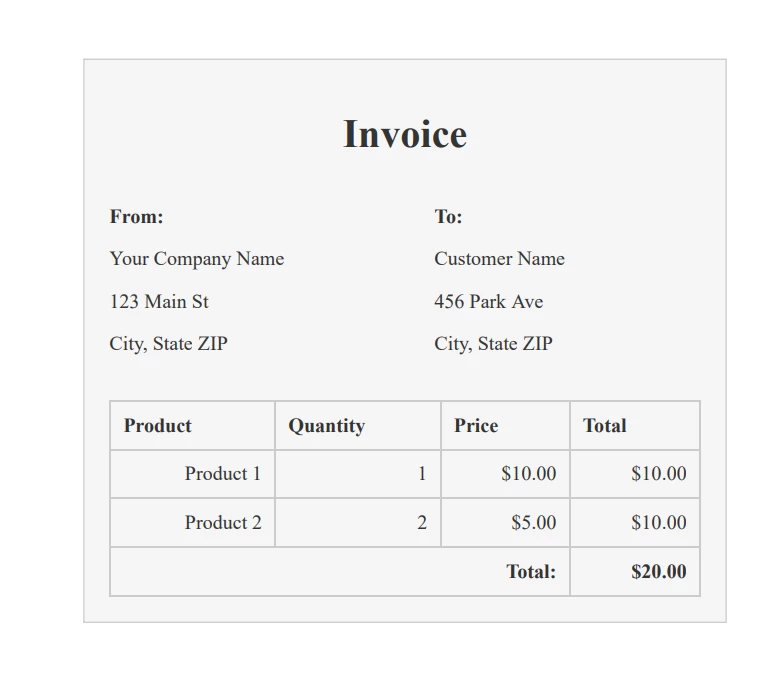 Salida del Archivo PDF
El código proporcionado se puede usar para convertir cualquier URL a un documento PDF rápidamente y guardarlo en un archivo utilizando la biblioteca IronPDF.
import com.ironsoftware.ironpdf.*;
import java.io.IOException;
import java.nio.file.Paths;

public class UrlToPdfConverter {
    public static void main(String[] args) {
        // Apply your license key
        License.setLicenseKey("YOUR-LICENSE-KEY");

        // Set a log path
        Settings.setLogPath(Paths.get("C:/tmp/IronPdfEngine.log"));

        // Render the URL as a PDF
        PdfDocument myPdf = PdfDocument.renderUrlAsPdf("https://ironpdf.com");

        // Save the PdfDocument to a file
        myPdf.saveAs(Paths.get("url.pdf"));
    }
}Aquí están los pasos para convertir una URL a PDF:
License.setLicenseKey. Puede obtener una clave de licencia del sitio web de IronPDF.Settings.setLogPath. Este paso es opcional pero recomendado para fines de depuración.PdfDocument.renderUrlAsPdf](/java/object-reference/api/com/ironsoftware/ironpdf/PdfDocument.html#renderUrlAsPdf(java.lang.String) para convertir la URL en un PDF. Este método devuelve un objeto PdfDocument que representa el PDF generado.PdfDocument.saveAs](/java/object-reference/api/com/ironsoftware/ironpdf/PdfDocument.html#saveAs(java.lang.String) para guardar el PDF en un archivo. Este método toma un objeto Path que representa la ruta del archivo donde se debe guardar el PDF.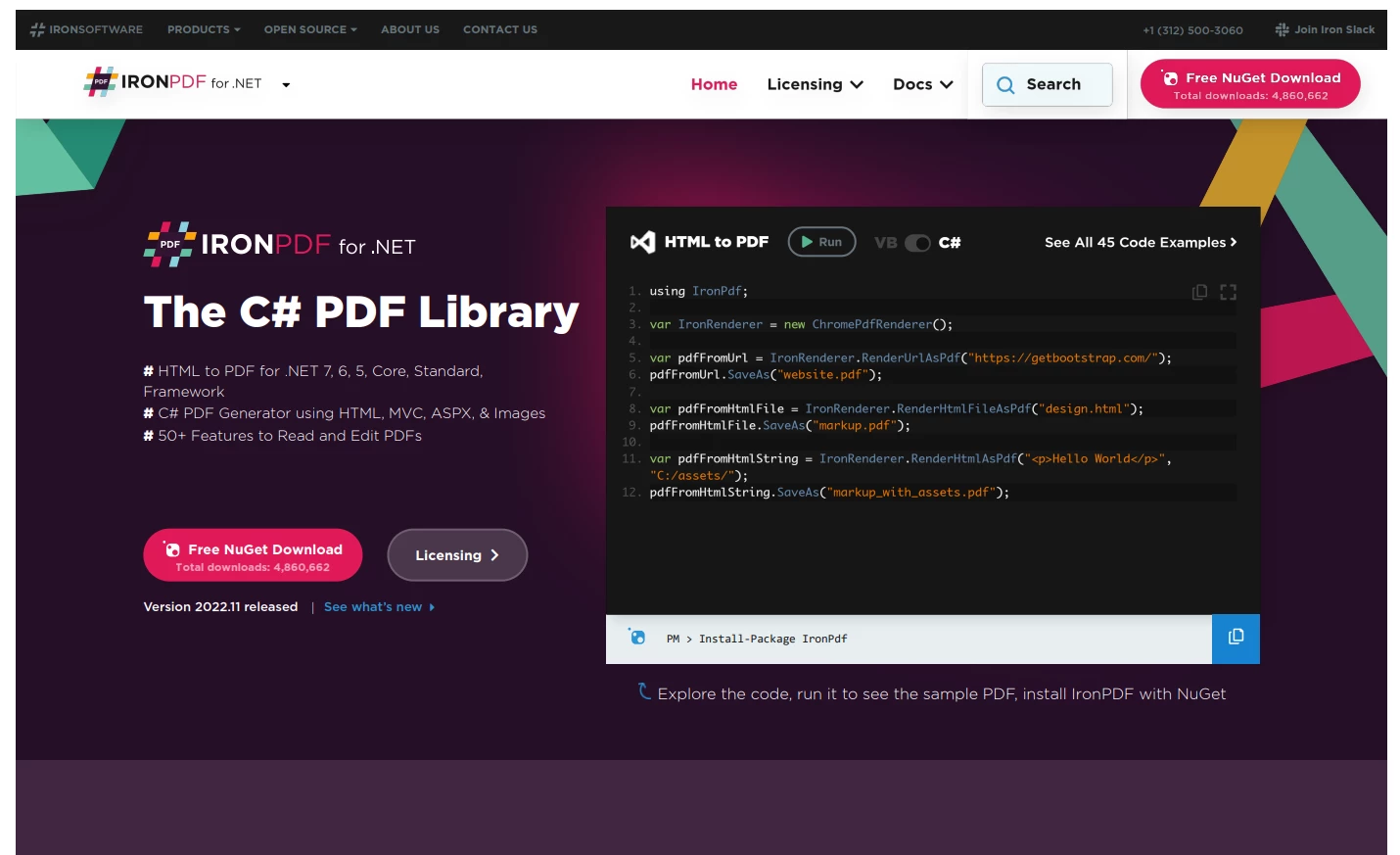 Salida del Archivo PDF
El artículo destaca la importancia de usar el formato PDF en la era digital actual e introduce IronPDF como una biblioteca de PDF de Java que ayuda a los desarrolladores a crear, editar y manipular documentos PDF. IronPDF es compatible con tecnologías web contemporáneas, como CSS3 y JavaScript, y cuenta con una API sencilla que permite a los desarrolladores generar archivos PDF desde cero o convertir documentos HTML existentes a PDF.
Además, el artículo proporciona ejemplos prácticos para demostrar cómo IronPDF puede usarse para convertir archivos HTML, contenido HTML y URLs en documentos PDF. El modelo de precios de las opciones de licencia de IronPDF comienza en $999 e incluye una prueba gratuita para que los desarrolladores prueben el producto antes de comprarlo.

Curtis Chau tiene una licenciatura en Ciencias de la Computación (Carleton University) y se especializa en el desarrollo front-end con experiencia en Node.js, TypeScript, JavaScript y React. Apasionado por crear interfaces de usuario intuitivas y estéticamente agradables, disfruta trabajando con frameworks modernos y creando manuales bien estructurados y visualmente atractivos.

IronPDF es parte de IRONSUITE
10 productos API .NET para tus documentos de oficina











Cuando necesitas que tu PDF se parezca al HTML, rápido.

