from ironpdf import *

# Instantiate Renderer
renderer = ChromePdfRenderer()

# Create a PDF from a HTML string using Python
pdf = renderer.RenderHtmlAsPdf("<h1>Hello World</h1>")

# Export to a file or Stream
pdf.SaveAs("output.pdf")

# Advanced Example with HTML Assets
# Load external html assets: Images, CSS and JavaScript.
# An optional BasePath 'C:\site\assets\' is set as the file location to load assets from
myAdvancedPdf = renderer.RenderHtmlAsPdf("<img src='icons/iron.png'>", r"C:\site\assets")
myAdvancedPdf.SaveAs("html-with-assets.pdf")
from ironpdf import *# Instantiate Rendererrenderer = ChromePdfRenderer()# Create a PDF from a HTML string using Pythonpdf = renderer.RenderHtmlAsPdf("<h1>Hello World</h1>")# Export to a file or Streampdf.SaveAs("output.pdf")# Advanced Example with HTML Assets# Load external html assets: Images, CSS and JavaScript.# An optional BasePath 'C:\site\assets\' is set as the file location to load assets frommyAdvancedPdf = renderer.RenderHtmlAsPdf("<img src='icons/iron.png'>", r"C:\site\assets")myAdvancedPdf.SaveAs("html-with-assets.pdf")
Hay escenarios donde es necesario aplanar un PDF, lo que significa eliminar estos elementos interactivos y convertirlos en un formato estático y no editable. En Python, es posible lograr esto usando la biblioteca [IronPDF](/python/). Este artículo profundizará en cómo aplanar un archivo PDF usando **IronPDF**.
<div class="hsg-featured-snippet">
<h2>Cómo Aplanar Un Archivo PDF en Python</h2>
<ol>
<li><a class="js-modal-open" data-modal-id="download-modal" href="#download-modal">Descargue la biblioteca Python para aplanar un archivo PDF</a></li>
<li>Preparar el archivo PDF para ser aplanado</li>
<li>Importe el archivo PDF mediante el método <code>FromFile</code></li>
<li>Utilizar el método <code>Flatten</code> para aplanar un archivo PDF</li>
<li>Exporte el archivo PDF aplanado con el método <code>SaveAs</code></li>
</ol>
</div>
## IronPDF
Python es un lenguaje de programación que ayuda a los programadores a diseñar interfaces gráficas de usuario de manera rápida y sencilla. Python también es mucho más dinámico para los programadores que otros lenguajes. Como resultado, introducir la biblioteca [IronPDF](/python/) a Python es un procedimiento sencillo. Para desarrollar rápidamente y de manera segura una interfaz gráfica de usuario completamente funcional, se puede usar una amplia gama de herramientas preinstaladas, incluyendo PyQt, wxWidgets, Kivy, y muchos otros paquetes y bibliotecas. Podemos incorporar una serie de características de otros frameworks, como .NET Core, usando IronPDF, que no solo admite Python. Haz clic [aquí](/python/) para aprender más sobre Python IronPDF.
IronPDF simplifica el diseño y desarrollo web en Python. Django, Flask y Pyramid son tres paradigmas de desarrollo web en Python que han visto una amplia aceptación como resultado. Sólo un puñado de los sitios web y servicios en línea que han utilizado estos frameworks incluyen Reddit, Mozilla y Spotify.
### Características de IronPDF
- La [creación de documentos PDF](/python/tutorials/html-to-pdf/) a partir de una variedad de fuentes, incluyendo HTML, HTML5, ASPX y Razor/MVC View, es posible con IronPDF. Ofrece la opción de crear archivos PDF a partir de páginas HTML e imágenes.
- El kit de herramientas de IronPDF puede ayudar con una variedad de tareas, como crear PDFs interactivos, completar y enviar [formularios interactivos](/python/examples/form-data/), [dividir](/python/blog/using-ironpdf-for-python/split-pdf-python-tutorial/) y [combinar](/python/how-to/python-merge-pdf/) archivos PDF, extraer texto e imágenes, buscar texto dentro de archivos PDF, [rasterizar PDFs a imágenes](/python/examples/rasterize-a-pdf-to-images/), cambiar tamaños de fuente, y convertir archivos PDF.
- Con soporte para agentes de usuario, proxies, cookies, encabezados HTTP y variables de formulario, IronPDF proporciona validación de formularios de inicio de sesión en HTML.
- [Nombres de usuario y contraseñas](/python/examples/security-and-metadata/) son utilizados por IronPDF para otorgar acceso a documentos que están asegurados.
- IronPDF puede [imprimir un archivo PDF](/python/how-to/python-print-pdf/) desde varias fuentes, como una cadena, flujo o URL, con solo unas pocas líneas de código.
Con la ayuda de IronPDF, se vuelve fácil generar documentos PDF aplanados.
## Configuración de Python
### Configuración del entorno
Comprueba que Python está instalado en tu PC. Visita el sitio web oficial de Python para [descargar](https://www.python.org/downloads/) e instalar la versión más reciente de Python que sea compatible con tu sistema operativo. Una vez que Python esté instalado, separa los requisitos para tu proyecto creando un entorno virtual. El módulo `venv` te permite crear y gestionar entornos virtuales para proporcionar a tu proyecto de conversión un espacio de trabajo ordenado e independiente.
### Nueva iniciativa en PyCharm
[PyCharm](https://www.jetbrains.com/pycharm/) es recomendado como un IDE para escribir código Python, para este tutorial.
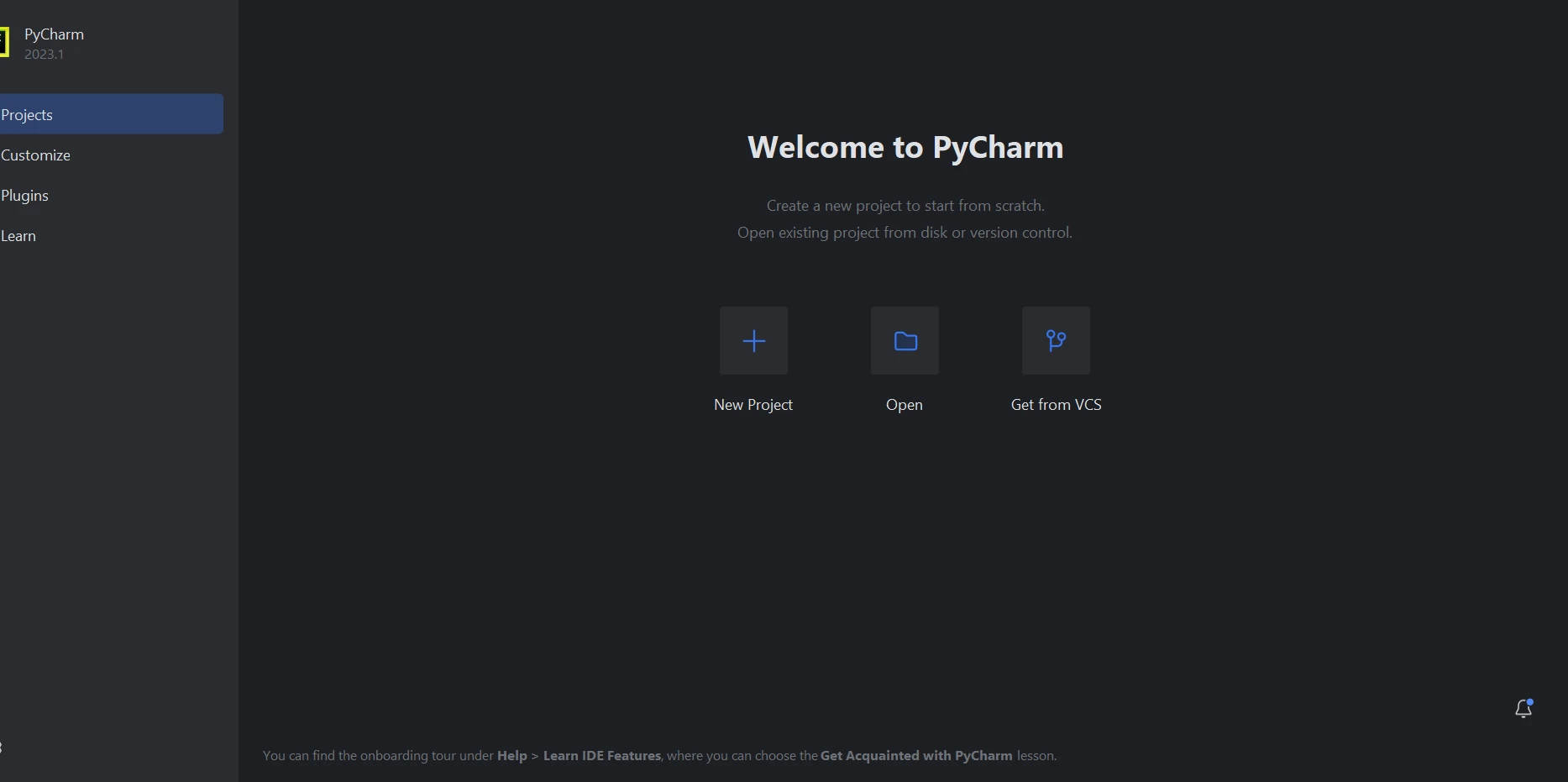
Selecciona "Nuevo Proyecto" una vez que el IDE de PyCharm haya iniciado.
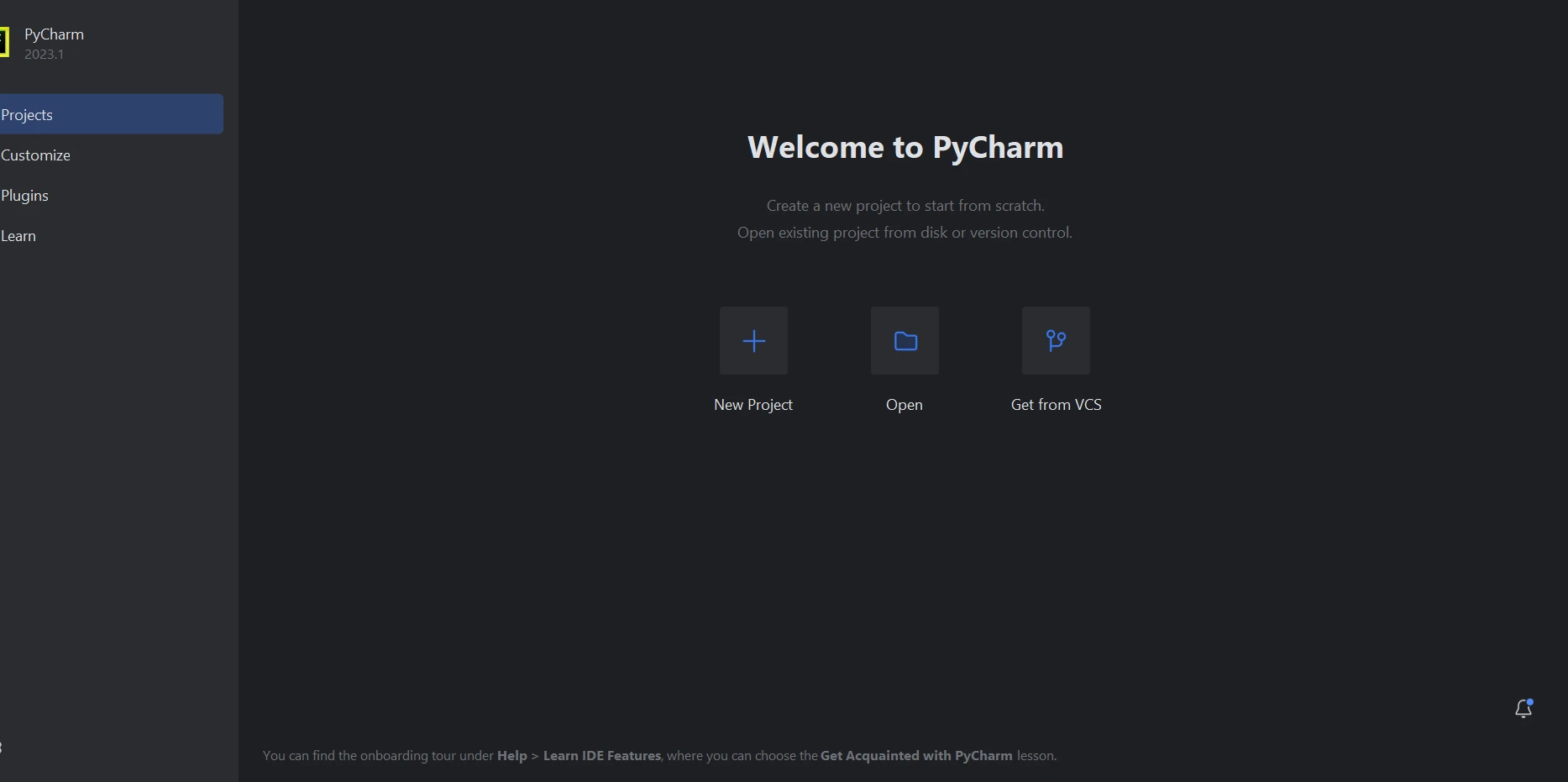
**Crear un Nuevo Proyecto en PyCharm**
Cuando seleccionas "Nuevo Proyecto", se abrirá una nueva ventana donde puedes especificar el entorno y la ubicación del proyecto. La imagen a continuación puede ayudarte a ver esto.
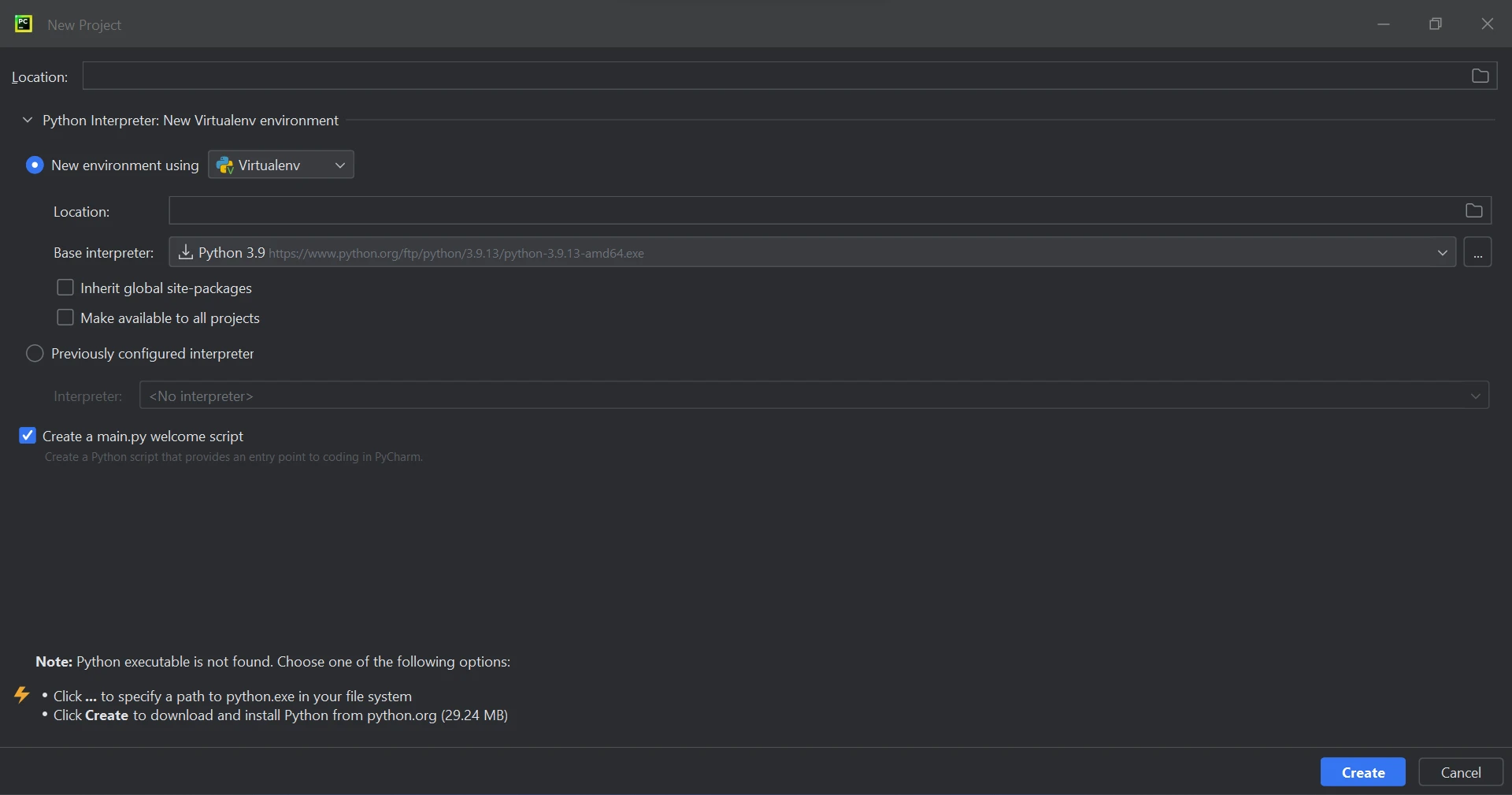
**Especificar el entorno y la ubicación del proyecto**
Haz clic en el botón **Crear** para comenzar un Nuevo Proyecto después de seleccionar la ubicación y la ruta del entorno del Proyecto. El software entonces se puede construir en la nueva ventana que aparece posteriormente. Este tutorial hace uso de Python 3.9.
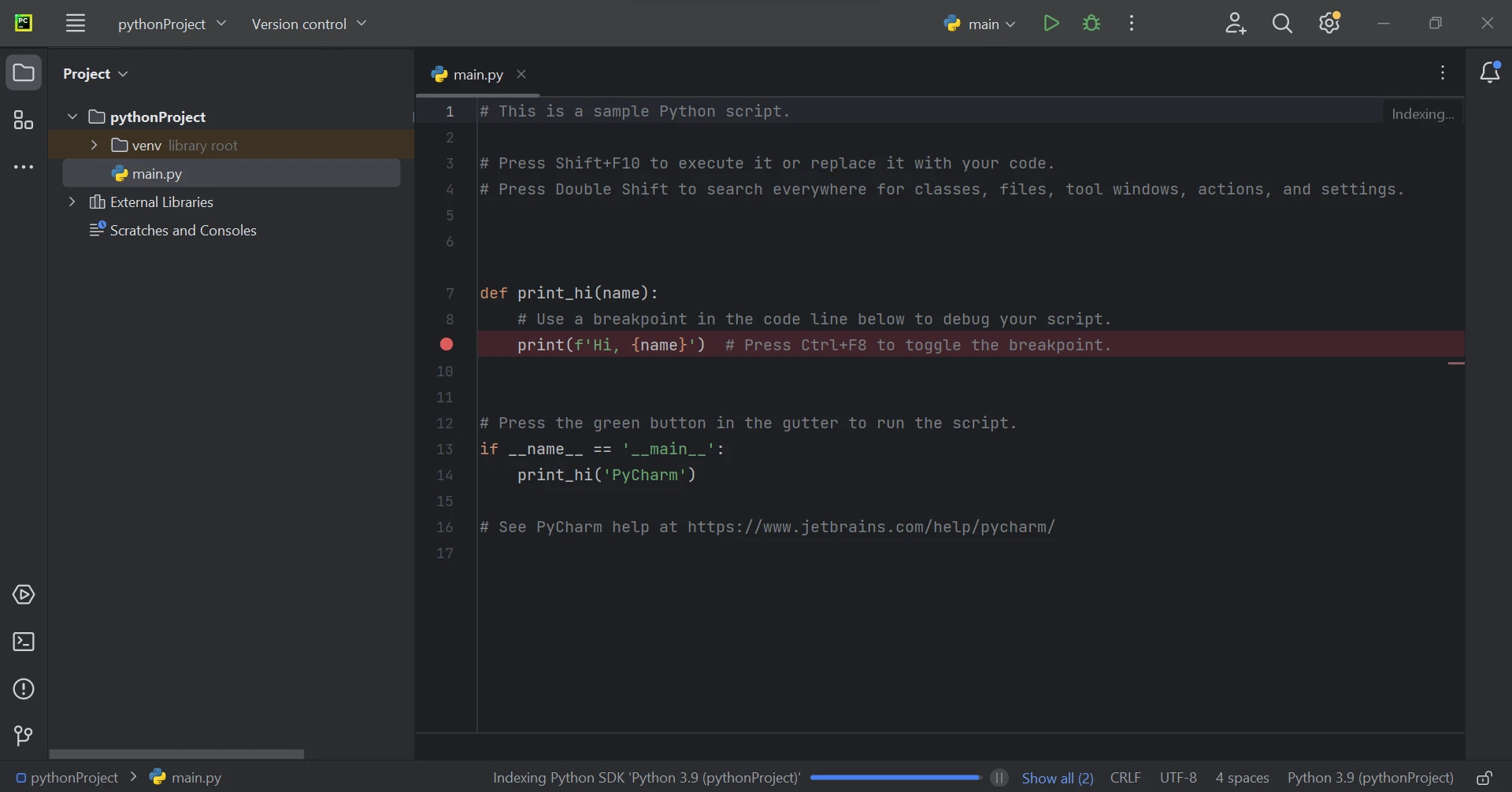
**Un nuevo Proyecto Python ha sido creado exitosamente en PyCharm**
### Requisitos de la biblioteca IronPDF
[IronPDF for Python](/python/), usa mayoritariamente .NET 6.0. Como resultado, para utilizar IronPDF for Python, tu computadora debe tener el runtime de .NET 6.0 instalado. Antes de que los usuarios de Linux y Mac puedan usar este módulo de Python, es posible que .NET deba ser instalado. Para obtener el entorno de ejecución requerido, visita esta [página de descargas de Microsoft](https://dotnet.microsoft.com/en-us/download/dotnet/6.0).
### Instalación de la biblioteca IronPDF
Para instalar el paquete `ironpdf` necesario para crear, editar y abrir archivos PDF, empieza por abrir un terminal en PyCharm y ejecuta el siguiente comando:
```shell
:ProductInstall
```
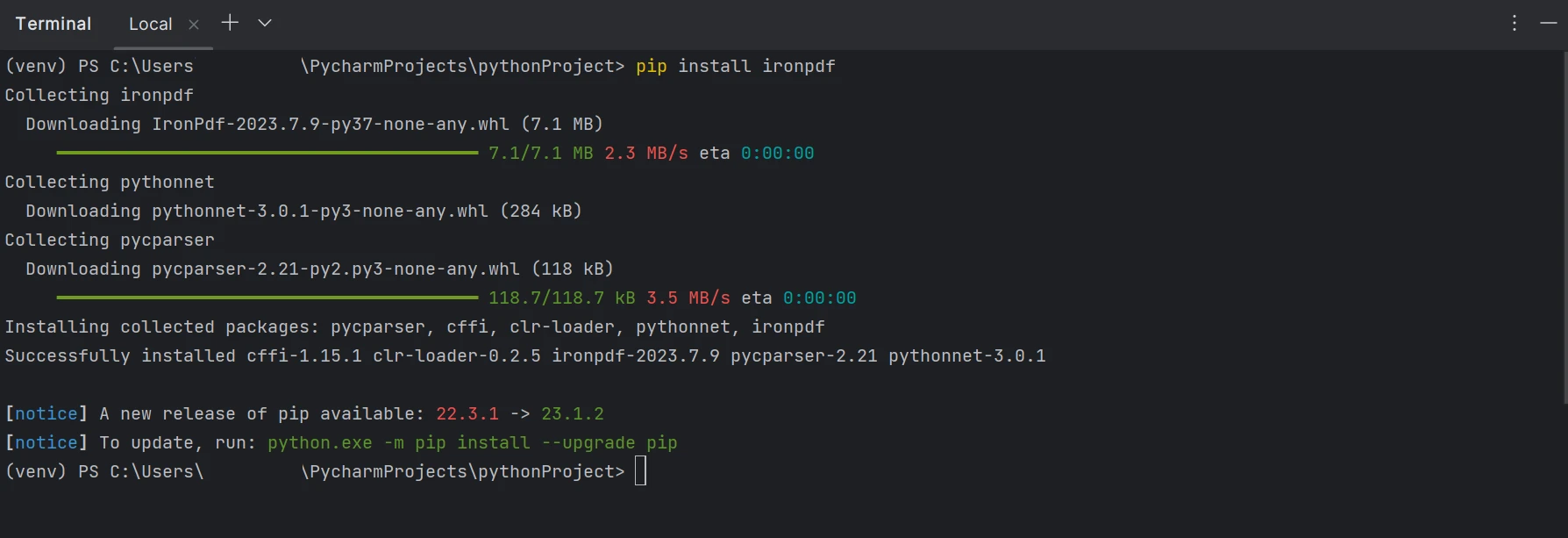
**Instalar el paquete IronPDF**
### Generar PDF aplanado con IronPDF
El aplanamiento de un PDF se puede hacer fácilmente con la ayuda de IronPDF con solo unas pocas líneas de código. A continuación se muestra el PDF de origen que tiene cuadros de texto con un control de calendario como archivo PDF de muestra.
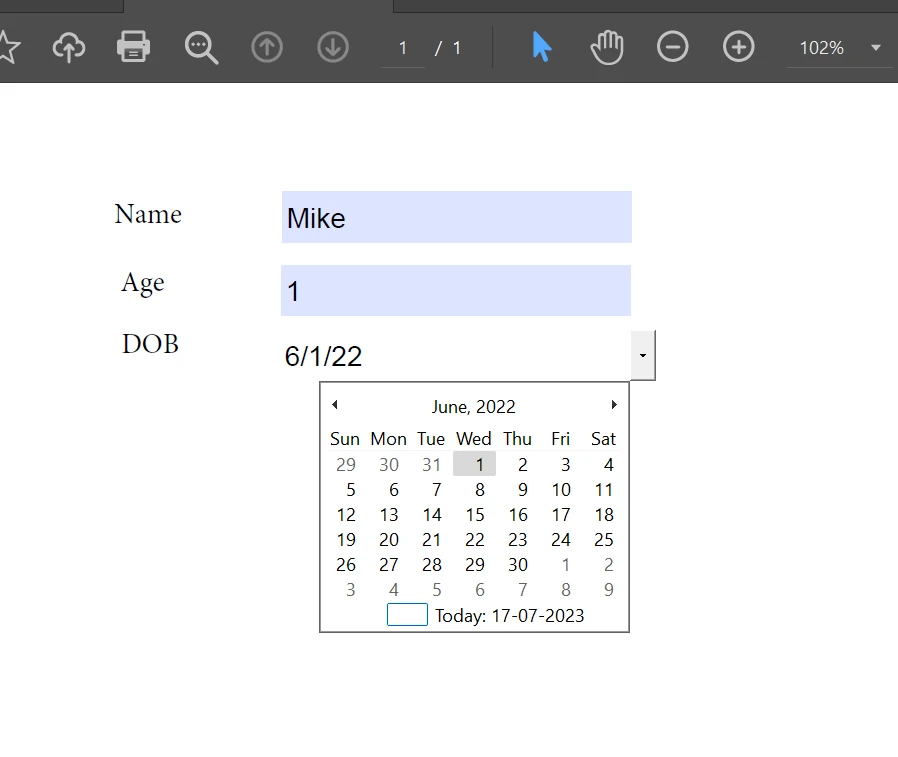
**PDF de origen que contiene un formulario con controles de calendario y cuadro de texto**
En el formulario PDF que tiene tres campos, que incluyen dos cuadros de texto y un control de calendario. También contiene algunos valores de campos de formulario. - A continuación, el código de muestra.
```python
from ironpdf import PdfDocument

# Load the PDF document from a specified file path
pdf = PdfDocument.FromFile('F:\\PDF\\EditorDemo.pdf')

# Call the Flatten method to remove all form fields and controls
pdf.Flatten()

# Save the flattened PDF to a new file
pdf.SaveAs("flattenpdf.pdf")
```
Este ejemplo comienza importando el módulo `ironpdf`, preparando el terreno para utilizar sus funcionalidades en operaciones con PDF. Mediante `PdfDocument.FromFile()`, carga un archivo PDF existente, lo que permite realizar diversas manipulaciones. Se invoca el método `Flatten()` para eliminar elementos interactivos como los campos de formulario, convirtiéndolos en una parte estática del contenido del PDF. Por último, `SaveAs()` se utiliza para guardar el PDF modificado en un nuevo archivo, completando así el proceso de aplanamiento.
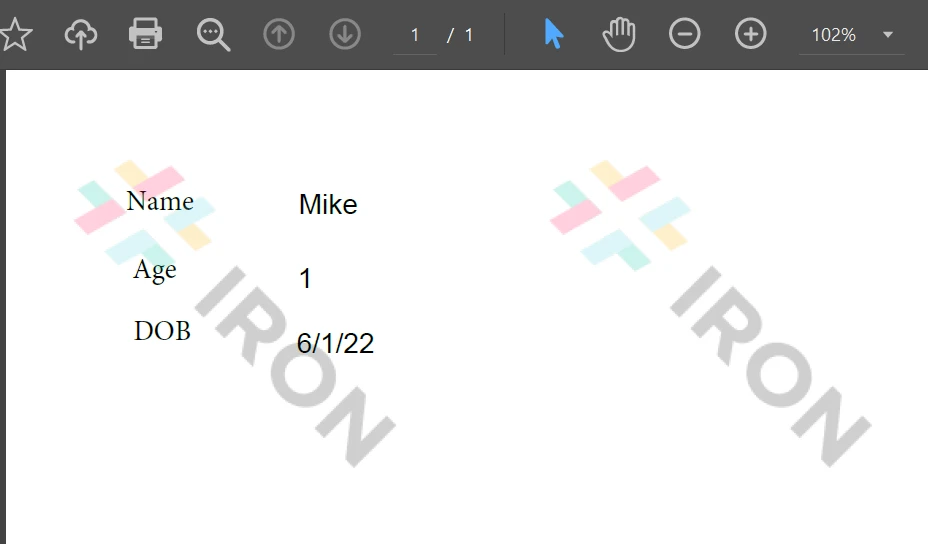
**El PDF aplanado de salida**
Para más detalles sobre PDF Aplanados, visita este [enlace de código con ejemplos detallados](/how-to/pdf-image-flatten-csharp/).
## Conclusión
La biblioteca [IronPDF](/python/) proporciona métodos de seguridad robustos para minimizar riesgos y asegurar la protección de datos. Es compatible con todos los navegadores web ampliamente utilizados y no está limitado a ninguno en particular. IronPDF permite a los programadores crear y leer archivos PDF fácilmente con solo unas pocas líneas de código. Para acomodarse a las diversas necesidades de los desarrolladores, la biblioteca IronPDF ofrece una variedad de opciones de licencias, incluyendo una licencia para desarrolladores gratuita y licencias de desarrollo adicionales disponibles para su compra.
El paquete `$liteLicense` Lite incluye una licencia perpetua, una garantía de devolución del dinero de 30 días, un año de asistencia técnica y posibilidades de actualización. Más allá de la compra inicial, no hay más costos. Los entornos de producción, pruebas y desarrollo todos hacen uso de estas licencias.
IronPDF también ofrece licencias gratuitas con algunas limitaciones de tiempo y redistribución. Durante el período de [licencia de prueba](trial-license), los usuarios pueden evaluar el producto en uso real sin una marca de agua. Para obtener más información sobre cuánto cuesta la edición de prueba de IronPDF y cómo licenciarlo, haz clic en esta [página de licencias](licensing).
Hay escenarios donde es necesario aplanar un PDF, lo que significa eliminar estos elementos interactivos y convertirlos en un formato estático y no editable. En Python, es posible lograr esto usando la biblioteca IronPDF. Este artículo profundizará en cómo aplanar un archivo PDF usando IronPDF.
Importe el archivo PDF mediante el método FromFile
Utilizar el método Flatten para aplanar un archivo PDF
Exporte el archivo PDF aplanado con el método SaveAs
IronPDF
Python es un lenguaje de programación que ayuda a los programadores a diseñar interfaces gráficas de usuario de manera rápida y sencilla. Python también es mucho más dinámico para los programadores que otros lenguajes. Como resultado, introducir la biblioteca IronPDF a Python es un procedimiento sencillo. Para desarrollar rápidamente y de manera segura una interfaz gráfica de usuario completamente funcional, se puede usar una amplia gama de herramientas preinstaladas, incluyendo PyQt, wxWidgets, Kivy, y muchos otros paquetes y bibliotecas. Podemos incorporar una serie de características de otros frameworks, como .NET Core, usando IronPDF, que no solo admite Python. Haz clic aquí para aprender más sobre Python IronPDF.
IronPDF simplifica el diseño y desarrollo web en Python. Django, Flask y Pyramid son tres paradigmas de desarrollo web en Python que han visto una amplia aceptación como resultado. Sólo un puñado de los sitios web y servicios en línea que han utilizado estos frameworks incluyen Reddit, Mozilla y Spotify.
Características de IronPDF
La creación de documentos PDF a partir de una variedad de fuentes, incluyendo HTML, HTML5, ASPX y Razor/MVC View, es posible con IronPDF. Ofrece la opción de crear archivos PDF a partir de páginas HTML e imágenes.
El kit de herramientas de IronPDF puede ayudar con una variedad de tareas, como crear PDFs interactivos, completar y enviar formularios interactivos, dividir y combinar archivos PDF, extraer texto e imágenes, buscar texto dentro de archivos PDF, rasterizar PDFs a imágenes, cambiar tamaños de fuente, y convertir archivos PDF.
Con soporte para agentes de usuario, proxies, cookies, encabezados HTTP y variables de formulario, IronPDF proporciona validación de formularios de inicio de sesión en HTML.
IronPDF puede imprimir un archivo PDF desde varias fuentes, como una cadena, flujo o URL, con solo unas pocas líneas de código.
Con la ayuda de IronPDF, se vuelve fácil generar documentos PDF aplanados.
Configuración de Python
Configuración del entorno
Comprueba que Python está instalado en tu PC. Visita el sitio web oficial de Python para descargar e instalar la versión más reciente de Python que sea compatible con tu sistema operativo. Una vez que Python esté instalado, separa los requisitos para tu proyecto creando un entorno virtual. El módulo venv te permite crear y gestionar entornos virtuales para proporcionar a tu proyecto de conversión un espacio de trabajo ordenado e independiente.
Nueva iniciativa en PyCharm
PyCharm es recomendado como un IDE para escribir código Python, para este tutorial.
Selecciona "Nuevo Proyecto" una vez que el IDE de PyCharm haya iniciado.
Crear un Nuevo Proyecto en PyCharm
Cuando seleccionas "Nuevo Proyecto", se abrirá una nueva ventana donde puedes especificar el entorno y la ubicación del proyecto. La imagen a continuación puede ayudarte a ver esto.
Especificar el entorno y la ubicación del proyecto
Haz clic en el botón Crear para comenzar un Nuevo Proyecto después de seleccionar la ubicación y la ruta del entorno del Proyecto. El software entonces se puede construir en la nueva ventana que aparece posteriormente. Este tutorial hace uso de Python 3.9.
Un nuevo Proyecto Python ha sido creado exitosamente en PyCharm
Requisitos de la biblioteca IronPDF
IronPDF for Python, usa mayoritariamente .NET 6.0. Como resultado, para utilizar IronPDF for Python, tu computadora debe tener el runtime de .NET 6.0 instalado. Antes de que los usuarios de Linux y Mac puedan usar este módulo de Python, es posible que .NET deba ser instalado. Para obtener el entorno de ejecución requerido, visita esta página de descargas de Microsoft.
Instalación de la biblioteca IronPDF
Para instalar el paquete ironpdf necesario para crear, editar y abrir archivos PDF, empieza por abrir un terminal en PyCharm y ejecuta el siguiente comando:
> pip install ironpdf
pip install ironpdf
Instalar el paquete IronPDF
Generar PDF aplanado con IronPDF
El aplanamiento de un PDF se puede hacer fácilmente con la ayuda de IronPDF con solo unas pocas líneas de código. A continuación se muestra el PDF de origen que tiene cuadros de texto con un control de calendario como archivo PDF de muestra.
PDF de origen que contiene un formulario con controles de calendario y cuadro de texto
En el formulario PDF que tiene tres campos, que incluyen dos cuadros de texto y un control de calendario. También contiene algunos valores de campos de formulario. - A continuación, el código de muestra.
from ironpdf importPdfDocument# Load the PDF document from a specified file pathpdf = PdfDocument.FromFile('F:\\PDF\\EditorDemo.pdf')# Call the Flatten method to remove all form fields and controlspdf.Flatten()# Save the flattened PDF to a new filepdf.SaveAs("flattenpdf.pdf")
from ironpdf import PdfDocument

# Load the PDF document from a specified file path
pdf = PdfDocument.FromFile('F:\\PDF\\EditorDemo.pdf')

# Call the Flatten method to remove all form fields and controls
pdf.Flatten()

# Save the flattened PDF to a new file
pdf.SaveAs("flattenpdf.pdf")
Python
Este ejemplo comienza importando el módulo ironpdf, preparando el terreno para utilizar sus funcionalidades en operaciones con PDF. Mediante PdfDocument.FromFile(), carga un archivo PDF existente, lo que permite realizar diversas manipulaciones. Se invoca el método Flatten() para eliminar elementos interactivos como los campos de formulario, convirtiéndolos en una parte estática del contenido del PDF. Por último, SaveAs() se utiliza para guardar el PDF modificado en un nuevo archivo, completando así el proceso de aplanamiento.
La biblioteca IronPDF proporciona métodos de seguridad robustos para minimizar riesgos y asegurar la protección de datos. Es compatible con todos los navegadores web ampliamente utilizados y no está limitado a ninguno en particular. IronPDF permite a los programadores crear y leer archivos PDF fácilmente con solo unas pocas líneas de código. Para acomodarse a las diversas necesidades de los desarrolladores, la biblioteca IronPDF ofrece una variedad de opciones de licencias, incluyendo una licencia para desarrolladores gratuita y licencias de desarrollo adicionales disponibles para su compra.
El paquete $999 Lite incluye una licencia perpetua, una garantía de devolución del dinero de 30 días, un año de asistencia técnica y posibilidades de actualización. Más allá de la compra inicial, no hay más costos. Los entornos de producción, pruebas y desarrollo todos hacen uso de estas licencias.
IronPDF también ofrece licencias gratuitas con algunas limitaciones de tiempo y redistribución. Durante el período de licencia de prueba, los usuarios pueden evaluar el producto en uso real sin una marca de agua. Para obtener más información sobre cuánto cuesta la edición de prueba de IronPDF y cómo licenciarlo, haz clic en esta página de licencias.
Curtis Chau tiene una licenciatura en Ciencias de la Computación (Carleton University) y se especializa en el desarrollo front-end con experiencia en Node.js, TypeScript, JavaScript y React. Apasionado por crear interfaces de usuario intuitivas y estéticamente agradables, disfruta trabajando con frameworks modernos y creando manuales bien estructurados y visualmente atractivos.




 Crear un Nuevo Proyecto en PyCharm
 Especificar el entorno y la ubicación del proyecto
 Un nuevo Proyecto Python ha sido creado exitosamente en PyCharm
 Instalar el paquete IronPDF
 PDF de origen que contiene un formulario con controles de calendario y cuadro de texto
 El PDF aplanado de salida