


Actualizado 21 de abril de 2026
Cómo Convertir PDF a PNG en Python
En este artículo, vamos a usar IronPDF for Python para dividir el PDF en archivos de imagen PNG.
Leer más

La efectividad y la eficiencia son fundamentales en el ámbito de la extracción de datos en línea y la generación de documentos. Una integración fluida de herramientas y marcos de trabajo sólidos es necesaria para extraer datos de sitios web y su posterior conversión en documentos de calibre profesional.
Aquí viene Scrapy, un marco de trabajo de scraping web en Python, e IronPDF, dos formidables bibliotecas que trabajan juntas para optimizar la extracción de datos en línea y la creación de PDFs dinámicos.
Los desarrolladores ahora pueden navegar sin esfuerzo por la compleja web y extraer rápidamente datos estructurados con precisión y rapidez gracias a Scrapy en Python, una biblioteca de rastreo y scraping web de primera. Con sus robustos selectores XPath y CSS y su arquitectura asincrónica, es la opción ideal para trabajos de scraping de cualquier complejidad.
Por el contrario, IronPDF es una potente biblioteca .NET que admite la creación, edición y manipulación programática de documentos PDF. IronPDF ofrece a los desarrolladores una solución completa para producir documentos PDF dinámicos y estéticamente atractivos con sus poderosas herramientas de creación de PDF, que incluyen conversión de HTML a PDF y capacidades de edición de PDF.
Esta publicación te llevará a un recorrido por la integración fluida de Scrapy Python con IronPDF y te mostrará cómo este par dinámico transforma la forma en que se realizan el scraping web y la creación de documentos. Mostraremos cómo estas dos bibliotecas trabajan juntas para facilitar trabajos complejos y acelerar flujos de trabajo de desarrollo, desde el scraping de datos de la web con Scrapy hasta la generación dinámica de informes PDF con IronPDF.
Ven a explorar las posibilidades en el scraping web y la generación de documentos mientras usamos IronPDF para aprovechar por completo Scrapy.
La arquitectura asincrónica utilizada por Scrapy permite el procesamiento de varias solicitudes a la vez. Esto conduce a una mayor eficiencia y velocidades de scraping web más rápidas, particularmente al trabajar con sitios web complicados o grandes cantidades de datos.
Scrapy tiene características de gestión de procesos de rastreo de Scrapy sólidas, como el filtrado automático de URL, la programación de solicitudes configurable y el manejo integrado de directivas robots.txt. El comportamiento del rastreo puede ser ajustado por los desarrolladores para satisfacer sus propias necesidades y garantizar la adherencia a las pautas del sitio web.
Scrapy permite a los usuarios navegar y seleccionar elementos dentro de páginas HTML utilizando selectores para XPath y CSS. Esta adaptabilidad hace que la extracción de datos sea más precisa y confiable al permitir que los desarrolladores apunten específicamente a determinados elementos o patrones en una página web.
Los desarrolladores pueden especificar componentes reutilizables para procesar datos raspados antes de exportarlos o almacenarlos utilizando la canalización de ítems de Scrapy. Al realizar operaciones como limpieza, validación, transformación y eliminación de duplicados, los desarrolladores pueden garantizar la precisión y consistencia de los datos extraídos.
Una serie de componentes de middleware que vienen pre-instalados en Scrapy ofrecen características como manejo automático de cookies, limitación de solicitudes, rotación de user-agent y rotación de proxy. Estos elementos de middleware son fácilmente configurables y personalizables para mejorar la eficiencia del scraping y abordar problemas comunes.
Al crear middleware personalizados, extensiones y canalizaciones, los desarrolladores pueden personalizar y expandir aún más las capacidades de Scrapy gracias a su arquitectura modular y extensible. Debido a su adaptabilidad, los desarrolladores pueden incluir fácilmente Scrapy en sus procesos actuales y modificarlo para satisfacer sus necesidades específicas de scraping.
Instala Scrapy usando pip ejecutando el siguiente comando:
pip install scrapyPara definir tu araña, crea un nuevo archivo Python (como example.py) en el directorio spiders/. Aquí se proporciona una ilustración de un spider básico que extrae desde una URL:
import scrapy

class QuotesSpider(scrapy.Spider):
    # Name of the spider
    name = 'quotes'
    # Starting URL
    start_urls = ['http://quotes.toscrape.com']

    def parse(self, response):
        # Iterate through each quote block in the response
        for quote in response.css('div.quote'):
            # Extract and yield quote details
            yield {
                'text': quote.css('span.text::text').get(),
                'author': quote.css('span small.author::text').get(),
                'tags': quote.css('div.tags a.tag::text').getall(),
            }
        # Identify and follow the next page link
        next_page = response.css('li.next a::attr(href)').get()
        if next_page is not None:
yield response.follow(next_page, self.parse)Para configurar los parámetros del proyecto Scrapy, como el agente de usuario, los retrasos en la descarga y los pipelines, edita el archivo settings.py. A continuación se muestra un ejemplo de cómo cambiar el agente de usuario y hacer que los pipelines funcionen:
# Obey robots.txt rules
ROBOTSTXT_OBEY = True
# Set user-agent
USER_AGENT = 'Mozilla/5.0 (Windows NT 10.0; Win64; x64) AppleWebKit/537.36 (KHTML, like Gecko) Chrome/58.0.3029.110 Safari/537.3'
# Configure pipelines
ITEM_PIPELINES = {
    'myproject.pipelines.MyPipeline': 300,
}Comenzar con Scrapy e IronPDF requiere combinar las robustas habilidades de scraping web de Scrapy con las dinámicas características de producción de PDF de IronPDF. Te guiaré a través de los pasos para configurar un proyecto Scrapy a continuación, para que puedas extraer datos de sitios web y usar IronPDF para crear un documento PDF que contenga los datos.
IronPDF es una poderosa biblioteca .NET para crear, editar y modificar documentos PDF programáticamente en C#, VB.NET y otros lenguajes .NET. Dado que ofrece a los desarrolladores un amplio conjunto de funciones para crear dinámicamente PDFs de alta calidad, es una opción popular para muchos programas.
Generación de PDF: Usando IronPDF, los programadores pueden crear nuevos documentos PDF o convertir elementos HTML existentes como etiquetas, texto, imágenes y otros formatos de archivos en PDFs. Esta característica es muy útil para crear informes, facturas, recibos y otros documentos de manera dinámica.
Conversión de HTML a PDF: IronPDF facilita que los desarrolladores transformen documentos HTML, incluidos estilos de JavaScript y CSS, en archivos PDF. Esto permite la creación de PDFs desde páginas web, contenido generado dinámicamente y plantillas HTML.
Modificación y Edición de Documentos PDF: IronPDF proporciona un conjunto completo de funcionalidades para modificar y alterar documentos PDF preexistentes. Los desarrolladores pueden fusionar varios archivos PDF, separarlos en documentos separados, eliminar páginas y agregar marcadores, anotaciones y marcas de agua, entre otras características, para personalizar PDFs según sus requisitos.
Después de asegurarte de que Python esté instalado en tu computadora, usa pip para instalar IronPDF.
Para definir tu araña, crea un nuevo archivo Python (como example.py) en el directorio de la araña de tu proyecto Scrapy (myproject/myproject/spiders). Un ejemplo de código de un spider básico que extrae citas de una URL:
import scrapy
from IronPdf import *

class QuotesSpider(scrapy.Spider):
    name = 'quotes'
    # Web page link
    start_urls = ['http://quotes.toscrape.com']

    def parse(self, response):
        quotes = []
        for quote in response.css('div.quote'):
            title = quote.css('span.text::text').get()
            content = quote.css('span small.author::text').get()
            quotes.append((title, content))  # Append quote to list

        # Generate PDF document using IronPDF
        renderer = ChromePdfRenderer()
        pdf = renderer.RenderHtmlAsPdf(self.get_pdf_content(quotes))
        pdf.SaveAs("quotes.pdf")

    def get_pdf_content(self, quotes):
        # Generate HTML content for PDF using extracted quotes
        html_content = "<html><head><title>Quotes</title></head><body>"
        for title, content in quotes:
            html_content += f"<h2>{title}</h2><p>Author: {content}</p>"
        html_content += "</body></html>"
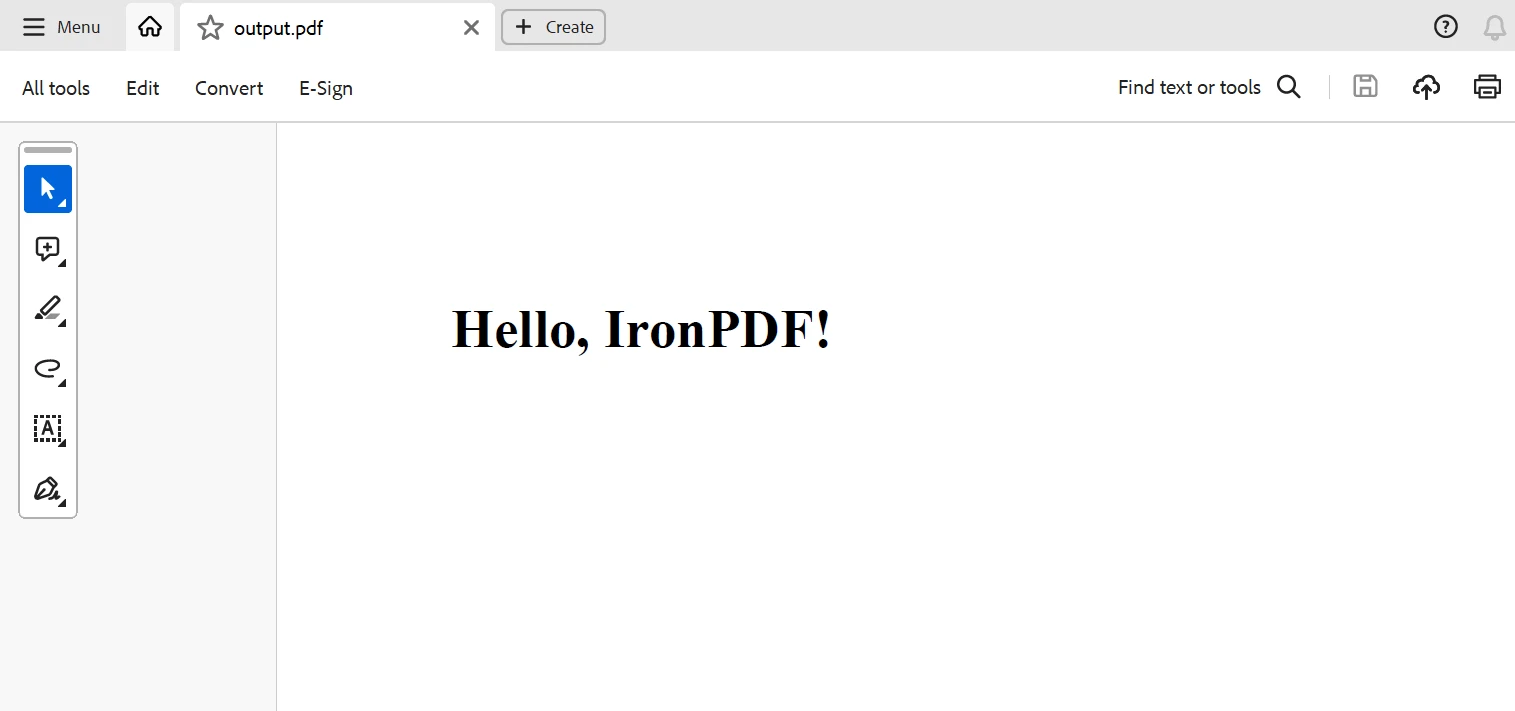
return html_contentEn el ejemplo de código anterior de un proyecto Scrapy con IronPDF, se está utilizando IronPDF para crear un documento PDF utilizando los datos que han sido extraídos usando Scrapy.
Aquí, el método parse de la araña recopila citas de la página web y utiliza la función get_pdf_content para crear el contenido HTML del archivo PDF. Posteriormente, este material HTML se convierte en un documento PDF mediante IronPDF y se guarda como quotes.pdf.
En resumen, la combinación de Scrapy e IronPDF ofrece a los desarrolladores una sólida opción para automatizar actividades de scraping web y producir documentos PDF al instante. Las características flexibles de producción de PDF de IronPDF junto con las poderosas capacidades de rastreo y scraping web de Scrapy proporcionan un proceso fluido para recolectar datos estructurados de cualquier página web y convertir los datos extraídos en informes PDF, facturas o documentos de calidad profesional.
A través del uso de Scrapy Spider Python, los desarrolladores pueden navegar eficazmente las complejidades de internet, recuperar información de muchas fuentes y organizarla de manera sistemática. El marco de trabajo flexible de Scrapy, su arquitectura asincrónica y soporte para selectores XPath y CSS le brindan la flexibilidad y escalabilidad necesarias para gestionar una variedad de actividades de scraping web.
Se incluye una licencia de por vida con IronPDF, que tiene un precio bastante razonable cuando se compra en un paquete. El paquete ofrece una excelente relación calidad-precio, ya que solo cuesta $999 (una compra única para varios sistemas). Aquellos con licencias tienen acceso 24/7 a soporte técnico en línea. Para más información sobre la tarifa, por favor visita el sitio web. Visita esta página para conocer más sobre los productos de Iron Software.

Curtis Chau tiene una licenciatura en Ciencias de la Computación (Carleton University) y se especializa en el desarrollo front-end con experiencia en Node.js, TypeScript, JavaScript y React. Apasionado por crear interfaces de usuario intuitivas y estéticamente agradables, disfruta trabajando con frameworks modernos y creando manuales bien estructurados y visualmente atractivos.

IronPDF es parte de IRONSUITE
10 productos API .NET para tus documentos de oficina










Cuando necesitas que tu PDF se parezca al HTML, rápido.

