Keras Python(開発者向けのしくみ)

Keras は、ディープラーニングモデルの開発と評価に使える、強力で使いやすいPythonライブラリです。 フランソワ・ショレによって最初に開発されたKerasモデルは、そのシンプルさとユーザーフレンドリーなインターフェースで人気を集め、機械学習の初心者と専門家の両方にとって優れた選択肢になっています。
さらに、IronPDF PDF生成ライブラリについて調べ、これら2つのライブラリを組み合わせて結果を生成し、PDFにエクスポートする方法を見ていきます。
Kerasの主な特長
1. ユーザーフレンドリーでモジュラ―
"人のためのディープラーニング"というキャッチフレーズで、Kerasは使いやすく、モジュラ―で拡張可能に設計されています。 Kerasモデルはエラー時に明確で実用的なフィードバックを提供し、開発者がモデルをデバッグし効率的に最適化するのに役立ちます。
2. 複数のバックエンドのサポート
KerasはTensorFlow、Theano、およびMicrosoft Cognitive Toolkit (CNTK)など、さまざまなディープラーニングフレームワーク上で動作します。 この柔軟性により、開発者はニーズに最も適したバックエンドを選ぶことができます。
3. 広範なニューラルネットワークのサポート
Kerasは畳み込み層、再帰層、および全結合層を含む幅広いニューラルネットワーク層をサポートしています。 また、マルチインプットおよびマルチアウトプットモデル、レイヤー共有、モデル共有などの複雑なアーキテクチャもサポートしています。
4. 前処理ユーティリティ
Kerasには、画像処理やテキスト処理など、データの前処理用のユーティリティが含まれており、データセットをトレーニング用に準備するのが簡単になります。
5. モデルの可視化とデバッグツール
Kerasはニューラルネットワークの構造の可視化やトレーニングプロセスの監視のためのツールを提供しています。 これはモデルの動作を理解し、必要な調整を行うために重要です。 最もシンプルなモデルタイプはSequential Kerasモデルで、単にレイヤーの直線的なスタックです。
インストール
Kerasのインストールは簡単です。 pipを使用してインストールできます:
pip install keras
pip install tensorflow
pip install keras
pip install tensorflowKerasでシンプルなニューラルネットワークを構築する
以下は、Kerasを使用してシンプルなフィードフォワードニューラルネットワークを構築する方法の例です:
import keras
import numpy as np
import matplotlib.pyplot as plt
# Function to read UCR formatted data
def readucr(filename):
"""
Reads a UCR format file and returns the features and labels.
Args:
filename (str): Path to the data file
Returns:
x, y: Features and labels as numpy arrays
"""
data = np.loadtxt(filename, delimiter="\t")
y = data[:, 0]
x = data[:, 1:]
return x, y.astype(int)
# Define the root URL for the dataset
root_url = "https://raw.githubusercontent.com/hfawaz/cd-diagram/master/FordA/"
x_train, y_train = readucr(root_url + "FordA_TRAIN.tsv")
x_test, y_test = readucr(root_url + "FordA_TEST.tsv")
# Get unique classes from the dataset
classes = np.unique(np.concatenate((y_train, y_test), axis=0))
# Plot an example from each class
plt.figure()
for c in classes:
c_x_train = x_train[y_train == c]
plt.plot(c_x_train[0], label="class " + str(c))
plt.legend(loc="best")
plt.show()
plt.close()import keras
import numpy as np
import matplotlib.pyplot as plt
# Function to read UCR formatted data
def readucr(filename):
"""
Reads a UCR format file and returns the features and labels.
Args:
filename (str): Path to the data file
Returns:
x, y: Features and labels as numpy arrays
"""
data = np.loadtxt(filename, delimiter="\t")
y = data[:, 0]
x = data[:, 1:]
return x, y.astype(int)
# Define the root URL for the dataset
root_url = "https://raw.githubusercontent.com/hfawaz/cd-diagram/master/FordA/"
x_train, y_train = readucr(root_url + "FordA_TRAIN.tsv")
x_test, y_test = readucr(root_url + "FordA_TEST.tsv")
# Get unique classes from the dataset
classes = np.unique(np.concatenate((y_train, y_test), axis=0))
# Plot an example from each class
plt.figure()
for c in classes:
c_x_train = x_train[y_train == c]
plt.plot(c_x_train[0], label="class " + str(c))
plt.legend(loc="best")
plt.show()
plt.close()出力
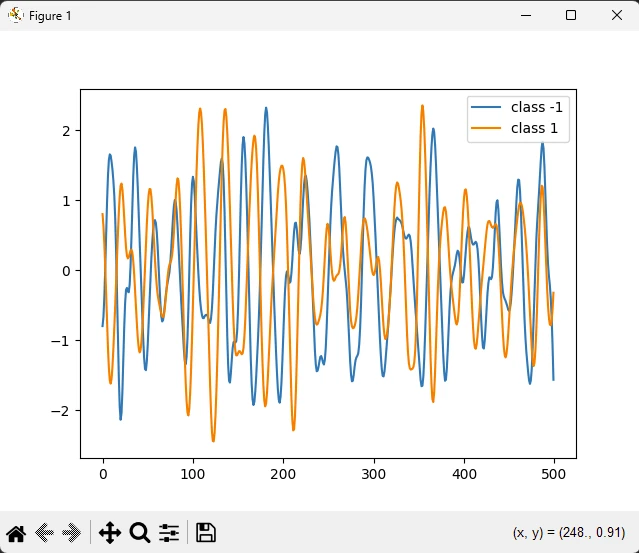
実世界での応用
1. 画像分類
Kerasは画像分類タスクで広く使用されています。 例えば、Kerasによって構築された畳み込みニューラルネットワーク(CNN)は、画像内のオブジェクトを認識する際に高精度を達成することができます。
2. 自然言語処理
Kerasは、人間の言語を処理し理解することができるモデルを構築するためのツールを提供しています。 Kerasの再帰ネットワーク(RNNs)および長短期記憶(LSTM)ネットワークは、感情分析や機械翻訳などのタスクで一般的に使用されています。
3. 生成的モデル
Kerasは、学習データに似た新しいデータサンプルを生成するために使用される生成的敵対ネットワーク(GANs)などの生成モデルを開発するために使用できます。
IronPDFの紹介
IronPDF はIron Softwareによって開発および維持されている強力なPythonライブラリです。 PythonプロジェクトでPDFコンテンツの作成、編集、および抽出を可能にします。 IronPDFの主な特長をいくつか紹介します:
PDF生成:
HTML、URL、JavaScript、CSS、および画像形式を含むさまざまなソースからPDFを生成できます。
- ヘッダー、フッター、署名、添付ファイル、およびセキュリティ機能を生成されたPDFに追加できます。
2.パフォーマンスの最適化:
* IronPDFはフルマルチスレッドおよび非同期操作をサポートしています。3.クロスプラットフォームの互換性:
* Windows、macOS、Linux、Docker、Azure、AWSでPython 3.7+と連携します。始めるには、pipを使用してIronPDFをインストールします:
pip install ironpdfpip install ironpdfインストール後、HTMLコンテンツまたはURLを使用してPDFを作成できます。 以下は例です:
- HTMLからPDFへ:
from ironpdf import ChromePdfRenderer
# Create a PDF renderer
renderer = ChromePdfRenderer()
# Render HTML content as a PDF
pdf = renderer.RenderHtmlAsPdf("<h1>Hello World</h1>")
pdf.SaveAs("ironAwesome.pdf")from ironpdf import ChromePdfRenderer
# Create a PDF renderer
renderer = ChromePdfRenderer()
# Render HTML content as a PDF
pdf = renderer.RenderHtmlAsPdf("<h1>Hello World</h1>")
pdf.SaveAs("ironAwesome.pdf")- PDFへのURL:
from ironpdf import ChromePdfRenderer
# Create a PDF renderer
renderer = ChromePdfRenderer()
# Render a URL as a PDF
pdf = renderer.RenderUrlAsPdf("https://ironpdf.com/python/")
pdf.SaveAs("ironAwesome.pdf")from ironpdf import ChromePdfRenderer
# Create a PDF renderer
renderer = ChromePdfRenderer()
# Render a URL as a PDF
pdf = renderer.RenderUrlAsPdf("https://ironpdf.com/python/")
pdf.SaveAs("ironAwesome.pdf")IronPDFとKeras Python: モデルのPDF生成
インストール
pip install ironpdf
pip install keras
pip install tensorflowpip install ironpdf
pip install keras
pip install tensorflow以下のコードを使用してモデルプロットを生成し、それをPDFにエクスポートします:
import keras
import numpy as np
import matplotlib.pyplot as plt
from ironpdf import License, ImageToPdfConverter

# Apply your license key
License.LicenseKey = "your key goes here"

def readucr(filename):
    """Read and parse UCR formatted data."""
    data = np.loadtxt(filename, delimiter="\t")
    y = data[:, 0]
    x = data[:, 1:]
    return x, y.astype(int)

# Define the root URL for the dataset
root_url = "https://raw.githubusercontent.com/hfawaz/cd-diagram/master/FordA/"
x_train, y_train = readucr(root_url + "FordA_TRAIN.tsv")
x_test, y_test = readucr(root_url + "FordA_TEST.tsv")

# Extract unique classes from the dataset
classes = np.unique(np.concatenate((y_train, y_test), axis=0))

# Plot example data for each class
plt.figure()
for c in classes:
    c_x_train = x_train[y_train == c]
    plt.plot(c_x_train[0], label="class " + str(c))
plt.legend(loc="best")
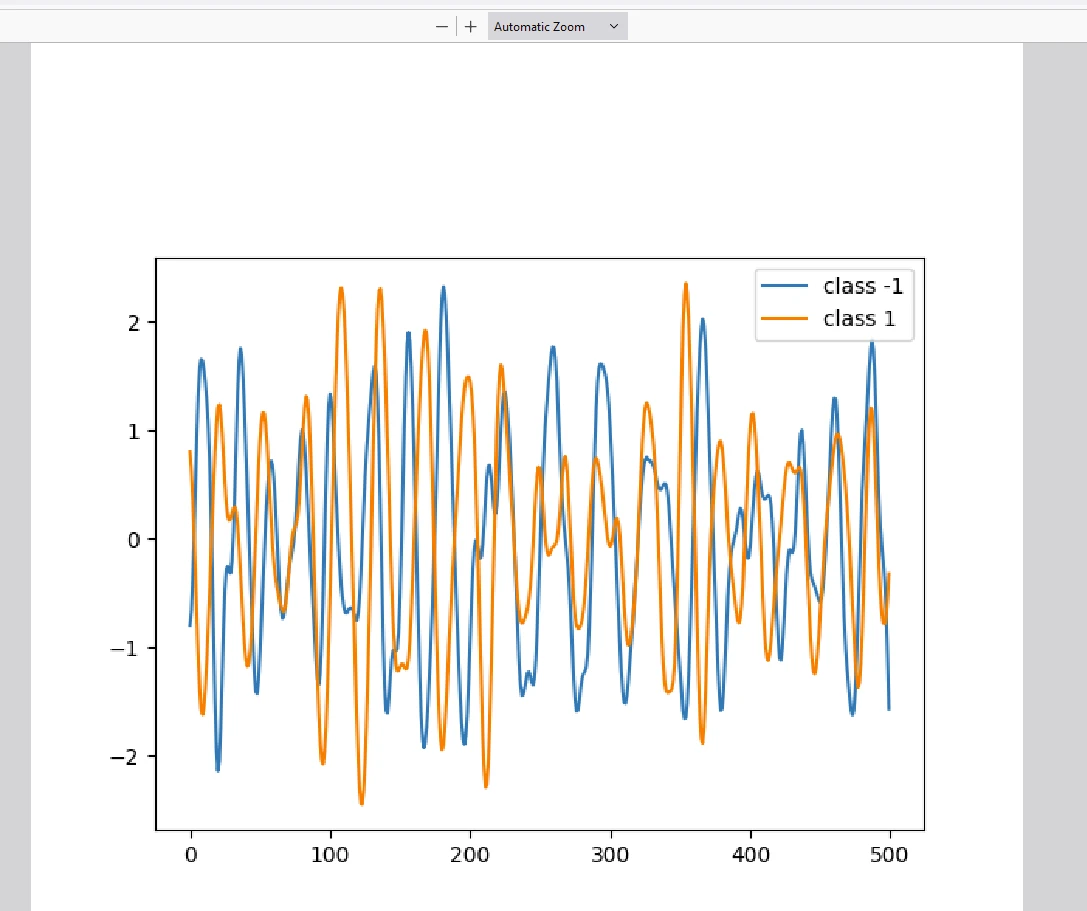
plt.savefig('data.png')
plt.show()
plt.close()

# Convert the saved image to a PDF
ImageToPdfConverter.ImageToPdf("data.png").SaveAs("plot.pdf")
import keras
import numpy as np
import matplotlib.pyplot as plt
from ironpdf import License, ImageToPdfConverter
# Apply your license key
License.LicenseKey = "your key goes here"
def readucr(filename):
"""Read and parse UCR formatted data."""
data = np.loadtxt(filename, delimiter="\t")
y = data[:, 0]
x = data[:, 1:]
return x, y.astype(int)
# Define the root URL for the dataset
root_url = "https://raw.githubusercontent.com/hfawaz/cd-diagram/master/FordA/"
x_train, y_train = readucr(root_url + "FordA_TRAIN.tsv")
x_test, y_test = readucr(root_url + "FordA_TEST.tsv")
# Extract unique classes from the dataset
classes = np.unique(np.concatenate((y_train, y_test), axis=0))
# Plot example data for each class
plt.figure()
for c in classes:
c_x_train = x_train[y_train == c]
plt.plot(c_x_train[0], label="class " + str(c))
plt.legend(loc="best")
plt.savefig('data.png')
plt.show()
plt.close()
# Convert the saved image to a PDF
ImageToPdfConverter.ImageToPdf("data.png").SaveAs("plot.pdf")コードの説明
ライブラリのインポート:
- コードは必要なライブラリをインポートすることから始まります:
- Keras: 人気のディープラーニングライブラリ。
- numpy (npとして): 数値演算用。
- matplotlib.pyplot (pltとして): プロット作成用。
- ironpdf: PDFを扱うためのIronPDFライブラリ。
- コードは必要なライブラリをインポートすることから始まります:
2.ライセンスキーの設定:
* `License.LicenseKey = "your key"`の行はIronPDFのライセンスキーを設定します。3.データの読み取り:
* `readucr`関数は、特定の形式(タブ区切りの値)のファイルからデータを読み取ります。
* データからラベル(y)と特徴(x)を抽出します。4.トレーニングデータとテストデータの読み込み:
* コードは"FordA"データセットに関連するトレーニングおよびテストデータファイルのURLを構築します。
* `readucr`関数を使用してデータをロードします。5.データのプロット:
* コードはデータセット内のユニークなクラスを識別します。
* 各クラスについて、最初のインスタンス(`c_x_train[0]`)を選択してプロットします。
* 凡例でクラスラベルを示しています。6.プロットを保存する:
* プロットは"data.png"名の画像ファイルとして保存されます。7.画像をPDFに変換する:
* IronPDFの`ImageToPdfConverter`は、保存された画像("data.png")をPDFファイル("plot.pdf")に変換します。出力されたPDF
IronPDFライセンス
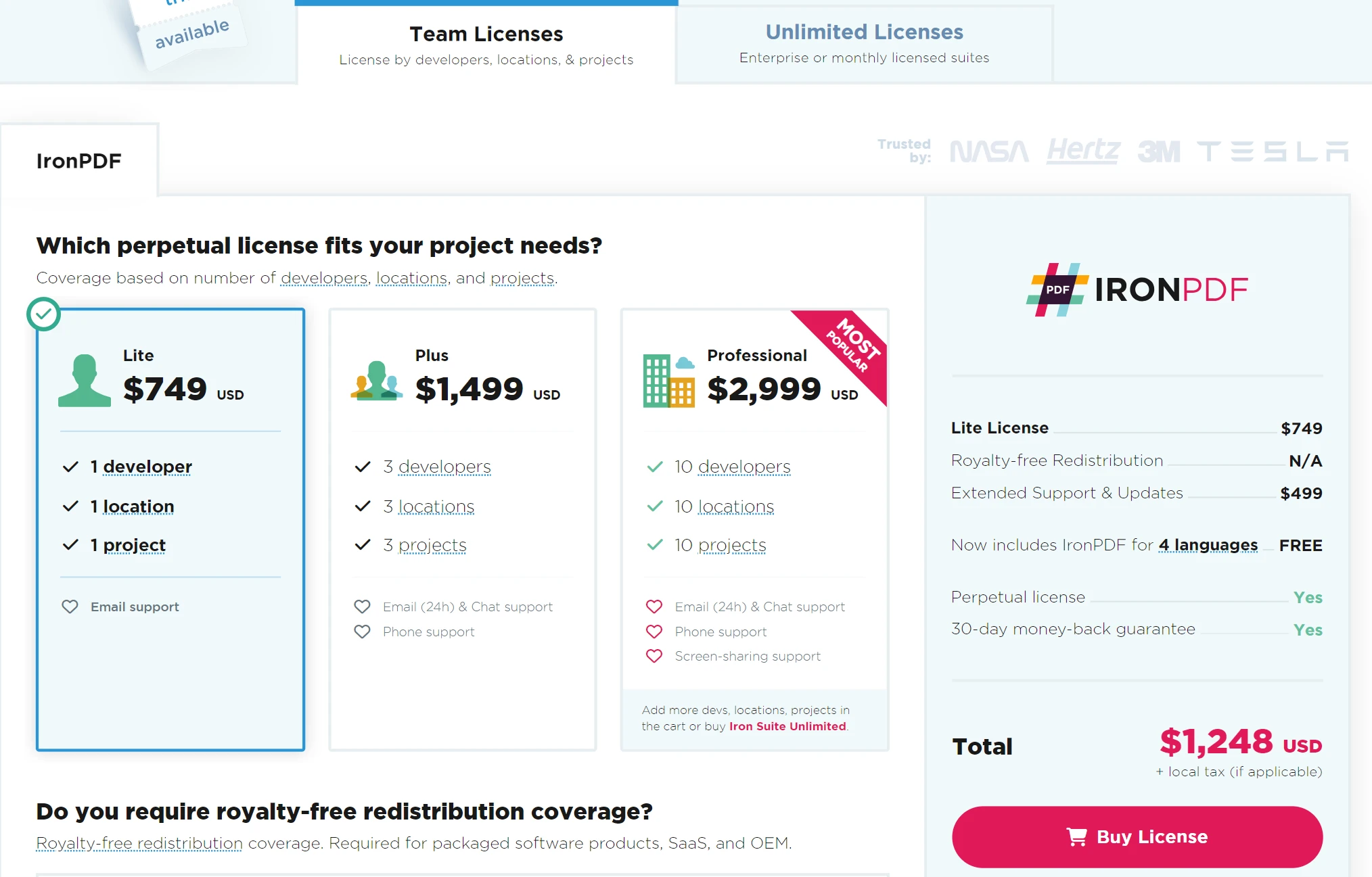
IronPDFは上記のコードで示されるように、実行にはライセンスが必要です。 スクリプトの冒頭でライセンスキーを次のように設定します:
# Apply your license key
License.LicenseKey = "your key goes here"
# Apply your license key
License.LicenseKey = "your key goes here"IronPDFライブラリの試用ライセンスに興味がある場合、試用ライセンスキーはこちらから取得できます。
結論
Kerasの人工知能Pythonライブラリは、そのシンプルさと柔軟性によりディープラーニングコミュニティで際立っています。 ニューラルネットワークの構築に関わる複雑さを抽象化し、開発者がモデルの設計と実験に集中できるようにします。 初めてディープラーニングを始める初心者でも、経験豊富な実践者でも、Kerasはアイディアを具現化するために必要なツールを提供します。
一方、IronPDFはPDFの生成と操作を簡単にする多用途のライブラリで、結果をPDFにエクスポートすることを容易にします。 これら2つのスキルを持つことで、ユーザーは最新のデータサイエンスモデルを書き、結果のドキュメント化のために出力をPDFにエクスポートできます。








 無料で始めましょう
 無料で始めましょう
 無料ライブデモを予約



 クレジットカードやアカウントの作成は不要です。