



已更新 2026年4月23日
简化 .NET 与 Microsoft.Extensions.AI 的 LLM 集成
AI正在改变软件开发,但将大型语言模型(LLM)集成到.NET中直到现在一直很复杂。通过IronPdf.AI,将AI集成更进一步,该产品为.NET应用程序带来了OpenAI驱动的PDF解析、数据提取和内容摘要。
阅读更多

在 C# 编程中,理解委托对于编写灵活且可扩展的代码至关重要。 委托作为强大的实体,促进了在该语言中实现回调、事件处理和函数式编程范式。 微软关于委托的指南提供了关于在 C# 应用程序中使用委托实例的全面概述。
在本全面指南中,我们将深入研究C#委托的复杂性,探索其功能、用例,以及如何使开发人员编写出更模块化和可扩展的代码。
本质上,C# 中的委托是一个类型安全的对象,也称为函数指针,它封装一个或多个方法。 委托能够创建对函数的引用,为将方法作为参数传递、存储在数据结构中并动态调用提供了手段。 这使得委托成为实现回调机制和实现事件驱动架构的基石。
使用委托的基本步骤包括使用委托类型和参数进行声明、实例化,以及通过定义回调方法进行调用。 这是一个基本示例:
// Delegate declaration
public delegate void MyDelegate(string message);

class Program
{
    static void Main(string[] args)
    {
        // Instantiation
        MyDelegate myDelegate = DisplayMessage;

        // Invocation
        myDelegate("Hello, Delegates!");
    }

    // Method to be referenced
    static void DisplayMessage(string message)
    {
        Console.WriteLine(message);
    }
}' Delegate declaration
Public Delegate Sub MyDelegate(message As String)
Class Program
Shared Sub Main(args As String())
' Instantiation
Dim myDelegate As MyDelegate = AddressOf DisplayMessage
' Invocation
myDelegate("Hello, Delegates!")
End Sub
' Method to be referenced
Shared Sub DisplayMessage(message As String)
Console.WriteLine(message)
End Sub
End Class委托的主要用例之一是实现回调。 考虑一种场景,当某个特定事件发生时,一个方法需要通知外部组件。 委托提供了一种简洁和模块化的解决方案:
using System;

class Program
{
    static void Main(string[] args)
    {
        EventPublisher publisher = new EventPublisher();
        EventSubscriber subscriber = new EventSubscriber(publisher);

        publisher.SimulateEvent("Test Event");
    }
}

public class EventPublisher
{
    // Declare a delegate type
    public delegate void EventHandler(string eventName);

    // Create an instance of the delegate
    public event EventHandler EventOccurred;

    // Simulate an event
    public void SimulateEvent(string eventName)
    {
        // Invoke the delegate to notify subscribers
        EventOccurred?.Invoke(eventName);
    }
}

public class EventSubscriber
{
    public EventSubscriber(EventPublisher eventPublisher)
    {
        // Subscribe to the event using the delegate
        eventPublisher.EventOccurred += HandleEvent;
    }

    // Method to be invoked when the event occurs
    private void HandleEvent(string eventName)
    {
        Console.WriteLine($"Event handled: {eventName}");
    }
}Imports System
Module Program
Sub Main(args As String())
Dim publisher As New EventPublisher()
Dim subscriber As New EventSubscriber(publisher)
publisher.SimulateEvent("Test Event")
End Sub
End Module
Public Class EventPublisher
' Declare a delegate type
Public Delegate Sub EventHandler(eventName As String)
' Create an instance of the delegate
Public Event EventOccurred As EventHandler
' Simulate an event
Public Sub SimulateEvent(eventName As String)
' Invoke the delegate to notify subscribers
RaiseEvent EventOccurred(eventName)
End Sub
End Class
Public Class EventSubscriber
Public Sub New(eventPublisher As EventPublisher)
' Subscribe to the event using the delegate
AddHandler eventPublisher.EventOccurred, AddressOf HandleEvent
End Sub
' Method to be invoked when the event occurs
Private Sub HandleEvent(eventName As String)
Console.WriteLine($"Event handled: {eventName}")
End Sub
End Class委托在C#中接受函数式编程概念中起着至关重要的作用。 使用委托与高阶函数,开发人员可以将函数作为参数传递、返回函数,并创建更具表现力和简洁的代码:
public delegate int MyDelegate(int x, int y);

public class Calculator
{
    public int PerformOperation(MyDelegate operation, int operand1, int operand2)
    {
        // Execute the operation method reference through the passed delegate
        return operation(operand1, operand2);
    }
}

// Usage
var calculator = new Calculator();
int result = calculator.PerformOperation((x, y) => x + y, 5, 3); // Adds 5 and 3
Console.WriteLine(result); // Outputs: 8Public Delegate Function MyDelegate(ByVal x As Integer, ByVal y As Integer) As Integer
Public Class Calculator
Public Function PerformOperation(ByVal operation As MyDelegate, ByVal operand1 As Integer, ByVal operand2 As Integer) As Integer
' Execute the operation method reference through the passed delegate
Return operation(operand1, operand2)
End Function
End Class
' Usage
Private calculator = New Calculator()
Private result As Integer = calculator.PerformOperation(Function(x, y) x + y, 5, 3) ' Adds 5 and 3
Console.WriteLine(result) ' Outputs: 8
了解更多关于IronPDF的功能作为一个功能丰富的库,设计用于促进PDF生成、操作和交互于C#应用程序中。 无论是需要从头创建PDF、将HTML转换为PDF,还是从现有PDF中提取内容,IronPDF都提供了一整套工具来简化这些任务。 其多功能性使其成为开发人员在多种项目中工作的宝贵资产。
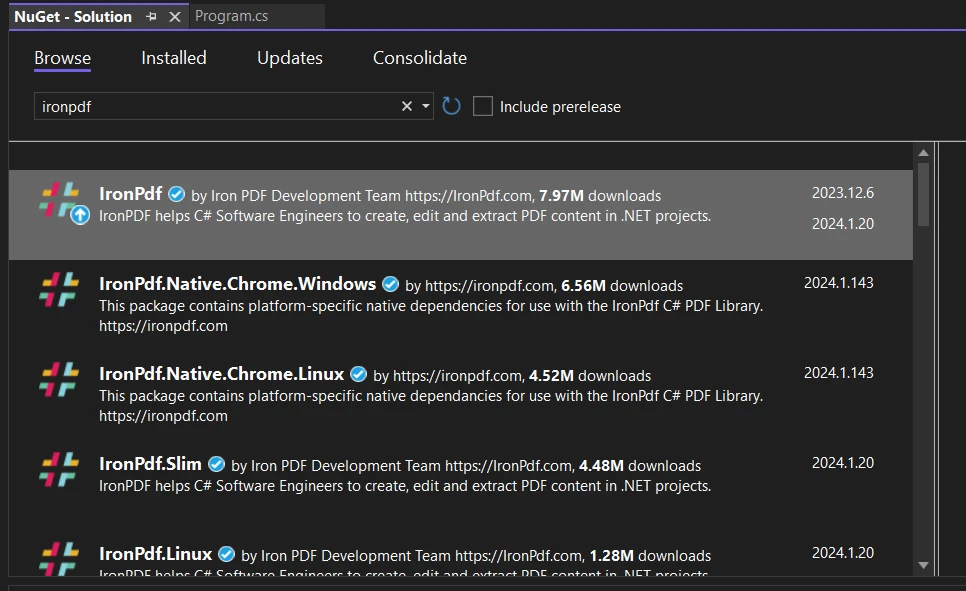
要开始在C#项目中利用IronPDF库,您可以轻松安装IronPDF NuGet包。 在您的包管理器控制台中使用以下命令:
或者,您可以在NuGet包管理器中搜索"IronPDF"并从那里安装。
在C#中,委托作为类型安全的函数指针,允许方法被引用和作为参数传递。 委托在上述不同场景中扮演了关键角色。 现在,问题来了:C#委托如何适应IronPDF的环境,并且它们能否有效地一起使用?
利用IronPDF与委托的一种方法是通过文档事件的回调。 IronPDF提供了您可以使用委托订阅的事件,允许您在文档生成过程中的特定点上执行自定义逻辑。 例如:
using IronPdf;

public delegate string AddPasswordEventHandler(PdfDocument e);

string AddPassword(PdfDocument document)
{
    string password = "";
    if (document.Password == "")
    {
        password = "Iron123";
    }
    return password;
}

PdfDocument document = new PdfDocument("StyledDocument.pdf");
AddPasswordEventHandler handler = AddPassword;
document.Password = handler.Invoke(document); // Subscribe to the event
document.SaveAs("PasswordProtected.pdf");Imports IronPdf
Public Delegate Function AddPasswordEventHandler(ByVal e As PdfDocument) As String
Private Function AddPassword(ByVal document As PdfDocument) As String
Dim password As String = ""
If document.Password = "" Then
password = "Iron123"
End If
Return password
End Function
Private document As New PdfDocument("StyledDocument.pdf")
Private handler As AddPasswordEventHandler = AddressOf AddPassword
document.Password = handler.Invoke(document) ' Subscribe to the event
document.SaveAs("PasswordProtected.pdf")在这段C#代码片段中,定义了一个名为PdfDocument作为参数并返回一个字符串。 在该方法中,初始化了一个名为Password属性进行条件检查。 如果密码是空字符串,就将值"Iron123"赋给password变量,并返回它。
接下来,创建一个名为"StyledDocument.pdf"的PdfDocument实例。 声明一个名为AddPassword方法相同的签名。 将该委托的一个实例命名为AddPassword方法。 然后使用Password属性。
最后,在SaveAs方法,将其保存为"PasswordProtected.pdf"。 代码有效地使用委托根据PdfDocument的密码。
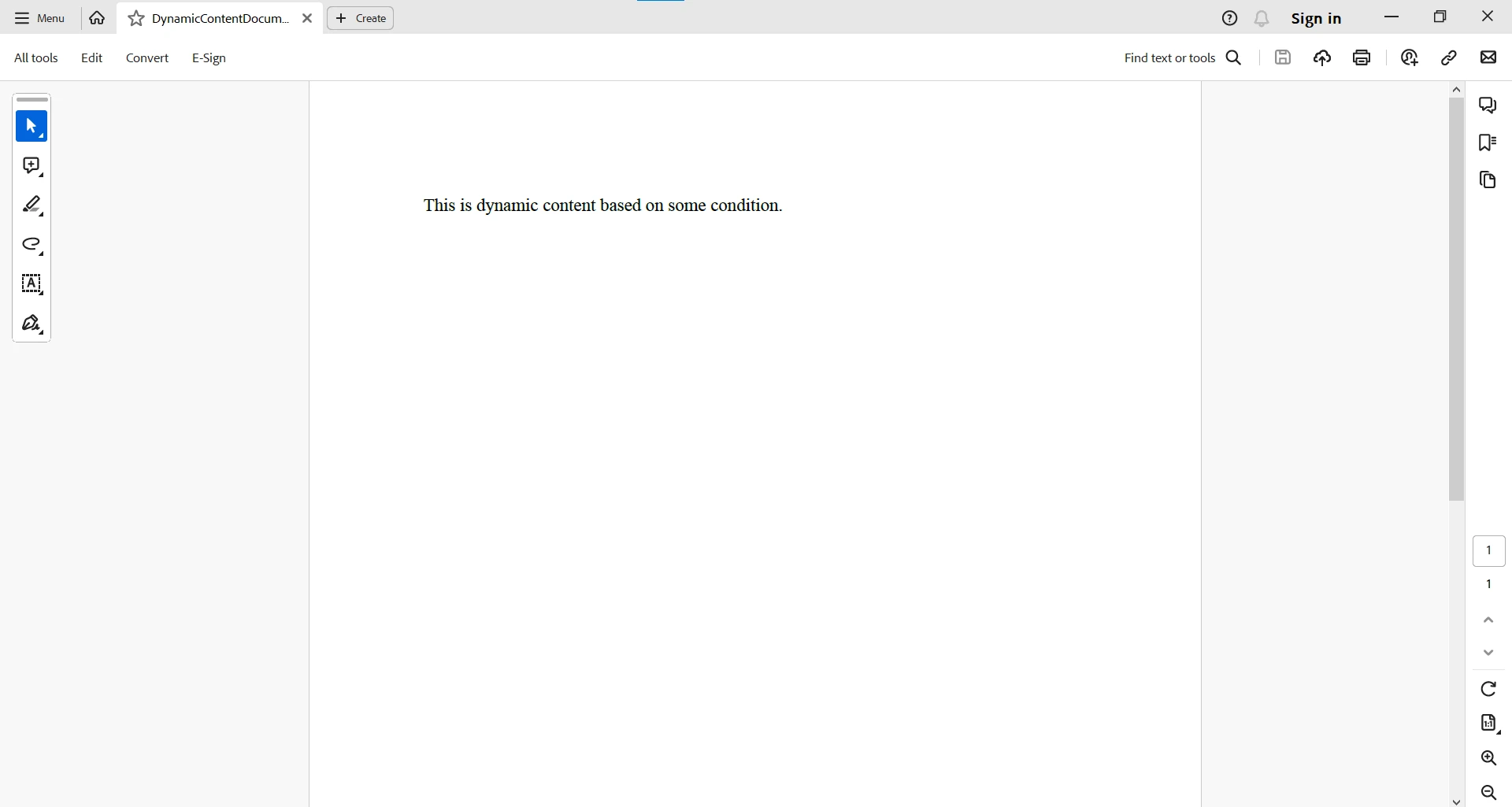
委托也可以用于将动态内容注入PDF文档。 IronPDF支持插入HTML内容以生成HTML到PDF,并且开发人员可以使用委托根据特定条件或数据动态生成HTML:
// Assuming GetDynamicContent is a delegate that generates dynamic HTML content
Func<string> getDynamicContent = () =>
{
    // Custom logic to generate dynamic content
    return "<p>This is dynamic content based on some condition.</p>";
};

// Incorporate dynamic HTML into the PDF
var pdfRenderer = new ChromePdfRenderer();
var pdfDocument = pdfRenderer.RenderHtmlAsPdf($"<html><body>{getDynamicContent()}</body></html>");
pdfDocument.SaveAs("DynamicContentDocument.pdf");' Assuming GetDynamicContent is a delegate that generates dynamic HTML content
Dim getDynamicContent As Func(Of String) = Function()
' Custom logic to generate dynamic content
Return "<p>This is dynamic content based on some condition.</p>"
End Function
' Incorporate dynamic HTML into the PDF
Dim pdfRenderer = New ChromePdfRenderer()
Dim pdfDocument = pdfRenderer.RenderHtmlAsPdf($"<html><body>{getDynamicContent()}</body></html>")
pdfDocument.SaveAs("DynamicContentDocument.pdf")在此示例中,getDynamicContent委托动态生成HTML内容,然后将其嵌入到PDF文档中。
要高效地使用IronPDF,请访问IronPDF文档。
总之,C#委托是代码灵活性和模块化的支柱。 它们使开发人员能够实现回调、处理事件,并接受函数式编程范式,例如能够以编程方式更改方法调用。 作为C#工具箱中的一个多功能工具,委托使开发人员能够创建更易维护、可扩展和具有表现力的代码。 无论您是在构建事件驱动应用程序、实现回调机制或探索函数式编程,C#委托都是您编程之旅中的强大助手。
C#委托和IronPDF可以形成一个合作的组合,在您的应用程序中增强文档生成的功能。 无论是自定义文档事件还是注入动态内容,委托为扩展IronPDF的功能提供了灵活的机制。 在探索可能性时,请考虑您项目的具体要求,以及委托如何有助于实现更定制化和动态化的PDF生成过程与IronPDF。

Jacob Mellor 是 Iron Software 的首席技术官,也是一位开创 C# PDF 技术的有远见的工程师。作为 Iron Software 核心代码库的原始开发者,他从公司成立之初就开始塑造公司的产品架构,与首席执行官 Cameron Rimington 一起将公司转变为一家拥有 50 多名员工的公司,为 NASA、特斯拉和全球政府机构提供服务。

当您需要PDF看起来像HTML时,速度快。













