已更新 2026年4月21日
Java 通过引用传递 (开发人员如何运作)
在 Java 编程语言中,参数传递总是通过值传递。当处理对象时,引用变量被值传递
阅读更多

在Java中生成随机数是许多编程场景中的基本操作,从游戏开发和模拟到安全和机器学习。 Java 提供了两种主要方式来生成这些数字:通过 Math.random() 方法用于快速和简单的任务,通过 Random 类用于更加专业的需求。 理解如何有效地使用这些工具对于初学者来说至关重要,特别是那些希望为程序添加不确定性元素的人。 我们还将讨论IronPDF 适用于 Java library以及如何在PDF生成中使用随机数。
Math.random() 方法是一个静态方法,可以生成大于等于 0.0 且小于 1.0 的伪随机 double 值。它是 Math 类的一部分,该类提供了执行基本数值运算(如指数、对数和三角运算)的各种方法。 Math.random() 的简单性使得它高度可访问,可以快速生成伪随机数。
public class Main {
    public static void main(String[] args) {
        // Generate a random double value between 0.0 and 1.0
        double value = Math.random();
        System.out.println("Random double value: " + value);
    }
}此示例演示如何生成随机的 double 值并将其打印到控制台。
对于更多样化的需求,如生成在指定范围内的随机整数、布尔值或浮点数,java.util 包中的 Random 类更合适。 它需要创建一个 Random 类的实例,然后调用其方法之一来生成随机数。
import java.util.Random;

public class Main {
    public static void main(String[] args) {
        // Create a Random object
        Random random = new Random();
        // Generates a random integer from 0 to 9
        int randomInt = random.nextInt(10);
        System.out.println("Random integer: " + randomInt);
    }
}此代码片段创建一个 Random 对象,并使用它生成一个介于 0 和 9 之间的随机整数。
Math.random() 极其简单,不需要对象实例化或复杂设置,非常适合初学者或仅需一个随机双精度值的使用场景。
Random 类提供了更广泛的方法范围来生成随机数,包括 nextLong() 和 nextBoolean(),提供了更大的灵活性和对生成随机数的控制。
通过使用 Random 类的种子值,可以生成一个可预测的伪随机数序列,这对于调试或需要某种程度可预测性的应用程序非常有用。
public class Main {
    public static void main(String[] args) {
        int max = 6; // Maximum face value of the die
        // Generate a random integer between 1 and 6
        int roll = (int) (Math.random() * max) + 1;
        System.out.println("You rolled a: " + roll);
    }
}控制台示例输出: 您掷出的点数为:6
此示例通过生成一个介于 1 和 6 之间的随机整数来模拟掷六面骰子。它展示了如何使用 Math.random() 通过将结果乘以最大值并加一来将范围从 0-5 移至 1-6,从而在特定范围内生成数值。
import java.util.Random;

public class Main {
    public static void main(String[] args) {
        Random random = new Random();
        // Generate a random temperature from -10 to 20 degrees Celsius
        int temp = random.nextInt(31) - 10;
        // Generate a random boolean to indicate raining condition
        boolean raining = random.nextBoolean();
        System.out.println("Today's temperature is: " + temp + "C, and it is " + (raining ? "raining" : "not raining"));
    }
}控制台示例输出: 今天的温度为:8C,正在下雨
该代码片段通过生成一个在指定范围内的随机温度和用于指示是否下雨的布尔值来模拟天气状况。 它展示了使用 Random 类生成整数和布尔值。
import java.util.Collections;
import java.util.ArrayList;
import java.util.Arrays;

public class Main {
    public static void main(String[] args) {
        // Initialize an ArrayList with integers
        ArrayList<Integer> data = new ArrayList<>(Arrays.asList(1, 2, 3, 4, 5));
        // Shuffle the list to randomize element order
        Collections.shuffle(data);
        System.out.println("Shuffled data: " + data);
    }
}控制台示例输出: 已打乱的数据:[5, 3, 1, 4, 2]
虽然不直接使用 Math.random() 或 Random 类,但此示例展示了如何洗牌整数列表,这是准备用于机器学习算法的数据时的常见操作。 Collections.shuffle() 内部使用 Random 进行元素洗牌。
IronPDF 适用于 Java是一个允许Java开发人员在应用中生成、编辑和读取PDF文档的库。 它支持将HTML转换为PDF,确保HTML源代码的格式在PDF输出中得到准确保留。 IronPDF专为Java 8及更高版本设计,可在包括Kotlin和Scala在内的各种JVM语言中使用。
它提供了广泛的PDF操作功能,包括编辑内容、合并、拆分PDF,以及处理表单和元数据。 要在Java项目中使用IronPDF,可以通过Maven依赖包含它。
在使用 IronPDF for Java 的上下文中集成 Math.random(),您可以根据随机数动态生成 PDF 内容。 例如,您可能想在 Java PDF Generation from HTML 中包含一个随机数,该数将被转换为 PDF。 以下是您的做法:
package ironpdf;

import com.ironsoftware.ironpdf.*;
import java.awt.print.PrinterException;
import java.io.IOException;
import java.nio.file.Paths;

public class App {
    public static void main(String[] args) throws IOException, PrinterException {
        // Set license key for IronPDF
        License.setLicenseKey("Key");
        // Generate a random number between 0 and 99
        int randomNumber = (int) (Math.random() * 100);
        // Create HTML content, embedding the random number
        String htmlContent = "<html><body><h1>Random Number</h1><p>" + randomNumber + "</p></body></html>";
        // Render HTML content to PDF
        PdfDocument pdf = PdfDocument.renderHtmlAsPdf(htmlContent);
        // Save the PDF to a specified path
        pdf.saveAs(Paths.get("f:\\IronPdf\\random.pdf"));
    }
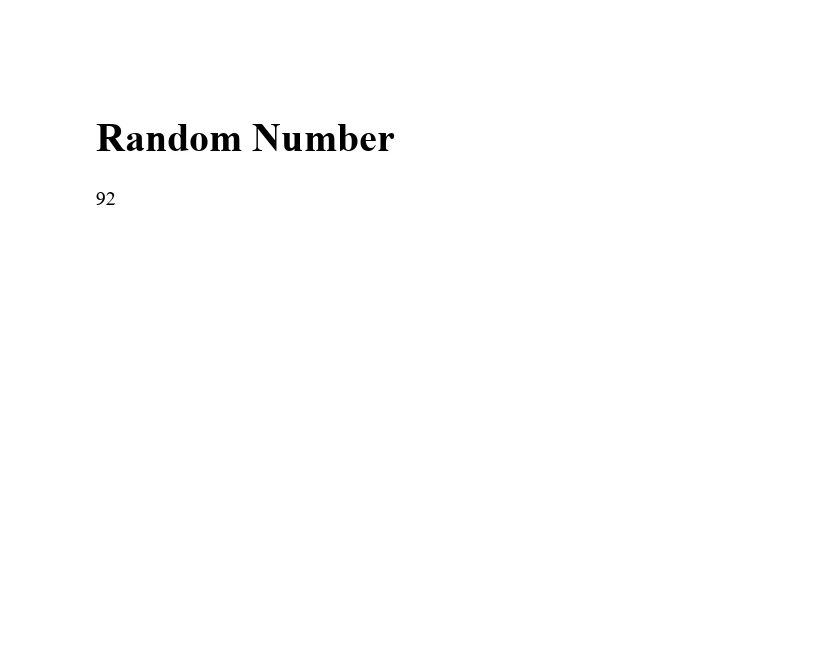
}该示例创建了一个简单的HTML字符串,其中包括一个标题和一个显示随机生成的数字的段落。 Math.random() 函数生成一个大于等于 0.0 且小于 1.0 的双精度值,然后乘以 100 并转换为整数,以获得一个介于 0 和 99 之间的随机数。然后通过 IronPDF 的 renderHtmlAsPdf 方法将此 HTML 字符串转换为 PDF 文档,生成的 PDF 将以"random.pdf"命名保存。
在 Java 中使用 Math.random() 方法和 Random 类生成随机数,是程序员工具库中的一个强大工具。 从在游戏中添加不确定性元素到模拟现实世界现象和为机器学习准备数据,理解如何生成随机数是必不可少的。 通过探索提供的示例并进行自己的实验,您将掌握将随机数生成有效地集成到Java应用中的技能。
IronPDF提供免费试用,用户可以在购买前探索其功能。 IronPDF 的授权起价为 $999。

Curtis Chau 拥有卡尔顿大学的计算机科学学士学位,专注于前端开发,精通 Node.js、TypeScript、JavaScript 和 React。他热衷于打造直观且美观的用户界面,喜欢使用现代框架并创建结构良好、视觉吸引力强的手册。

当您需要PDF看起来像HTML时,速度快。