Ramda JS NPM(开发者如何使用)

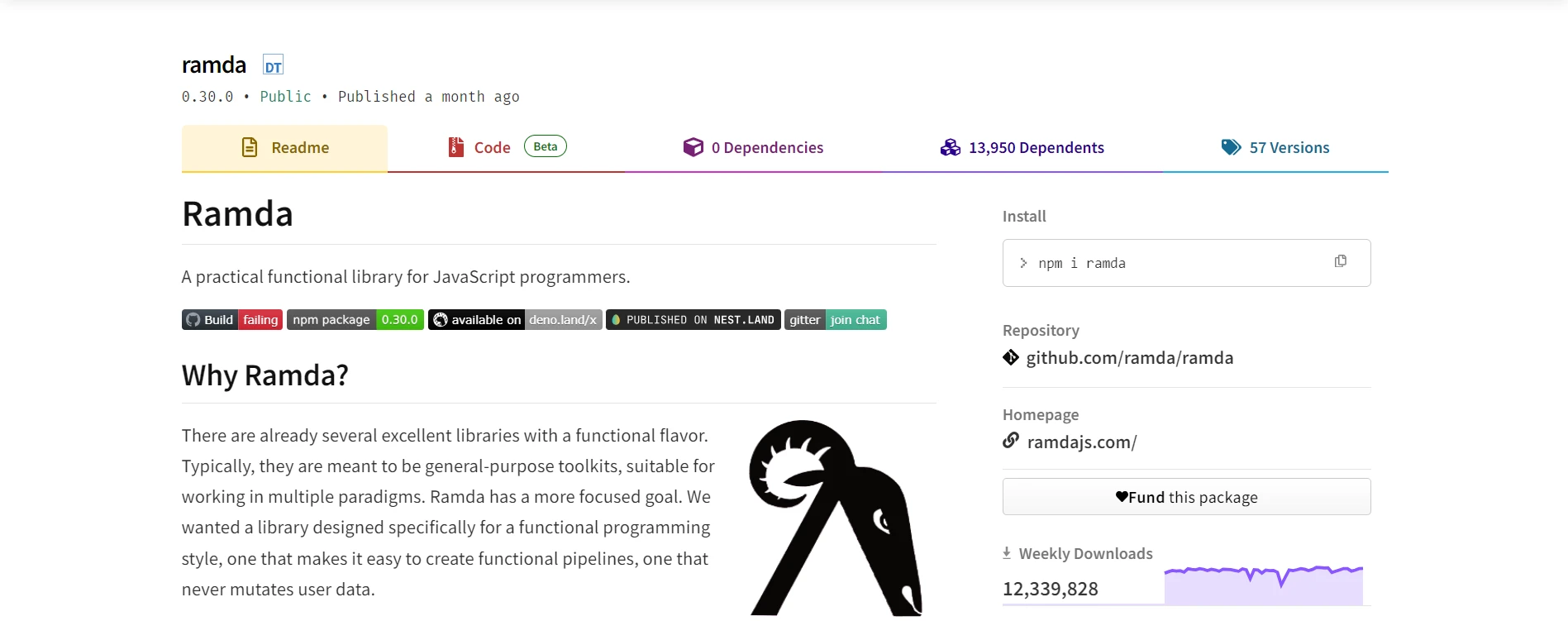
Ramda 是一个用于 JavaScript 的实用函数库,专为构建模块化、可重用的代码而设计。 它强调不变性和纯函数,使其成为在 JavaScript 应用程序中管理状态和数据转换的强大工具。 与 Lodash 或 Underscore 等其他库不同,Ramda 遵循更具功能性的方式,提供了一系列广泛的实用程序,方便实现函数式编程风格。
Ramda 的核心原则
不变性
不变性是 Ramda 的一个关键原则。 Ramda 中的函数不会修改输入数据,而是返回新的数据结构。 这种方法减少了副作用的风险,使代码更具可预测性和易于调试。
更纯粹的函数式风格
Ramda 为 JavaScript 程序员提供的库鼓励使用纯函数,即在相同输入下产生相同输出且无副作用的函数。 纯函数提高了代码的可靠性,使其更容易测试。
创建函数管道
Ramda 提供了组合函数的工具,允许开发人员通过组合简单函数来构建复杂操作。 这种可组合性使其易于创建功能性、可读性和可维护性的代码。
柯里化
所有 Ramda 函数都是自动柯里化的。 柯里化涉及将接受多个参数的函数分解为一系列函数,每个函数仅接受一个参数。 这个特性使得部分应用成为可能,其中函数的一部分参数可以固定,从而创建一个接受其余参数的新函数。
开始使用 Ramda
要开始使用 Ramda,通过 NPM 安装它:
npm install ramdanpm install ramda安装后,你可以将其导入到你的 JavaScript 文件中:
const R = require('ramda');const R = require('ramda');或者如果你正在使用 ES6 模块:
import * as R from 'ramda';import * as R from 'ramda';基本用法示例
以下是一系列使用示例,展示 Ramda 的主要区分特性。
不变性
以下示例展示了 Ramda 的不变性特性。 它从不改变用户数据; 而是添加到原始数据结构中:
const originalArray = [1, 2, 3, 4];
const newArray = R.append(5, originalArray);

// Log the original array and the new augmented array
console.log(originalArray); // [1, 2, 3, 4]
console.log(newArray);      // [1, 2, 3, 4, 5]
const originalArray = [1, 2, 3, 4];
const newArray = R.append(5, originalArray);
// Log the original array and the new augmented array
console.log(originalArray); // [1, 2, 3, 4]
console.log(newArray); // [1, 2, 3, 4, 5]纯函数
考虑一个将两个数字相加的函数:
const add = R.add;
console.log(add(2, 3)); // 5
const add = R.add;
console.log(add(2, 3)); // 5由于 R.add 是一个纯函数,对于相同的输入,它总会返回相同的结果。
函数组合
函数组合允许通过简化函数构建复杂操作。 Ramda 提供了 R.compose 和 R.pipe 用于此目的:
const multiplyBy2 = R.multiply(2);
const subtract1 = R.subtract(R.__, 1);
const multiplyAndSubtract = R.compose(subtract1, multiplyBy2);

// First multiply by 2, then subtract 1
console.log(multiplyAndSubtract(5)); // 9
const multiplyBy2 = R.multiply(2);
const subtract1 = R.subtract(R.__, 1);
const multiplyAndSubtract = R.compose(subtract1, multiplyBy2);
// First multiply by 2, then subtract 1
console.log(multiplyAndSubtract(5)); // 9柯里化
柯里化将一个函数转换为可以用比期望的更少的参数调用的形式。 Ramda 默认对其所有函数进行柯里化:
// A function to add three numbers
const addThreeNumbers = (a, b, c) => a + b + c;

// Currying the function using Ramda's R.curry
const curriedAddThreeNumbers = R.curry(addThreeNumbers);

// Create a new function by partially applying two arguments
const add5And10 = curriedAddThreeNumbers(5)(10);

// Call the new function with the remaining argument
console.log(add5And10(2)); // 17
// A function to add three numbers
const addThreeNumbers = (a, b, c) => a + b + c;
// Currying the function using Ramda's R.curry
const curriedAddThreeNumbers = R.curry(addThreeNumbers);
// Create a new function by partially applying two arguments
const add5And10 = curriedAddThreeNumbers(5)(10);
// Call the new function with the remaining argument
console.log(add5And10(2)); // 17高级功能
透镜
Ramda 的 Lenses 是用于不变数据操作的强大功能。 它们提供了一种方法,专注于基本数据结构的特定部分,允许安全的读取和更新。
const person = { name: 'John', address: { city: 'New York', zip: 10001 } };

// Create a lens that focuses on the 'address' property
const addressLens = R.lensProp('address');

// Create a lens that focuses on the 'city' within the 'address' object
const cityLens = R.lensPath(['address', 'city']);

// Update city to 'Los Angeles' immutably
const updatedPerson = R.set(cityLens, 'Los Angeles', person);

// Retrieve the updated city from the new person object
console.log(R.view(cityLens, updatedPerson)); // Los Angeles

// Verify no mutation occurred on the original object
console.log(person.address.city); // New York
const person = { name: 'John', address: { city: 'New York', zip: 10001 } };
// Create a lens that focuses on the 'address' property
const addressLens = R.lensProp('address');
// Create a lens that focuses on the 'city' within the 'address' object
const cityLens = R.lensPath(['address', 'city']);
// Update city to 'Los Angeles' immutably
const updatedPerson = R.set(cityLens, 'Los Angeles', person);
// Retrieve the updated city from the new person object
console.log(R.view(cityLens, updatedPerson)); // Los Angeles
// Verify no mutation occurred on the original object
console.log(person.address.city); // New York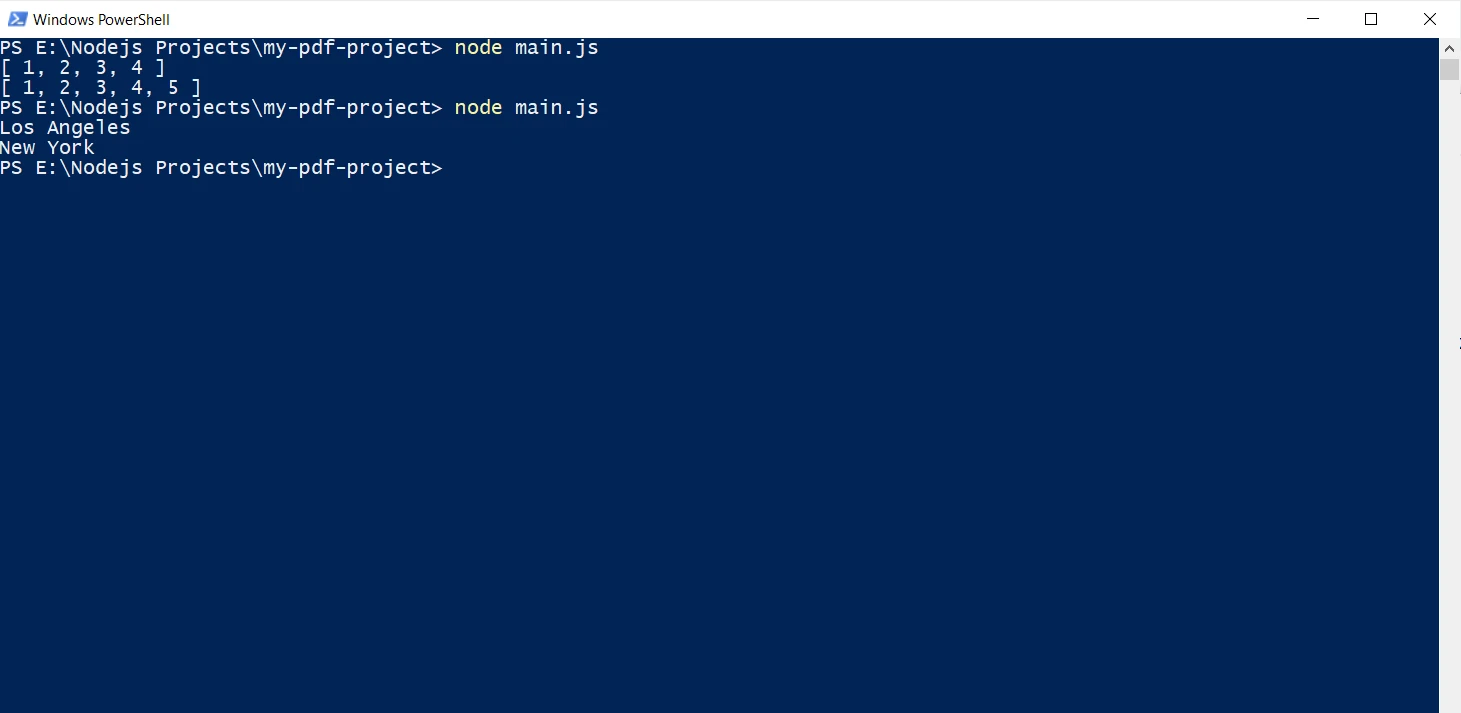
转换器
转换器通过将过滤、映射和归约的步骤合并为对数据进行单次通过来有效地转换数据管道。
const numbers = [1, 2, 3, 4, 5];

// Define functions to identify even numbers and double any number
const isEven = x => x % 2 === 0;
const double = x => x * 2;

// Create a transducer combining filtering and mapping operations
const transducer = R.compose(R.filter(isEven), R.map(double));

// Apply the transducer to transform the list
const result = R.transduce(transducer, R.flip(R.append), [], numbers);

console.log(result); // [4, 8]
const numbers = [1, 2, 3, 4, 5];
// Define functions to identify even numbers and double any number
const isEven = x => x % 2 === 0;
const double = x => x * 2;
// Create a transducer combining filtering and mapping operations
const transducer = R.compose(R.filter(isEven), R.map(double));
// Apply the transducer to transform the list
const result = R.transduce(transducer, R.flip(R.append), [], numbers);
console.log(result); // [4, 8]无点风格
Ramda 鼓励无点函数式编程风格,其中定义函数时不显式提及其参数。 这导致代码更简洁且更简明。
// Calculate the sum of elements in a list
const sum = R.reduce(R.add, 0);

// Calculate the average value using sum and length
const average = R.converge(R.divide, [sum, R.length]);

console.log(average([1, 2, 3, 4, 5])); // 3
// Calculate the sum of elements in a list
const sum = R.reduce(R.add, 0);
// Calculate the average value using sum and length
const average = R.converge(R.divide, [sum, R.length]);
console.log(average([1, 2, 3, 4, 5])); // 3在 Node.js 中使用 Ramda JS 和 IronPDF
将 Ramda JS 的函数式编程能力与 Node.js 中 IronPDF 的 PDF 生成功能相结合,可以实现更可维护、可读、且高效的代码。
什么是 IronPDF?
IronPDF for Node.js 由 Iron Software 开发,是一个强大的库,可使开发人员在 Node.js 环境中直接创建、操作和渲染 PDF 文档。 它为从 URL、HTML 文件和 HTML 字符串生成PDF提供了全面的功能,使其在基于 Web 的应用程序中具有高度的通用性。 这个库简化了复杂的 PDF 操作,允许通过最小的代码实现直接转换和渲染。
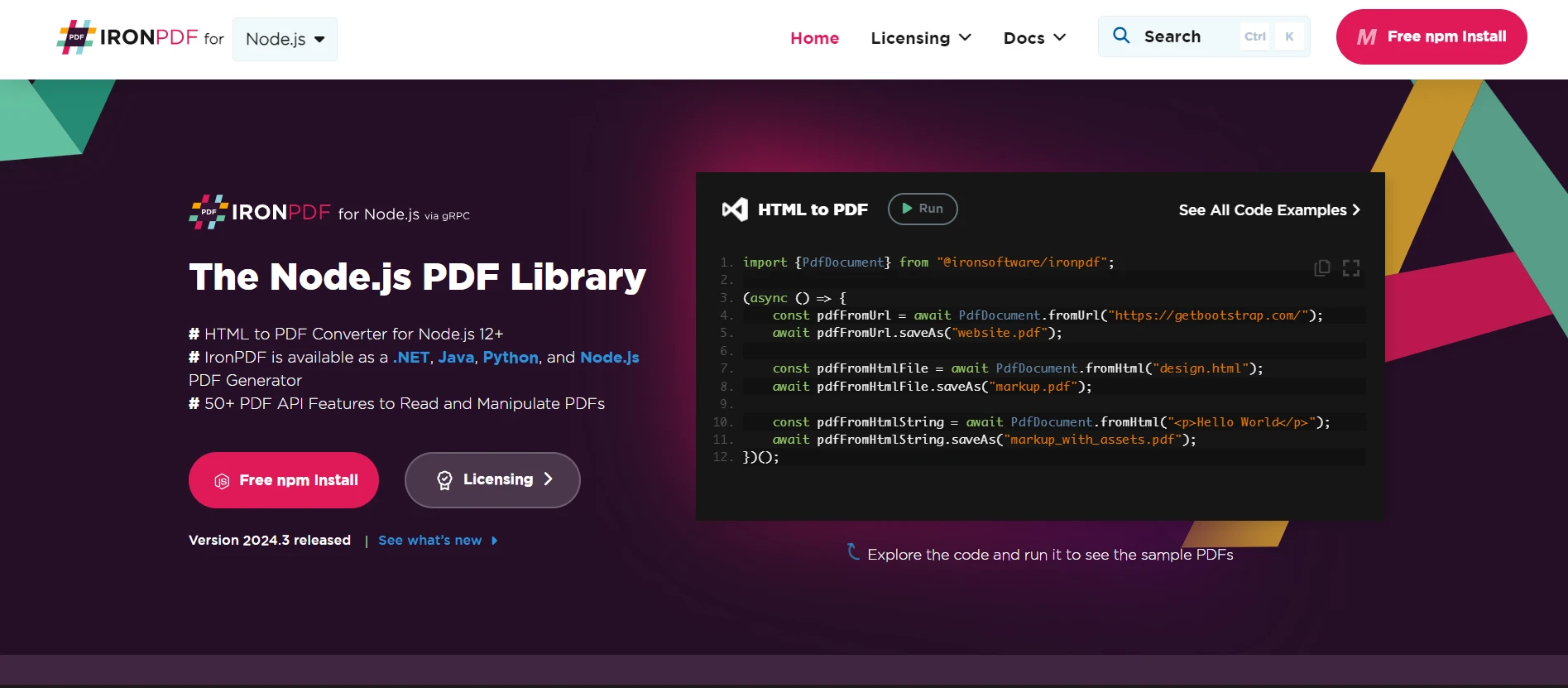
使用 IronPDF,开发人员可以轻松地将 PDF 生成集成到他们的工作流程中,受益于其强大的功能性和易用性,这对于在现代 Web 应用程序中创建动态报表、发票和其他基于文档的功能尤其有用。
安装
首先,使用 npm 安装 IronPDF for Node.js 包:
npm i @ironsoftware/ironpdf
基本用法
要将 IronPDF 与 Ramda 结合使用,导入所需模块:
import { PdfDocument } from "@ironsoftware/ironpdf";
import * as R from "ramda";
import { PdfDocument } from "@ironsoftware/ironpdf";
import * as R from "ramda";使用 Ramda 和 IronPDF 生成 PDF
我们可以使用 Ramda 创建执行所有 PDF 生成操作的函数管道。 在这里,我们从 URL、HTML 字符串 和 HTML 文件 创建 PDF 并使用 Ramda 函数式 JavaScript 风格进行管道化:
// Function to generate PDF from a URL
const generatePdfFromUrl = (url) => {
  return PdfDocument.fromUrl(url)
    .then(pdf => pdf.saveAs("website.pdf"));
};

// Function to generate PDF from an HTML file
const generatePdfFromHtmlFile = (filePath) => {
  return PdfDocument.fromHtml(filePath)
    .then(pdf => pdf.saveAs("markup.pdf"));
};

// Function to generate PDF from an HTML string
const generatePdfFromHtmlString = (htmlString) => {
  return PdfDocument.fromHtml(htmlString)
    .then(pdf => pdf.saveAs("markup_with_assets.pdf"));
};

// Main function to generate all PDFs using Ramda's pipe
const generatePdfs = async () => {
  const generateFromUrl = R.pipe(
    generatePdfFromUrl
  );
  const generateFromHtmlFile = R.pipe(
    generatePdfFromHtmlFile
  );
  const generateFromHtmlString = R.pipe(
    generatePdfFromHtmlString
  );

  // Await the generation of PDFs from various sources
  await generateFromUrl("https://ironpdf.com/nodejs/");
  await generateFromHtmlFile("design.html");
  await generateFromHtmlString("<p>Hello World</p>");

  console.log("PDFs generated successfully");
};

// Execute the PDF generation
generatePdfs();
// Function to generate PDF from a URL
const generatePdfFromUrl = (url) => {
return PdfDocument.fromUrl(url)
.then(pdf => pdf.saveAs("website.pdf"));
};
// Function to generate PDF from an HTML file
const generatePdfFromHtmlFile = (filePath) => {
return PdfDocument.fromHtml(filePath)
.then(pdf => pdf.saveAs("markup.pdf"));
};
// Function to generate PDF from an HTML string
const generatePdfFromHtmlString = (htmlString) => {
return PdfDocument.fromHtml(htmlString)
.then(pdf => pdf.saveAs("markup_with_assets.pdf"));
};
// Main function to generate all PDFs using Ramda's pipe
const generatePdfs = async () => {
const generateFromUrl = R.pipe(
generatePdfFromUrl
);
const generateFromHtmlFile = R.pipe(
generatePdfFromHtmlFile
);
const generateFromHtmlString = R.pipe(
generatePdfFromHtmlString
);
// Await the generation of PDFs from various sources
await generateFromUrl("https://ironpdf.com/nodejs/");
await generateFromHtmlFile("design.html");
await generateFromHtmlString("<p>Hello World</p>");
console.log("PDFs generated successfully");
};
// Execute the PDF generation
generatePdfs();URL 到 PDF 输出:
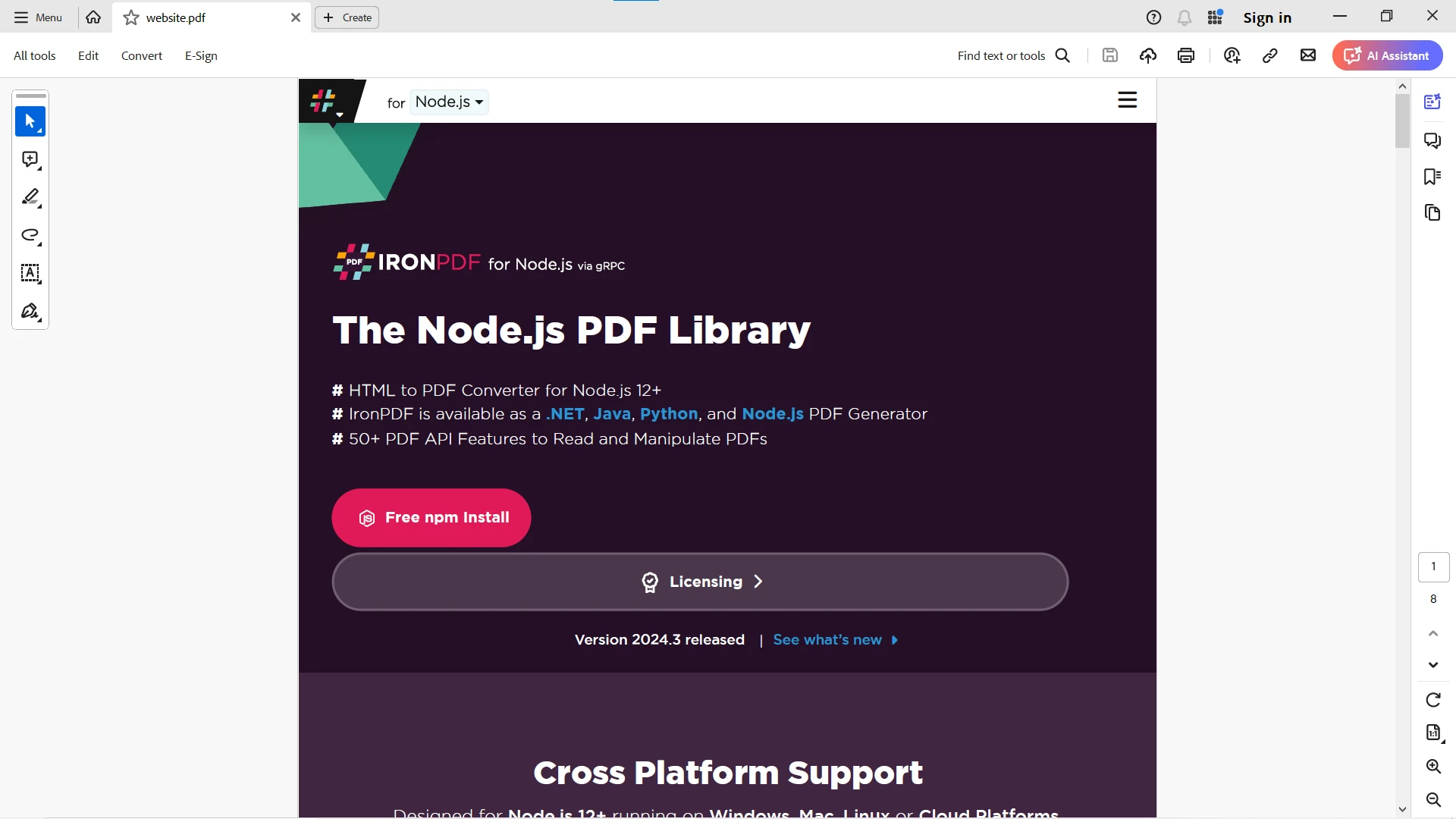
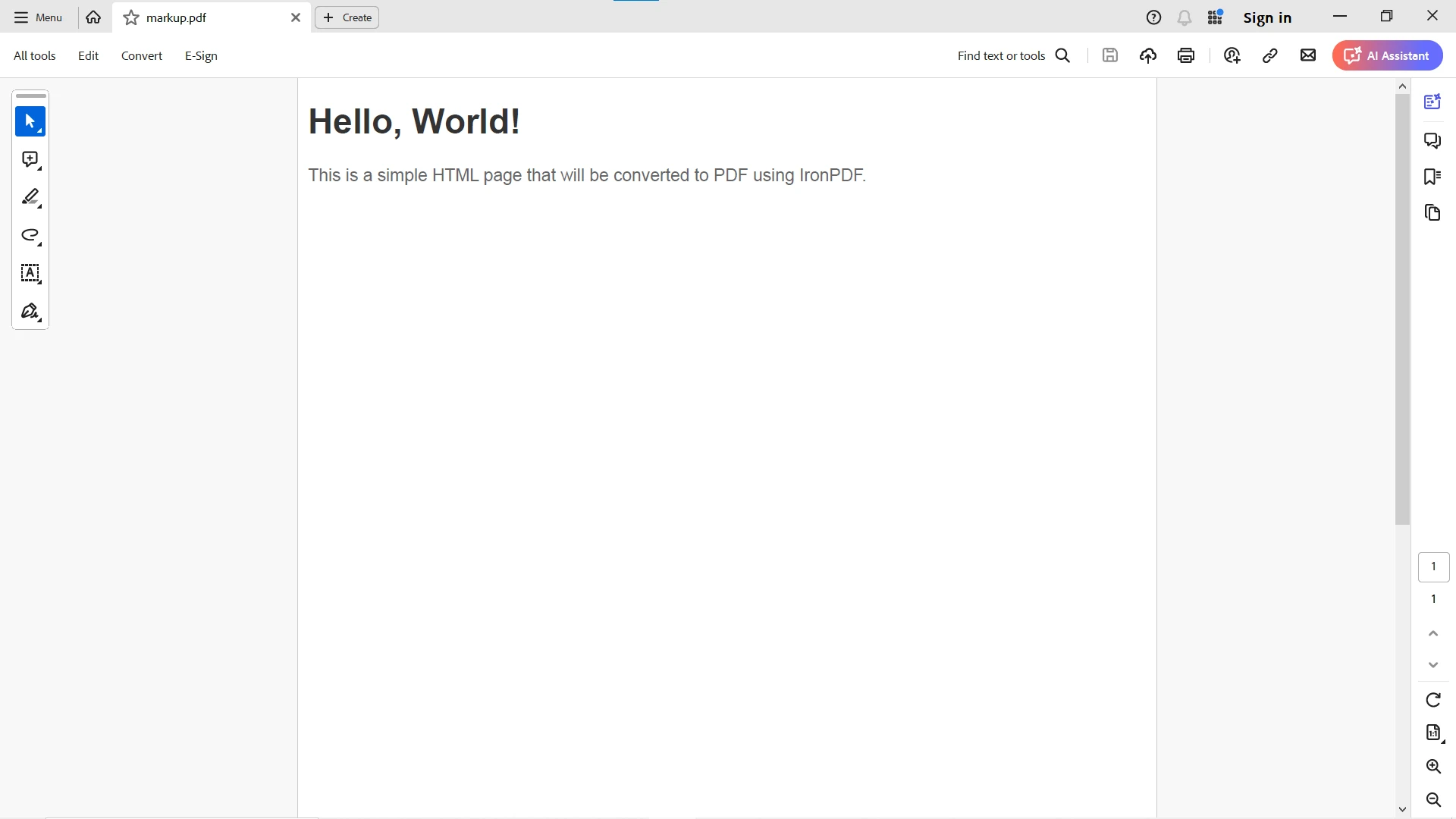
HTML 文件到 PDF 输出:
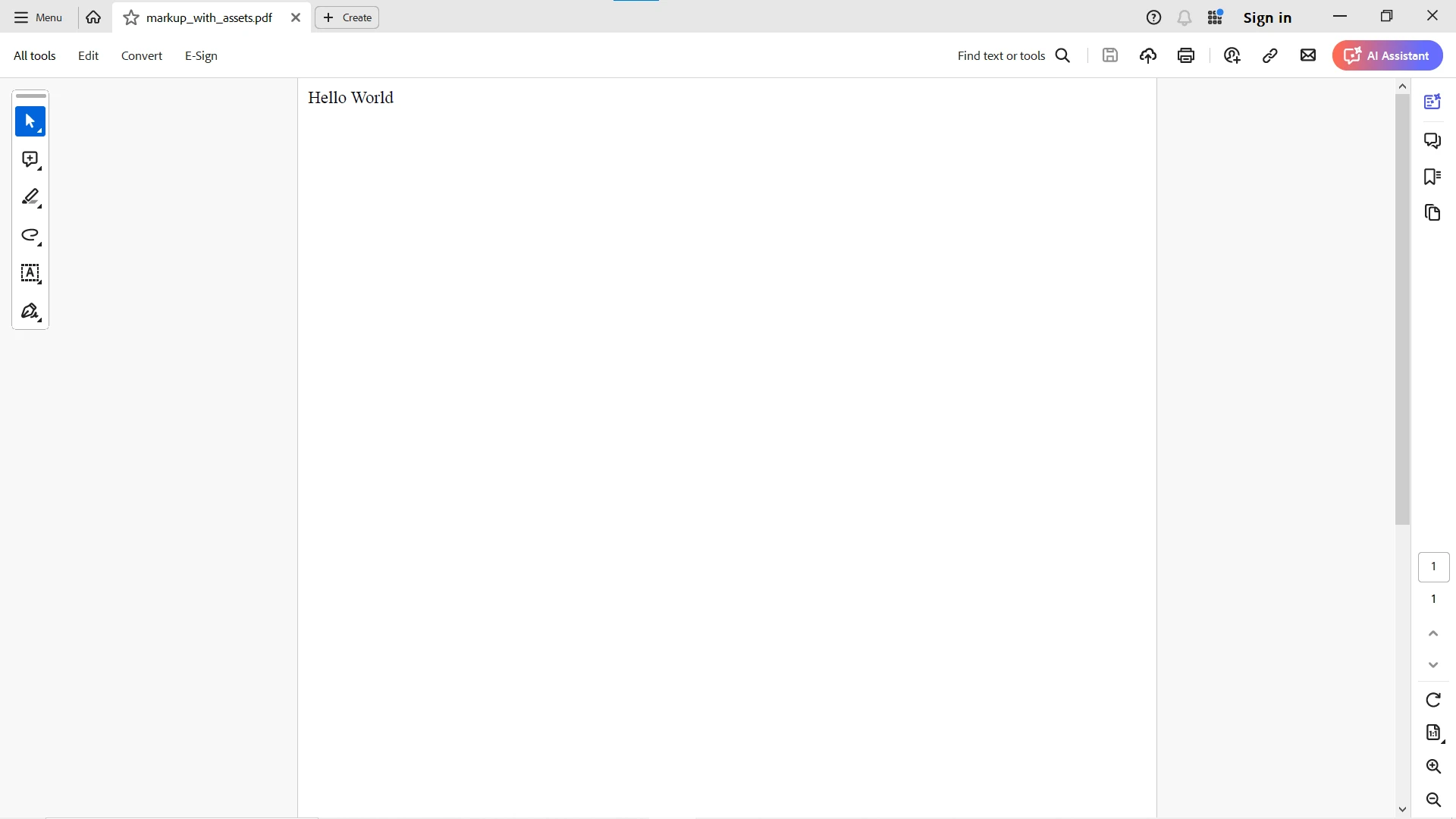
HTML 字符串到 PDF 输出:
结论
Ramda 是一个多功能且强大的库,专为 JavaScript 中的函数式编程而设计。 通过强调不变性、纯函数和函数组合,Ramda 帮助开发人员编写更可靠和可维护的代码。
通过在 Node.js 中将 Ramda JS 与 IronPDF 集成,你可以创建一个生成 PDF 的功能性和有组织的方法。 Ramda 的函数式编程实用程序使代码更易读和可维护,而 IronPDF 提供了强大的 PDF 生成功能。 这种组合可以从多种来源高效且可扩展地创建 PDF,增强你的 Node.js 应用程序。
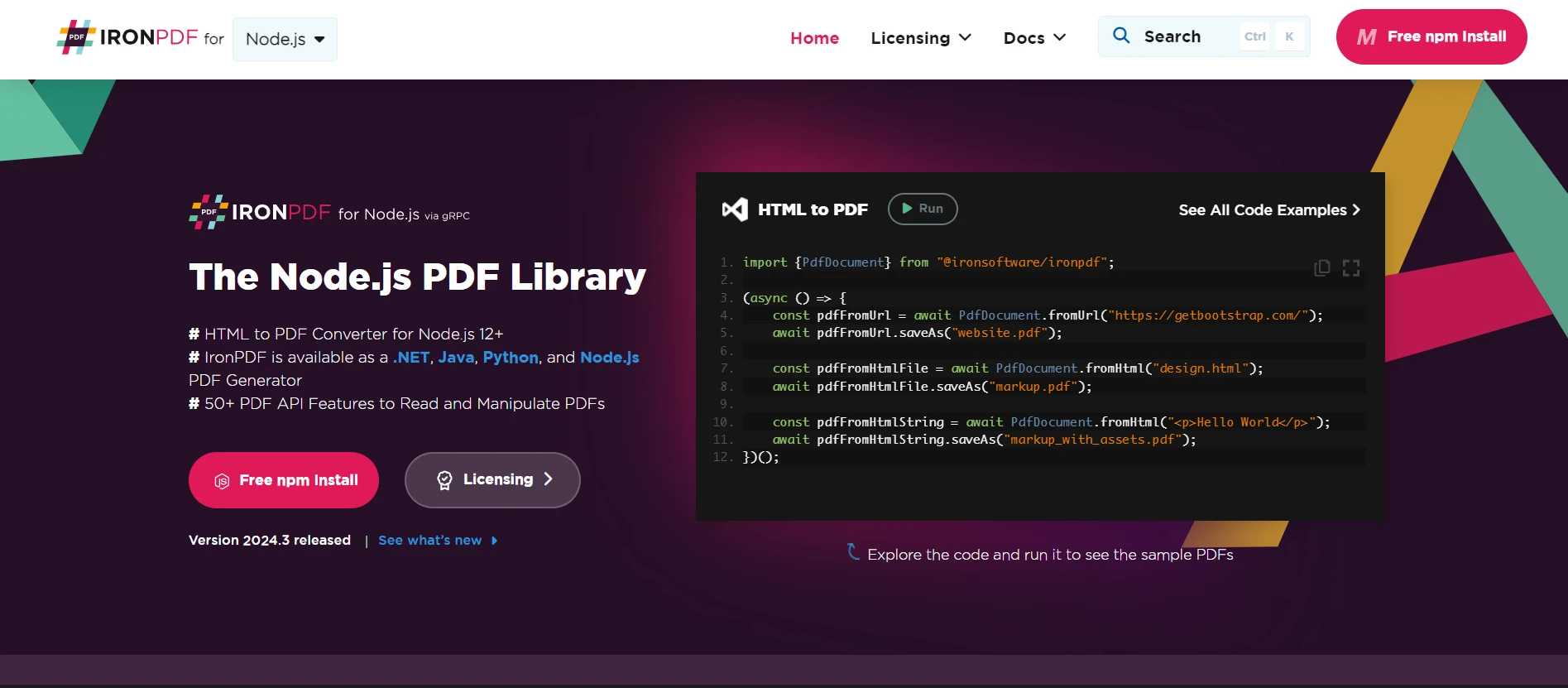
试用IronPDF,从$799开始。 发现强大的功能并了解为什么它值得投资。 今天就试一下!






 免费开始
免费开始 免费开始
免费开始 预定免费现场演示



 无需信用卡或创建账户