已更新 2026年4月23日
深流 io (开发者如何使用)
在本文中,我们将学习如何使用开放实时服务器深流和 IronPDF 生成 PDF。
阅读更多

在Python编程语言中开发强大而有弹性的程序时,通常需要优雅地处理临时错误,特别是在使用外部服务或网络操作时。 在这里,强大的Python通用重试库Tenacity派上了用场。 开发人员可以通过将Tenacity与IronPDF(一种功能丰富的Python应用程序创建PDF文档的框架)结合起来,提高其PDF生成操作的可靠性和稳健性。
Tenacity提供了一个可适应且可定制的结构,用于重试因网络故障、超时或服务中断等暂时性问题而失败或引发异常的任务。Tenacity凭借其用户友好的API和广泛的功能集,使重试逻辑的开发变得更简单,让开发人员能够专注于创建可靠的系统,而不必担心短暂的故障。
在本文中,我们将讨论将Tenacity库与IronPDF集成的优势,展示实际示例,并提供在Python应用程序中创建可靠的PDF生成过程的建议。 开发人员可以通过结合Tenacity的强大功能与IronPDF,在提供高质量的PDF文档的同时提高他们应用程序的稳健性和可靠性。
Tenacity使程序员能够使用Python装饰器向函数或方法添加重试逻辑。 因此,可以简单地为特定动作添加重试行为,而无需更改原始代码。
Tenacity提供了几个可调整的参数来指定重试计划。 开发人员可以自定义重试的最大次数、重试之间的时间间隔以及重试发生的情况。
Tenacity支持指数退避,这是一种流行的当前重试调用技术,其中重试之间的间隔随着每次尝试的次数呈指数增长。 这样做可以避免在流量大或拥堵时向目标服务发送过多请求。
Tenacity提供了引入抖动和随机性的选项,以避免重试延迟引起的同步问题和雷击效应。 这减少了多个客户端同时重试的可能性,避免了重试努力同时爆发。
开发人员可以根据操作的返回值或任何引发的异常创建独特的重试条件。 这样可以精确控制重试应该在何时和什么条件下进行。
Tenacity促进了通用操作超时和截止日期的创建,保证重试尝试不会无限期进行,并且如果操作超过预定阈值将最终终止。
Flask、Django和Celery只是Tenacity轻松交互的一些框架。 这使得开发人员可以轻松地在后台操作、网络端点或他们系统的任何其他部分添加重试逻辑。
from tenacity import retry, wait_exponential

# Decorate the function with a retry mechanism
@retry(wait=wait_exponential(multiplier=1, min=1, max=10))
def my_function():
    # Your code logic here
    pass

# Explanation:
# - `multiplier`: Used to increase the interval between retries.
# - `min`: Minimum wait time in seconds between retries.
# - `max`: Maximum wait time allowed between retries.
from tenacity import retry, wait_random
@retry(wait=wait_random(min=1, max=10))
def my_function():
# Your code logic here
pass
# Explanation:
# - `min`: Minimum random wait time in seconds between retries.
# - `max`: Maximum random wait time in seconds between retries.from tenacity import retry, retry_if_exception_type
# Retry on specific exceptions like ConnectionError
@retry(retry=retry_if_exception_type(ConnectionError))
def my_function():
# Your code logic here
pass
# Explanation:
# Retry only if a ConnectionError exception is raised during the function execution.from tenacity import retry, retry_if_result
@retry(retry=retry_if_result(lambda result: result is None))
def my_function():
# Your code logic here
return some_result
# Explanation:
# Retry if the function result is `None`.from tenacity import retry, stop_after_delay
@retry(stop=stop_after_delay(30))
def my_function():
# Your code logic here
pass
# Explanation:
# Stop retrying after 30 seconds have elapsed since the first attempt.from tenacity import retry, after_log
import logging
logger = logging.getLogger(__name__)
@retry(after=after_log(logger, logging.DEBUG))
def my_function():
# Your code logic here
pass
# Explanation:
# Use a logger to log details of each retry attempt at the DEBUG level.借助于流行的工具包IronPDF,我们可以在程序中创建、编辑和渲染PDF文档。 以多种方式处理PDF:您可以将HTML页面转换为PDF,向现有的PDF中添加文字、图像和形状,从现有的PDF中提取文字和图像。甚至可以从HTML内容、图像或原始数据中创建新的PDF页面。
IronPDF极其易于使用,这是其主要优点之一。 Python的用户友好的API和详尽的文档使得开发人员可以轻松开始在项目中创建PDF。 IronPDF 还有两个优点:速度和效率,使开发人员能够快速创建高质量的PDF文档。
在Python应用程序中使用Tenacity和IronPDF的首要步骤是安装所需的依赖项,并将这两个库集成到您的PDF生成工作流程中。
:ProductInstall pip install tenacity ironpdf在您的Python脚本中,从Tenacity和IronPDF导入所需的模块:
from tenacity import retry, stop_after_attempt, wait_fixed
from IronPdf import IronPdf

# Set up retry behavior on the PDF generating function
@retry(
    stop=stop_after_attempt(3),   # Stop retrying after 3 attempts
    wait=wait_fixed(2)            # Wait 2 seconds between retry attempts
)
def generate_pdf(html_content):
    iron_pdf = IronPdf()
    # Render the HTML content as a PDF
    iron_pdf.render_html_as_pdf(html_content)
    # Save the generated PDF to a file
    iron_pdf.save_as_pdf("output.pdf")

# Explanation:
# - `@retry(stop=stop_after_attempt(3))`: Stop after 3 failed attempts.
# - `wait_fixed(2)`: Wait 2 seconds before each retry attempt.调用您的PDF创建函数并传递HTML文本。 如果发生异常,Tenacity将根据预设的重试参数自动重试该函数。
try:
    html_content = "<html><body><h1>Hello, IronPDF!</h1></body></html>"
    generate_pdf(html_content)
    print("PDF generated successfully")
except Exception as e:
    print("Failed to generate PDF:", e)

# Explanation:
# Attempt to generate a PDF and handle any exceptions that might occur during the process.通过修改重试次数、重试条件和等待条件、重试间隔以及重试发生的情况等因素,您可以进一步调整重试行为。 Tenacity提供不同的重试方法以及重试和等待条件策略,您可以根据需求微调重试行为。
以下是基于上面的代码生成的输出:
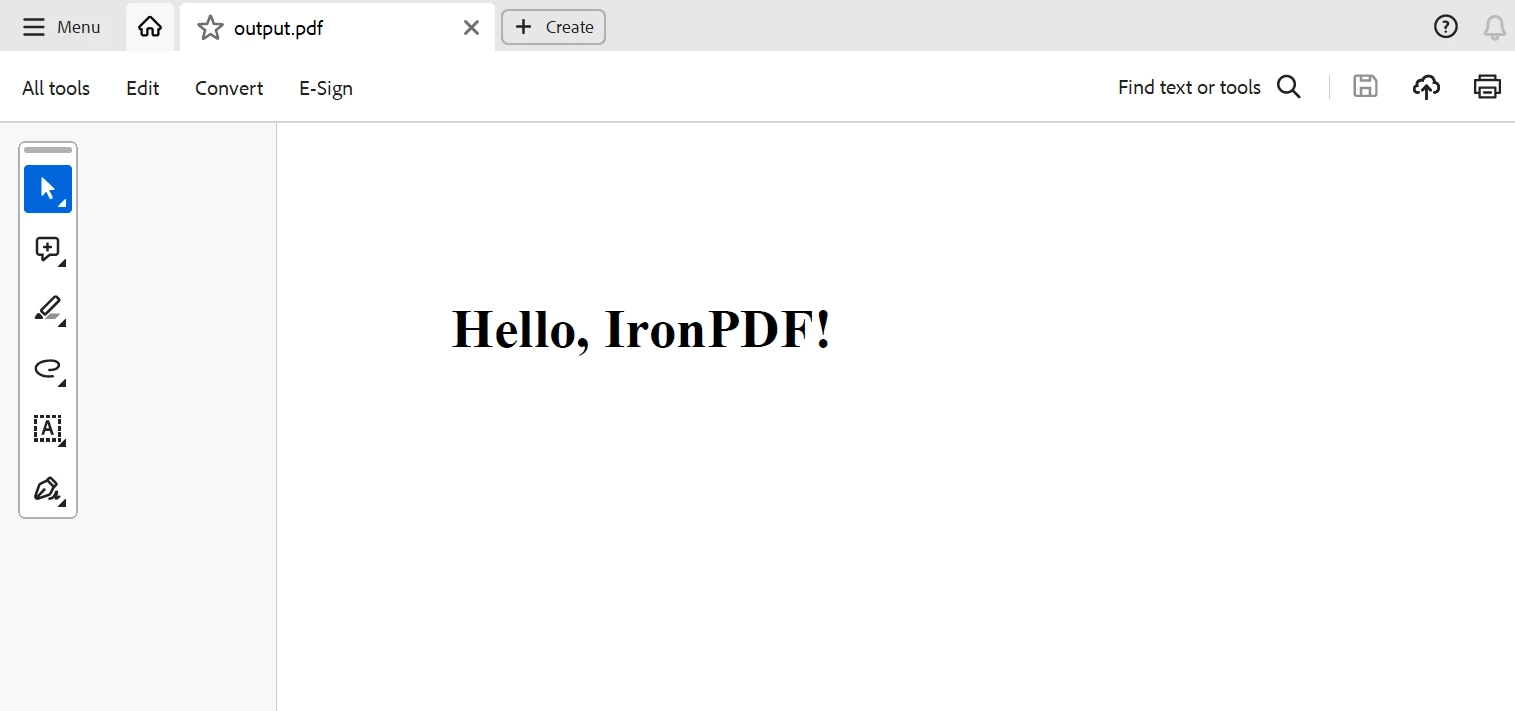
总之,Tenacity和IronPDF共同提供了一种强大的解决方案,用于在Python应用程序中创建稳健和可靠的PDF生成工作流程。 开发人员可以通过利用IronPDF的强大PDF生成能力和Tenacity的可定制重试逻辑,确保其PDF生成过程稳健且能够应对临时故障和重试。
Tenacity的广泛功能集令开发人员可以对多个条件下的重试策略进行精确调整,指定独特的重试标准,定制异常重试,并包含复杂的配置选项。 Tenacity允许开发人员优雅地处理临时故障,例如网络中断或服务中断,并保证重要的PDF创建过程立即重试。
总之,开发人员通过使用Tenacity与IronPDF,可以创建可靠、坚固的PDF生产解决方案,能够应对现实世界环境的考验。 这种组合为在Python应用程序中创建可靠和可扩展的PDF生成工作流程提供了强大的基础,无论是用于生成发票、报告还是文档。
包中包含了一个IronPDF终身许可证,价格合理。 对于许多系统,该软件包以非常实惠的$999提供。 许可证持有者可以随时获得全天候在线工程支持。 请访问许可证页面以获取有关费用的更多详细信息。 要了解有关Iron Software产品的更多信息,请访问库页面。

Curtis Chau 拥有卡尔顿大学的计算机科学学士学位,专注于前端开发,精通 Node.js、TypeScript、JavaScript 和 React。他热衷于打造直观且美观的用户界面,喜欢使用现代框架并创建结构良好、视觉吸引力强的手册。

当您需要PDF看起来像HTML时,速度快。