In der weiten Welt der C#-Programmierung ist der sorgfältige Umgang mit Speicherressourcen ein Eckpfeiler für die Entwicklung robuster und leistungsstarker Anwendungen. Im Zentrum dieses Imperativs steht ein zentrales Merkmal – der Destruktor.
Dieser Artikel dient als umfassende Untersuchung der nuancierten Welt von C#-Destruktoren, indem er ihre Besonderheiten durch Erläuterung ihrer Definition, Erklärung ihres Zwecks, Darlegung illustrierender Beispiele und Verdeutlichung der Relevanz ihrer Integration in Ihr Codebasis beleuchtet.
Im folgenden Inhalt dieses Artikels werden wir die Destruktoren, ihre Beispiele und ihre Anwendungen besprechen. Wir werden auch besprechen, wie man die Destruktoren mit der PDF-Bibliothek in C# namens IronPDF verwendet.
1. Was sind Destruktoren?
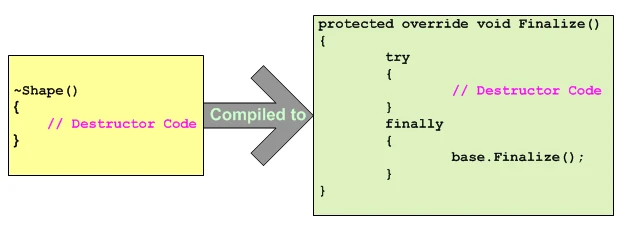
Ein Destruktor in der C#-Programmiersprache ist eine spezialisierte Methode, die automatisch ausgeführt wird, wenn ein Objekt entweder den Gültigkeitsbereich verlässt oder ausdrücklich auf null gesetzt wird. Dieser spezielle Aspekt von C# ist von großer Bedeutung, hauptsächlich im Bereich des Ressourcenmanagements. Destruktoren ermöglichen es Entwicklern innerhalb ihres Betriebsrahmens, nicht verwaltete Ressourcen systematisch freizugeben, einschließlich Elemente wie Dateihandles, Datenbankverbindungen oder Netzwerksockets.
Innerhalb der Syntax von C# zeigt der Destruktor einer Klasse eine unverwechselbare Struktur, die durch das Vorhandensein des Tildensymbols (~) gekennzeichnet ist, dem unmittelbar der Klassenname folgt. Dies unterscheidet ihn in grundlegender Weise von Konstruktoren – Destruktoren enthalten keine Parameter, was ihre Implementierung bemerkenswert unkompliziert und prägnant macht. Diese Abwesenheit von Parametern trägt zur Einfachheit und Klarheit der Destruktoren und ihrer Integration in C#-Codebasen bei.
1.1. Beispiel für Destruktoren
Lassen Sie uns das Konzept der Klassen-Destruktoren mit einem einfachen Beispiel veranschaulichen. Betrachten Sie eine Klasse namens ResourceHandler, die einen Dateistream verwaltet. Der Destruktor in diesem Fall wird automatisch aufgerufen, um den Dateistream zu schließen, wenn das Objekt nicht mehr benötigt wird.
using System;
using System.IO;

public class ResourceHandler
{
    private FileStream fileStream;

    // Constructor
    public ResourceHandler(string filePath)
    {
        fileStream = new FileStream(filePath, FileMode.Open);
    }

    // Destructor
    ~ResourceHandler()
    {
        // Check if the file stream is not null before attempting to close it
        if (fileStream != null)
        {
            fileStream.Close();
            Console.WriteLine("File stream closed.");
        }
    }
}
using System;
using System.IO;

public class ResourceHandler
{
    private FileStream fileStream;

    // Constructor
    public ResourceHandler(string filePath)
    {
        fileStream = new FileStream(filePath, FileMode.Open);
    }

    // Destructor
    ~ResourceHandler()
    {
        // Check if the file stream is not null before attempting to close it
        if (fileStream != null)
        {
            fileStream.Close();
            Console.WriteLine("File stream closed.");
        }
    }
}
Imports System
Imports System.IO
Public Class ResourceHandler
Private fileStream As FileStream
' Constructor
Public Sub New(ByVal filePath As String)
fileStream = New FileStream(filePath, FileMode.Open)
End Sub
' Destructor
Protected Overrides Sub Finalize()
' Check if the file stream is not null before attempting to close it
If fileStream IsNot Nothing Then
fileStream.Close()
Console.WriteLine("File stream closed.")
End If
End Sub
End Class
Imports System
Imports System.IO

Public Class ResourceHandler
	Private fileStream As FileStream

	' Constructor
	Public Sub New(ByVal filePath As String)
		fileStream = New FileStream(filePath, FileMode.Open)
	End Sub

	' Destructor
	Protected Overrides Sub Finalize()
		' Check if the file stream is not null before attempting to close it
		If fileStream IsNot Nothing Then
			fileStream.Close()
			Console.WriteLine("File stream closed.")
		End If
	End Sub
End Class
In diesem Beispiel wird ein Dateistream erstellt und geöffnet, wenn eine Instanz von ResourceHandler erstellt wird. Der Destruktor stellt sicher, dass der Dateistream geschlossen wird, wenn das Objekt von der Garbage Collection eingesammelt wird.
2. wann man Destruktoren verwenden sollte
Destruktoren werden besonders wertvoll, wenn es um Ressourcen geht, die nicht vom Garbage Collector zur Laufzeit von .NET verwaltet werden, wie Dateihandles oder Datenbankverbindungen. Während der Garbage Collector die Speicherverwaltung für verwaltete Objekte übernimmt, ist er möglicherweise nicht über die spezifischen Bereinigungsanforderungen für nicht verwaltete Ressourcen informiert. Destruktoren schließen diese Lücke, indem sie dem Garbage Collector einen Mechanismus zur Verfügung stellen, um diese Ressourcen ausdrücklich freizugeben.
Es ist wichtig zu beachten, dass C#-Entwickler oft die using-Anweisung in Verbindung mit Objekten verwenden, die das IDisposable-Interface implementieren. Dies gewährleistet eine rechtzeitige und deterministische Freigabe von Ressourcen und macht Destruktoren in modernem C#-Code seltener. Das Verständnis von Destruktoren bleibt jedoch entscheidend für Szenarien, in denen eine direkte Ressourcenverwaltung notwendig ist.
3. eine Einführung in IronPDF in C#
IronPDF – C# PDF-Bibliothek ist eine leistungsstarke Bibliothek für die Arbeit mit PDFs in C#. Sie bietet Entwicklern eine umfassende Palette von Werkzeugen zum Erstellen, Bearbeiten und Verarbeiten von PDF-Dokumenten reibungslos innerhalb ihrer C#-Anwendungen. Mit IronPDF können Entwickler PDFs aus verschiedenen Quellen generieren, einschließlich HTML, Bilder und andere Dokumentformate.
IronPDF überzeugt in der HTML-zu-PDF-Konvertierung, indem es den originalen Layouts und Stilen präzise erhält. Es ist ideal zur Erstellung von PDFs aus webbasierten Inhalten wie Berichten, Rechnungen und Dokumentationen. Mit Unterstützung für HTML-Dateien, URLs und rohe HTML-Strings erstellt IronPDF problemlos hochwertige PDF-Dokumente.
using IronPdf;

class Program
{
    static void Main(string[] args)
    {
        var renderer = new ChromePdfRenderer();

        // Convert HTML String to PDF
        var htmlContent = "<h1>Hello, IronPDF!</h1><p>This is a PDF from an HTML string.</p>";
        var pdfFromHtmlString = renderer.RenderHtmlAsPdf(htmlContent);
        pdfFromHtmlString.SaveAs("HTMLStringToPDF.pdf");

        // Convert HTML File to PDF
        var htmlFilePath = "path_to_your_html_file.html"; // Specify the path to your HTML file
        var pdfFromHtmlFile = renderer.RenderHtmlFileAsPdf(htmlFilePath);
        pdfFromHtmlFile.SaveAs("HTMLFileToPDF.pdf");

        // Convert URL to PDF
        var url = "http://ironpdf.com"; // Specify the URL
        var pdfFromUrl = renderer.RenderUrlAsPdf(url);
        pdfFromUrl.SaveAs("URLToPDF.pdf");
    }
}
using IronPdf;

class Program
{
    static void Main(string[] args)
    {
        var renderer = new ChromePdfRenderer();

        // Convert HTML String to PDF
        var htmlContent = "<h1>Hello, IronPDF!</h1><p>This is a PDF from an HTML string.</p>";
        var pdfFromHtmlString = renderer.RenderHtmlAsPdf(htmlContent);
        pdfFromHtmlString.SaveAs("HTMLStringToPDF.pdf");

        // Convert HTML File to PDF
        var htmlFilePath = "path_to_your_html_file.html"; // Specify the path to your HTML file
        var pdfFromHtmlFile = renderer.RenderHtmlFileAsPdf(htmlFilePath);
        pdfFromHtmlFile.SaveAs("HTMLFileToPDF.pdf");

        // Convert URL to PDF
        var url = "http://ironpdf.com"; // Specify the URL
        var pdfFromUrl = renderer.RenderUrlAsPdf(url);
        pdfFromUrl.SaveAs("URLToPDF.pdf");
    }
}
Imports IronPdf
Friend Class Program
Shared Sub Main(ByVal args() As String)
Dim renderer = New ChromePdfRenderer()
' Convert HTML String to PDF
Dim htmlContent = "<h1>Hello, IronPDF!</h1><p>This is a PDF from an HTML string.</p>"
Dim pdfFromHtmlString = renderer.RenderHtmlAsPdf(htmlContent)
pdfFromHtmlString.SaveAs("HTMLStringToPDF.pdf")
' Convert HTML File to PDF
Dim htmlFilePath = "path_to_your_html_file.html" ' Specify the path to your HTML file
Dim pdfFromHtmlFile = renderer.RenderHtmlFileAsPdf(htmlFilePath)
pdfFromHtmlFile.SaveAs("HTMLFileToPDF.pdf")
' Convert URL to PDF
Dim url = "http://ironpdf.com" ' Specify the URL
Dim pdfFromUrl = renderer.RenderUrlAsPdf(url)
pdfFromUrl.SaveAs("URLToPDF.pdf")
End Sub
End Class
Imports IronPdf

Friend Class Program
	Shared Sub Main(ByVal args() As String)
		Dim renderer = New ChromePdfRenderer()

		' Convert HTML String to PDF
		Dim htmlContent = "<h1>Hello, IronPDF!</h1><p>This is a PDF from an HTML string.</p>"
		Dim pdfFromHtmlString = renderer.RenderHtmlAsPdf(htmlContent)
		pdfFromHtmlString.SaveAs("HTMLStringToPDF.pdf")

		' Convert HTML File to PDF
		Dim htmlFilePath = "path_to_your_html_file.html" ' Specify the path to your HTML file
		Dim pdfFromHtmlFile = renderer.RenderHtmlFileAsPdf(htmlFilePath)
		pdfFromHtmlFile.SaveAs("HTMLFileToPDF.pdf")

		' Convert URL to PDF
		Dim url = "http://ironpdf.com" ' Specify the URL
		Dim pdfFromUrl = renderer.RenderUrlAsPdf(url)
		pdfFromUrl.SaveAs("URLToPDF.pdf")
	End Sub
End Class
Diese Bibliothek vereinfacht die Komplexität der PDF-Handhabung und bietet eine benutzerfreundliche Oberfläche sowie eine Vielzahl von Funktionen, wodurch sie eine ausgezeichnete Wahl für C#-Entwickler ist, die eine effiziente und zuverlässige PDF-Funktionalität in ihren Anwendungen suchen. Lassen Sie uns nun in die Welt der C#-Destruktoren eintauchen und erkunden, wie sie effektiv genutzt werden können, insbesondere in Verbindung mit IronPDF.
3.1. Verwendung von C#-Destruktoren mit IronPDF
Lassen Sie uns ein praktisches Beispiel erkunden, wie C#-Destruktoren in Verbindung mit IronPDF verwendet werden, um Ressourcen effizient zu verwalten. Betrachten Sie ein Szenario, in dem Sie ein PDF-Dokument erzeugen und sicherstellen möchten, dass die zugehörigen Ressourcen freigegeben werden, wenn das Dokument nicht mehr benötigt wird.
using IronPdf;
using System;

public class PdfGenerator
{
    private IronPdf.PdfDocument pdfDocument;

    public void Generate()
    {
        var renderer = new ChromePdfRenderer();
        pdfDocument = renderer.RenderHtmlAsPdf("<p>This PDF is generated using IronPDF and Destructors.</p>");
        pdfDocument.SaveAs("output.pdf");
        Console.WriteLine("PDF document created.");
    }

    // Destructor
    ~PdfGenerator()
    {
        // If pdfDocument is not null, dispose of it to release resources
        if (pdfDocument != null)
        {
            pdfDocument.Dispose();
            Console.WriteLine("PDF document resources released.");
        }
    }
}

class Program
{
    public static void Main()
    {
        // Create an instance of PdfGenerator and generate the PDF
        PdfGenerator pdfGenerator = new PdfGenerator();
        pdfGenerator.Generate();
    }
}
using IronPdf;
using System;

public class PdfGenerator
{
    private IronPdf.PdfDocument pdfDocument;

    public void Generate()
    {
        var renderer = new ChromePdfRenderer();
        pdfDocument = renderer.RenderHtmlAsPdf("<p>This PDF is generated using IronPDF and Destructors.</p>");
        pdfDocument.SaveAs("output.pdf");
        Console.WriteLine("PDF document created.");
    }

    // Destructor
    ~PdfGenerator()
    {
        // If pdfDocument is not null, dispose of it to release resources
        if (pdfDocument != null)
        {
            pdfDocument.Dispose();
            Console.WriteLine("PDF document resources released.");
        }
    }
}

class Program
{
    public static void Main()
    {
        // Create an instance of PdfGenerator and generate the PDF
        PdfGenerator pdfGenerator = new PdfGenerator();
        pdfGenerator.Generate();
    }
}
Imports IronPdf
Imports System
Public Class PdfGenerator
Private pdfDocument As IronPdf.PdfDocument
Public Sub Generate()
Dim renderer = New ChromePdfRenderer()
pdfDocument = renderer.RenderHtmlAsPdf("<p>This PDF is generated using IronPDF and Destructors.</p>")
pdfDocument.SaveAs("output.pdf")
Console.WriteLine("PDF document created.")
End Sub
' Destructor
Protected Overrides Sub Finalize()
' If pdfDocument is not null, dispose of it to release resources
If pdfDocument IsNot Nothing Then
pdfDocument.Dispose()
Console.WriteLine("PDF document resources released.")
End If
End Sub
End Class
Friend Class Program
Public Shared Sub Main()
' Create an instance of PdfGenerator and generate the PDF
Dim pdfGenerator As New PdfGenerator()
pdfGenerator.Generate()
End Sub
End Class
Imports IronPdf
Imports System

Public Class PdfGenerator
	Private pdfDocument As IronPdf.PdfDocument

	Public Sub Generate()
		Dim renderer = New ChromePdfRenderer()
		pdfDocument = renderer.RenderHtmlAsPdf("<p>This PDF is generated using IronPDF and Destructors.</p>")
		pdfDocument.SaveAs("output.pdf")
		Console.WriteLine("PDF document created.")
	End Sub

	' Destructor
	Protected Overrides Sub Finalize()
		' If pdfDocument is not null, dispose of it to release resources
		If pdfDocument IsNot Nothing Then
			pdfDocument.Dispose()
			Console.WriteLine("PDF document resources released.")
		End If
	End Sub
End Class

Friend Class Program
	Public Shared Sub Main()
		' Create an instance of PdfGenerator and generate the PDF
		Dim pdfGenerator As New PdfGenerator()
		pdfGenerator.Generate()
	End Sub
End Class
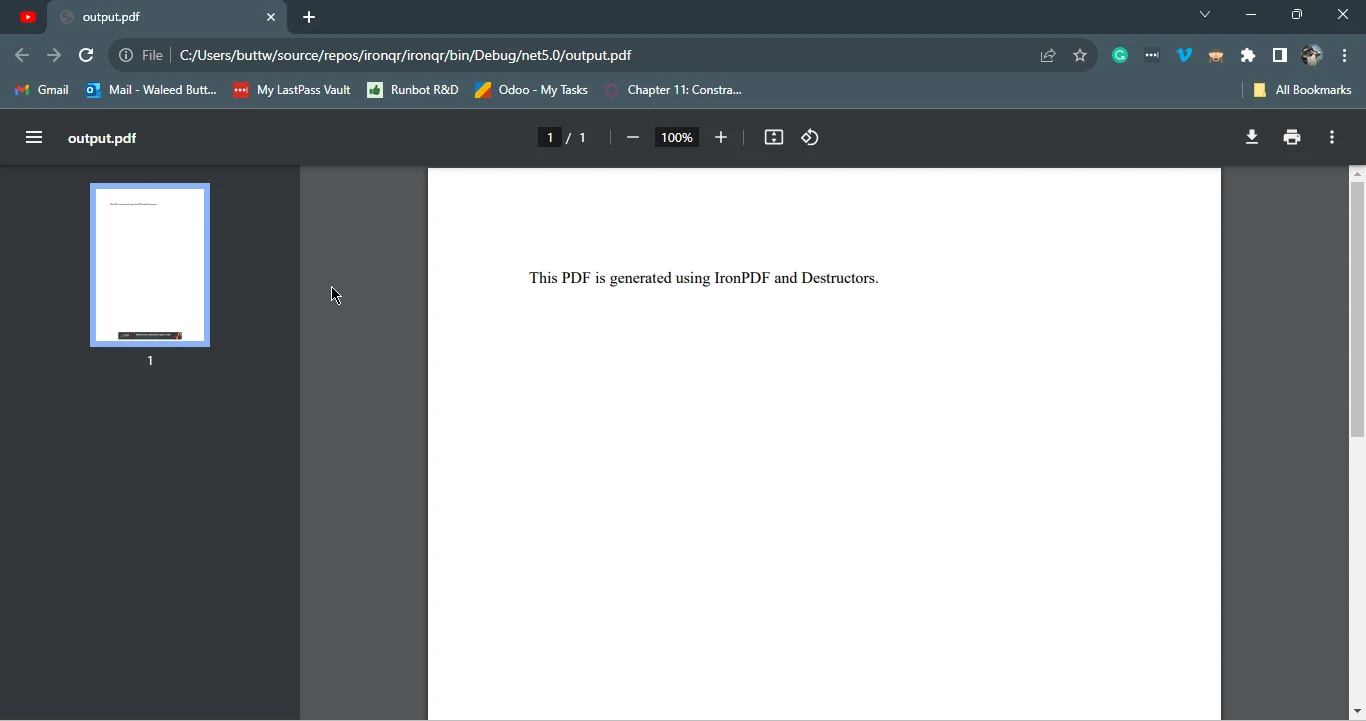
Das obige C#-Codebeispiel definiert eine PdfGenerator-Klasse, die für die Erstellung von PDF-Dokumenten mit IronPDF verantwortlich ist. Die Klasse kapselt ein privates Feld, pdfDocument, das eine Instanz von IronPdf.PdfDocument ist. Die Generate-Methode verwendet die ChromePdfRenderer, um HTML-Inhalte in ein PDF zu rendern, in diesem Fall ein einfacher Absatz, der die Verwendung von IronPDF demonstriert. Das generierte PDF wird als 'output.pdf' gespeichert, und eine Nachricht wird auf der Konsole ausgegeben, die die erfolgreiche Erstellung des Dokuments anzeigt.
Die Klasse enthält einen Destruktor (~PdfGenerator()), der sicherstellt, dass die pdfDocument-Instanz entsorgt wird, wenn das Objekt nicht mehr verwendet wird. Die begleitende Program-Klasse enthält die Hauptmethode, in der eine Instanz von PdfGenerator erstellt wird und die Generate-Methode aufgerufen wird, um das PDF-Dokument zu erzeugen. Der Code veranschaulicht eine grundlegende Implementierung der PDF-Erstellung mit IronPDF in einer C#-Anwendung, die Einfachheit und die Einhaltung guter Programmierpraktiken demonstriert.
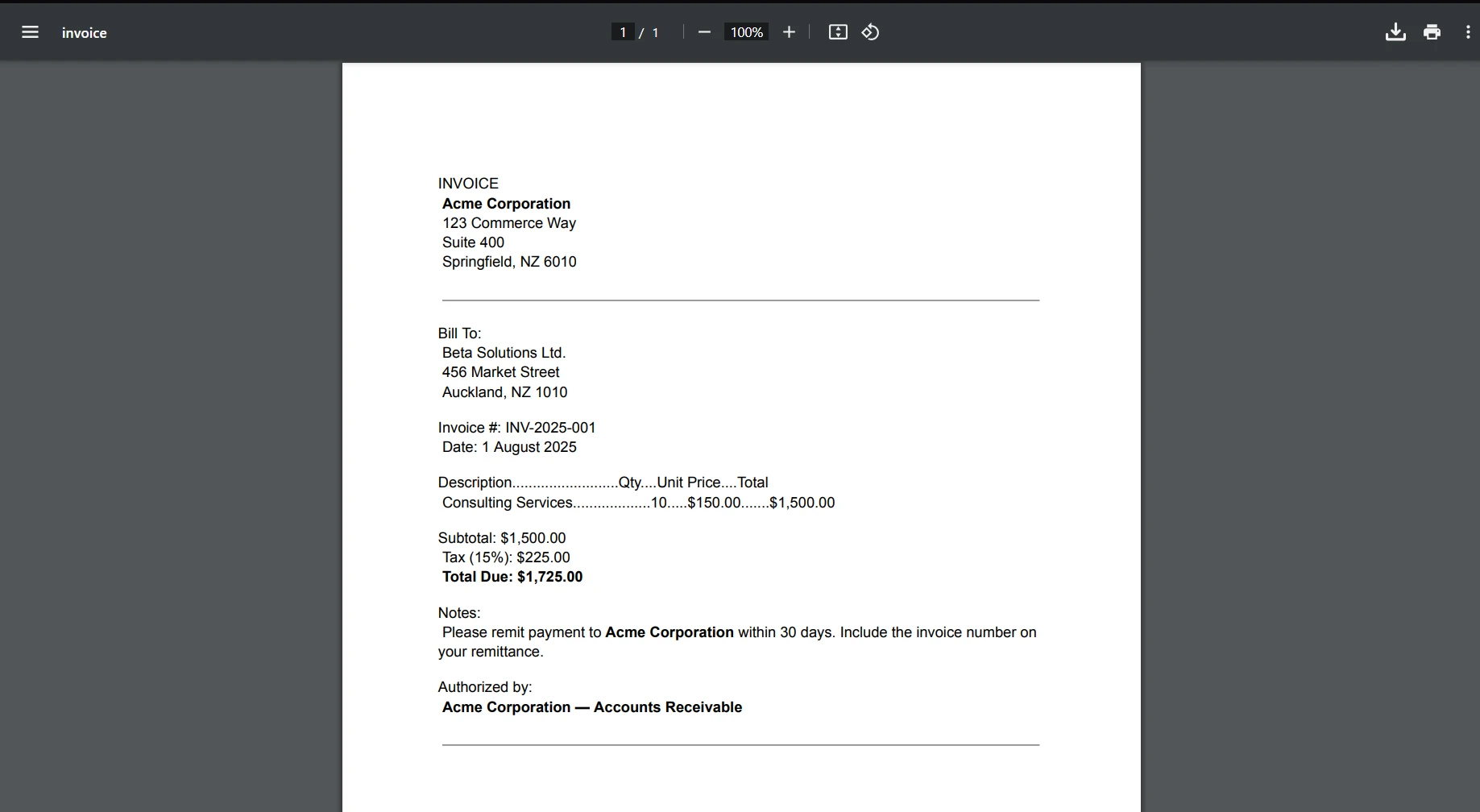
3.2. PDF-Ausgabe
3.3. Konsolenausgabe
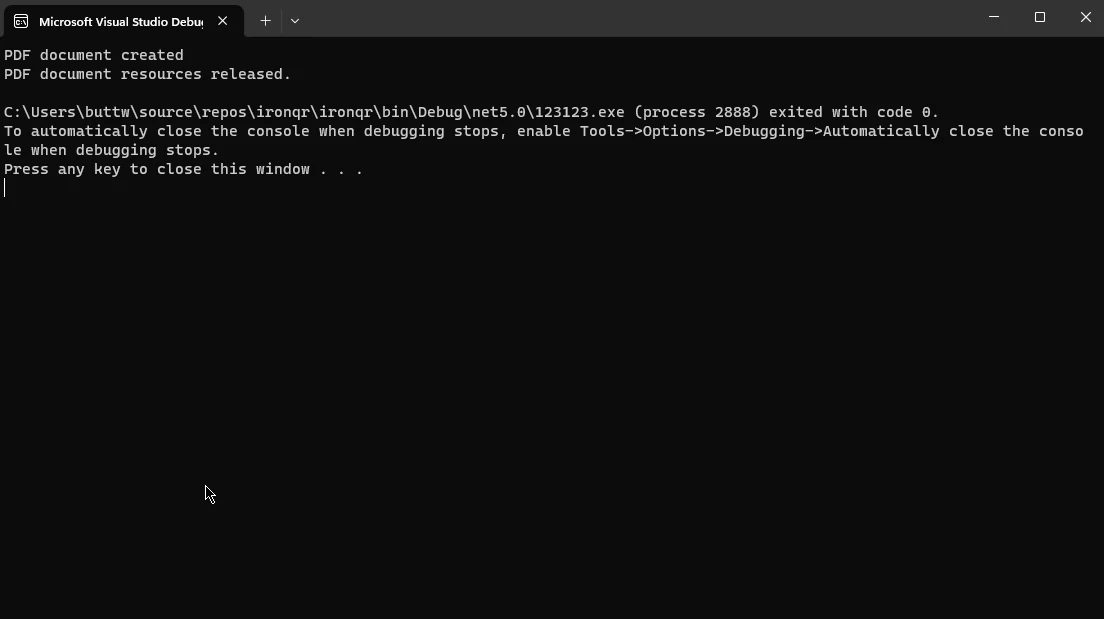
4. Fazit
Im dynamischen Landschaft der C#-Programmierung ist das Verständnis des Speichermanagements unverzichtbar für die Erstellung effizienter und zuverlässiger Anwendungen. Destruktoren bieten einen Mechanismus, um Ressourcen ausdrücklich freizugeben, was sie zu einem wertvollen Werkzeug in Szenarien macht, die nicht verwaltete Ressourcen betreffen.
Während moderner C#-Code oft auf die using-Anweisung und das IDisposable-Interface für das Ressourcenmanagement setzt, bleiben Destruktoren für spezifische Anwendungsfälle relevant. Die Integration von C#-Destruktoren mit Bibliotheken wie IronPDF – Generate, Edit & Read PDFs veranschaulicht ihre praktische Anwendung in realen Szenarien.
Während Sie die Feinheiten der C#-Entwicklung durchlaufen, ziehen Sie die überlegte Verwendung von Destruktoren in Betracht, wenn Sie mit nicht verwalteten Systemressourcen umgehen, um sicherzustellen, dass Ihre Anwendungen nicht nur funktional sind, sondern auch in Bezug auf die Nutzung von Systemressourcen optimiert bleiben.
IronPDF bietet eine kostenlose Testversion, um die PDF-Funktionen zu testen. Für weitere Informationen über die Konvertierung von HTML in PDF besuchen Sie den HTML to PDF Guide.