Introduction to Unit Testing in C#
Unit-Testing ist eine kritische Phase der Softwareentwicklung, die Entwicklern hilft, die Funktionalität einzelner Einheiten des Quellcodes zu überprüfen. In C# stellt das Unit-Testing sicher, dass jede Komponente oder Methode unter verschiedenen Bedingungen korrekt funktioniert. Durch das Isolieren jedes Teils des Programms und das Aufzeigen, dass einzelne Teile fehlerfrei sind, trägt das Unit-Testing erheblich zur Zuverlässigkeit Ihrer Anwendung bei. In diesem Artikel werden wir die Grundlagen des C#-Unit-Test-Projekts und der IronPDF-Bibliothek für .NET erforschen.
Einrichten Ihres ersten Unit-Tests in Visual Studio
Erstellen eines Unit-Test-Projekts
Um mit dem Unit-Testing in C# zu beginnen, müssen Sie eines der Unit-Test-Projekte in Visual Studio einrichten. Visual Studio bietet ein integriertes Unit-Testing-Framework, das einen einfachen Start ermöglicht. Wenn Sie ein neues Projekt erstellen, wählen Sie die Vorlage 'Unit Test Project' unter der C#-Kategorie. Diese Vorlage richtet alles ein, was Sie zum Erstellen und Ausführen von Unit-Tests benötigen.
using Microsoft.VisualStudio.TestTools.UnitTesting;
using System;

namespace Unit_Test_Project_Example
{
    // A simple calculator class with an Add method
    public class Calculator
    {
        public int Add(int a, int b)
        {
            return a + b;
        }
    }

    // A test class to validate the functionality of the Calculator class
    [TestClass]
    public class CalculatorTests
    {
        // A test method to check if the Add method in Calculator returns the correct sum
        [TestMethod]
        public void Add_ShouldReturnCorrectSum()
        {
            // Arrange
            var calculator = new Calculator();

            // Act
            var result = calculator.Add(2, 2);

            // Assert
            Assert.AreEqual(4, result);
        }
    }
}
using Microsoft.VisualStudio.TestTools.UnitTesting;
using System;

namespace Unit_Test_Project_Example
{
    // A simple calculator class with an Add method
    public class Calculator
    {
        public int Add(int a, int b)
        {
            return a + b;
        }
    }

    // A test class to validate the functionality of the Calculator class
    [TestClass]
    public class CalculatorTests
    {
        // A test method to check if the Add method in Calculator returns the correct sum
        [TestMethod]
        public void Add_ShouldReturnCorrectSum()
        {
            // Arrange
            var calculator = new Calculator();

            // Act
            var result = calculator.Add(2, 2);

            // Assert
            Assert.AreEqual(4, result);
        }
    }
}
Imports Microsoft.VisualStudio.TestTools.UnitTesting
Imports System
Namespace Unit_Test_Project_Example
' A simple calculator class with an Add method
Public Class Calculator
Public Function Add(ByVal a As Integer, ByVal b As Integer) As Integer
Return a + b
End Function
End Class
' A test class to validate the functionality of the Calculator class
<TestClass>
Public Class CalculatorTests
' A test method to check if the Add method in Calculator returns the correct sum
<TestMethod>
Public Sub Add_ShouldReturnCorrectSum()
' Arrange
Dim calculator As New Calculator()
' Act
Dim result = calculator.Add(2, 2)
' Assert
Assert.AreEqual(4, result)
End Sub
End Class
End Namespace
Imports Microsoft.VisualStudio.TestTools.UnitTesting
Imports System

Namespace Unit_Test_Project_Example
	' A simple calculator class with an Add method
	Public Class Calculator
		Public Function Add(ByVal a As Integer, ByVal b As Integer) As Integer
			Return a + b
		End Function
	End Class

	' A test class to validate the functionality of the Calculator class
	<TestClass>
	Public Class CalculatorTests
		' A test method to check if the Add method in Calculator returns the correct sum
		<TestMethod>
		Public Sub Add_ShouldReturnCorrectSum()
			' Arrange
			Dim calculator As New Calculator()

			' Act
			Dim result = calculator.Add(2, 2)

			' Assert
			Assert.AreEqual(4, result)
		End Sub
	End Class
End Namespace
Verstehen von Testmethoden und Testklassen
In einem Unit-Test-Projekt organisieren Sie Tests in Klassen und Methoden. Eine Testklasse repräsentiert eine Sammlung von Unit-Test-Methoden, die zusammen ausgeführt werden sollen. Jede Unit-Test-Methode, die mit dem Attribut [TestMethod] versehen ist, enthält die Logik zum Testen einer bestimmten Funktion Ihres Codes. Die Testklasse selbst ist mit dem Attribut [TestClass] gekennzeichnet, was dem Testframework signalisiert, dass sie Tests zur Ausführung enthält.
Ausführen und Verstehen Ihrer Tests
Verwendung des Test Explorers in Visual Studio
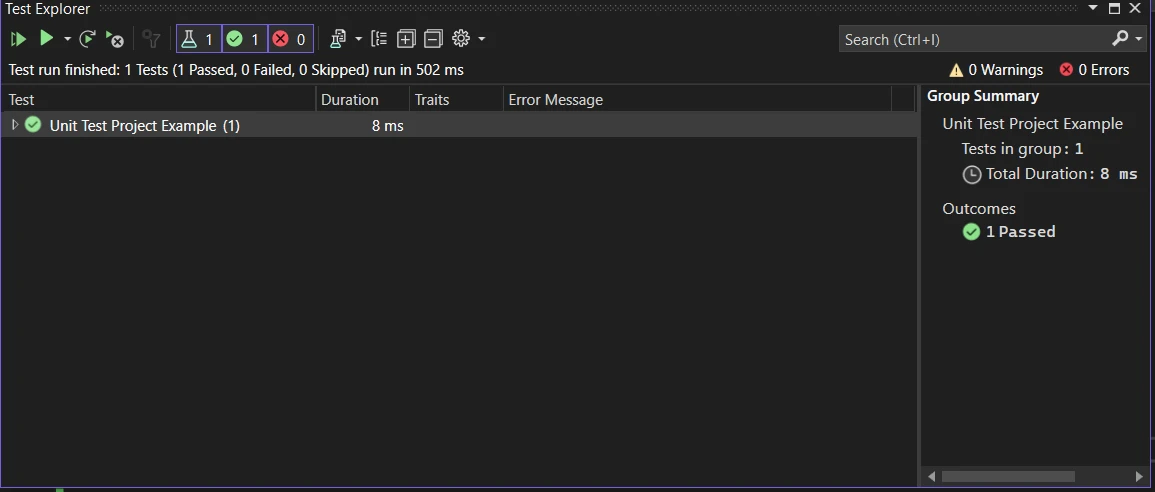
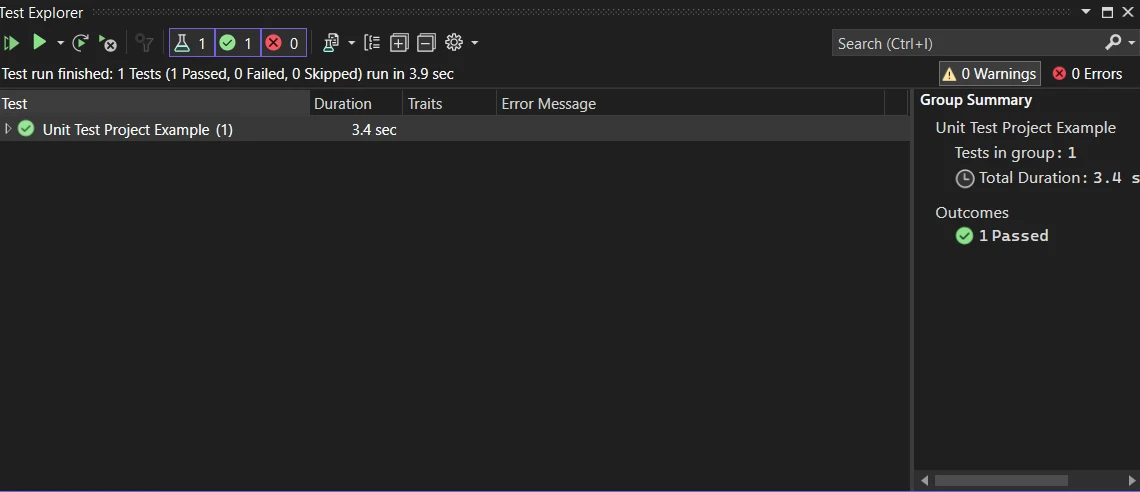
Das Test Explorer-Fenster von Visual Studio ist Ihr zentrales Zentrum zum Ausführen und Verwalten aller Testmethoden. Sie können alle Tests, eine Auswahl von Tests oder einzelne Tests ausführen. Nach dem Ausführen von Tests bietet der Test Explorer eine detaillierte Zusammenfassung über bestandene und fehlgeschlagene Tests, sodass Sie Probleme schnell identifizieren und beheben können.
Interpretation von Testergebnissen
- Bestandene Tests: Diese Tests wurden erfolgreich ausgeführt, was darauf hinweist, dass sich der getestete Code unter den angegebenen Bedingungen wie erwartet verhält.
- Fehlgeschlagene Tests: Diese weisen auf eine Diskrepanz zwischen den erwarteten und den tatsächlichen Ergebnissen hin und signalisieren mögliche Fehler oder Missverständnisse in den Anforderungen oder im Testcode.
Es ist entscheidend, fehlgeschlagene Tests umgehend zu untersuchen, da sie ein frühes Warnzeichen für Probleme in Ihrem Code sein können.
Erweiterte Techniken und Beste Praktiken zum Schreiben von C# Unittests
Über das einfache Schreiben und Ausführen von Tests hinaus erfordert das Beherrschen von Unit-Testing in C# das Verständnis einiger fortgeschrittener Techniken und bewährter Praktiken. Diese Ansätze können Ihnen helfen, effizientere und effektivere Tests zu schreiben und sicherzustellen, dass Ihre Anwendung zuverlässig und wartbar ist.
Effektive Organisation von Tests
Eine gute Organisation ist der Schlüssel zur Pflege einer großen Test-Suite. Gruppieren Sie Ihre Tests logisch nach der Funktionalität, die sie abdecken. Verwenden Sie beschreibende Namen für Ihre Testmethoden und -klassen, um anzugeben, was jeder Test überprüft. Dieser Ansatz erleichtert das Auffinden und Verstehen von Tests später, insbesondere wenn Ihre Testsuite wächst.
Mocking und Dependency Injection
Oftmals interagiert der zu testende Code mit externen Ressourcen oder anderen Teilen Ihrer Anwendung. In solchen Fällen verwenden Sie Mocking-Frameworks wie Moq oder NSubstitute, um Mock-Objekte zu erstellen. Diese Stellvertreter ahmen das Verhalten der echten Objekte nach und erlauben Ihnen, Ihren Code isoliert zu testen. Dependency Injection macht Ihren Code testbarer, da es ermöglicht, reale Abhängigkeiten während des Testens durch Mocks oder Stubs zu ersetzen.
using Microsoft.VisualStudio.TestTools.UnitTesting;
using Moq;

// A sample test class demonstrating the use of mocks
[TestClass]
public class ProductServiceTests
{
    // A test method to verify the GetProductById method of ProductService
    [TestMethod]
    public void GetProductById_ShouldReturnCorrectProduct()
    {
        // Arrange
        var mockRepository = new Mock<IProductRepository>();
        mockRepository.Setup(x => x.FindById(1)).Returns(new Product { Id = 1, Name = "Laptop" });

        ProductService productService = new ProductService(mockRepository.Object);

        // Act
        Product result = productService.GetProductById(1);

        // Assert
        Assert.IsNotNull(result);
        Assert.AreEqual("Laptop", result.Name);
    }
}
using Microsoft.VisualStudio.TestTools.UnitTesting;
using Moq;

// A sample test class demonstrating the use of mocks
[TestClass]
public class ProductServiceTests
{
    // A test method to verify the GetProductById method of ProductService
    [TestMethod]
    public void GetProductById_ShouldReturnCorrectProduct()
    {
        // Arrange
        var mockRepository = new Mock<IProductRepository>();
        mockRepository.Setup(x => x.FindById(1)).Returns(new Product { Id = 1, Name = "Laptop" });

        ProductService productService = new ProductService(mockRepository.Object);

        // Act
        Product result = productService.GetProductById(1);

        // Assert
        Assert.IsNotNull(result);
        Assert.AreEqual("Laptop", result.Name);
    }
}
Imports Microsoft.VisualStudio.TestTools.UnitTesting
Imports Moq
' A sample test class demonstrating the use of mocks
<TestClass>
Public Class ProductServiceTests
' A test method to verify the GetProductById method of ProductService
<TestMethod>
Public Sub GetProductById_ShouldReturnCorrectProduct()
' Arrange
Dim mockRepository = New Mock(Of IProductRepository)()
mockRepository.Setup(Function(x) x.FindById(1)).Returns(New Product With {
.Id = 1,
.Name = "Laptop"
})
Dim productService As New ProductService(mockRepository.Object)
' Act
Dim result As Product = productService.GetProductById(1)
' Assert
Assert.IsNotNull(result)
Assert.AreEqual("Laptop", result.Name)
End Sub
End Class
Imports Microsoft.VisualStudio.TestTools.UnitTesting
Imports Moq

' A sample test class demonstrating the use of mocks
<TestClass>
Public Class ProductServiceTests
	' A test method to verify the GetProductById method of ProductService
	<TestMethod>
	Public Sub GetProductById_ShouldReturnCorrectProduct()
		' Arrange
		Dim mockRepository = New Mock(Of IProductRepository)()
		mockRepository.Setup(Function(x) x.FindById(1)).Returns(New Product With {
			.Id = 1,
			.Name = "Laptop"
		})

		Dim productService As New ProductService(mockRepository.Object)

		' Act
		Dim result As Product = productService.GetProductById(1)

		' Assert
		Assert.IsNotNull(result)
		Assert.AreEqual("Laptop", result.Name)
	End Sub
End Class
Datengetriebene Tests nutzen
Datengetriebene Tests ermöglichen es Ihnen, dieselbe Testmethode mehrfach mit unterschiedlichen Eingabedaten auszuführen. Diese Technik ist besonders nützlich, um eine breite Palette von Eingaben und Szenarien zu testen, ohne mehrere Testmethoden schreiben zu müssen. Visual Studio unterstützt datengetriebenes Testen, indem Sie Ihre Testdaten aus verschiedenen Quellen wie Inline-Daten, CSV-Dateien oder Datenbanken angeben können.
Asserts verstehen und effektiv nutzen
Asserts sind das Herz Ihrer Testmethoden, da sie die Ergebnisse Ihrer Tests validieren. Verstehen Sie die Bandbreite der Assert-Methoden, die in Ihrem Testframework verfügbar sind, und verwenden Sie diese entsprechend, um erwartete Werte, Ausnahmen oder Bedingungen zu überprüfen. Die richtige Assert-Nutzung kann Ihre Tests klarer und robuster machen.
Kontinuierliche Integration und Testautomatisierung
Integrieren Sie Ihre Unit-Tests in Ihre Continuous-Integration-(CI-)Pipeline. Dies stellt sicher, dass Tests automatisch jedes Mal ausgeführt werden, wenn Änderungen am Code vorgenommen werden, was hilft, Probleme frühzeitig zu erkennen und zu beheben. Automatisierung erleichtert auch das häufige und konsistente Ausführen von Tests, was entscheidend für die Pflege eines gesunden Codes ist.
Tests und Produktionscode auf dem gleichen Stand halten
Ihre Unit-Tests sind nur so gut wie ihre Übereinstimmung mit dem Produktionscode. Stellen Sie sicher, dass alle Änderungen an der Funktionalität in den entsprechenden Unit-Tests widergespiegelt werden. Diese Praxis verhindert, dass veraltete Tests fälschlicherweise bestehen und stellt sicher, dass Ihre Testsuite den Zustand Ihrer Anwendung genau wiedergibt.
Aus fehlgeschlagenen Tests lernen
Wenn ein Test fehlschlägt, ist das eine Gelegenheit zum Lernen und zur Verbesserung. Ein fehlgeschlagener Test kann unerwartete Verhaltensweisen, falsche Annahmen oder Bereiche Ihres Codes offenlegen, die komplexer und fehleranfälliger sind, als nötig. Analysieren Sie fehlgeschlagene Tests sorgfältig, um ihre zugrunde liegenden Ursachen zu verstehen und verwenden Sie diese Erkenntnisse, um sowohl Ihre Tests als auch Ihren Produktionscode zu verbessern.
Einführung in IronPDF
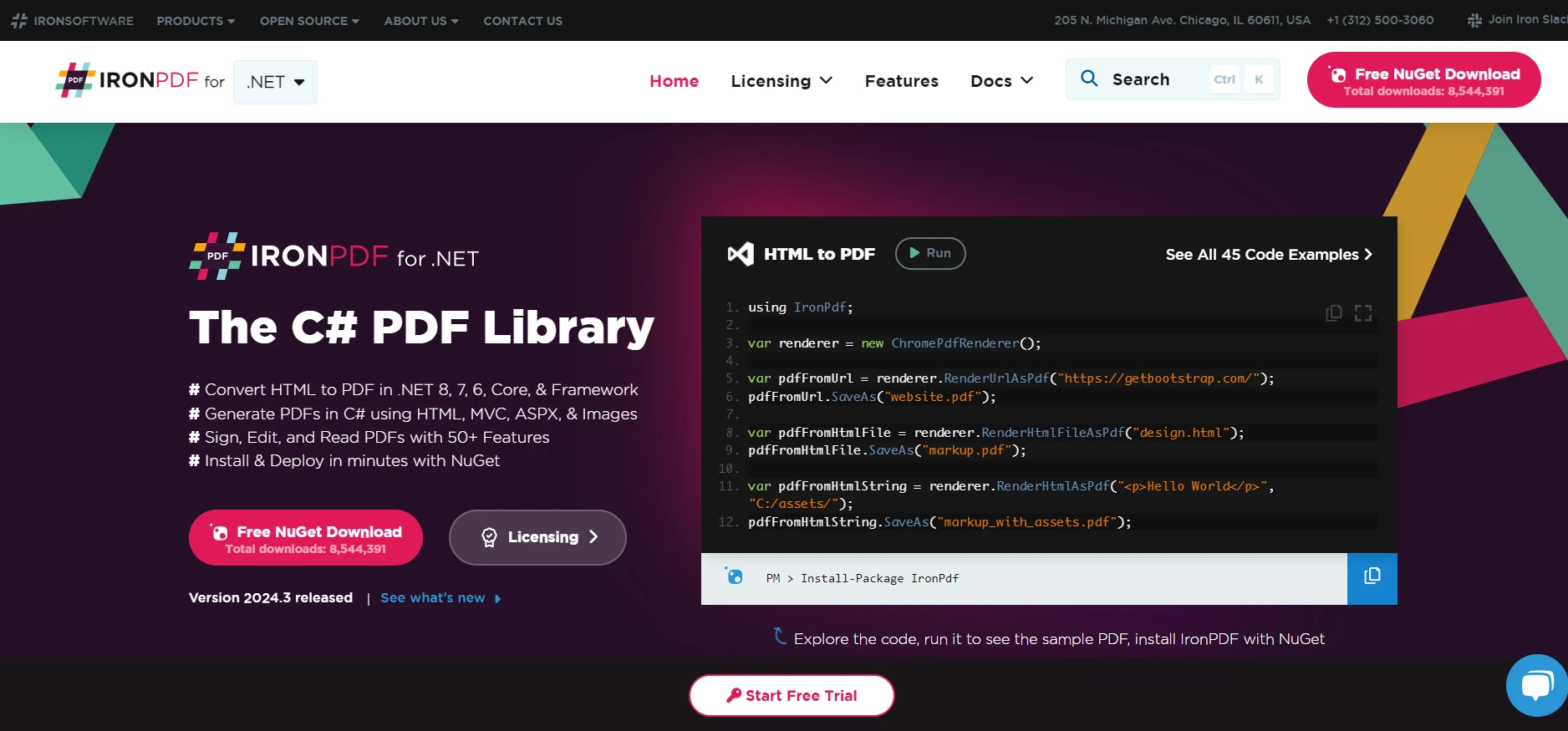
IronPDF for .NET PDF-Entwicklung ist eine umfassende Bibliothek, die für .NET-Entwickler entwickelt wurde, um ihnen das Erstellen, Manipulieren und Lesen von PDF-Dokumenten in ihren Anwendungen zu ermöglichen. IronPDF ist bekannt für seine Fähigkeit, PDFs direkt aus HTML-Code, CSS, Bildern und JavaScript zu erstellen, um die besten PDFs zu erzeugen. Es unterstützt ein breites Spektrum von .NET-Projekttypen und Anwendungsumgebungen, einschließlich Web- und Desktopanwendungen, Dienste und mehr, auf verschiedenen Betriebssystemen wie Windows, Linux und macOS sowie in Docker- und Cloud-Umgebungen wie Azure und AWS.
IronPDF macht es einfach, HTML, URLs und komplette Webseiten in professionelle PDFs zu konvertieren, die genauso aussehen wie die Quelle. Es ist perfekt für Berichte, Rechnungen oder das Archivieren von Webinhalten. Wenn Sie nach einer einfachen Möglichkeit suchen, HTML in PDF zu konvertieren, erledigt IronPDF dies fehlerlos.
using IronPdf;

class Program
{
    static void Main(string[] args)
    {
        var renderer = new ChromePdfRenderer();

        // 1. Convert HTML String to PDF
        var htmlContent = "<h1>Hello, IronPDF!</h1><p>This is a PDF from an HTML string.</p>";
        var pdfFromHtmlString = renderer.RenderHtmlAsPdf(htmlContent);
        pdfFromHtmlString.SaveAs("HTMLStringToPDF.pdf");

        // 2. Convert HTML File to PDF
        var htmlFilePath = "path_to_your_html_file.html"; // Specify the path to your HTML file
        var pdfFromHtmlFile = renderer.RenderHtmlFileAsPdf(htmlFilePath);
        pdfFromHtmlFile.SaveAs("HTMLFileToPDF.pdf");

        // 3. Convert URL to PDF
        var url = "http://ironpdf.com"; // Specify the URL
        var pdfFromUrl = renderer.RenderUrlAsPdf(url);
        pdfFromUrl.SaveAs("URLToPDF.pdf");
    }
}
using IronPdf;

class Program
{
    static void Main(string[] args)
    {
        var renderer = new ChromePdfRenderer();

        // 1. Convert HTML String to PDF
        var htmlContent = "<h1>Hello, IronPDF!</h1><p>This is a PDF from an HTML string.</p>";
        var pdfFromHtmlString = renderer.RenderHtmlAsPdf(htmlContent);
        pdfFromHtmlString.SaveAs("HTMLStringToPDF.pdf");

        // 2. Convert HTML File to PDF
        var htmlFilePath = "path_to_your_html_file.html"; // Specify the path to your HTML file
        var pdfFromHtmlFile = renderer.RenderHtmlFileAsPdf(htmlFilePath);
        pdfFromHtmlFile.SaveAs("HTMLFileToPDF.pdf");

        // 3. Convert URL to PDF
        var url = "http://ironpdf.com"; // Specify the URL
        var pdfFromUrl = renderer.RenderUrlAsPdf(url);
        pdfFromUrl.SaveAs("URLToPDF.pdf");
    }
}
Imports IronPdf
Friend Class Program
Shared Sub Main(ByVal args() As String)
Dim renderer = New ChromePdfRenderer()
' 1. Convert HTML String to PDF
Dim htmlContent = "<h1>Hello, IronPDF!</h1><p>This is a PDF from an HTML string.</p>"
Dim pdfFromHtmlString = renderer.RenderHtmlAsPdf(htmlContent)
pdfFromHtmlString.SaveAs("HTMLStringToPDF.pdf")
' 2. Convert HTML File to PDF
Dim htmlFilePath = "path_to_your_html_file.html" ' Specify the path to your HTML file
Dim pdfFromHtmlFile = renderer.RenderHtmlFileAsPdf(htmlFilePath)
pdfFromHtmlFile.SaveAs("HTMLFileToPDF.pdf")
' 3. Convert URL to PDF
Dim url = "http://ironpdf.com" ' Specify the URL
Dim pdfFromUrl = renderer.RenderUrlAsPdf(url)
pdfFromUrl.SaveAs("URLToPDF.pdf")
End Sub
End Class
Imports IronPdf

Friend Class Program
	Shared Sub Main(ByVal args() As String)
		Dim renderer = New ChromePdfRenderer()

		' 1. Convert HTML String to PDF
		Dim htmlContent = "<h1>Hello, IronPDF!</h1><p>This is a PDF from an HTML string.</p>"
		Dim pdfFromHtmlString = renderer.RenderHtmlAsPdf(htmlContent)
		pdfFromHtmlString.SaveAs("HTMLStringToPDF.pdf")

		' 2. Convert HTML File to PDF
		Dim htmlFilePath = "path_to_your_html_file.html" ' Specify the path to your HTML file
		Dim pdfFromHtmlFile = renderer.RenderHtmlFileAsPdf(htmlFilePath)
		pdfFromHtmlFile.SaveAs("HTMLFileToPDF.pdf")

		' 3. Convert URL to PDF
		Dim url = "http://ironpdf.com" ' Specify the URL
		Dim pdfFromUrl = renderer.RenderUrlAsPdf(url)
		pdfFromUrl.SaveAs("URLToPDF.pdf")
	End Sub
End Class
Codebeispiel
Hier ist ein Beispiel, wie Sie IronPDF in einem C#-Unit-Testing-Szenario verwenden könnten. Angenommen, Sie möchten eine Funktion testen, die ein PDF aus HTML-Inhalten generiert. Sie könnten IronPDF verwenden, um das HTML als PDF zu rendern und dann das Vorhandensein oder den Inhalt des PDFs als Teil Ihres Tests zu überprüfen:
using IronPdf;
using Microsoft.VisualStudio.TestTools.UnitTesting;
using System;
using System.IO;

// A sample test class to verify PDF generation
[TestClass]
public class PdfGenerationTests
{
    // A test method to verify HTML to PDF generation using IronPDF
    [TestMethod]
    public void TestHtmlToPdfGeneration()
    {
        IronPdf.License.LicenseKey = "License-Key"; // Set your IronPDF license key

        var renderer = new ChromePdfRenderer();

        // Render HTML to a PDF
        var pdf = renderer.RenderHtmlAsPdf("<h1>Hello, world!</h1>");

        string filePath = Path.Combine(Path.GetTempPath(), "test.pdf");

        // Save the generated PDF to a file
        pdf.SaveAs(filePath);

        // Assert the PDF file was created successfully
        Assert.IsTrue(File.Exists(filePath), "The generated PDF does not exist.");

        // Additional assertions to verify the PDF content could be added here
        // Clean up generated file
        File.Delete(filePath);
    }
}
using IronPdf;
using Microsoft.VisualStudio.TestTools.UnitTesting;
using System;
using System.IO;

// A sample test class to verify PDF generation
[TestClass]
public class PdfGenerationTests
{
    // A test method to verify HTML to PDF generation using IronPDF
    [TestMethod]
    public void TestHtmlToPdfGeneration()
    {
        IronPdf.License.LicenseKey = "License-Key"; // Set your IronPDF license key

        var renderer = new ChromePdfRenderer();

        // Render HTML to a PDF
        var pdf = renderer.RenderHtmlAsPdf("<h1>Hello, world!</h1>");

        string filePath = Path.Combine(Path.GetTempPath(), "test.pdf");

        // Save the generated PDF to a file
        pdf.SaveAs(filePath);

        // Assert the PDF file was created successfully
        Assert.IsTrue(File.Exists(filePath), "The generated PDF does not exist.");

        // Additional assertions to verify the PDF content could be added here
        // Clean up generated file
        File.Delete(filePath);
    }
}
Imports IronPdf
Imports Microsoft.VisualStudio.TestTools.UnitTesting
Imports System
Imports System.IO
' A sample test class to verify PDF generation
<TestClass>
Public Class PdfGenerationTests
' A test method to verify HTML to PDF generation using IronPDF
<TestMethod>
Public Sub TestHtmlToPdfGeneration()
IronPdf.License.LicenseKey = "License-Key" ' Set your IronPDF license key
Dim renderer = New ChromePdfRenderer()
' Render HTML to a PDF
Dim pdf = renderer.RenderHtmlAsPdf("<h1>Hello, world!</h1>")
Dim filePath As String = Path.Combine(Path.GetTempPath(), "test.pdf")
' Save the generated PDF to a file
pdf.SaveAs(filePath)
' Assert the PDF file was created successfully
Assert.IsTrue(File.Exists(filePath), "The generated PDF does not exist.")
' Additional assertions to verify the PDF content could be added here
' Clean up generated file
File.Delete(filePath)
End Sub
End Class
Imports IronPdf
Imports Microsoft.VisualStudio.TestTools.UnitTesting
Imports System
Imports System.IO

' A sample test class to verify PDF generation
<TestClass>
Public Class PdfGenerationTests

    ' A test method to verify HTML to PDF generation using IronPDF
    <TestMethod>
    Public Sub TestHtmlToPdfGeneration()
        IronPdf.License.LicenseKey = "License-Key" ' Set your IronPDF license key

        Dim renderer = New ChromePdfRenderer()

        ' Render HTML to a PDF
        Dim pdf = renderer.RenderHtmlAsPdf("<h1>Hello, world!</h1>")

        Dim filePath As String = Path.Combine(Path.GetTempPath(), "test.pdf")

        ' Save the generated PDF to a file
        pdf.SaveAs(filePath)

        ' Assert the PDF file was created successfully
        Assert.IsTrue(File.Exists(filePath), "The generated PDF does not exist.")

        ' Additional assertions to verify the PDF content could be added here
        ' Clean up generated file
        File.Delete(filePath)
    End Sub
End Class
Dieses Beispiel zeigt einen einfachen Unit-Test, der IronPDF verwendet, um ein PDF aus einem HTML-String zu generieren, es in einer temporären Datei zu speichern und dann die Existenz der Datei zu überprüfen.
Abschluss
Unit-Testing ist ein unverzichtbarer Teil des Softwareentwicklungslebenszyklus. Durch das Einrichten und Schreiben effektiver Tests, das Ausführen dieser durch den Test Explorer von Visual Studio und die Verwendung von Tools zur Codeabdeckung stellen Sie sicher, dass Ihre C#-Anwendungen zuverlässig sind und hohe Qualitätsstandards halten. Durch das Verständnis und die Anwendung von Prinzipien der testgetriebenen Entwicklung können Sie die Qualität Ihrer Unit-Test-Projekte in C# weiter verbessern. Denken Sie daran, dass das Ziel des Unit-Testing nicht nur darin besteht, Fehler zu finden, sondern eine robuste Grundlage für Ihre Anwendung zu schaffen, die leichtere Aktualisierungen, Debugging und Funktionserweiterungen erleichtert. Erkunden Sie die IronPDF-Lizenzoptionen mit Lizenzoptionen, die ab $$ liteLicense beginnen.