Einführung in Jupyter Notebook
Jupyter Notebook ist eine Webanwendung, die es Ihnen ermöglicht, Dokumente mit ausführbaren Codeschnipseln, Visualisierungen, Gleichungen und Erzähltext zu erstellen und zu teilen. Es ist ein weit anerkanntes Open-Source-Projekt, das für seine Robustheit in der Datenwissenschaft und Forschung bekannt ist. Jupyter Notebook hat nun C# vollständig durch die Integration in .NET Core aufgenommen. Diese Integration ist entscheidend für C#-Entwickler und Datenanalysten, die auf .NET-Technologien setzen, da sie die umfangreichen Funktionen von Jupyter Notebooks mit der Robustheit von C# und dem .NET-Framework kombiniert, um interaktivere Erlebnisse zu bieten.
Verständnis der .NET Core Integration
.NET Core ist ein vielseitiges und plattformübergreifendes Framework von Microsoft, das jetzt Hand in Hand mit Jupyter Notebooks über das .NET Interactive Tool arbeitet. Diese Kombination bietet eine leistungsstarke Plattform zum Erstellen von reichhaltiger interaktiver Dokumentation, die ausführbare C#-Codeschnipsel enthält. Mit .NET Core können Sie die Stärken von C# und F# in einer interaktiven Umgebung nutzen, was es ideal für Tutorials, Datenanalysen und vieles mehr macht.
Einrichten von Jupyter Notebook für C#
Um mit Jupyter Notebooks in C# zu beginnen, muss das .NET SDK installiert werden. Dieses Software Development Kit ist eine Sammlung von Bibliotheken und Tools, die Entwicklern ermöglichen, .NET-Anwendungen und -Dienste zu erstellen und auszuführen. Sobald das .NET SDK vorhanden ist, ist der nächste Schritt die Installation des .NET Interactive Tools, das speziell für Jupyter entwickelt wurde.
Das .NET Interactive Tool kann als globales Tool auf Ihrem Computer mit dem folgenden Befehl installiert werden:
dotnet tool install --global Microsoft.dotnet-interactive
dotnet tool install --global Microsoft.dotnet-interactive
SHELL
Nach der Installation ermöglicht dieses Tool die Integration von C# mit Jupyter, indem der folgende Befehl ausgeführt wird, um das .NET Interactive Tool mit Jupyter zu verbinden:
dotnet interactive jupyter install
dotnet interactive jupyter install
SHELL
Das erste C# Notebook einrichten
Um ein neues C#-Notebook in Jupyter zu erstellen, gehen Sie zum Jupyter-Dashboard, klicken Sie auf 'Neu' und wählen Sie 'C# (.NET Interactive)'. Dies erstellt ein leeres Notizbuch, eine Leinwand, auf der Sie mit dem Schreiben von C#-Skripten beginnen können.
Arbeiten mit einem C# Kernel in Jupyter
In einem Jupyter Notebook mit einem C#-Kernel können Sie interaktiv C#-Code in Zellen schreiben und ausführen. Jede Zelle im Notizbuch kann Code enthalten, den Sie unabhängig voneinander ausführen können. Diese Funktion eignet sich hervorragend zum Testen kleiner Codeschnipsel oder zur Entwicklung von Schritt-für-Schritt-Tutorials. Zum Beispiel können Sie in einer neuen Zelle einfachen C#-Code schreiben, um eine Ausgabe anzuzeigen:
// Print a message to the console
Console.WriteLine("Hello, Jupyter Notebook C#!");
// Print a message to the console
Console.WriteLine("Hello, Jupyter Notebook C#!");
' Print a message to the console
Console.WriteLine("Hello, Jupyter Notebook C#!")
' Print a message to the console
Console.WriteLine("Hello, Jupyter Notebook C#!")
Erweiterte Funktionen in C# Jupyter Notebooks
Die Integration von C# Jupyter Notebooks mit Visual Studio Code verbessert das Entwicklererlebnis, insbesondere für diejenigen, die an Microsofts IDE gewöhnt sind. In VSCode können Sie die Befehlspalette nutzen, um Jupyter-spezifische Befehle auszuführen und einen reibungslosen Übergang zwischen verschiedenen Entwicklungsumgebungen zu gewährleisten.
Interaktive Dokumentation und Code-Ausführung
Ein herausragendes Merkmal von Jupyter Notebook ist die Möglichkeit, interaktive Dokumentationen zu erstellen. Das bedeutet, dass Sie einen Code schreiben, dokumentieren und anderen erlauben können, ihn direkt im Notizbuch auszuführen und zu ändern. Es ist eine leistungsstarke Möglichkeit, die Funktionsweise von Code zu demonstrieren und Wissen zu teilen.
Verwaltung von Jupyter-Notebooks
Um Jupyter Notebooks effektiv zu verwalten, ist es wichtig, die Funktionsweise des Jupyter-Servers zu verstehen. Befehle wie jupyter kernelspec list helfen, alle verfügbaren Kerne aufzulisten. Das Verwalten dieser Kernel ist entscheidend für eine reibungslose sprachenübergreifende Erfahrung in Jupyter.
Integration mit Python und anderen Sprachen
Die Flexibilität von Jupyter Notebooks bei der Unterstützung mehrerer Sprachen ermöglicht die nahtlose Integration zwischen Python und C#. Wenn Sie auch Python installiert haben, können Sie innerhalb desselben Notebooks zwischen den Sprachen wechseln, was es zu einer unverzichtbaren Hilfe für polyglotte Programmierung und Datenanalyse macht. Hier ist ein Beispiel für die Verwendung von Python und C# im selben Notizbuch:
# Python code
print("Hello from Python!")
# Python code
print("Hello from Python!")
Python
// C# code in another cell
Console.WriteLine("Hello from C#!");
// C# code in another cell
Console.WriteLine("Hello from C#!");
' C# code in another cell
Console.WriteLine("Hello from C#!")
' C# code in another cell
Console.WriteLine("Hello from C#!")
Integration von IronPDF mit C# Jupyter Notebooks
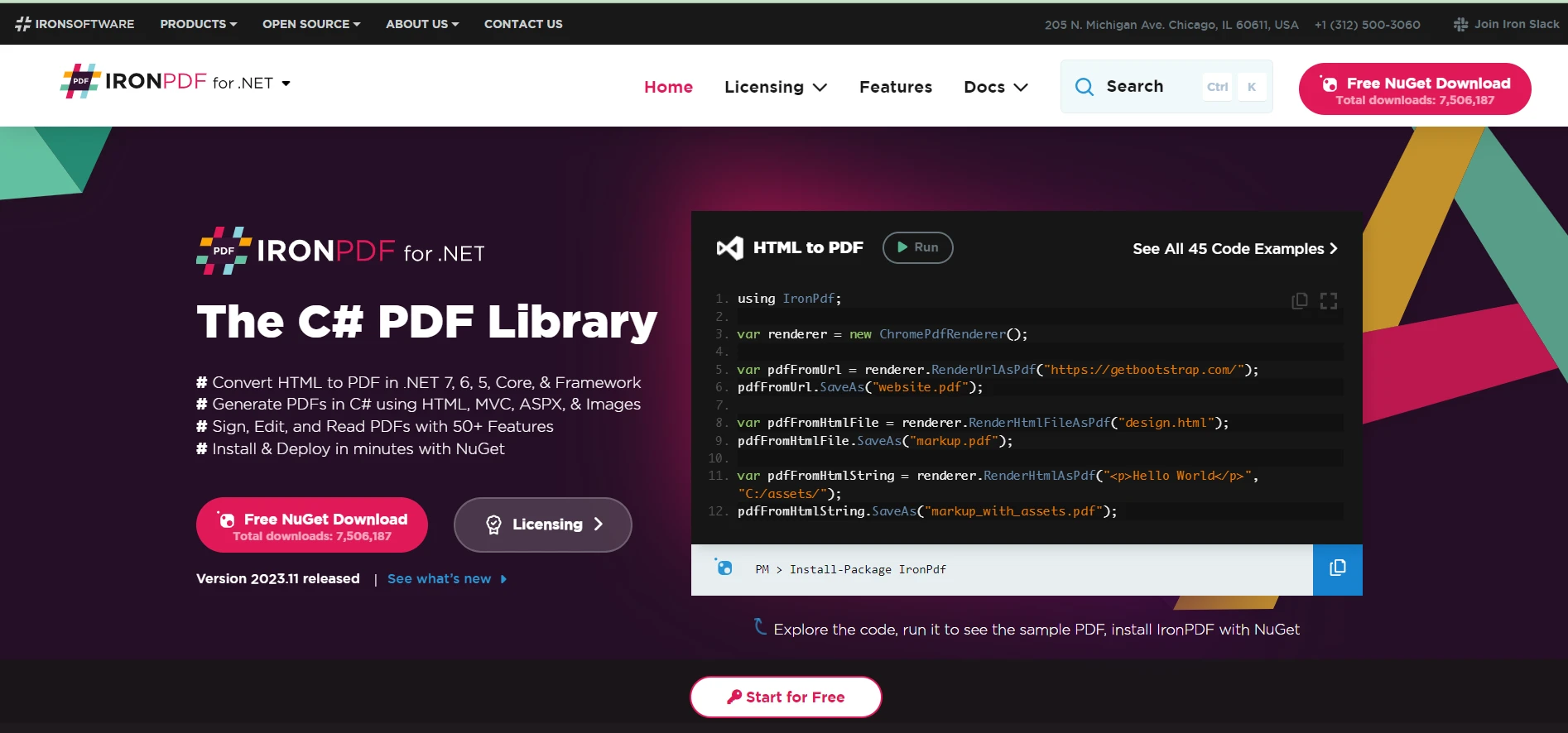
IronPDF for .NET PDF Solutions ist eine robuste C#-Bibliothek, die entwickelt wurde, um mit PDF-Dateien zu arbeiten und Funktionen wie HTML-zu-PDF-Konvertierung, PDF-Bearbeitung und mehr zu bieten. Die Integration von IronPDF in eine Jupyter Notebook-Umgebung kann deren Möglichkeiten erheblich erweitern, insbesondere zum Erstellen und Bearbeiten von PDF-Dokumenten innerhalb des Notizbuchs.
IronPDF bietet eine einfache, aber leistungsstarke API für C#-Entwickler. Es ermöglicht Aufgaben wie das Konvertieren von HTML-Seiten in PDFs, das Erstellen von PDFs aus HTML-Strings und das Speichern von PDFs an bestimmten Dateipfaden.
Im Kontext von Jupyter Notebooks kann IronPDF als Erweiterung eines interaktiven Dokumentengenerators für C# dienen. Es erlaubt Nutzern nicht nur, C#-Code zum Erstellen oder Bearbeiten von PDFs zu schreiben und zu testen, sondern auch die Ergebnisse in Echtzeit zu sehen. Diese Integration ist besonders vorteilhaft für Bildungszwecke, Demonstrationen oder die Erstellung von reichhaltigen und interaktiven technischen Dokumentationen.
Abschluss
Jupyter Notebook's Erweiterung, die Unterstützung für C# über .NET Interactive Notebooks beinhaltet, ist ein bedeutender Erfolg für die .NET-Community. Es bereichert das Jupyter-Ökosystem erheblich, indem es die Leistungsfähigkeit und Bequemlichkeit des interaktiven Programmierens den C#-Entwicklern und -Anfängern zugänglich macht.
Besonders hervorzuheben ist, dass IronPDF eine kostenlose Testversion der IronPDF Features anbietet, damit Benutzer seine Funktionen online erkunden können, und Lizenzen für das Tool beginnen bei $999, was es zu einer wertvollen Investition für Fachleute macht, die erweiterte PDF-Manipulations- und Generierungsfunktionen in ihren C#-Projekten suchen. Und wenn Sie mehr über die Implementierung von IronPDF oder allgemeine Informationen wissen möchten, steht der Link zum IronPDF Blog zu PDF und .NET zur Verfügung.