using IronPdf;

// Disable local disk access or cross-origin requests
Installation.EnableWebSecurity = true;

// Instantiate Renderer
var renderer = new ChromePdfRenderer();

// Create a PDF from a HTML string using C#
var pdf = renderer.RenderHtmlAsPdf("<h1>Hello World</h1>");

// Export to a file or Stream
pdf.SaveAs("output.pdf");

// Advanced Example with HTML Assets
// Load external html assets: Images, CSS and JavaScript.
// An optional BasePath 'C:\site\assets\' is set as the file location to load assets from
var myAdvancedPdf = renderer.RenderHtmlAsPdf("<img src='icons/iron.png'>", @"C:\site\assets\");
myAdvancedPdf.SaveAs("html-with-assets.pdf");
using IronPdf;// Disable local disk access or cross-origin requestsInstallation.EnableWebSecurity = true;// Instantiate Renderervar renderer = new ChromePdfRenderer();// Create a PDF from a HTML string using C#var pdf = renderer.RenderHtmlAsPdf("<h1>Hello World</h1>");// Export to a file or Streampdf.SaveAs("output.pdf");// Advanced Example with HTML Assets// Load external html assets: Images, CSS and JavaScript.// An optional BasePath 'C:\site\assets\' is set as the file location to load assets fromvar myAdvancedPdf = renderer.RenderHtmlAsPdf("<img src='icons/iron.png'>", @"C:\site\assets\");myAdvancedPdf.SaveAs("html-with-assets.pdf");
Die Möglichkeit, PDF-Dokumente zusammenzuführen, ist eine häufige Anforderung in vielen Anwendungen. Egal ob Sie mit Berichten, Rechnungen oder einem anderen dokumentenzentrierten System arbeiten, das Zusammenführen von [PDFs](https://www.adobe.com/acrobat/about-adobe-pdf.html) kann Prozesse optimieren und das Benutzererlebnis verbessern. Im [.NET-Ökosystem](https://dotnet.microsoft.com/en-us/learn/dotnet/what-is-dotnet) bietet IronPDF eine leistungsstarke und flexible Lösung für die Arbeit mit PDF-Dateien. In diesem Artikel werden wir untersuchen, wie man verschiedene PDF-Dokumente mit der [offiziellen Website von IronPDF](/) in einer .NET-Anwendung zusammenführen kann.
## Schritte zum Zusammenführen von PDF .NET-Dateien
1. PDF-Dateien erstellen
2. PDF-Dateien öffnen
3. Verwenden Sie die `PdfDocument.Merge()` Methode zum Zusammenführen von PDF-Dateien
## Was ist IronPDF?
[IronPDF](/) ist eine .NET-PDF-Bibliothek, die es Ihnen ermöglicht, PDF-Dokumente aus HTML, Bildern oder anderen Quellen zu erstellen und zu bearbeiten. Es ist kompatibel mit .NET 8, 7, 6, 5, Core, Standard und Framework und unterstützt verschiedene Funktionen wie Verschlüsselung, Komprimierung, digitale Signaturen und OCR.
### Funktionen von IronPDF
Zu den Hauptfunktionen von IronPDF gehören:
#### HTML zu PDF
Sie können HTML-Dateien, Zeichenfolgen oder URLs in PDF-Dokumente umwandeln, mit Unterstützung für CSS, JavaScript, Bilder, Schriftarten und responsive Layouts. Sie können auch Seitenvorlagen, Kopf- und Fußzeilen, Seitennummern und Seitenumbrüche anwenden, um das Erscheinungsbild des PDF anzupassen.
#### PDF-Bearbeitung
Sie können bestehende PDF-Dokumente bearbeiten, indem Sie Seiten hinzufügen, löschen oder zusammenführen, Metadaten ändern, Passwörter und Berechtigungen anwenden, digitale Signaturen hinzufügen und die Dateigröße komprimieren. Sie können auch Text, Bilder und Formulardaten aus PDFs extrahieren oder PDFs in HTML oder Bilder umwandeln.
#### PDF-Erstellung
Sie können PDF-Dokumente von Grund auf unter Verwendung von IronPDF erstellen oder die `PDFDocument` Klasse verwenden, um PDF-Elemente wie Text, [Bilder](/examples/image-to-pdf/), Formen, Anmerkungen, Lesezeichen und Formulare zu manipulieren. Sie können auch die `PDFPrintOptions` Klasse verwenden, um die Druckeinstellungen des PDF zu steuern.
## Einstieg mit IronPDF
Der Einstieg mit IronPDF ist kinderleicht. Installieren Sie das IronPDF [NuGet-Paket](https://www.nuget.org/packages/IronPdf) in Ihrem .NET-Projekt mithilfe der NuGet-Paket-Manager-Konsole:
```shell
:ProductInstall
```
Alternativ können Sie es direkt aus der [Installationsanleitung von IronPDF](/#trial-license-after-download) installieren.
## Zusammenführung von PDF-Dokumenten mit IronPDF
Sobald IronPDF installiert ist, können Sie problemlos mehrere PDF-Dokumente in Ihrer .NET-Anwendung zusammenführen. Hier ist eine Schritt-für-Schritt-Anleitung, wie es geht:
### Lizenzschlüssel hinzufügen
Wir benötigen eine IronPDF-Lizenz zur Verwendung in unserem Projekt. Sie können eine [kostenlose Testlizenz](trial-license) von der IronPDF-Website erhalten.
```csharp
// Assign your IronPDF license key to enable full functionality
IronPdf.License.LicenseKey = "IRONSUITE.ABC.XYZ.COM.876UTR-DEPLOYMENT.TRIAL-P45MXL.TRIAL.EXPIRES.31.JAN.2030";
```
Ersetzen Sie diesen Lizenzschlüssel mit dem von IronPDF erhaltenen.
Als nächstes müssen wir ein neues PDF-Dokument öffnen oder erstellen.
### Schritt 1: PDF-Dokument erstellen
Beginnen Sie damit, ein IronPDF-Dokument für jede PDF-Datei zu erstellen, die Sie zusammenführen möchten. Egal ob Sie mit bestehenden PDFs oder neuen PDFs arbeiten, IronPDF macht den Prozess nahtlos.
```csharp
// Create an instance of ChromePdfRenderer
ChromePdfRenderer chromePdfRenderer = new ChromePdfRenderer();
// Render a URL as a PDF document and save it as PDF1.pdf
PdfDocument pdfDocument = chromePdfRenderer.RenderUrlAsPdf("https://www.adobe.com/acrobat/about-adobe-pdf.html");
pdfDocument.SaveAs("PDF1.pdf");
```
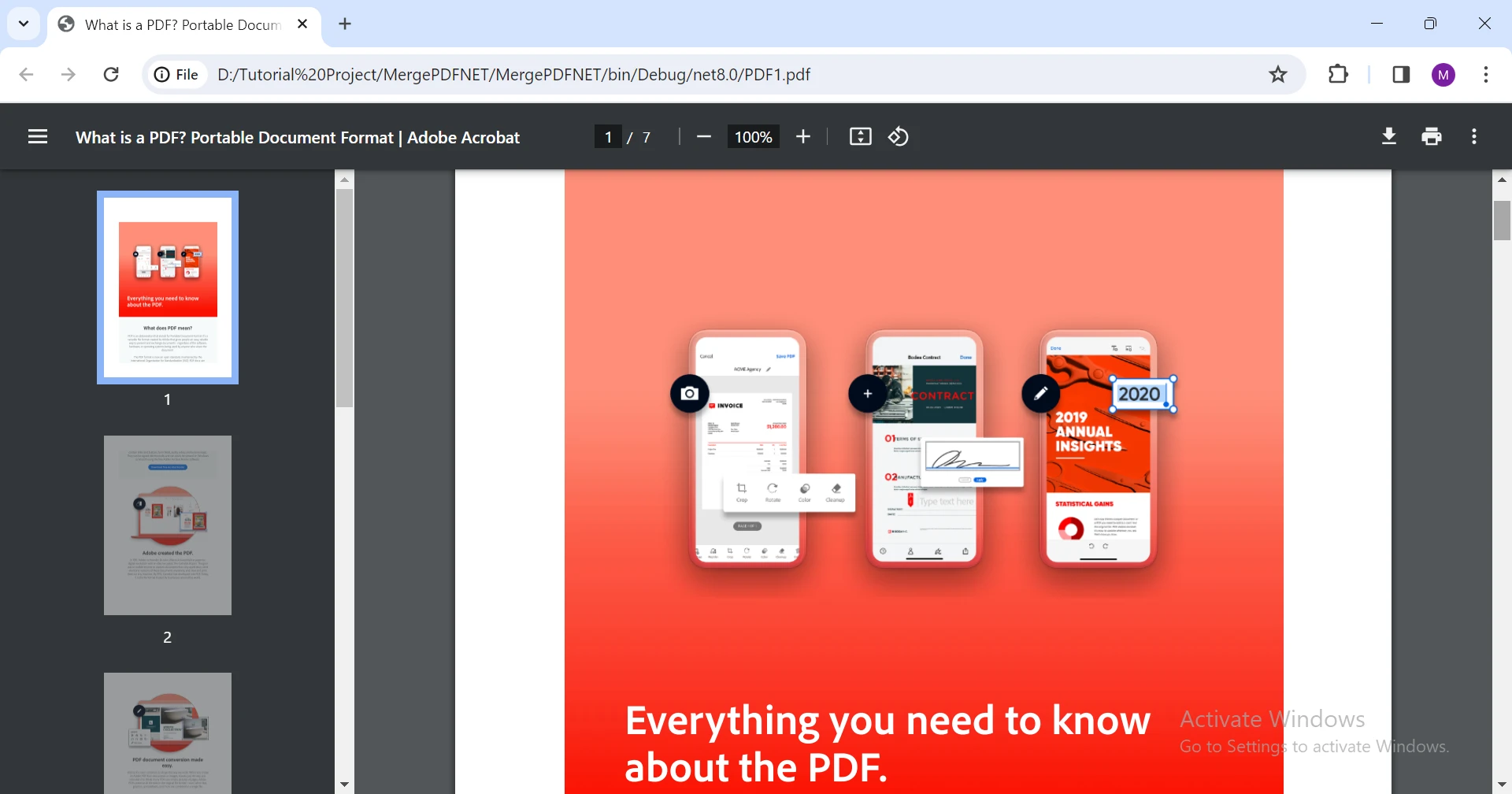
Der obige Code wird eine neue PDF-Datei von der im Argument übergebenen URL erstellen. Es wird eine **ChromePdfRenderer**-Instanz initialisiert, die Teil von IronPDF ist. Es verwendet dann diesen Renderer, um eine Webseite (in diesem Fall die PDF-Informationsseite von Adobe) in ein PDF-Dokument zu konvertieren und speichert es als "PDF1.pdf." Die **RenderUrlAsPdf**-Methode ermöglicht die nahtlose Konvertierung von Webinhalten in eine herunterladbare PDF-Datei unter Verwendung des Chrome-Browser-Engines.
Das generierte PDF-Dokument ist wie folgt:
IronPDF bietet drei Möglichkeiten, ein neues PDF-Dokument zu erstellen:
1. Erstellen [PDF von URL](/examples/converting-a-url-to-a-pdf/)
2. Erstellen [PDF von HTML-Datei](/examples/file-to-pdf/)
3. Erstellen [PDF von HTML-String](/examples/using-html-to-create-a-pdf/)
Lassen Sie uns eine zweite PDF-Datei aus einem HTML-String erstellen:
```csharp
// Create a PDF document from an HTML string and save it as PDF2.pdf
ChromePdfRenderer chromePdfRenderer = new ChromePdfRenderer();
PdfDocument pdfDocument = chromePdfRenderer.RenderHtmlAsPdf("<h1>MY PDF File</h1>");
pdfDocument.SaveAs("PDF2.pdf");
```
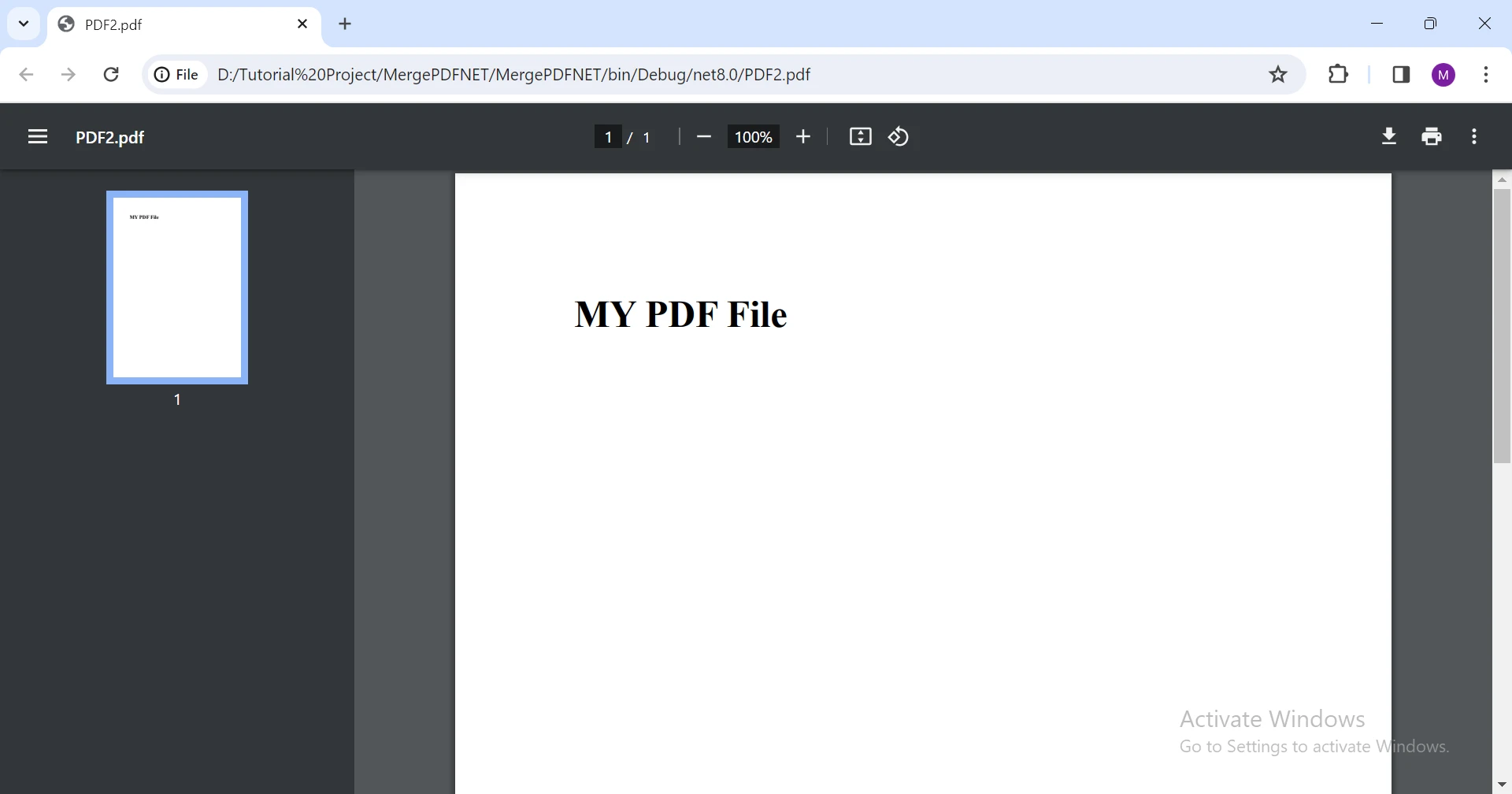
Der obige Code wird ein neues PDF-Dokument aus dem im **`RenderHtmlAsPdf()`**-Methode übergebenen HTML-String generieren.
Die Ausgabepdf-Datei ist wie folgt:
Nun, da wir beide PDFs bereit haben, schreiben wir den Code zum Zusammenführen von PDFs.
## PDF-Dateien zusammenführen
Nun, da Sie einzelne PDF-Dokumente haben, können Sie diese mit IronPDF zu einem einzigen PDF-Dokument zusammenführen.
```csharp
// Load existing PDF files into PdfDocument instances
PdfDocument pdfDocument1 = new PdfDocument("PDF1.pdf");
PdfDocument pdfDocument2 = new PdfDocument("PDF2.pdf");
// Merge the PDF documents into a single file
var merged = PdfDocument.Merge(pdfDocument1, pdfDocument2);
merged.SaveAs("Merged.pdf");
```
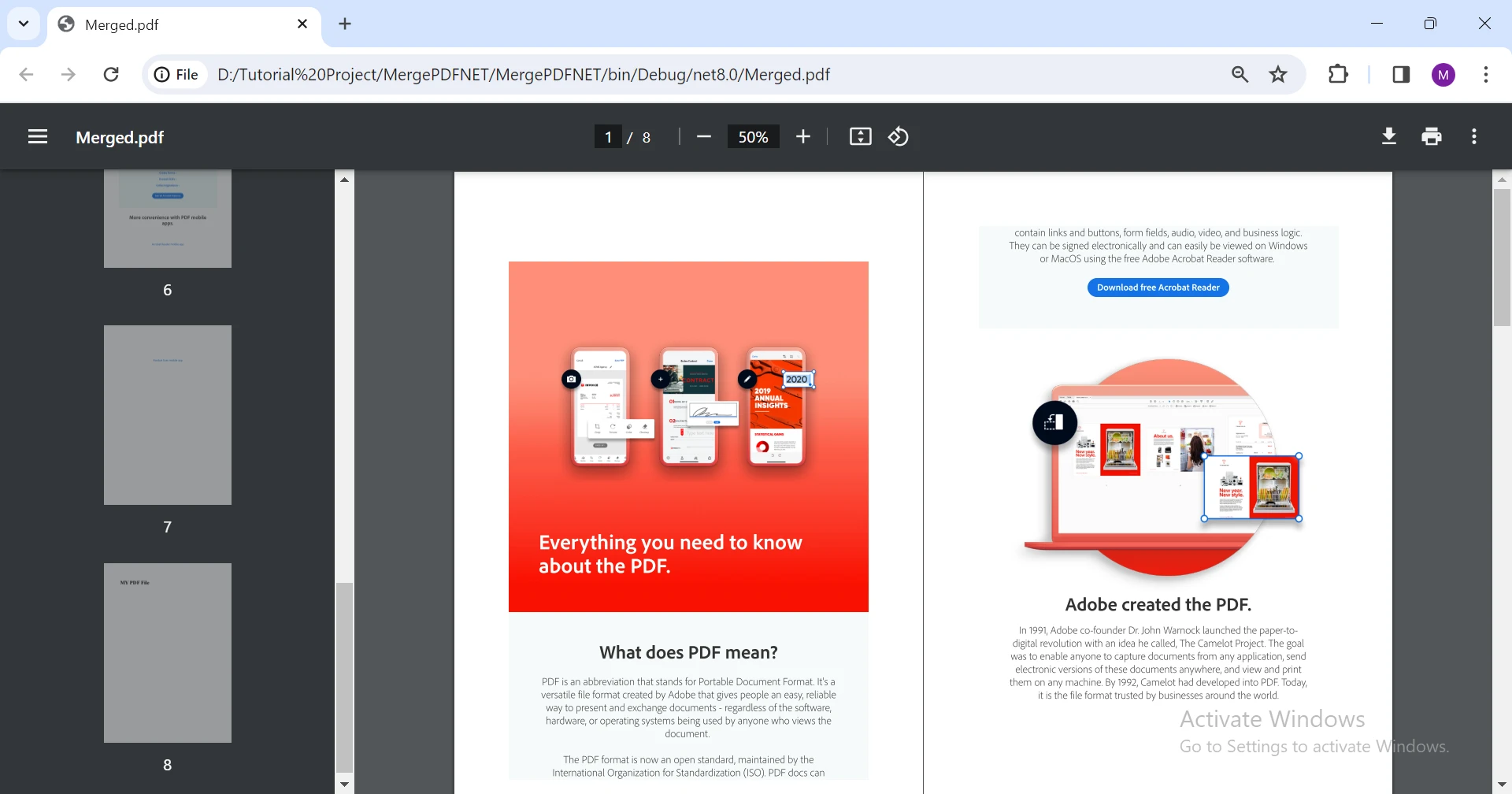
Der obige Code erstellt zwei **PdfDocument**-Instanzen, `pdfDocument1` und `pdfDocument2`, indem er bestehende PDF-Dateien ("PDF1.pdf" und "PDF2.pdf") lädt. Die **PdfDocument.Merge**-Methode wird dann verwendet, um diese beiden Eingabepdf-Dateien zu einem einzigen zusammengeführten Dokument zu kombinieren, und das Ergebnis wird als "Merged.pdf" gespeichert. Dies zeigt, wie IronPDF den Prozess des Zusammenführens bestehender PDFs in eine konsolidierte Datei mit wenigen Zeilen Code vereinfacht. Auf diese Weise können wir mehrere PDF-Dateien ganz einfach zusammenführen.
Das zusammengeführte PDF-Dokument ist so:
## Abschluss
Zusammenfassend wird der Prozess der Zusammenführung mehrerer PDF-Dokumente in einer .NET-Anwendung durch die Verwendung von IronPDF bemerkenswert vereinfacht. Diese leistungsstarke Bibliothek vereinfacht nicht nur das Zusammenführen von PDFs, sondern bietet auch erstaunliche Funktionen für die [PDF-Erstellung](/blog/using-ironpdf/asp-net-pdf-generator/), [Bearbeitung](/tutorials/csharp-edit-pdf-complete-tutorial/) und Manipulation. Von der Konvertierung von HTML in PDF mit erweiterten Styling-Optionen bis hin zum nahtlosen Zusammenführen bestehender PDFs erweist sich IronPDF als vielseitiges Tool im Werkzeugkasten des Entwicklers.
Indem Sie die in diesem Leitfaden beschriebenen Schritte befolgen, können Entwickler IronPDF mühelos in ihre Projekte integrieren und dessen Möglichkeiten nutzen, um dokumentenzentrierte Anwendungen zu verbessern. Egal ob Sie es mit Berichten, Rechnungen oder einem anderen Dokumententyp zu tun haben, die Funktionen von IronPDF, einschließlich der Möglichkeit, Seiten anzuhängen, zu löschen oder zu ändern, machen es zu einem unschätzbaren Wert. Zusätzlich stellt die Kompatibilität der Bibliothek mit verschiedenen .NET-Frameworks sicher, dass sie in einer Vielzahl von Projekten anwendbar ist.
IronPDF ist einfach zu installieren und zu verwenden und bietet umfassende Dokumentation und Beispiele, die Ihnen helfen, mit der PDF-Entwicklung in C# zu beginnen. Es bietet verschiedene [Lizenzierungsoptionen](/licensing/), zusammen mit einer kostenlosen Testversion, abhängig von der Anzahl der Entwickler, Standorte, Projekte und Vertriebsbedürfnisse. Die Lizenzen sind unbefristet und beinhalten kostenlosen Support sowie Updates.
Die Möglichkeit, PDF-Dokumente zusammenzuführen, ist eine häufige Anforderung in vielen Anwendungen. Egal ob Sie mit Berichten, Rechnungen oder einem anderen dokumentenzentrierten System arbeiten, das Zusammenführen von PDFs kann Prozesse optimieren und das Benutzererlebnis verbessern. Im .NET-Ökosystem bietet IronPDF eine leistungsstarke und flexible Lösung für die Arbeit mit PDF-Dateien. In diesem Artikel werden wir untersuchen, wie man verschiedene PDF-Dokumente mit der offiziellen Website von IronPDF in einer .NET-Anwendung zusammenführen kann.
Schritte zum Zusammenführen von PDF .NET-Dateien
PDF-Dateien erstellen
PDF-Dateien öffnen
Verwenden Sie die PdfDocument.Merge() Methode zum Zusammenführen von PDF-Dateien
Was ist IronPDF?
IronPDF ist eine .NET-PDF-Bibliothek, die es Ihnen ermöglicht, PDF-Dokumente aus HTML, Bildern oder anderen Quellen zu erstellen und zu bearbeiten. Es ist kompatibel mit .NET 8, 7, 6, 5, Core, Standard und Framework und unterstützt verschiedene Funktionen wie Verschlüsselung, Komprimierung, digitale Signaturen und OCR.
Funktionen von IronPDF
Zu den Hauptfunktionen von IronPDF gehören:
HTML zu PDF
Sie können HTML-Dateien, Zeichenfolgen oder URLs in PDF-Dokumente umwandeln, mit Unterstützung für CSS, JavaScript, Bilder, Schriftarten und responsive Layouts. Sie können auch Seitenvorlagen, Kopf- und Fußzeilen, Seitennummern und Seitenumbrüche anwenden, um das Erscheinungsbild des PDF anzupassen.
PDF-Bearbeitung
Sie können bestehende PDF-Dokumente bearbeiten, indem Sie Seiten hinzufügen, löschen oder zusammenführen, Metadaten ändern, Passwörter und Berechtigungen anwenden, digitale Signaturen hinzufügen und die Dateigröße komprimieren. Sie können auch Text, Bilder und Formulardaten aus PDFs extrahieren oder PDFs in HTML oder Bilder umwandeln.
PDF-Erstellung
Sie können PDF-Dokumente von Grund auf unter Verwendung von IronPDF erstellen oder die PDFDocument Klasse verwenden, um PDF-Elemente wie Text, Bilder, Formen, Anmerkungen, Lesezeichen und Formulare zu manipulieren. Sie können auch die PDFPrintOptions Klasse verwenden, um die Druckeinstellungen des PDF zu steuern.
Einstieg mit IronPDF
Der Einstieg mit IronPDF ist kinderleicht. Installieren Sie das IronPDF NuGet-Paket in Ihrem .NET-Projekt mithilfe der NuGet-Paket-Manager-Konsole:
Sobald IronPDF installiert ist, können Sie problemlos mehrere PDF-Dokumente in Ihrer .NET-Anwendung zusammenführen. Hier ist eine Schritt-für-Schritt-Anleitung, wie es geht:
Lizenzschlüssel hinzufügen
Wir benötigen eine IronPDF-Lizenz zur Verwendung in unserem Projekt. Sie können eine kostenlose Testlizenz von der IronPDF-Website erhalten.
// Assign your IronPDF license key to enable full functionalityIronPdf.License.LicenseKey = "IRONSUITE.ABC.XYZ.COM.876UTR-DEPLOYMENT.TRIAL-P45MXL.TRIAL.EXPIRES.31.JAN.2030";
// Assign your IronPDF license key to enable full functionality
IronPdf.License.LicenseKey = "IRONSUITE.ABC.XYZ.COM.876UTR-DEPLOYMENT.TRIAL-P45MXL.TRIAL.EXPIRES.31.JAN.2030";
' Assign your IronPDF license key to enable full functionalityIronPdf.License.LicenseKey = "IRONSUITE.ABC.XYZ.COM.876UTR-DEPLOYMENT.TRIAL-P45MXL.TRIAL.EXPIRES.31.JAN.2030"
' Assign your IronPDF license key to enable full functionality
IronPdf.License.LicenseKey = "IRONSUITE.ABC.XYZ.COM.876UTR-DEPLOYMENT.TRIAL-P45MXL.TRIAL.EXPIRES.31.JAN.2030"
Ersetzen Sie diesen Lizenzschlüssel mit dem von IronPDF erhaltenen.
Als nächstes müssen wir ein neues PDF-Dokument öffnen oder erstellen.
Schritt 1: PDF-Dokument erstellen
Beginnen Sie damit, ein IronPDF-Dokument für jede PDF-Datei zu erstellen, die Sie zusammenführen möchten. Egal ob Sie mit bestehenden PDFs oder neuen PDFs arbeiten, IronPDF macht den Prozess nahtlos.
// Create an instance of ChromePdfRendererChromePdfRenderer chromePdfRenderer = new ChromePdfRenderer();// Render a URL as a PDF document and save it as PDF1.pdfPdfDocument pdfDocument = chromePdfRenderer.RenderUrlAsPdf("https://www.adobe.com/acrobat/about-adobe-pdf.html");pdfDocument.SaveAs("PDF1.pdf");
// Create an instance of ChromePdfRenderer
ChromePdfRenderer chromePdfRenderer = new ChromePdfRenderer();

// Render a URL as a PDF document and save it as PDF1.pdf
PdfDocument pdfDocument = chromePdfRenderer.RenderUrlAsPdf("https://www.adobe.com/acrobat/about-adobe-pdf.html");
pdfDocument.SaveAs("PDF1.pdf");
' Create an instance of ChromePdfRendererDim chromePdfRenderer As New ChromePdfRenderer()' Render a URL as a PDF document and save it as PDF1.pdfDim pdfDocument AsPdfDocument = chromePdfRenderer.RenderUrlAsPdf("https://www.adobe.com/acrobat/about-adobe-pdf.html")pdfDocument.SaveAs("PDF1.pdf")
' Create an instance of ChromePdfRenderer
Dim chromePdfRenderer As New ChromePdfRenderer()

' Render a URL as a PDF document and save it as PDF1.pdf
Dim pdfDocument As PdfDocument = chromePdfRenderer.RenderUrlAsPdf("https://www.adobe.com/acrobat/about-adobe-pdf.html")
pdfDocument.SaveAs("PDF1.pdf")
Der obige Code wird eine neue PDF-Datei von der im Argument übergebenen URL erstellen. Es wird eine ChromePdfRenderer-Instanz initialisiert, die Teil von IronPDF ist. Es verwendet dann diesen Renderer, um eine Webseite (in diesem Fall die PDF-Informationsseite von Adobe) in ein PDF-Dokument zu konvertieren und speichert es als "PDF1.pdf." Die RenderUrlAsPdf-Methode ermöglicht die nahtlose Konvertierung von Webinhalten in eine herunterladbare PDF-Datei unter Verwendung des Chrome-Browser-Engines.
Das generierte PDF-Dokument ist wie folgt:
IronPDF bietet drei Möglichkeiten, ein neues PDF-Dokument zu erstellen:
Lassen Sie uns eine zweite PDF-Datei aus einem HTML-String erstellen:
// Create a PDF document from an HTML string and save it as PDF2.pdfChromePdfRenderer chromePdfRenderer = new ChromePdfRenderer();PdfDocument pdfDocument = chromePdfRenderer.RenderHtmlAsPdf("<h1>MY PDF File</h1>");pdfDocument.SaveAs("PDF2.pdf");
// Create a PDF document from an HTML string and save it as PDF2.pdf
ChromePdfRenderer chromePdfRenderer = new ChromePdfRenderer();
PdfDocument pdfDocument = chromePdfRenderer.RenderHtmlAsPdf("<h1>MY PDF File</h1>");
pdfDocument.SaveAs("PDF2.pdf");
' Create a PDF document from an HTML string and save it as PDF2.pdfDim chromePdfRenderer As New ChromePdfRenderer()Dim pdfDocument AsPdfDocument = chromePdfRenderer.RenderHtmlAsPdf("<h1>MY PDF File</h1>")pdfDocument.SaveAs("PDF2.pdf")
' Create a PDF document from an HTML string and save it as PDF2.pdf
Dim chromePdfRenderer As New ChromePdfRenderer()
Dim pdfDocument As PdfDocument = chromePdfRenderer.RenderHtmlAsPdf("<h1>MY PDF File</h1>")
pdfDocument.SaveAs("PDF2.pdf")
Der obige Code wird ein neues PDF-Dokument aus dem im RenderHtmlAsPdf()-Methode übergebenen HTML-String generieren.
Die Ausgabepdf-Datei ist wie folgt:
Nun, da wir beide PDFs bereit haben, schreiben wir den Code zum Zusammenführen von PDFs.
PDF-Dateien zusammenführen
Nun, da Sie einzelne PDF-Dokumente haben, können Sie diese mit IronPDF zu einem einzigen PDF-Dokument zusammenführen.
// Load existing PDF files into PdfDocument instancesPdfDocument pdfDocument1 = new PdfDocument("PDF1.pdf");PdfDocument pdfDocument2 = new PdfDocument("PDF2.pdf");// Merge the PDF documents into a single filevar merged = PdfDocument.Merge(pdfDocument1, pdfDocument2);merged.SaveAs("Merged.pdf");
// Load existing PDF files into PdfDocument instances
PdfDocument pdfDocument1 = new PdfDocument("PDF1.pdf");
PdfDocument pdfDocument2 = new PdfDocument("PDF2.pdf");

// Merge the PDF documents into a single file
var merged = PdfDocument.Merge(pdfDocument1, pdfDocument2);
merged.SaveAs("Merged.pdf");
' Load existing PDF files into PdfDocument instancesDim pdfDocument1 As New PdfDocument("PDF1.pdf")Dim pdfDocument2 As New PdfDocument("PDF2.pdf")' Merge the PDF documents into a single fileDim merged = PdfDocument.Merge(pdfDocument1, pdfDocument2)merged.SaveAs("Merged.pdf")
' Load existing PDF files into PdfDocument instances
Dim pdfDocument1 As New PdfDocument("PDF1.pdf")
Dim pdfDocument2 As New PdfDocument("PDF2.pdf")

' Merge the PDF documents into a single file
Dim merged = PdfDocument.Merge(pdfDocument1, pdfDocument2)
merged.SaveAs("Merged.pdf")
Der obige Code erstellt zwei PdfDocument-Instanzen, pdfDocument1 und pdfDocument2, indem er bestehende PDF-Dateien ("PDF1.pdf" und "PDF2.pdf") lädt. Die PdfDocument.Merge-Methode wird dann verwendet, um diese beiden Eingabepdf-Dateien zu einem einzigen zusammengeführten Dokument zu kombinieren, und das Ergebnis wird als "Merged.pdf" gespeichert. Dies zeigt, wie IronPDF den Prozess des Zusammenführens bestehender PDFs in eine konsolidierte Datei mit wenigen Zeilen Code vereinfacht. Auf diese Weise können wir mehrere PDF-Dateien ganz einfach zusammenführen.
Das zusammengeführte PDF-Dokument ist so:
Abschluss
Zusammenfassend wird der Prozess der Zusammenführung mehrerer PDF-Dokumente in einer .NET-Anwendung durch die Verwendung von IronPDF bemerkenswert vereinfacht. Diese leistungsstarke Bibliothek vereinfacht nicht nur das Zusammenführen von PDFs, sondern bietet auch erstaunliche Funktionen für die PDF-Erstellung, Bearbeitung und Manipulation. Von der Konvertierung von HTML in PDF mit erweiterten Styling-Optionen bis hin zum nahtlosen Zusammenführen bestehender PDFs erweist sich IronPDF als vielseitiges Tool im Werkzeugkasten des Entwicklers.
Indem Sie die in diesem Leitfaden beschriebenen Schritte befolgen, können Entwickler IronPDF mühelos in ihre Projekte integrieren und dessen Möglichkeiten nutzen, um dokumentenzentrierte Anwendungen zu verbessern. Egal ob Sie es mit Berichten, Rechnungen oder einem anderen Dokumententyp zu tun haben, die Funktionen von IronPDF, einschließlich der Möglichkeit, Seiten anzuhängen, zu löschen oder zu ändern, machen es zu einem unschätzbaren Wert. Zusätzlich stellt die Kompatibilität der Bibliothek mit verschiedenen .NET-Frameworks sicher, dass sie in einer Vielzahl von Projekten anwendbar ist.
IronPDF ist einfach zu installieren und zu verwenden und bietet umfassende Dokumentation und Beispiele, die Ihnen helfen, mit der PDF-Entwicklung in C# zu beginnen. Es bietet verschiedene Lizenzierungsoptionen, zusammen mit einer kostenlosen Testversion, abhängig von der Anzahl der Entwickler, Standorte, Projekte und Vertriebsbedürfnisse. Die Lizenzen sind unbefristet und beinhalten kostenlosen Support sowie Updates.
Jacob Mellor ist Chief Technology Officer bei Iron Software und ein visionärer Ingenieur, der Pionierarbeit in der C# PDF-Technologie leistet. Als der ursprüngliche Entwickler hinter der Kern-Codebasis von Iron Software hat er die Produktarchitektur des Unternehmens seit seiner Gründung geprägt und es zusammen mit CEO Cameron Rimington in ein Unternehmen mit mehr als 50 Mitarbeitern verwandelt, das die NASA, Tesla und globale Regierungsbehörden beliefert.