Datenberichterstattung und -visualisierung sind wesentliche Bestandteile vieler Anwendungen in der heutigen Softwareumgebung und bieten Einblicke in das Benutzerverhalten, Leistungsindikatoren und GeschäftskPIs. MySqlClient ist eine MySQL-Bibliothek für .NET, die es Entwicklern ermöglicht, einfach eine Verbindung zu MySQL-Datenbanken herzustellen, die häufig zur Speicherung und Verwaltung von Daten in Online-Anwendungen verwendet werden.
Im Gegensatz dazu ist IronPDF eine beliebte .NET-Bibliothek zum Erstellen und Bearbeiten von PDF-Dateien. IronPDF ist eine nützliche Lösung für Datenberichterstattungs- und Dokumentenerstellungstätigkeiten, da es Entwicklern ermöglicht, dynamische PDF-Berichte, Rechnungen, Abrechnungen und mehr direkt innerhalb ihrer .NET-Anwendungen zu erstellen.
In diesem Artikel untersuchen wir die Integration von MySqlClient mit IronPDF, um eine effiziente Datenberichterstellung in .NET-Anwendungen zu ermöglichen. Durch die Kombination dieser Technologien können Entwickler den Prozess des Abfragens von Daten aus MySQL-Datenbanken und der Generierung von ansprechenden PDF-Berichten rationalisieren, indem sie den Nutzern ermöglichen, fundierte Entscheidungen auf der Grundlage von datengestützten Einblicken zu treffen.
Benutzung von MySqlClient
- Erstellen Sie ein neues C#-Projekt in Visual Studio.
- Installieren Sie die MySqlClient-Bibliothek von NuGet.
- Öffnen Sie die Verbindung zur MySQL-Datenbank.
- Führen Sie die Abfrage aus und holen Sie das Ergebnis ein.
- Verarbeiten Sie die Daten und schließen Sie das Objekt.
Einführung in MySqlClient
Die Entwicklung von .NET-Anwendungen erfordert die Verwendung von MySqlClient, insbesondere beim Arbeiten mit MySQL-Datenbanken. Es erleichtert die nahtlose Ausführung einer Vielzahl von Datenbankaktivitäten, indem es als Brücke zwischen dem Anwendungscode und dem MySQL-Datenbankserver fungiert. Dies umfasst das Ausführen von SQL-Abfragen, das Abrufen von Informationen, das Bearbeiten von Datenbankeinträgen und das Aufrechterhalten von Datenbankverbindungen.
Vorteile von MySqlClient
Datenbank-Konnektivität: Von .NET-Programmen aus bietet MySqlClient Klassen und Methoden, um eine Verbindung zu MySQL-Datenbankservern herzustellen. Entwickler können Verbindungsdetails wie den Datenbanknamen, Login, Passwort und Serveradresse angeben, um eine Verbindung herzustellen.
SQL-Operationen: Mit MySqlClient können Entwickler SQL-Abfragen gegen die MySQL-Datenbank ausführen, sobald eine Verbindung hergestellt wurde. Dies umfasst das Abrufen von Daten mit SELECT-Abfragen sowie das Ändern von Datenbankeinträgen mit INSERT-, UPDATE-, DELETE- und anderen Datenmanipulationsabfragen.
SQL-Angriffe verhindern: SQL-Injection-Angriffe können vermieden werden und die sichere Parameterübertragung zu SQL-Abfragen wird durch die Unterstützung von parametrisierten Abfragen in MySqlClient ermöglicht. Da bei parametrisierten Abfragen die SQL-Funktionalität von Benutzereingaben isoliert wird, wird die Sicherheit verbessert.
Bei der Verwendung von MySqlClient in C# können Fehler wie "Fehlgeschlagenes Erstellen des Rads für MySqlClient" während der Installation oder Abhängigkeitsauflösung auftreten, was auf mögliche Probleme mit dem MySqlClient-Paket oder seinen Abhängigkeiten hinweist.
Einstieg mit MySqlClient
Erstellen eines neuen Projekts in Visual Studio
Um die Visual Studio-Anwendung zu öffnen, wählen Sie das Menü Datei, klicken Sie auf "Neues Projekt" und wählen Sie "Konsolenanwendung" aus.
Die Organisation des Visual Studio-Projekts hängt vom ausgewählten Anwendungstyp ab. Um Code zur Anwendung hinzuzufügen und diese zu erstellen, öffnen Sie einfach die Datei Program.cs.
MySqlClient im C#-Projekt installieren
Um MySqlClient in ein C#-Projekt zu integrieren, verwenden Sie Microsofts .NET-Paketmanager, NuGet, um das MySql.Data-Paket zu installieren. Dieses Paket stellt die erforderlichen Tools und Ressourcen bereit, um MySqlClient in Ihre Anwendungen zu integrieren.
Implementierung von MySqlClient in .NET-Anwendungen
Mehrere .NET-Anwendungstypen, wie z.B. Windows Forms (WinForms) und Windows-Konsole, sind mit MySqlClient kompatibel. Die grundlegende Idee hinter jedem Framework ist, trotz der Unterschiede in der Implementierung, immer die gleiche: Verwenden Sie Ihre Anwendung, um verschiedene Arten von Datenbankoperationen durchzuführen.
Ein grundlegendes Beispiel für die Verwendung von MySqlClient Operation
Bevor Sie mit der MySQL-Datenbank interagieren, stellen Sie eine Verbindung mit MySqlClient her. Führen Sie anschließend SQL-Abfragen aus, um Daten von MySQL abzurufen. Ein Tool zum Ausführen von SQL-Abfragen ist MySqlCommand.
using MySql.Data.MySqlClient;
using System;

class Program
{
    static async Task Main(string[] args)
    {
        try
        {
            // Define the connection string with MySQL server details
            string connString = "server=myServerAddress;user=myUsername;password=myPassword;database=myDatabase";

            // Create connection object
            using var conn = new MySqlConnection(connString);

            // Open the connection
            await conn.OpenAsync();

            // SQL query to retrieve data
            string sql = "SELECT * FROM myTable";

            // Create MySqlCommand to execute the query
            using var cmd = new MySqlCommand(sql, conn);

            // Execute the command and retrieve data using MySqlDataReader
            using MySqlDataReader reader = await cmd.ExecuteReaderAsync();

            // Loop through the retrieved data and print to console
            while (await reader.ReadAsync())
            {
                string name = reader["Name"].ToString();
                int age = Convert.ToInt32(reader["Age"]);
                Console.WriteLine($"Name: {name}, Age: {age}");
            }
        }
        catch (Exception ex)
        {
            // Print exception message if any error occurs
            Console.WriteLine($"An error occurred: {ex.Message}");
        }
    }
}
using MySql.Data.MySqlClient;
using System;

class Program
{
    static async Task Main(string[] args)
    {
        try
        {
            // Define the connection string with MySQL server details
            string connString = "server=myServerAddress;user=myUsername;password=myPassword;database=myDatabase";

            // Create connection object
            using var conn = new MySqlConnection(connString);

            // Open the connection
            await conn.OpenAsync();

            // SQL query to retrieve data
            string sql = "SELECT * FROM myTable";

            // Create MySqlCommand to execute the query
            using var cmd = new MySqlCommand(sql, conn);

            // Execute the command and retrieve data using MySqlDataReader
            using MySqlDataReader reader = await cmd.ExecuteReaderAsync();

            // Loop through the retrieved data and print to console
            while (await reader.ReadAsync())
            {
                string name = reader["Name"].ToString();
                int age = Convert.ToInt32(reader["Age"]);
                Console.WriteLine($"Name: {name}, Age: {age}");
            }
        }
        catch (Exception ex)
        {
            // Print exception message if any error occurs
            Console.WriteLine($"An error occurred: {ex.Message}");
        }
    }
}
Imports MySql.Data.MySqlClient
Imports System
Module Program
Async Function Main(args As String()) As Task
Try
' Define the connection string with MySQL server details
Dim connString As String = "server=myServerAddress;user=myUsername;password=myPassword;database=myDatabase"
' Create connection object
Using conn As New MySqlConnection(connString)
' Open the connection
Await conn.OpenAsync()
' SQL query to retrieve data
Dim sql As String = "SELECT * FROM myTable"
' Create MySqlCommand to execute the query
Using cmd As New MySqlCommand(sql, conn)
' Execute the command and retrieve data using MySqlDataReader
Using reader As MySqlDataReader = Await cmd.ExecuteReaderAsync()
' Loop through the retrieved data and print to console
While Await reader.ReadAsync()
Dim name As String = reader("Name").ToString()
Dim age As Integer = Convert.ToInt32(reader("Age"))
Console.WriteLine($"Name: {name}, Age: {age}")
End While
End Using
End Using
End Using
Catch ex As Exception
' Print exception message if any error occurs
Console.WriteLine($"An error occurred: {ex.Message}")
End Try
End Function
End Module
Imports MySql.Data.MySqlClient
Imports System

Module Program
    Async Function Main(args As String()) As Task
        Try
            ' Define the connection string with MySQL server details
            Dim connString As String = "server=myServerAddress;user=myUsername;password=myPassword;database=myDatabase"

            ' Create connection object
            Using conn As New MySqlConnection(connString)

                ' Open the connection
                Await conn.OpenAsync()

                ' SQL query to retrieve data
                Dim sql As String = "SELECT * FROM myTable"

                ' Create MySqlCommand to execute the query
                Using cmd As New MySqlCommand(sql, conn)

                    ' Execute the command and retrieve data using MySqlDataReader
                    Using reader As MySqlDataReader = Await cmd.ExecuteReaderAsync()

                        ' Loop through the retrieved data and print to console
                        While Await reader.ReadAsync()
                            Dim name As String = reader("Name").ToString()
                            Dim age As Integer = Convert.ToInt32(reader("Age"))
                            Console.WriteLine($"Name: {name}, Age: {age}")
                        End While
                    End Using
                End Using
            End Using
        Catch ex As Exception
            ' Print exception message if any error occurs
            Console.WriteLine($"An error occurred: {ex.Message}")
        End Try
    End Function
End Module
Der obige Codeauszug ruft Daten aus einer MySQL-Datenbank mit MySqlClient ab und zeigt sie in der Konsole an.
MySqlClient Betrieb mit MySQL
Parametrisierte Abfragen mit MySql
Parametrisierte Abfragen verbessern die Leistung von Abfragen und verringern das Risiko von SQL Injection-Angriffen, indem sie dem Datenbankserver ermöglichen, Abfragepläne zwischenzuspeichern. MySqlClient bietet Unterstützung für parametrisierte Abfragen, was das Arbeiten mit dynamischen SQL-Abfragen auf sichere und effiziente Weise erleichtert.
Bulk-Operationen mit MySql
MySqlClient unterstützt Massen-Insert-, -Update- und -Delete-Operationen, die die Geschwindigkeit beim Arbeiten mit großen Datensätzen erheblich verbessern können. Wenn mehrere Zeilen in einer einzigen Datenbanktransaktion bearbeitet werden, reduzieren Massenoperationen den Overhead, der durch separate Rundfahrten zum Datenbankserver entsteht.
Transaktionen verwalten
Transaktionen ermöglichen es Ihnen, mehrere SQL-Anweisungen als eine einzige, koordinierte Arbeitseinheit auszuführen.
Verbindung mit MySQL-Datenbank
Mit nur wenigen Codezeilen unten kann MySqlClient Ihnen helfen, eine Verbindung zu einem MySQL-Datenbankserver herzustellen.
MySqlConnection conn = new MySqlConnection(connString);
MySqlConnection conn = new MySqlConnection(connString);
Dim conn As New MySqlConnection(connString)
Dim conn As New MySqlConnection(connString)
Integration von MySqlClient mit IronPDF
MySqlClient und IronPDF zusammen verwenden
Durch die Kombination von IronPDF und MySqlClient in einem C#-Projekt eröffnen sich spannende neue Möglichkeiten. IronPDF ist ein ausgezeichnetes Tool für die Umwandlung von Inhalten in PDFs, während MySqlClient ein hervorragendes Tool für die Interaktion mit MySQL ist. Diese Verbundenheit erlaubt es Programmierern, Anwendungen zu erstellen, die mit Datenbanken interagieren und PDFs aus diesen Inhalten erstellen.
IronPDF zeichnet sich in der HTML-zu-PDF-Konvertierung aus und sorgt für den präzisen Erhalt der ursprünglichen Layouts und Stile. Es ist ideal zur Erstellung von PDFs aus webbasierten Inhalten wie Berichten, Rechnungen und Dokumentationen. Mit Unterstützung für HTML-Dateien, URLs und rohe HTML-Strings erstellt IronPDF problemlos hochwertige PDF-Dokumente.
using IronPdf;

class Program
{
    static async Task Main(string[] args)
    {
        var renderer = new ChromePdfRenderer();

        // Convert an HTML string to PDF
        var htmlContent = "<h1>Hello, IronPDF!</h1><p>This is a PDF from an HTML string.</p>";
        var pdfFromHtmlString = await renderer.RenderHtmlAsPdfAsync(htmlContent);
        pdfFromHtmlString.SaveAs("HTMLStringToPDF.pdf");

        // Convert an HTML file to PDF
        var htmlFilePath = "path_to_your_html_file.html"; // Specify the path to your HTML file
        var pdfFromHtmlFile = await renderer.RenderHtmlFileAsPdfAsync(htmlFilePath);
        pdfFromHtmlFile.SaveAs("HTMLFileToPDF.pdf");

        // Convert a URL to PDF
        var url = "http://ironpdf.com"; // Specify the URL
        var pdfFromUrl = await renderer.RenderUrlAsPdfAsync(url);
        pdfFromUrl.SaveAs("URLToPDF.pdf");
    }
}
using IronPdf;

class Program
{
    static async Task Main(string[] args)
    {
        var renderer = new ChromePdfRenderer();

        // Convert an HTML string to PDF
        var htmlContent = "<h1>Hello, IronPDF!</h1><p>This is a PDF from an HTML string.</p>";
        var pdfFromHtmlString = await renderer.RenderHtmlAsPdfAsync(htmlContent);
        pdfFromHtmlString.SaveAs("HTMLStringToPDF.pdf");

        // Convert an HTML file to PDF
        var htmlFilePath = "path_to_your_html_file.html"; // Specify the path to your HTML file
        var pdfFromHtmlFile = await renderer.RenderHtmlFileAsPdfAsync(htmlFilePath);
        pdfFromHtmlFile.SaveAs("HTMLFileToPDF.pdf");

        // Convert a URL to PDF
        var url = "http://ironpdf.com"; // Specify the URL
        var pdfFromUrl = await renderer.RenderUrlAsPdfAsync(url);
        pdfFromUrl.SaveAs("URLToPDF.pdf");
    }
}
Imports IronPdf
Friend Class Program
Shared Async Function Main(ByVal args() As String) As Task
Dim renderer = New ChromePdfRenderer()
' Convert an HTML string to PDF
Dim htmlContent = "<h1>Hello, IronPDF!</h1><p>This is a PDF from an HTML string.</p>"
Dim pdfFromHtmlString = Await renderer.RenderHtmlAsPdfAsync(htmlContent)
pdfFromHtmlString.SaveAs("HTMLStringToPDF.pdf")
' Convert an HTML file to PDF
Dim htmlFilePath = "path_to_your_html_file.html" ' Specify the path to your HTML file
Dim pdfFromHtmlFile = Await renderer.RenderHtmlFileAsPdfAsync(htmlFilePath)
pdfFromHtmlFile.SaveAs("HTMLFileToPDF.pdf")
' Convert a URL to PDF
Dim url = "http://ironpdf.com" ' Specify the URL
Dim pdfFromUrl = Await renderer.RenderUrlAsPdfAsync(url)
pdfFromUrl.SaveAs("URLToPDF.pdf")
End Function
End Class
Imports IronPdf

Friend Class Program
	Shared Async Function Main(ByVal args() As String) As Task
		Dim renderer = New ChromePdfRenderer()

		' Convert an HTML string to PDF
		Dim htmlContent = "<h1>Hello, IronPDF!</h1><p>This is a PDF from an HTML string.</p>"
		Dim pdfFromHtmlString = Await renderer.RenderHtmlAsPdfAsync(htmlContent)
		pdfFromHtmlString.SaveAs("HTMLStringToPDF.pdf")

		' Convert an HTML file to PDF
		Dim htmlFilePath = "path_to_your_html_file.html" ' Specify the path to your HTML file
		Dim pdfFromHtmlFile = Await renderer.RenderHtmlFileAsPdfAsync(htmlFilePath)
		pdfFromHtmlFile.SaveAs("HTMLFileToPDF.pdf")

		' Convert a URL to PDF
		Dim url = "http://ironpdf.com" ' Specify the URL
		Dim pdfFromUrl = Await renderer.RenderUrlAsPdfAsync(url)
		pdfFromUrl.SaveAs("URLToPDF.pdf")
	End Function
End Class
MySql-Daten mit IronPDF abrufen
Mit MySqlClient können Sie Anwendungen erstellen, die Benutzern ermöglichen, mit der Datenbank zu interagieren, Funktionalitäten mit Transaktionen zu verbessern und Datentypen effizient zuzuordnen.
IronPDF installieren
-
Starten Sie Ihr Visual Studio-Projekt.
-
Gehen Sie zu "Tools" > "NuGet-Paketmanager" > "Paket-Manager-Konsole".
-
Oder Sie können IronPDF über den NuGet-Paketmanager für Lösungen installieren.
- Suchen Sie nach dem IronPDF-Paket, wählen Sie es aus und klicken Sie auf die Schaltfläche "Installieren".
Das IronPDF-Paket und alle erforderlichen Abhängigkeiten werden installiert.
Implementierung der Logik
- Verbindung herstellen: Beginnen Sie, indem Sie eine Verbindung zu Ihrer MySQL-Datenbank mit
MySqlClient herstellen. Initialisieren Sie ein MySqlConnection-Objekt und geben Sie die erforderliche Verbindungszeichenfolge an, die Details wie Serveradresse, Datenbankname, Benutzername und Passwort enthält.
- Abfrage ausführen: Verwenden Sie
MySqlCommand, um SQL-Abfragen in der MySQL-Datenbank auszuführen. Abrufen von Daten mit ExecuteReader() und Ausführen von Nicht-Abfrage-Anweisungen wie INSERT, UPDATE und DELETE mit ExecuteNonQuery().
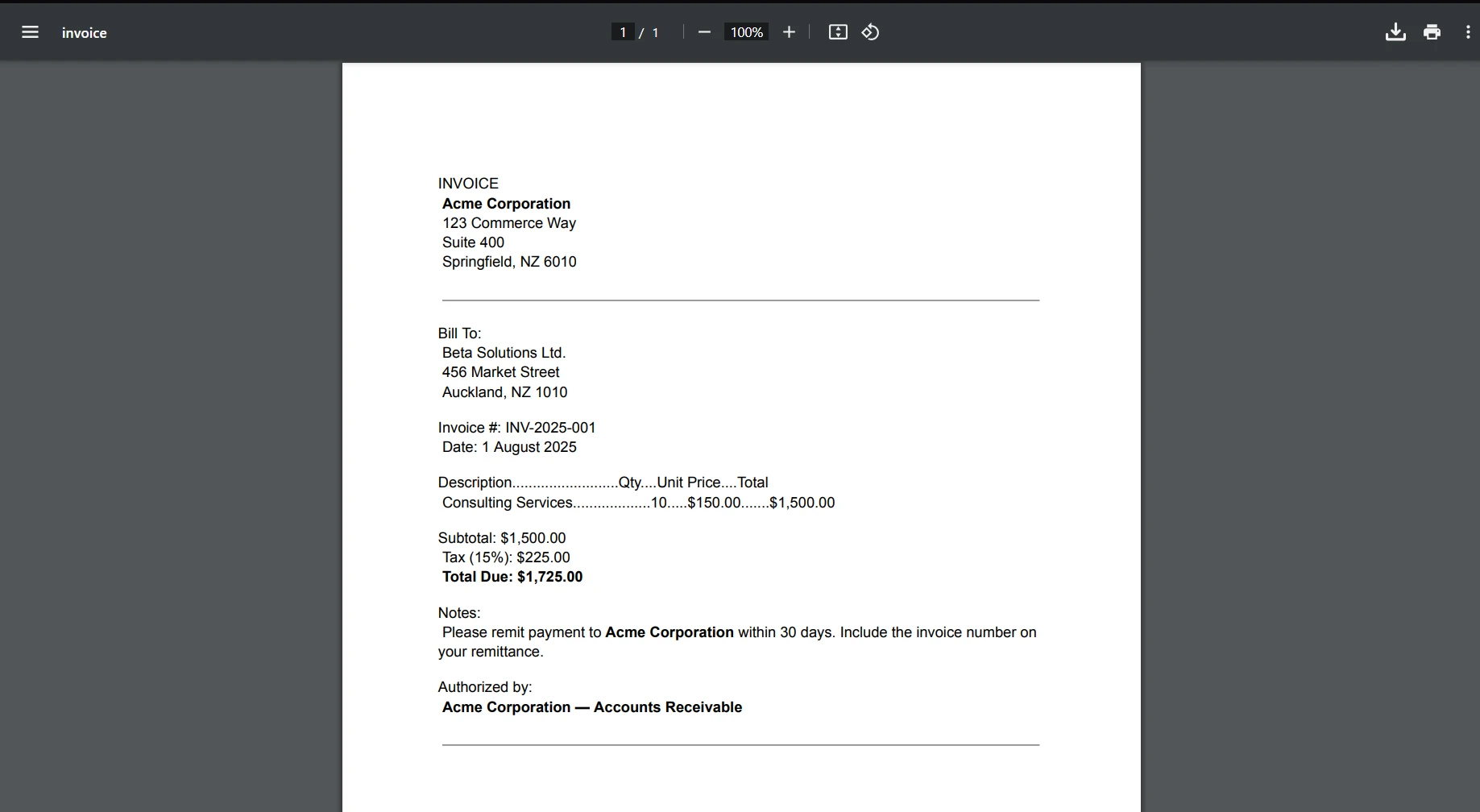
- Daten abrufen: Sobald Daten von MySql abgerufen wurden, verwenden Sie IronPDF, um PDF-Berichte zu erstellen. IronPDF bietet Funktionen zum Erstellen von PDF-Dokumenten, Hinzufügen von Text, Bildern und Tabellen sowie zum Speichern von Dateien.
- Bericht erstellen: Passen Sie das Erscheinungsbild von PDF-Berichten gemäß den Anforderungen Ihrer Anwendung mit CSS-Stilen, HTML-Vorlagen und der IronPDF-API an.
using MySql.Data.MySqlClient;
using IronPdf;
using System;
using System.Text;
using System.Threading.Tasks;

class Program
{
    static async Task Main(string[] args)
    {
        StringBuilder sb = new StringBuilder();
        var renderer = new ChromePdfRenderer(); // Instantiate Chrome Renderer

        sb.Append("<h1>Dynamic PDF Generated from MySqlClient Data</h1>");

        // MySQL client connection and command setup
        string connString = "server=myServerAddress;user=myUsername;password=myPassword;database=myDatabase";

        using var conn = new MySqlConnection(connString);
        await conn.OpenAsync();

        string sql = "SELECT Name, Age FROM myTable";
        using var cmd = new MySqlCommand(sql, conn);
        using MySqlDataReader reader = await cmd.ExecuteReaderAsync();

        while (await reader.ReadAsync())
        {
            // Retrieve data from the data reader
            string name = reader["Name"].ToString();
            int age = Convert.ToInt32(reader["Age"]);
            // Add data to the PDF
            sb.Append($"<p>Name: {name}, Age: {age}</p>");
        }

        var pdf = renderer.RenderHtmlAsPdf(sb.ToString());
        // Save the PDF document
        pdf.SaveAs("output.pdf");

        // Close the connection when done
        await conn.CloseAsync();
    }
}
using MySql.Data.MySqlClient;
using IronPdf;
using System;
using System.Text;
using System.Threading.Tasks;

class Program
{
    static async Task Main(string[] args)
    {
        StringBuilder sb = new StringBuilder();
        var renderer = new ChromePdfRenderer(); // Instantiate Chrome Renderer

        sb.Append("<h1>Dynamic PDF Generated from MySqlClient Data</h1>");

        // MySQL client connection and command setup
        string connString = "server=myServerAddress;user=myUsername;password=myPassword;database=myDatabase";

        using var conn = new MySqlConnection(connString);
        await conn.OpenAsync();

        string sql = "SELECT Name, Age FROM myTable";
        using var cmd = new MySqlCommand(sql, conn);
        using MySqlDataReader reader = await cmd.ExecuteReaderAsync();

        while (await reader.ReadAsync())
        {
            // Retrieve data from the data reader
            string name = reader["Name"].ToString();
            int age = Convert.ToInt32(reader["Age"]);
            // Add data to the PDF
            sb.Append($"<p>Name: {name}, Age: {age}</p>");
        }

        var pdf = renderer.RenderHtmlAsPdf(sb.ToString());
        // Save the PDF document
        pdf.SaveAs("output.pdf");

        // Close the connection when done
        await conn.CloseAsync();
    }
}
Imports MySql.Data.MySqlClient
Imports IronPdf
Imports System
Imports System.Text
Imports System.Threading.Tasks
Module Program
Async Function Main(ByVal args As String()) As Task
Dim sb As New StringBuilder()
Dim renderer = New ChromePdfRenderer() ' Instantiate Chrome Renderer
sb.Append("<h1>Dynamic PDF Generated from MySqlClient Data</h1>")
' MySQL client connection and command setup
Dim connString As String = "server=myServerAddress;user=myUsername;password=myPassword;database=myDatabase"
Using conn As New MySqlConnection(connString)
Await conn.OpenAsync()
Dim sql As String = "SELECT Name, Age FROM myTable"
Using cmd As New MySqlCommand(sql, conn)
Using reader As MySqlDataReader = Await cmd.ExecuteReaderAsync()
While Await reader.ReadAsync()
' Retrieve data from the data reader
Dim name As String = reader("Name").ToString()
Dim age As Integer = Convert.ToInt32(reader("Age"))
' Add data to the PDF
sb.Append($"<p>Name: {name}, Age: {age}</p>")
End While
End Using
End Using
Dim pdf = renderer.RenderHtmlAsPdf(sb.ToString())
' Save the PDF document
pdf.SaveAs("output.pdf")
' Close the connection when done
Await conn.CloseAsync()
End Using
End Function
End Module
Imports MySql.Data.MySqlClient
Imports IronPdf
Imports System
Imports System.Text
Imports System.Threading.Tasks

Module Program
    Async Function Main(ByVal args As String()) As Task
        Dim sb As New StringBuilder()
        Dim renderer = New ChromePdfRenderer() ' Instantiate Chrome Renderer

        sb.Append("<h1>Dynamic PDF Generated from MySqlClient Data</h1>")

        ' MySQL client connection and command setup
        Dim connString As String = "server=myServerAddress;user=myUsername;password=myPassword;database=myDatabase"

        Using conn As New MySqlConnection(connString)
            Await conn.OpenAsync()

            Dim sql As String = "SELECT Name, Age FROM myTable"
            Using cmd As New MySqlCommand(sql, conn)
                Using reader As MySqlDataReader = Await cmd.ExecuteReaderAsync()

                    While Await reader.ReadAsync()
                        ' Retrieve data from the data reader
                        Dim name As String = reader("Name").ToString()
                        Dim age As Integer = Convert.ToInt32(reader("Age"))
                        ' Add data to the PDF
                        sb.Append($"<p>Name: {name}, Age: {age}</p>")
                    End While

                End Using
            End Using

            Dim pdf = renderer.RenderHtmlAsPdf(sb.ToString())
            ' Save the PDF document
            pdf.SaveAs("output.pdf")

            ' Close the connection when done
            Await conn.CloseAsync()
        End Using
    End Function
End Module
Abschluss
IronPDF-Verbindung mit MySqlClient bietet eine starke Option für eine effektive Datenberichterstattung in .NET-Anwendungen. Durch die Verwendung von IronPDF zur Erstellung von optisch ansprechenden PDF-Berichten und MySqlClient zur Abfrage von Daten aus MySQL-Datenbanken können Entwickler den Prozess der Datenvisualisierung und Berichterstellung beschleunigen und den Benutzern wertvolle Einblicke bieten.
Zum Zugriff auf Daten aus MySQL-Datenbanken in .NET-Anwendungen bietet MySqlClient eine robuste Grundlage mit seinen umfangreichen Tools zum Abfragen, Ändern und Verwalten von Daten. Kombiniert mit IronPDFs Fähigkeit, dynamische und anpassbare PDF-Berichte zu erstellen, können Entwickler professionelle Berichte erstellen, die auf die Bedürfnisse ihrer Kunden zugeschnitten sind.
Für weitere Details zu IronPDF und den Lizenzen, siehe IronPDF Licensing. Um weitere Softwareprodukte von Iron Software zu erkunden, besuchen Sie Iron Software Products.