using IronPdf;

// Disable local disk access or cross-origin requests
Installation.EnableWebSecurity = true;

// Instantiate Renderer
var renderer = new ChromePdfRenderer();

// Create a PDF from a HTML string using C#
var pdf = renderer.RenderHtmlAsPdf("<h1>Hello World</h1>");

// Export to a file or Stream
pdf.SaveAs("output.pdf");

// Advanced Example with HTML Assets
// Load external html assets: Images, CSS and JavaScript.
// An optional BasePath 'C:\site\assets\' is set as the file location to load assets from
var myAdvancedPdf = renderer.RenderHtmlAsPdf("<img src='icons/iron.png'>", @"C:\site\assets\");
myAdvancedPdf.SaveAs("html-with-assets.pdf");
using IronPdf;// Disable local disk access or cross-origin requestsInstallation.EnableWebSecurity = true;// Instantiate Renderervar renderer = new ChromePdfRenderer();// Create a PDF from a HTML string using C#var pdf = renderer.RenderHtmlAsPdf("<h1>Hello World</h1>");// Export to a file or Streampdf.SaveAs("output.pdf");// Advanced Example with HTML Assets// Load external html assets: Images, CSS and JavaScript.// An optional BasePath 'C:\site\assets\' is set as the file location to load assets fromvar myAdvancedPdf = renderer.RenderHtmlAsPdf("<img src='icons/iron.png'>", @"C:\site\assets\");myAdvancedPdf.SaveAs("html-with-assets.pdf");
[Ocelot API Gateway](https://learn.microsoft.com/en-us/dotnet/architecture/microservices/multi-container-microservice-net-applications/implement-api-gateways-with-ocelot) ist eine .NET-Bibliothek, die das API-Gateway-Muster implementiert, das üblicherweise in API-Gateways verwendet wird, um Anfragen über mehrere Microservices hinweg zu bearbeiten. Es fungiert als leichtgewichtiges API-Gateway und leitet Anfragen von Clients an nachgelagerte Dienste weiter. Dieser Artikel bietet einen detaillierten Einblick in die Rolle des Ocelot API Gateway zwischen Clients und nachgelagerten Diensten und behandelt deren Installation, Konfiguration, wichtige Funktionen und praxisnahe Beispiele, um deren Fähigkeiten zu demonstrieren. Wir werden auch [IronPDF Overview](/) und Ocelot API kombiniert erkunden.
## Was ist Ocelot .NET?
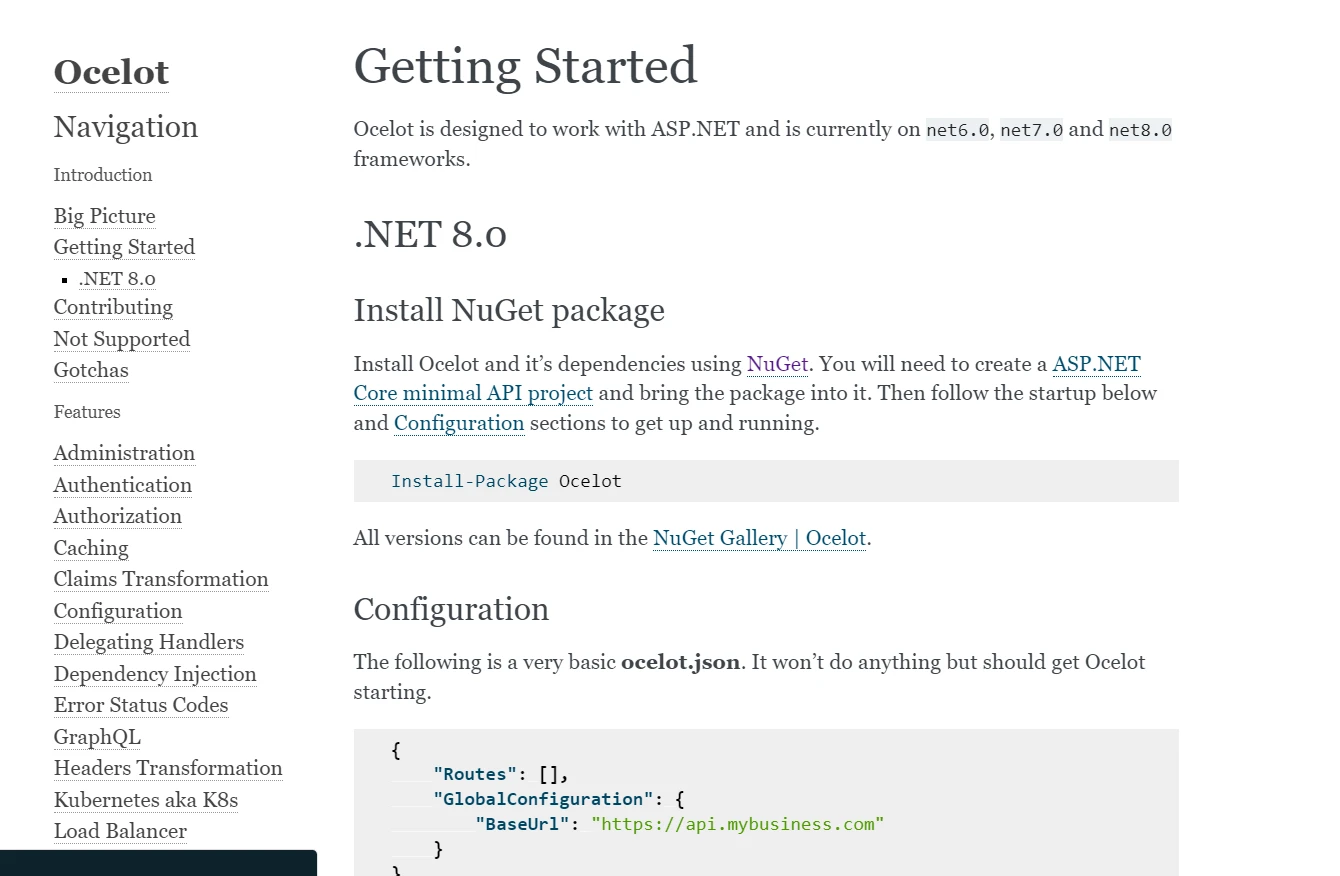
Ocelot ist eine Open-Source-API-Gateway-Lösung for .NET-Anwendungen, die entwickelt wurde, um das Routing von Anfragen über mehrere Mikrodienste zu erleichtern. Es fungiert als Reverse Proxy, der HTTP-Anfragen von Clients verwaltet und sie an die entsprechenden Dienste in einer ASP.NET Core-Umgebung weiterleitet. Entwickelt auf ASP.NET Core integriert sich Ocelot nahtlos in das .NET-Ökosystem und bietet ein umfangreiches Set an Funktionen, die für moderne Anwendungen unerlässlich sind.
## Schlüsselmerkmale von Ocelot
### Routing
Im Kern der Funktionalität von Ocelot steht seine Routing-Fähigkeit. Es gleicht eingehende Anfragen mit den entsprechenden Servicerouten aufgrund der von Entwicklern festgelegten Konfiguration ab und kann mit Service-Discovery-Mechanismen integriert werden. Dies beinhaltet die Unterstützung von Wildcard-Routing, was besonders nützlich ist, wenn es um unterschiedliche API-Versionen oder zahlreiche Serviceendpunkte geht.
### Middleware / Delegierende Handler
Ocelot ermöglicht es Entwicklern, benutzerdefinierte Middleware oder Handler zu injizieren, die Anfragen und Antworten verarbeiten können, bevor sie den Client oder den Dienst erreichen. Dies ist nützlich für das Hinzufügen von Headern, das Protokollieren von Anfragen oder sogar das Ändern der Antwortstruktur nach Bedarf.
### Lastausgleich
Ocelot unterstützt eine Vielzahl von Lastverteilungsstrategien von Haus aus, wie Round Robin, Least Connection und einen benutzerdefinierten Anbieter, wenn keine der vordefinierten Strategien die Anforderungen erfüllt. Diese Funktion stellt sicher, dass die Last gleichmäßig auf die verfügbaren Dienste verteilt wird, was die allgemeine Robustheit und Effizienz der Anwendung verbessert.
### Authentifizierung und Autorisierung
Die Sicherung von API-Endpunkten ist kritisch, und Ocelot bietet Unterstützung für die Integration mit bestehenden Authentifizierungsanbietern wie Identity Server. Es unterstützt beliebte Authentifizierungsschemata, einschließlich JWT und OAuth2, und ermöglicht eine granulare Kontrolle über den Benutzerzugriff auf Dienste.
### Rate Limiting und QoS
Die Ratenbegrenzung ist wichtig, um Missbrauch zu verhindern und eine faire Nutzung der Dienste zu gewährleisten, indem die Anzahl der Anfragen beschränkt wird, die ein Benutzer in einem bestimmten Zeitraum stellen kann. Quality of Service (QoS)-Optionen wie das Festlegen von Zeitlimits und Wiederholungen stellen sicher, dass Dienste unter verschiedenen Netzwerkbedingungen und Lasten verfügbar und reaktionsschnell bleiben.
## Einrichten von Ocelot in einem .NET-Projekt
Um Ocelot in Ihr Projekt zu integrieren, müssen Sie das Ocelot-Paket über NuGet installieren und es in der Program-Klasse konfigurieren:
```shell
:InstallCmd dotnet add package Ocelot
```
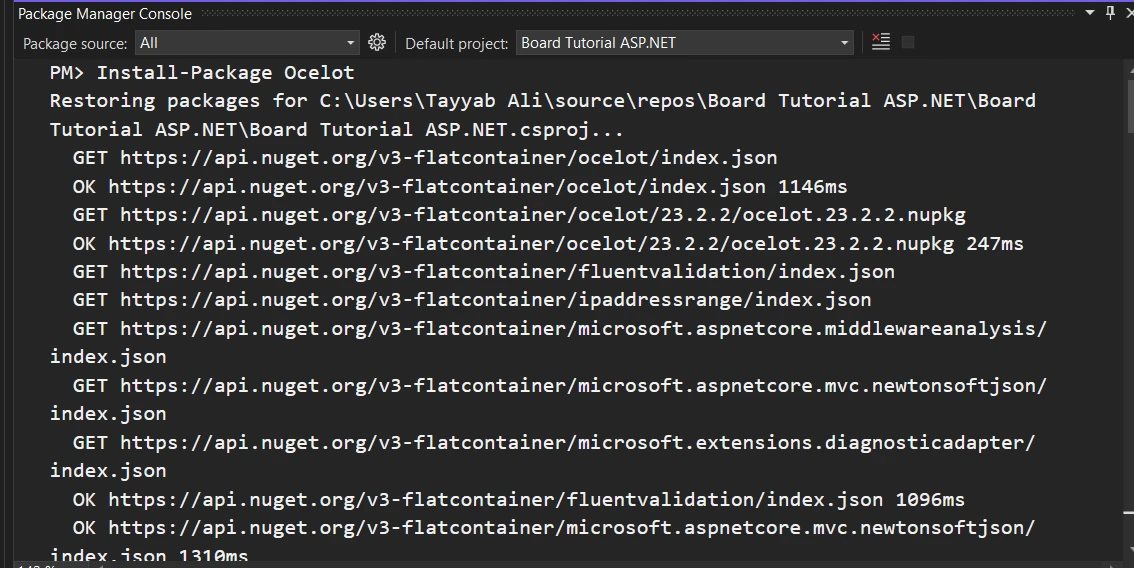
Konfigurieren Sie die Dienste, einschließlich der Request-Builder-Middleware, in Ihrer `Startup.cs` oder `Program.cs` Klasse, um den Service-Container einzurichten:
```csharp
public void ConfigureServices(IServiceCollection services)
{
    // Add Ocelot services to the service collection
    services.AddOcelot();
}

public async void Configure(IApplicationBuilder app, IWebHostEnvironment env)
{
    // Use the developer exception page when in development mode
    if (env.IsDevelopment())
    {
        app.UseDeveloperExceptionPage();
    }

    // Start Ocelot middleware
    await app.UseOcelot();
}
```
## Konfiguration von Routen in Ocelot
Ocelot verwendet eine Konfigurationsdatei, typischerweise **ocelot.json**, um die Routing-Regeln zu definieren. Hier ist ein komplexeres Beispiel, das mehrere Routen-Konfigurationen demonstriert:
```json
{
"ReRoutes": [
{
"DownstreamPathTemplate": "/api/users/{id}",
"DownstreamScheme": "https",
"DownstreamHostAndPorts": [
{
"Host": "userapi.com",
"Port": 443
}
],
"UpstreamPathTemplate": "/users/{id}",
"UpstreamHttpMethod": ["Get"]
},
{
"DownstreamPathTemplate": "/api/products/{id}",
"DownstreamScheme": "https",
"DownstreamHostAndPorts": [
{
"Host": "productapi.com",
"Port": 443
}
],
"UpstreamPathTemplate": "/products/{id}",
"UpstreamHttpMethod": ["Get"]
}
],
"GlobalConfiguration": {
"BaseUrl": "http://yourgateway.com"
}
}
```
Diese Konfiguration spezifiziert, wie Anfragen zum API-Gateway über den Pfad und die HTTP-Methode zu verschiedenen nachgelagerten Diensten weitergeleitet werden, wobei die JSON-Datei für die Einrichtung verwendet wird.
## Verwendung von IronPDF mit Ocelot .NET
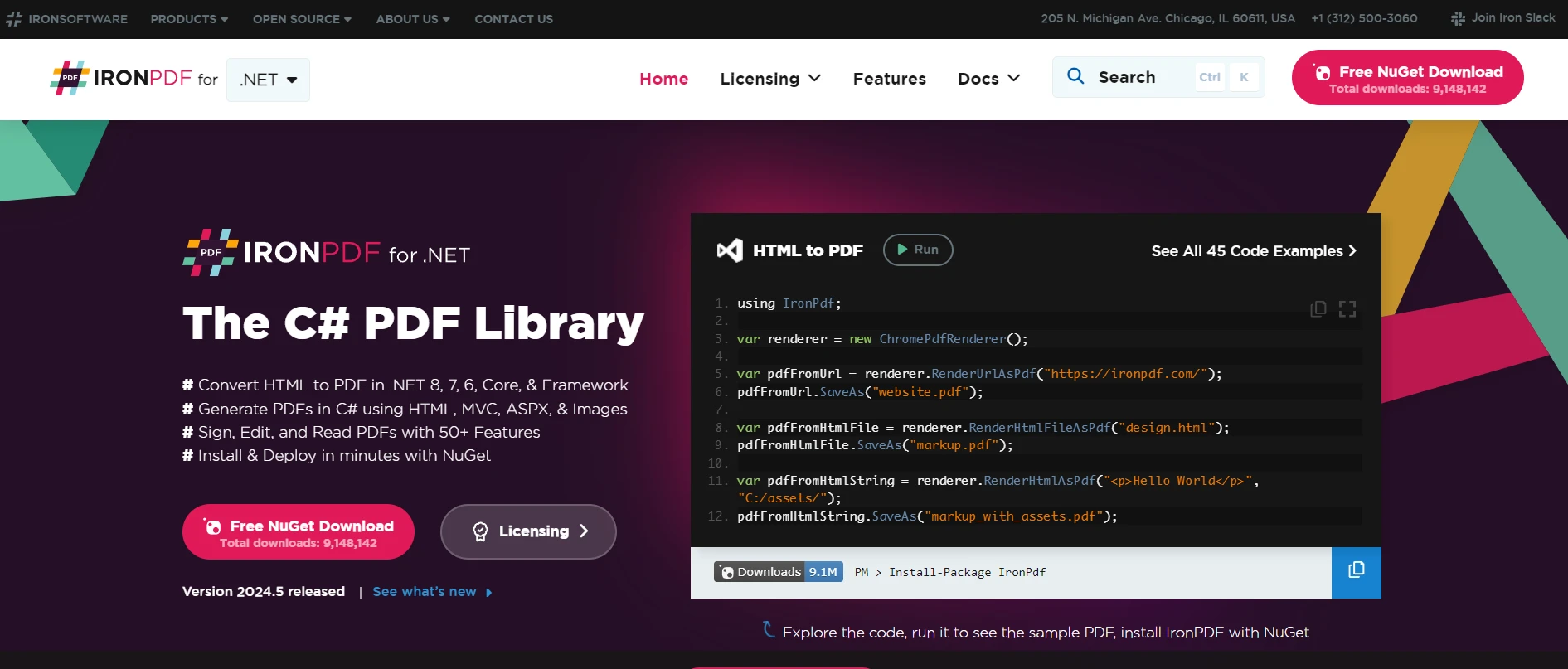
Die Kombination von Ocelot mit der [HTML-zu-PDF-Konvertierung von IronPDF](/examples/using-html-to-create-a-pdf/) in einer .NET-Anwendung bietet eine leistungsstarke Lösung, bei der Sie PDF-Generierungsanfragen an einen bestimmten Dienst weiterleiten oder sie intern bearbeiten können. Hier führe ich Sie durch die Einrichtung einer grundlegenden .NET Core-Anwendung, die Ocelot als API-Gateway und IronPDF zur Erstellung von PDFs aus HTML verwendet.
IronPDF überzeugt in der [HTML-zu-PDF](/tutorials/html-to-pdf/)-Konvertierung, indem es den originalen Layouts und Stilen präzise erhält. Es ist ideal zur Erstellung von PDFs aus webbasierten Inhalten wie Berichten, Rechnungen und Dokumentationen. Mit Unterstützung für HTML-Dateien, URLs und rohe HTML-Strings erstellt IronPDF problemlos hochwertige PDF-Dokumente.
```csharp
using IronPdf;
class Program
{
static void Main(string[] args)
{
var renderer = new ChromePdfRenderer();
// Convert HTML string to PDF
var htmlContent = "<h1>Hello, IronPDF!</h1><p>This is a PDF from an HTML string.</p>";
var pdfFromHtmlString = renderer.RenderHtmlAsPdf(htmlContent);
pdfFromHtmlString.SaveAs("HTMLStringToPDF.pdf");
// Convert HTML file to PDF
var htmlFilePath = "path_to_your_html_file.html"; // Specify the path to your HTML file
var pdfFromHtmlFile = renderer.RenderHtmlFileAsPdf(htmlFilePath);
pdfFromHtmlFile.SaveAs("HTMLFileToPDF.pdf");
// Convert URL to PDF
var url = "http://ironpdf.com"; // Specify the URL
var pdfFromUrl = renderer.RenderUrlAsPdf(url);
pdfFromUrl.SaveAs("URLToPDF.pdf");
}
}
```
### Schritt 1: Einrichten der .NET Core Webanwendung
Erstellen Sie zuerst ein neues .NET Core-Web-API-Projekt. Sie können dies mit der .NET CLI oder Visual Studio machen.
Verwendung der .NET CLI:
```shell
dotnet new webapi -n OcelotWith IronPDF
cd OcelotWith IronPDF
```
### Schritt 2: Hinzufügen notwendiger Pakete
Sie müssen Ocelot und IronPDF installieren. Sie können diese Pakete über NuGet hinzufügen.
```shell
dotnet add package Ocelot
dotnet add package IronPdf
```
### Schritt 3: Ocelot konfigurieren
Fügen Sie eine **ocelot.json**-Datei zum Stamm Ihres Projekts hinzu, um das Routing von Ocelot zu konfigurieren. Diese Einrichtung geht davon aus, dass Ocelot PDF-Generierungsanfragen an einen bestimmten Pfad weiterleiten soll, der innerhalb der gleichen Anwendung von IronPDF behandelt wird.
```json
{
"ReRoutes": [
{
"DownstreamPathTemplate": "/api/pdf",
"DownstreamScheme": "https",
"DownstreamHostAndPorts": [
{
"Host": "localhost",
"Port": 5001
}
],
"UpstreamPathTemplate": "/generatepdf",
"UpstreamHttpMethod": ["Post"]
}
],
"GlobalConfiguration": {
"BaseUrl": "http://localhost:5000"
}
}
```
### Schritt 4: Startup.cs konfigurieren
Aktualisieren Sie **Startup.cs**, um die Middleware von Ocelot einzuschließen. Stellen Sie sicher, dass Sie Ihre Anwendung auch zur Verwendung statischer Dateien konfigurieren, da IronPDF möglicherweise Assets vom lokalen Dateisystem laden muss.
```csharp
public class Startup
{
public void ConfigureServices(IServiceCollection services)
{
services.AddControllers();
services.AddOcelot();
}
public async void Configure(IApplicationBuilder app, IWebHostEnvironment env)
{
if (env.IsDevelopment())
{
app.UseDeveloperExceptionPage();
}
app.UseRouting();
app.UseAuthorization();
app.UseEndpoints(endpoints =>
{
endpoints.MapControllers();
});
await app.UseOcelot();
}
}
```
### Schritt 5: PDF-Erzeugung mit IronPDF implementieren
Erstellen Sie einen neuen Controller **PdfController.cs** in Ihrem Controller-Ordner. Dieser Controller wird die PDF-Generierungsanfragen bearbeiten.
```csharp
using Microsoft.AspNetCore.Mvc;
using IronPdf;
namespace OcelotWithIronPdf.Controllers
{
[ApiController]
[Route("api/[controller]")]
public class PdfController : ControllerBase
{
[HttpPost]
public IActionResult CreatePdfFromHtml([FromBody] string htmlContent)
{
var renderer = new ChromePdfRenderer();
var pdf = renderer.RenderHtmlAsPdf(htmlContent);
var output = pdf.BinaryData;
// Return the PDF as a file result
return File(output, "application/pdf", "generated.pdf");
}
}
}
```
### Schritt 6: Ausführen der Anwendung
Stellen Sie sicher, dass Ihre Anwendung richtig konfiguriert ist, um auf den in **ocelot.json** angegebenen Ports zu lauschen. Sie können dies in **Properties/launchSettings.json** festlegen.
```json
{
"profiles": {
"OcelotWith IronPDF": {
"commandName": "Project",
"launchBrowser": false,
"applicationUrl": "https://localhost:5001;http://localhost:5000",
"environmentVariables": {
"ASPNETCORE_ENVIRONMENT": "Development"
}
}
}
}
```
Führen Sie nun Ihre Anwendung aus, und Sie sollten in der Lage sein, HTML-Inhalte an `http://localhost:5000/generatepdf` zu senden und ein PDF als Antwort zu erhalten.
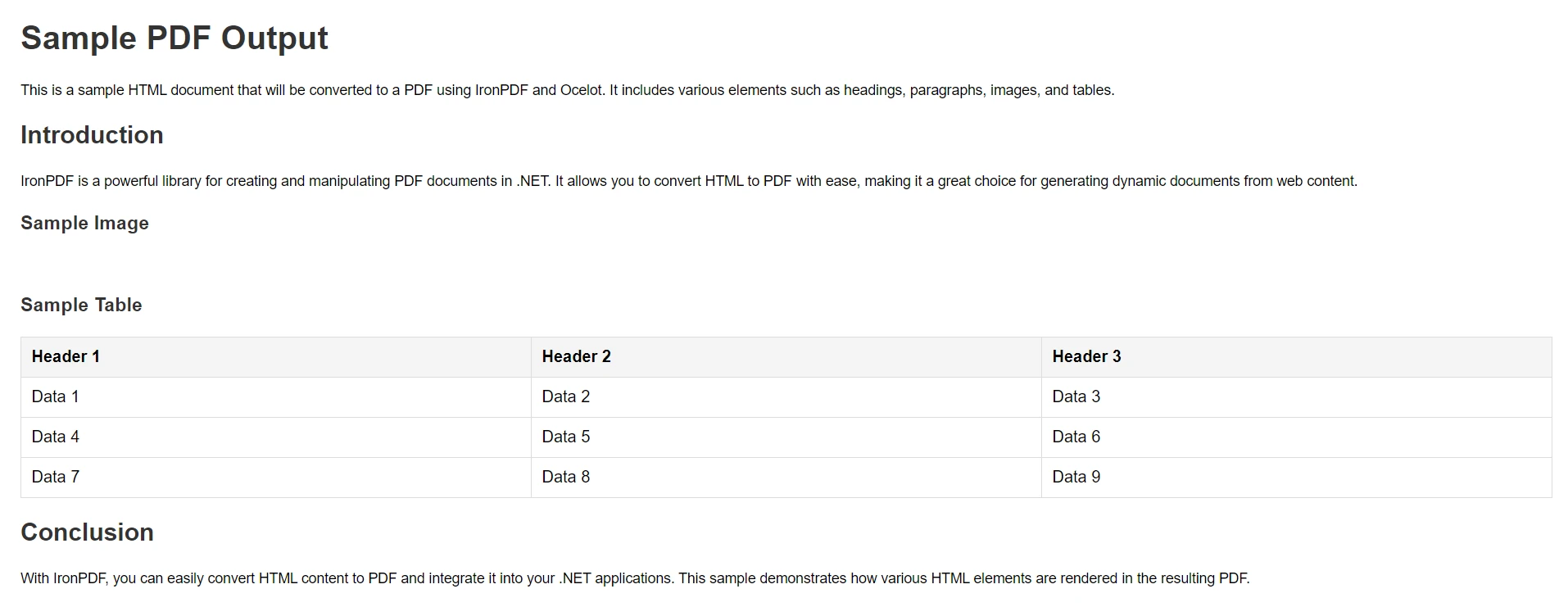
Dieses Beispiel zeigt eine grundlegende Implementierung von Ocelot mit IronPDF innerhalb der gleichen Anwendung. Für Produktionsszenarien sollten Sie in Erwägung ziehen, Ihre Endpunkte zu sichern, Fehlerszenarien zu behandeln und den PDF-Erstellungsprozess gemäß Ihren spezifischen Anforderungen zu optimieren.
## Abschluss
Abschließend ist Ocelot eine ausgezeichnete Wahl zur Verwaltung und Weiterleitung von Anfragen in einer Microservices-Architektur. Seine robusten Funktionen wie Routing, Lastverteilung, Middleware-Unterstützung und Authentifizierung machen es zu einem leistungsstarken Werkzeug für jeden .NET-Entwickler. Indem Sie den bereitgestellten detaillierten Schritten folgen, können Sie Ocelot effektiv in Ihre .NET-Projekte integrieren, um Ihre API-Gateway-Bedürfnisse zu optimieren.
Zusätzlich, wenn Sie PDF-Generierungsfunktionen benötigen, ist die Integration von IronPDF mit Ocelot unkompliziert und verbessert die Funktionalität Ihrer Anwendung. IronPDF bietet eine [kostenlose Testversion](trial-license) und Lizenzen beginnen mit einer kostengünstigen Lösung für Ihre PDF-Bedürfnisse.
Durch die Kombination von Ocelot und IronPDF können Sie eine umfassende und effiziente Microservices-Infrastruktur aufbauen, die sowohl Routing- als auch Dokumentenerstellungsanforderungen erfüllt.
Ocelot API Gateway ist eine .NET-Bibliothek, die das API-Gateway-Muster implementiert, das üblicherweise in API-Gateways verwendet wird, um Anfragen über mehrere Microservices hinweg zu bearbeiten. Es fungiert als leichtgewichtiges API-Gateway und leitet Anfragen von Clients an nachgelagerte Dienste weiter. Dieser Artikel bietet einen detaillierten Einblick in die Rolle des Ocelot API Gateway zwischen Clients und nachgelagerten Diensten und behandelt deren Installation, Konfiguration, wichtige Funktionen und praxisnahe Beispiele, um deren Fähigkeiten zu demonstrieren. Wir werden auch IronPDF Overview und Ocelot API kombiniert erkunden.
Was ist Ocelot .NET?
Ocelot ist eine Open-Source-API-Gateway-Lösung for .NET-Anwendungen, die entwickelt wurde, um das Routing von Anfragen über mehrere Mikrodienste zu erleichtern. Es fungiert als Reverse Proxy, der HTTP-Anfragen von Clients verwaltet und sie an die entsprechenden Dienste in einer ASP.NET Core-Umgebung weiterleitet. Entwickelt auf ASP.NET Core integriert sich Ocelot nahtlos in das .NET-Ökosystem und bietet ein umfangreiches Set an Funktionen, die für moderne Anwendungen unerlässlich sind.
Schlüsselmerkmale von Ocelot
Routing
Im Kern der Funktionalität von Ocelot steht seine Routing-Fähigkeit. Es gleicht eingehende Anfragen mit den entsprechenden Servicerouten aufgrund der von Entwicklern festgelegten Konfiguration ab und kann mit Service-Discovery-Mechanismen integriert werden. Dies beinhaltet die Unterstützung von Wildcard-Routing, was besonders nützlich ist, wenn es um unterschiedliche API-Versionen oder zahlreiche Serviceendpunkte geht.
Middleware / Delegierende Handler
Ocelot ermöglicht es Entwicklern, benutzerdefinierte Middleware oder Handler zu injizieren, die Anfragen und Antworten verarbeiten können, bevor sie den Client oder den Dienst erreichen. Dies ist nützlich für das Hinzufügen von Headern, das Protokollieren von Anfragen oder sogar das Ändern der Antwortstruktur nach Bedarf.
Lastausgleich
Ocelot unterstützt eine Vielzahl von Lastverteilungsstrategien von Haus aus, wie Round Robin, Least Connection und einen benutzerdefinierten Anbieter, wenn keine der vordefinierten Strategien die Anforderungen erfüllt. Diese Funktion stellt sicher, dass die Last gleichmäßig auf die verfügbaren Dienste verteilt wird, was die allgemeine Robustheit und Effizienz der Anwendung verbessert.
Authentifizierung und Autorisierung
Die Sicherung von API-Endpunkten ist kritisch, und Ocelot bietet Unterstützung für die Integration mit bestehenden Authentifizierungsanbietern wie Identity Server. Es unterstützt beliebte Authentifizierungsschemata, einschließlich JWT und OAuth2, und ermöglicht eine granulare Kontrolle über den Benutzerzugriff auf Dienste.
Rate Limiting und QoS
Die Ratenbegrenzung ist wichtig, um Missbrauch zu verhindern und eine faire Nutzung der Dienste zu gewährleisten, indem die Anzahl der Anfragen beschränkt wird, die ein Benutzer in einem bestimmten Zeitraum stellen kann. Quality of Service (QoS)-Optionen wie das Festlegen von Zeitlimits und Wiederholungen stellen sicher, dass Dienste unter verschiedenen Netzwerkbedingungen und Lasten verfügbar und reaktionsschnell bleiben.
Einrichten von Ocelot in einem .NET-Projekt
Um Ocelot in Ihr Projekt zu integrieren, müssen Sie das Ocelot-Paket über NuGet installieren und es in der Program-Klasse konfigurieren:
> dotnet add package Ocelot
dotnet add package Ocelot
Konfigurieren Sie die Dienste, einschließlich der Request-Builder-Middleware, in Ihrer Startup.cs oder Program.cs Klasse, um den Service-Container einzurichten:
public voidConfigureServices(IServiceCollection services){ // Add Ocelot services to the service collection services.AddOcelot();}public async voidConfigure(IApplicationBuilder app, IWebHostEnvironment env){ // Use the developer exception page when in development mode if (env.IsDevelopment()) { app.UseDeveloperExceptionPage(); } // Start Ocelot middleware await app.UseOcelot();}
public void ConfigureServices(IServiceCollection services)
{
    // Add Ocelot services to the service collection
    services.AddOcelot();
}

public async void Configure(IApplicationBuilder app, IWebHostEnvironment env)
{
    // Use the developer exception page when in development mode
    if (env.IsDevelopment())
    {
        app.UseDeveloperExceptionPage();
    }

    // Start Ocelot middleware
    await app.UseOcelot();
}
Public Sub ConfigureServices(services AsIServiceCollection) ' Add Ocelot services to the service collection services.AddOcelot()End SubPublicAsync Sub Configure(app AsIApplicationBuilder, env AsIWebHostEnvironment) ' Use the developer exception page when in development mode If env.IsDevelopment() Then app.UseDeveloperExceptionPage() End If ' Start Ocelot middlewareAwait app.UseOcelot()End Sub
Public Sub ConfigureServices(services As IServiceCollection)
    ' Add Ocelot services to the service collection
    services.AddOcelot()
End Sub

Public Async Sub Configure(app As IApplicationBuilder, env As IWebHostEnvironment)
    ' Use the developer exception page when in development mode
    If env.IsDevelopment() Then
        app.UseDeveloperExceptionPage()
    End If

    ' Start Ocelot middleware
    Await app.UseOcelot()
End Sub
Konfiguration von Routen in Ocelot
Ocelot verwendet eine Konfigurationsdatei, typischerweise ocelot.json, um die Routing-Regeln zu definieren. Hier ist ein komplexeres Beispiel, das mehrere Routen-Konfigurationen demonstriert:
Diese Konfiguration spezifiziert, wie Anfragen zum API-Gateway über den Pfad und die HTTP-Methode zu verschiedenen nachgelagerten Diensten weitergeleitet werden, wobei die JSON-Datei für die Einrichtung verwendet wird.
Verwendung von IronPDF mit Ocelot .NET
Die Kombination von Ocelot mit der HTML-zu-PDF-Konvertierung von IronPDF in einer .NET-Anwendung bietet eine leistungsstarke Lösung, bei der Sie PDF-Generierungsanfragen an einen bestimmten Dienst weiterleiten oder sie intern bearbeiten können. Hier führe ich Sie durch die Einrichtung einer grundlegenden .NET Core-Anwendung, die Ocelot als API-Gateway und IronPDF zur Erstellung von PDFs aus HTML verwendet.
IronPDF überzeugt in der HTML-zu-PDF-Konvertierung, indem es den originalen Layouts und Stilen präzise erhält. Es ist ideal zur Erstellung von PDFs aus webbasierten Inhalten wie Berichten, Rechnungen und Dokumentationen. Mit Unterstützung für HTML-Dateien, URLs und rohe HTML-Strings erstellt IronPDF problemlos hochwertige PDF-Dokumente.
using IronPdf;class Program{ static voidMain(string[] args) { var renderer = new ChromePdfRenderer(); // Convert HTML string to PDF var htmlContent = "<h1>Hello, IronPDF!</h1><p>This is a PDF from an HTML string.</p>"; var pdfFromHtmlString = renderer.RenderHtmlAsPdf(htmlContent); pdfFromHtmlString.SaveAs("HTMLStringToPDF.pdf"); // Convert HTML file to PDF var htmlFilePath = "path_to_your_html_file.html"; // Specify the path to your HTML file var pdfFromHtmlFile = renderer.RenderHtmlFileAsPdf(htmlFilePath); pdfFromHtmlFile.SaveAs("HTMLFileToPDF.pdf"); // Convert URL to PDF var url = "http://ironpdf.com"; // Specify the URL var pdfFromUrl = renderer.RenderUrlAsPdf(url); pdfFromUrl.SaveAs("URLToPDF.pdf"); }}
using IronPdf;

class Program
{
    static void Main(string[] args)
    {
        var renderer = new ChromePdfRenderer();

        // Convert HTML string to PDF
        var htmlContent = "<h1>Hello, IronPDF!</h1><p>This is a PDF from an HTML string.</p>";
        var pdfFromHtmlString = renderer.RenderHtmlAsPdf(htmlContent);
        pdfFromHtmlString.SaveAs("HTMLStringToPDF.pdf");

        // Convert HTML file to PDF
        var htmlFilePath = "path_to_your_html_file.html"; // Specify the path to your HTML file
        var pdfFromHtmlFile = renderer.RenderHtmlFileAsPdf(htmlFilePath);
        pdfFromHtmlFile.SaveAs("HTMLFileToPDF.pdf");

        // Convert URL to PDF
        var url = "http://ironpdf.com"; // Specify the URL
        var pdfFromUrl = renderer.RenderUrlAsPdf(url);
        pdfFromUrl.SaveAs("URLToPDF.pdf");
    }
}
ImportsIronPdfFriend Class ProgramShared Sub Main(ByVal args() AsString) Dim renderer = New ChromePdfRenderer() ' Convert HTML string to PDF Dim htmlContent = "<h1>Hello, IronPDF!</h1><p>This is a PDF from an HTML string.</p>" Dim pdfFromHtmlString = renderer.RenderHtmlAsPdf(htmlContent) pdfFromHtmlString.SaveAs("HTMLStringToPDF.pdf") ' Convert HTML file to PDF Dim htmlFilePath = "path_to_your_html_file.html" ' Specify the path to your HTML file Dim pdfFromHtmlFile = renderer.RenderHtmlFileAsPdf(htmlFilePath) pdfFromHtmlFile.SaveAs("HTMLFileToPDF.pdf") ' Convert URL to PDF Dim url = "http://ironpdf.com" ' Specify the URL Dim pdfFromUrl = renderer.RenderUrlAsPdf(url) pdfFromUrl.SaveAs("URLToPDF.pdf") End SubEnd Class
Imports IronPdf

Friend Class Program
	Shared Sub Main(ByVal args() As String)
		Dim renderer = New ChromePdfRenderer()

		' Convert HTML string to PDF
		Dim htmlContent = "<h1>Hello, IronPDF!</h1><p>This is a PDF from an HTML string.</p>"
		Dim pdfFromHtmlString = renderer.RenderHtmlAsPdf(htmlContent)
		pdfFromHtmlString.SaveAs("HTMLStringToPDF.pdf")

		' Convert HTML file to PDF
		Dim htmlFilePath = "path_to_your_html_file.html" ' Specify the path to your HTML file
		Dim pdfFromHtmlFile = renderer.RenderHtmlFileAsPdf(htmlFilePath)
		pdfFromHtmlFile.SaveAs("HTMLFileToPDF.pdf")

		' Convert URL to PDF
		Dim url = "http://ironpdf.com" ' Specify the URL
		Dim pdfFromUrl = renderer.RenderUrlAsPdf(url)
		pdfFromUrl.SaveAs("URLToPDF.pdf")
	End Sub
End Class
Schritt 1: Einrichten der .NET Core Webanwendung
Erstellen Sie zuerst ein neues .NET Core-Web-API-Projekt. Sie können dies mit der .NET CLI oder Visual Studio machen.
Verwendung der .NET CLI:
dotnet new webapi -n OcelotWith IronPDFcd OcelotWith IronPDF
dotnet new webapi -n OcelotWith IronPDF
cd OcelotWith IronPDF
SHELL
Schritt 2: Hinzufügen notwendiger Pakete
Sie müssen Ocelot und IronPDF installieren. Sie können diese Pakete über NuGet hinzufügen.
Fügen Sie eine ocelot.json-Datei zum Stamm Ihres Projekts hinzu, um das Routing von Ocelot zu konfigurieren. Diese Einrichtung geht davon aus, dass Ocelot PDF-Generierungsanfragen an einen bestimmten Pfad weiterleiten soll, der innerhalb der gleichen Anwendung von IronPDF behandelt wird.
Aktualisieren Sie Startup.cs, um die Middleware von Ocelot einzuschließen. Stellen Sie sicher, dass Sie Ihre Anwendung auch zur Verwendung statischer Dateien konfigurieren, da IronPDF möglicherweise Assets vom lokalen Dateisystem laden muss.
public class Startup{ public voidConfigureServices(IServiceCollection services) { services.AddControllers(); services.AddOcelot(); } public async voidConfigure(IApplicationBuilder app, IWebHostEnvironment env) { if (env.IsDevelopment()) { app.UseDeveloperExceptionPage(); } app.UseRouting(); app.UseAuthorization(); app.UseEndpoints(endpoints => { endpoints.MapControllers(); }); await app.UseOcelot(); }}
public class Startup
{
    public void ConfigureServices(IServiceCollection services)
    {
        services.AddControllers();
        services.AddOcelot();
    }

    public async void Configure(IApplicationBuilder app, IWebHostEnvironment env)
    {
        if (env.IsDevelopment())
        {
            app.UseDeveloperExceptionPage();
        }

        app.UseRouting();
        app.UseAuthorization();

        app.UseEndpoints(endpoints =>
        {
            endpoints.MapControllers();
        });

        await app.UseOcelot();
    }
}
Public Class Startup Public Sub ConfigureServices(services AsIServiceCollection) services.AddControllers() services.AddOcelot() End Sub PublicAsync Sub Configure(app AsIApplicationBuilder, env AsIWebHostEnvironment) If env.IsDevelopment() Then app.UseDeveloperExceptionPage() End If app.UseRouting() app.UseAuthorization() app.UseEndpoints(Sub(endpoints) endpoints.MapControllers() End Sub)Await app.UseOcelot() End SubEnd Class
Public Class Startup
    Public Sub ConfigureServices(services As IServiceCollection)
        services.AddControllers()
        services.AddOcelot()
    End Sub

    Public Async Sub Configure(app As IApplicationBuilder, env As IWebHostEnvironment)
        If env.IsDevelopment() Then
            app.UseDeveloperExceptionPage()
        End If

        app.UseRouting()
        app.UseAuthorization()

        app.UseEndpoints(Sub(endpoints)
                             endpoints.MapControllers()
                         End Sub)

        Await app.UseOcelot()
    End Sub
End Class
Schritt 5: PDF-Erzeugung mit IronPDF implementieren
Erstellen Sie einen neuen Controller PdfController.cs in Ihrem Controller-Ordner. Dieser Controller wird die PDF-Generierungsanfragen bearbeiten.
using Microsoft.AspNetCore.Mvc;using IronPdf;namespace OcelotWithIronPdf.Controllers{ [ApiController] [Route("api/[controller]")] public class PdfController : ControllerBase { [HttpPost] public IActionResultCreatePdfFromHtml([FromBody] string htmlContent) { var renderer = new ChromePdfRenderer(); var pdf = renderer.RenderHtmlAsPdf(htmlContent); var output = pdf.BinaryData; // Return the PDF as a file result returnFile(output, "application/pdf", "generated.pdf"); } }}
using Microsoft.AspNetCore.Mvc;
using IronPdf;

namespace OcelotWithIronPdf.Controllers
{
    [ApiController]
    [Route("api/[controller]")]
    public class PdfController : ControllerBase
    {
        [HttpPost]
        public IActionResult CreatePdfFromHtml([FromBody] string htmlContent)
        {
            var renderer = new ChromePdfRenderer();
            var pdf = renderer.RenderHtmlAsPdf(htmlContent);
            var output = pdf.BinaryData;

            // Return the PDF as a file result
            return File(output, "application/pdf", "generated.pdf");
        }
    }
}
C#
Schritt 6: Ausführen der Anwendung
Stellen Sie sicher, dass Ihre Anwendung richtig konfiguriert ist, um auf den in ocelot.json angegebenen Ports zu lauschen. Sie können dies in Properties/launchSettings.json festlegen.
Führen Sie nun Ihre Anwendung aus, und Sie sollten in der Lage sein, HTML-Inhalte an http://localhost:5000/generatepdf zu senden und ein PDF als Antwort zu erhalten.
Dieses Beispiel zeigt eine grundlegende Implementierung von Ocelot mit IronPDF innerhalb der gleichen Anwendung. Für Produktionsszenarien sollten Sie in Erwägung ziehen, Ihre Endpunkte zu sichern, Fehlerszenarien zu behandeln und den PDF-Erstellungsprozess gemäß Ihren spezifischen Anforderungen zu optimieren.
Abschluss
Abschließend ist Ocelot eine ausgezeichnete Wahl zur Verwaltung und Weiterleitung von Anfragen in einer Microservices-Architektur. Seine robusten Funktionen wie Routing, Lastverteilung, Middleware-Unterstützung und Authentifizierung machen es zu einem leistungsstarken Werkzeug für jeden .NET-Entwickler. Indem Sie den bereitgestellten detaillierten Schritten folgen, können Sie Ocelot effektiv in Ihre .NET-Projekte integrieren, um Ihre API-Gateway-Bedürfnisse zu optimieren.
Zusätzlich, wenn Sie PDF-Generierungsfunktionen benötigen, ist die Integration von IronPDF mit Ocelot unkompliziert und verbessert die Funktionalität Ihrer Anwendung. IronPDF bietet eine kostenlose Testversion und Lizenzen beginnen mit einer kostengünstigen Lösung für Ihre PDF-Bedürfnisse.
Durch die Kombination von Ocelot und IronPDF können Sie eine umfassende und effiziente Microservices-Infrastruktur aufbauen, die sowohl Routing- als auch Dokumentenerstellungsanforderungen erfüllt.
Jacob Mellor ist Chief Technology Officer bei Iron Software und ein visionärer Ingenieur, der Pionierarbeit in der C# PDF-Technologie leistet. Als der ursprüngliche Entwickler hinter der Kern-Codebasis von Iron Software hat er die Produktarchitektur des Unternehmens seit seiner Gründung geprägt und es zusammen mit CEO Cameron Rimington in ein Unternehmen mit mehr als 50 Mitarbeitern verwandelt, das die NASA, Tesla und globale Regierungsbehörden beliefert.



























