using IronPdf;

// Disable local disk access or cross-origin requests
Installation.EnableWebSecurity = true;

// Instantiate Renderer
var renderer = new ChromePdfRenderer();

// Create a PDF from a HTML string using C#
var pdf = renderer.RenderHtmlAsPdf("<h1>Hello World</h1>");

// Export to a file or Stream
pdf.SaveAs("output.pdf");

// Advanced Example with HTML Assets
// Load external html assets: Images, CSS and JavaScript.
// An optional BasePath 'C:\site\assets\' is set as the file location to load assets from
var myAdvancedPdf = renderer.RenderHtmlAsPdf("<img src='icons/iron.png'>", @"C:\site\assets\");
myAdvancedPdf.SaveAs("html-with-assets.pdf");
using IronPdf;// Disable local disk access or cross-origin requestsInstallation.EnableWebSecurity = true;// Instantiate Renderervar renderer = new ChromePdfRenderer();// Create a PDF from a HTML string using C#var pdf = renderer.RenderHtmlAsPdf("<h1>Hello World</h1>");// Export to a file or Streampdf.SaveAs("output.pdf");// Advanced Example with HTML Assets// Load external html assets: Images, CSS and JavaScript.// An optional BasePath 'C:\site\assets\' is set as the file location to load assets fromvar myAdvancedPdf = renderer.RenderHtmlAsPdf("<img src='icons/iron.png'>", @"C:\site\assets\");myAdvancedPdf.SaveAs("html-with-assets.pdf");
PM >Install-Package IronPdf
Install-Package IronPdf
ACTUALIZACIONES PARA DESARROLLADORES
Operador ternario en C# | Condicionales en una línea
En el mundo de la programación en C#, realizar una expresión condicional eficiente es una habilidad fundamental. El Operador Ternario o Operador Condicional (`? :`), es una herramienta versátil diseñada para agilizar y simplificar las verificaciones condicionales.
También existe un operador de coalescencia nula (`??`) que a menudo puede confundirse con un Operador Ternario ya que ambos son operadores condicionales. Sin embargo, la coalescencia nula está diseñada para manejar valores nulos y proporcionar valores predeterminados, mientras que el Operador Ternario (`? :`) es un operador condicional de propósito general basado en una expresión booleana, que permite verificaciones de expresiones de referencia condicional más amplias con tres operandos.
En este artículo, exploraremos las particularidades del [Operador Condicional Ternario en C#](https://learn.microsoft.com/en-us/dotnet/csharp/language-reference/operators/conditional-operator), su sintaxis, casos de uso, y cómo mejora la legibilidad y concisión del código.
## Entendiendo lo Esencial: Operador Ternario en C#
El Operador Ternario, una abreviatura concisa para expresiones condicionales, juega un papel fundamental en la escritura de código limpio y legible. El Operador Ternario reemplaza las declaraciones tradicionales `if-else` que requieren múltiples líneas de código. Su código de una sola línea puede reemplazar múltiples líneas que ayudan con asignaciones o declaraciones return directas.
### Descifrando la Sintaxis de ?
El Operador Ternario (`? :`) opera con tres operandos y devuelve uno de dos valores basados en la evaluación de una condición. Su sintaxis es sencilla:
```csharp
condition ? trueExpression : falseExpression;
```
Si el operador evalúa el `condition` como verdadero, se ejecuta `trueExpression`; de lo contrario, se ejecuta `falseExpression`. Esta simplicidad lo convierte en una opción preferida para los desarrolladores que buscan mejorar la claridad del código.
## Agilizando Asignaciones con Simplicidad
Considera un escenario donde necesitas asignar un máximo de dos números a una variable. El Operador Ternario simplifica esta tarea elegantemente:
```csharp
int number1 = 10;
int number2 = 15;
// Using the ternary operator to assign the maximum number to maxNumber
int maxNumber = (number1 > number2) ? number1 : number2;
Console.WriteLine("The maximum number is: " + maxNumber);
```
Aquí, `maxNumber` se asigna el valor de `number1` si la condición `(number1 > number2)` es verdadera; de lo contrario, obtiene el valor de `number2`. El Operador Ternario transforma esto en una declaración concisa y legible.
## Casos de Uso y Beneficios
1. Asignaciones en Una Línea: El Operador Ternario brilla cuando necesitas asignar un valor a una variable basado en una condición en una sola línea, eliminando la necesidad de un extenso bloque `if-else`.
```csharp
string result = (isSuccess) ? "Operation succeeded" : "Operation failed";
```
2. Declaraciones Return Concisas: Los métodos o funciones a menudo se benefician de la sintaxis concisa del Operador Ternario para las declaraciones return.
```csharp
int GetAbsoluteValue(int number) => (number >= 0) ? number : -number;
```
3. Verificaciones Condicionales Inline: Cuando se requiere una verificación condicional rápida dentro de una declaración, el Operador Ternario proporciona una solución elegante.
```csharp
Console.WriteLine((isEven) ? "It's an even number" : "It's an odd number");
```
## Operador Ternario Anidado
Aunque el operador ternario es una herramienta poderosa, es esencial usarlo de manera sensata para mantener la legibilidad del código. Anidar operadores ternarios excesivamente puede llevar a un código que sea difícil de entender. Considera el siguiente ejemplo:
```csharp
string result = (condition1) ? ((condition2) ? "Nested success" : "Nested failure") : "Outer failure";
```
Mientras que el anidamiento puede ser útil, ten cuidado de no sacrificar claridad por concisión.
## Presentando IronPDF: Una Robusta Biblioteca de Generación de PDF
[Resumen de la Biblioteca de IronPDF](/) es una biblioteca C# que permite a los desarrolladores crear, editar y manipular documentos PDF sin esfuerzo dentro de sus aplicaciones .NET. Ya sea que estés generando facturas, informes o contenido dinámico, IronPDF agiliza el proceso de creación de PDFs, ofreciendo características como conversión de HTML a PDF, combinación de PDFs, y más.
IronPDF sobresale en la [conversión de HTML a PDF](/tutorials/html-to-pdf/), asegurando una conservación precisa de los diseños y estilos originales. Es perfecto para crear PDFs a partir de contenido basado en la web como informes, facturas y documentación. Con soporte para archivos HTML, URLs y cadenas de HTML crudo, IronPDF produce fácilmente documentos PDF de alta calidad.
```csharp
using IronPdf;
class Program
{
static void Main(string[] args)
{
var renderer = new ChromePdfRenderer();
// 1. Convert HTML String to PDF
var htmlContent = "<h1>Hello, IronPDF!</h1><p>This is a PDF from an HTML string.</p>";
var pdfFromHtmlString = renderer.RenderHtmlAsPdf(htmlContent);
pdfFromHtmlString.SaveAs("HTMLStringToPDF.pdf");
// 2. Convert HTML File to PDF
var htmlFilePath = "path_to_your_html_file.html"; // Specify the path to your HTML file
var pdfFromHtmlFile = renderer.RenderHtmlFileAsPdf(htmlFilePath);
pdfFromHtmlFile.SaveAs("HTMLFileToPDF.pdf");
// 3. Convert URL to PDF
var url = "http://ironpdf.com"; // Specify the URL
var pdfFromUrl = renderer.RenderUrlAsPdf(url);
pdfFromUrl.SaveAs("URLToPDF.pdf");
}
}
```
### Instalación de IronPDF: Un Inicio Rápido
Para comenzar a aprovechar la biblioteca IronPDF en tu proyecto de C#, puedes instalar fácilmente el paquete NuGet de IronPDF. Utiliza el siguiente comando en tu Consola del Administrador de Paquetes:
```shell
:ProductInstall
```
Alternativamente, puedes buscar "IronPDF" en el Administrador de Paquetes NuGet e instalarlo desde allí.
### Generando PDFs con IronPDF
Aquí hay un código fuente simple para [generar un PDF a partir de una cadena HTML](/examples/using-html-to-create-a-pdf/) con elementos de HTML:
```csharp
using IronPdf;
class Program
{
static void Main(string [] args)
{
// Instantiate Renderer
var renderer = new ChromePdfRenderer();
// Create a PDF from an HTML string using C#
var pdf = renderer.RenderHtmlAsPdf("<h1>Hello World</h1>");
// Export to a file
pdf.SaveAs("output.pdf");
// Advanced Example with HTML Assets
// Load external html assets: Images, CSS and JavaScript.
// An optional BasePath 'C:\\site\\assets\\' is set as the file location to load assets from
var myAdvancedPdf = renderer.RenderHtmlAsPdf("<img src='icons/iron.png'>", @"C:\site\assets\");
myAdvancedPdf.SaveAs("html-with-assets.pdf");
}
}
```
### La Esencia del Operador Ternario C#
El Operador Ternario C# (`? :`) es una herramienta sucinta para manejar expresiones condicionales. Su sintaxis, en la forma de `condition ? trueExpression : falseExpression`, proporciona una manera elegante de agilizar las verificaciones y asignaciones condicionales.
## Elevando la Generación de PDF con el Operador Condicional Ternario
### 1. Contenido Condicional en PDFs
IronPDF te permite generar dinámicamente contenido PDF basado en condiciones. El Operador Ternario se vuelve invaluable en este escenario, permitiéndote elegir entre diferentes bloques de contenido dentro del PDF según condiciones específicas.
```csharp
using IronPdf;
bool isPremiumUser = License.IsLicensed; // Example condition
var pdf = new ChromePdfRenderer();
var content = (isPremiumUser) ? GeneratePremiumContentFromUser() : GenerateStandardDefaultContent();
pdf.RenderHtmlAsPdf(content).SaveAs("GeneratedDocument.pdf");
```
En el ejemplo anterior, el Operador Ternario determina si generar contenido premium especificado por el usuario o contenido estándar con valores predeterminados dentro del PDF según la condición `isPremiumUser`. `isPremiumUser` La expresión ternaria puede ser una verificación de cualquier cosa. Puede usarse para verificar si el usuario tiene licencia para IronPDF o no.
### 2. Estilo y Formato Dinámicos
Adaptar la apariencia de elementos en un PDF basado en condiciones es un requisito común. El Operador Ternario facilita decisiones de estilo dinámico, contribuyendo a un PDF más personalizado y centrado en el usuario.
```csharp
bool isPrintMode = false; // Example of setting the print mode
var renderOptions = new ChromePdfRenderOptions();
renderOptions.CssMediaType = (isPrintMode) ? IronPdf.Rendering.PdfCssMediaType.Print : IronPdf.Rendering.PdfCssMediaType.Screen;
var pdfDocument = new ChromePdfRenderer();
pdfDocument.RenderingOptions = renderOptions;
pdfDocument.RenderUrlAsPdf("https://ironpdf.com").SaveAs("StyledPDF.pdf");
```
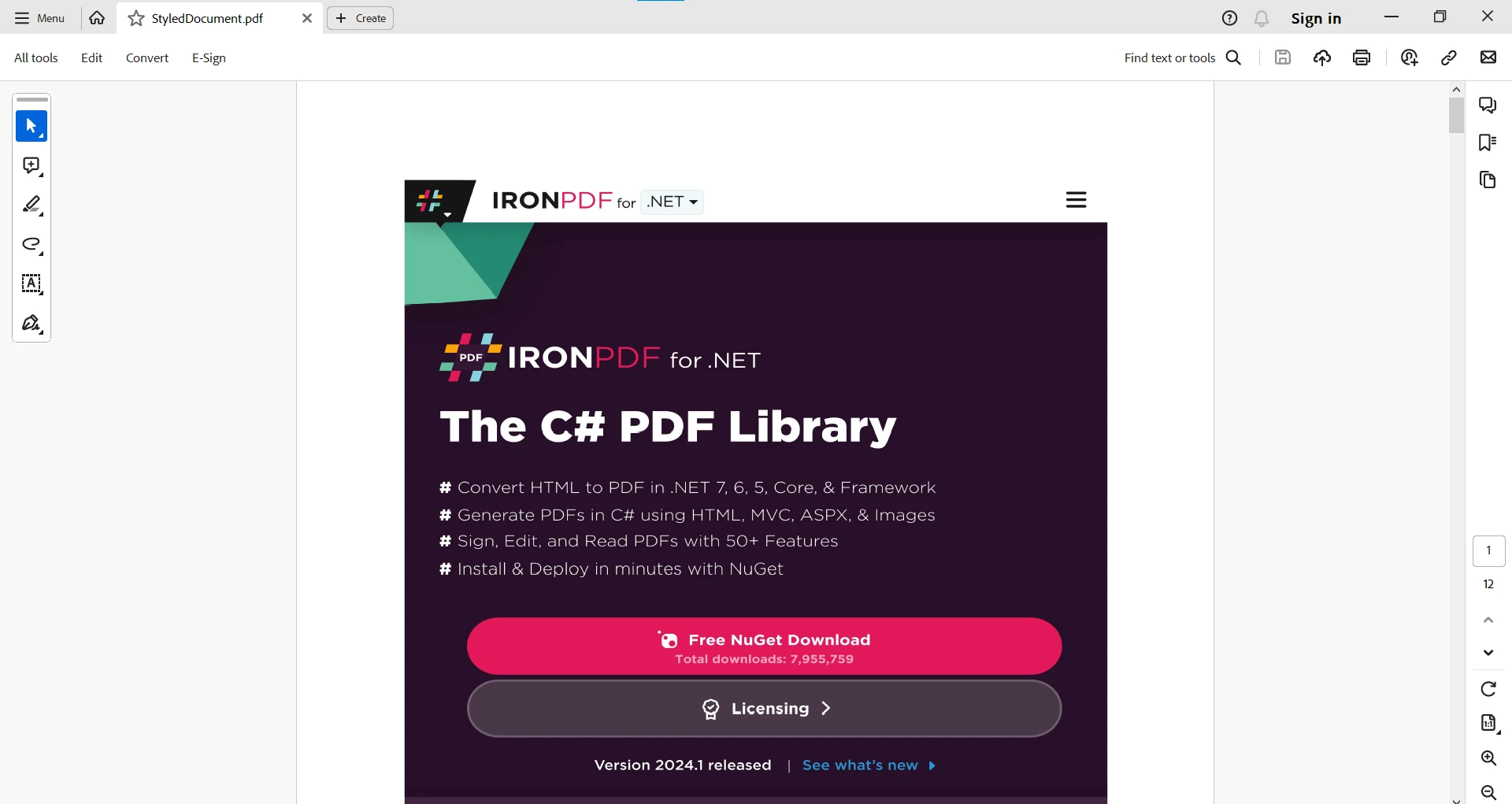
Aquí, el código ajusta dinámicamente las opciones de renderizado para el documento PDF basado en si la bandera `isPrintMode` es `true` o `false`. Si está en modo de impresión (`true`), el `CssMediaType` se establece para usar la hoja de estilo `Print`; de lo contrario, se establece para usar la hoja de estilo `Screen`. Esta flexibilidad permite a los desarrolladores controlar el comportamiento de renderizado de PDF basado en diferentes escenarios, como optimización para visualización en pantalla o salida de impresión.
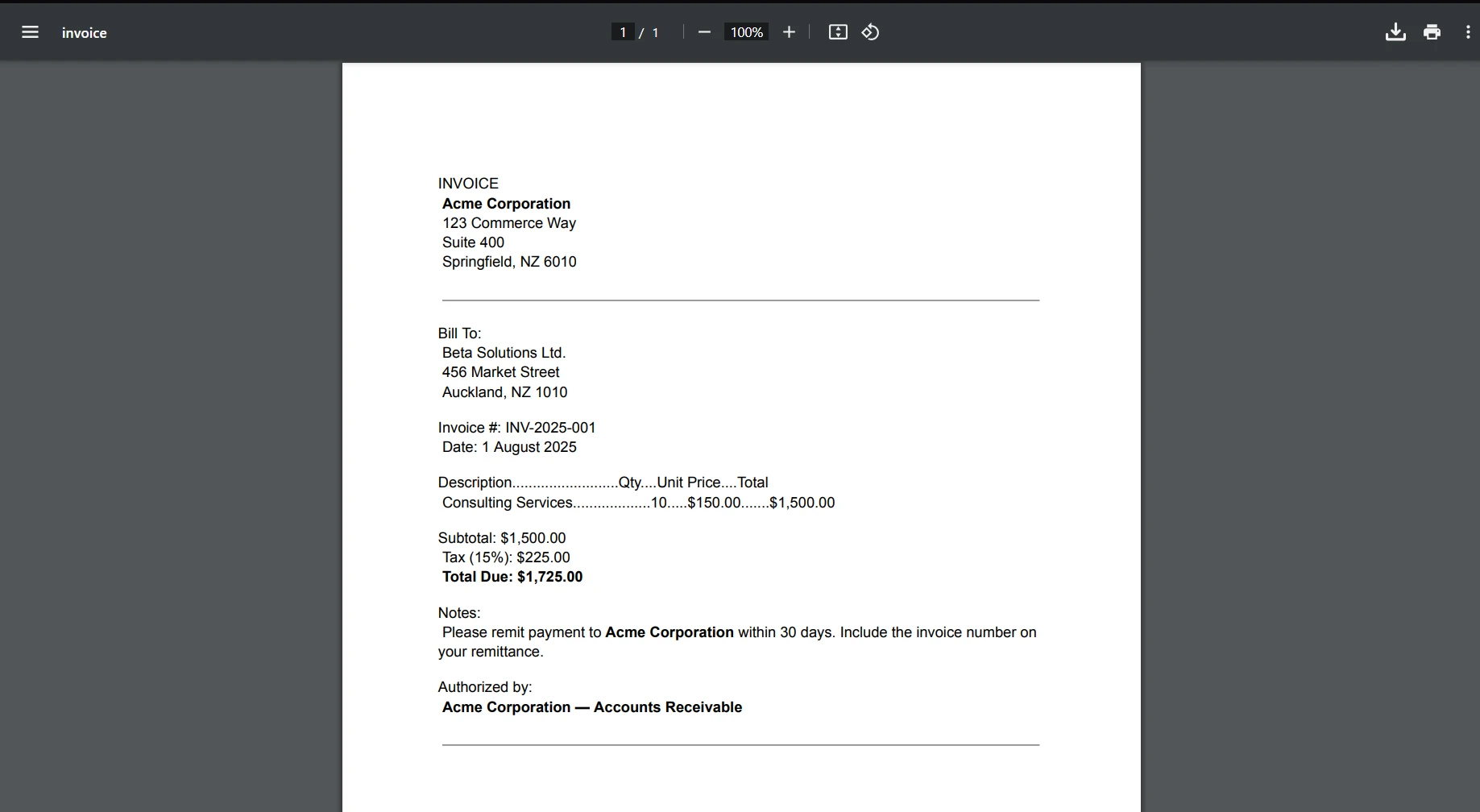
El PDF generado coincide con la hoja de estilo `Screen` de la página de inicio de IronPDF:
### 3. Inclusión Condicional de Encabezado y Pie de Página
Incorporar encabezados y pies de página en PDFs puede ser condicional basado en las preferencias del usuario o requisitos específicos. El Operador Ternario simplifica este proceso de toma de decisiones.
```csharp
var includeHeader = true;
var includeFooter = false; // Example conditions for including header and footer
var renderOptions = new ChromePdfRenderOptions();
renderOptions.HtmlHeader = (includeHeader) ? new HtmlHeaderFooter()
{
BaseUrl = "https://ironpdf.com",
DrawDividerLine = true
} : null;
renderOptions.HtmlFooter = (includeFooter) ? new HtmlHeaderFooter() : null;
var pdf = new ChromePdfRenderer();
pdf.RenderingOptions = renderOptions;
pdf.RenderHtmlAsPdf("<html><body><h1>PDF with Header and Footer</h1></body></html>").SaveAs("ConditionalHeaderFooter.pdf");
```
En este caso, el Operador Ternario decide si incluir opciones de encabezado y pie de página basado en las condiciones. Para obtener información más detallada sobre cómo implementar las funcionalidades y opciones de renderizado de IronPDF, por favor visita la [documentación de IronPDF](/docs/).
## Conclusión
El Operador Ternario C# se presenta como un recurso valioso para simplificar expresiones condicionales y mejorar la legibilidad del código. Su sintaxis concisa empodera a los desarrolladores para escribir código limpio y expresivo, lo que lo convierte en una herramienta indispensable en el arsenal de programación de C#.
Ya sea para asignaciones simples, declaraciones return, o verificaciones inline, el Operador Ternario ofrece un enfoque versátil y elegante para los condicionales. Abraza su simplicidad cuando sea apropiado, y deja que tu código C# refleje elegancia y claridad en el dinámico panorama de la programación.
En conclusión, IronPDF y el Operador Ternario C# prueban ser una combinación formidable. Las capacidades de IronPDF para crear PDFs se integran sin esfuerzo con la sintaxis concisa y expresiva de las expresiones ternarias, permitiendo a los desarrolladores crear PDFs dinámicos, impulsados por condiciones con elegancia.
Ya sea personalizando contenido, ajustando estilos, o decidiendo sobre la inclusión de encabezados y pies de página, la Operación Ternaria añade una capa de sofisticación a la generación de PDF dentro del marco de IronPDF.
IronPDF es gratuito para el desarrollo y ofrece una [prueba gratuita de IronPDF](trial-license) para probar toda su funcionalidad. Sin embargo, se requiere una [licencia comercial](/licensing/) para usarlo en modo comercial.
En el mundo de la programación en C#, realizar una expresión condicional eficiente es una habilidad fundamental. El Operador Ternario o Operador Condicional (? :), es una herramienta versátil diseñada para agilizar y simplificar las verificaciones condicionales.
También existe un operador de coalescencia nula (??) que a menudo puede confundirse con un Operador Ternario ya que ambos son operadores condicionales. Sin embargo, la coalescencia nula está diseñada para manejar valores nulos y proporcionar valores predeterminados, mientras que el Operador Ternario (? :) es un operador condicional de propósito general basado en una expresión booleana, que permite verificaciones de expresiones de referencia condicional más amplias con tres operandos.
En este artículo, exploraremos las particularidades del Operador Condicional Ternario en C#, su sintaxis, casos de uso, y cómo mejora la legibilidad y concisión del código.
Entendiendo lo Esencial: Operador Ternario en C#
El Operador Ternario, una abreviatura concisa para expresiones condicionales, juega un papel fundamental en la escritura de código limpio y legible. El Operador Ternario reemplaza las declaraciones tradicionales if-else que requieren múltiples líneas de código. Su código de una sola línea puede reemplazar múltiples líneas que ayudan con asignaciones o declaraciones return directas.
Descifrando la Sintaxis de ?
El Operador Ternario (? :) opera con tres operandos y devuelve uno de dos valores basados en la evaluación de una condición. Su sintaxis es sencilla:
condition ? trueExpression : falseExpression;
condition ? trueExpression : falseExpression;
If(condition, trueExpression, falseExpression)
If(condition, trueExpression, falseExpression)
Si el operador evalúa el condition como verdadero, se ejecuta trueExpression; de lo contrario, se ejecuta falseExpression. Esta simplicidad lo convierte en una opción preferida para los desarrolladores que buscan mejorar la claridad del código.
Agilizando Asignaciones con Simplicidad
Considera un escenario donde necesitas asignar un máximo de dos números a una variable. El Operador Ternario simplifica esta tarea elegantemente:
int number1 = 10;int number2 = 15;// Using the ternary operator to assign the maximum number to maxNumberint maxNumber = (number1 > number2) ? number1 : number2;Console.WriteLine("The maximum number is: " + maxNumber);
int number1 = 10;
int number2 = 15;
// Using the ternary operator to assign the maximum number to maxNumber
int maxNumber = (number1 > number2) ? number1 : number2;
Console.WriteLine("The maximum number is: " + maxNumber);
Dim number1 AsInteger = 10Dim number2 AsInteger = 15' Using the ternary operator to assign the maximum number to maxNumberDim maxNumber AsInteger = If(number1 > number2, number1, number2)Console.WriteLine("The maximum number is: " & maxNumber)
Dim number1 As Integer = 10
Dim number2 As Integer = 15
' Using the ternary operator to assign the maximum number to maxNumber
Dim maxNumber As Integer = If(number1 > number2, number1, number2)
Console.WriteLine("The maximum number is: " & maxNumber)
Aquí, maxNumber se asigna el valor de number1 si la condición (number1 > number2) es verdadera; de lo contrario, obtiene el valor de number2. El Operador Ternario transforma esto en una declaración concisa y legible.
Casos de Uso y Beneficios
Asignaciones en Una Línea: El Operador Ternario brilla cuando necesitas asignar un valor a una variable basado en una condición en una sola línea, eliminando la necesidad de un extenso bloque if-else.
string result = (isSuccess) ? "Operation succeeded" : "Operation failed";
string result = (isSuccess) ? "Operation succeeded" : "Operation failed";
Dim result AsString = If(isSuccess, "Operation succeeded", "Operation failed")
Dim result As String = If(isSuccess, "Operation succeeded", "Operation failed")
Declaraciones Return Concisas: Los métodos o funciones a menudo se benefician de la sintaxis concisa del Operador Ternario para las declaraciones return.
intGetAbsoluteValue(int number) => (number >= 0) ? number : -number;
int GetAbsoluteValue(int number) => (number >= 0) ? number : -number;
Private Function GetAbsoluteValue(ByVal number AsInteger) AsInteger Return If(number >= 0, number, -number)End Function
Private Function GetAbsoluteValue(ByVal number As Integer) As Integer
	Return If(number >= 0, number, -number)
End Function
Verificaciones Condicionales Inline: Cuando se requiere una verificación condicional rápida dentro de una declaración, el Operador Ternario proporciona una solución elegante.
Console.WriteLine((isEven) ? "It's an even number" : "It's an odd number");
Console.WriteLine((isEven) ? "It's an even number" : "It's an odd number");
Console.WriteLine(If(isEven, "It's an even number", "It's an odd number"))
Console.WriteLine(If(isEven, "It's an even number", "It's an odd number"))
Operador Ternario Anidado
Aunque el operador ternario es una herramienta poderosa, es esencial usarlo de manera sensata para mantener la legibilidad del código. Anidar operadores ternarios excesivamente puede llevar a un código que sea difícil de entender. Considera el siguiente ejemplo:
Dim result AsString = If(condition1, (If(condition2, "Nested success", "Nested failure")), "Outer failure")
Dim result As String = If(condition1, (If(condition2, "Nested success", "Nested failure")), "Outer failure")
Mientras que el anidamiento puede ser útil, ten cuidado de no sacrificar claridad por concisión.
Presentando IronPDF: Una Robusta Biblioteca de Generación de PDF
Resumen de la Biblioteca de IronPDF es una biblioteca C# que permite a los desarrolladores crear, editar y manipular documentos PDF sin esfuerzo dentro de sus aplicaciones .NET. Ya sea que estés generando facturas, informes o contenido dinámico, IronPDF agiliza el proceso de creación de PDFs, ofreciendo características como conversión de HTML a PDF, combinación de PDFs, y más.
IronPDF sobresale en la conversión de HTML a PDF, asegurando una conservación precisa de los diseños y estilos originales. Es perfecto para crear PDFs a partir de contenido basado en la web como informes, facturas y documentación. Con soporte para archivos HTML, URLs y cadenas de HTML crudo, IronPDF produce fácilmente documentos PDF de alta calidad.
using IronPdf;class Program{ static voidMain(string[] args) { var renderer = new ChromePdfRenderer(); // 1. Convert HTML String to PDF var htmlContent = "<h1>Hello, IronPDF!</h1><p>This is a PDF from an HTML string.</p>"; var pdfFromHtmlString = renderer.RenderHtmlAsPdf(htmlContent); pdfFromHtmlString.SaveAs("HTMLStringToPDF.pdf"); // 2. Convert HTML File to PDF var htmlFilePath = "path_to_your_html_file.html"; // Specify the path to your HTML file var pdfFromHtmlFile = renderer.RenderHtmlFileAsPdf(htmlFilePath); pdfFromHtmlFile.SaveAs("HTMLFileToPDF.pdf"); // 3. Convert URL to PDF var url = "http://ironpdf.com"; // Specify the URL var pdfFromUrl = renderer.RenderUrlAsPdf(url); pdfFromUrl.SaveAs("URLToPDF.pdf"); }}
using IronPdf;

class Program
{
    static void Main(string[] args)
    {
        var renderer = new ChromePdfRenderer();

        // 1. Convert HTML String to PDF
        var htmlContent = "<h1>Hello, IronPDF!</h1><p>This is a PDF from an HTML string.</p>";
        var pdfFromHtmlString = renderer.RenderHtmlAsPdf(htmlContent);
        pdfFromHtmlString.SaveAs("HTMLStringToPDF.pdf");

        // 2. Convert HTML File to PDF
        var htmlFilePath = "path_to_your_html_file.html"; // Specify the path to your HTML file
        var pdfFromHtmlFile = renderer.RenderHtmlFileAsPdf(htmlFilePath);
        pdfFromHtmlFile.SaveAs("HTMLFileToPDF.pdf");

        // 3. Convert URL to PDF
        var url = "http://ironpdf.com"; // Specify the URL
        var pdfFromUrl = renderer.RenderUrlAsPdf(url);
        pdfFromUrl.SaveAs("URLToPDF.pdf");
    }
}
ImportsIronPdfFriend Class ProgramShared Sub Main(ByVal args() AsString) Dim renderer = New ChromePdfRenderer() ' 1. Convert HTML String to PDF Dim htmlContent = "<h1>Hello, IronPDF!</h1><p>This is a PDF from an HTML string.</p>" Dim pdfFromHtmlString = renderer.RenderHtmlAsPdf(htmlContent) pdfFromHtmlString.SaveAs("HTMLStringToPDF.pdf") ' 2. Convert HTML File to PDF Dim htmlFilePath = "path_to_your_html_file.html" ' Specify the path to your HTML file Dim pdfFromHtmlFile = renderer.RenderHtmlFileAsPdf(htmlFilePath) pdfFromHtmlFile.SaveAs("HTMLFileToPDF.pdf") ' 3. Convert URL to PDF Dim url = "http://ironpdf.com" ' Specify the URL Dim pdfFromUrl = renderer.RenderUrlAsPdf(url) pdfFromUrl.SaveAs("URLToPDF.pdf") End SubEnd Class
Imports IronPdf

Friend Class Program
	Shared Sub Main(ByVal args() As String)
		Dim renderer = New ChromePdfRenderer()

		' 1. Convert HTML String to PDF
		Dim htmlContent = "<h1>Hello, IronPDF!</h1><p>This is a PDF from an HTML string.</p>"
		Dim pdfFromHtmlString = renderer.RenderHtmlAsPdf(htmlContent)
		pdfFromHtmlString.SaveAs("HTMLStringToPDF.pdf")

		' 2. Convert HTML File to PDF
		Dim htmlFilePath = "path_to_your_html_file.html" ' Specify the path to your HTML file
		Dim pdfFromHtmlFile = renderer.RenderHtmlFileAsPdf(htmlFilePath)
		pdfFromHtmlFile.SaveAs("HTMLFileToPDF.pdf")

		' 3. Convert URL to PDF
		Dim url = "http://ironpdf.com" ' Specify the URL
		Dim pdfFromUrl = renderer.RenderUrlAsPdf(url)
		pdfFromUrl.SaveAs("URLToPDF.pdf")
	End Sub
End Class
Instalación de IronPDF: Un Inicio Rápido
Para comenzar a aprovechar la biblioteca IronPDF en tu proyecto de C#, puedes instalar fácilmente el paquete NuGet de IronPDF. Utiliza el siguiente comando en tu Consola del Administrador de Paquetes:
PM > Install-Package IronPdf
Install-Package IronPdf
Alternativamente, puedes buscar "IronPDF" en el Administrador de Paquetes NuGet e instalarlo desde allí.
using IronPdf;class Program{ static voidMain(string [] args) { // Instantiate Renderer var renderer = new ChromePdfRenderer(); // Create a PDF from an HTML string using C# var pdf = renderer.RenderHtmlAsPdf("<h1>Hello World</h1>"); // Export to a file pdf.SaveAs("output.pdf"); // Advanced Example with HTML Assets // Load external html assets: Images, CSS and JavaScript. // An optional BasePath 'C:\\site\\assets\\' is set as the file location to load assets from var myAdvancedPdf = renderer.RenderHtmlAsPdf("<img src='icons/iron.png'>", @"C:\site\assets\"); myAdvancedPdf.SaveAs("html-with-assets.pdf"); }}
using IronPdf;

class Program
{
    static void Main(string [] args)
    {
        // Instantiate Renderer
        var renderer = new ChromePdfRenderer();

        // Create a PDF from an HTML string using C#
        var pdf = renderer.RenderHtmlAsPdf("<h1>Hello World</h1>");

        // Export to a file
        pdf.SaveAs("output.pdf");

        // Advanced Example with HTML Assets
        // Load external html assets: Images, CSS and JavaScript.
        // An optional BasePath 'C:\\site\\assets\\' is set as the file location to load assets from
        var myAdvancedPdf = renderer.RenderHtmlAsPdf("<img src='icons/iron.png'>", @"C:\site\assets\");
        myAdvancedPdf.SaveAs("html-with-assets.pdf");
    }
}
ImportsIronPdfFriend Class ProgramShared Sub Main(ByVal args() AsString) ' Instantiate Renderer Dim renderer = New ChromePdfRenderer() ' Create a PDF from an HTML string using C# Dim pdf = renderer.RenderHtmlAsPdf("<h1>Hello World</h1>") ' Export to a file pdf.SaveAs("output.pdf") ' Advanced Example with HTML Assets ' Load external html assets: Images, CSS and JavaScript. ' An optional BasePath 'C:\\site\\assets\\' is set as the file location to load assets from Dim myAdvancedPdf = renderer.RenderHtmlAsPdf("<img src='icons/iron.png'>", "C:\site\assets\") myAdvancedPdf.SaveAs("html-with-assets.pdf") End SubEnd Class
Imports IronPdf

Friend Class Program
	Shared Sub Main(ByVal args() As String)
		' Instantiate Renderer
		Dim renderer = New ChromePdfRenderer()

		' Create a PDF from an HTML string using C#
		Dim pdf = renderer.RenderHtmlAsPdf("<h1>Hello World</h1>")

		' Export to a file
		pdf.SaveAs("output.pdf")

		' Advanced Example with HTML Assets
		' Load external html assets: Images, CSS and JavaScript.
		' An optional BasePath 'C:\\site\\assets\\' is set as the file location to load assets from
		Dim myAdvancedPdf = renderer.RenderHtmlAsPdf("<img src='icons/iron.png'>", "C:\site\assets\")
		myAdvancedPdf.SaveAs("html-with-assets.pdf")
	End Sub
End Class
La Esencia del Operador Ternario C#
El Operador Ternario C# (? :) es una herramienta sucinta para manejar expresiones condicionales. Su sintaxis, en la forma de condition ? trueExpression : falseExpression, proporciona una manera elegante de agilizar las verificaciones y asignaciones condicionales.
Elevando la Generación de PDF con el Operador Condicional Ternario
1. Contenido Condicional en PDFs
IronPDF te permite generar dinámicamente contenido PDF basado en condiciones. El Operador Ternario se vuelve invaluable en este escenario, permitiéndote elegir entre diferentes bloques de contenido dentro del PDF según condiciones específicas.
using IronPdf;bool isPremiumUser = License.IsLicensed; // Example conditionvar pdf = new ChromePdfRenderer();var content = (isPremiumUser) ? GeneratePremiumContentFromUser() : GenerateStandardDefaultContent();pdf.RenderHtmlAsPdf(content).SaveAs("GeneratedDocument.pdf");
using IronPdf;

bool isPremiumUser = License.IsLicensed; // Example condition
var pdf = new ChromePdfRenderer();
var content = (isPremiumUser) ? GeneratePremiumContentFromUser() : GenerateStandardDefaultContent();

pdf.RenderHtmlAsPdf(content).SaveAs("GeneratedDocument.pdf");
ImportsIronPdfPrivate isPremiumUser AsBoolean = License.IsLicensed' Example conditionPrivate pdf = New ChromePdfRenderer()Private content = If(isPremiumUser, GeneratePremiumContentFromUser(), GenerateStandardDefaultContent())pdf.RenderHtmlAsPdf(content).SaveAs("GeneratedDocument.pdf")
Imports IronPdf

Private isPremiumUser As Boolean = License.IsLicensed ' Example condition
Private pdf = New ChromePdfRenderer()
Private content = If(isPremiumUser, GeneratePremiumContentFromUser(), GenerateStandardDefaultContent())

pdf.RenderHtmlAsPdf(content).SaveAs("GeneratedDocument.pdf")
En el ejemplo anterior, el Operador Ternario determina si generar contenido premium especificado por el usuario o contenido estándar con valores predeterminados dentro del PDF según la condición isPremiumUser. isPremiumUser La expresión ternaria puede ser una verificación de cualquier cosa. Puede usarse para verificar si el usuario tiene licencia para IronPDF o no.
2. Estilo y Formato Dinámicos
Adaptar la apariencia de elementos en un PDF basado en condiciones es un requisito común. El Operador Ternario facilita decisiones de estilo dinámico, contribuyendo a un PDF más personalizado y centrado en el usuario.
bool isPrintMode = false; // Example of setting the print modevar renderOptions = new ChromePdfRenderOptions();renderOptions.CssMediaType = (isPrintMode) ? IronPdf.Rendering.PdfCssMediaType.Print : IronPdf.Rendering.PdfCssMediaType.Screen;var pdfDocument = new ChromePdfRenderer();pdfDocument.RenderingOptions = renderOptions;pdfDocument.RenderUrlAsPdf("https://ironpdf.com").SaveAs("StyledPDF.pdf");
bool isPrintMode = false; // Example of setting the print mode
var renderOptions = new ChromePdfRenderOptions();
renderOptions.CssMediaType = (isPrintMode) ? IronPdf.Rendering.PdfCssMediaType.Print : IronPdf.Rendering.PdfCssMediaType.Screen;
var pdfDocument = new ChromePdfRenderer();
pdfDocument.RenderingOptions = renderOptions;
pdfDocument.RenderUrlAsPdf("https://ironpdf.com").SaveAs("StyledPDF.pdf");
Dim isPrintMode AsBoolean = False ' Example of setting the print modeDim renderOptions = New ChromePdfRenderOptions()renderOptions.CssMediaType = If(isPrintMode, IronPdf.Rendering.PdfCssMediaType.Print, IronPdf.Rendering.PdfCssMediaType.Screen)Dim pdfDocument = New ChromePdfRenderer()pdfDocument.RenderingOptions = renderOptionspdfDocument.RenderUrlAsPdf("https://ironpdf.com").SaveAs("StyledPDF.pdf")
Dim isPrintMode As Boolean = False ' Example of setting the print mode
Dim renderOptions = New ChromePdfRenderOptions()
renderOptions.CssMediaType = If(isPrintMode, IronPdf.Rendering.PdfCssMediaType.Print, IronPdf.Rendering.PdfCssMediaType.Screen)
Dim pdfDocument = New ChromePdfRenderer()
pdfDocument.RenderingOptions = renderOptions
pdfDocument.RenderUrlAsPdf("https://ironpdf.com").SaveAs("StyledPDF.pdf")
Aquí, el código ajusta dinámicamente las opciones de renderizado para el documento PDF basado en si la bandera isPrintMode es true o false. Si está en modo de impresión (true), el CssMediaType se establece para usar la hoja de estilo Print; de lo contrario, se establece para usar la hoja de estilo Screen. Esta flexibilidad permite a los desarrolladores controlar el comportamiento de renderizado de PDF basado en diferentes escenarios, como optimización para visualización en pantalla o salida de impresión.
El PDF generado coincide con la hoja de estilo Screen de la página de inicio de IronPDF:
3. Inclusión Condicional de Encabezado y Pie de Página
Incorporar encabezados y pies de página en PDFs puede ser condicional basado en las preferencias del usuario o requisitos específicos. El Operador Ternario simplifica este proceso de toma de decisiones.
var includeHeader = true;var includeFooter = false; // Example conditions for including header and footervar renderOptions = new ChromePdfRenderOptions();renderOptions.HtmlHeader = (includeHeader) ? new HtmlHeaderFooter(){BaseUrl = "https://ironpdf.com",DrawDividerLine = true} : null;renderOptions.HtmlFooter = (includeFooter) ? new HtmlHeaderFooter() : null;var pdf = new ChromePdfRenderer();pdf.RenderingOptions = renderOptions;pdf.RenderHtmlAsPdf("<html><body><h1>PDF with Header and Footer</h1></body></html>").SaveAs("ConditionalHeaderFooter.pdf");
var includeHeader = true;
var includeFooter = false; // Example conditions for including header and footer
var renderOptions = new ChromePdfRenderOptions();

renderOptions.HtmlHeader = (includeHeader) ? new HtmlHeaderFooter()
{
    BaseUrl = "https://ironpdf.com",
    DrawDividerLine = true
} : null;

renderOptions.HtmlFooter = (includeFooter) ? new HtmlHeaderFooter() : null;

var pdf = new ChromePdfRenderer();
pdf.RenderingOptions = renderOptions;
pdf.RenderHtmlAsPdf("<html><body><h1>PDF with Header and Footer</h1></body></html>").SaveAs("ConditionalHeaderFooter.pdf");
Dim includeHeader = TrueDim includeFooter = False ' Example conditions for including header and footerDim renderOptions = New ChromePdfRenderOptions()renderOptions.HtmlHeader = If(includeHeader, New HtmlHeaderFooter() With { .BaseUrl = "https://ironpdf.com", .DrawDividerLine = True}, Nothing)renderOptions.HtmlFooter = If(includeFooter, New HtmlHeaderFooter(), Nothing)Dim pdf = New ChromePdfRenderer()pdf.RenderingOptions = renderOptionspdf.RenderHtmlAsPdf("<html><body><h1>PDF with Header and Footer</h1></body></html>").SaveAs("ConditionalHeaderFooter.pdf")
Dim includeHeader = True
Dim includeFooter = False ' Example conditions for including header and footer
Dim renderOptions = New ChromePdfRenderOptions()

renderOptions.HtmlHeader = If(includeHeader, New HtmlHeaderFooter() With {
	.BaseUrl = "https://ironpdf.com",
	.DrawDividerLine = True
}, Nothing)

renderOptions.HtmlFooter = If(includeFooter, New HtmlHeaderFooter(), Nothing)

Dim pdf = New ChromePdfRenderer()
pdf.RenderingOptions = renderOptions
pdf.RenderHtmlAsPdf("<html><body><h1>PDF with Header and Footer</h1></body></html>").SaveAs("ConditionalHeaderFooter.pdf")
En este caso, el Operador Ternario decide si incluir opciones de encabezado y pie de página basado en las condiciones. Para obtener información más detallada sobre cómo implementar las funcionalidades y opciones de renderizado de IronPDF, por favor visita la documentación de IronPDF.
Conclusión
El Operador Ternario C# se presenta como un recurso valioso para simplificar expresiones condicionales y mejorar la legibilidad del código. Su sintaxis concisa empodera a los desarrolladores para escribir código limpio y expresivo, lo que lo convierte en una herramienta indispensable en el arsenal de programación de C#.
Ya sea para asignaciones simples, declaraciones return, o verificaciones inline, el Operador Ternario ofrece un enfoque versátil y elegante para los condicionales. Abraza su simplicidad cuando sea apropiado, y deja que tu código C# refleje elegancia y claridad en el dinámico panorama de la programación.
En conclusión, IronPDF y el Operador Ternario C# prueban ser una combinación formidable. Las capacidades de IronPDF para crear PDFs se integran sin esfuerzo con la sintaxis concisa y expresiva de las expresiones ternarias, permitiendo a los desarrolladores crear PDFs dinámicos, impulsados por condiciones con elegancia.
Ya sea personalizando contenido, ajustando estilos, o decidiendo sobre la inclusión de encabezados y pies de página, la Operación Ternaria añade una capa de sofisticación a la generación de PDF dentro del marco de IronPDF.
IronPDF es gratuito para el desarrollo y ofrece una prueba gratuita de IronPDF para probar toda su funcionalidad. Sin embargo, se requiere una licencia comercial para usarlo en modo comercial.
Jacob Mellor es Director de Tecnología de Iron Software y un ingeniero visionario pionero en la tecnología C# PDF. Como desarrollador original de la base de código principal de Iron Software, ha dado forma a la arquitectura de productos de la empresa desde su creación, transformándola, junto con el director ejecutivo Cameron Rimington, en una empresa de más de 50 personas que presta servicios a la NASA, Tesla y organismos gubernamentales de todo el mundo.