En el desarrollo de .NET, la conversión entre diferentes tipos de datos es una habilidad esencial, especialmente al tratar con tipos comunes como cadenas y enteros. Una de las operaciones más frecuentes que realizarás es convertir una variable de cadena a un valor entero. Ya sea manejando cadenas numéricas de entradas de usuario, archivos o bases de datos, poder convertir eficientemente variables de cadena a enteros es crucial. Afortunadamente, C# ofrece varios métodos para realizar estas conversiones de manera efectiva, gracias a los métodos int.Parse() e int.TryParse().
Por otro lado, al trabajar con PDFs, la capacidad de extraer y manipular datos de texto se vuelve aún más importante, especialmente al tratar con documentos como facturas, informes o formularios que a menudo contienen cadenas de enteros. Es aquí donde IronPDF entra en juego, una biblioteca poderosa y fácil de usar para trabajar con PDFs en .NET. En este artículo, veremos tanto cómo convertir cadenas a enteros en C# como cómo IronPDF puede ayudarte a manejar tareas relacionadas con PDF en tus proyectos .NET.
¿Por qué convertir una cadena a un entero en C#?
Las conversiones de cadena a entero son un paso crítico en muchas aplicaciones donde los datos numéricos se proporcionan como cadena. Aquí hay algunos casos de uso comunes:
- Manejo de entrada del usuario: cuando los usuarios ingresan números a través de formularios o elementos de la interfaz de usuario, los datos a menudo llegan como cadenas. Convertir estos valores a enteros es necesario para cálculos o manipulaciones adicionales de datos.
- Datos de fuentes externas: al leer datos de archivos, bases de datos o documentos como PDF, los datos suelen estar en formato de cadena. Convertir estas variables de cadena a enteros permite una manipulación, validación y cálculos precisos.
- Rendimiento y legibilidad: las operaciones con números enteros son más rápidas que las operaciones con cadenas, y mantener los datos en su tipo previsto hace que el código sea más legible y fácil de mantener.
- Manejo de valores predeterminados: si una cadena de entrada no contiene un número válido, deberá proporcionar un valor predeterminado cuando falle la conversión, lo que garantizará que la aplicación continúe ejecutándose sin problemas.
Basic Methods for Converting String to Integer in C#
Hay varias formas de convertir una variable de cadena a un valor entero en C#. Los enfoques más comunes incluyen el método Parse, el método TryParse y la clase Convert.
Uso de int.Parse()
El método int.Parse() es una forma sencilla de convertir una cadena en un entero. Sin embargo, asume que la cadena de entrada está en el formato correcto (es decir, un número válido) y lanzará una excepción FormatException si la conversión falla.
int number = int.Parse("123");
int number = int.Parse("123");Dim number As Integer = Integer.Parse("123")
Dim number As Integer = Integer.Parse("123")
Ventajas:
- Simple y directo para entradas de cadena válidas.
Desventajas:
- Lanza una excepción si la cadena no es un número válido, lo que puede no ser ideal al procesar datos no confiables (como la entrada de usuario o datos de archivos externos).
Uso de int.TryParse()
Para conversiones más seguras, el método TryParse se usa comúnmente. Intenta la conversión y devuelve un valor booleano que indica si la conversión fue exitosa o no. Si la conversión falla, no lanza una excepción sino que simplemente devuelve false. El resultado se almacena en un parámetro de salida.
bool success = int.TryParse("123", out int result);
bool success = int.TryParse("123", out int result);Dim result As Integer
Dim success As Boolean = Integer.TryParse("123", result)
Dim result As Integer
Dim success As Boolean = Integer.TryParse("123", result)
Aquí, success es un valor booleano que indica si la conversión tuvo éxito, y result es el entero convertido, almacenado en el parámetro out.
Ventajas:
- Maneja cadenas no válidas de forma elegante devolviendo false en lugar de lanzar excepciones.
- Ideal para escenarios donde no estás seguro si la cadena es un número válido.
Desventajas:
- Requiere una comprobación adicional (el resultado booleano) para confirmar si la conversión tuvo éxito.
Uso de la clase Convert
Otra forma de convertir una variable de cadena en un valor entero es usar la clase Convert. La clase Convert incluye métodos que pueden convertir diferentes tipos de datos, incluyendo cadenas a enteros.
int number = Convert.ToInt32("123");
int number = Convert.ToInt32("123");Dim number As Integer = Convert.ToInt32("123")
Dim number As Integer = Convert.ToInt32("123")
Ventajas:
- La clase
Convert puede manejar una gama más amplia de tipos de datos más allá de solo cadenas y enteros.
Desventajas:
- Al igual que el método parse, si la variable de cadena no está en el formato correcto, este método lanza una excepción FormatException.
Manejo de archivos PDF en .NET con IronPDF
Al trabajar con PDFs, es posible que necesites extraer y procesar cualquier cadena de entero incrustada en el documento. IronPDF simplifica la manipulación de PDFs, permitiéndote extraer texto y números sin problemas. Esto puede ser especialmente útil en escenarios donde necesitas extraer y convertir números de factura, cantidades u otros datos importantes.
Características de IronPDF
IronPDF ofrece un conjunto completo de características para trabajar con PDFs, incluyendo:
- Conversión de PDF: IronPDF puede convertir HTML a PDF, con su total soporte a los estándares web modernos. Puedes estar seguro de que IronPDF devolverá consistentemente PDFs con precisión de píxeles desde tu página HTML o contenido. IronPDF también puede convertir archivos PDF desde otros formatos como DOCX, imágenes, RTF, y más.
- Generación de PDF: con IronPDF, puede generar archivos PDF a partir de URL, archivos ASPX o cadenas HTML.
- Características de seguridad: Con IronPDF, siempre puedes estar seguro de que cualquier archivo PDF sensible está seguro gracias a sus características de seguridad. Usa IronPDF para encriptar tus archivos PDF, establecer contraseñas, y establecer permisos para tus archivos PDF.
- Funciones de Edición de PDF: Con IronPDF puedes procesar documentos PDF existentes, editarlos y leer archivos PDF con facilidad. IronPDF ofrece características de edición como agregar encabezados y pies de página, estampar texto e imágenes en las páginas del PDF, agregar marcas de agua personalizadas al PDF, trabajar con formularios PDF, y dividir o fusionar archivos PDF.
- Integración: Se integra perfectamente con aplicaciones ASP.NET y MVC.
- Soporte de Versiones de PDF: Soporte para versiones de PDF 1.2-1.7.
Estas características hacen de IronPDF una herramienta poderosa para cualquier aplicación que requiera funcionalidad con PDFs, desde informes simples hasta sistemas de procesamiento de documentos complejos.
Uno de los escenarios clave donde la conversión de cadena a entero y el manejo de PDFs se unen es cuando necesitas extraer datos numéricos de PDFs. Por ejemplo, puedes querer extraer números de factura, IDs de pedido o cantidades de un documento PDF, que a menudo vienen como cadenas. En este siguiente ejemplo, demostraremos cómo extraer texto de un PDF usando IronPDF y convertir cualquier cadena que represente enteros en valores enteros usando el método TryParse.
Usando IronPDF, puedes extraer texto de un PDF y luego convertir cualquier cadena de números en enteros usando int.TryParse(). Así es como:
using System;
using System.Text.RegularExpressions;
using IronPdf;

public static class PdfNumberExtractor
{
    public static void Main(string[] args)
    {
        // Load the PDF file
        PdfDocument pdf = PdfDocument.FromFile("invoice.pdf");

        // Extract text from the PDF
        string extractedText = pdf.ExtractAllText();

        // Use regex to extract potential numbers from the text
        var matches = Regex.Matches(extractedText, @"\d+");

        if (matches.Count > 0)
        {
            Console.WriteLine("Extracted number(s) from PDF:");

            foreach (Match match in matches)
            {
                // Try to parse each match as an integer
                if (int.TryParse(match.Value, out int num))
                {
                    Console.WriteLine(num); // If successful, print the number
                }
            }
        }
        else
        {
            Console.WriteLine("Could not find any numbers in the extracted text.");
        }
    }
}
using System;
using System.Text.RegularExpressions;
using IronPdf;

public static class PdfNumberExtractor
{
    public static void Main(string[] args)
    {
        // Load the PDF file
        PdfDocument pdf = PdfDocument.FromFile("invoice.pdf");

        // Extract text from the PDF
        string extractedText = pdf.ExtractAllText();

        // Use regex to extract potential numbers from the text
        var matches = Regex.Matches(extractedText, @"\d+");

        if (matches.Count > 0)
        {
            Console.WriteLine("Extracted number(s) from PDF:");

            foreach (Match match in matches)
            {
                // Try to parse each match as an integer
                if (int.TryParse(match.Value, out int num))
                {
                    Console.WriteLine(num); // If successful, print the number
                }
            }
        }
        else
        {
            Console.WriteLine("Could not find any numbers in the extracted text.");
        }
    }
}
Imports System
Imports System.Text.RegularExpressions
Imports IronPdf
Public Module PdfNumberExtractor
Public Sub Main(args As String())
' Load the PDF file
Dim pdf As PdfDocument = PdfDocument.FromFile("invoice.pdf")
' Extract text from the PDF
Dim extractedText As String = pdf.ExtractAllText()
' Use regex to extract potential numbers from the text
Dim matches = Regex.Matches(extractedText, "\d+")
If matches.Count > 0 Then
Console.WriteLine("Extracted number(s) from PDF:")
For Each match As Match In matches
' Try to parse each match as an integer
Dim num As Integer
If Integer.TryParse(match.Value, num) Then
Console.WriteLine(num) ' If successful, print the number
End If
Next
Else
Console.WriteLine("Could not find any numbers in the extracted text.")
End If
End Sub
End Module
Imports System
Imports System.Text.RegularExpressions
Imports IronPdf

Public Module PdfNumberExtractor
    Public Sub Main(args As String())
        ' Load the PDF file
        Dim pdf As PdfDocument = PdfDocument.FromFile("invoice.pdf")

        ' Extract text from the PDF
        Dim extractedText As String = pdf.ExtractAllText()

        ' Use regex to extract potential numbers from the text
        Dim matches = Regex.Matches(extractedText, "\d+")

        If matches.Count > 0 Then
            Console.WriteLine("Extracted number(s) from PDF:")

            For Each match As Match In matches
                ' Try to parse each match as an integer
                Dim num As Integer
                If Integer.TryParse(match.Value, num) Then
                    Console.WriteLine(num) ' If successful, print the number
                End If
            Next
        Else
            Console.WriteLine("Could not find any numbers in the extracted text.")
        End If
    End Sub
End Module
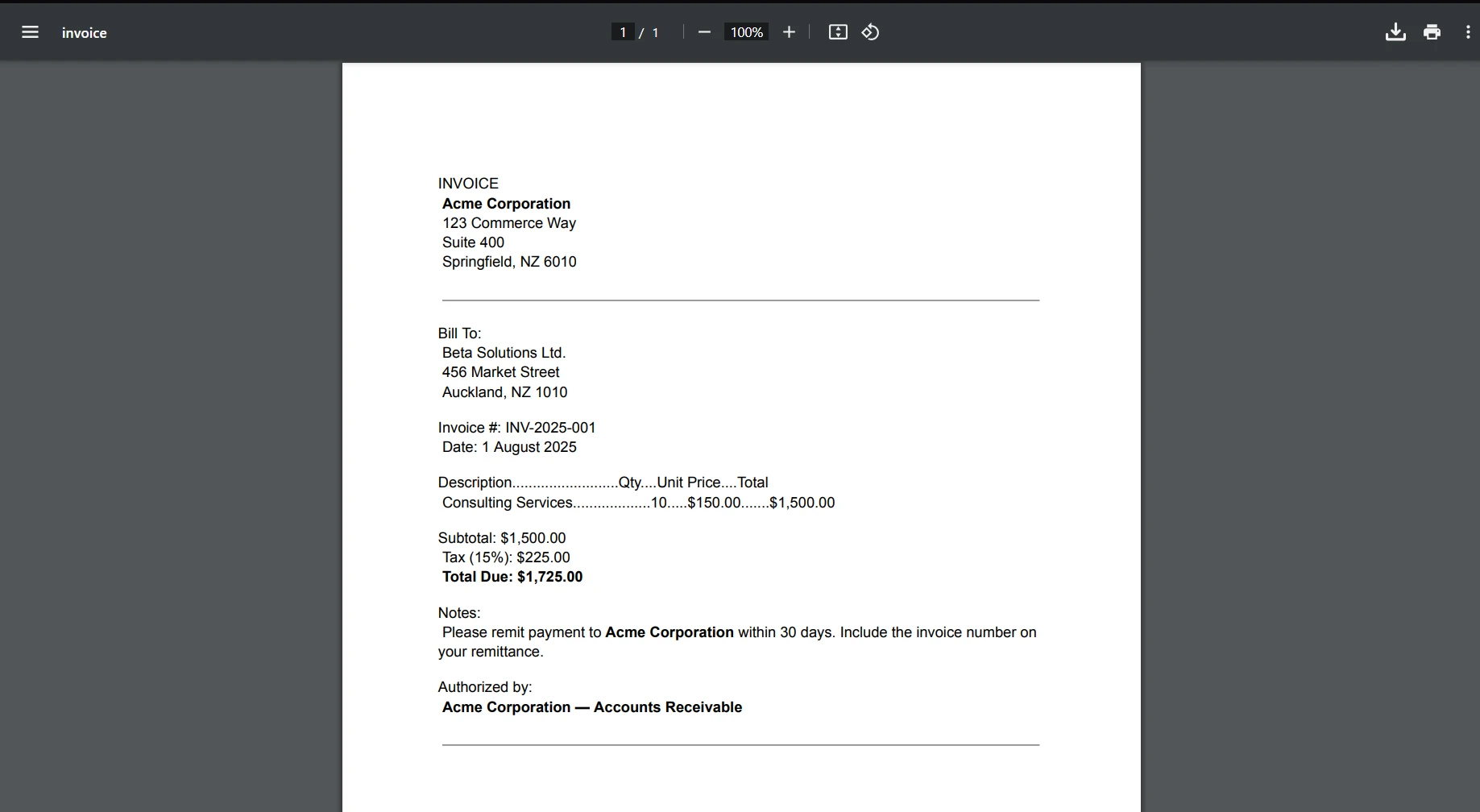
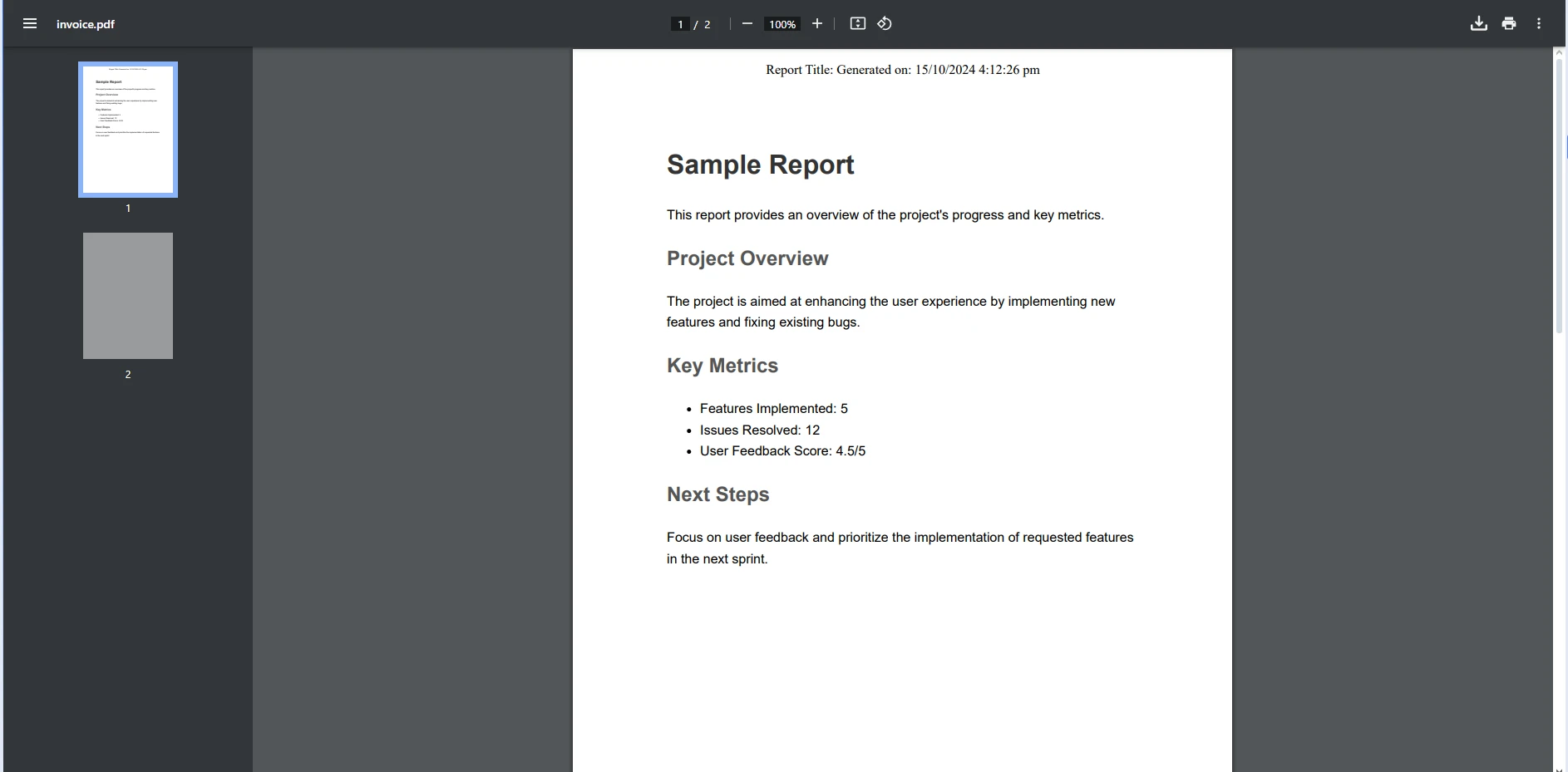
PDF de Entrada
Salida de Consola
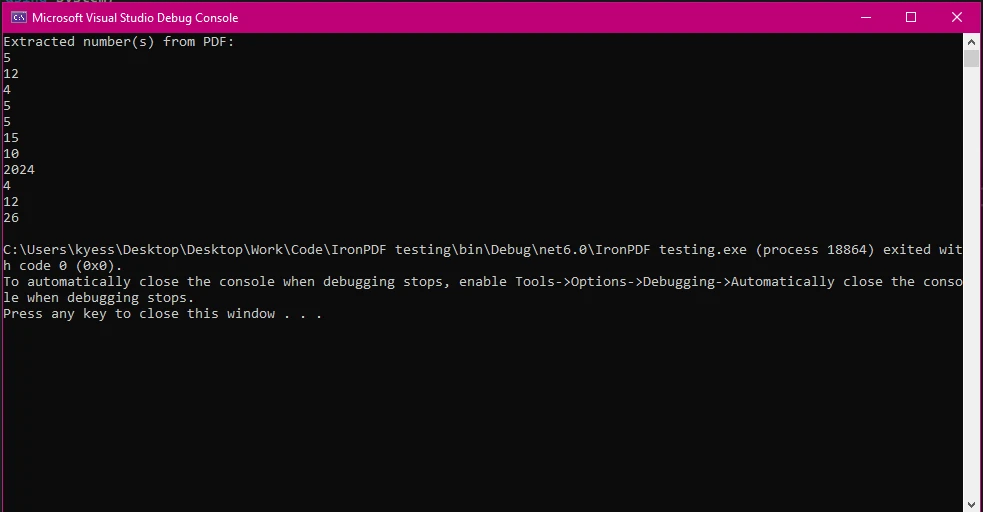
En este ejemplo de código, comenzamos cargando el archivo PDF llamado "invoice.pdf" y antes de extraer todo el texto del documento usando el método ExtractAllText(). Para identificar posibles números dentro del texto extraído, el código aplica una expresión regular (regex) \d+, que coincide con secuencias de dígitos.
Las coincidencias se almacenan, y si se encuentran números, se muestran en la consola. Cada coincidencia se analiza individualmente como un entero usando int.TryParse(), asegurando que solo se procesen valores numéricos válidos. Si no se encuentran números, se muestra un mensaje que indica que no se extrajeron números. Este enfoque es útil para procesar PDFs que contienen datos numéricos, como facturas, donde extraer y convertir números es esencial.
Casos de uso de la conversión de datos PDF a números enteros en aplicaciones del mundo real
Aquí hay algunos escenarios donde convertir texto extraído de PDF a enteros puede ser valioso:
- Procesamiento de facturas: extracción y procesamiento de números de facturas o montos totales para sistemas de facturación automatizados.
- Seguimiento de pedidos: recuperación de ID de pedidos o cantidades de archivos PDF de envío o confirmación de pedido.
- Informes financieros: análisis de archivos PDF que contienen informes financieros o registros de transacciones donde es necesario validar o resumir datos numéricos.
Conclusión
Convertir cadenas a enteros es una habilidad fundamental en C#, especialmente al trabajar con fuentes de datos externas. Los métodos int.Parse() y int.TryParse() brindan formas flexibles de manejar estas conversiones, asegurando tanto simplicidad como seguridad.
Mientras tanto, IronPDF empodera a los desarrolladores .NET para manejar flujos de trabajo complejos de PDF con facilidad. Ya sea que estés extrayendo texto, creando informes dinámicos o convirtiendo datos de PDF en formatos utilizables, IronPDF es una valiosa adición a tu kit de herramientas de desarrollo.
¿Quieres probar IronPDF tú mismo? Comienza tu prueba gratuita hoy y experimenta cómo IronPDF puede transformar la forma en que manejas PDFs en tus aplicaciones .NET!