using IronPdf;

// Disable local disk access or cross-origin requests
Installation.EnableWebSecurity = true;

// Instantiate Renderer
var renderer = new ChromePdfRenderer();

// Create a PDF from a HTML string using C#
var pdf = renderer.RenderHtmlAsPdf("<h1>Hello World</h1>");

// Export to a file or Stream
pdf.SaveAs("output.pdf");

// Advanced Example with HTML Assets
// Load external html assets: Images, CSS and JavaScript.
// An optional BasePath 'C:\site\assets\' is set as the file location to load assets from
var myAdvancedPdf = renderer.RenderHtmlAsPdf("<img src='icons/iron.png'>", @"C:\site\assets\");
myAdvancedPdf.SaveAs("html-with-assets.pdf");
using IronPdf;// Disable local disk access or cross-origin requestsInstallation.EnableWebSecurity = true;// Instantiate Renderervar renderer = new ChromePdfRenderer();// Create a PDF from a HTML string using C#var pdf = renderer.RenderHtmlAsPdf("<h1>Hello World</h1>");// Export to a file or Streampdf.SaveAs("output.pdf");// Advanced Example with HTML Assets// Load external html assets: Images, CSS and JavaScript.// An optional BasePath 'C:\site\assets\' is set as the file location to load assets fromvar myAdvancedPdf = renderer.RenderHtmlAsPdf("<img src='icons/iron.png'>", @"C:\site\assets\");myAdvancedPdf.SaveAs("html-with-assets.pdf");
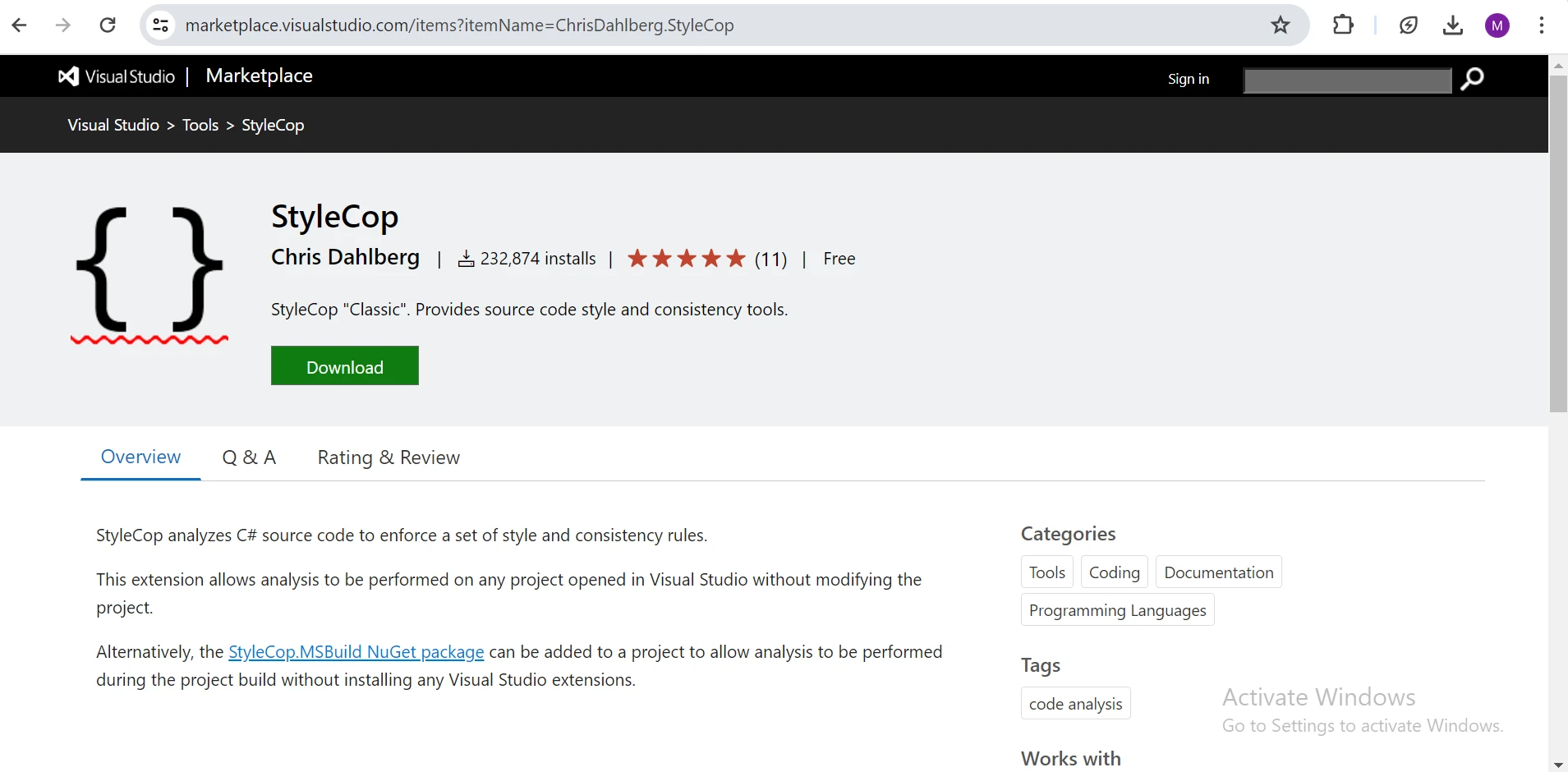
Cuando dos desarrolladores colaboran, inevitablemente discutirán el estilo de codificación. Cada desarrollador tiene una manera única de escribir el código fuente, haciendo que la consistencia sea más importante que elegir el estilo perfecto. Herramientas como [StyleCop](https://marketplace.visualstudio.com/items?itemName=ChrisDahlberg.StyleCop) ayudan a aplicar reglas de consistencia de codificación mediante un archivo de conjunto de reglas, asegurando uniformidad a través del equipo o proyecto. La consistencia mejora la legibilidad y facilita la depuración y el mantenimiento, creando un entorno de desarrollo más eficiente.
## ¿Qué es **StyleCop?**
[StyleCop](https://www.nuget.org/packages/StyleCop.Analyzers/) es una herramienta de análisis estático de código abierto para C# que verifica el código para adherirse a un conjunto predefinido de reglas de estilo y consistencia o reglas de formato. Se integra perfectamente con Visual Studio y puede incorporarse en los procesos de construcción para garantizar la consistencia del código en los equipos de desarrollo. Para configurar StyleCop, puede usar un archivo XML o un archivo JSON para definir reglas individuales a las que su proyecto debe adherirse. Este encabezado de archivo XML le permite personalizar el análisis modificando las reglas específicas según las necesidades de su proyecto. StyleCop admite una amplia gama de configuraciones, convirtiéndolo en una herramienta flexible para mantener la calidad y consistencia del código.
## Características principales de **StyleCop** C#
1. **Legibilidad mejorada:** StyleCop analiza el código fuente de C# y aplica estándares de codificación consistentes, lo que facilita que los desarrolladores lean y comprendan el código de los demás.
2. **Mantenibilidad:** al identificar violaciones de las mejores prácticas y convenciones de codificación, StyleCop garantiza que su código sea más fácil de mantener y menos propenso a errores.
3. **Automatización:** habilitar las comprobaciones automatizadas de StyleCop garantiza que las reglas de estilo se apliquen de manera consistente, eliminando la subjetividad y los errores de las revisiones manuales.
### Cómo configurar **StyleCop** en proyectos .NET
Comience abriendo su proyecto en Visual Studio. Luego, vaya al Explorador de Soluciones, haga clic derecho en su proyecto y elija "Administrar Paquetes de NuGet". En el Administrador de Paquetes de NuGet, busque "[StyleCop.Analyzers](https://www.nuget.org/packages/StyleCop.Analyzers/)" e instálelo.
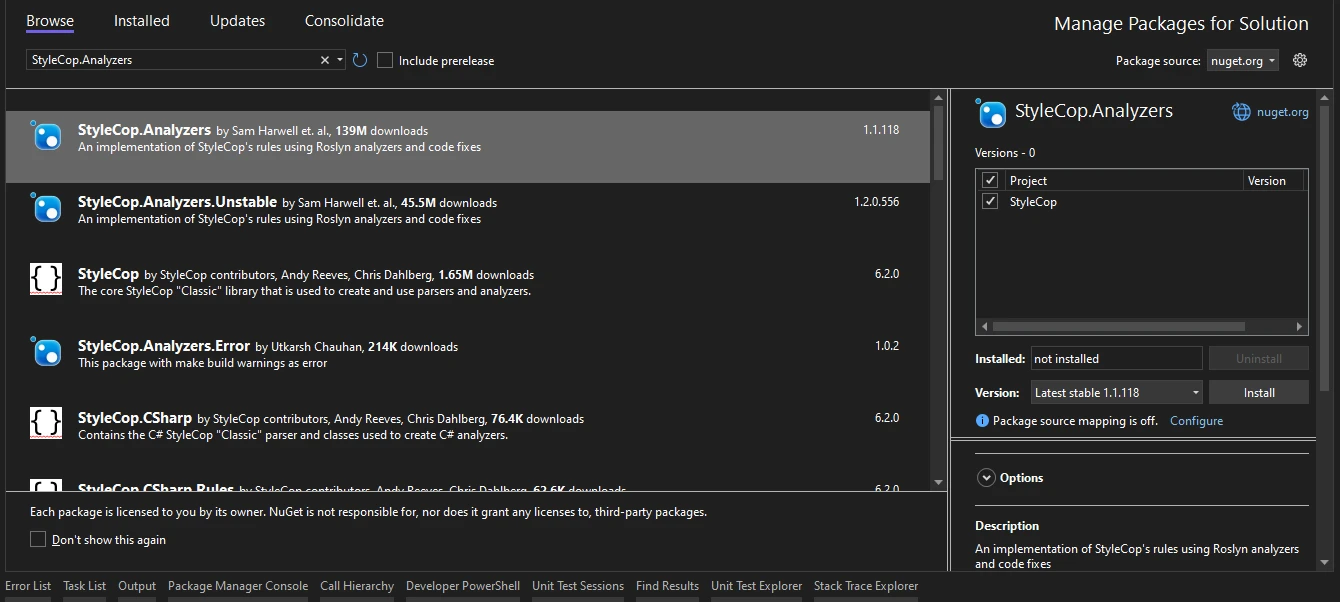
Alternativamente, para instalar StyleCop Analyzers utilizando la Consola del Administrador de Paquetes de NuGet, utilice el siguiente comando:
```shell
:InstallCmd Install-Package StyleCop.Analyzers
```
El comando anterior instalará StyleCop con todas sus dependencias. StyleCop ahora se puede usar con la declaración de namespace.
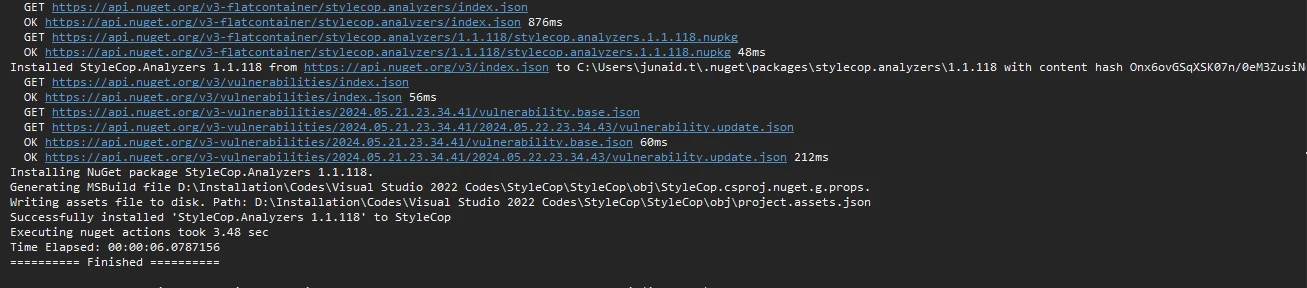
### Ejemplo de código básico
#### Ejemplo 1: Aplicación de los comentarios de la documentación
Una regla común aplicada por StyleCop es la obligación de comentarios de documentación en métodos y clases de acceso público. Esto asegura que su código esté bien documentado y sea comprensible.
```csharp
// Source code without StyleCop
public class Calculator
{
    public int Add(int a, int b)
    {
        return a + b;
    }
}
```
Sin usar StyleCop, el código carece de comentarios de documentación, lo que dificulta que otros desarrolladores entiendan el propósito del método **Add** y los parámetros **a** y **b**. Esto puede llevar a confusiones y disminuir la mantenibilidad del código fuente.
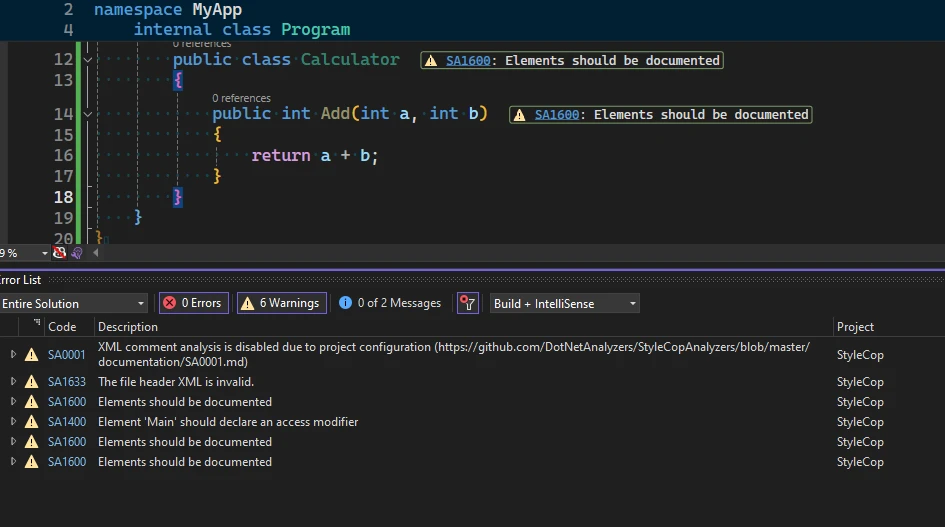
Si se violan las convenciones de codificación, StyleCop emite advertencias, como se ve en la captura de pantalla anterior dentro de Visual Studio.
#### Aplicación de las directrices de StyleCop
```csharp
// Code with StyleCop
/// <summary>
/// Provides methods for basic arithmetic operations.
/// </summary>
public class Calculator
{
/// <summary>
/// Adds two integers.
/// </summary>
/// <param name="a">The first integer.</param>
/// <param name="b">The second integer.</param>
/// <returns>The sum of the two integers.</returns>
public int Add(int a, int b)
{
return a + b;
}
}
```
Con StyleCop, se añaden comentarios de documentación al código, proporcionando información clara sobre la funcionalidad de la clase **Calculator** y su método **Add**. Los desarrolladores pueden fácilmente entender lo que hace el método, qué parámetros acepta y qué devuelve, mejorando la legibilidad y mantenibilidad del código.
#### Ejemplo 2: Convenciones de nomenclatura coherentes
```csharp
public class rectangle
{
public double length;
public double Width;
public void calculate_area()
{
// Calculate area
}
public void GetPerimeter()
{
// Calculate perimeter
}
}
```
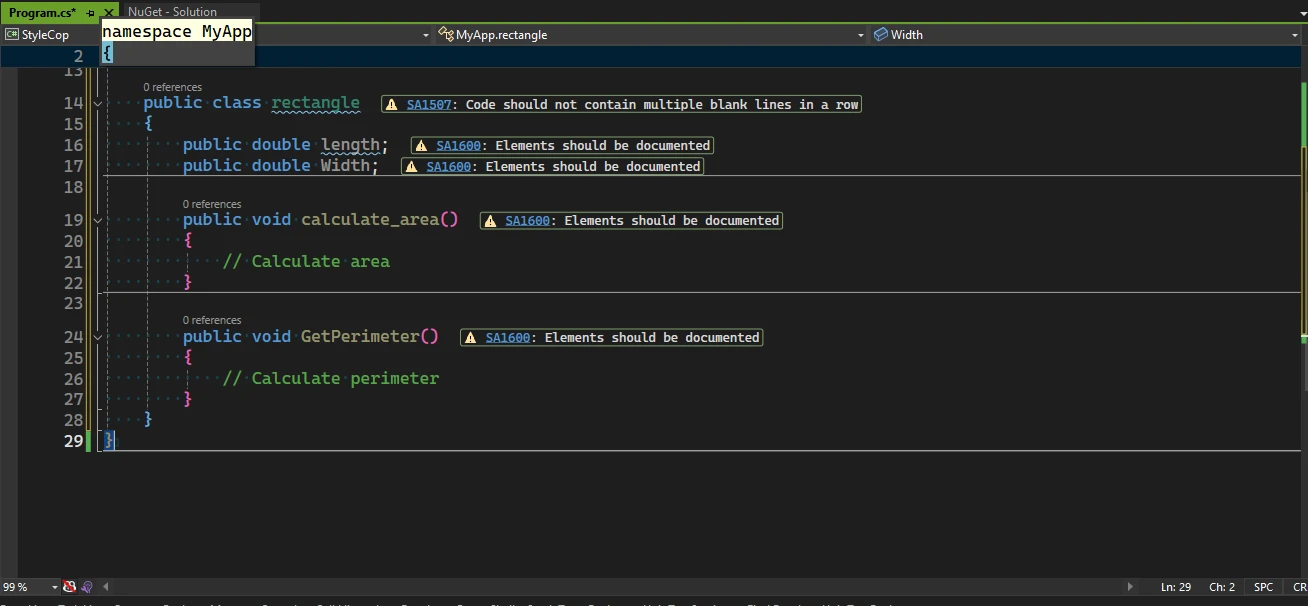
En este código fuente, el nombre de la clase (**rectangle**) y los nombres de las propiedades (**length**, **Width**) violan las reglas de estilo y consistencia. Los nombres de los métodos (**calculate_area**, **GetPerimeter**) tienen mayúsculas inconsistentes, lo que conduce a advertencias de convenciones de nomenclatura.
#### Captura de pantalla del código anterior
## Integración de IronPDF con las reglas de StyleCop
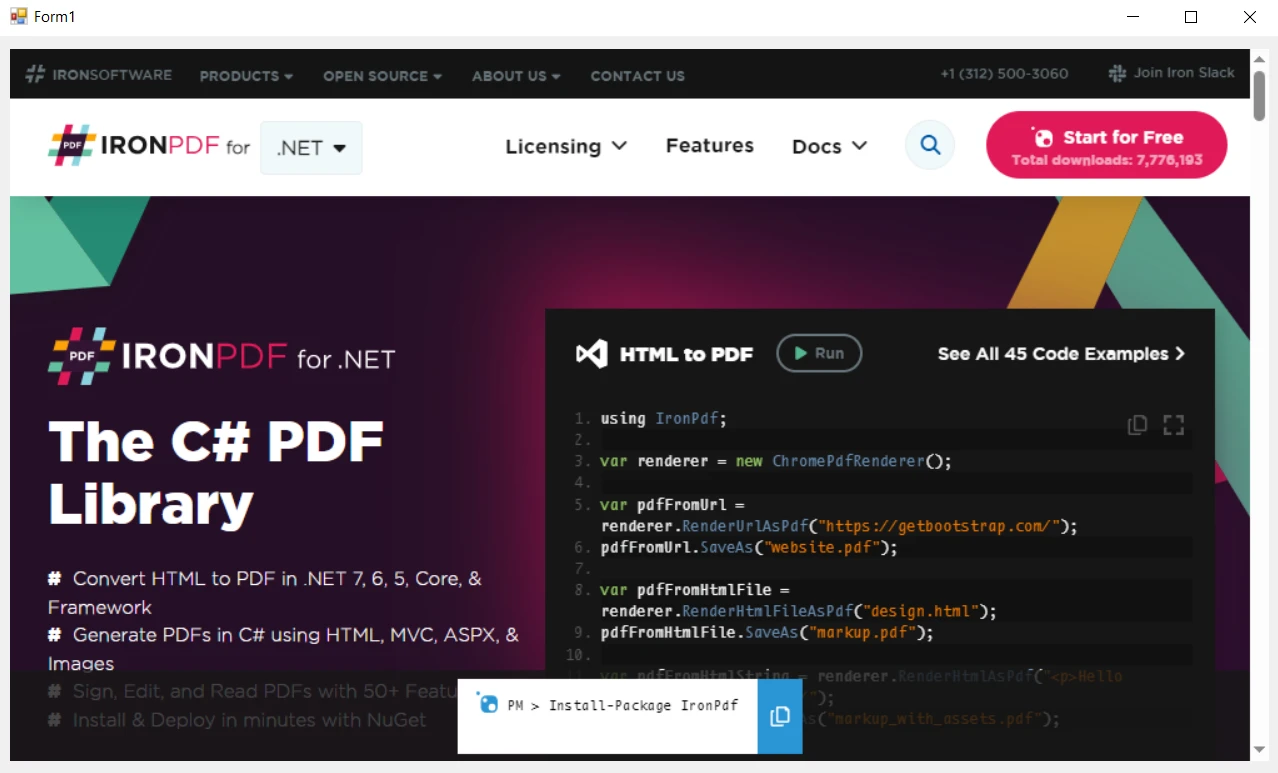
[Explore las Capacidades de IronPDF](https://ironpdf.com) es una librería PDF líder para C# que capacita a los desarrolladores para crear fácilmente, [editar Documentos PDF con IronPDF](/examples/pdf-compression/), y [manipular PDFs existentes](/examples/image-to-pdf/) dentro de sus proyectos .NET. Ya sea que necesite [convertir HTML a PDF](/examples/using-html-to-create-a-pdf/), generar archivos PDF dinámicos, o [extraer texto e imágenes de PDFs](/examples/csharp-replace-text-in-pdf/), IronPDF proporciona una API fácil de usar que simplifica el proceso. Utiliza un motor Chromium .NET para renderizar páginas HTML en archivos PDF, haciéndolo una herramienta esencial para ingenieros de software que trabajan con C#. La compatibilidad de IronPDF se extiende a lo largo de .NET Core (8, 7, 6, 5 y 3.1+), .NET Standard (2.0+), y .NET Framework (4.6.2+), y admite varios tipos de proyectos, incluidos web (Blazor y WebForms), escritorio (WPF y MAUI), y aplicaciones de consola. Cuando necesita que sus PDFs se parezcan al HTML, IronPDF ofrece precisión, facilidad de uso y velocidad.
### Ejemplo de código
#### Antes de aplicar las reglas de StyleCop
```csharp
using IronPdf;
namespace YourNamespace
{
public class PdfGenerator
{
public void generatePDF(string output)
{
// This code snippet does not adhere to StyleCop rules
var renderer = new ChromePdfRenderer();
PdfDocument pdf = renderer.RenderUrlAsPdf("<h1>Hello, World!</h1>");
pdf.SaveAs(output);
}
}
}
```
#### Descripción del código
Antes de aplicar las reglas de StyleCop, el código presenta varias violaciones: el nombre del método `generatePDF` no sigue la convención PascalCase, y el parámetro `output` carece de claridad en su nombramiento. Además, el uso de tipado implícito con `var` para la variable `pdf` reduce la legibilidad. Omitir el namespace para la instanciación de `HtmlToPdf` puede generar confusión, especialmente en proyectos más grandes.
#### Después de aplicar las reglas de StyleCop
```csharp
using IronPdf;
namespace YourNamespace
{
/// <summary>
/// Provides PDF generation functionalities.
/// </summary>
public class PdfGenerator
{
/// <summary>
/// Generates a PDF from a URL and saves it to the specified file path.
/// </summary>
/// <param name="outputFilePath">The file path where the PDF will be saved.</param>
public void GeneratePdf(string outputFilePath)
{
// This code snippet adheres to StyleCop rules
ChromePdfRenderer chromePdfRenderer = new ChromePdfRenderer();
PdfDocument pdfDocument = chromePdfRenderer.RenderUrlAsPdf("<h1>Hello, World!</h1>");
pdfDocument.SaveAs(outputFilePath);
}
}
}
```
#### Descripción del código
Después de aplicar las reglas de StyleCop, el método `GeneratePdf` sigue la convención PascalCase, mejorando la legibilidad. Ahora, el parámetro `outputFilePath` es más descriptivo, indicando su propósito. El uso de tipado explícito (`ChromePdfRenderer` y `PdfDocument`) mejora la claridad.
### Conclusión
Integrar StyleCop en sus proyectos .NET asegura estándares de codificación consistentes, agilizando el proceso de desarrollo con un archivo de conjunto de reglas personalizable. StyleCop se puede ejecutar a través de la línea de comandos para aplicar estos estándares directamente en el código fuente, mejorando la legibilidad y mantenibilidad. Además, usar bibliotecas como IronPDF proporciona capacidades de generación de PDF robustas, ideales para crear documentos dinámicos. IronPDF ofrece [una licencia de prueba gratuita para desarrolladores](trial-license) para aquellos satisfechos con su funcionalidad.
Cuando dos desarrolladores colaboran, inevitablemente discutirán el estilo de codificación. Cada desarrollador tiene una manera única de escribir el código fuente, haciendo que la consistencia sea más importante que elegir el estilo perfecto. Herramientas como StyleCop ayudan a aplicar reglas de consistencia de codificación mediante un archivo de conjunto de reglas, asegurando uniformidad a través del equipo o proyecto. La consistencia mejora la legibilidad y facilita la depuración y el mantenimiento, creando un entorno de desarrollo más eficiente.
¿Qué es StyleCop?
StyleCop es una herramienta de análisis estático de código abierto para C# que verifica el código para adherirse a un conjunto predefinido de reglas de estilo y consistencia o reglas de formato. Se integra perfectamente con Visual Studio y puede incorporarse en los procesos de construcción para garantizar la consistencia del código en los equipos de desarrollo. Para configurar StyleCop, puede usar un archivo XML o un archivo JSON para definir reglas individuales a las que su proyecto debe adherirse. Este encabezado de archivo XML le permite personalizar el análisis modificando las reglas específicas según las necesidades de su proyecto. StyleCop admite una amplia gama de configuraciones, convirtiéndolo en una herramienta flexible para mantener la calidad y consistencia del código.
Características principales de StyleCop C#
Legibilidad mejorada: StyleCop analiza el código fuente de C# y aplica estándares de codificación consistentes, lo que facilita que los desarrolladores lean y comprendan el código de los demás.
Mantenibilidad: al identificar violaciones de las mejores prácticas y convenciones de codificación, StyleCop garantiza que su código sea más fácil de mantener y menos propenso a errores.
Automatización: habilitar las comprobaciones automatizadas de StyleCop garantiza que las reglas de estilo se apliquen de manera consistente, eliminando la subjetividad y los errores de las revisiones manuales.
Cómo configurar StyleCop en proyectos .NET
Comience abriendo su proyecto en Visual Studio. Luego, vaya al Explorador de Soluciones, haga clic derecho en su proyecto y elija "Administrar Paquetes de NuGet". En el Administrador de Paquetes de NuGet, busque "StyleCop.Analyzers" e instálelo.
Alternativamente, para instalar StyleCop Analyzers utilizando la Consola del Administrador de Paquetes de NuGet, utilice el siguiente comando:
PM > Install-Package StyleCop.Analyzers
Install-Package StyleCop.Analyzers
El comando anterior instalará StyleCop con todas sus dependencias. StyleCop ahora se puede usar con la declaración de namespace.
Ejemplo de código básico
Ejemplo 1: Aplicación de los comentarios de la documentación
Una regla común aplicada por StyleCop es la obligación de comentarios de documentación en métodos y clases de acceso público. Esto asegura que su código esté bien documentado y sea comprensible.
// Source code without StyleCoppublic class Calculator{ public intAdd(int a, int b) { return a + b; }}
// Source code without StyleCop
public class Calculator
{
    public int Add(int a, int b)
    {
        return a + b;
    }
}
Public Class Calculator Public Function Add(a AsInteger, b AsInteger) AsInteger Return a + b End FunctionEnd Class
Public Class Calculator
    Public Function Add(a As Integer, b As Integer) As Integer
        Return a + b
    End Function
End Class
Sin usar StyleCop, el código carece de comentarios de documentación, lo que dificulta que otros desarrolladores entiendan el propósito del método Add y los parámetros a y b. Esto puede llevar a confusiones y disminuir la mantenibilidad del código fuente.
Si se violan las convenciones de codificación, StyleCop emite advertencias, como se ve en la captura de pantalla anterior dentro de Visual Studio.
Aplicación de las directrices de StyleCop
// Code with StyleCop/// <summary>/// Provides methods for basic arithmetic operations./// </summary>public class Calculator{ /// <summary> /// Adds two integers. /// </summary> /// <param name="a">The first integer.</param> /// <param name="b">The second integer.</param> /// <returns>The sum of the two integers.</returns> public intAdd(int a, int b) { return a + b; }}
// Code with StyleCop
/// <summary>
/// Provides methods for basic arithmetic operations.
/// </summary>
public class Calculator
{
    /// <summary>
    /// Adds two integers.
    /// </summary>
    /// <param name="a">The first integer.</param>
    /// <param name="b">The second integer.</param>
    /// <returns>The sum of the two integers.</returns>
    public int Add(int a, int b)
    {
        return a + b;
    }
}
' Code with StyleCop''' <summary>''' Provides methods for basic arithmetic operations.''' </summary>Public Class Calculator ''' <summary> ''' Adds two integers. ''' </summary> ''' <param name="a">The first integer.</param> ''' <param name="b">The second integer.</param> ''' <returns>The sum of the two integers.</returns> Public Function Add(a AsInteger, b AsInteger) AsInteger Return a + b End FunctionEnd Class
' Code with StyleCop
''' <summary>
''' Provides methods for basic arithmetic operations.
''' </summary>
Public Class Calculator
    ''' <summary>
    ''' Adds two integers.
    ''' </summary>
    ''' <param name="a">The first integer.</param>
    ''' <param name="b">The second integer.</param>
    ''' <returns>The sum of the two integers.</returns>
    Public Function Add(a As Integer, b As Integer) As Integer
        Return a + b
    End Function
End Class
Con StyleCop, se añaden comentarios de documentación al código, proporcionando información clara sobre la funcionalidad de la clase Calculator y su método Add. Los desarrolladores pueden fácilmente entender lo que hace el método, qué parámetros acepta y qué devuelve, mejorando la legibilidad y mantenibilidad del código.
Ejemplo 2: Convenciones de nomenclatura coherentes
public class rectangle{ public double length; public doubleWidth; public void calculate_area() { // Calculate area } public voidGetPerimeter() { // Calculate perimeter }}
public class rectangle
{
    public double length;
    public double Width;

    public void calculate_area()
    {
        // Calculate area
    }

    public void GetPerimeter()
    {
        // Calculate perimeter
    }
}
Public Class Rectangle PublicLengthAsDouble PublicWidthAsDouble Public Sub CalculateArea() ' Calculate area End Sub Public Sub GetPerimeter() ' Calculate perimeter End SubEnd Class
Public Class Rectangle
    Public Length As Double
    Public Width As Double

    Public Sub CalculateArea()
        ' Calculate area
    End Sub

    Public Sub GetPerimeter()
        ' Calculate perimeter
    End Sub
End Class
En este código fuente, el nombre de la clase (rectangle) y los nombres de las propiedades (length, Width) violan las reglas de estilo y consistencia. Los nombres de los métodos (calculate_area, GetPerimeter) tienen mayúsculas inconsistentes, lo que conduce a advertencias de convenciones de nomenclatura.
Captura de pantalla del código anterior
Integración de IronPDF con las reglas de StyleCop
Explore las Capacidades de IronPDF es una librería PDF líder para C# que capacita a los desarrolladores para crear fácilmente, editar Documentos PDF con IronPDF, y manipular PDFs existentes dentro de sus proyectos .NET. Ya sea que necesite convertir HTML a PDF, generar archivos PDF dinámicos, o extraer texto e imágenes de PDFs, IronPDF proporciona una API fácil de usar que simplifica el proceso. Utiliza un motor Chromium .NET para renderizar páginas HTML en archivos PDF, haciéndolo una herramienta esencial para ingenieros de software que trabajan con C#. La compatibilidad de IronPDF se extiende a lo largo de .NET Core (8, 7, 6, 5 y 3.1+), .NET Standard (2.0+), y .NET Framework (4.6.2+), y admite varios tipos de proyectos, incluidos web (Blazor y WebForms), escritorio (WPF y MAUI), y aplicaciones de consola. Cuando necesita que sus PDFs se parezcan al HTML, IronPDF ofrece precisión, facilidad de uso y velocidad.
Ejemplo de código
Antes de aplicar las reglas de StyleCop
using IronPdf;namespace YourNamespace{ public class PdfGenerator { public void generatePDF(string output) { // This code snippet does not adhere to StyleCop rules var renderer = new ChromePdfRenderer(); PdfDocument pdf = renderer.RenderUrlAsPdf("<h1>Hello, World!</h1>"); pdf.SaveAs(output); } }}
using IronPdf;

namespace YourNamespace
{
    public class PdfGenerator
    {
        public void generatePDF(string output)
        {
            // This code snippet does not adhere to StyleCop rules
            var renderer = new ChromePdfRenderer();
            PdfDocument pdf = renderer.RenderUrlAsPdf("<h1>Hello, World!</h1>");
            pdf.SaveAs(output);
        }
    }
}
ImportsIronPdfNamespaceYourNamespace Public Class PdfGenerator Public Sub generatePDF(ByVal output AsString) ' This code snippet does not adhere to StyleCop rules Dim renderer = New ChromePdfRenderer() Dim pdf AsPdfDocument = renderer.RenderUrlAsPdf("<h1>Hello, World!</h1>") pdf.SaveAs(output) End Sub End ClassEndNamespace
Imports IronPdf

Namespace YourNamespace
	Public Class PdfGenerator
		Public Sub generatePDF(ByVal output As String)
			' This code snippet does not adhere to StyleCop rules
			Dim renderer = New ChromePdfRenderer()
			Dim pdf As PdfDocument = renderer.RenderUrlAsPdf("<h1>Hello, World!</h1>")
			pdf.SaveAs(output)
		End Sub
	End Class
End Namespace
Descripción del código
Antes de aplicar las reglas de StyleCop, el código presenta varias violaciones: el nombre del método generatePDF no sigue la convención PascalCase, y el parámetro output carece de claridad en su nombramiento. Además, el uso de tipado implícito con var para la variable pdf reduce la legibilidad. Omitir el namespace para la instanciación de HtmlToPdf puede generar confusión, especialmente en proyectos más grandes.
Después de aplicar las reglas de StyleCop
using IronPdf;namespace YourNamespace{ /// <summary> /// Provides PDF generation functionalities. /// </summary> public class PdfGenerator { /// <summary> /// Generates a PDF from a URL and saves it to the specified file path. /// </summary> /// <param name="outputFilePath">The file path where the PDF will be saved.</param> public voidGeneratePdf(string outputFilePath) { // This code snippet adheres to StyleCop rules ChromePdfRenderer chromePdfRenderer = new ChromePdfRenderer(); PdfDocument pdfDocument = chromePdfRenderer.RenderUrlAsPdf("<h1>Hello, World!</h1>"); pdfDocument.SaveAs(outputFilePath); } }}
using IronPdf;

namespace YourNamespace
{
    /// <summary>
    /// Provides PDF generation functionalities.
    /// </summary>
    public class PdfGenerator
    {
        /// <summary>
        /// Generates a PDF from a URL and saves it to the specified file path.
        /// </summary>
        /// <param name="outputFilePath">The file path where the PDF will be saved.</param>
        public void GeneratePdf(string outputFilePath)
        {
            // This code snippet adheres to StyleCop rules
            ChromePdfRenderer chromePdfRenderer = new ChromePdfRenderer();
            PdfDocument pdfDocument = chromePdfRenderer.RenderUrlAsPdf("<h1>Hello, World!</h1>");
            pdfDocument.SaveAs(outputFilePath);
        }
    }
}
ImportsIronPdfNamespaceYourNamespace ''' <summary> ''' Provides PDF generation functionalities. ''' </summary> Public Class PdfGenerator ''' <summary> ''' Generates a PDF from a URL and saves it to the specified file path. ''' </summary> ''' <param name="outputFilePath">The file path where the PDF will be saved.</param> Public Sub GeneratePdf(ByVal outputFilePath AsString) ' This code snippet adheres to StyleCop rules Dim chromePdfRenderer As New ChromePdfRenderer() Dim pdfDocument AsPdfDocument = chromePdfRenderer.RenderUrlAsPdf("<h1>Hello, World!</h1>") pdfDocument.SaveAs(outputFilePath) End Sub End ClassEndNamespace
Imports IronPdf

Namespace YourNamespace
	''' <summary>
	''' Provides PDF generation functionalities.
	''' </summary>
	Public Class PdfGenerator
		''' <summary>
		''' Generates a PDF from a URL and saves it to the specified file path.
		''' </summary>
		''' <param name="outputFilePath">The file path where the PDF will be saved.</param>
		Public Sub GeneratePdf(ByVal outputFilePath As String)
			' This code snippet adheres to StyleCop rules
			Dim chromePdfRenderer As New ChromePdfRenderer()
			Dim pdfDocument As PdfDocument = chromePdfRenderer.RenderUrlAsPdf("<h1>Hello, World!</h1>")
			pdfDocument.SaveAs(outputFilePath)
		End Sub
	End Class
End Namespace
Descripción del código
Después de aplicar las reglas de StyleCop, el método GeneratePdf sigue la convención PascalCase, mejorando la legibilidad. Ahora, el parámetro outputFilePath es más descriptivo, indicando su propósito. El uso de tipado explícito (ChromePdfRenderer y PdfDocument) mejora la claridad.
Conclusión
Integrar StyleCop en sus proyectos .NET asegura estándares de codificación consistentes, agilizando el proceso de desarrollo con un archivo de conjunto de reglas personalizable. StyleCop se puede ejecutar a través de la línea de comandos para aplicar estos estándares directamente en el código fuente, mejorando la legibilidad y mantenibilidad. Además, usar bibliotecas como IronPDF proporciona capacidades de generación de PDF robustas, ideales para crear documentos dinámicos. IronPDF ofrece una licencia de prueba gratuita para desarrolladores para aquellos satisfechos con su funcionalidad.
Jacob Mellor es Director de Tecnología de Iron Software y un ingeniero visionario pionero en la tecnología C# PDF. Como desarrollador original de la base de código principal de Iron Software, ha dado forma a la arquitectura de productos de la empresa desde su creación, transformándola, junto con el director ejecutivo Cameron Rimington, en una empresa de más de 50 personas que presta servicios a la NASA, Tesla y organismos gubernamentales de todo el mundo.