En el entorno robusto del desarrollo .NET, el manejo sin problemas de las tareas de generación y conversión de documentos es esencial para una multitud de aplicaciones. Ya sea generando informes dinámicos, creando facturas o convirtiendo documentos entre formatos, tener las herramientas adecuadas a su disposición puede agilizar significativamente su flujo de trabajo y aumentar la productividad.
En este artículo, exploraremos cómo Xceed.Document.NET e IronPDF - dos bibliotecas poderosas para la manipulación de documentos en .NET - pueden simplificar estos procesos y capacitar a los desarrolladores para crear aplicaciones versátiles y eficientes.
Introducción a Xceed.Document.NET
Xceed.Document.NET, desarrollado por Xceed, es un ensamblado .NET integral que facilita la creación, manipulación y formato de documentos de Word (archivos DOCX) de manera programática sin la necesidad de instalar Microsoft Word o Office InterOp. Desarrollado con simplicidad y versatilidad en mente, Xceed.Document.NET proporciona a los desarrolladores un API intuitivo para integrar sin problemas capacidades de generación de documentos en sus aplicaciones .NET.
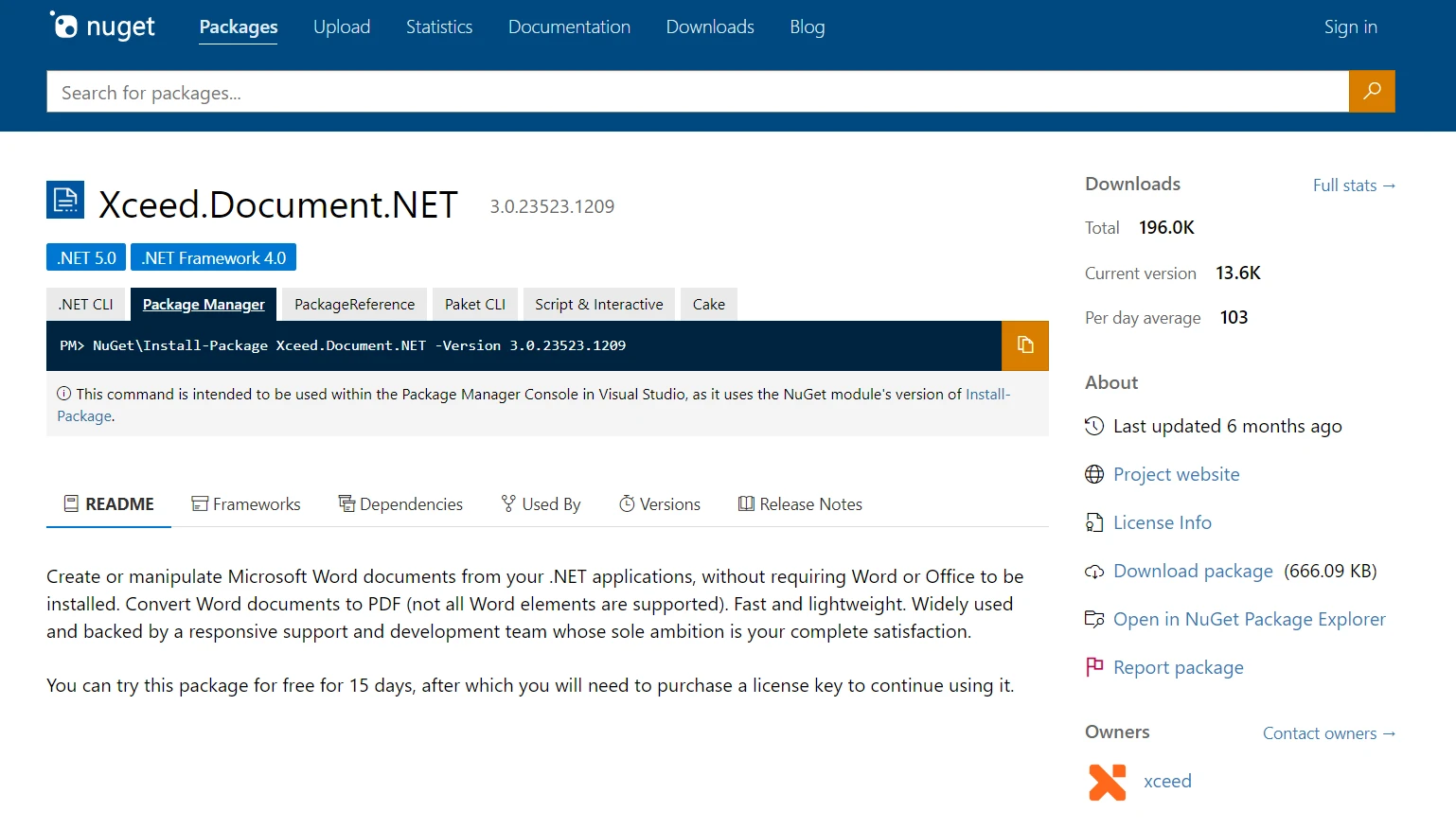
Aprovechando el poder de Xceed.Document.NET, los desarrolladores pueden manipular sin esfuerzo varios elementos de documentos de Word, incluyendo párrafos, tablas, imágenes y estilos, para crear documentos ricos y personalizados adaptados a sus requisitos específicos. También puede establecer las propiedades del documento, firmar digitalmente y garantizar firmas digitales para la integridad del documento de MS Word.
Xceed ofrece varias bibliotecas adaptadas para diferentes formatos de documentos como documentos de texto, varios formatos de texto, documento .NET a PDF.
Características de Xceed.Document.NET
- Potente manipulación de documentos: Xceed.Document .NET permite a los desarrolladores crear, modificar y formatear documentos de Word con facilidad, gracias a su completo conjunto de características y su API intuitiva.
- Gestión de contenido versátil: con Xceed.Document .NET, los desarrolladores pueden manipular varios elementos del documento, como párrafos, tablas, imágenes y estilos para crear documentos dinámicos y visualmente atractivos.
- Opciones de formato enriquecidas: Xceed.Document .NET ofrece amplias opciones de formato, lo que permite a los desarrolladores personalizar la apariencia de sus documentos aplicando fuentes, colores, alineaciones y más.
- Compatibilidad entre plataformas: Xceed.Document .NET es compatible con varias plataformas .NET , incluidas Windows Forms, WPF, ASP.NET y .NET Core, lo que lo hace adecuado para una amplia gama de aplicaciones.
- Integración perfecta: Xceed.Document .NET se integra perfectamente con otras bibliotecas y marcos .NET , lo que permite a los desarrolladores mejorar sus flujos de trabajo relacionados con documentos con facilidad.
Crear Proyecto de Visual Studio en C#
-
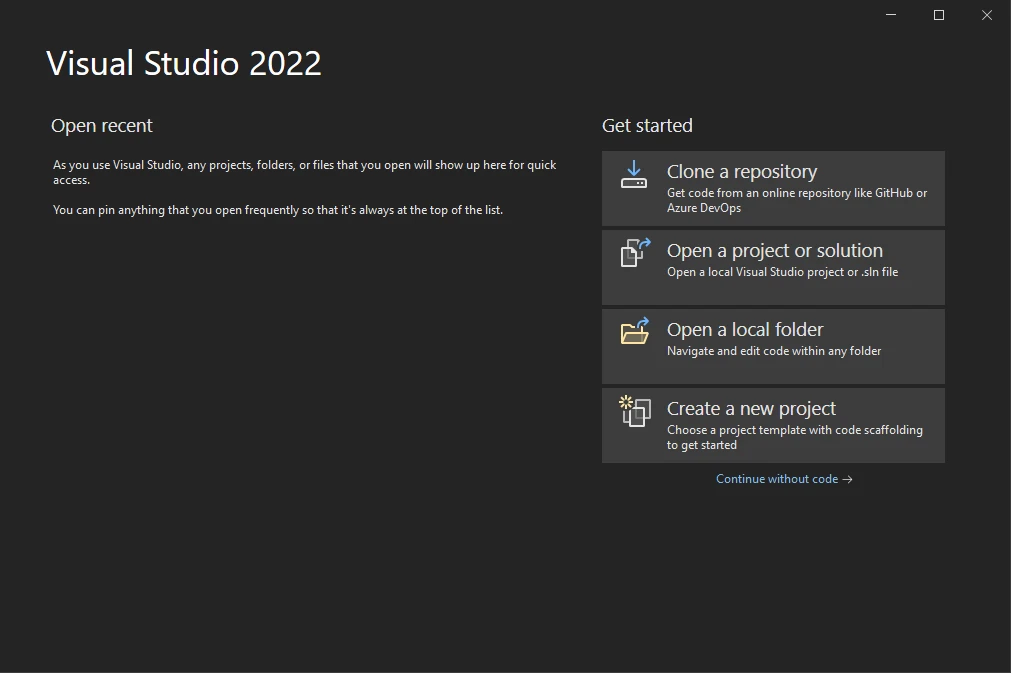
Abrir Visual Studio y crear un nuevo proyecto de C#.
-
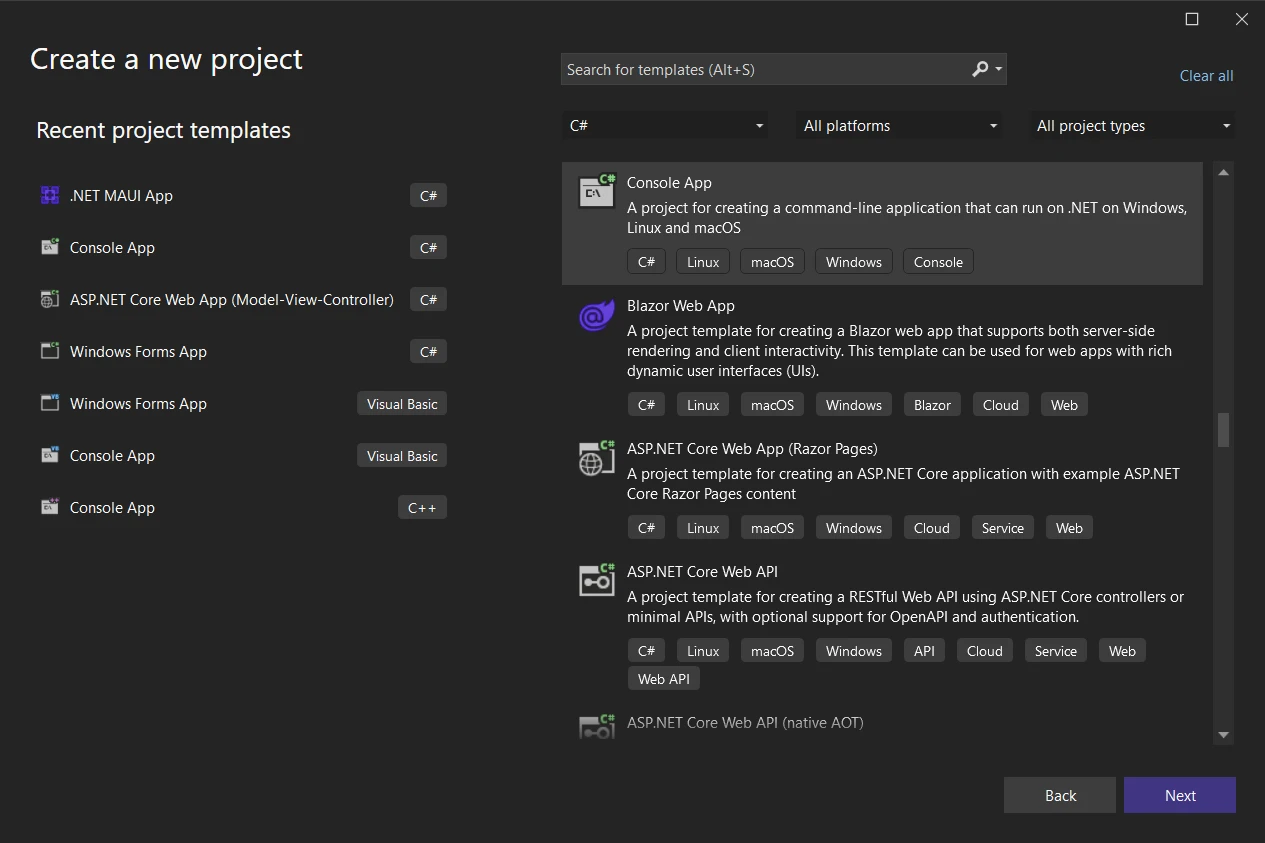
Elige la plantilla de proyecto adecuada según tus necesidades (por ejemplo, Aplicación de Consola, Aplicación Windows Forms).
-
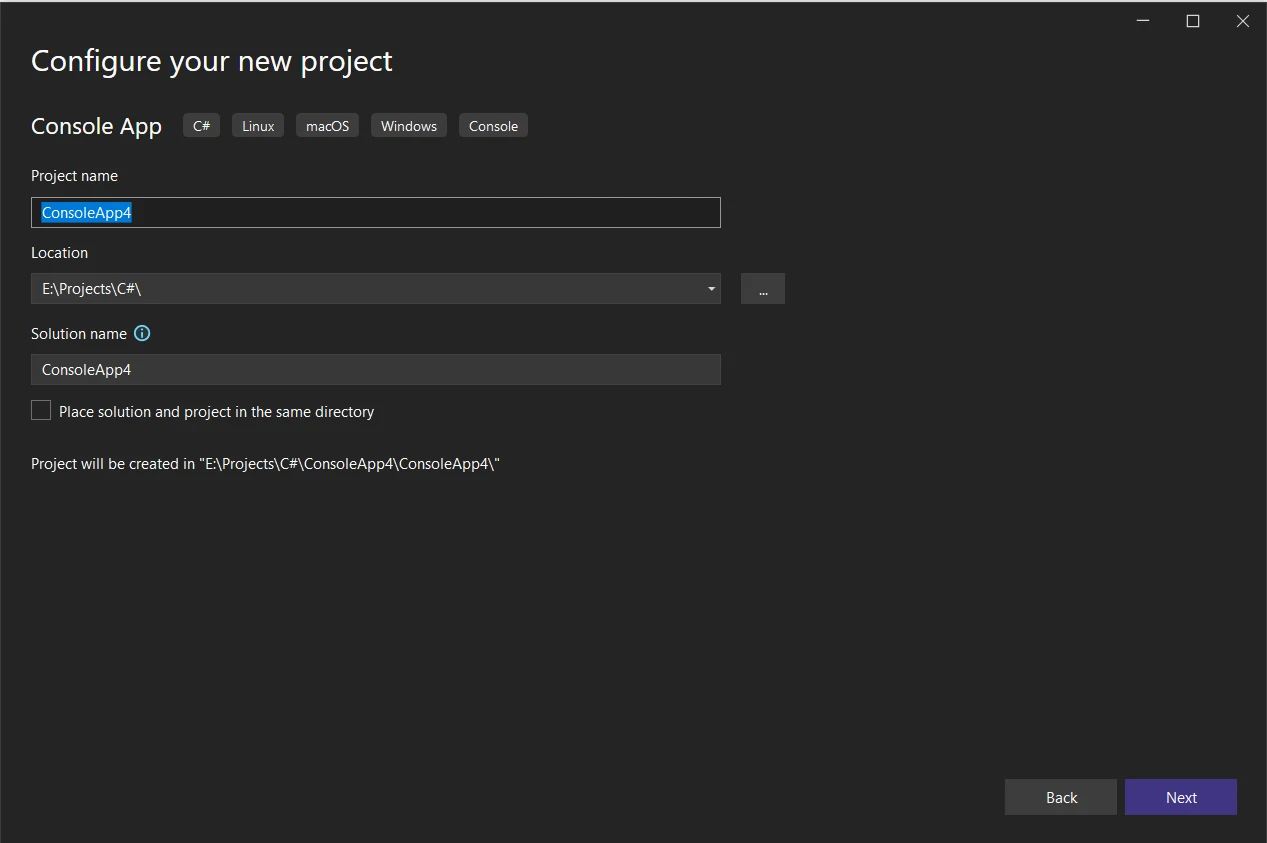
Especifica el nombre y la ubicación del proyecto, luego haz clic en "Siguiente".
-
Desde Información Adicional, selecciona el último Marco .NET. Haz clic en "Crear" para crear el proyecto.
Proceso de instalación
La instalación de Xceed.Document.NET es un proceso sencillo:
-
Abrir Visual Studio o su IDE preferido.
-
Crear un nuevo proyecto .NET o abrir uno existente.
-
Navegar a la Consola del Administrador de Paquetes NuGet.
-
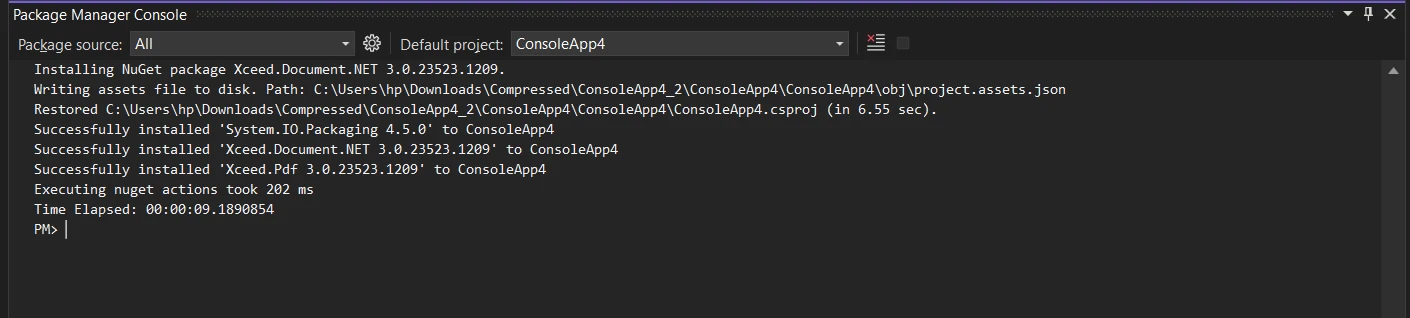
Ejecutar el siguiente comando para instalar el paquete Xceed.Document.NET:
Install-Package Xceed.Document.NET
Install-Package Xceed.Document.NET
PowerShell
-
Una vez que la instalación esté completa, puede comenzar a usar Xceed.Document.NET en su proyecto.
Nota: Es esencial entender que Xceed.Words.NET es necesario para crear formatos DOCX, utilizando Xceed.Document.NET para incorporar elementos en ellos.
Install-Package Xceed.Words.NET
Install-Package Xceed.Words.NET
PowerShell
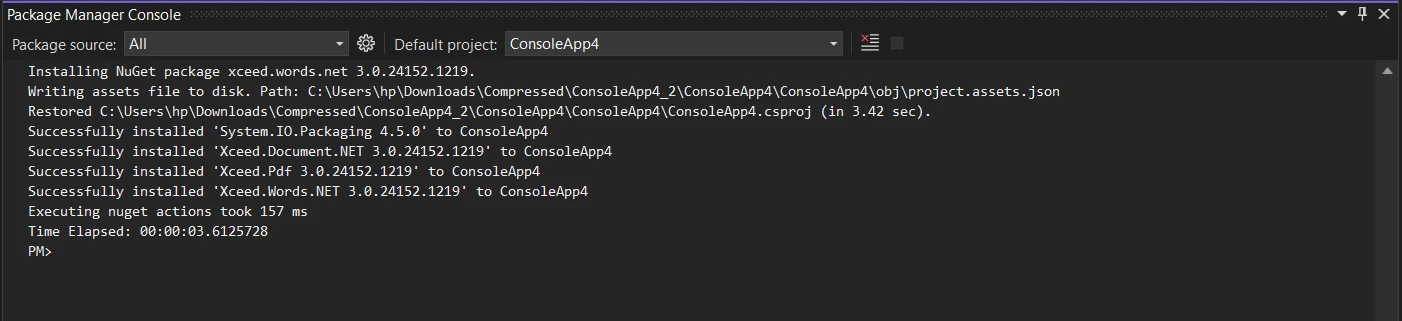
Creación de archivos DOCX con Xceed.Document.NET
Usar Xceed.Document.NET para crear archivos DOCX es simple e intuitivo. Aquí hay un ejemplo básico de cómo crear un documento de Word de forma programática:
using Xceed.Words.NET;
using System;

class Program
{
    static void Main(string[] args)
    {
        // Create a new document
        using (DocX document = DocX.Create("SampleDocument.docx"))
        {
            // Add a paragraph with text, styling it with font size, boldness and centered alignment
            document.InsertParagraph("Hello, World!")
                    .FontSize(12)     // Set the font size
                    .Bold()           // Make the text bold
                    .Alignment = Alignment.center; // Center align the text

            // Save the document
            document.Save();
            Console.WriteLine("Document created successfully!");
        }
    }
}
using Xceed.Words.NET;
using System;

class Program
{
    static void Main(string[] args)
    {
        // Create a new document
        using (DocX document = DocX.Create("SampleDocument.docx"))
        {
            // Add a paragraph with text, styling it with font size, boldness and centered alignment
            document.InsertParagraph("Hello, World!")
                    .FontSize(12)     // Set the font size
                    .Bold()           // Make the text bold
                    .Alignment = Alignment.center; // Center align the text

            // Save the document
            document.Save();
            Console.WriteLine("Document created successfully!");
        }
    }
}
Imports Xceed.Words.NET
Imports System
Friend Class Program
Shared Sub Main(ByVal args() As String)
' Create a new document
Using document As DocX = DocX.Create("SampleDocument.docx")
' Add a paragraph with text, styling it with font size, boldness and centered alignment
document.InsertParagraph("Hello, World!").FontSize(12).Bold().Alignment = Alignment.center ' Center align the text
' Save the document
document.Save()
Console.WriteLine("Document created successfully!")
End Using
End Sub
End Class
Imports Xceed.Words.NET
Imports System

Friend Class Program
	Shared Sub Main(ByVal args() As String)
		' Create a new document
		Using document As DocX = DocX.Create("SampleDocument.docx")
			' Add a paragraph with text, styling it with font size, boldness and centered alignment
			document.InsertParagraph("Hello, World!").FontSize(12).Bold().Alignment = Alignment.center ' Center align the text

			' Save the document
			document.Save()
			Console.WriteLine("Document created successfully!")
		End Using
	End Sub
End Class
Aquí está la salida del código anterior. El archivo DOCX creado se puede abrir utilizando la aplicación Microsoft Office Word.
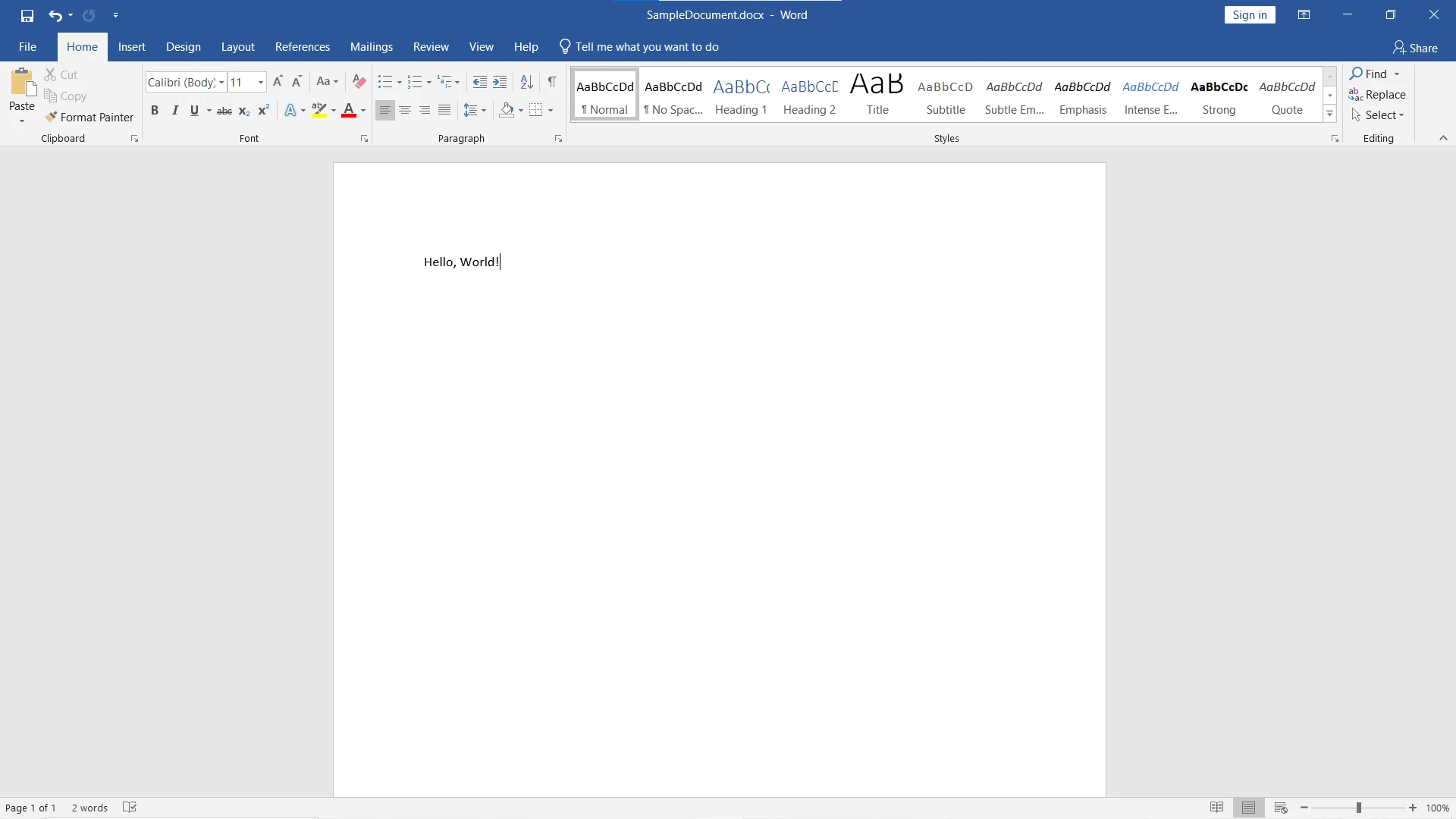
Integración de Xceed.Document.NET con IronPDF
Integrar Xceed.Document.NET con IronPDF permite a los desarrolladores convertir sin problemas documentos de Word (archivos DOCX) generados usando Xceed.Document.NET en formato PDF.
IronPDF
IronPDF es una biblioteca .NET robusta diseñada para simplificar tareas de generación, manipulación y renderización de PDF dentro de aplicaciones .NET. Con su conjunto completo de características y API intuitivo, IronPDF capacita a los desarrolladores para crear, modificar y renderizar archivos PDF de forma programática con facilidad sin la necesidad de instalar Adobe Acrobat Reader.
IronPDF es una gran herramienta para convertir páginas web, URL y HTML en PDFs que se asemejan perfectamente a la fuente original. Esto es ideal para generar PDFs de contenido en línea como informes y facturas. ¡Si necesitas crear un PDF a partir de una página web, IronPDF es la solución para ti!
using IronPdf;
using System;

class Program
{
    static void Main(string[] args)
    {
        var renderer = new ChromePdfRenderer();

        // 1. Convert HTML String to PDF
        var htmlContent = "<h1>Hello, IronPDF!</h1><p>This is a PDF from an HTML string.</p>";
        var pdfFromHtmlString = renderer.RenderHtmlAsPdf(htmlContent);
        pdfFromHtmlString.SaveAs("HTMLStringToPDF.pdf");
        Console.WriteLine("HTML string converted to PDF successfully.");

        // 2. Convert HTML File to PDF
        var htmlFilePath = "path_to_your_html_file.html"; // Specify the path to your HTML file
        var pdfFromHtmlFile = renderer.RenderHtmlFileAsPdf(htmlFilePath);
        pdfFromHtmlFile.SaveAs("HTMLFileToPDF.pdf");
        Console.WriteLine("HTML file converted to PDF successfully.");

        // 3. Convert URL to PDF
        var url = "http://ironpdf.com"; // Specify the URL
        var pdfFromUrl = renderer.RenderUrlAsPdf(url);
        pdfFromUrl.SaveAs("URLToPDF.pdf");
        Console.WriteLine("URL converted to PDF successfully.");
    }
}
using IronPdf;
using System;

class Program
{
    static void Main(string[] args)
    {
        var renderer = new ChromePdfRenderer();

        // 1. Convert HTML String to PDF
        var htmlContent = "<h1>Hello, IronPDF!</h1><p>This is a PDF from an HTML string.</p>";
        var pdfFromHtmlString = renderer.RenderHtmlAsPdf(htmlContent);
        pdfFromHtmlString.SaveAs("HTMLStringToPDF.pdf");
        Console.WriteLine("HTML string converted to PDF successfully.");

        // 2. Convert HTML File to PDF
        var htmlFilePath = "path_to_your_html_file.html"; // Specify the path to your HTML file
        var pdfFromHtmlFile = renderer.RenderHtmlFileAsPdf(htmlFilePath);
        pdfFromHtmlFile.SaveAs("HTMLFileToPDF.pdf");
        Console.WriteLine("HTML file converted to PDF successfully.");

        // 3. Convert URL to PDF
        var url = "http://ironpdf.com"; // Specify the URL
        var pdfFromUrl = renderer.RenderUrlAsPdf(url);
        pdfFromUrl.SaveAs("URLToPDF.pdf");
        Console.WriteLine("URL converted to PDF successfully.");
    }
}
Imports IronPdf
Imports System
Friend Class Program
Shared Sub Main(ByVal args() As String)
Dim renderer = New ChromePdfRenderer()
' 1. Convert HTML String to PDF
Dim htmlContent = "<h1>Hello, IronPDF!</h1><p>This is a PDF from an HTML string.</p>"
Dim pdfFromHtmlString = renderer.RenderHtmlAsPdf(htmlContent)
pdfFromHtmlString.SaveAs("HTMLStringToPDF.pdf")
Console.WriteLine("HTML string converted to PDF successfully.")
' 2. Convert HTML File to PDF
Dim htmlFilePath = "path_to_your_html_file.html" ' Specify the path to your HTML file
Dim pdfFromHtmlFile = renderer.RenderHtmlFileAsPdf(htmlFilePath)
pdfFromHtmlFile.SaveAs("HTMLFileToPDF.pdf")
Console.WriteLine("HTML file converted to PDF successfully.")
' 3. Convert URL to PDF
Dim url = "http://ironpdf.com" ' Specify the URL
Dim pdfFromUrl = renderer.RenderUrlAsPdf(url)
pdfFromUrl.SaveAs("URLToPDF.pdf")
Console.WriteLine("URL converted to PDF successfully.")
End Sub
End Class
Imports IronPdf
Imports System

Friend Class Program
	Shared Sub Main(ByVal args() As String)
		Dim renderer = New ChromePdfRenderer()

		' 1. Convert HTML String to PDF
		Dim htmlContent = "<h1>Hello, IronPDF!</h1><p>This is a PDF from an HTML string.</p>"
		Dim pdfFromHtmlString = renderer.RenderHtmlAsPdf(htmlContent)
		pdfFromHtmlString.SaveAs("HTMLStringToPDF.pdf")
		Console.WriteLine("HTML string converted to PDF successfully.")

		' 2. Convert HTML File to PDF
		Dim htmlFilePath = "path_to_your_html_file.html" ' Specify the path to your HTML file
		Dim pdfFromHtmlFile = renderer.RenderHtmlFileAsPdf(htmlFilePath)
		pdfFromHtmlFile.SaveAs("HTMLFileToPDF.pdf")
		Console.WriteLine("HTML file converted to PDF successfully.")

		' 3. Convert URL to PDF
		Dim url = "http://ironpdf.com" ' Specify the URL
		Dim pdfFromUrl = renderer.RenderUrlAsPdf(url)
		pdfFromUrl.SaveAs("URLToPDF.pdf")
		Console.WriteLine("URL converted to PDF successfully.")
	End Sub
End Class
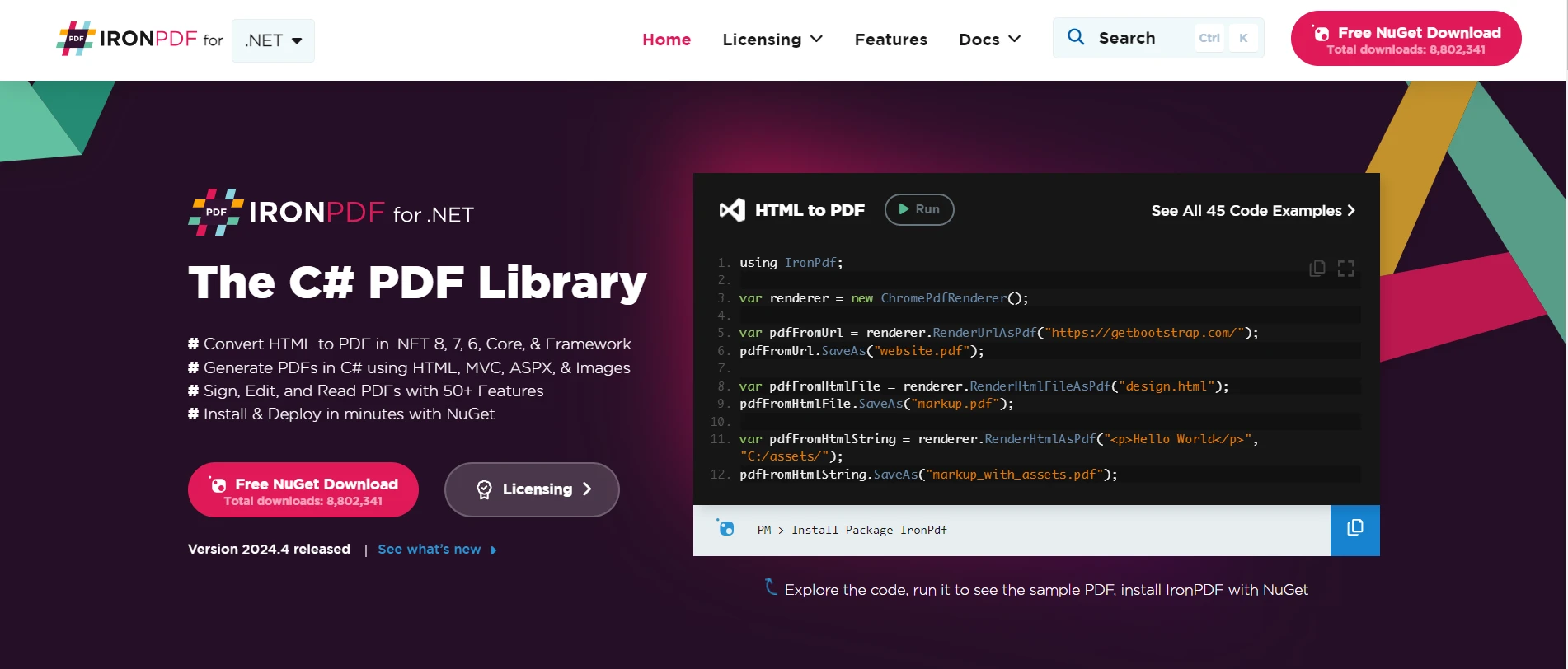
Características destacadas de IronPDF:
- Generación de PDF: IronPDF permite a los desarrolladores crear documentos PDF a partir de diversas fuentes, como HTML, imágenes y datos XML. Esto habilita la generación de PDFs dinámicos y personalizables adaptados a requisitos específicos.
- Manipulación de PDF: con IronPDF, los desarrolladores pueden manipular documentos PDF existentes agregando, modificando o eliminando páginas, texto, imágenes, anotaciones y otros elementos. Esta flexibilidad permite a los desarrolladores editar y personalizar documentos PDF según sus necesidades.
- Conversión de PDF: IronPDF facilita la conversión de HTML, documentos de Word (DOCX), imágenes y otros formatos de archivos al formato PDF. Esto proporciona interoperabilidad sin problemas entre diferentes tipos de documentos y simplifica el proceso de trabajo con PDFs en aplicaciones .NET.
- Representación de PDF: IronPDF ofrece capacidades de representación de PDF de alta calidad, lo que permite a los desarrolladores mostrar documentos PDF dentro de sus aplicaciones .NET utilizando componentes de visualización personalizables. Esto permite a los usuarios ver el contenido PDF directamente dentro de la interfaz de la aplicación.
- Compatibilidad entre plataformas: IronPDF ofrece un amplio soporte .NET . Es compatible con varias plataformas .NET, incluyendo Windows Forms, WPF, ASP.NET, y .NET Core. Está disponible para Windows, Linux y macOS. Esto asegura que los desarrolladores puedan usar IronPDF en una amplia gama de aplicaciones, independientemente de la plataforma de destino.
- Optimización del rendimiento: IronPDF está optimizado para el rendimiento y la escalabilidad, lo que garantiza una generación y representación de PDF rápida y eficiente incluso para documentos grandes. Esto permite a los desarrolladores crear aplicaciones receptivas y de alto rendimiento que manejan eficazmente tareas relacionadas con PDF.
- Opciones de licencia: IronPDF ofrece opciones de licencia flexibles para adaptarse a las necesidades de desarrolladores individuales, equipos pequeños y aplicaciones de nivel empresarial. Esto proporciona soluciones rentables para tareas relacionadas con PDF, permitiendo a los desarrolladores elegir el modelo de licenciamiento que mejor se adapte a sus requisitos.
Pasos para integrar Xceed.Document.NET con la librería IronPDF
Aquí están los pasos para integrar Xceed.Document.NET con IronPDF:
1. Instalar IronPDF
-
Abrir Visual Studio o su IDE preferido.
-
Navegar a la Consola del Administrador de Paquetes NuGet.
-
Ejecutar el siguiente comando para instalar el paquete IronPDF:
Install-Package IronPdf
Install-Package IronPdf
PowerShell
-
Alternativamente, puedes instalarlo desde el Administrador de Paquetes NuGet para Soluciones.
-
Seleccionar IronPDF de la pestaña de búsqueda de NuGet y hacer clic en instalar.
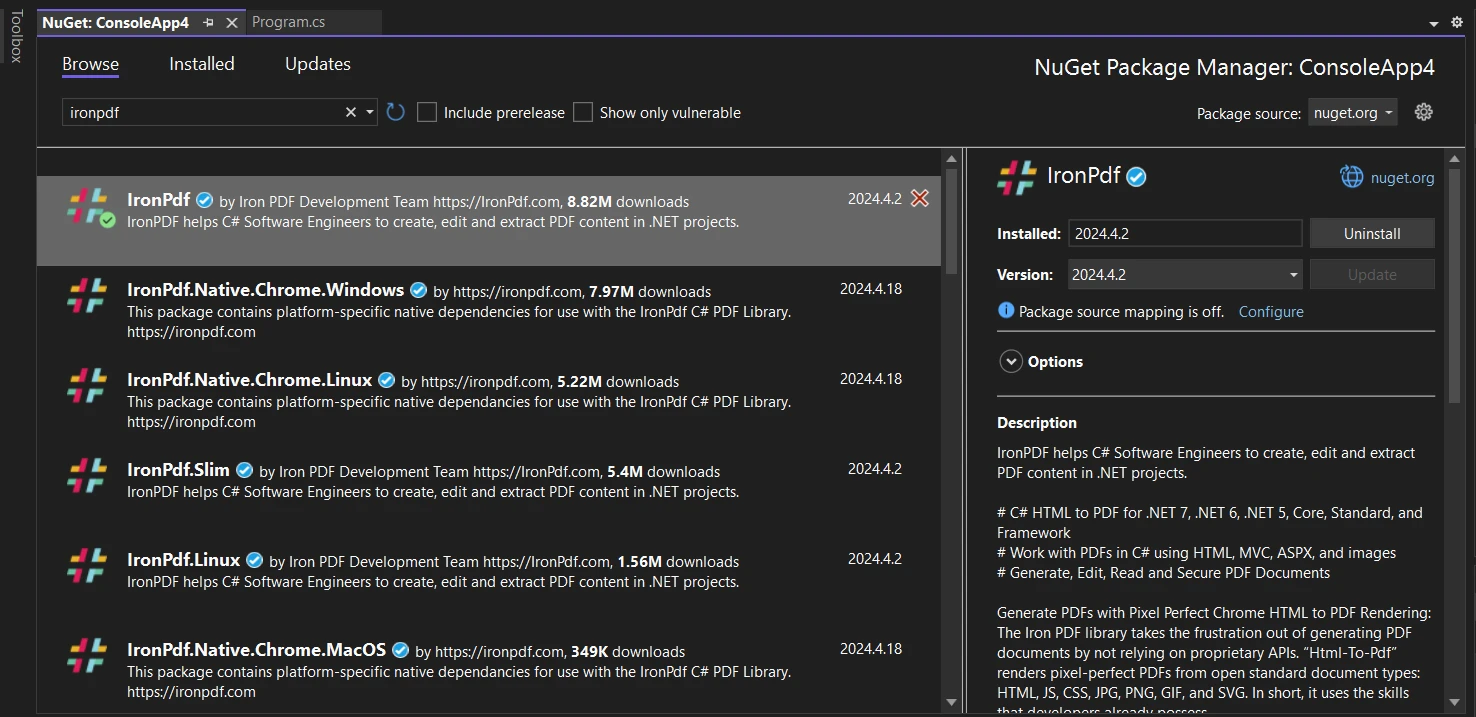
2. Implementar la lógica para convertir DOCX a PDF utilizando IronPDF
- Una vez que ambos, Xceed.Document.NET y IronPDF estén instalados, puede implementar la lógica para convertir DOCX a PDF usando IronPDF.
- Instancie la clase
DocxToPdfRenderer de IronPDF.
- Utilice el método
RenderDocxAsPdf para renderizar el archivo DOCX generado usando Xceed.Document.NET como un documento PDF.
- Guardar el documento PDF usando IronPDF.
Aquí hay un fragmento de código de ejemplo que demuestra cómo convertir un archivo DOCX a PDF usando IronPDF:
using IronPdf;
using System;

class Program
{
    static void Main(string[] args)
    {
        // Instantiate the DOCX to PDF renderer
        DocxToPdfRenderer renderer = new DocxToPdfRenderer();

        // Render from a DOCX file to produce a PDF document
        PdfDocument pdf = renderer.RenderDocxAsPdf("SampleDocument.docx");

        // Save the PDF document
        pdf.SaveAs("SampleDocument.pdf");
        Console.WriteLine("DOCX file converted to PDF successfully.");
    }
}
using IronPdf;
using System;

class Program
{
    static void Main(string[] args)
    {
        // Instantiate the DOCX to PDF renderer
        DocxToPdfRenderer renderer = new DocxToPdfRenderer();

        // Render from a DOCX file to produce a PDF document
        PdfDocument pdf = renderer.RenderDocxAsPdf("SampleDocument.docx");

        // Save the PDF document
        pdf.SaveAs("SampleDocument.pdf");
        Console.WriteLine("DOCX file converted to PDF successfully.");
    }
}
Imports IronPdf
Imports System
Module Program
Sub Main(args As String())
' Instantiate the DOCX to PDF renderer
Dim renderer As New DocxToPdfRenderer()
' Render from a DOCX file to produce a PDF document
Dim pdf As PdfDocument = renderer.RenderDocxAsPdf("SampleDocument.docx")
' Save the PDF document
pdf.SaveAs("SampleDocument.pdf")
Console.WriteLine("DOCX file converted to PDF successfully.")
End Sub
End Module
Imports IronPdf
Imports System

Module Program
    Sub Main(args As String())
        ' Instantiate the DOCX to PDF renderer
        Dim renderer As New DocxToPdfRenderer()

        ' Render from a DOCX file to produce a PDF document
        Dim pdf As PdfDocument = renderer.RenderDocxAsPdf("SampleDocument.docx")

        ' Save the PDF document
        pdf.SaveAs("SampleDocument.pdf")
        Console.WriteLine("DOCX file converted to PDF successfully.")
    End Sub
End Module
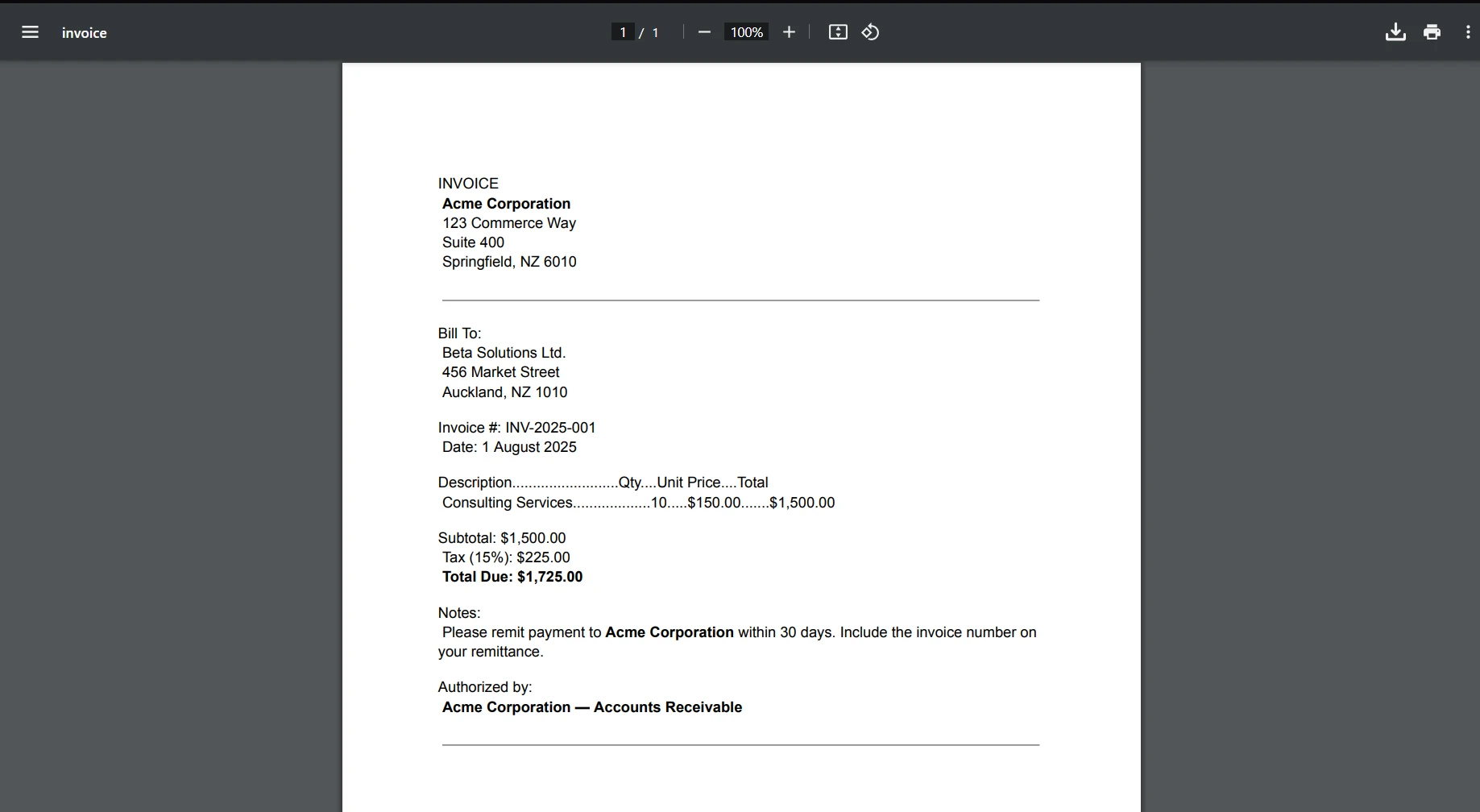
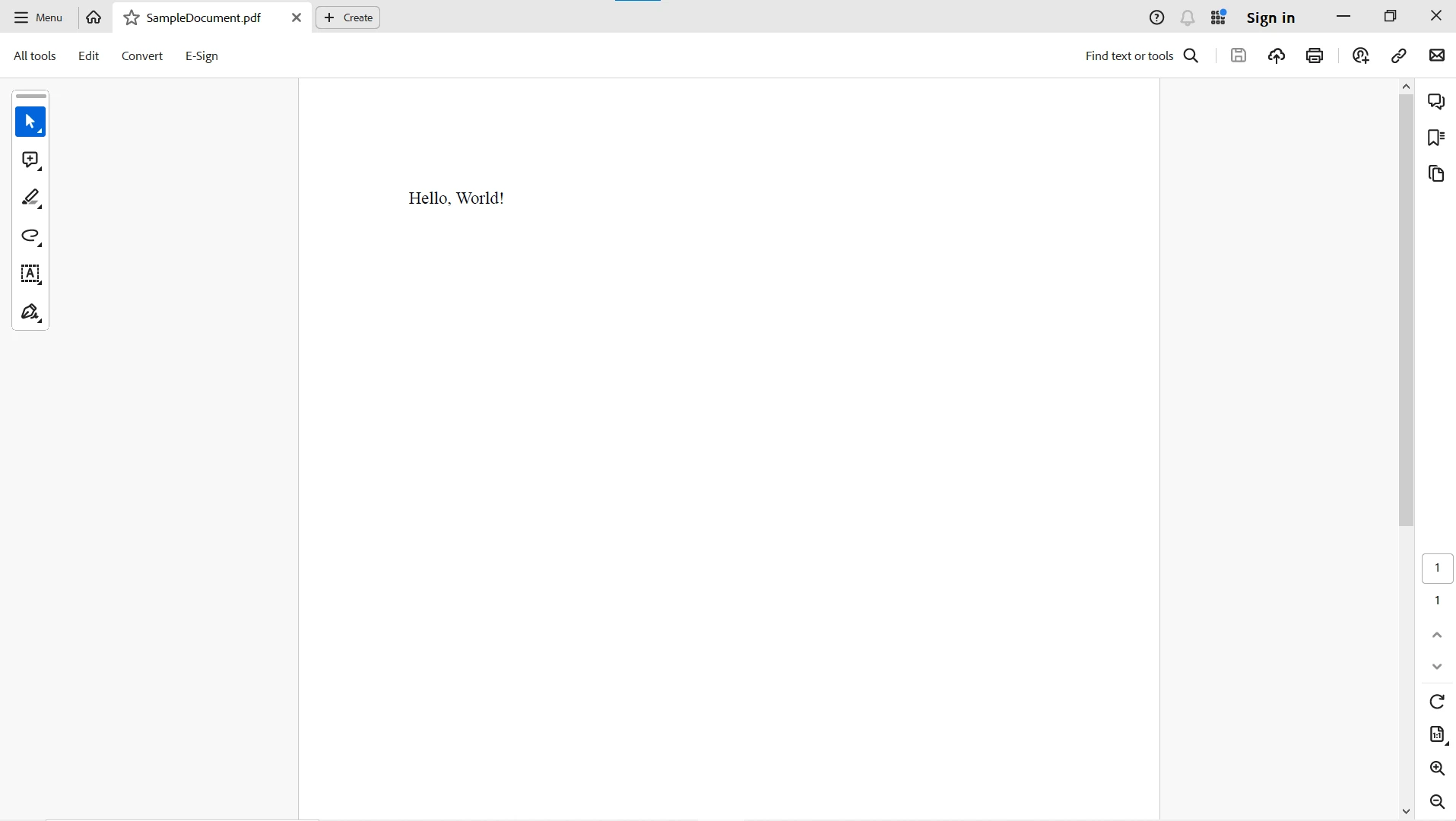
El archivo DOCX se convierte sin esfuerzo a un archivo PDF para preservar el texto formateado como estaba en el documento original.
Salida: Conversión de DOCX a PDF
Para más información sobre IronPDF y sus capacidades, por favor visite esta página de documentación de IronPDF. Explore el ejemplo listo para usar de HTML a PDF y comience con la manipulación de PDF en su consola de .NET Framework o aplicaciones web.
Conclusión
En conclusión, Xceed.Document.NET e IronPDF ofrecen poderosas soluciones para la generación y conversión de documentos en aplicaciones .NET. Al aprovechar las capacidades de Xceed.Document.NET, los desarrolladores pueden crear documentos de Word dinámicos y visualmente atractivos con facilidad. Con la integración sin problemas con IronPDF, los desarrolladores pueden convertir estos documentos de Word a formato PDF sin esfuerzo, mejorando la versatilidad y accesibilidad de sus aplicaciones. Ya sea que esté creando informes, generando facturas o convirtiendo documentos entre formatos, Xceed.Document.NET e IronPDF capacitan a los desarrolladores para agilizar flujos de trabajo relacionados con documentos y entregar resultados excepcionales en sus aplicaciones .NET.
IronPDF de Iron Software ofrece una prueba gratuita y es necesario para la implementación en proyectos comerciales. Descargue la biblioteca desde la página de descarga de IronPDF y pruébela.