using IronPdf;

// Disable local disk access or cross-origin requests
Installation.EnableWebSecurity = true;

// Instantiate Renderer
var renderer = new ChromePdfRenderer();

// Create a PDF from a HTML string using C#
var pdf = renderer.RenderHtmlAsPdf("<h1>Hello World</h1>");

// Export to a file or Stream
pdf.SaveAs("output.pdf");

// Advanced Example with HTML Assets
// Load external html assets: Images, CSS and JavaScript.
// An optional BasePath 'C:\site\assets\' is set as the file location to load assets from
var myAdvancedPdf = renderer.RenderHtmlAsPdf("<img src='icons/iron.png'>", @"C:\site\assets\");
myAdvancedPdf.SaveAs("html-with-assets.pdf");
using IronPdf;// Disable local disk access or cross-origin requestsInstallation.EnableWebSecurity = true;// Instantiate Renderervar renderer = new ChromePdfRenderer();// Create a PDF from a HTML string using C#var pdf = renderer.RenderHtmlAsPdf("<h1>Hello World</h1>");// Export to a file or Streampdf.SaveAs("output.pdf");// Advanced Example with HTML Assets// Load external html assets: Images, CSS and JavaScript.// An optional BasePath 'C:\site\assets\' is set as the file location to load assets fromvar myAdvancedPdf = renderer.RenderHtmlAsPdf("<img src='icons/iron.png'>", @"C:\site\assets\");myAdvancedPdf.SaveAs("html-with-assets.pdf");
PM >Install-Package IronPdf
Install-Package IronPdf
USANDO IRONPDF
Cómo Comprimir Archivos PDF en una Biblioteca .NET
Poder crear documentos PDF a partir de varios tipos de archivos es una excelente manera de hacer una versión compilada y fácil de leer de su archivo original. Por ejemplo, puede que tenga su portafolio mostrado como una página web, pero quiera convertirlo en un archivo PDF fácil de presentar para compartir con posibles empleadores. O quizás tenga gráficos llenos de datos esenciales que quiera mostrar como parte de un informe, con un convertidor de PDF, podría convertir su informe y gráficos a PDF y combinarlos en un documento fácilmente compartible.
Hoy, veremos cómo convertir archivos al formato PDF usando C#. También estaremos mirando [**IronPDF**](https://ironpdf.com), una poderosa biblioteca .NET para PDF, y cómo puede usarse para la conversión de PDF. Ya sea que esté manejando HTML, imágenes u otros documentos, IronPDF proporciona una forma sencilla y eficiente de crear y manipular archivos PDF de manera programática.
## ¿Por qué utilizar IronPDF para la conversión de PDF?
IronPDF es una biblioteca estándar en la industria que simplifica la creación y conversión de PDF. Admite la conversión de una amplia gama de formatos a PDF, como HTML, imágenes e incluso otros PDF. Las características clave son:
* **Representación de PDF de alta fidelidad:** gracias a su fuerte soporte para los estándares web modernos, IronPDF es capaz de producir consistentemente PDF de alta calidad a partir de contenido web como HTML y páginas web.
* **Generación de PDF:** Genere documentos PDF a partir de formatos de archivo como imágenes, HTML, DOCX y Markdown.
* **Funciones de seguridad:** con IronPDF, gestionar la seguridad de PDF, como el cifrado de PDF y la firma digital, es muy sencillo.
* **Integración fácil:** IronPDF se integra perfectamente con ASP.NET y aplicaciones de escritorio.
## Instalar IronPDF
Antes de que podamos comenzar a convertir archivos a documentos PDF usando IronPDF, debemos instalarlo y configurarlo dentro de nuestro proyecto. Afortunadamente, gracias a la fácil implementación de IronPDF, esto se puede hacer en muy poco tiempo. Para instalar la biblioteca IronPDF, puede ejecutar el siguiente comando en la Consola del Administrador de Paquetes de NuGet:
```shell
:ProductInstall
```
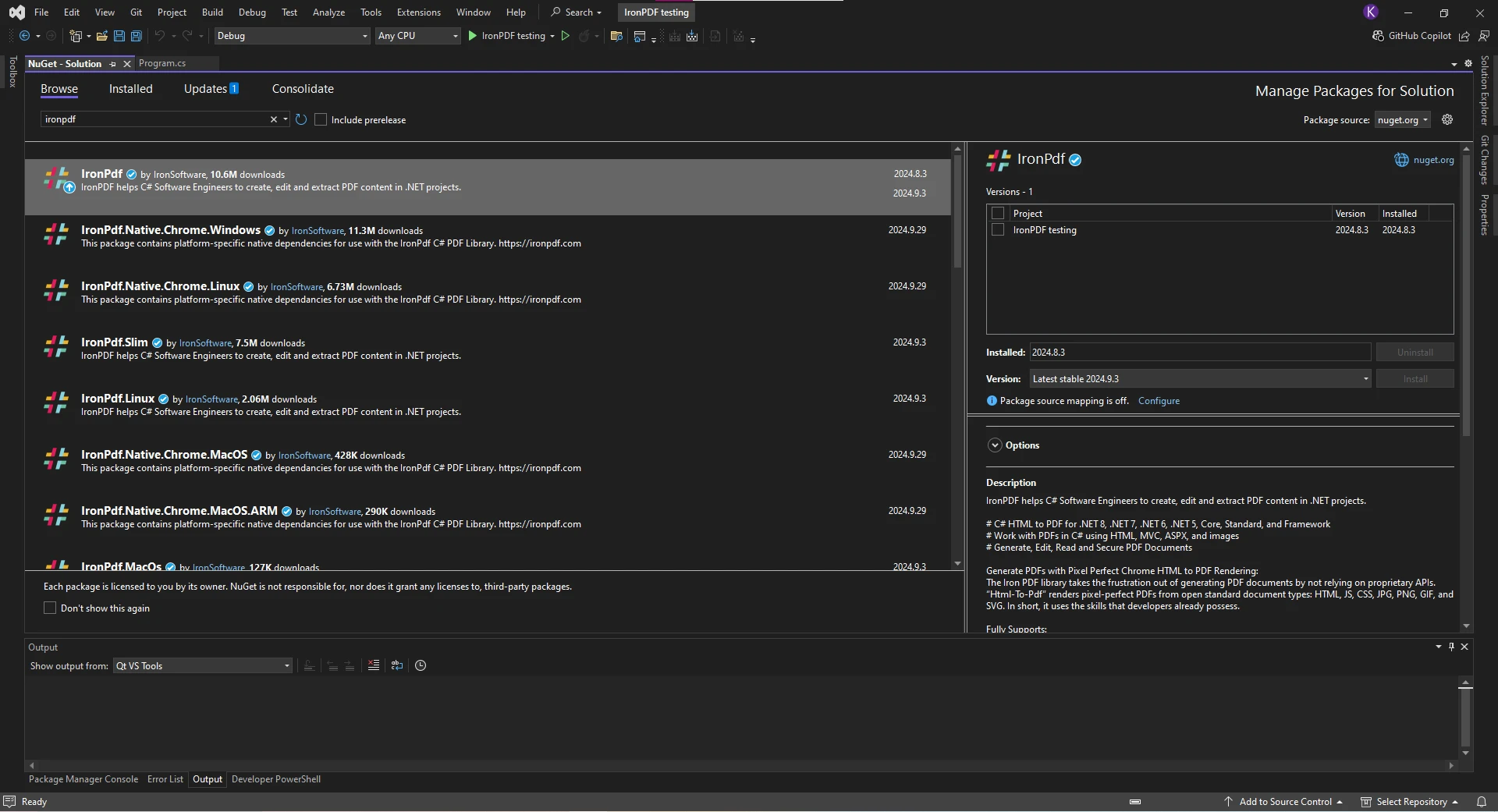
Alternativamente, puede instalarlo usando Administrar Paquetes NuGet para Solución:
## Conversión de PDF en C#
Ahora, podemos ver cómo IronPDF aborda la conversión de PDF desde diferentes tipos de archivo. Como mencionamos antes, IronPDF es una poderosa biblioteca de PDF capaz de manejar la conversión de PDF desde muchos tipos de archivo. Esto lo hace extremadamente versátil en situaciones donde necesita convertir más que solo HTML a PDF, que es en lo que muchas otras bibliotecas de PDF se centran. Con IronPDF, puede hacer todas sus conversiones en un solo lugar, sin la necesidad de instalar bibliotecas adicionales.
### Convertir cadena HTML a PDF
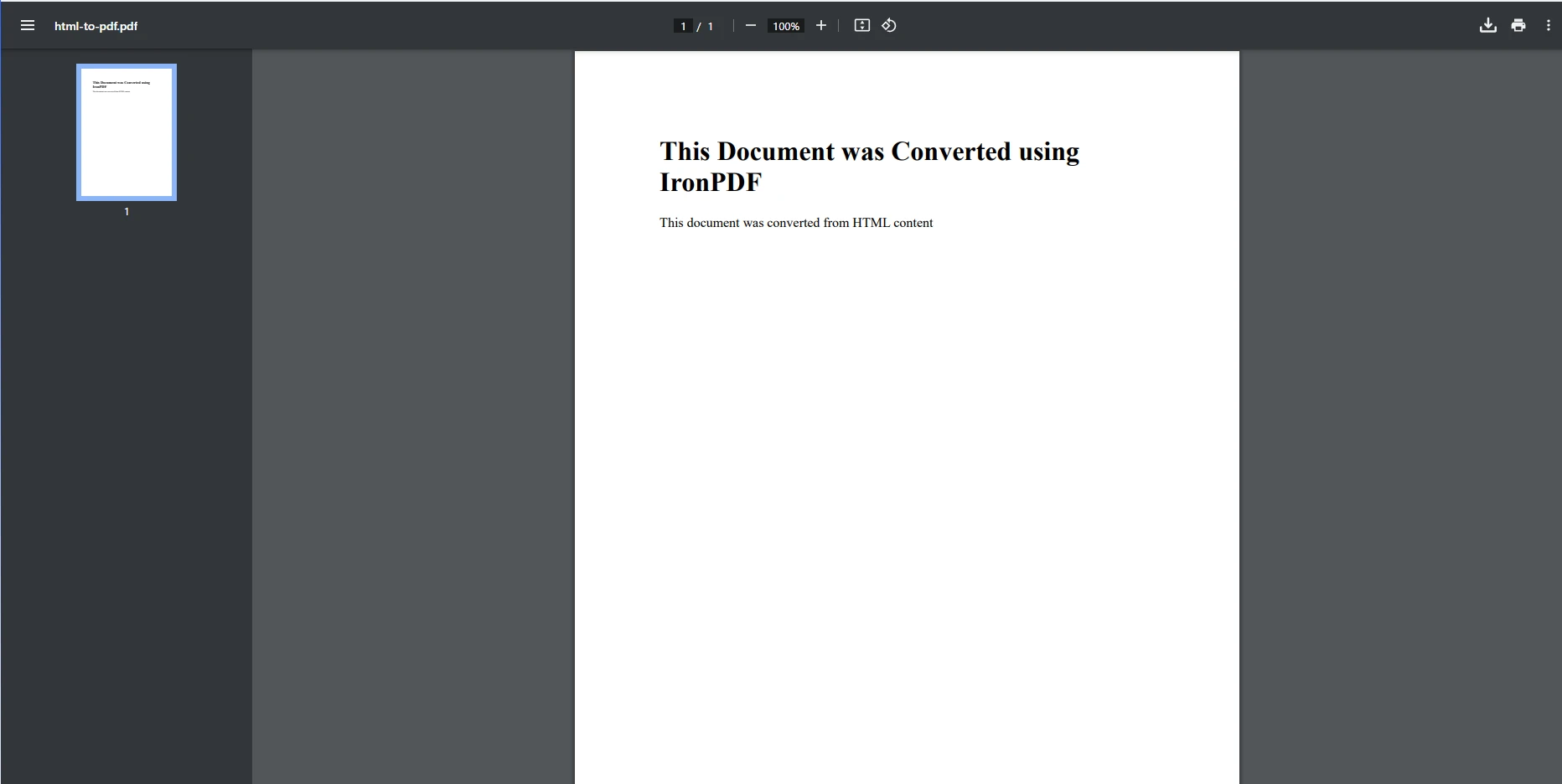
Uno de los escenarios más comunes para la conversión de PDF es convertir contenido HTML en un documento PDF, e IronPDF hace que este proceso sea muy sencillo. Para este ejemplo, converteremos una cadena HTML, pero el proceso es similar para un documento HTML, una página HTML o archivos HTML. Primero, crearemos una instancia de **ChromePdfRenderer** para renderizar nuestro contenido HTML como un PDF. Luego, usando **`RenderHtmlAsPdf()`**, podemos convertir el contenido HTML a PDF, antes de finalmente guardar el PDF.
```csharp
using IronPdf;

class Program
{
    static void Main(string[] args)
    {
        // HTML content to convert
        string html = "<h1>This Document was Converted using IronPDF</h1><p>This document was converted from HTML content</p>";

        // Instantiate the ChromePdfRenderer class
        ChromePdfRenderer renderer = new ChromePdfRenderer();

        // Render the HTML content into a PDF document
        PdfDocument pdf = renderer.RenderHtmlAsPdf(html);

        // Save the rendered PDF document to a file
        pdf.SaveAs("html-to-pdf.pdf");
    }
}
```
#### Resultado
### URL a PDF
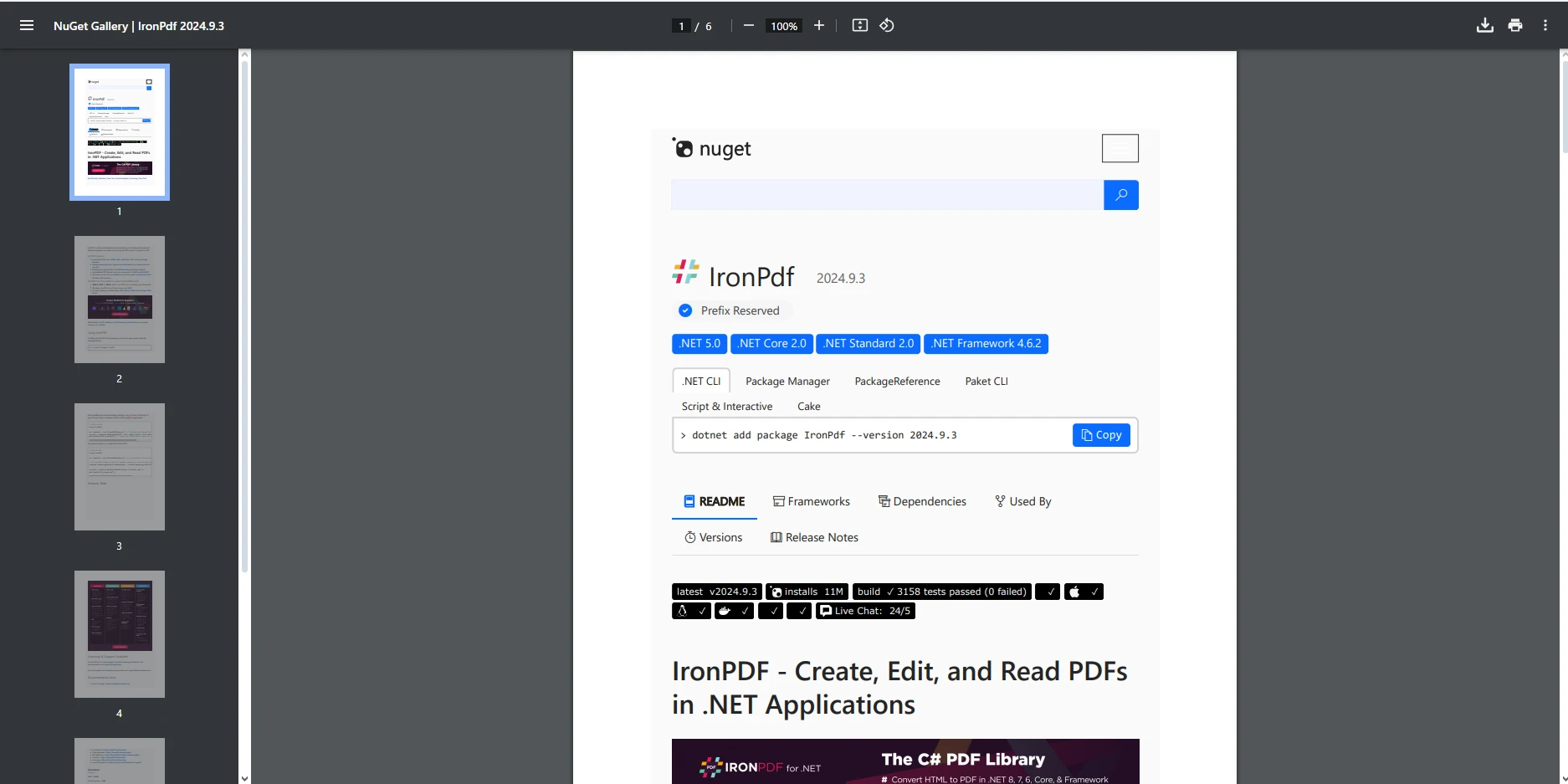
Otro método común de conversión de PDF es convertir una URL a PDF. De esta manera, podemos capturar páginas web enteras como un PDF perfecto píxel a píxel. Usando la URL [https://www.nuget.org/packages/IronPdf/](https://www.nuget.org/packages/IronPdf/), utilizaremos la clase **ChromePdfRenderer** y el soporte de IronPDF para los estándares web modernos para generar un PDF de alta calidad en solo unas pocas líneas de código.
```csharp
using System;
using IronPdf;
class Program
{
static void Main(string[] args)
{
// Instantiate the ChromePdfRenderer
ChromePdfRenderer renderer = new ChromePdfRenderer();
// Render the URL content into a PDF
PdfDocument pdf = renderer.RenderUrlAsPdf("https://www.nuget.org/packages/IronPdf/");
// Save the PDF to a file
pdf.SaveAs("url-to-pdf.pdf");
}
}
```
#### Resultado
### Convertir imágenes en PDF
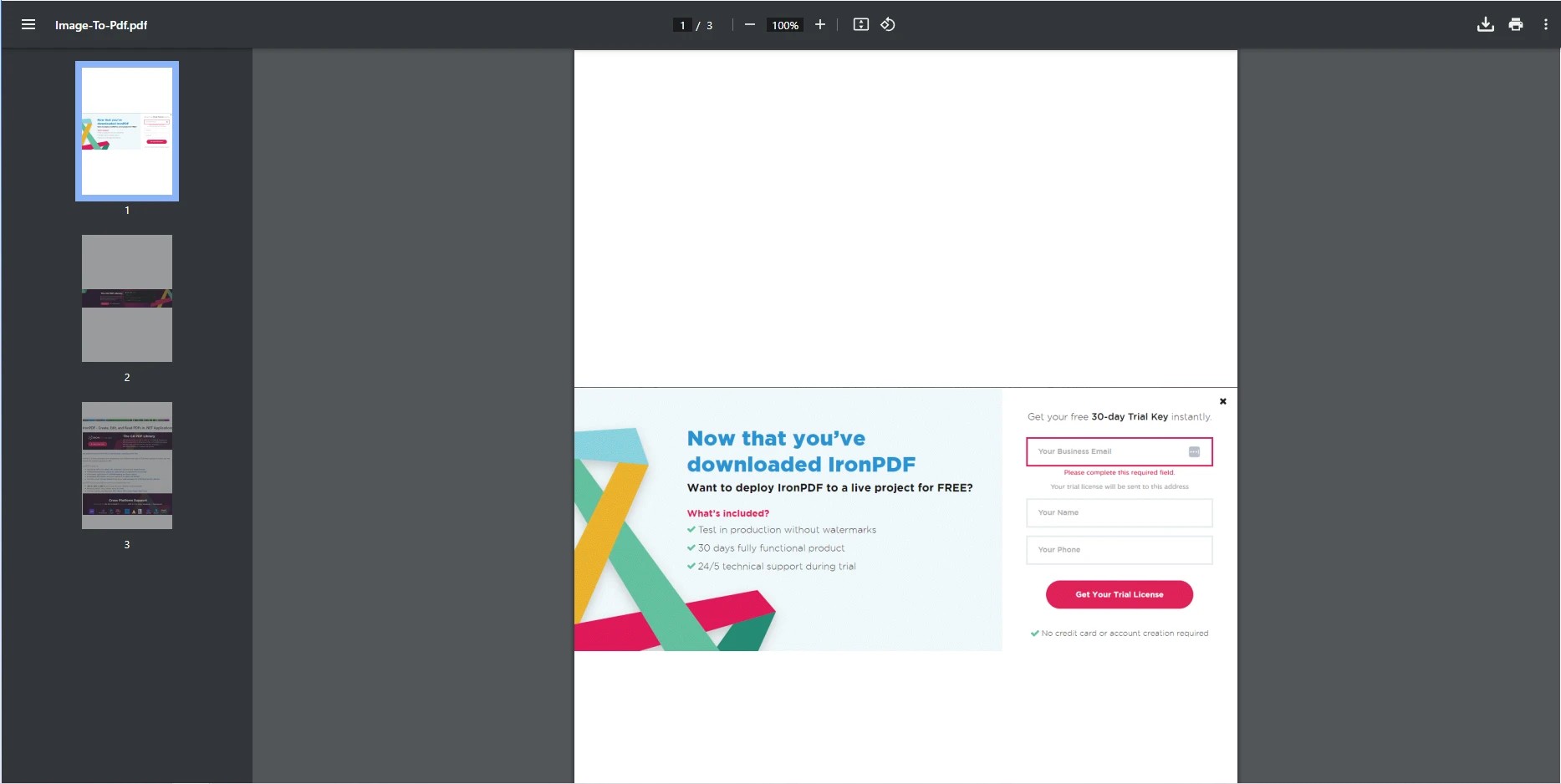
IronPDF también admite la conversión de tipos de archivo de imagen, como PNG, JPG y GIF, a PDFs. Esta es una excelente manera de compilar múltiples imágenes en un solo documento. Para nuestro ejemplo, tomaremos tres imágenes diferentes, cada una en un formato de imagen diferente, y las convertiremos en nuevos PDFs, antes de fusionarlas en un solo PDF para demostrar cómo esto puede usarse para convertir múltiples imágenes en el mismo PDF. La clase **ImageToPdfConverter** se utiliza para llevar a cabo la conversión de las imágenes.
```csharp
using System.Collections.Generic;
using IronPdf;
class Program
{
static void Main(string[] args)
{
// Define image file paths
string jpgFile = "image-jpg.jpg";
string pngFile = "image-png.png";
string gifFile = "image-gif.gif";
// Convert each image to a separate PDF document
PdfDocument pdfA = ImageToPdfConverter.ImageToPdf(gifFile);
PdfDocument pdfB = ImageToPdfConverter.ImageToPdf(pngFile);
PdfDocument pdfC = ImageToPdfConverter.ImageToPdf(jpgFile);
// Combine all the PDFs into a single document
List<PdfDocument> pdfFiles = new List<PdfDocument> { pdfA, pdfB, pdfC };
PdfDocument mergedPdf = PdfDocument.Merge(pdfFiles);
// Save the merged PDF document to a file
mergedPdf.SaveAs("images-to-pdf.pdf");
}
}
```
#### Resultado
### Convertir archivos DOCX a PDF
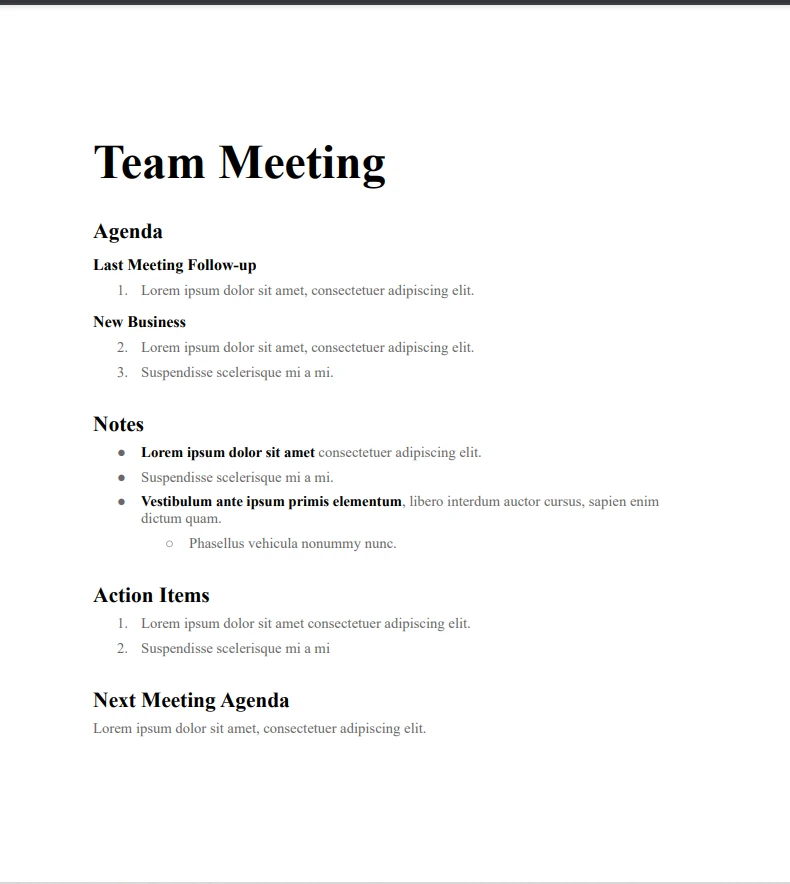
IronPDF maneja la conversión de DOCX a PDF sin problemas, en solo un par de líneas de código. Primero, crearemos una nueva instancia de la clase **DocxToPdfRenderer**, que luego utilizaremos para convertir el archivo DOCX usando **`RenderDocxAsPdf()`**, antes de finalmente guardar el PDF.
```csharp
using IronPdf;
class Program
{
static void Main(string[] args)
{
// Instantiate the DocxToPdfRenderer
DocxToPdfRenderer renderer = new DocxToPdfRenderer();
// Convert the DOCX file to a PDF
PdfDocument pdf = renderer.RenderDocxAsPdf("Meeting notes.docx");
// Save the converted PDF document
pdf.SaveAs("docx-to-pdf.pdf");
}
}
```
## Conclusión
En el paisaje digital de hoy, convertir documentos en un formato universalmente accesible como PDF es crucial para asegurar consistencia, portabilidad y presentación profesional. Con IronPDF, integrar capacidades robustas para convertir PDFs en sus aplicaciones C# no solo es eficiente, sino también increíblemente flexible.
A lo largo de este tutorial, demostrámos lo fácil que es convertir archivos HTML, páginas web, imágenes, URLs e incluso archivos DOCX en PDFs pulidos y profesionales. Pero esto es solo la punta del iceberg. **IronPDF** ofrece una amplia gama de características más allá de la conversión básica, como:
* **Fusionar múltiples PDFs** en un solo documento.
* **Agregar características de seguridad** como protección por contraseña y firmas digitales.
* **Extraer texto e imágenes** de PDFs existentes.
* **Generar PDFs dinámicos** con datos en tiempo real, haciéndolos ideales para generar facturas, informes y certificados.
¿Listo para llevar su procesamiento de documentos al siguiente nivel? Comience a experimentar con IronPDF hoy con su [prueba gratuita](trial-license), y desbloquee todo el potencial de la manipulación de PDFs en sus proyectos C#.
Para una mayor exploración de características avanzadas, optimizaciones y ejemplos prácticos, visite la [documentación](https://ironpdf.com/docs/) oficial de IronPDF y únase a una comunidad de desarrolladores que transforman la forma en que se manejan los PDFs en aplicaciones modernas.
Poder crear documentos PDF a partir de varios tipos de archivos es una excelente manera de hacer una versión compilada y fácil de leer de su archivo original. Por ejemplo, puede que tenga su portafolio mostrado como una página web, pero quiera convertirlo en un archivo PDF fácil de presentar para compartir con posibles empleadores. O quizás tenga gráficos llenos de datos esenciales que quiera mostrar como parte de un informe, con un convertidor de PDF, podría convertir su informe y gráficos a PDF y combinarlos en un documento fácilmente compartible.
Hoy, veremos cómo convertir archivos al formato PDF usando C#. También estaremos mirando IronPDF, una poderosa biblioteca .NET para PDF, y cómo puede usarse para la conversión de PDF. Ya sea que esté manejando HTML, imágenes u otros documentos, IronPDF proporciona una forma sencilla y eficiente de crear y manipular archivos PDF de manera programática.
¿Por qué utilizar IronPDF para la conversión de PDF?
IronPDF es una biblioteca estándar en la industria que simplifica la creación y conversión de PDF. Admite la conversión de una amplia gama de formatos a PDF, como HTML, imágenes e incluso otros PDF. Las características clave son:
Representación de PDF de alta fidelidad: gracias a su fuerte soporte para los estándares web modernos, IronPDF es capaz de producir consistentemente PDF de alta calidad a partir de contenido web como HTML y páginas web.
Generación de PDF: Genere documentos PDF a partir de formatos de archivo como imágenes, HTML, DOCX y Markdown.
Funciones de seguridad: con IronPDF, gestionar la seguridad de PDF, como el cifrado de PDF y la firma digital, es muy sencillo.
Integración fácil: IronPDF se integra perfectamente con ASP.NET y aplicaciones de escritorio.
Instalar IronPDF
Antes de que podamos comenzar a convertir archivos a documentos PDF usando IronPDF, debemos instalarlo y configurarlo dentro de nuestro proyecto. Afortunadamente, gracias a la fácil implementación de IronPDF, esto se puede hacer en muy poco tiempo. Para instalar la biblioteca IronPDF, puede ejecutar el siguiente comando en la Consola del Administrador de Paquetes de NuGet:
PM > Install-Package IronPdf
Install-Package IronPdf
Alternativamente, puede instalarlo usando Administrar Paquetes NuGet para Solución:
Conversión de PDF en C#
Ahora, podemos ver cómo IronPDF aborda la conversión de PDF desde diferentes tipos de archivo. Como mencionamos antes, IronPDF es una poderosa biblioteca de PDF capaz de manejar la conversión de PDF desde muchos tipos de archivo. Esto lo hace extremadamente versátil en situaciones donde necesita convertir más que solo HTML a PDF, que es en lo que muchas otras bibliotecas de PDF se centran. Con IronPDF, puede hacer todas sus conversiones en un solo lugar, sin la necesidad de instalar bibliotecas adicionales.
Convertir cadena HTML a PDF
Uno de los escenarios más comunes para la conversión de PDF es convertir contenido HTML en un documento PDF, e IronPDF hace que este proceso sea muy sencillo. Para este ejemplo, converteremos una cadena HTML, pero el proceso es similar para un documento HTML, una página HTML o archivos HTML. Primero, crearemos una instancia de ChromePdfRenderer para renderizar nuestro contenido HTML como un PDF. Luego, usando RenderHtmlAsPdf(), podemos convertir el contenido HTML a PDF, antes de finalmente guardar el PDF.
using IronPdf;class Program{ static voidMain(string[] args) { // HTML content to convert string html = "<h1>This Document was Converted using IronPDF</h1><p>This document was converted from HTML content</p>"; // Instantiate the ChromePdfRenderer class ChromePdfRenderer renderer = new ChromePdfRenderer(); // Render the HTML content into a PDF document PdfDocument pdf = renderer.RenderHtmlAsPdf(html); // Save the rendered PDF document to a file pdf.SaveAs("html-to-pdf.pdf"); }}
using IronPdf;

class Program
{
    static void Main(string[] args)
    {
        // HTML content to convert
        string html = "<h1>This Document was Converted using IronPDF</h1><p>This document was converted from HTML content</p>";

        // Instantiate the ChromePdfRenderer class
        ChromePdfRenderer renderer = new ChromePdfRenderer();

        // Render the HTML content into a PDF document
        PdfDocument pdf = renderer.RenderHtmlAsPdf(html);

        // Save the rendered PDF document to a file
        pdf.SaveAs("html-to-pdf.pdf");
    }
}
ImportsIronPdfModuleProgram Sub Main(args AsString()) ' HTML content to convert Dim html AsString = "<h1>This Document was Converted using IronPDF</h1><p>This document was converted from HTML content</p>" ' Instantiate the ChromePdfRenderer class Dim renderer As New ChromePdfRenderer() ' Render the HTML content into a PDF document Dim pdf AsPdfDocument = renderer.RenderHtmlAsPdf(html) ' Save the rendered PDF document to a file pdf.SaveAs("html-to-pdf.pdf") End SubEndModule
Imports IronPdf

Module Program
    Sub Main(args As String())
        ' HTML content to convert
        Dim html As String = "<h1>This Document was Converted using IronPDF</h1><p>This document was converted from HTML content</p>"

        ' Instantiate the ChromePdfRenderer class
        Dim renderer As New ChromePdfRenderer()

        ' Render the HTML content into a PDF document
        Dim pdf As PdfDocument = renderer.RenderHtmlAsPdf(html)

        ' Save the rendered PDF document to a file
        pdf.SaveAs("html-to-pdf.pdf")
    End Sub
End Module
Resultado
URL a PDF
Otro método común de conversión de PDF es convertir una URL a PDF. De esta manera, podemos capturar páginas web enteras como un PDF perfecto píxel a píxel. Usando la URL https://www.nuget.org/packages/IronPdf/, utilizaremos la clase ChromePdfRenderer y el soporte de IronPDF para los estándares web modernos para generar un PDF de alta calidad en solo unas pocas líneas de código.
using System;using IronPdf;class Program{ static voidMain(string[] args) { // Instantiate the ChromePdfRenderer ChromePdfRenderer renderer = new ChromePdfRenderer(); // Render the URL content into a PDF PdfDocument pdf = renderer.RenderUrlAsPdf("https://www.nuget.org/packages/IronPdf/"); // Save the PDF to a file pdf.SaveAs("url-to-pdf.pdf"); }}
using System;
using IronPdf;

class Program
{
    static void Main(string[] args)
    {
        // Instantiate the ChromePdfRenderer
        ChromePdfRenderer renderer = new ChromePdfRenderer();

        // Render the URL content into a PDF
        PdfDocument pdf = renderer.RenderUrlAsPdf("https://www.nuget.org/packages/IronPdf/");

        // Save the PDF to a file
        pdf.SaveAs("url-to-pdf.pdf");
    }
}
ImportsSystemImportsIronPdfModuleProgram Sub Main(args AsString()) ' Instantiate the ChromePdfRenderer Dim renderer As New ChromePdfRenderer() ' Render the URL content into a PDF Dim pdf AsPdfDocument = renderer.RenderUrlAsPdf("https://www.nuget.org/packages/IronPdf/") ' Save the PDF to a file pdf.SaveAs("url-to-pdf.pdf") End SubEndModule
Imports System
Imports IronPdf

Module Program
    Sub Main(args As String())
        ' Instantiate the ChromePdfRenderer
        Dim renderer As New ChromePdfRenderer()

        ' Render the URL content into a PDF
        Dim pdf As PdfDocument = renderer.RenderUrlAsPdf("https://www.nuget.org/packages/IronPdf/")

        ' Save the PDF to a file
        pdf.SaveAs("url-to-pdf.pdf")
    End Sub
End Module
Resultado
Convertir imágenes en PDF
IronPDF también admite la conversión de tipos de archivo de imagen, como PNG, JPG y GIF, a PDFs. Esta es una excelente manera de compilar múltiples imágenes en un solo documento. Para nuestro ejemplo, tomaremos tres imágenes diferentes, cada una en un formato de imagen diferente, y las convertiremos en nuevos PDFs, antes de fusionarlas en un solo PDF para demostrar cómo esto puede usarse para convertir múltiples imágenes en el mismo PDF. La clase ImageToPdfConverter se utiliza para llevar a cabo la conversión de las imágenes.
using System.Collections.Generic;using IronPdf;class Program{ static voidMain(string[] args) { // Define image file paths string jpgFile = "image-jpg.jpg"; string pngFile = "image-png.png"; string gifFile = "image-gif.gif"; // Convert each image to a separate PDF document PdfDocument pdfA = ImageToPdfConverter.ImageToPdf(gifFile); PdfDocument pdfB = ImageToPdfConverter.ImageToPdf(pngFile); PdfDocument pdfC = ImageToPdfConverter.ImageToPdf(jpgFile); // Combine all the PDFs into a single document List<PdfDocument> pdfFiles = new List<PdfDocument> { pdfA, pdfB, pdfC }; PdfDocument mergedPdf = PdfDocument.Merge(pdfFiles); // Save the merged PDF document to a file mergedPdf.SaveAs("images-to-pdf.pdf"); }}
using System.Collections.Generic;
using IronPdf;

class Program
{
    static void Main(string[] args)
    {
        // Define image file paths
        string jpgFile = "image-jpg.jpg";
        string pngFile = "image-png.png";
        string gifFile = "image-gif.gif";

        // Convert each image to a separate PDF document
        PdfDocument pdfA = ImageToPdfConverter.ImageToPdf(gifFile);
        PdfDocument pdfB = ImageToPdfConverter.ImageToPdf(pngFile);
        PdfDocument pdfC = ImageToPdfConverter.ImageToPdf(jpgFile);

        // Combine all the PDFs into a single document
        List<PdfDocument> pdfFiles = new List<PdfDocument> { pdfA, pdfB, pdfC };
        PdfDocument mergedPdf = PdfDocument.Merge(pdfFiles);

        // Save the merged PDF document to a file
        mergedPdf.SaveAs("images-to-pdf.pdf");
    }
}
ImportsSystem.Collections.GenericImportsIronPdfClass ProgramShared Sub Main(args AsString()) ' Define image file paths Dim jpgFile AsString = "image-jpg.jpg" Dim pngFile AsString = "image-png.png" Dim gifFile AsString = "image-gif.gif" ' Convert each image to a separate PDF document Dim pdfA AsPdfDocument = ImageToPdfConverter.ImageToPdf(gifFile) Dim pdfB AsPdfDocument = ImageToPdfConverter.ImageToPdf(pngFile) Dim pdfC AsPdfDocument = ImageToPdfConverter.ImageToPdf(jpgFile) ' Combine all the PDFs into a single document Dim pdfFiles As New List(OfPdfDocument) From {pdfA, pdfB, pdfC} Dim mergedPdf AsPdfDocument = PdfDocument.Merge(pdfFiles) ' Save the merged PDF document to a file mergedPdf.SaveAs("images-to-pdf.pdf") End SubEnd Class
Imports System.Collections.Generic
Imports IronPdf

Class Program
    Shared Sub Main(args As String())
        ' Define image file paths
        Dim jpgFile As String = "image-jpg.jpg"
        Dim pngFile As String = "image-png.png"
        Dim gifFile As String = "image-gif.gif"

        ' Convert each image to a separate PDF document
        Dim pdfA As PdfDocument = ImageToPdfConverter.ImageToPdf(gifFile)
        Dim pdfB As PdfDocument = ImageToPdfConverter.ImageToPdf(pngFile)
        Dim pdfC As PdfDocument = ImageToPdfConverter.ImageToPdf(jpgFile)

        ' Combine all the PDFs into a single document
        Dim pdfFiles As New List(Of PdfDocument) From {pdfA, pdfB, pdfC}
        Dim mergedPdf As PdfDocument = PdfDocument.Merge(pdfFiles)

        ' Save the merged PDF document to a file
        mergedPdf.SaveAs("images-to-pdf.pdf")
    End Sub
End Class
Resultado
Convertir archivos DOCX a PDF
IronPDF maneja la conversión de DOCX a PDF sin problemas, en solo un par de líneas de código. Primero, crearemos una nueva instancia de la clase DocxToPdfRenderer, que luego utilizaremos para convertir el archivo DOCX usando RenderDocxAsPdf(), antes de finalmente guardar el PDF.
using IronPdf;class Program{ static voidMain(string[] args) { // Instantiate the DocxToPdfRenderer DocxToPdfRenderer renderer = new DocxToPdfRenderer(); // Convert the DOCX file to a PDF PdfDocument pdf = renderer.RenderDocxAsPdf("Meeting notes.docx"); // Save the converted PDF document pdf.SaveAs("docx-to-pdf.pdf"); }}
using IronPdf;

class Program
{
    static void Main(string[] args)
    {
        // Instantiate the DocxToPdfRenderer
        DocxToPdfRenderer renderer = new DocxToPdfRenderer();

        // Convert the DOCX file to a PDF
        PdfDocument pdf = renderer.RenderDocxAsPdf("Meeting notes.docx");

        // Save the converted PDF document
        pdf.SaveAs("docx-to-pdf.pdf");
    }
}
ImportsIronPdfModuleProgram Sub Main(args AsString()) ' Instantiate the DocxToPdfRenderer Dim renderer As New DocxToPdfRenderer() ' Convert the DOCX file to a PDF Dim pdf AsPdfDocument = renderer.RenderDocxAsPdf("Meeting notes.docx") ' Save the converted PDF document pdf.SaveAs("docx-to-pdf.pdf") End SubEndModule
Imports IronPdf

Module Program
    Sub Main(args As String())
        ' Instantiate the DocxToPdfRenderer
        Dim renderer As New DocxToPdfRenderer()

        ' Convert the DOCX file to a PDF
        Dim pdf As PdfDocument = renderer.RenderDocxAsPdf("Meeting notes.docx")

        ' Save the converted PDF document
        pdf.SaveAs("docx-to-pdf.pdf")
    End Sub
End Module
Conclusión
En el paisaje digital de hoy, convertir documentos en un formato universalmente accesible como PDF es crucial para asegurar consistencia, portabilidad y presentación profesional. Con IronPDF, integrar capacidades robustas para convertir PDFs en sus aplicaciones C# no solo es eficiente, sino también increíblemente flexible.
A lo largo de este tutorial, demostrámos lo fácil que es convertir archivos HTML, páginas web, imágenes, URLs e incluso archivos DOCX en PDFs pulidos y profesionales. Pero esto es solo la punta del iceberg. IronPDF ofrece una amplia gama de características más allá de la conversión básica, como:
Fusionar múltiples PDFs en un solo documento.
Agregar características de seguridad como protección por contraseña y firmas digitales.
Extraer texto e imágenes de PDFs existentes.
Generar PDFs dinámicos con datos en tiempo real, haciéndolos ideales para generar facturas, informes y certificados.
¿Listo para llevar su procesamiento de documentos al siguiente nivel? Comience a experimentar con IronPDF hoy con su prueba gratuita, y desbloquee todo el potencial de la manipulación de PDFs en sus proyectos C#.
Para una mayor exploración de características avanzadas, optimizaciones y ejemplos prácticos, visite la documentación oficial de IronPDF y únase a una comunidad de desarrolladores que transforman la forma en que se manejan los PDFs en aplicaciones modernas.
Curtis Chau tiene una licenciatura en Ciencias de la Computación (Carleton University) y se especializa en el desarrollo front-end con experiencia en Node.js, TypeScript, JavaScript y React. Apasionado por crear interfaces de usuario intuitivas y estéticamente agradables, disfruta trabajando con frameworks modernos y creando manuales bien estructurados y visualmente atractivos.