


Actualizado 21 de abril de 2026
Cómo Convertir TIFF A PDF en Java
Esta guía integral te llevará a través de los pasos sobre cómo convertir imágenes TIFF a PDF sin problemas en Java usando IronPDF.
Leer más

Este artículo explorará IronPDF para crear documentos PDF programáticamente.
La Biblioteca de PDF de Java por IronPDF permite a los desarrolladores crear, editar y manipular documentos PDF en sus aplicaciones Java. Los desarrolladores de Java que necesitan crear archivos PDF a partir de los datos de sus aplicaciones encontrarán que esta biblioteca es una excelente elección porque ofrece un conjunto diverso de funcionalidades.
IronPDF viene con características como agregar nuevo contenido HTML, incrustar encabezados y pies de página HTML, sellar y añadir marcas de agua a los documentos, crear archivos PDF protegidos con contraseña, aplicar firmas digitales a archivos PDF, mejorar documentos con fondos y primeros planos, crear un archivo PDF completo a partir de documentos XML, agregar y editar anotaciones, y usar esquemas y marcadores para una mejor navegación. Echemos un vistazo más de cerca.
Con IronPDF, los desarrolladores pueden agregar fácilmente nuevo contenido HTML a sus documentos PDF. Esta es una gran característica para los desarrolladores que desean generar dinámicamente sus documentos de formularios PDF con contenido HTML enriquecido. La biblioteca es compatible con muchos elementos HTML, incluidas imágenes, enlaces y tablas, entre otros. El contenido HTML también puede ser estilizado usando CSS, lo que facilita la creación de PDFs con aspecto profesional.
import com.ironsoftware.ironpdf.*;
import java.io.IOException;
import java.nio.file.Paths;

// Apply your license key
License.setLicenseKey("YOUR-LICENSE-KEY");

// Set a log path
Settings.setLogPath(Paths.get("C:/tmp/IronPdfEngine.log"));

// Render the HTML as a PDF. Stored in myPdf as type PdfDocument.
PdfDocument myPdf = PdfDocument.renderHtmlAsPdf("<h1>Hello World</h1> Made with IronPDF!");

// Save the PdfDocument to a file
myPdf.saveAs(Paths.get("html_saved.pdf"));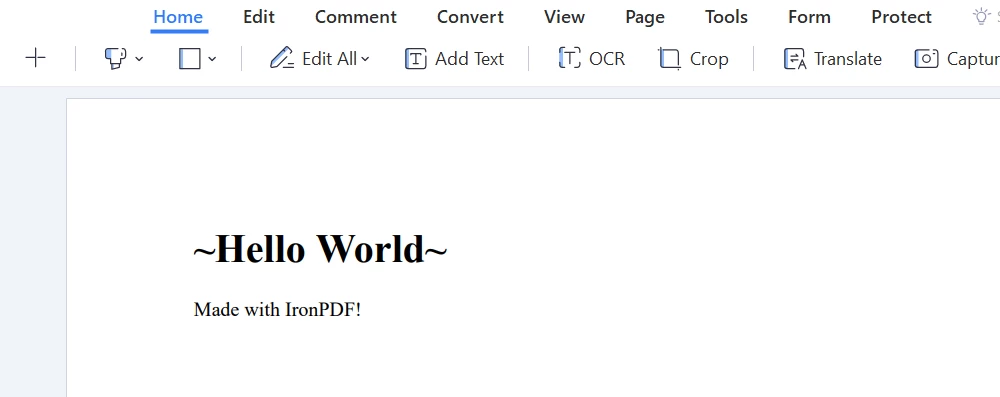 PDF de Salida
Los encabezados y los pies de página son componentes esenciales de muchos documentos PDF, e IronPDF facilita la integración de encabezados y pies de página HTML en tus documentos. Con IronPDF, los desarrolladores pueden agregar encabezados y pies de página personalizados, incluidos texto, imágenes y números de página, a sus documentos PDF. Esta característica es particularmente útil para las empresas que necesitan agregar información de marca o de derechos de autor a sus documentos.
import com.ironsoftware.ironpdf.PdfDocument;
import com.ironsoftware.ironpdf.headerfooter.HtmlHeaderFooter;
import java.io.IOException;
import java.nio.file.Paths;
import java.util.List;
import java.util.ArrayList;

// Render a PDF from a URL
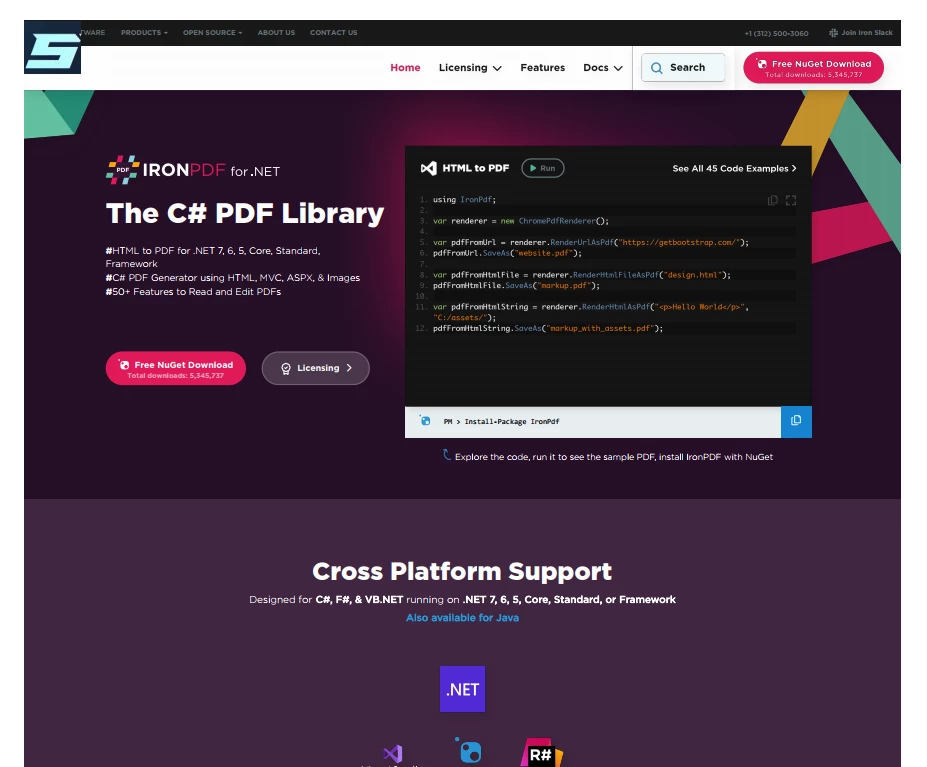
PdfDocument pdf = PdfDocument.renderUrlAsPdf("https://ironpdf.com");

// Build a footer using HTML
HtmlHeaderFooter footer = new HtmlHeaderFooter();
footer.setMaxHeight(15); // millimeters
footer.setHtmlFragment("<center><i>{page} of {total-pages}</i></center>");
footer.setDrawDividerLine(true);
pdf.addHtmlFooter(footer);
List<PdfDocument> pdfs = new ArrayList<>();

// Build a header using an image asset
HtmlHeaderFooter header = new HtmlHeaderFooter();
header.setMaxHeight(20); // millimeters
header.setHtmlFragment("<img src=\"logo.png\" />");
header.setBaseUrl("./assets/");
pdf.addHtmlHeader(header);

try {
    pdf.saveAs(Paths.get("assets/html_headers_footers.pdf"));
} catch (IOException e) {
    throw new RuntimeException(e);
} PDF de Salida
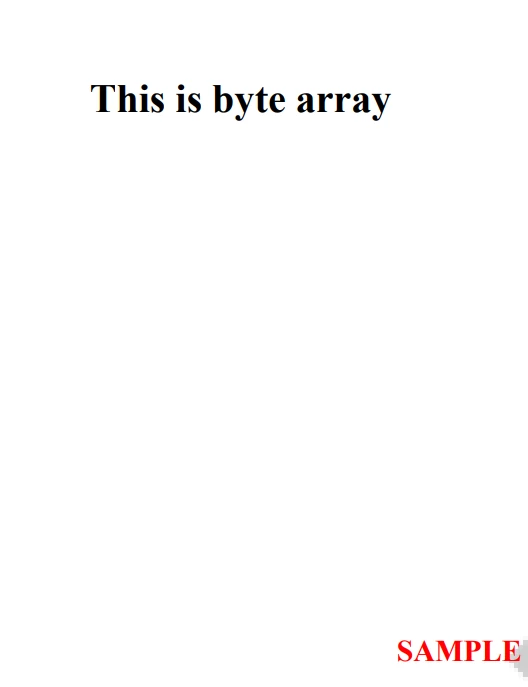
Usando IronPDF, los desarrolladores pueden agregar sellos y marcas de agua a sus documentos PDF. Las marcas de agua son imágenes o textos transparentes que aparecen en el fondo del documento, mientras que los sellos agregan un mensaje o imagen personalizada a un nuevo documento.
Estas características son excelentes para las empresas que necesitan proteger sus documentos del uso no autorizado o agregar un mensaje personalizado a sus documentos.
package IronPDF.ironpdf_java;

import java.io.IOException;
import java.nio.file.Paths;
import com.ironsoftware.ironpdf.*;
import com.ironsoftware.ironpdf.stamp.HorizontalAlignment;
import com.ironsoftware.ironpdf.stamp.VerticalAlignment;

public class Test {
    public static void main(String[] args) throws IOException {
        License.setLicenseKey("Your-License");

        // Load an existing PDF from the filesystem
        PdfDocument pdf = PdfDocument.fromFile(Paths.get("C:\\byteToPdf.pdf"));

        // Apply a watermark to the PDF
        pdf.applyWatermark("<h2 style='color:red'>SAMPLE</h2>", 30, VerticalAlignment.TOP, HorizontalAlignment.CENTER);

        // Save the watermarked PDF
        pdf.saveAs(Paths.get("assets/watermark.pdf"));
    }
} PDF de Salida
IronPDF también permite que los desarrolladores implementen fondos y primeros planos personalizados en sus documentos PDF. Los primeros planos se usan para agregar texto o imágenes personalizadas sobre un documento, mientras que los fondos agregan una imagen o color personalizado al fondo. Los propietarios de empresas que desean que sus documentos o formularios PDF tengan una marca o gráficos personalizados encontrarán esta característica particularmente útil.
import com.ironsoftware.ironpdf.*;
import java.io.IOException;
import java.nio.file.Paths;

public class BackgroundForegroundExample {

    public static void main(String[] args) throws IOException {
        // Load background and foreground PDFs from the filesystem
        PdfDocument backgroundPdf = PdfDocument.fromFile(Paths.get("assets/MyBackground.pdf"));
        PdfDocument foregroundPdf = PdfDocument.fromFile(Paths.get("assets/MyForeground.pdf"));

        // Render content (HTML, URL, etc) as a PDF Document
        PdfDocument pdf = PdfDocument.renderUrlAsPdf("https://www.nuget.org/packages/IronPdf");

        // Add the background and foreground PDFs to the newly-rendered document.
        pdf.addBackgroundPdf(backgroundPdf);
        pdf.addForegroundPdf(foregroundPdf);

        // Save the document with background and foreground
        pdf.saveAs(Paths.get("assets/BackgroundForegroundPdf.pdf"));
    }
}Las anotaciones son una excelente manera de agregar información adicional a documentos PDF, como notas, comentarios o destacados. Con IronPDF, los desarrolladores pueden gestionar anotaciones eficazmente agregándolas y editándolas en sus documentos PDF.
import com.ironsoftware.ironpdf.PdfDocument;
import com.ironsoftware.ironpdf.annotation.AnnotationIcon;
import com.ironsoftware.ironpdf.annotation.AnnotationManager;
import com.ironsoftware.ironpdf.annotation.AnnotationOptions;
import java.io.IOException;
import java.nio.file.Paths;

public class AnnotationExample {

    public static void main(String[] args) throws IOException {
        // Load an existing PDF from the file system
        PdfDocument pdf = PdfDocument.fromFile(Paths.get("assets/example.pdf"));

        // Create an annotation to be placed at a specific location on a page.
        AnnotationOptions annotation = new AnnotationOptions(
            "This is a major title", // Title of the annotation
            "This is the long 'sticky note' comment content...", // Content of the annotation
            150, // x-axis coordinate location
            250  // y-axis coordinate location
        );
        annotation.setIcon(AnnotationIcon.HELP);
        annotation.setOpacity(0.9);
        annotation.setPrintable(false);
        annotation.setHidden(false);
        annotation.setOpen(true);
        annotation.setReadonly(true);
        annotation.setRotateable(true);

        // Add the annotation to a specific page of the PDF
        AnnotationManager annotationManager = pdf.getAnnotation();
        annotationManager.addTextAnnotation(annotation, 0); // Add to the first page

        // Save the PDF with the modifications
        pdf.saveAs(Paths.get("assets/annotated.pdf"));
    }
}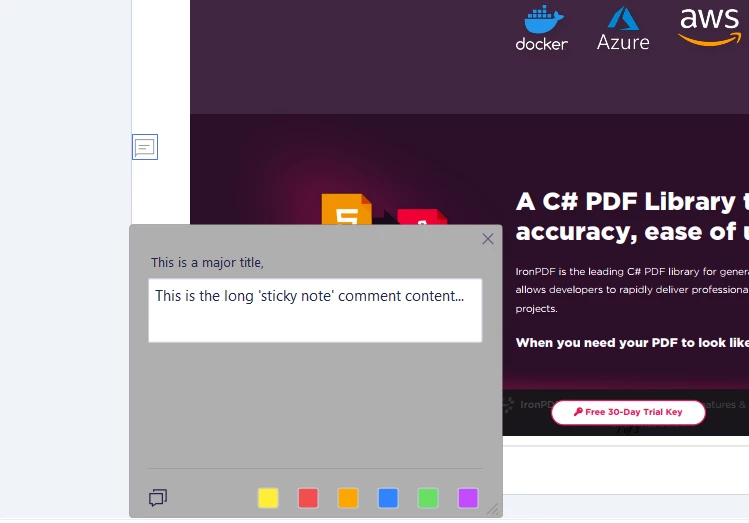 Archivo de Salida
Los desarrolladores pueden mejorar documentos PDF utilizando marcadores con IronPDF. Un esquema proporciona una visión general de alto nivel del contenido de un documento, mientras que los marcadores proporcionan un acceso rápido a secciones específicas. Para documentos grandes o complejos, esta característica permite a los usuarios navegar rápidamente a sus secciones deseadas.
import com.ironsoftware.ironpdf.PdfDocument;
import com.ironsoftware.ironpdf.bookmark.Bookmark;
import com.ironsoftware.ironpdf.bookmark.BookmarkManager;
import java.io.IOException;
import java.nio.file.Paths;
import java.util.List;

public class BookmarkExample {

    public static void main(String[] args) throws IOException {
        // Load an existing PDF from the file system
        PdfDocument pdf = PdfDocument.fromFile(Paths.get("assets/book.pdf"));

        // Add top-level bookmarks to pages of the PDF using their page indices
        BookmarkManager bookmarks = pdf.getBookmark();
        bookmarks.addBookMarkAtEnd("Author's Note", 2);
        bookmarks.addBookMarkAtEnd("Table of Contents", 3);
        bookmarks.addBookMarkAtEnd("Summary", 10);
        bookmarks.addBookMarkAtEnd("References", 12);

        List<Bookmark> bookmarkList = bookmarks.getBookmarks();
        Bookmark bookmark = bookmarkList.get(2);

        // Add a child bookmark
        bookmark.addChildBookmark("Conclusion", 11);

        // Save the PDF to the filesystem
        pdf.saveAs(Paths.get("assets/bookmarked.pdf"));
    }
}Este artículo explora varias características de IronPDF, como la capacidad de agregar anotaciones, marcadores, contenido HTML, colores de fondo y de primer plano, y encabezados y pies de página a documentos PDF. El artículo proporciona instrucciones paso a paso para implementar estas características usando IronPDF, facilitando a los desarrolladores crear documentos PDF con apariencia profesional que cumplan con sus necesidades específicas.
Ya sea que estés construyendo una aplicación web o de escritorio, IronPDF puede ayudarte a agilizar el proceso de generación de documentos PDF, ahorrándote tiempo y esfuerzo mientras aseguras que tus documentos se vean bien.
La información sobre licencias de IronPDF comienza en $999. IronPDF también ofrece una prueba gratuita, permitiendo a los desarrolladores probar la biblioteca y evaluar sus capacidades antes de tomar una decisión de compra. Durante el período de prueba, los usuarios tienen acceso a todas las características de la biblioteca, incluyendo soporte y actualizaciones. Después del período de prueba, los usuarios pueden elegir comprar una licencia para continuar usando la biblioteca. El precio de IronPDF varía dependiendo del número de desarrolladores que usen la biblioteca y el tipo de licencia.

Curtis Chau tiene una licenciatura en Ciencias de la Computación (Carleton University) y se especializa en el desarrollo front-end con experiencia en Node.js, TypeScript, JavaScript y React. Apasionado por crear interfaces de usuario intuitivas y estéticamente agradables, disfruta trabajando con frameworks modernos y creando manuales bien estructurados y visualmente atractivos.

IronPDF es parte de IRONSUITE
10 productos API .NET para tus documentos de oficina











Cuando necesitas que tu PDF se parezca al HTML, rápido.

