



已更新 2026年4月23日
deepstream io(開發人員的工作原理)
在這篇文章中,我們將學習如何使用開放即時伺服器 deepstream 和 IronPDF 生成 PDF。
閱讀更多

在快速變化的技術領域中,可擴展且有效的計算解決方案的需求比以往任何時候都更為迫切。 分散式計算在處理大量分散資料處理、並發使用者請求和計算需求高的任務時變得越來越必要。 為了讓開發者能夠充分利用分散式Python,我們將在本文中探討其應用、原理和工具。
在網頁開發領域,動態生成和修改PDF文件是一個常見需求。 程式化生成PDF的能力在即時建立發票、報告和證書時非常方便。
Python的廣泛生態和多樣性使其能夠處理大量PDF庫。 IronPDF是一個強大的解決方案,它通過簡化建立PDF的過程並支持任務並行和分散式計算,幫助開發者能夠充分利用其基礎設施。
基本上,分散式Python是指將計算工作分成更小的部分,並將其分配到多個節點或處理單元中進行處理的過程。 這些節點可以是連接到網路的單個機器、系統中的單個CPU核心、遠程物件、遠程函式、遠程或函式調用執行,甚至是單個過程中的個體執行緒。 其目的是通過將工作負載並行化來提高性能、可擴展性和容錯能力。
由於其易用性、適應性以及強大的庫生態系統,Python 是分散式計算工作負載的不錯選擇。 Python提供了豐富的分散式計算工具,適用於所有規模和使用情境,從強大的框架如threading。
在深入探討細節之前,讓我們看看分散式Python所建立的基本概念和原則:
平行性涉及同時執行多個任務,而並發性則關注於處理同時進行但不必同時進行的多個任務。 根據待處理的任務和系統的設計,分散式Python涵蓋了平行性和並發性。
平行和分散計算的關鍵組成部分是將工作分配到多個節點或處理單元。 不管是在多個核心上平行化計算程式中的函式執行還是將資料處理管道分成更小的階段,有效的工作分配對於優化整體性能、效能和資源使用來說至關重要。
在分散式系統中,有效的節點間通訊和協調至關重要,以促成遠程函式執行、複雜工作流、資料交換和計算同步的協調。
分散式Python程式受益於像訊息佇列、分散式資料結構和遠程程式調用(RPC)等技術,這些技術能夠促成遠程和實際函式執行之間的平順協調和通訊。
系統通過在不同機器上新增節點或處理單元來應對不斷增長的工作負載的能力被稱為擴展性。 相反地,容錯性指的是能夠承受如機器故障、網路分區、節點崩潰等故障並仍然可靠運行的系統設計。
為了保證跨多個機器的分散應用程式的穩定性和韌性,分散式Python框架經常包含容錯和自動擴展功能。
**資料處理與分析:**使用像Dask的分散式Python框架並行處理大型資料集,使得分散式Python應用程式能夠實施如批次處理、即時流處理和規模化機器學習等活動。
**使用微服務進行網路開發:**可以使用Python網路框架例如Celery來建立可擴展的網路應用程式和微服務架構。 網路應用程式可以輕鬆地整合如分散式快取、異步請求處理和背景工作處理等功能。
**科學計算與模擬:**Python強大的科學庫生態系統和分散式計算框架使高性能計算(HPC)和集群機器併行模擬成為可能。 應用程式包括金融風險分析、氣候建模、機器學習應用程式以及物理和計算生物學的模擬。
**邊緣計算和物聯網(IoT):**隨著物聯網裝置和邊緣計算設計的增多,分散式Python在處理感應器資料、協調邊緣計算過程、共同構建分散應用程式,以及在邊緣為現代應用程式實施分散式機器學習模型方面變得越來越重要。
Dask以進行涉及機器學習的工作。 在集群機器上將任務分割到幾個核心或處理器上,使Python開發者能在龐大的資料集上訓練和應用機器學習模型以有效地進行分散式管理。
import dask.dataframe as dd
from dask_ml.model_selection import train_test_split
from dask_ml.xgboost import XGBoostClassifier
from sklearn.metrics import accuracy_score

# Load and prepare data (replace with your data loading logic)
df = dd.read_csv("training_data.csv")
X = df.drop("target_column", axis=1)  # Features
y = df["target_column"]  # Target variable

# Split data into training and testing sets
X_train, X_test, y_train, y_test = train_test_split(X, y, test_size=0.2)

# Define and train the XGBoost model in a distributed fashion
model = XGBoostClassifier(n_estimators=100)  # Adjust hyperparameters as needed
model.fit(X_train, y_train)

# Make predictions on test data (can be further distributed)
y_pred = model.predict(X_test)

# Evaluate model performance (replace with your desired evaluation metric)
accuracy = accuracy_score(y_test, y_pred)
print(f"Model Accuracy: {accuracy}")借助強大的分散式計算框架Ray,您可以在集群的多個核心或計算機上同時執行Python函式或任務。 Ray允許您藉由使用@ray.remote裝飾器來將函式指定為遠程。 然後,這些遠程任務或操作可以在集群的Ray工作者上異步執行。
import ray
import numpy as np

# Define the Monte Carlo simulation function
@ray.remote
def simulate(seed):
    np.random.seed(seed)  # Set random seed for reproducibility
    # Perform your simulation logic here (replace with your specific simulation)
    # This example simulates a random walk and returns the final position
    steps = 1000
    position = 0
    for _ in range(steps):
        position += np.random.choice([-1, 1])
    return position

# Initialize Ray cluster (comment out if using existing cluster)
ray.init()

# Number of simulations to run
num_sims = 10000

# Run simulations in parallel using Ray's map function
simulations = ray.get([simulate.remote(seed) for seed in range(num_sims)])

# Analyze simulation results (calculate statistics like average final position)
average_position = np.mean(simulations)
print(f"Average final position: {average_position}")

# Shut down Ray cluster (comment out if using existing cluster)
ray.shutdown()借助知名的IronPDF for .NET軟體包,我們可以在.NET程式中建立、修改和呈現PDF文件。 處理PDF的方式多種多樣:從從HTML內容、照片或原始資料建立新的PDF文件,到從現有的PDF中提取文字和圖像,將HTML頁面轉換為PDF,以及在已有PDF上新增文字、圖像、形狀。
IronPDF的簡單性和易用性是其主要優勢之一。 由於其友好的API和詳盡的文件,開發者可以輕鬆地在他們的.NET程式中開始生成PDF。 IronPDF的速度和效率是開發者能夠迅速生成高品質 PDF 文件的另一個特徵。
IronPDF的一些優勢:
分散式Python框架如Ray使任務能夠分配到集群內的多個核心或計算機。 這使得可以跨集群平行執行如PDF生成這樣的複雜任務,並在其中利用多個核心,這大大縮短了生成大量PDF批次所需的時間。
首先,使用pip安裝ray庫:
以下是一些展示了使用IronPDF和Python進行分散式PDF生成的概念性Python程式碼:
中央工作者(worker.py):
from ironpdf import ChromePdfRenderer
from celery import Celery

app = Celery('pdf_tasks', broker='pyamqp://')
app.autodiscover_tasks()

@app.task(name='generate_pdf')
def generate_pdf(data):
    print(data)
    renderer = ChromePdfRenderer()  # Instantiate renderer
    pdf = renderer.RenderHtmlAsPdf(str(data))
    pdf.SaveAs("output.pdf")
    return f"PDF generated for data {data}"

if __name__ == '__main__':
app.worker_main(argv=['worker', '--loglevel=info', '--without-gossip', '--without-mingle', '--without-heartbeat', '-Ofair', '--pool=solo'])客戶端腳本(client.py):
from celery import Celery

app = Celery('pdf_tasks', broker='pyamqp://localhost')

def main():
    # Send task to worker
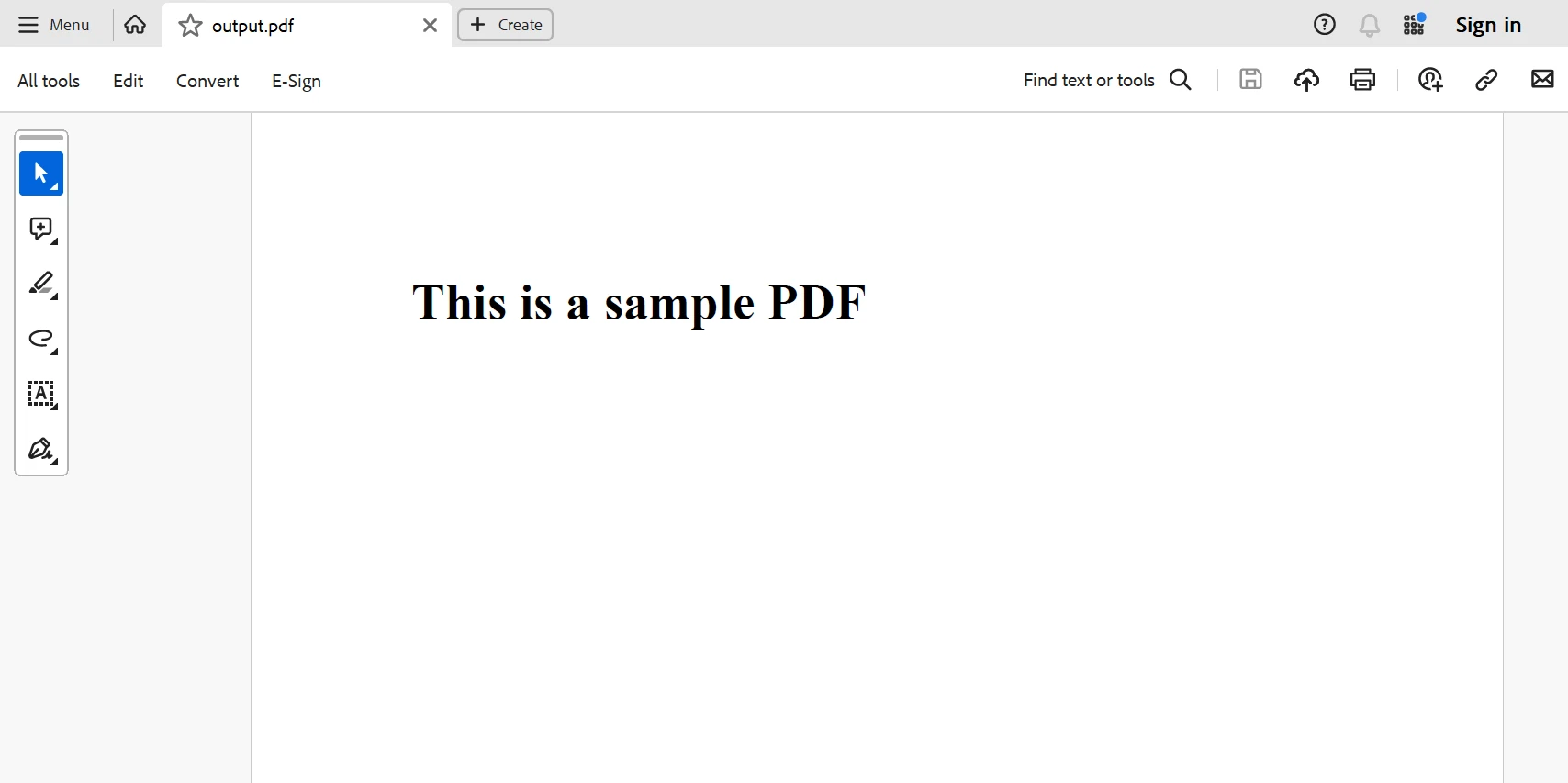
    task = app.send_task('generate_pdf', args=("<h1>This is a sample PDF</h1>",))
    print(task.get())  # Wait for task completion and print result

if __name__ == '__main__':
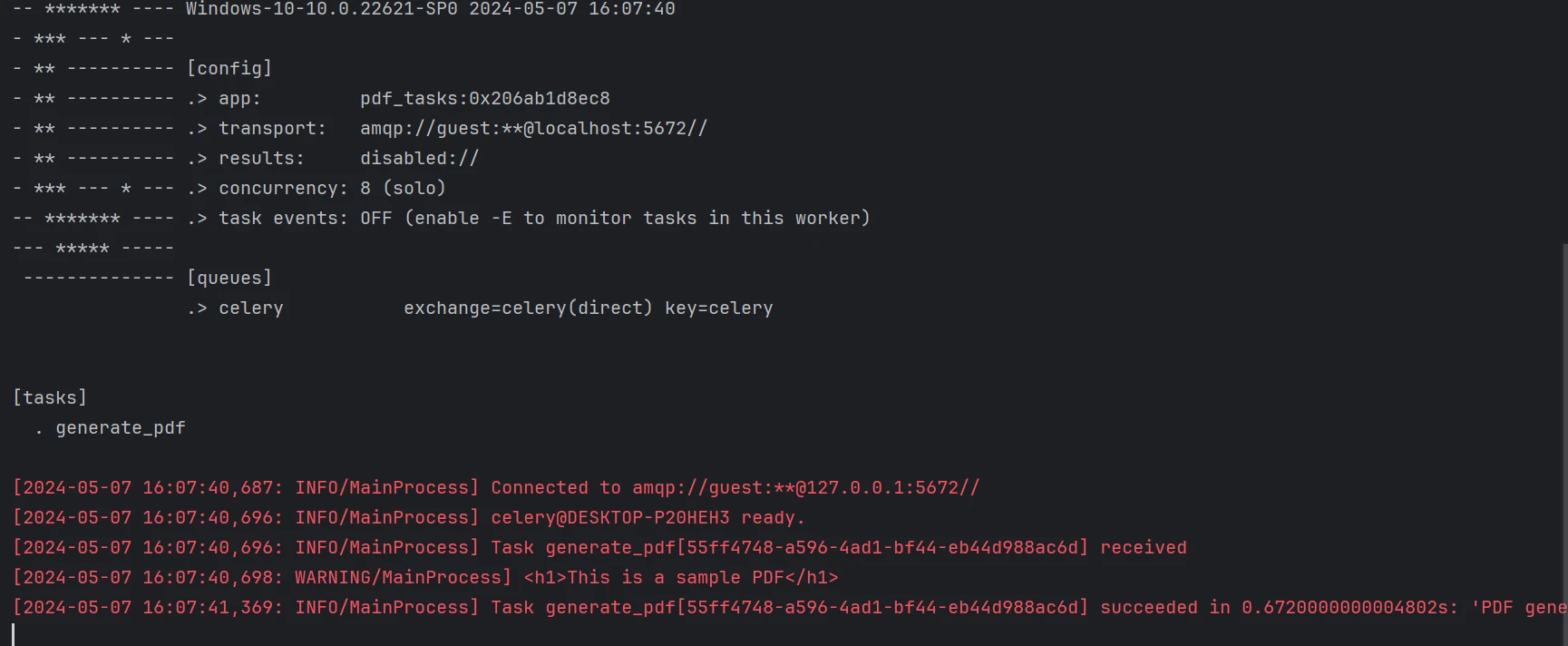
main()Celery是我們使用的任務佇列系統。 作業連同包含HTML內容的資料一起被發送到中央工作者(worker.py)。 該功能使用IronPDF建立一個PDF並保存它。
客戶端腳本(client.py)向佇列發送包含範例資料的任務。 這個腳本可以更改以從不同的計算機發送其他任務進來。
以下是從上述程式碼生成的PDF。
處理大規模PDF建立活動的IronPDF使用者可以通過利用分散式Python 和 Ray 或 Dask 之類的庫釋放巨大的潛力。 相較於在單一機器上執行程式碼,通過將相同的程式碼工作負載擴展到多個核心並跨多台機器使用,您可以獲得巨大的速度提升。
透過使用分散式Python程式語言,IronPDF可以從在單一系統上建立PDF的強大工具提升為有效管理大型資料集的可靠解決方案。 為了在即將到來的具有大規模PDF建立項目中充分利用IronPDF,請調查所提供的Python庫並嘗試這些方法!
IronPDF作為一個套件購買時價格合理,並且擁有終身許可證。 該套件是一個不錯的選擇,對於許多系統來說,只需$999即可購買。 它為許可證持有人提供24/7線上技術支援。 如需有關收費的更多資訊,請造訪網站。要了解 Iron Software 產品的更多資訊,請造訪此頁面。

Curtis Chau擁有Carleton大學的電腦科學學士學位,專精於前端開發,擁有Node.js、TypeScript、JavaScript和React的專業知識。Curtis熱衷於建立直觀且美觀的使用者介面,喜愛使用現代框架並建立結構良好、視覺吸引力的手冊。


IronPDF 是 IRONSUITE 的一部分
10 款適用於辦公室文件的 .NET API 產品

當您需要您的PDF看起來像HTML一樣快速。











