



已更新 2026年4月23日
简化 .NET 与 Microsoft.Extensions.AI 的 LLM 集成
AI正在改变软件开发,但将大型语言模型(LLM)集成到.NET中直到现在一直很复杂。通过IronPdf.AI,将AI集成更进一步,该产品为.NET应用程序带来了OpenAI驱动的PDF解析、数据提取和内容摘要。
阅读更多

在C#编程语言中,感叹号(null-forgiving)运算符是处理布尔表达式和空值情景的重要工具。 随着软件开发的日益复杂,理解如何有效地使用运算符可以显著增强代码的稳健性和可维护性。
当使用像IronPDF这类旨在无缝生成和操作PDF的库时,掌握空值处理和逻辑运算的差异是至关重要的。 !运算符在可能出现空值的情景中特别有用,这使得开发人员能够对他们的代码充满信心,并简化他们的工作流程。 本文将探讨!运算符的重要性,其在C#中的应用,以及与IronPDF的集成。
null-forgiving运算符(!)是C#中的基本运算符之一。 它主要用于反转布尔值,使得更容易处理涉及值类型的条件。这个运算符允许开发人员在控制语句中创建更具表达力的条件,提高代码的可读性。
考虑一个场景,你想检查用户是否没有登录:
bool isLoggedIn = false;
if (!isLoggedIn)
{
    Console.WriteLine("User is not logged in.");
}Dim isLoggedIn As Boolean = False
If Not isLoggedIn Then
Console.WriteLine("User is not logged in.")
End If在此示例中,! 操作符检查 isLoggedIn 是否为假。 如果是,将显示消息。 这种否定可以简化复杂的条件,使代码更易读和理解。
C#提供了多种工具来管理空值状态,了解它们之间的差异对于有效编码是至关重要的。 在这个情境中,有两个最重要的运算符是空条件运算符 (?.) 和 null-forgiving 运算符 (!)。
-空条件运算符 (?.):此运算符允许安全地访问可能为空的对象的属性或方法。 通过使用?.,您可以防止空状态异常,而无需显式检查对象是否为空。
string? userName = null;
int userNameLength = userName?.Length ?? 0; // Returns 0 if userName is null'INSTANT VB WARNING: Nullable reference types have no equivalent in VB:
'ORIGINAL LINE: string? userName = null;
Dim userName As String = Nothing
Dim userNameLength As Integer = If(userName?.Length, 0) ' Returns 0 if userName is null-允许空值运算符 (!):此运算符是开发人员告知编译器不应将变量视为空值的一种方式。 它有效地抑制了与可空引用类型相关的可空警告,帮助您避免关于潜在空值的任何不必要的编译器警告。
string? message = GetMessage(); // GetMessage could return null
Console.WriteLine(message!); // We assert that message is not null'INSTANT VB WARNING: Nullable reference types have no equivalent in VB:
'ORIGINAL LINE: string? message = GetMessage();
Dim message As String = GetMessage() ' GetMessage could return null
'INSTANT VB TODO TASK: There is no VB equivalent to the C# 'null-forgiving operator':
'ORIGINAL LINE: Console.WriteLine(message!);
Console.WriteLine(message) ' We assert that message is not null在这种情况下,! 操作符告诉编译器您确定 message 在打印时不为空,尽管有可能为空。 这在您想确保方法的返回值被正确处理并避免任何可能的空引用警告时尤其重要。
了解这些运算符对于避免空引用异常并保证代码的清洁和安全至关重要。 在正确的上下文中使用!可以在不牺牲安全性的情况下简化代码。
当使用IronPDF这样的强大库来在.NET中创建和处理PDF文件时,开发人员可能经常会遇到对象或方法结果可能返回空的情况。 例如,当从文件加载一个PDF文档时,如果文件不存在或无法读取,您可能会收到空值。 在这里,null-forgiving运算符(!)成为一个有价值的工具,确认变量不应为空,使您的代码能够在没有多余的空检查情况下继续。
要开始使用IronPDF结合null-forgiving运算符,您首先需要安装它。 如果已经安装,可以跳到下一节。 否则,以下步骤将介绍如何安装IronPDF库。
要使用 NuGet 包管理器控制台安装 IronPDF,打开 Visual Studio 并导航到包管理器控制台。 然后运行以下命令:
打开 Visual Studio,转到 "工具 -> NuGet 包管理器 -> 为解决方案管理 NuGet 包",然后搜索 IronPDF。 在这里,您只需选择您的项目并点击"安装",IronPDF 就会被添加到您的项目中。
一旦您安装了 IronPDF,您所需添加的全部内容就是在代码顶部添加正确的 using 语句以开始使用 IronPDF:
using IronPdf;Imports IronPdf让我们来看一个使用IronPDF渲染PDF文档的实际示例。 假设您有一个方法,根据指定的文件路径检索一个PDF文档。 如果路径无效,方法可能会返回空值。 以下是您如何有效地处理这种情况:
using IronPdf;

PdfDocument? pdf = PdfDocument.FromFile("example.pdf");
// Here we use the null-forgiving operator to assert that pdf is not null
pdf!.SaveAs("output.pdf");Imports IronPdf
Private pdf? As PdfDocument = PdfDocument.FromFile("example.pdf")
' Here we use the null-forgiving operator to assert that pdf is not null
'INSTANT VB TODO TASK: There is no VB equivalent to the C# 'null-forgiving operator':
'ORIGINAL LINE: pdf!.SaveAs("output.pdf");
pdf.SaveAs("output.pdf")在此示例中,方法 PdfDocument.FromFile(filePath) 尝试从指定路径加载PDF。 ! 操作符表示您期望 pdf 为非空。 然而,重要的是要注意,如果提供的文件路径无效或文件无法读取,此代码会抛出一个运行时异常。
为了提高安全性,您可能希望在使用!运算符之前进行检查:
PdfDocument? pdf = PdfDocument.FromFile("example.pdf");
if (pdf != null)
{
    pdf.SaveAs("output.pdf");
}
else
{
    Console.WriteLine("Failed to load PDF document. Please check the file path.");
}Dim pdf? As PdfDocument = PdfDocument.FromFile("example.pdf")
If pdf IsNot Nothing Then
pdf.SaveAs("output.pdf")
Else
Console.WriteLine("Failed to load PDF document. Please check the file path.")
End If这种方法确保您只有在pdf变量确实为非空时才调用其方法,从而避免潜在的运行时错误。
IronPDF中另一个常见的使用场景是访问文档属性,例如PDF文档的标题或元数据。 若 PDF 未设置标题,Title 属性可能返回空. 以下是如何使用空条件运算符安全地检索此属性:
using IronPdf;

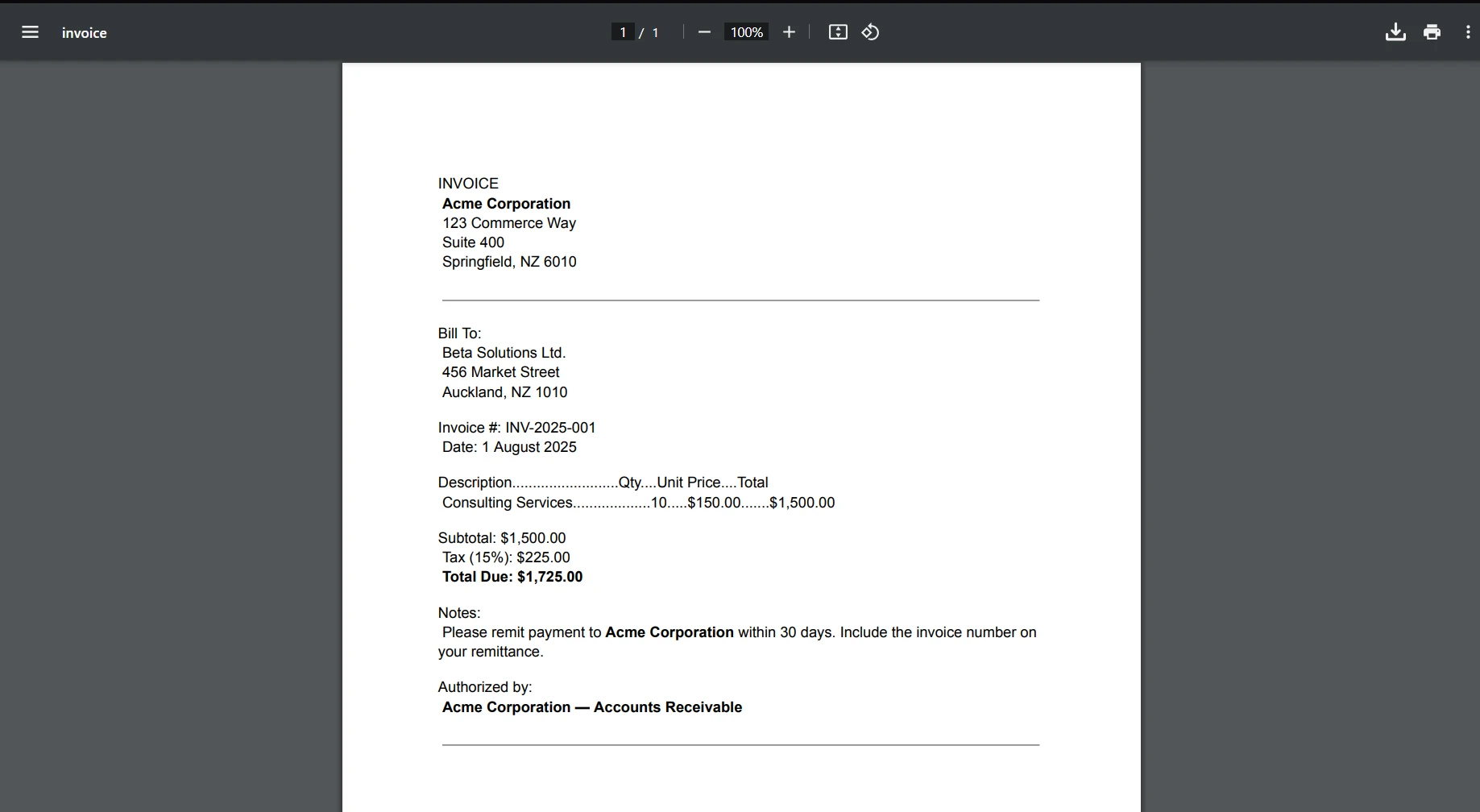
PdfDocument? pdf = PdfDocument.FromFile("invoice.pdf");
// Assuming the title might be null, we use the null-forgiving operator
string? title = pdf!.MetaData.Title!;
Console.WriteLine($"Document Title: {title}");Imports IronPdf
Private pdf? As PdfDocument = PdfDocument.FromFile("invoice.pdf")
' Assuming the title might be null, we use the null-forgiving operator
'INSTANT VB TODO TASK: There is no VB equivalent to the C# 'null-forgiving operator':
'ORIGINAL LINE: string? title = pdf!.MetaData.Title!;
'INSTANT VB WARNING: Nullable reference types have no equivalent in VB:
'ORIGINAL LINE: string? title = pdf.MetaData.Title;
Private title As String = pdf.MetaData.Title
Console.WriteLine($"Document Title: {title}")在这个示例中,pdf!和pdf.MetaData.Title!都使用了null-forgiving运算符。 首先确保 pdf 不为空,其次确认 Title 属性也不为空。 但是,与以前一样,要谨慎行事; 如果任一值确实为空,此代码将导致运行时异常。
为了改进此示例,您可以提供一个后备值:
string title = pdf?.MetaData.Title ?? "Untitled Document"; // Fallback to "Untitled Document" if Title is null
Console.WriteLine($"Document Title: {title}");Dim title As String = If(pdf?.MetaData.Title, "Untitled Document") ' Fallback to "Untitled Document" if Title is null
Console.WriteLine($"Document Title: {title}")这个替代方法确保您始终有一个有效的字符串可供使用,显著提高了代码的稳健性。
虽然null-forgiving运算符(!)是一个强大的工具,但应谨慎使用。 以下是一些避免常见错误的最佳实践:
只有在确信时使用 !: 仅在您确信变量为非空时才使用 null-forgiving 运算符。 过度依赖此运算符可能会在您的假设不正确时导致运行时异常。
与空条件检查结合使用: 在适用的情况下,将 null-forgiving 运算符与空条件检查结合使用,以增强安全性。 例如:
var title = pdf?.MetaData.Title!; // Safely access Title while asserting non-null'INSTANT VB TODO TASK: There is no VB equivalent to the C# 'null-forgiving operator':
'ORIGINAL LINE: var title = pdf?.MetaData.Title!;
Dim title = pdf?.MetaData.Title ' Safely access Title while asserting non-null3.实现稳健的错误处理:始终实现错误处理来处理意外的空值。 这可能涉及记录错误或提供用户友好的反馈。
4.对关键操作使用 try-catch:执行可能导致异常的操作(例如加载 PDF)时,请考虑将其包装在 try-catch 块中,以便优雅地处理任何问题:
try
{
    var pdfDocument = PdfDocument.FromFile(filePath);
    // Proceed with processing
}
catch (Exception ex)
{
    Console.WriteLine($"Error loading PDF: {ex.Message}");
}Try
Dim pdfDocument = PdfDocument.FromFile(filePath)
' Proceed with processing
Catch ex As Exception
Console.WriteLine($"Error loading PDF: {ex.Message}")
End Try5.记录你的假设:在使用允许空值运算符时,请注释你的代码,以说明你为什么认为一个变量不为空。 这一做法有助于将来的开发人员(甚至您自己)理解逻辑。
实施代码审查是捕捉可空警告潜在问题的绝佳方法。 鼓励团队成员仔细检查 ! 的使用可以带来更可靠的代码,并帮助防止在生产中出现意外行为。
了解项目文件在您的 C# 应用中的结构至关重要。
项目文件指定您正在使用的库,如 IronPDF,以及任何特定的配置。 在使用 null-forgiving 运算符时,请确保您的项目文件包含所有必要的引用,以防止编译错误,尤其是在处理复杂库时。
理解感叹号 (!) 运算符在 C# 中的作用对于开发健壮的应用程序至关重要,特别是在使用像 IronPDF 的库时。 此运算符允许开发人员对其代码充满信心,在提高可读性的同时减少不必要的空检查。 然而,务必谨慎使用此运算符,确保变量确实不为空,以避免运行时异常。
现在,您已经熟悉了 C# 感叹号的使用,可以在 IronPDF 项目中使用它们,以确保生成出色的 PDF,同时避免可能出现的空引用错误。 如果您目前没有 IronPDF,但想开始使用这个功能丰富的库来提升您的 PDF 项目,请下载其 免费试用版,只需几分钟即可在您的项目中运行。

Jacob Mellor 是 Iron Software 的首席技术官,也是一位开创 C# PDF 技术的有远见的工程师。作为 Iron Software 核心代码库的原始开发者,他从公司成立之初就开始塑造公司的产品架构,与首席执行官 Cameron Rimington 一起将公司转变为一家拥有 50 多名员工的公司,为 NASA、特斯拉和全球政府机构提供服务。

IronPDF 是 IRONSUITE的一部分
10 个 .NET API 产品用于您的办公文档

当您需要PDF看起来像HTML时,速度快。


