



已更新 2026年4月23日
简化 .NET 与 Microsoft.Extensions.AI 的 LLM 集成
AI正在改变软件开发,但将大型语言模型(LLM)集成到.NET中直到现在一直很复杂。通过IronPdf.AI,将AI集成更进一步,该产品为.NET应用程序带来了OpenAI驱动的PDF解析、数据提取和内容摘要。
阅读更多

在 C# 编程领域,Math.Round 值方法在数值四舍五入方面发挥着举足轻重的作用,尤其是在处理双值和小数数据类型时。该方法允许开发人员将给定的数值四舍五入到最接近的整数值或指定的小数位数,从而为数学运算提供灵活性和精确性。 有几种四舍五入类型可供选择,例如中点四舍五入。 在本文中,我们将深入探讨 C# 中 Math.Round 的复杂性,探索其各个方面和使用场景。 在本文的后续章节中,我们将探讨利用 Iron Software 的 IronPDF 库来处理 PDF。
C# 中的 Math.Round 方法是一种功能强大的工具,用于使用指定的四舍五入约定对小数位数进行四舍五入。 它是 System 命名空间的一部分,提供多个重载以适应不同的舍入操作。
// Methods overloaded by Math.Round
Math.Round(Double)
Math.Round(Double, Int32) // Int32 specifies number of fractional digits
Math.Round(Double, Int32, MidpointRounding)  // Int32 specifies number of fractional digits, MidpointRounding is the type of rounding method
Math.Round(Double, MidpointRounding)  // MidpointRounding is the type of rounding method
Math.Round(Decimal)
Math.Round(Decimal, Int32) // Int32 specifies number of fractional digits
Math.Round(Decimal, Int32, MidpointRounding)
Math.Round(Decimal, MidpointRounding)' Methods overloaded by Math.Round
'INSTANT VB TODO TASK: The following line uses invalid syntax:
'Math.Round(Double) Math.Round(Double, Int32) Math.Round(Double, Int32, MidpointRounding) Math.Round(Double, MidpointRounding) Math.Round(Decimal) Math.Round(Decimal, Int32) Math.Round(Decimal, Int32, MidpointRounding) Math.Round(Decimal, MidpointRounding)在处理双数值时,Math.Round 通常用于将数字四舍五入到最接近的整数。 例如:
double originalValue = 3.75;
double roundedValue = Math.Round(originalValue);
// Output: 4Dim originalValue As Double = 3.75
Dim roundedValue As Double = Math.Round(originalValue)
' Output: 4在本例中,Math.Round 方法将原始双数值 3.75 四舍五入为最接近的整数值,即 4。
同样,Math.Round 方法适用于十进制值。 请考虑以下示例:
decimal originalValue = 8.625m;
decimal roundedValue = Math.Round(originalValue, 2);
// Output: 8.63Dim originalValue As Decimal = 8.625D
Dim roundedValue As Decimal = Math.Round(originalValue, 2)
' Output: 8.63此处使用 Math.Round 方法将小数 8.625 四舍五入到小数点后两位,得到四舍五入后的数值 8.63。
Math.Round 的主要用途是将给定数值四舍五入为最接近的整数。 当小数部分正好位于两个整数的中间时,该方法遵循指定的四舍五入惯例。 MidpointRounding 枚举可用作 Math.Round 方法的参数,并决定是向最接近的偶数舍入还是从零开始舍入。
让我们来探讨一下如何使用 MidpointRounding 模式:
double originalValue = 5.5;
double roundedValueEven = Math.Round(originalValue, MidpointRounding.ToEven);
double roundedValueOdd = Math.Round(originalValue, MidpointRounding.AwayFromZero);
// Output: roundedValueEven = 6, roundedValueOdd = 6Dim originalValue As Double = 5.5
Dim roundedValueEven As Double = Math.Round(originalValue, MidpointRounding.ToEven)
Dim roundedValueOdd As Double = Math.Round(originalValue, MidpointRounding.AwayFromZero)
' Output: roundedValueEven = 6, roundedValueOdd = 6在本例中,当对数值 5.5 进行四舍五入时,MidpointRounding.ToEven 向最接近的偶数取整(结果为 6),而 MidpointRounding.AwayFromZero 从零开始取整,结果为 6。
要将一个数字四舍五入到指定的小数位数,Math.Round 方法允许包含一个代表小数位数的附加参数:
decimal originalValue = 9.123456m;
decimal roundedValue = Math.Round(originalValue, 3);
// Output: 9.123Dim originalValue As Decimal = 9.123456D
Dim roundedValue As Decimal = Math.Round(originalValue, 3)
' Output: 9.123这里,小数点后的数字 9.123456 被四舍五入到小数点后三位,得到四舍五入后的数值 9.123。
当结果中最小有效数字后的数值正好位于两个数字的中间时,就产生了中点值。 例如,当四舍五入到小数点后两位 2.57 时,2.56500 是一个中点值;当四舍五入到整数 4 时,3.500 是一个中点值。在没有定义四舍五入惯例的情况下,如何在中点值的四舍五入策略中识别最接近的值是一个难题。
C# 中的 Round 方法支持两种处理中点值的四舍五入约定:
从零开始四舍五入:中点值会四舍五入到从零开始的下一个数字。 该方法由 MidpointRounding.AwayFromZero 枚举成员表示。
四舍五入到最接近的偶数(银行四舍五入):中点值四舍五入为最接近的偶数。 这种四舍五入方法由 MidpointRounding.ToEven 枚举成员表示。
decimal[] decimalSampleValues = { 1.15m, 1.25m, 1.35m, 1.45m, 1.55m, 1.65m };
decimal sum = 0;

// Calculate true mean values.
foreach (var value in decimalSampleValues)
{
    sum += value;
}
Console.WriteLine("True mean values: {0:N2}", sum / decimalSampleValues.Length);

// Calculate mean values with rounding away from zero.
sum = 0;
foreach (var value in decimalSampleValues)
{
    sum += Math.Round(value, 1, MidpointRounding.AwayFromZero);
}
Console.WriteLine("AwayFromZero mean: {0:N2}", sum / decimalSampleValues.Length);

// Calculate mean values with rounding to the nearest even.
sum = 0;
foreach (var value in decimalSampleValues)
{
    sum += Math.Round(value, 1, MidpointRounding.ToEven);
}
Console.WriteLine("ToEven mean: {0:N2}", sum / decimalSampleValues.Length);Dim decimalSampleValues() As Decimal = { 1.15D, 1.25D, 1.35D, 1.45D, 1.55D, 1.65D }
Dim sum As Decimal = 0
' Calculate true mean values.
For Each value In decimalSampleValues
sum += value
Next value
Console.WriteLine("True mean values: {0:N2}", sum / decimalSampleValues.Length)
' Calculate mean values with rounding away from zero.
sum = 0
For Each value In decimalSampleValues
sum += Math.Round(value, 1, MidpointRounding.AwayFromZero)
Next value
Console.WriteLine("AwayFromZero mean: {0:N2}", sum / decimalSampleValues.Length)
' Calculate mean values with rounding to the nearest even.
sum = 0
For Each value In decimalSampleValues
sum += Math.Round(value, 1, MidpointRounding.ToEven)
Next value
Console.WriteLine("ToEven mean: {0:N2}", sum / decimalSampleValues.Length)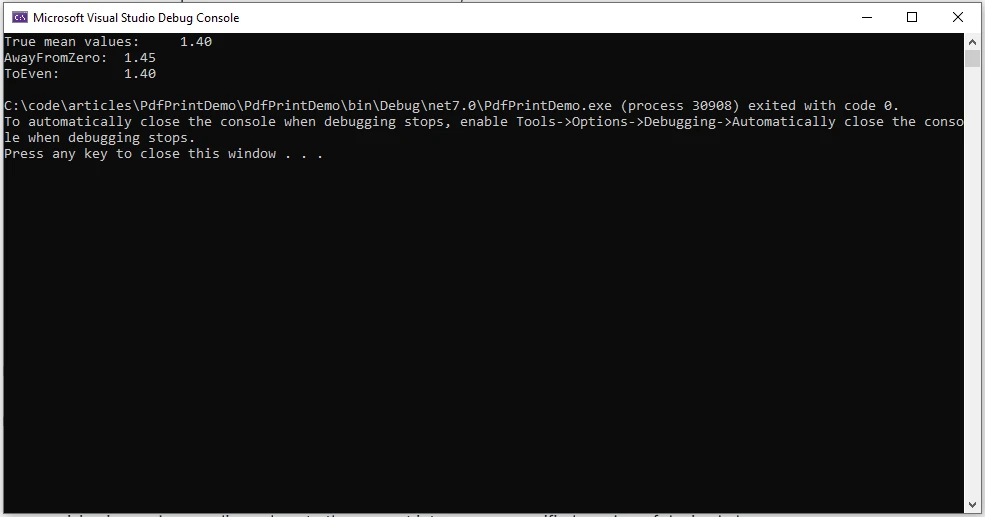

AwayFromZero 四舍五入策略将一个数字四舍五入到最接近的数字,将一个数字从零四舍五入到其他两个数字的中间。
该策略的特点是直接四舍五入为零。 翻译结果应最接近无限精确的结果,且在量级上不得高于无限精确的结果。
这种策略包括四舍五入,当一个数字位于两个数字的中间时,就四舍五入到最接近的偶数。
这一策略要求向下取整,结果应最接近无限精确的结果,但不得大于无限精确的结果。
这种策略包括向上取整,结果应最接近且不小于无限精确的结果。
在使用双精度浮点数时,必须了解浮点表示法的性质可能导致的不精确性。 Math.Round 方法可将数值四舍五入到最接近的整数或指定的小数位数,从而帮助减轻精度问题。
开发人员可以利用 Math.Round 方法实现所需的计算精度:
double originalValue = 123.456789;
double result = Math.Round(originalValue, 4);
// Output: 123.4568, rounded valueDim originalValue As Double = 123.456789
Dim result As Double = Math.Round(originalValue, 4)
' Output: 123.4568, rounded value在本例中,双数值 123.456789 四舍五入到小数点后四位,得到更精确的数值 123.4568。
当一个分数值正好位于两个整数的中间时,中点舍入策略就变得至关重要。 Math.Round 方法采用指定的 MidpointRounding 策略来解决此类情况。
下面是一个使用中点四舍五入的例子:
double originalValue = 7.5;
double roundedValue = Math.Round(originalValue, MidpointRounding.AwayFromZero);
// Output: 8Dim originalValue As Double = 7.5
Dim roundedValue As Double = Math.Round(originalValue, MidpointRounding.AwayFromZero)
' Output: 8这里,数值 7.5 从 0 舍入,得到四舍五入后的数值 8。
以下是一些在不同语境中的应用实例:
在金融应用中,精确的四舍五入至关重要。 例如,在计算利率、转换货币或处理税收计算时,可以使用 Math.Round 方法来确保结果四舍五入到适当的小数位数,以符合财务标准。
double interestRate = 0.04567;
double roundedInterest = Math.Round(interestRate, 4); // Round to 4 decimal placesDim interestRate As Double = 0.04567
Dim roundedInterest As Double = Math.Round(interestRate, 4) ' Round to 4 decimal places在用户界面中显示数值时,为了提高可读性,通常会将数字四舍五入。 使用 Math.Round 进行四舍五入可以提高所呈现信息的清晰度。
double temperature = 23.678;
double roundedTemperature = Math.Round(temperature, 1); // Round to 1 decimal placeDim temperature As Double = 23.678
Dim roundedTemperature As Double = Math.Round(temperature, 1) ' Round to 1 decimal place在统计分析中,精确的四舍五入对于避免引入偏差或误差至关重要。 Math.Round 方法可以帮助以所需的精确度呈现结果。
double meanValue = CalculateMean(data);
double roundedMean = Math.Round(meanValue, 2); // Round mean value to 2 decimal placesDim meanValue As Double = CalculateMean(data)
Dim roundedMean As Double = Math.Round(meanValue, 2) ' Round mean value to 2 decimal places在科学应用领域,准确性至关重要。 在处理实验数据或科学计算时,使用 Math.Round 进行四舍五入可确保以有意义且准确的方式呈现结果。
double experimentalResult = 9.87654321;
double roundedResult = Math.Round(experimentalResult, 5); // Round to 5 decimal placesDim experimentalResult As Double = 9.87654321
Dim roundedResult As Double = Math.Round(experimentalResult, 5) ' Round to 5 decimal places在实施数学模型或模拟时,四舍五入可以简化复杂的计算。 在建模过程中,可以使用 Math.Round 方法来控制中间结果的精度。
double modelResult = SimulatePhysicalSystem(parameters);
double roundedModelResult = Math.Round(modelResult, 3); // Round to 3 decimal placesDim modelResult As Double = SimulatePhysicalSystem(parameters)
Dim roundedModelResult As Double = Math.Round(modelResult, 3) ' Round to 3 decimal places在游戏开发中,数字精度对于物理计算、定位和其他数学运算至关重要。 Math.Round 方法可确保与游戏相关的数值四舍五入到适当的精度水平。
double playerPosition = CalculatePlayerPosition();
double roundedPosition = Math.Round(playerPosition, 2); // Round to 2 decimal placesDim playerPosition As Double = CalculatePlayerPosition()
Dim roundedPosition As Double = Math.Round(playerPosition, 2) ' Round to 2 decimal places在上述每个场景中,Math.Round 方法都允许开发人员控制数值的精度,从而提高应用程序的准确性和可读性。
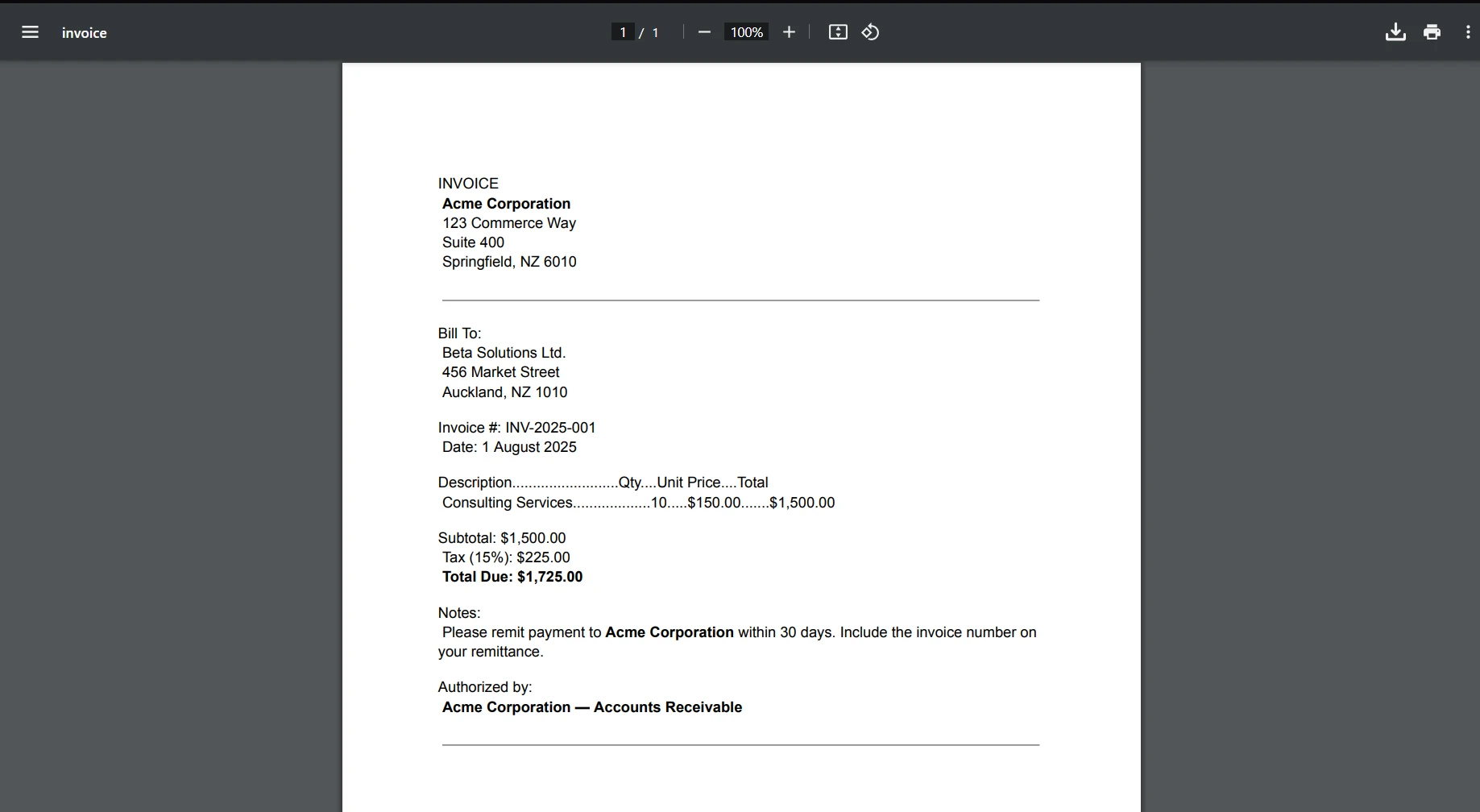
IronPDF 的核心功能是其HTML 转 PDF 功能,可保持布局和样式。 它可以将网页内容转换成 PDF,非常适合报告、发票和文档。 您可以轻松将 HTML 文件、URL 和 HTML 字符串转换为 PDF。
using IronPdf;

class Program
{
    static void Main(string[] args)
    {
        var renderer = new ChromePdfRenderer();

        // Convert HTML String to PDF
        var htmlContent = "<h1>Hello, IronPDF!</h1><p>This is a PDF from an HTML string.</p>";
        var pdfFromHtmlString = renderer.RenderHtmlAsPdf(htmlContent);
        pdfFromHtmlString.SaveAs("HTMLStringToPDF.pdf");

        // Convert HTML File to PDF
        var htmlFilePath = "path_to_your_html_file.html"; // Specify the path to your HTML file
        var pdfFromHtmlFile = renderer.RenderHtmlFileAsPdf(htmlFilePath);
        pdfFromHtmlFile.SaveAs("HTMLFileToPDF.pdf");

        // Convert URL to PDF
        var url = "http://ironpdf.com"; // Specify the URL
        var pdfFromUrl = renderer.RenderUrlAsPdf(url);
        pdfFromUrl.SaveAs("URLToPDF.pdf");
    }
}Imports IronPdf
Friend Class Program
Shared Sub Main(ByVal args() As String)
Dim renderer = New ChromePdfRenderer()
' Convert HTML String to PDF
Dim htmlContent = "<h1>Hello, IronPDF!</h1><p>This is a PDF from an HTML string.</p>"
Dim pdfFromHtmlString = renderer.RenderHtmlAsPdf(htmlContent)
pdfFromHtmlString.SaveAs("HTMLStringToPDF.pdf")
' Convert HTML File to PDF
Dim htmlFilePath = "path_to_your_html_file.html" ' Specify the path to your HTML file
Dim pdfFromHtmlFile = renderer.RenderHtmlFileAsPdf(htmlFilePath)
pdfFromHtmlFile.SaveAs("HTMLFileToPDF.pdf")
' Convert URL to PDF
Dim url = "http://ironpdf.com" ' Specify the URL
Dim pdfFromUrl = renderer.RenderUrlAsPdf(url)
pdfFromUrl.SaveAs("URLToPDF.pdf")
End Sub
End Class现在,让我们看看如何使用 IronPDF 的 Iron Software C# PDF 库生成 PDF 文档。
您可以选择通过 NuGet 包管理器控制台或 Visual Studio 包管理器安装 IronPDF。
使用NuGet包管理器安装IronPDF,通过在搜索栏中搜索"IronPDF"。
using IronPdf;

List<string> cart = new List<string>();

void AddItems(params string[] items)
{
    for (int i = 0; i < items.Length; i++)
    {
        cart.Add(items[i]);
    }
}

Console.WriteLine("Enter the cart items as comma-separated values:");
var itemsString = Console.ReadLine();
if (itemsString != null)
{
    var items = itemsString.Split(",").ToArray();
    AddItems(items);
}

AddItems("Sample1", "Sample2");

Console.WriteLine("-------------------------------------------------------");
Console.WriteLine("Display Cart");

string name = "Sam";
var count = cart.Count;
string content = $@"
<!DOCTYPE html>
<html>
<body>
<h1>Hello, {name}!</h1>
<p>You have {count} items in the cart.</p>
" + string.Join("\n", cart.Select(x => $"<p>{x}</p>"))
+ @"
</body>
</html>";

var pdfRenderer = new ChromePdfRenderer();
pdfRenderer.RenderHtmlAsPdf(content).SaveAs("cart.pdf");Imports Microsoft.VisualBasic
Imports IronPdf
Private cart As New List(Of String)()
Private Sub AddItems(ParamArray ByVal items() As String)
For i As Integer = 0 To items.Length - 1
cart.Add(items(i))
Next i
End Sub
Console.WriteLine("Enter the cart items as comma-separated values:")
Dim itemsString = Console.ReadLine()
If itemsString IsNot Nothing Then
Dim items = itemsString.Split(",").ToArray()
AddItems(items)
End If
AddItems("Sample1", "Sample2")
Console.WriteLine("-------------------------------------------------------")
Console.WriteLine("Display Cart")
Dim name As String = "Sam"
Dim count = cart.Count
Dim content As String = $"
<!DOCTYPE html>
<html>
<body>
<h1>Hello, {name}!</h1>
<p>You have {count} items in the cart.</p>
" & String.Join(vbLf, cart.Select(Function(x) $"<p>{x}</p>")) & "
</body>
</html>"
Dim pdfRenderer = New ChromePdfRenderer()
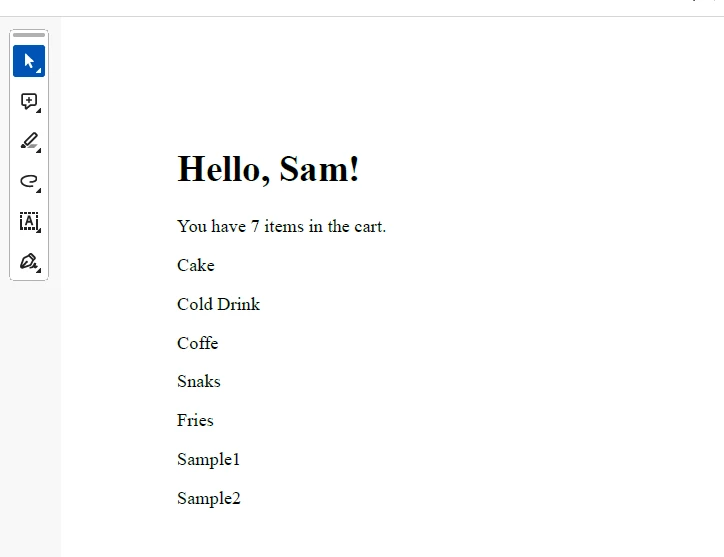
pdfRenderer.RenderHtmlAsPdf(content).SaveAs("cart.pdf")在上述代码中,我们正在为购物车项目生成 HTML 文档,然后使用 IronPDF 将其保存为 PDF 文档。
要启用所提供代码的功能,必须获得许可证密钥。 您可以从此处获取试用密钥,必须将其插入到 appsettings.json 文件中。
"IronPdf.LicenseKey": "your license key"提供您的电子邮件 ID 以获取试用许可证。
总之,C# 中的 Math.Round 方法是对双数值和小数值进行四舍五入的通用工具,它为开发人员提供了将数值四舍五入到最接近的整数或指定小数位数的灵活性。 了解 Math.Round 的复杂性,包括其对中点值的处理和 MidpointRounding 策略的使用,对于在 C# 编程中进行准确可靠的数学运算至关重要。 无论是处理财务计算、用户界面显示,还是其他需要精确数字表示的场景,Math.Round 方法都是程序员工具包中不可或缺的资产。 此外,我们还看到 IronPDF 是如何生成 PDF 文档的多功能库。

Jacob Mellor 是 Iron Software 的首席技术官,也是一位开创 C# PDF 技术的有远见的工程师。作为 Iron Software 核心代码库的原始开发者,他从公司成立之初就开始塑造公司的产品架构,与首席执行官 Cameron Rimington 一起将公司转变为一家拥有 50 多名员工的公司,为 NASA、特斯拉和全球政府机构提供服务。


IronPDF 是 IRONSUITE的一部分
10 个 .NET API 产品用于您的办公文档

当您需要PDF看起来像HTML时,速度快。


