using IronPdf;

// Disable local disk access or cross-origin requests
Installation.EnableWebSecurity = true;

// Instantiate Renderer
var renderer = new ChromePdfRenderer();

// Create a PDF from a HTML string using C#
var pdf = renderer.RenderHtmlAsPdf("<h1>Hello World</h1>");

// Export to a file or Stream
pdf.SaveAs("output.pdf");

// Advanced Example with HTML Assets
// Load external html assets: Images, CSS and JavaScript.
// An optional BasePath 'C:\site\assets\' is set as the file location to load assets from
var myAdvancedPdf = renderer.RenderHtmlAsPdf("<img src='icons/iron.png'>", @"C:\site\assets\");
myAdvancedPdf.SaveAs("html-with-assets.pdf");
using IronPdf;// Disable local disk access or cross-origin requestsInstallation.EnableWebSecurity = true;// Instantiate Renderervar renderer = new ChromePdfRenderer();// Create a PDF from a HTML string using C#var pdf = renderer.RenderHtmlAsPdf("<h1>Hello World</h1>");// Export to a file or Streampdf.SaveAs("output.pdf");// Advanced Example with HTML Assets// Load external html assets: Images, CSS and JavaScript.// An optional BasePath 'C:\site\assets\' is set as the file location to load assets fromvar myAdvancedPdf = renderer.RenderHtmlAsPdf("<img src='icons/iron.png'>", @"C:\site\assets\");myAdvancedPdf.SaveAs("html-with-assets.pdf");
Lint-Tools sind entscheidend in der modernen Softwareentwicklung, da sie Kodierungsstandards durchsetzen, Fehler erkennen und die Codequalität verbessern. Ein Linter ist einfach ein statisches Code-Analyse-Tool, das hilft, die Lesbarkeit des Codes zu verbessern, sowie potenzielle Syntaxfehler, Tippfehler und logische Fehler zu beheben, bevor sie zu Laufzeitfehlern oder unerwartetem Verhalten führen. Im robusten Entwicklungsumfeld der C#-Programmierung bieten Linter den Entwicklern Werkzeuge zur Analyse und Verbesserung ihres Codes.
In diesem Artikel werden wir das Konzept von [**C# Linters**](https://code.visualstudio.com/docs/csharp/formatting-linting), ihre Bedeutung, beliebte Optionen und wie sie dazu beitragen, sauberen und wartbaren Code zu schreiben, erkunden.
## Verstehen von C# Linters
Ein [**linter**](https://learn.microsoft.com/en-us/dotnet/fundamentals/code-analysis/overview?tabs=net-8), kurz für Code-Linter oder statische Code-Analyse-Tool, ist ein statisches Analyse-Tool, das Quellcode auf potenzielle Probleme, Einhaltung von Kodierungsstandards und Konsistenz im Stil untersucht. C# Linter analysieren den Code, ohne ihn auszuführen, und bieten Einblicke in potenzielle Probleme und Verbesserungsbereiche.
Durch die Verwendung einer **editorconfig**-Datei können Entwickler konsistente Namenskonventionen, Kodierungsstile und andere Regeln im gesamten Quellcode etablieren und so eine saubere und einheitliche Codebasis fördern. Diese Tools, die oft als .NET-Tools integriert werden, identifizieren und adressieren automatisch Codeprobleme und stellen sicher, dass der Code vordefinierten Regelsets entspricht.
Linter unterstützen Best Practices, indem sie Regelverletzungen hervorheben und automatische Korrekturen anbieten, was zu einer effizienteren und wartbareren Codebasis beiträgt. Die Verwendung von Lintern im Entwicklungsprozess hilft, technische Schulden zu mindern, Build-Warnungen zu adressieren und letztendlich eine Kultur des sauberen Codes und der Einhaltung von Best Practices im gesamten Projekt zu fördern.
### Hauptfunktionen von C# Linters
1. **Code-Qualitätssicherung:** Linter identifizieren häufige Programmierfehler, potenzielle Bugs und Abweichungen von Kodierungs-Best-Practices.
2. **Durchsetzung von Kodierungsstandards:** Linter erzwingen Kodierungsstandards und Stilleitlinien, um Konsistenz im gesamten Codebestand sicherzustellen.
3. **Sicherheits- und Leistungsanalyse:** Einige Linter können Sicherheitslücken und Leistungsprobleme erkennen und robusten und effizienten Code fördern.
4. **Refactoring-Empfehlungen:** Linter können Empfehlungen für das Refactoring geben, um die Wartbarkeit und Lesbarkeit des Codes zu verbessern.
## Beliebte C# Linters
Linter spielen eine zentrale Rolle bei der Aufrechterhaltung der Codequalität und der Einhaltung der besten Praktiken in der Softwareentwicklung. Mehrere Linter sind in der C#-Entwicklungswelt weit verbreitet, und jeder bietet einzigartige Funktionen und Integrationen. Erkunden wir einige Optionen:
### 1. Roslyn-Analysatoren
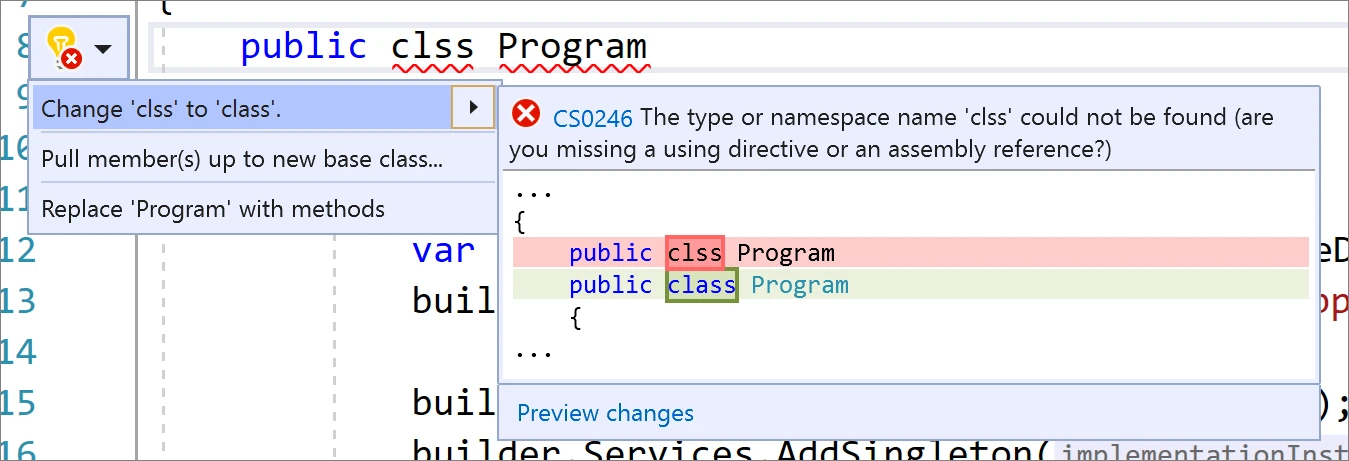
* **Beschreibung:** Teil der .NET Compiler Plattform ([Roslyn](https://learn.microsoft.com/en-us/visualstudio/code-quality/roslyn-analyzers-overview?view=vs-2022)), dieser statische .NET-Format-Tool-Analyzer bietet Echtzeit-Feedback zur Codequalität und Einhaltung von Programmierstandards.
* **Funktionen:**
* Umfassende statische Analyse von Codeproblemen.
* Integration mit Visual Studio.
* Erstellung benutzerdefinierter Regeln.
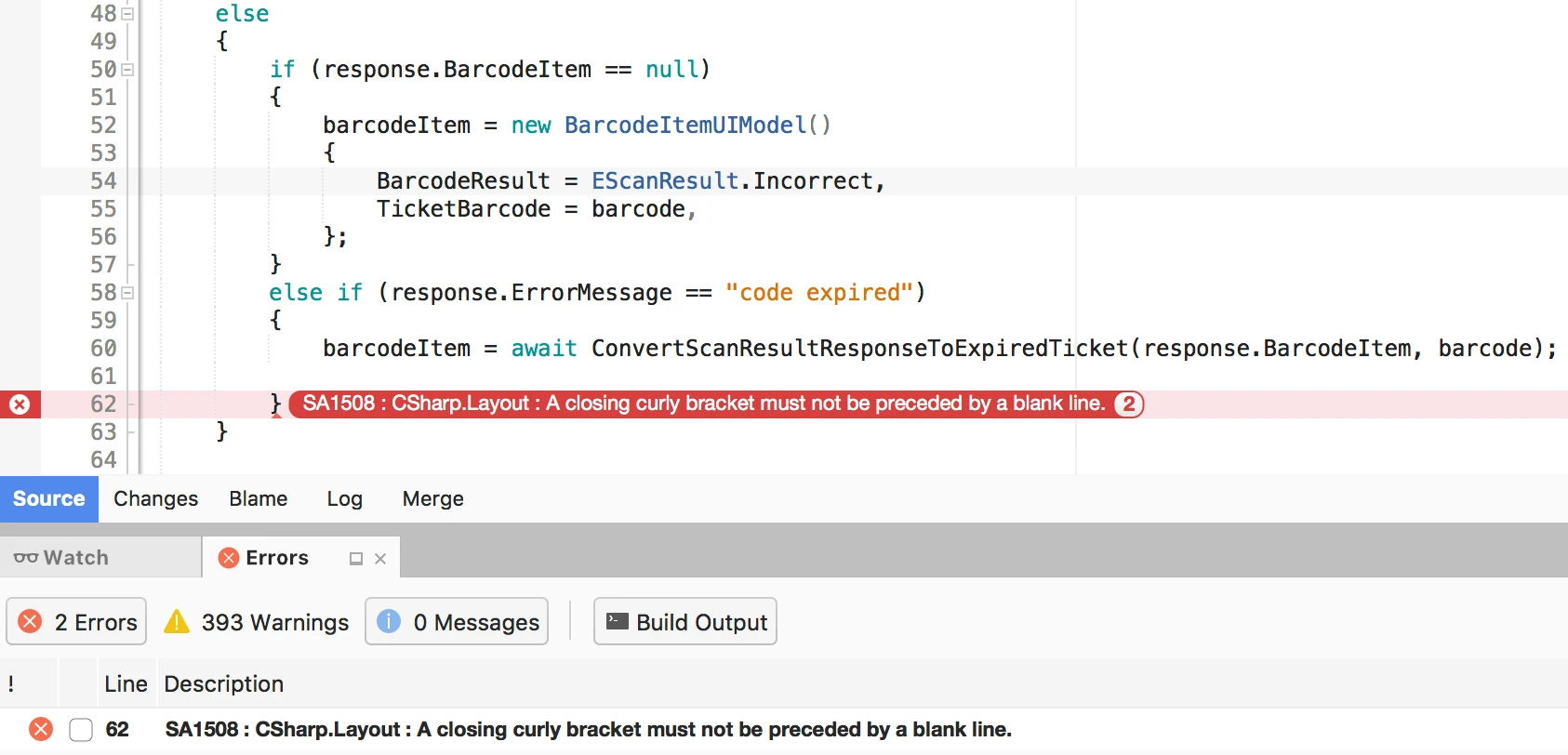
### 2. StyleCop.Analyzers
* **Beschreibung:** Ein Satz von Analyzern basierend auf [StyleCop](https://github.com/DotNetAnalyzers/StyleCopAnalyzers), der sich auf Kodierungsstil und Konsistenz im C#-Code konzentriert.
* **Funktionen:**
* Durchsetzung von Code-Stil-Einstellungen.
* Integration mit Visual Studio und MSBuild.
* Anpassbare Regeln und Formatierungstools.
### 3. sonarQube
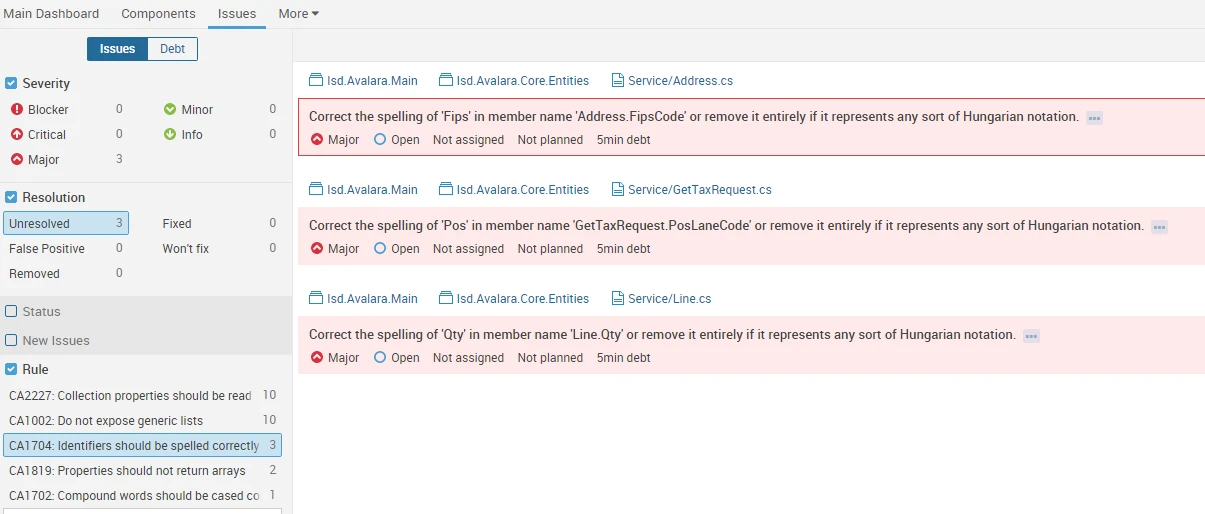
* **Beschreibung:** [SonarQube](https://www.sonarsource.com/products/sonarqube/developer-edition/?gads_campaign=SQ-Hroi2-PMax&gads_ad_group=Global&gads_keyword=&gad_source=1&gclid=CjwKCAiAuYuvBhApEiwAzq_YicCvsncXAZCZJ6UkJsnk0kPayjjoPtBbn446lur6W7K5jkm8HRfrORoCkV0QAvD_BwE) ist eine umfassende Plattform für Code-Qualität, die statische Code-Analyse für mehrere Sprachen, einschließlich C#, umfasst.
* **Funktionen:**
* Erkennung von Bugs, Sicherheitslücken und Codegerüchen.
* Integration mit CI/CD-Pipelines.
* Dashboard zur Verfolgung von Code-Qualitätsmetriken.
### 4. ReSharper
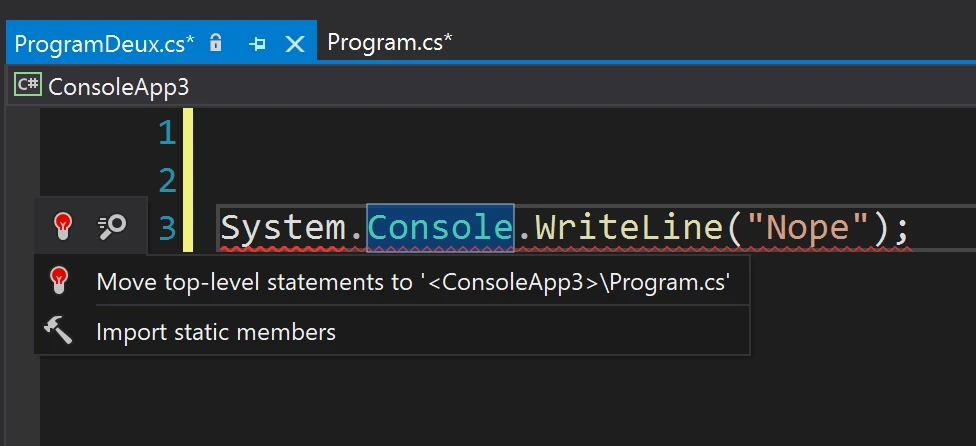
* **Beschreibung:** [ReSharper](https://www.jetbrains.com/resharper/) ist eine beliebte Visual Studio Erweiterung, die Code-Analyse, Refactoring-Vorschläge und Kodierungsunterstützung bietet.
* **Funktionen:**
* Echtzeit-Code-Inspektionen.
* Code-Bereinigungs- und Refactoring-Tools.
* Unterstützung für Unit-Tests.
## Integration von C# Linters in den Entwicklungs-Workflow
Die Integration von C# Lintern in den Entwicklungsablauf stellt sicher, dass die Codequalität kontinuierlich überwacht und aufrechterhalten wird. Hier ist eine Schritt-für-Schritt-Anleitung:
1. **Wählen Sie einen Linter:** Wählen Sie einen C# Linter basierend auf den Anforderungen Ihres Projekts, Kodierungsstandards und den vom Linter bereitgestellten Funktionen aus.
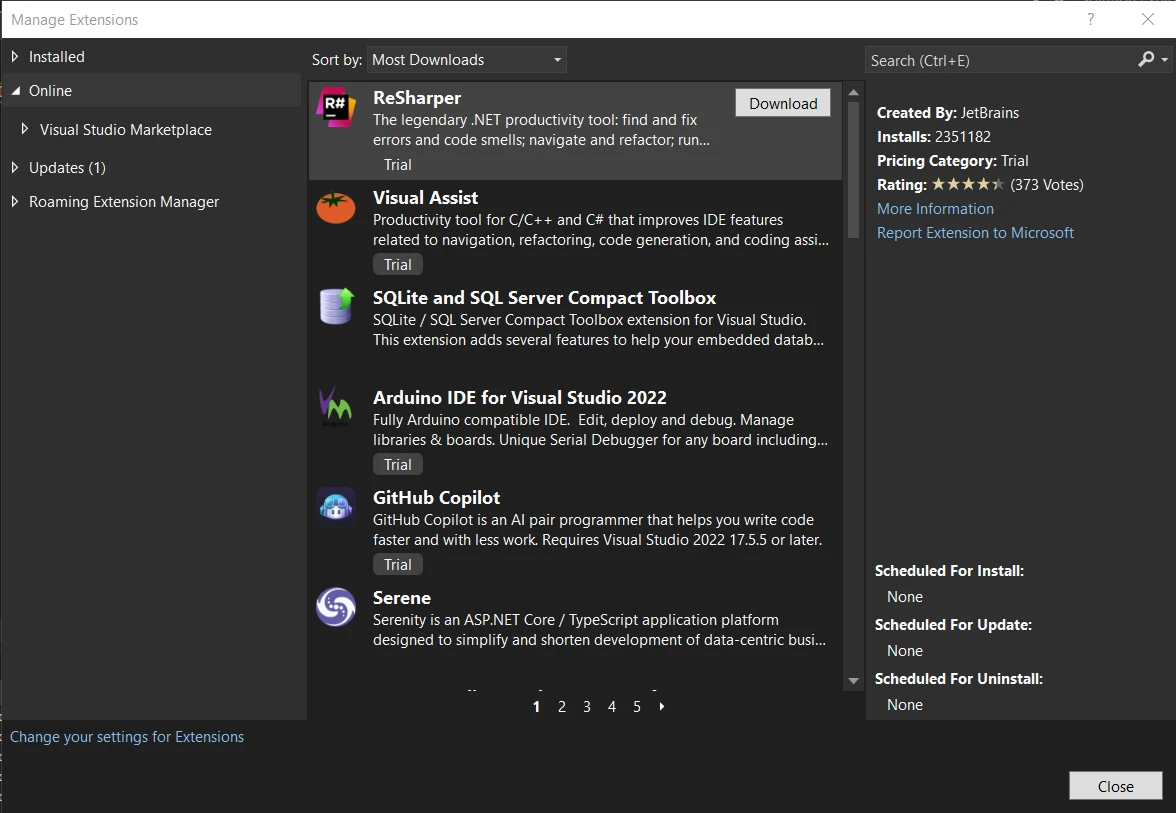
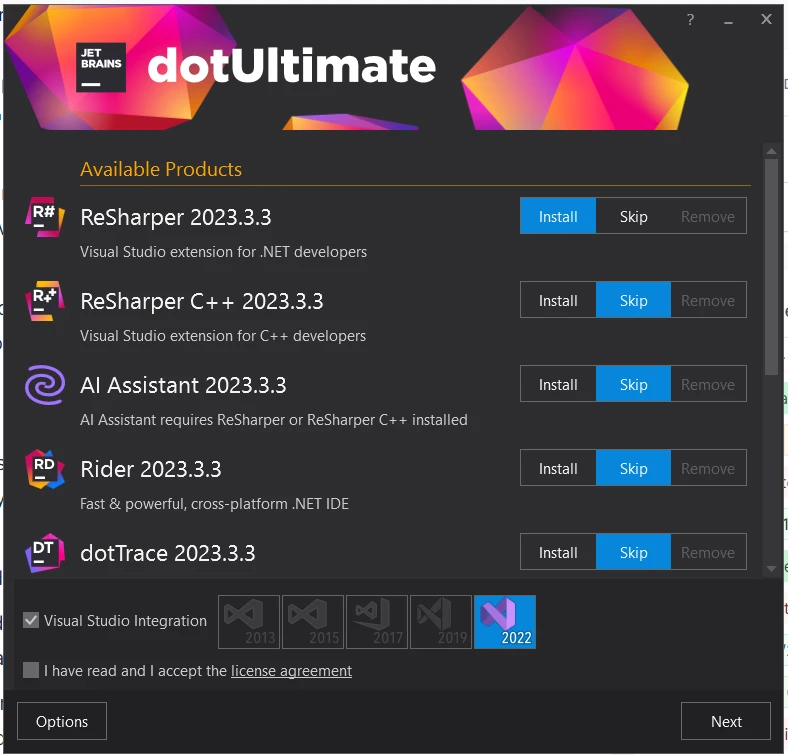
2. **Installation:** Installieren Sie den gewählten Linter über einen Paketmanager oder eine Erweiterung, abhängig vom Tool. Zum Beispiel werden Roslyn-Analyzer oft mit der Visual Studio-Installation geliefert, während andere Tools möglicherweise eine zusätzliche Einrichtung erfordern. Ein solches Beispiel ist ReSharper. Sie können es von Visual Studio -> Erweiterungen -> Erweiterungen verwalten herunterladen:
3. **Regeln konfigurieren:** Passen Sie Linter-Regeln an, um mit den Kodierungsstandards Ihres Projekts übereinzustimmen. Die meisten Linter erlauben es Ihnen, einzelne Regeln je nach Bedarf zu aktivieren, zu deaktivieren oder zu konfigurieren.
4. **Integration mit der IDE:** Integrieren Sie den Linter in Ihre integrierte Entwicklungsumgebung (IDE). Viele Linter lassen sich nahtlos in beliebte IDEs wie Visual Studio integrieren und bieten Echtzeit-Feedback und Vorschläge. [ReSharper](https://www.jetbrains.com/resharper/), ein beliebter Linter, der von JetBrains bereitgestellt wird, kann leicht in jede Version der Visual Studio IDE integriert werden.
5. **Integration mit CI/CD:** Integrieren Sie den Linter in Ihre Continuous Integration/Continuous Deployment (CI/CD)-Pipeline, um Codequalitätsprüfungen als Teil des automatisierten Build-Prozesses durchzusetzen.
## Vorteile der Verwendung von C# Linters
1. **Konsequenter Code-Stil:** Linter erzwingen Kodierungsstandards, um einen einheitlichen Codestil im gesamten Projekt zu fördern. Diese Konsistenz verbessert die Lesbarkeit und Zusammenarbeit unter den Teammitgliedern.
2. **Frühe Fehlererkennung:** Durch die statische Analyse des Codes können Linter potenzielle Fehler und Probleme früh im Entwicklungsprozess identifizieren und so die Wahrscheinlichkeit von Fehlern im Endprodukt verringern.
3. **Verbesserte Codequalität:** Linter tragen zur gesamten Codequalität bei, indem sie Bereiche hervorheben, die Aufmerksamkeit, Refactoringsvorschläge und potenzielle Optimierungen benötigen.
4. **Erhöhte Entwicklerproduktivität:** Echtzeit-Feedback von Lintern innerhalb der IDE hilft Entwicklern, Probleme umgehend zu beheben, was zu erhöhter Produktivität und schnelleren Entwicklungszyklen führt.
5. **Wartbarkeit und Skalierbarkeit:** Durch konsequente Einhaltung der Kodierungsstandards und Behebung potenzieller von Lintern identifizierter Probleme wird die Wartbarkeit und Skalierbarkeit des Codes über die Zeit verbessert.
## Introducing IronPDF for C#
[**IronPDF**](/) ist eine leistungsstarke C#-Bibliothek, die entwickelt wurde, um die Erstellung, Manipulation und Darstellung von PDF-Dokumenten innerhalb von .NET-Anwendungen zu vereinfachen. Dieses vielseitige Tool ermöglicht es Entwicklern, PDFs aus verschiedenen Quellen zu erstellen, bestehende PDFs zu manipulieren und nahtlos PDF-Funktionalitäten in C#-Anwendungen zu integrieren.
Das herausragende Merkmal von IronPDF ist seine Fähigkeit, [HTML in PDF](/tutorials/html-to-pdf/) zu konvertieren und dabei Layouts und Stile perfekt zu erhalten. Es ist ideal zur Erstellung von PDFs aus Webinhalten wie Berichten, Rechnungen und Dokumentationen. Sie können HTML-Dateien, URLs oder HTML-Strings problemlos in PDF-Dateien umwandeln.
```csharp
using IronPdf;

class Program
{
    static void Main(string[] args)
    {
        var renderer = new ChromePdfRenderer();

        // 1. Convert HTML String to PDF
        var htmlContent = "<h1>Hello, IronPDF!</h1><p>This is a PDF from an HTML string.</p>";
        var pdfFromHtmlString = renderer.RenderHtmlAsPdf(htmlContent);
        pdfFromHtmlString.SaveAs("HTMLStringToPDF.pdf");

        // 2. Convert HTML File to PDF
        var htmlFilePath = "path_to_your_html_file.html"; // Specify the path to your HTML file
        var pdfFromHtmlFile = renderer.RenderHtmlFileAsPdf(htmlFilePath);
        pdfFromHtmlFile.SaveAs("HTMLFileToPDF.pdf");

        // 3. Convert URL to PDF
        var url = "http://ironpdf.com"; // Specify the URL
        var pdfFromUrl = renderer.RenderUrlAsPdf(url);
        pdfFromUrl.SaveAs("URLToPDF.pdf");
    }
}
```
## Grundlagen von IronPDF verstehen
IronPDF bietet Entwicklern eine Vielzahl von Funktionen, um PDF-bezogene Aufgaben zu erledigen, und macht es zu einem unverzichtbaren Tool für Anwendungen, die PDF-Erstellung, -Manipulation und -Darstellung erfordern.
### Wichtige Merkmale
1. **PDF-Erstellung:** Erstellen Sie PDFs aus HTML, URLs, Bildern und anderen Formaten und bieten Sie Flexibilität bei der Inhaltserstellung.
2. **PDF-Manipulation:** Manipulieren Sie bestehende PDF-Dokumente durch Zusammenführung, Aufteilung, Hinzufügen von Wasserzeichen und mehr.
3. **HTML-zu-PDF-Konvertierung:** Konvertieren Sie HTML-Inhalte in hochwertige PDFs und bewahren Sie dabei Stile und Layouts.
4. **PDF-Darstellung:** Anzeigen von PDFs innerhalb von C#-Anwendungen, sodass Benutzer PDF-Inhalte anzeigen und damit interagieren können.
## Einstieg mit IronPDF
Um IronPDF in Ihre C#-Anwendung zu integrieren, können Sie das IronPDF NuGet-Paket installieren, indem Sie den folgenden Befehl in der Paket-Manager-Konsole hinzufügen (ersetzen Sie `:ProductInstall` durch den tatsächlichen Befehl):
```shell
:ProductInstall
```
Alternativ können Sie das Paket "IronPDF" mithilfe des NuGet Package Managers installieren. Unter allen mit IronPDF verbundenen NuGet-Packages, wählen und laden Sie das erforderliche Paket aus dieser Liste herunter.
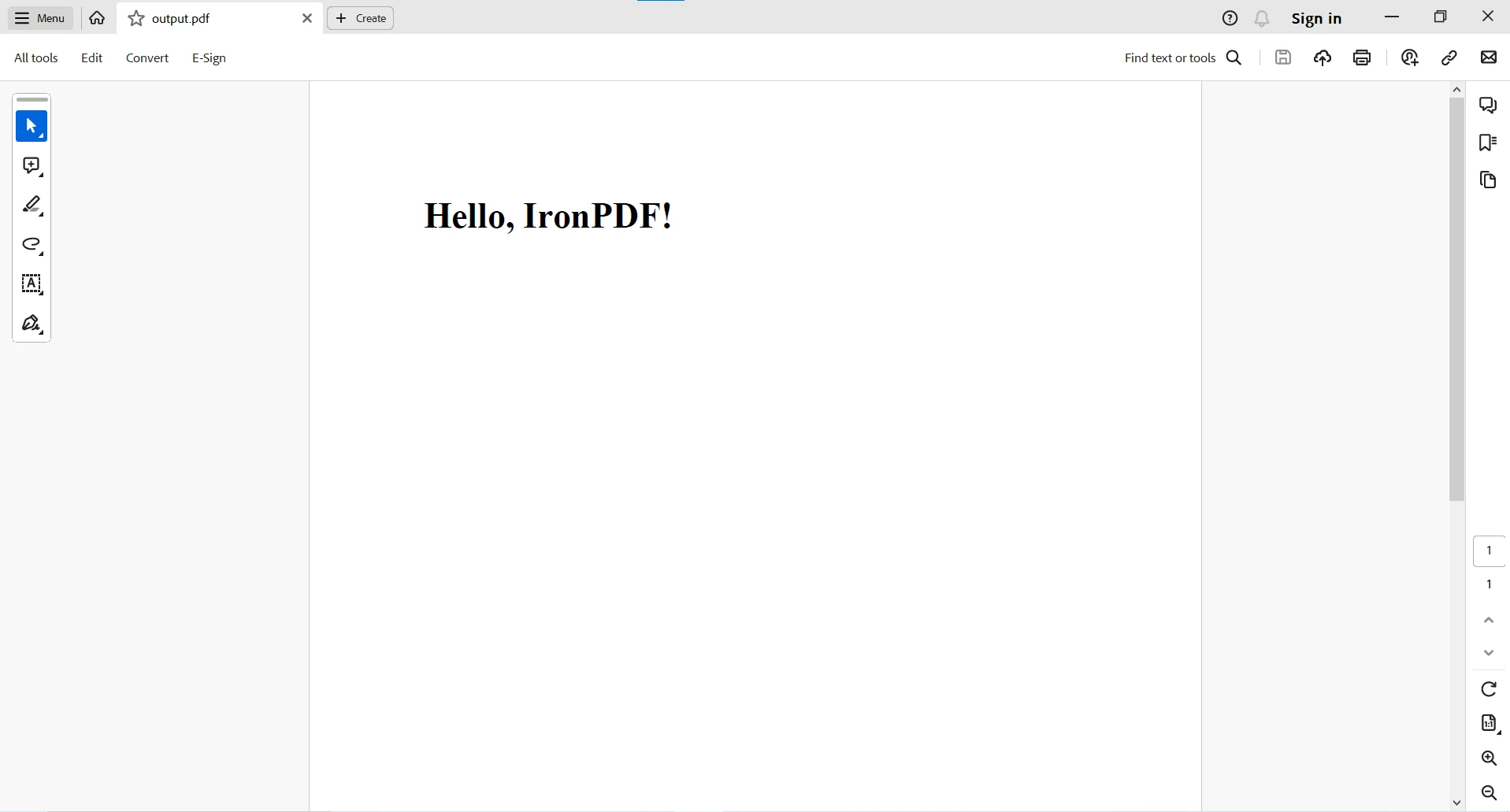
 ist mit IronPDF ganz einfach. Hier ist ein einfaches Beispiel:
```csharp
using IronPdf;
var htmlContent = "<h1>Hello, IronPDF!</h1>";
var pdfRenderer = new ChromePdfRenderer();
var pdf = pdfRenderer.RenderHtmlAsPdf(htmlContent);
pdf.SaveAs("output.pdf");
```
#### AUSGABE
Für weitere PDF-bezogene Funktionalitäten in C# mit IronPDF besuchen Sie bitte die [**Codebeispiele**](/examples/file-to-pdf/) und den [**IronPDF-Blog**](/blog/) für weitere Einblicke.
## Können C# Linters mit IronPDF verwendet werden?
C# Linter, wie Roslyn Analyzer, StyleCop.Analyzer und andere, konzentrieren sich auf die statische Code-Analyse und die Durchsetzung von Kodierungsstandards. Sie untersuchen in erster Linie den Quellcode auf potenzielle Probleme, Stilverletzungen und die Einhaltung von Best Practices.
[IronPDF](/) hingegen ist eine Bibliothek, die sich auf PDF-bezogene Funktionalitäten spezialisiert hat, und ihre Integration mit Lintern ist möglicherweise nicht direkt. Linter arbeiten typischerweise auf der Quellcodeebene, analysieren Syntax, Struktur und Muster im Codebestand.
Während C# Linter möglicherweise nicht direkt die Standards auf den von IronPDF generierten oder manipulierten Inhalt analysieren oder durchsetzen, spielen sie eine entscheidende Rolle bei der Sicherstellung der Gesamtqualität und Konsistenz des C#-Codes, der mit IronPDF interagiert.
Entwickler können C# Linter nutzen, um eine saubere und standardisierte Codebasis zu pflegen und Probleme im Zusammenhang mit Kodierungskonventionen, potenziellen Fehlern und Stilkonstanz zu adressieren. Durch die Kombination der Leistungsfähigkeit von C# Lintern für die Codequalitäts-Sicherung mit den Fähigkeiten von IronPDF für PDF-bezogene Aufgaben wird ein umfassendes Konzept zum Aufbau robuster und wartbarer C#-Anwendungen sichergestellt.
Für weitere Informationen zu IronPDF und seiner vollständigen Funktionalität besuchen Sie bitte die offizielle [**Dokumentation**](/docs/) und den [**API-Referenz**](/object-reference/api/).
## Abschluss
**C# Linter** sind unverzichtbare Werkzeuge im Werkzeugkasten eines jeden C# Entwicklers, da sie Einblicke in die Codequalität, die Einhaltung von Standards und potenzielle Verbesserungen bieten. Egal, ob Sie sich für Roslyn Analyzers, StyleCop.Analyzer, SonarQube, ReSharper oder ein anderes Tool entscheiden, die Integration eines Linters in Ihren Entwicklungsablauf ist ein proaktiver Schritt zu einer saubereren, besser wartbaren Codebasis. Nutzen Sie die Leistungsfähigkeit von C# Lintern, um Ihre Kodierungspraktiken zu verbessern und zum Gesamterfolg Ihrer Softwareprojekte beizutragen.
Abschließend, während C# Linter möglicherweise nicht speziell auf mit IronPDF generierte Inhalte abzielen, ist ihre Nutzung komplementär und trägt zur Gesamtqualität der C#-Codebasis bei, die [IronPDF](/)-Funktionalität integriert. Diese Kombination stellt sicher, dass Entwickler sowohl von den nahtlosen PDF-Manipulationsmöglichkeiten von IronPDF als auch von der durch C# Linter bereitgestellten Codequalitäts-Sicherung profitieren können.
IronPDF bietet eine kostenlose [**Testlizenz**](trial-license). Laden Sie die Bibliothek von ihrer [**offiziellen Webseite**](download-modal) herunter und probieren Sie sie aus.
Lint-Tools sind entscheidend in der modernen Softwareentwicklung, da sie Kodierungsstandards durchsetzen, Fehler erkennen und die Codequalität verbessern. Ein Linter ist einfach ein statisches Code-Analyse-Tool, das hilft, die Lesbarkeit des Codes zu verbessern, sowie potenzielle Syntaxfehler, Tippfehler und logische Fehler zu beheben, bevor sie zu Laufzeitfehlern oder unerwartetem Verhalten führen. Im robusten Entwicklungsumfeld der C#-Programmierung bieten Linter den Entwicklern Werkzeuge zur Analyse und Verbesserung ihres Codes.
In diesem Artikel werden wir das Konzept von C# Linters, ihre Bedeutung, beliebte Optionen und wie sie dazu beitragen, sauberen und wartbaren Code zu schreiben, erkunden.
Verstehen von C# Linters
Ein linter, kurz für Code-Linter oder statische Code-Analyse-Tool, ist ein statisches Analyse-Tool, das Quellcode auf potenzielle Probleme, Einhaltung von Kodierungsstandards und Konsistenz im Stil untersucht. C# Linter analysieren den Code, ohne ihn auszuführen, und bieten Einblicke in potenzielle Probleme und Verbesserungsbereiche.
Durch die Verwendung einer editorconfig-Datei können Entwickler konsistente Namenskonventionen, Kodierungsstile und andere Regeln im gesamten Quellcode etablieren und so eine saubere und einheitliche Codebasis fördern. Diese Tools, die oft als .NET-Tools integriert werden, identifizieren und adressieren automatisch Codeprobleme und stellen sicher, dass der Code vordefinierten Regelsets entspricht.
Linter unterstützen Best Practices, indem sie Regelverletzungen hervorheben und automatische Korrekturen anbieten, was zu einer effizienteren und wartbareren Codebasis beiträgt. Die Verwendung von Lintern im Entwicklungsprozess hilft, technische Schulden zu mindern, Build-Warnungen zu adressieren und letztendlich eine Kultur des sauberen Codes und der Einhaltung von Best Practices im gesamten Projekt zu fördern.
Hauptfunktionen von C# Linters
Code-Qualitätssicherung: Linter identifizieren häufige Programmierfehler, potenzielle Bugs und Abweichungen von Kodierungs-Best-Practices.
Durchsetzung von Kodierungsstandards: Linter erzwingen Kodierungsstandards und Stilleitlinien, um Konsistenz im gesamten Codebestand sicherzustellen.
Sicherheits- und Leistungsanalyse: Einige Linter können Sicherheitslücken und Leistungsprobleme erkennen und robusten und effizienten Code fördern.
Refactoring-Empfehlungen: Linter können Empfehlungen für das Refactoring geben, um die Wartbarkeit und Lesbarkeit des Codes zu verbessern.
Beliebte C# Linters
Linter spielen eine zentrale Rolle bei der Aufrechterhaltung der Codequalität und der Einhaltung der besten Praktiken in der Softwareentwicklung. Mehrere Linter sind in der C#-Entwicklungswelt weit verbreitet, und jeder bietet einzigartige Funktionen und Integrationen. Erkunden wir einige Optionen:
1. Roslyn-Analysatoren
Beschreibung: Teil der .NET Compiler Plattform (Roslyn), dieser statische .NET-Format-Tool-Analyzer bietet Echtzeit-Feedback zur Codequalität und Einhaltung von Programmierstandards.
Funktionen:
Umfassende statische Analyse von Codeproblemen.
Integration mit Visual Studio.
Erstellung benutzerdefinierter Regeln.
2. StyleCop.Analyzers
Beschreibung: Ein Satz von Analyzern basierend auf StyleCop, der sich auf Kodierungsstil und Konsistenz im C#-Code konzentriert.
Funktionen:
Durchsetzung von Code-Stil-Einstellungen.
Integration mit Visual Studio und MSBuild.
Anpassbare Regeln und Formatierungstools.
3. sonarQube
Beschreibung:SonarQube ist eine umfassende Plattform für Code-Qualität, die statische Code-Analyse für mehrere Sprachen, einschließlich C#, umfasst.
Funktionen:
Erkennung von Bugs, Sicherheitslücken und Codegerüchen.
Integration mit CI/CD-Pipelines.
Dashboard zur Verfolgung von Code-Qualitätsmetriken.
4. ReSharper
Beschreibung:ReSharper ist eine beliebte Visual Studio Erweiterung, die Code-Analyse, Refactoring-Vorschläge und Kodierungsunterstützung bietet.
Funktionen:
Echtzeit-Code-Inspektionen.
Code-Bereinigungs- und Refactoring-Tools.
Unterstützung für Unit-Tests.
Integration von C# Linters in den Entwicklungs-Workflow
Die Integration von C# Lintern in den Entwicklungsablauf stellt sicher, dass die Codequalität kontinuierlich überwacht und aufrechterhalten wird. Hier ist eine Schritt-für-Schritt-Anleitung:
Wählen Sie einen Linter: Wählen Sie einen C# Linter basierend auf den Anforderungen Ihres Projekts, Kodierungsstandards und den vom Linter bereitgestellten Funktionen aus.
Installation: Installieren Sie den gewählten Linter über einen Paketmanager oder eine Erweiterung, abhängig vom Tool. Zum Beispiel werden Roslyn-Analyzer oft mit der Visual Studio-Installation geliefert, während andere Tools möglicherweise eine zusätzliche Einrichtung erfordern. Ein solches Beispiel ist ReSharper. Sie können es von Visual Studio -> Erweiterungen -> Erweiterungen verwalten herunterladen:
Regeln konfigurieren: Passen Sie Linter-Regeln an, um mit den Kodierungsstandards Ihres Projekts übereinzustimmen. Die meisten Linter erlauben es Ihnen, einzelne Regeln je nach Bedarf zu aktivieren, zu deaktivieren oder zu konfigurieren.
Integration mit der IDE: Integrieren Sie den Linter in Ihre integrierte Entwicklungsumgebung (IDE). Viele Linter lassen sich nahtlos in beliebte IDEs wie Visual Studio integrieren und bieten Echtzeit-Feedback und Vorschläge. ReSharper, ein beliebter Linter, der von JetBrains bereitgestellt wird, kann leicht in jede Version der Visual Studio IDE integriert werden.
Integration mit CI/CD: Integrieren Sie den Linter in Ihre Continuous Integration/Continuous Deployment (CI/CD)-Pipeline, um Codequalitätsprüfungen als Teil des automatisierten Build-Prozesses durchzusetzen.
Vorteile der Verwendung von C# Linters
Konsequenter Code-Stil: Linter erzwingen Kodierungsstandards, um einen einheitlichen Codestil im gesamten Projekt zu fördern. Diese Konsistenz verbessert die Lesbarkeit und Zusammenarbeit unter den Teammitgliedern.
Frühe Fehlererkennung: Durch die statische Analyse des Codes können Linter potenzielle Fehler und Probleme früh im Entwicklungsprozess identifizieren und so die Wahrscheinlichkeit von Fehlern im Endprodukt verringern.
Verbesserte Codequalität: Linter tragen zur gesamten Codequalität bei, indem sie Bereiche hervorheben, die Aufmerksamkeit, Refactoringsvorschläge und potenzielle Optimierungen benötigen.
Erhöhte Entwicklerproduktivität: Echtzeit-Feedback von Lintern innerhalb der IDE hilft Entwicklern, Probleme umgehend zu beheben, was zu erhöhter Produktivität und schnelleren Entwicklungszyklen führt.
Wartbarkeit und Skalierbarkeit: Durch konsequente Einhaltung der Kodierungsstandards und Behebung potenzieller von Lintern identifizierter Probleme wird die Wartbarkeit und Skalierbarkeit des Codes über die Zeit verbessert.
Introducing IronPDF for C#
IronPDF ist eine leistungsstarke C#-Bibliothek, die entwickelt wurde, um die Erstellung, Manipulation und Darstellung von PDF-Dokumenten innerhalb von .NET-Anwendungen zu vereinfachen. Dieses vielseitige Tool ermöglicht es Entwicklern, PDFs aus verschiedenen Quellen zu erstellen, bestehende PDFs zu manipulieren und nahtlos PDF-Funktionalitäten in C#-Anwendungen zu integrieren.
Das herausragende Merkmal von IronPDF ist seine Fähigkeit, HTML in PDF zu konvertieren und dabei Layouts und Stile perfekt zu erhalten. Es ist ideal zur Erstellung von PDFs aus Webinhalten wie Berichten, Rechnungen und Dokumentationen. Sie können HTML-Dateien, URLs oder HTML-Strings problemlos in PDF-Dateien umwandeln.
using IronPdf;class Program{ static voidMain(string[] args) { var renderer = new ChromePdfRenderer(); // 1. Convert HTML String to PDF var htmlContent = "<h1>Hello, IronPDF!</h1><p>This is a PDF from an HTML string.</p>"; var pdfFromHtmlString = renderer.RenderHtmlAsPdf(htmlContent); pdfFromHtmlString.SaveAs("HTMLStringToPDF.pdf"); // 2. Convert HTML File to PDF var htmlFilePath = "path_to_your_html_file.html"; // Specify the path to your HTML file var pdfFromHtmlFile = renderer.RenderHtmlFileAsPdf(htmlFilePath); pdfFromHtmlFile.SaveAs("HTMLFileToPDF.pdf"); // 3. Convert URL to PDF var url = "http://ironpdf.com"; // Specify the URL var pdfFromUrl = renderer.RenderUrlAsPdf(url); pdfFromUrl.SaveAs("URLToPDF.pdf"); }}
using IronPdf;

class Program
{
    static void Main(string[] args)
    {
        var renderer = new ChromePdfRenderer();

        // 1. Convert HTML String to PDF
        var htmlContent = "<h1>Hello, IronPDF!</h1><p>This is a PDF from an HTML string.</p>";
        var pdfFromHtmlString = renderer.RenderHtmlAsPdf(htmlContent);
        pdfFromHtmlString.SaveAs("HTMLStringToPDF.pdf");

        // 2. Convert HTML File to PDF
        var htmlFilePath = "path_to_your_html_file.html"; // Specify the path to your HTML file
        var pdfFromHtmlFile = renderer.RenderHtmlFileAsPdf(htmlFilePath);
        pdfFromHtmlFile.SaveAs("HTMLFileToPDF.pdf");

        // 3. Convert URL to PDF
        var url = "http://ironpdf.com"; // Specify the URL
        var pdfFromUrl = renderer.RenderUrlAsPdf(url);
        pdfFromUrl.SaveAs("URLToPDF.pdf");
    }
}
ImportsIronPdfModuleProgram Sub Main(args AsString()) Dim renderer = New ChromePdfRenderer() ' 1. Convert HTML String to PDF Dim htmlContent = "<h1>Hello, IronPDF!</h1><p>This is a PDF from an HTML string.</p>" Dim pdfFromHtmlString = renderer.RenderHtmlAsPdf(htmlContent) pdfFromHtmlString.SaveAs("HTMLStringToPDF.pdf") ' 2. Convert HTML File to PDF Dim htmlFilePath = "path_to_your_html_file.html" ' Specify the path to your HTML file Dim pdfFromHtmlFile = renderer.RenderHtmlFileAsPdf(htmlFilePath) pdfFromHtmlFile.SaveAs("HTMLFileToPDF.pdf") ' 3. Convert URL to PDF Dim url = "http://ironpdf.com" ' Specify the URL Dim pdfFromUrl = renderer.RenderUrlAsPdf(url) pdfFromUrl.SaveAs("URLToPDF.pdf") End SubEndModule
Imports IronPdf

Module Program
    Sub Main(args As String())
        Dim renderer = New ChromePdfRenderer()

        ' 1. Convert HTML String to PDF
        Dim htmlContent = "<h1>Hello, IronPDF!</h1><p>This is a PDF from an HTML string.</p>"
        Dim pdfFromHtmlString = renderer.RenderHtmlAsPdf(htmlContent)
        pdfFromHtmlString.SaveAs("HTMLStringToPDF.pdf")

        ' 2. Convert HTML File to PDF
        Dim htmlFilePath = "path_to_your_html_file.html" ' Specify the path to your HTML file
        Dim pdfFromHtmlFile = renderer.RenderHtmlFileAsPdf(htmlFilePath)
        pdfFromHtmlFile.SaveAs("HTMLFileToPDF.pdf")

        ' 3. Convert URL to PDF
        Dim url = "http://ironpdf.com" ' Specify the URL
        Dim pdfFromUrl = renderer.RenderUrlAsPdf(url)
        pdfFromUrl.SaveAs("URLToPDF.pdf")
    End Sub
End Module
Grundlagen von IronPDF verstehen
IronPDF bietet Entwicklern eine Vielzahl von Funktionen, um PDF-bezogene Aufgaben zu erledigen, und macht es zu einem unverzichtbaren Tool für Anwendungen, die PDF-Erstellung, -Manipulation und -Darstellung erfordern.
Wichtige Merkmale
PDF-Erstellung: Erstellen Sie PDFs aus HTML, URLs, Bildern und anderen Formaten und bieten Sie Flexibilität bei der Inhaltserstellung.
PDF-Manipulation: Manipulieren Sie bestehende PDF-Dokumente durch Zusammenführung, Aufteilung, Hinzufügen von Wasserzeichen und mehr.
HTML-zu-PDF-Konvertierung: Konvertieren Sie HTML-Inhalte in hochwertige PDFs und bewahren Sie dabei Stile und Layouts.
PDF-Darstellung: Anzeigen von PDFs innerhalb von C#-Anwendungen, sodass Benutzer PDF-Inhalte anzeigen und damit interagieren können.
Einstieg mit IronPDF
Um IronPDF in Ihre C#-Anwendung zu integrieren, können Sie das IronPDF NuGet-Paket installieren, indem Sie den folgenden Befehl in der Paket-Manager-Konsole hinzufügen (ersetzen Sie :ProductInstall durch den tatsächlichen Befehl):
PM > Install-Package IronPdf
Install-Package IronPdf
Alternativ können Sie das Paket "IronPDF" mithilfe des NuGet Package Managers installieren. Unter allen mit IronPDF verbundenen NuGet-Packages, wählen und laden Sie das erforderliche Paket aus dieser Liste herunter.