In C# ist die Substring-Methode ein wesentliches Werkzeug zur Manipulation von Zeichenfolgen. Diese Funktion ermöglicht es Entwicklern, einen Teil einer Zeichenfolge basierend auf einer angegebenen Zeichenposition zu extrahieren. Dieser Leitfaden zielt darauf ab, die öffentliche Zeichenfolge Substring-Methode und die IronPDF-Bibliothek ausführlich zu erläutern und detaillierte Beispiele und Erklärungen bereitzustellen, um Anfängern zu helfen, deren Verwendung und Fähigkeiten vollständig zu verstehen.
Verständnis der Substring-Methode
Die Substring-Methode in C#, ein Mitglied der String-Klasse, ermöglicht die Manipulation beginnend mit dem ersten Zeichen basierend auf den angegebenen Parametern. Sie wird verwendet, um einen Teil der Zeichenfolge zu erhalten, beginnend bei einem angegebenen Index und optional für eine angegebene Länge. Die Syntax dieser Methode ist unkompliziert, was die Implementierung in jedem Codierungsfall, in dem Zeichenfolgenmanipulation notwendig ist, erleichtert.
Syntax und Parameter
Die Substring-Methode hat zwei Hauptformen:
public string Substring(int startIndex);
public string Substring(int startIndex, int length);
public string Substring(int startIndex);
public string Substring(int startIndex, int length);
public String Substring(Integer startIndex)
public String Substring(Integer startIndex, Integer length)
public String Substring(Integer startIndex)
public String Substring(Integer startIndex, Integer length)
- public string Substring(int startIndex): Diese Methode gibt eine Teilzeichenkette zurück, die bei startIndex beginnt und bis zum Ende der Zeichenkette reicht.
- public string Substring(int startIndex, int length): Diese Methode gibt eine Teilzeichenkette zurück, die bei startIndex beginnt und die angegebene Länge hat.
Die beteiligten Parameter sind:
- int startIndex: Dies ist der nullbasierte Index, an dem die Teilzeichenkette beginnt.
- int length: (optional) Es handelt sich um den zweiten Parameter. Dies ist die Anzahl der Zeichen, die in die zurückgegebene Teilzeichenfolge aufgenommen werden.
Wie die Substring-Methode funktioniert
Der Prozess der Substring-Methode ist unkompliziert. Wenn aufgerufen, extrahiert sie Zeichen aus der ursprünglichen Zeichenfolge, beginnend bei dem angegebenen Index (startIndex). Wenn der length-Parameter angegeben wird, gibt die Methode die angegebene Anzahl von Zeichen zurück. Ohne den length-Parameter wird die Methode bis zum Ende der Zeichenfolge fortgeführt. Das Verwenden von Substring in C# stellt sicher, dass beide Parameter (startIndex und length) als Ganzzahlen behandelt werden, was Typensicherheit erzwingt und potenzielle Laufzeitfehler verhindert.
Detaillierte Beispiele für die Substring-Methode
Um besser zu verstehen, wie die Substring-Methode implementiert wird, betrachten wir mehrere Beispiele, die ihre praktischen Anwendungen veranschaulichen.
Angenommen, Sie haben eine Zeichenfolge und müssen eine Teilzeichenfolge von einem bestimmten Index bis zum Ende der Zeichenfolge extrahieren. So könnten Sie es tun:
// Main method demonstrating substring extraction
public static void Main(string[] args)
{
    string text = "Hello, world!";
    string substring = text.Substring(7); // Extract from index 7 to the end
    Console.WriteLine(substring);
}
// Main method demonstrating substring extraction
public static void Main(string[] args)
{
    string text = "Hello, world!";
    string substring = text.Substring(7); // Extract from index 7 to the end
    Console.WriteLine(substring);
}
' Main method demonstrating substring extraction
Public Shared Sub Main(ByVal args() As String)
Dim text As String = "Hello, world!"
Dim substring As String = text.Substring(7) ' Extract from index 7 to the end
Console.WriteLine(substring)
End Sub
' Main method demonstrating substring extraction
Public Shared Sub Main(ByVal args() As String)
	Dim text As String = "Hello, world!"
	Dim substring As String = text.Substring(7) ' Extract from index 7 to the end
	Console.WriteLine(substring)
End Sub
Ausgabe:
In diesem Beispiel beginnt die Substring-Methode bei Index 7, was dem 'w' in "world!" entspricht, und ruft jedes Zeichen bis zum Ende der Zeichenfolge ab. Dies ist besonders nützlich, wenn die Länge der Teilzeichenfolge dynamisch ist oder nicht vorherbestimmt ist.
Nun, schauen wir uns ein Szenario an, in dem sowohl der Startindex als auch die Länge der Teilzeichenfolge angegeben sind:
// Main method demonstrating substring extraction with specified length
public static void Main(string[] args)
{
    string text = "Hello, world!";
    string substring = text.Substring(7, 5); // Starts at index 7, length of 5
    Console.WriteLine(substring);
}
// Main method demonstrating substring extraction with specified length
public static void Main(string[] args)
{
    string text = "Hello, world!";
    string substring = text.Substring(7, 5); // Starts at index 7, length of 5
    Console.WriteLine(substring);
}
' Main method demonstrating substring extraction with specified length
Public Shared Sub Main(ByVal args() As String)
Dim text As String = "Hello, world!"
Dim substring As String = text.Substring(7, 5) ' Starts at index 7, length of 5
Console.WriteLine(substring)
End Sub
' Main method demonstrating substring extraction with specified length
Public Shared Sub Main(ByVal args() As String)
	Dim text As String = "Hello, world!"
	Dim substring As String = text.Substring(7, 5) ' Starts at index 7, length of 5
	Console.WriteLine(substring)
End Sub
Ausgabe:
Hier beginnt die Teilzeichenfolge beim siebten Zeichen und erstreckt sich über fünf Zeichen. Diese Methode ist sehr nützlich, wenn Sie die Kontrolle über die Grenzen der Teilzeichenfolge benötigen.
Teilstrings aus einem Array von Zeichenketten abrufen
Angenommen, Sie haben ein Array von Strings und möchten Teilzeichenfolgen aus jedem String basierend auf einer angegebenen Zeichenposition und Länge extrahieren. Sie können eine foreach-Schleife verwenden, um über das Array zu iterieren und die Substring-Methode auf jeden String anzuwenden.
// Example of extracting substrings from an array of strings
string[] array = { "apple", "banana", "orange" };
foreach (string str in array)
{
    string substring = str.Substring(1, 3); // Substring starts from index 1
    Console.WriteLine(substring);
}
// Example of extracting substrings from an array of strings
string[] array = { "apple", "banana", "orange" };
foreach (string str in array)
{
    string substring = str.Substring(1, 3); // Substring starts from index 1
    Console.WriteLine(substring);
}
' Example of extracting substrings from an array of strings
Dim array() As String = { "apple", "banana", "orange" }
For Each str As String In array
Dim substring As String = str.Substring(1, 3) ' Substring starts from index 1
Console.WriteLine(substring)
Next str
' Example of extracting substrings from an array of strings
Dim array() As String = { "apple", "banana", "orange" }
For Each str As String In array
	Dim substring As String = str.Substring(1, 3) ' Substring starts from index 1
	Console.WriteLine(substring)
Next str
Dieser Code gibt aus:
Behandlung von Randfällen
Es ist wichtig, Randfälle zu berücksichtigen, um Laufzeitfehler wie ArgumentOutOfRangeException zu vermeiden. Beim Verwenden der Substring-Methode ist es wichtig sicherzustellen, dass die angegebene Zeichenposition und Länge innerhalb der Grenzen der ursprünglichen Zeichenfolge liegen. Andernfalls kann dies zu einer Ausnahme außerhalb des Bereichs führen. Sie können die Länge der ursprünglichen Zeichenfolge überprüfen, um solche Ausnahmen zu vermeiden. Hier sind wichtige Punkte:
- Der startIndex muss innerhalb der Grenzen der Zeichenfolge liegen.
- Die Summe aus startIndex und length darf die Länge der ursprünglichen Zeichenfolge nicht überschreiten.
- Negative Werte für startIndex oder length sind nicht zulässig und führen zu einem Fehler.
Überprüfung der Gültigkeit von Indizes
Um sicherzustellen, dass Ihre Teilzeichenfolge-Extraktion keinen Fehler verursacht, können Sie Überprüfungen hinzufügen:
// Main method with checks to avoid ArgumentOutOfRangeException
public static void Main(string[] args)
{
    string text = "Hello, world!";
    int startIndex = 7;
    int length = 5;
    if (startIndex >= 0 && startIndex < text.Length && startIndex + length <= text.Length)
    {
        string substring = text.Substring(startIndex, length);
        Console.WriteLine(substring);
    }
    else
    {
        Console.WriteLine("Invalid substring parameters.");
    }
}
// Main method with checks to avoid ArgumentOutOfRangeException
public static void Main(string[] args)
{
    string text = "Hello, world!";
    int startIndex = 7;
    int length = 5;
    if (startIndex >= 0 && startIndex < text.Length && startIndex + length <= text.Length)
    {
        string substring = text.Substring(startIndex, length);
        Console.WriteLine(substring);
    }
    else
    {
        Console.WriteLine("Invalid substring parameters.");
    }
}
' Main method with checks to avoid ArgumentOutOfRangeException
Public Shared Sub Main(ByVal args() As String)
Dim text As String = "Hello, world!"
Dim startIndex As Integer = 7
Dim length As Integer = 5
If startIndex >= 0 AndAlso startIndex < text.Length AndAlso startIndex + length <= text.Length Then
Dim substring As String = text.Substring(startIndex, length)
Console.WriteLine(substring)
Else
Console.WriteLine("Invalid substring parameters.")
End If
End Sub
' Main method with checks to avoid ArgumentOutOfRangeException
Public Shared Sub Main(ByVal args() As String)
	Dim text As String = "Hello, world!"
	Dim startIndex As Integer = 7
	Dim length As Integer = 5
	If startIndex >= 0 AndAlso startIndex < text.Length AndAlso startIndex + length <= text.Length Then
		Dim substring As String = text.Substring(startIndex, length)
		Console.WriteLine(substring)
	Else
		Console.WriteLine("Invalid substring parameters.")
	End If
End Sub
Dieser Codeblock stellt sicher, dass die Teilzeichenfolgenparameter gültig sind, bevor versucht wird, die Teilzeichenfolge zu extrahieren, und so potenzielle Laufzeitfehler vermieden werden.
Integration von IronPDF mit Substring in C# zur dynamischen PDF-Erstellung
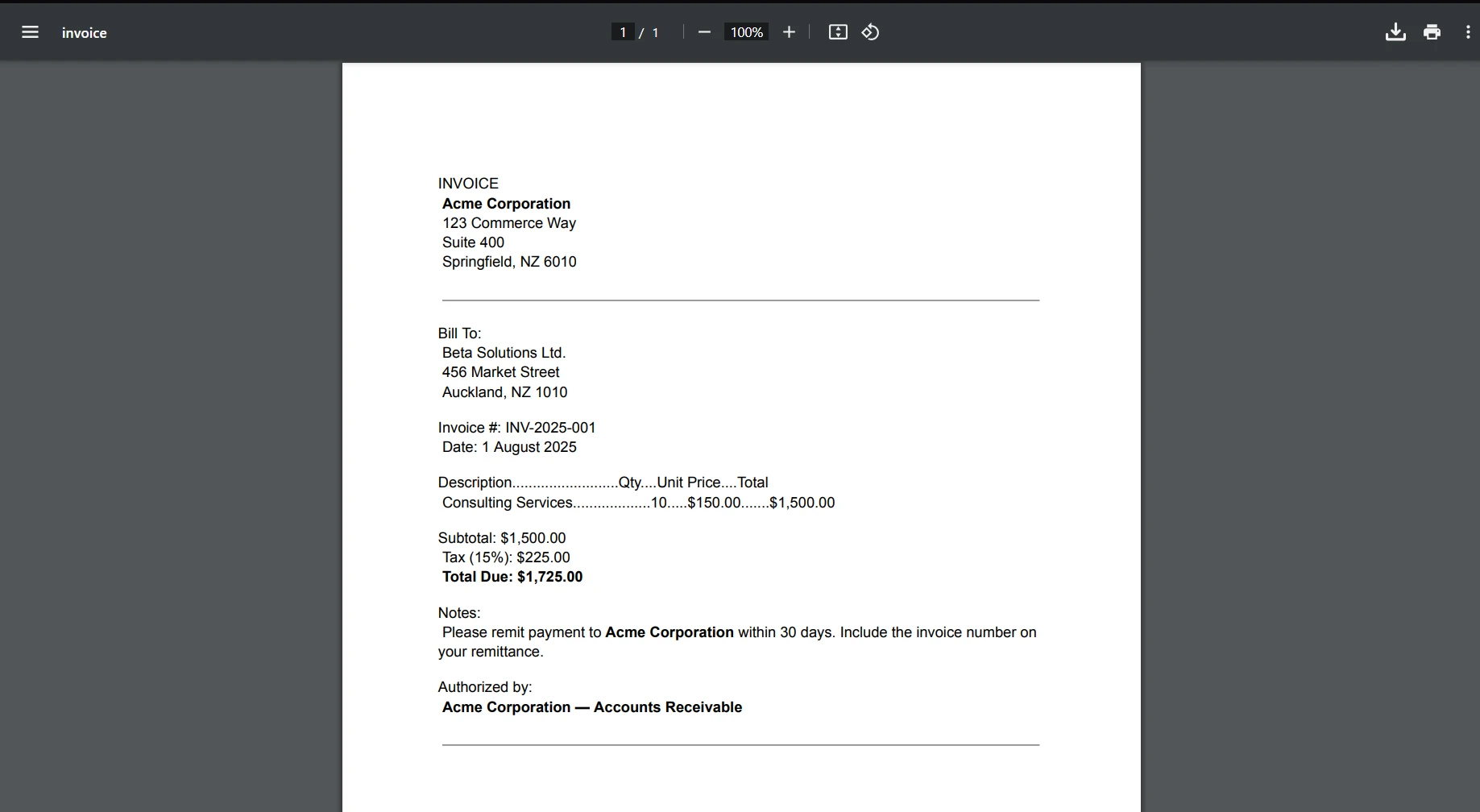
IronPDF ist eine leistungsstarke PDF-Bibliothek, die es Entwicklern ermöglicht, PDF-Dokumente direkt in ihren .NET-Anwendungen zu erstellen, zu manipulieren und darzustellen. Es ermöglicht die HTML-zu-PDF-Konvertierung, die hilft, maßgeschneiderte und schöne PDF-Dokumente zu erstellen. IronPDF unterstützt eine Vielzahl von PDF-Operationen, einschließlich Generieren von PDFs aus HTML, Exportieren von PDFs, Bearbeiten vorhandener PDFs und vieles mehr, und bietet so ein umfassendes Toolkit zum Umgang mit PDF-Dateien in einer .NET-Umgebung.
IronPDF macht die HTML-zu-PDF-Konvertierung einfach, während Layouts und Stile intakt bleiben. Es ist ein großartiges Werkzeug, um PDFs aus webbasierten Inhalten wie Berichten, Rechnungen und Dokumentationen zu erstellen. HTML-Dateien, URLs und HTML-Strings können nahtlos in PDF-Dateien umgewandelt werden.
using IronPdf;

class Program
{
    static void Main(string[] args)
    {
        var renderer = new ChromePdfRenderer();

        // 1. Convert HTML String to PDF
        var htmlContent = "<h1>Hello, IronPDF!</h1><p>This is a PDF from an HTML string.</p>";
        var pdfFromHtmlString = renderer.RenderHtmlAsPdf(htmlContent);
        pdfFromHtmlString.SaveAs("HTMLStringToPDF.pdf");

        // 2. Convert HTML File to PDF
        var htmlFilePath = "path_to_your_html_file.html"; // Specify the path to your HTML file
        var pdfFromHtmlFile = renderer.RenderHtmlFileAsPdf(htmlFilePath);
        pdfFromHtmlFile.SaveAs("HTMLFileToPDF.pdf");

        // 3. Convert URL to PDF
        var url = "https://ironpdf.com"; // Specify the URL
        var pdfFromUrl = renderer.RenderUrlAsPdf(url);
        pdfFromUrl.SaveAs("URLToPDF.pdf");
    }
}
using IronPdf;

class Program
{
    static void Main(string[] args)
    {
        var renderer = new ChromePdfRenderer();

        // 1. Convert HTML String to PDF
        var htmlContent = "<h1>Hello, IronPDF!</h1><p>This is a PDF from an HTML string.</p>";
        var pdfFromHtmlString = renderer.RenderHtmlAsPdf(htmlContent);
        pdfFromHtmlString.SaveAs("HTMLStringToPDF.pdf");

        // 2. Convert HTML File to PDF
        var htmlFilePath = "path_to_your_html_file.html"; // Specify the path to your HTML file
        var pdfFromHtmlFile = renderer.RenderHtmlFileAsPdf(htmlFilePath);
        pdfFromHtmlFile.SaveAs("HTMLFileToPDF.pdf");

        // 3. Convert URL to PDF
        var url = "https://ironpdf.com"; // Specify the URL
        var pdfFromUrl = renderer.RenderUrlAsPdf(url);
        pdfFromUrl.SaveAs("URLToPDF.pdf");
    }
}
Imports IronPdf
Module Program
Sub Main(args As String())
Dim renderer = New ChromePdfRenderer()
' 1. Convert HTML String to PDF
Dim htmlContent = "<h1>Hello, IronPDF!</h1><p>This is a PDF from an HTML string.</p>"
Dim pdfFromHtmlString = renderer.RenderHtmlAsPdf(htmlContent)
pdfFromHtmlString.SaveAs("HTMLStringToPDF.pdf")
' 2. Convert HTML File to PDF
Dim htmlFilePath = "path_to_your_html_file.html" ' Specify the path to your HTML file
Dim pdfFromHtmlFile = renderer.RenderHtmlFileAsPdf(htmlFilePath)
pdfFromHtmlFile.SaveAs("HTMLFileToPDF.pdf")
' 3. Convert URL to PDF
Dim url = "https://ironpdf.com" ' Specify the URL
Dim pdfFromUrl = renderer.RenderUrlAsPdf(url)
pdfFromUrl.SaveAs("URLToPDF.pdf")
End Sub
End Module
Imports IronPdf

Module Program
    Sub Main(args As String())
        Dim renderer = New ChromePdfRenderer()

        ' 1. Convert HTML String to PDF
        Dim htmlContent = "<h1>Hello, IronPDF!</h1><p>This is a PDF from an HTML string.</p>"
        Dim pdfFromHtmlString = renderer.RenderHtmlAsPdf(htmlContent)
        pdfFromHtmlString.SaveAs("HTMLStringToPDF.pdf")

        ' 2. Convert HTML File to PDF
        Dim htmlFilePath = "path_to_your_html_file.html" ' Specify the path to your HTML file
        Dim pdfFromHtmlFile = renderer.RenderHtmlFileAsPdf(htmlFilePath)
        pdfFromHtmlFile.SaveAs("HTMLFileToPDF.pdf")

        ' 3. Convert URL to PDF
        Dim url = "https://ironpdf.com" ' Specify the URL
        Dim pdfFromUrl = renderer.RenderUrlAsPdf(url)
        pdfFromUrl.SaveAs("URLToPDF.pdf")
    End Sub
End Module
Das Kombinieren von IronPDF mit der C# Substring-Methode kann unglaublich nützlich sein, um PDF-Dokumente zu erstellen, die Textmanipulation und -extraktion vor der PDF-Konvertierung erfordern. Wenn Sie beispielsweise spezifische Informationen aus einem großen Textblock extrahieren und diese in einem PDF-Format präsentieren müssen, können Sie die Substring-Methode verwenden, um den gewünschten Text zu isolieren, und IronPDF, um diesen Text in ein PDF-Dokument umzuwandeln.
Betrachten wir ein Szenario, in dem Sie einen großen Text mit wichtigen Informationen an bestimmten Indizes haben und diese Informationen extrahieren und ein PDF-Dokument damit erstellen müssen. Im Folgenden finden Sie ein schrittweises Beispiel dafür, wie dies unter Verwendung von sowohl IronPDF als auch der C# Substring-Methode erreicht werden kann.
using IronPdf;
using System;

public class PdfGenerator
{
    public static void Main(string[] args)
    {
        // Applying your license for IronPDF
        License.LicenseKey = "License-Key";
        // Original large text from which we need to extract information
        string originalText = "IronPDF helps you generate PDF documents in .NET applications easily. Discover more about IronPDF at the official site.";
        // Using the Substring method to extract the part of the string that talks about IronPDF
        string importantInfo = originalText.Substring(0, 65);  // Extracts the first sentence

        // Create a PDF document with IronPDF
        var renderer = new ChromePdfRenderer();
        // Convert the extracted text to PDF
        PdfDocument pdf = renderer.RenderHtmlAsPdf($"<h1>Extracted Information</h1><p>{importantInfo}</p>");
        // Save the PDF to a file
        pdf.SaveAs("ExtractedInfo.pdf");
        // Confirmation output
        Console.WriteLine("PDF generated successfully with extracted information.");
    }
}
using IronPdf;
using System;

public class PdfGenerator
{
    public static void Main(string[] args)
    {
        // Applying your license for IronPDF
        License.LicenseKey = "License-Key";
        // Original large text from which we need to extract information
        string originalText = "IronPDF helps you generate PDF documents in .NET applications easily. Discover more about IronPDF at the official site.";
        // Using the Substring method to extract the part of the string that talks about IronPDF
        string importantInfo = originalText.Substring(0, 65);  // Extracts the first sentence

        // Create a PDF document with IronPDF
        var renderer = new ChromePdfRenderer();
        // Convert the extracted text to PDF
        PdfDocument pdf = renderer.RenderHtmlAsPdf($"<h1>Extracted Information</h1><p>{importantInfo}</p>");
        // Save the PDF to a file
        pdf.SaveAs("ExtractedInfo.pdf");
        // Confirmation output
        Console.WriteLine("PDF generated successfully with extracted information.");
    }
}
Imports IronPdf
Imports System
Public Class PdfGenerator
Public Shared Sub Main(ByVal args As String())
' Applying your license for IronPDF
License.LicenseKey = "License-Key"
' Original large text from which we need to extract information
Dim originalText As String = "IronPDF helps you generate PDF documents in .NET applications easily. Discover more about IronPDF at the official site."
' Using the Substring method to extract the part of the string that talks about IronPDF
Dim importantInfo As String = originalText.Substring(0, 65) ' Extracts the first sentence
' Create a PDF document with IronPDF
Dim renderer = New ChromePdfRenderer()
' Convert the extracted text to PDF
Dim pdf As PdfDocument = renderer.RenderHtmlAsPdf($"<h1>Extracted Information</h1><p>{importantInfo}</p>")
' Save the PDF to a file
pdf.SaveAs("ExtractedInfo.pdf")
' Confirmation output
Console.WriteLine("PDF generated successfully with extracted information.")
End Sub
End Class
Imports IronPdf
Imports System

Public Class PdfGenerator
    Public Shared Sub Main(ByVal args As String())
        ' Applying your license for IronPDF
        License.LicenseKey = "License-Key"
        ' Original large text from which we need to extract information
        Dim originalText As String = "IronPDF helps you generate PDF documents in .NET applications easily. Discover more about IronPDF at the official site."
        ' Using the Substring method to extract the part of the string that talks about IronPDF
        Dim importantInfo As String = originalText.Substring(0, 65)  ' Extracts the first sentence

        ' Create a PDF document with IronPDF
        Dim renderer = New ChromePdfRenderer()
        ' Convert the extracted text to PDF
        Dim pdf As PdfDocument = renderer.RenderHtmlAsPdf($"<h1>Extracted Information</h1><p>{importantInfo}</p>")
        ' Save the PDF to a file
        pdf.SaveAs("ExtractedInfo.pdf")
        ' Confirmation output
        Console.WriteLine("PDF generated successfully with extracted information.")
    End Sub
End Class
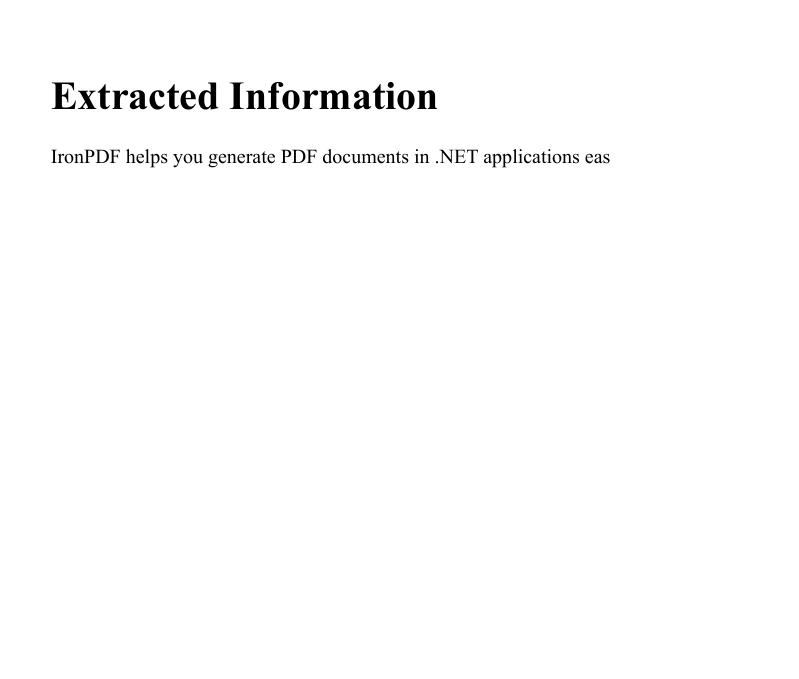
Dieser Prozess zeigt einen einfachen Weg, Textmanipulation und PDF-Erstellung zu integrieren, was besonders nützlich sein kann für das Erstellen von Berichten oder Dokumentationen, die spezifische Informationen aus größeren Texten extrahieren und präsentieren müssen.
Abschluss
Die Substring-Methode in C# ist ein leistungsstarkes Werkzeug zur Zeichenfolgenmanipulation, das es Entwicklern ermöglicht, leicht Teile von Texten basierend auf angegebenen Zeichenpositionen zu extrahieren. Durch das Verstehen und Nutzen dieser Methode können Sie eine Vielzahl von Textverarbeitungsaufgaben effektiv bewältigen. Denken Sie daran, Randfälle zu berücksichtigen und Indizes zu validieren, um die Robustheit Ihrer Anwendungen zu erhalten. IronPDF bietet eine kostenlose Testversion für Entwickler zur Erkundung seiner Funktionen an, und die Lizenzierung für das Produkt beginnt bei $999.