Als Entwickler kann die Wahl des richtigen Frameworks entscheidend für den Erfolg Ihres Projekts sein. In diesem Artikel gehen wir tief auf die Unterschiede zwischen .NET Core und .NET Framework ein, zwei beliebte Frameworks von Microsoft. Zusätzlich werden wir erkunden, wie IronPDF, eine führende PDF-Bibliothek, mit den neuesten .NET-Technologien kompatibel ist. Abschließend stellen wir zwei weitere bemerkenswerte Bibliotheken kurz vor: IronXL und IronOCR.
Verständnis von .NET Core und .NET Framework
1.1. .NET Framework
.NET Framework, veröffentlicht im Jahr 2002, ist ein Software-Framework, das von Microsoft entwickelt wurde. Es bietet eine Laufzeitumgebung, die es Entwicklern ermöglicht, Windows-basierte Anwendungen mit verschiedenen Programmiersprachen wie C# und VB.NET zu erstellen. Die umfangreiche Bibliothek von .NET Framework bietet vorgefertigte Lösungen und wiederverwendbare Komponenten, die die Entwicklung vereinfachen und die Anwendungsleistung verbessern.
1.2. .NET Core
.NET Core ist ein Open-Source-, plattformübergreifendes und modulares Framework, das 2016 eingeführt wurde. Es ist eine leichte und leistungsstarke Alternative zu .NET Framework, die darauf ausgelegt ist, Microservices und Cloud-native Anwendungen zu unterstützen. .NET Core ermöglicht es Entwicklern, Anwendungen zu erstellen, die unter Windows, Linux und macOS ausgeführt werden, und dabei denselben Code zu verwenden.
.NET Core vs .NET Framework: Hauptunterschiede
Der bedeutendste Unterschied zwischen .NET Core und .NET Framework liegt in ihrer Plattformkompatibilität. Während .NET Framework auf Windows beschränkt ist, ist .NET Core plattformübergreifend, sodass Entwickler Anwendungen für Windows, Linux und macOS erstellen können.
2.2. Leistung
.NET Core wurde für eine bessere Leistung optimiert und ist damit ein schnelleres und effizienteres Framework als .NET Framework. Das modulare Design von .NET Core stellt sicher, dass Anwendungen nur die notwendigen Komponenten enthalten, was die Gesamtgröße reduziert und die Ladezeiten verbessert.
2.3. Unterstützung von Bibliotheken und APIs
.NET Core bietet eine kleinere Menge an Bibliotheken und APIs im Vergleich zu .NET Framework. Allerdings sind die Bibliotheken von .NET Core modularer und werden häufiger aktualisiert. Der .NET Standard, ein gemeinsamer Satz von APIs für beide Frameworks, hilft, die Lücke zu überbrücken, indem er Entwicklern ermöglicht, Bibliotheken zu erstellen, die sowohl mit .NET Core als auch mit .NET Framework funktionieren.
2.4. Entwicklung und Einsatz
Die Entwicklung und Bereitstellung von Anwendungen mit .NET Core ist einfacher als mit .NET Framework. Die Befehlszeilenschnittstelle (CLI) von .NET Core bietet eine konsistente Benutzererfahrung über alle Plattformen hinweg und vereinfacht den Entwicklungsprozess. Zusätzlich ermöglicht die nebeneinander vorhandene Bereitstellung von .NET Core, dass mehrere Anwendungsversionen gleichzeitig ohne Konflikte existieren können.
IronPDF: Kompatibilität mit den neuesten .NET-Technologien
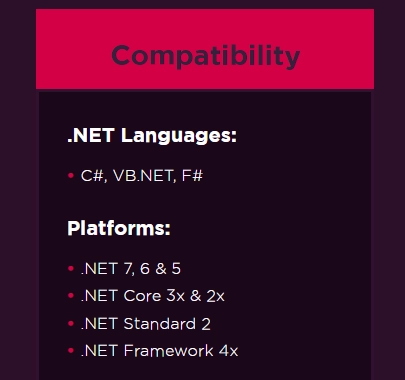
Erkunden Sie die IronPDF PDF-Bibliothek ist eine leistungsstarke PDF-Bibliothek, die Entwicklern ermöglicht, PDFs aus HTML mit IronPDF zu erstellen, Inhalte aus PDF-Dateien in ihren .NET-Anwendungen zu lesen, zu bearbeiten und zu extrahieren. Sie ist sowohl mit .NET Core als auch mit .NET Framework vollständig kompatibel, wodurch Entwickler ihre leistungsstarken Funktionen unabhängig vom gewählten Framework nutzen können. Die Unterstützung von IronPDF für die HTML-zu-PDF-Konvertierung, PDF-Manipulation und nahtlose Integration mit .NET-Technologien macht es zu einem unverzichtbaren Werkzeug für moderne Entwickler.
Einführung in IronXL und IronOCR
Entdecken Sie die Fähigkeiten der IronXL Excel-Bibliothek ist eine vielseitige Excel-Bibliothek, die Entwicklern ermöglicht, Excel-Dateien mit IronXL zu lesen, zu schreiben und in .NET-Anwendungen zu manipulieren. Sie bietet eine intuitive API und unterstützt verschiedene Dateiformate, einschließlich XLS, XLSX, CSV und TSV.
Erfahren Sie mehr über die Texterkennung von IronOCR ist eine fortschrittliche Optical Character Recognition (OCR)-Bibliothek, die für .NET-Entwickler entwickelt wurde. Sie kann Text aus Bildern und PDFs lesen, unterstützt mehrere Sprachen und bietet überlegene Genauigkeit und Leistung.
Abschluss
Beim Vergleich von .NET Core und .NET Framework ist es wichtig, Faktoren wie Plattformkompatibilität, Leistung, Bibliotheksunterstützung sowie Entwicklungs- und Bereitstellungsprozesse zu berücksichtigen. Während .NET Core besser für moderne, plattformübergreifende Anwendungen geeignet ist und eine bessere Leistung bietet, bleibt .NET Framework eine sinnvolle Option für traditionelle Windows-basierte Anwendungen mit umfangreicher Bibliotheksunterstützung.
Das Einbinden leistungsstarker Bibliotheken wie IronPDF, IronXL und IronOCR in Ihre .NET-Anwendungen kann deren Funktionalität erheblich steigern. Die Kompatibilität von IronPDF sowohl mit .NET Core als auch mit .NET Framework stellt sicher, dass Entwickler die umfassenden PDF-Funktionen in ihren Projekten nutzen können, unabhängig vom gewählten Framework.
Da sich die Welt von .NET weiterentwickelt, ist es für Entwickler wichtig, über die neuesten Technologien und Bibliotheken informiert zu bleiben. Indem Sie die Unterschiede zwischen .NET Core und .NET Framework verstehen und modernste Werkzeuge wie IronPDF, IronXL und IronOCR nutzen, können Entwickler robuste, effiziente und funktionsreiche Anwendungen entwickeln, um den Anforderungen der modernen Softwarelandschaft gerecht zu werden.