using IronPdf;

// Disable local disk access or cross-origin requests
Installation.EnableWebSecurity = true;

// Instantiate Renderer
var renderer = new ChromePdfRenderer();

// Create a PDF from a HTML string using C#
var pdf = renderer.RenderHtmlAsPdf("<h1>Hello World</h1>");

// Export to a file or Stream
pdf.SaveAs("output.pdf");

// Advanced Example with HTML Assets
// Load external html assets: Images, CSS and JavaScript.
// An optional BasePath 'C:\site\assets\' is set as the file location to load assets from
var myAdvancedPdf = renderer.RenderHtmlAsPdf("<img src='icons/iron.png'>", @"C:\site\assets\");
myAdvancedPdf.SaveAs("html-with-assets.pdf");
using IronPdf;// Disable local disk access or cross-origin requestsInstallation.EnableWebSecurity = true;// Instantiate Renderervar renderer = new ChromePdfRenderer();// Create a PDF from a HTML string using C#var pdf = renderer.RenderHtmlAsPdf("<h1>Hello World</h1>");// Export to a file or Streampdf.SaveAs("output.pdf");// Advanced Example with HTML Assets// Load external html assets: Images, CSS and JavaScript.// An optional BasePath 'C:\site\assets\' is set as the file location to load assets fromvar myAdvancedPdf = renderer.RenderHtmlAsPdf("<img src='icons/iron.png'>", @"C:\site\assets\");myAdvancedPdf.SaveAs("html-with-assets.pdf");
PM >Install-Package IronPdf
Install-Package IronPdf
ENTWICKLER-UPDATES
Sharpziplib ZIP extrahieren C# (Funktionsweise für Entwickler)
In der heutigen digitalen Landschaft, in der Datenmanagement von größter Bedeutung ist, sind effiziente Werkzeuge für Komprimierung und Dekomprimierung entscheidend. Ein solches Werkzeug, das im .NET-Ökosystem heraussticht, ist [SharpZipLib](https://www.nuget.org/packages/SharpZipLib/). In diesem Artikel werden wir einen tiefen Einblick in SharpZipLib nehmen und seine Funktionen, Anwendungen und die Integration in Ihre .NET-Projekte untersuchen.
## Was ist SharpZipLib?
[SharpZipLib](https://github.com/icsharpcode/SharpZipLib) ist eine funktionsreiche, Open-Source-Kompressionsbibliothek für .NET, die vollständig in C# geschrieben ist. Es bietet umfassende Unterstützung für verschiedene Kompressionsformate, einschließlich ZIP, GZip und Tar. Entwickelt von einer engagierten Community, bietet SharpZipLib eine breite Palette von Funktionalitäten zum effizienten Komprimieren und Dekomprimieren von Dateien.
### Funktionen und Möglichkeiten
1. **Unterstützung für mehrere Kompressionsformate:** SharpZipLib unterstützt beliebte Kompressionsformate wie ZIP, GZip und Tar und erfüllt damit unterschiedliche Anwendungsfälle und Anforderungen.
2. **Stream-basierte Operationen:** Die Bibliothek arbeitet mit Streams, was es Entwicklern ermöglicht, Daten aus verschiedenen Quellen zu verarbeiten, einschließlich Dateien, Speicher-Streams oder Netzwerk-Streams. Diese Flexibilität erleichtert die nahtlose Integration in verschiedene Teile einer Anwendung.
3. **Kompressionsstufen:** Entwickler können die Kompressionsstufen feinabstimmen, um das Verhältnis von Komprimierung zu Verarbeitungsgeschwindigkeit entsprechend ihren spezifischen Anforderungen auszugleichen.
4. **Passwortschutz:** SharpZipLib ermöglicht die Erstellung von passwortgeschützten ZIP-Archiven, um die Datensicherheit durch Verschlüsselung der Inhalte mit einem angegebenen Passwort zu gewährleisten.
5. **Fehlerbehandlung und Wiederherstellung:** Robuste Fehlerbehandlungsmechanismen ermöglichen es Entwicklern, Ausnahmen bei Komprimierungs- und Dekomprimierungsvorgängen elegant zu handhaben. Zusätzlich unterstützt SharpZipLib die Wiederherstellung aus beschädigten Archiven, was die Zuverlässigkeit erhöht.
### Anwendungsfälle
1. **Dateikomprimierung und Archivierung:** SharpZipLib ist ideal für Anwendungen, die das Komprimieren und Archivieren von Dateien erfordern, wie Backup-Dienstprogramme, Dateiverwaltungstools oder Datensatzexportfunktionen.
2. **Webdienste und APIs:** Webdienste, die mit Dateitransfers oder Datenaustausch umgehen, profitieren häufig von der Komprimierung zur Reduzierung des Bandbreitenverbrauchs. SharpZipLib kann nahtlos in solche Dienste integriert werden, um ausgehende Daten zu komprimieren oder eingehende Nutzlasten effizient zu dekomprimieren.
3. **Desktop-Anwendungen:** Desktop-Anwendungen, die mit großen Datensätzen oder Ressourcendateien arbeiten, können SharpZipLib nutzen, um Dateien zur Speicherung oder Verteilung zu komprimieren. Dies ist besonders nützlich für Softwareinstallationsprogramme oder Datenabgleichstools.
4. **Datensicherung und -speicherung:** Anwendungen, die regelmäßige Backups oder die Speicherung von Daten im komprimierten Format erfordern, können den Backup-Prozess automatisieren und den Speicherplatz effektiv einsparen, indem SharpZipLib verwendet wird.
## Vorteile von SharpZipLib
1. **Open Source:** Als Open-Source-Bibliothek fördert SharpZipLib die Zusammenarbeit und den Beitrag der Community, was eine kontinuierliche Verbesserung und Anpassungsfähigkeit an sich entwickelnde Anforderungen gewährleistet.
2. **Plattformübergreifende Kompatibilität:** SharpZipLib, geschrieben in C# und gezielt für das .NET-Framework, ist mit verschiedenen Plattformen kompatibel, einschließlich Windows, Linux und macOS, was seine Vielseitigkeit erhöht.
3. **Leichtgewichtig und effizient:** SharpZipLib ist darauf ausgelegt, leichtgewichtig und effizient zu sein, den Ressourcenverbrauch zu minimieren und gleichzeitig leistungsstarke Komprimierungs- und Dekomprimierungsfunktionen bereitzustellen.
4. **Umfassende Dokumentation und Unterstützung:** Umfassende Dokumentation und Community-Unterstützung erleichtern es Entwicklern, integrative und problemlose Lösungen bei der Verwendung von SharpZipLib zu finden.
## C#-Projekt in Visual Studio erstellen
1. Öffnen Sie Visual Studio und klicken Sie auf die Option "Neues Projekt erstellen".
2. Wählen Sie die geeignete Projektvorlage basierend auf Ihren Anforderungen (z.B. Konsolenanwendung, Windows Forms-Anwendung).
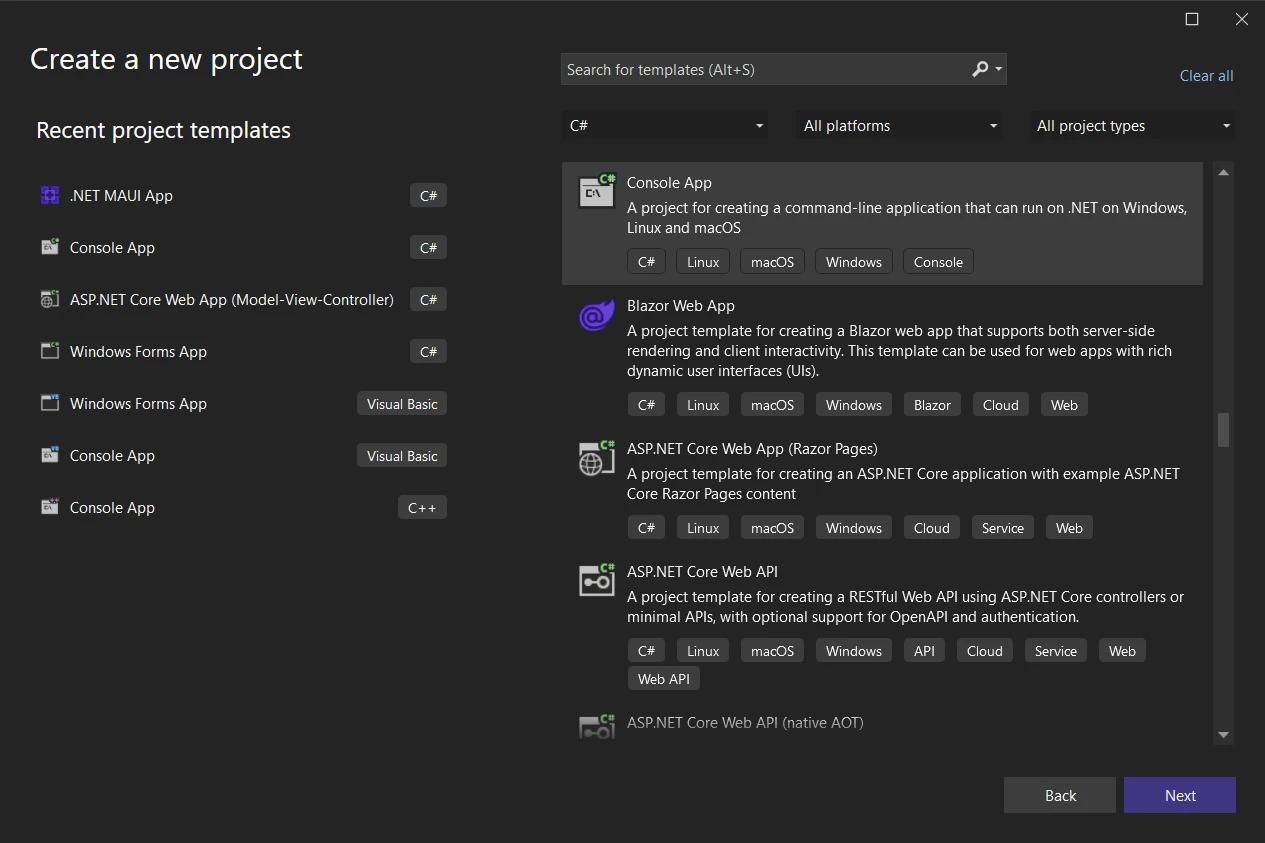
3. Geben Sie den Projektnamen und den Speicherort an und klicken Sie dann auf "Weiter".

4. Wählen Sie aus den zusätzlichen Informationen das neueste .NET-Framework aus. Klicken Sie auf "Erstellen".
## Installationsprozess
Um SharpZipLib in Ihr .NET-Projekt zu integrieren:
1. Klicken Sie in Ihrer [Visual Studio IDE](https://visualstudio.microsoft.com/downloads/) C# ConsoleApp mit der rechten Maustaste auf Ihr Projekt im Solution Explorer und wählen Sie "NuGet-Pakete verwalten..."
2. Suchen Sie im NuGet-Manager-Fenster nach "SharpZipLib".
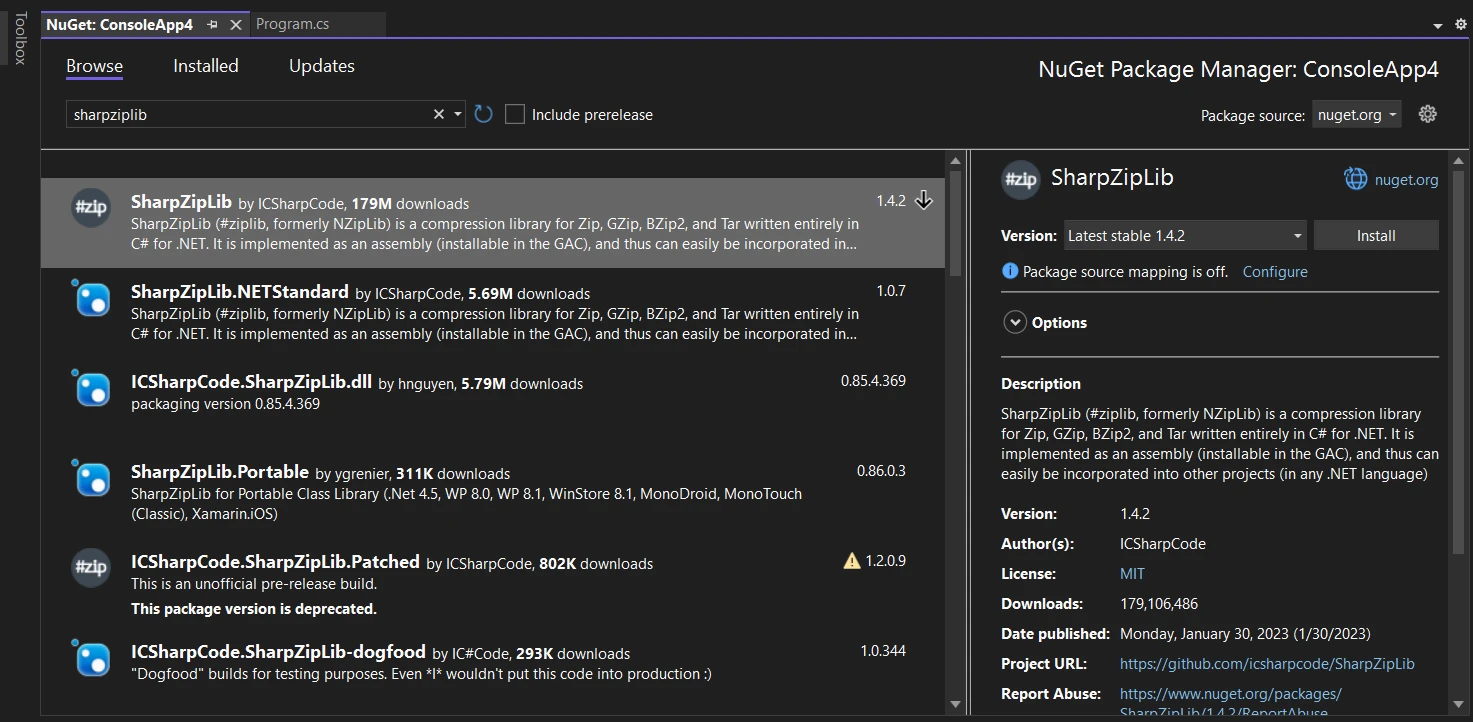
3. Wählen Sie "SharpZipLib" aus den Suchergebnissen und klicken Sie auf die Schaltfläche "Installieren".
4. NuGet wird die notwendigen Abhängigkeiten automatisch herunterladen und Ihrem Projekt hinzufügen.
## Beispielcode
Hier ist ein einfaches Beispiel, das zeigt, wie man SharpZipLib zum Komprimieren und Dekomprimieren von Dateien verwendet:
```csharp
using ICSharpCode.SharpZipLib.Zip;
using System;
using System.IO;

namespace SharpZipLibExample
{
    class Program
    {
        static void Main(string[] args)
        {
            string sourceDirectory = @"C:\SourceDirectory";     // Source directory containing files to compress
            string zipFilePath = @"C:\OutputDirectory\compressed.zip"; // Output path for the compressed ZIP file

            // Compress files from the source directory
            CompressDirectory(sourceDirectory, zipFilePath);
            Console.WriteLine("Files compressed successfully.");

            string extractPath = @"C:\OutputDirectory\extracted"; // Path to extract the decompressed files

            // Decompress files from the ZIP archive
            Decompress(zipFilePath, extractPath);
            Console.WriteLine("Files decompressed successfully.");
        }

        // Method to compress all files in a directory to a ZIP file
        static void CompressDirectory(string sourceDirectory, string zipFilePath)
        {
            using (var zipOutputStream = new ZipOutputStream(File.Create(zipFilePath)))
            {
                zipOutputStream.SetLevel(5); // Set compression level (0-9), 5 as a mid-range

                // Recursively add files in the source directory to the ZIP file
                AddDirectoryFilesToZip(sourceDirectory, zipOutputStream);

                zipOutputStream.Finish();
                zipOutputStream.Close();
            }
        }

        // Method to add files from a directory to a ZIP output stream
        static void AddDirectoryFilesToZip(string sourceDirectory, ZipOutputStream zipOutputStream)
        {
            // Get list of files in the directory
            string[] files = Directory.GetFiles(sourceDirectory);

            foreach (string file in files)
            {
                var entry = new ZipEntry(Path.GetFileName(file)); // Create a new entry for each file
                zipOutputStream.PutNextEntry(entry);

                using (var fileStream = File.OpenRead(file))
                {
                    // Buffer for reading files
                    byte[] buffer = new byte[4096];
                    int sourceBytes;

                    // Read file and write to ZIP stream
                    while ((sourceBytes = fileStream.Read(buffer, 0, buffer.Length)) > 0)
                    {
                        zipOutputStream.Write(buffer, 0, sourceBytes);
                    }
                }
            }

            // Handle subdirectories recursively
            string[] subdirectories = Directory.GetDirectories(sourceDirectory);
            foreach (string subdirectory in subdirectories)
            {
                AddDirectoryFilesToZip(subdirectory, zipOutputStream);
            }
        }

        // Method to decompress files from a ZIP file
        static void Decompress(string zipFilePath, string extractPath)
        {
            using (var zipInputStream = new ZipInputStream(File.OpenRead(zipFilePath)))
            {
                ZipEntry entry;
                // Read entries from the ZIP archive
                while ((entry = zipInputStream.GetNextEntry()) != null)
                {
                    string entryPath = Path.Combine(extractPath, entry.Name);

                    // Process files
                    if (entry.IsFile)
                    {
                        string directoryName = Path.GetDirectoryName(entryPath);
                        if (!Directory.Exists(directoryName))
                            Directory.CreateDirectory(directoryName);

                        using (var fileStream = File.Create(entryPath))
                        {
                            // Buffer for reading entries
                            byte[] buffer = new byte[4096];
                            int bytesRead;
                            // Read from ZIP stream and write to file
                            while ((bytesRead = zipInputStream.Read(buffer, 0, buffer.Length)) > 0)
                            {
                                fileStream.Write(buffer, 0, bytesRead);
                            }
                        }
                    }
                    else if (entry.IsDirectory) // Process directories
                    {
                        Directory.CreateDirectory(entryPath);
                    }
                }
            }
        }
    }
}
```
SharpZipLib ist seit langem ein Grundpfeiler der .NET-Entwicklungsgemeinschaft und bietet essentielle Funktionen für den Umgang mit komprimierten Archiven wie ZIP, GZip, Tar und BZip2. Doch da sich die Technologie weiterentwickelt und Entwickler fortschrittlichere Lösungen suchen, sind bestimmte Einschränkungen von SharpZipLib offensichtlich geworden.
## Einschränkungen von SharpZipLib
1. **Komplexität:** Die API von SharpZipLib kann umständlich und ausführlich sein, sodass Entwickler lange Codezeilen schreiben müssen, um einfache Aufgaben wie das Erstellen oder Extrahieren von ZIP-Archiven durchzuführen.
2. **Fehlende moderne Funktionen:** SharpZipLib bietet keine Unterstützung für moderne .NET -Funktionen und -Plattformen und ist daher für zeitgemäße Entwicklungsumgebungen weniger geeignet.
3. **Eingeschränkte Dokumentation:** Obwohl SharpZipLib schon lange existiert, ist die zugehörige Dokumentation oft spärlich und veraltet, was es Entwicklern erschwert, mit dem Programm zu beginnen oder Probleme zu beheben.
4. **Leistung:** Die Leistung von SharpZipLib entspricht möglicherweise nicht immer den Erwartungen der Entwickler, insbesondere bei der Verarbeitung großer oder komplexer Archive.
## IronZIP: Überbrückung der Kluft
[IronZIP-Dokumentation](https://ironsoftware.com/csharp/zip/docs/), entwickelt von [Iron Software Übersicht](https://ironsoftware.com/), ist eine moderne und effiziente Lösung für die Verwaltung von ZIP-Archiven in .NET-Anwendungen. Mit seiner intuitiven API können Entwickler ZIP-Dateien einfach erstellen, lesen und manipulieren. IronZIP bietet erweiterte Funktionen wie anpassbare Kompressionsstufen und Passwortschutz, um Flexibilität und Datensicherheit zu gewährleisten. Kompatibel mit den neuesten .NET-Versionen und optimiert für Leistung, vereinfacht IronZIP Archivverwaltung leicht und effizient.
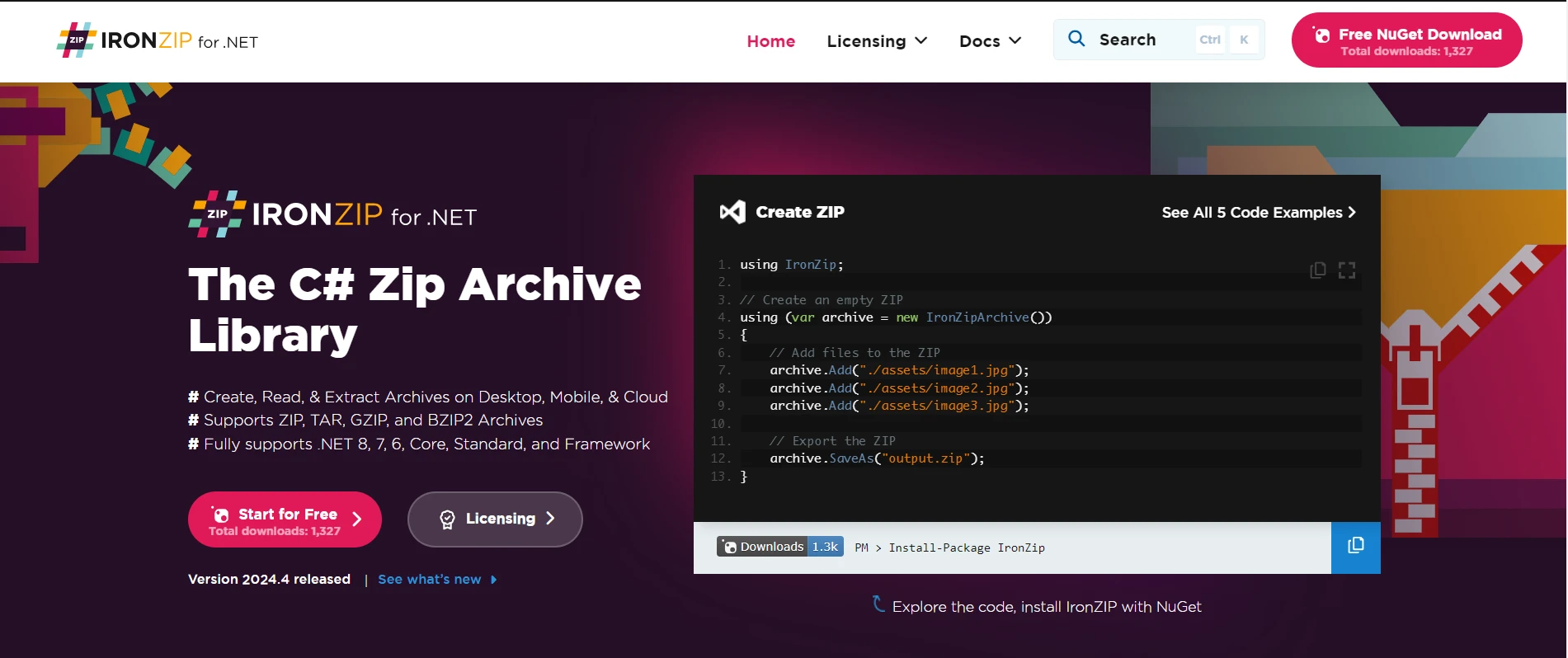
[IronZIP-Funktionen](https://ironsoftware.com/csharp/zip/) entsteht als robuste und moderne Lösung, die die Mängel von SharpZipLib anspricht. So schließt IronZIP die Lücken:
1. **Erweiterte API:** IronZIP bietet eine intuitive und entwicklerfreundliche API, die Archivverwaltungsaufgaben vereinfacht. Mit IronZIP können Entwickler komplexe Operationen mit nur wenigen Codezeilen ausführen, was die Entwicklungszeit und den Aufwand reduziert.
2. **Volle .NET Unterstützung:** IronZIP unterstützt die neuesten .NET Versionen vollständig, einschließlich .NET Core, .NET Standard und .NET Framework, und gewährleistet so die Kompatibilität mit modernen Entwicklungsumgebungen und Plattformen.
3. **Umfassende Dokumentation:** IronZIP wird mit einer umfassenden Dokumentation und Beispielen geliefert, die es Entwicklern ermöglicht, die Funktionen und Möglichkeiten schnell zu erfassen. Die umfangreiche Dokumentation hilft, die Lernkurve zu vereinfachen und erleichtert die Integration in Projekte.
4. **Kontrolle des Komprimierungsgrades:** IronZIP bietet Entwicklern die Möglichkeit, den Komprimierungsgrad zu steuern und ihn so ihren Anforderungen entsprechend anzupassen. Diese Funktion ermöglicht es Entwicklern, das Gleichgewicht zwischen Dateigrößenreduktion und Kompressionsgeschwindigkeit zu finden.
5. **Passwortschutz:** IronZIP unterstützt den Passwortschutz für ZIP-Archive und erhöht so die Sicherheit sensibler Daten. Entwickler können ZIP-Archive problemlos mit traditionellen, AES128- und AES256-Passwörtern verschlüsseln, um sicherzustellen, dass nur autorisierte Benutzer auf die Inhalte des Archivs zugreifen können.
6. **Leistungsoptimierung:** IronZIP ist auf Leistung optimiert und bietet im Vergleich zu SharpZipLib schnellere Komprimierungs- und Extraktionsgeschwindigkeiten. Diese Optimierung gewährleistet, dass Entwickler große Datenmengen effizient verarbeiten können, ohne Kompromisse bei der Leistung einzugehen.
Erkunden Sie die [IronZIP-Dokumentation](https://ironsoftware.com/csharp/zip/docs/) für weitere Informationen zu den ersten Schritten mit IronZIP. Die [IronZIP-Codebeispiele](https://ironsoftware.com/csharp/zip/examples/create-zip/) helfen Ihnen, ohne Schwierigkeiten zu starten.
### IronZIP-Installation
Hier sind die Schritte zur Integration von XDocument mit IronPDF:
* Öffnen Sie [Visual Studio IDE](https://visualstudio.microsoft.com/) oder Ihre bevorzugte IDE.
* Gehen Sie im Menü Werkzeuge zur NuGet-Paket-Manager-Konsole.
* Geben Sie den folgenden Befehl ein, um das IronZIP-Paket zu installieren:
```shell
:ProductInstall
```
* Alternativ können Sie es vom NuGet-Pakete-Manager für Lösungen installieren.
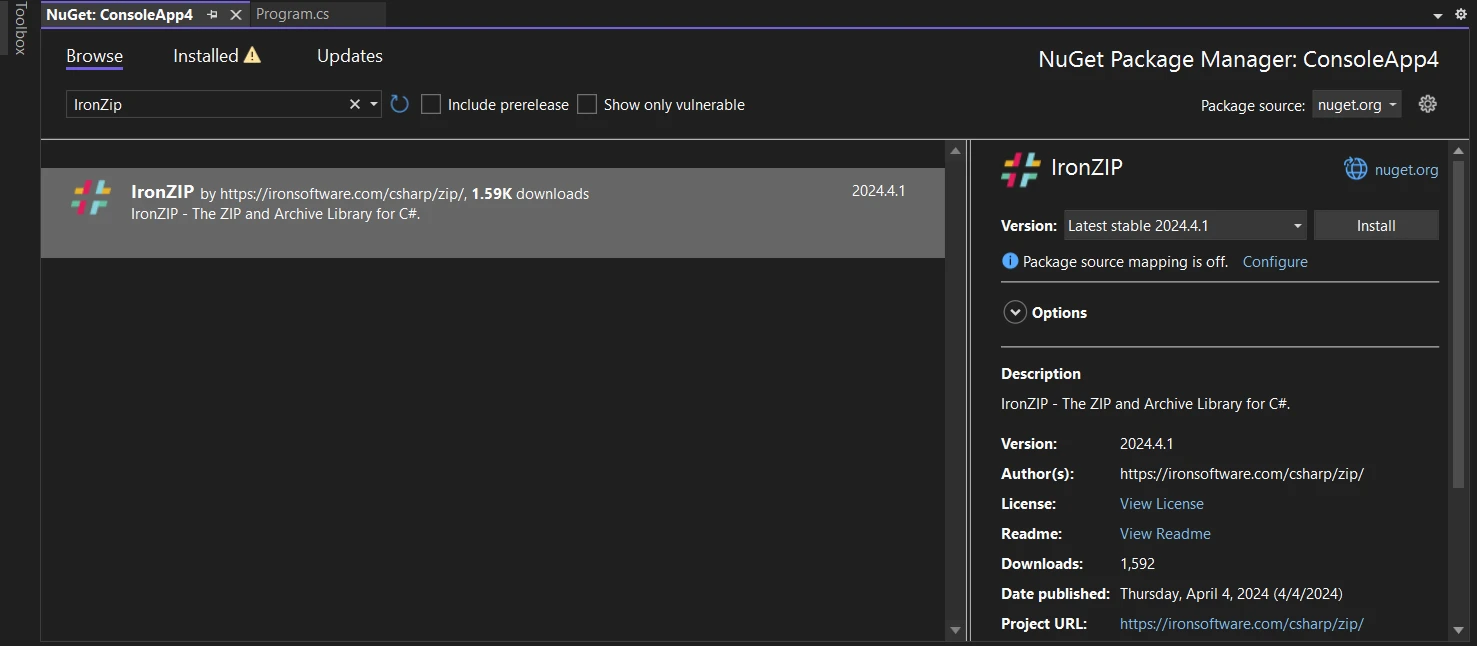
* Wählen Sie IronZIP aus dem NuGet-Browsing-Tab und klicken Sie auf Install:
### Beispielcode
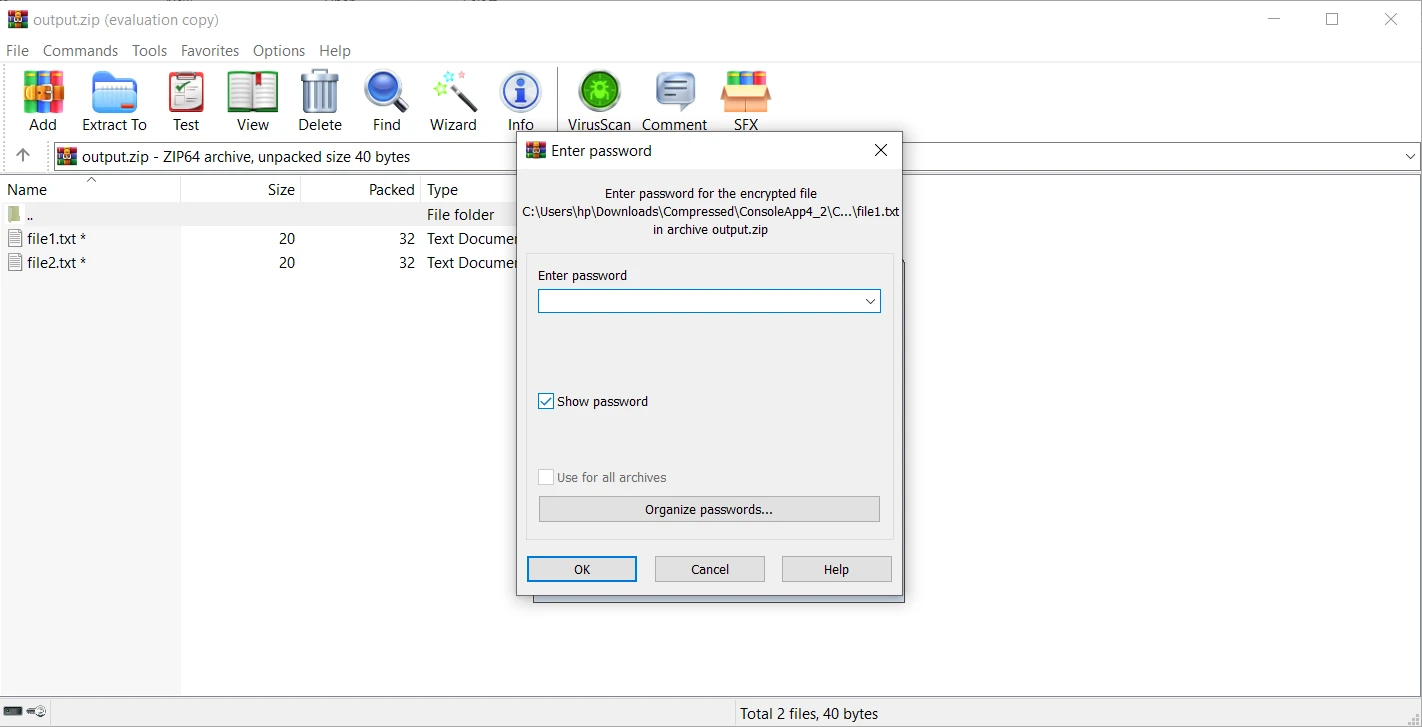
Der folgende Quellcode zeigt, wie IronZIP effizient [eine ZIP-Datei mit IronZIP erstellt](https://ironsoftware.com/csharp/zip/examples/create-zip/) mit Leichtigkeit und nur wenigen Codezeilen. Hier können Sie mehrere Dateien zum [passwortgeschützten ZIP-Archiv hinzufügen](https://ironsoftware.com/csharp/zip/examples/password-protect-zip/), indem Sie die Dateinamen im angegebenen Ordner angeben. Beim Erstellen des `IronZipArchive` Objekts können Sie auch das Kompressionsniveau angeben, um die Dateigröße der Ausgabedatei zu reduzieren.
```csharp
using IronZip;
using IronZip.Enum;
class Program
{
static void Main()
{
// Create an empty ZIP with the highest compression
using (var archive = new IronZipArchive(9))
{
// Password protect the ZIP (Support AES128 & AES256)
archive.SetPassword("P@ssw0rd", EncryptionMethods.Traditional);
archive.AddArchiveEntry("./assets/file1.txt");
archive.AddArchiveEntry("./assets/file2.txt");
// Export the ZIP
archive.SaveAs("output.zip");
}
}
}
```
#### Ausgabe Zip-Datei
## Abschluss
[SharpZipLib Übersicht](https://github.com/icsharpcode/SharpZipLib) erweist sich als leistungsstarke Kompressionsbibliothek für .NET, die eine Vielzahl von Funktionen und Fähigkeiten für die effiziente Handhabung komprimierter Dateien bietet. Egal, ob es darum geht, Daten zur Speicherung zu komprimieren, Dateien zu archivieren oder den Bandbreitenverbrauch in Webdiensten zu optimieren, SharpZipLib bietet die notwendigen Werkzeuge, um Komprimierungs- und Dekomprimierungsvorgänge zu rationalisieren. Mit ihrer Open-Source-Natur, plattformübergreifender Kompatibilität und robusten Funktionalität bleibt SharpZipLib eine bevorzugte Wahl für Entwickler, die eine zuverlässige Lösung für Komprimierungsaufgaben in ihren .NET-Anwendungen suchen.
Während SharpZipLib eine zuverlässige Wahl bei der Arbeit mit komprimierten Archiven in .NET-Anwendungen gewesen ist, sind ihre Einschränkungen in der heutigen Entwicklungslandschaft zunehmend offensichtlich geworden. [Erkunden Sie die IronZIP-API](https://ironsoftware.com/csharp/zip/object-reference/api/), die die Lücken, die SharpZipLib hinterlässt, füllt und dabei eine moderne und funktionsreiche Alternative bietet, die Benutzerfreundlichkeit, Leistung und Kompatibilität priorisiert. Mit IronZIP können Entwickler neue Möglichkeiten im Archivmanagement erschließen und ihren Entwicklungsworkflow mit erweiterten Fähigkeiten und einer intuitiven API optimieren.
IronZIP bietet eine [kostenlose Testlizenzübersicht](trial-license). Laden Sie die Bibliothek von [IronZIP-Downloads](https://ironsoftware.com/csharp/zip/) herunter und probieren Sie es aus.
In der heutigen digitalen Landschaft, in der Datenmanagement von größter Bedeutung ist, sind effiziente Werkzeuge für Komprimierung und Dekomprimierung entscheidend. Ein solches Werkzeug, das im .NET-Ökosystem heraussticht, ist SharpZipLib. In diesem Artikel werden wir einen tiefen Einblick in SharpZipLib nehmen und seine Funktionen, Anwendungen und die Integration in Ihre .NET-Projekte untersuchen.
Was ist SharpZipLib?
SharpZipLib ist eine funktionsreiche, Open-Source-Kompressionsbibliothek für .NET, die vollständig in C# geschrieben ist. Es bietet umfassende Unterstützung für verschiedene Kompressionsformate, einschließlich ZIP, GZip und Tar. Entwickelt von einer engagierten Community, bietet SharpZipLib eine breite Palette von Funktionalitäten zum effizienten Komprimieren und Dekomprimieren von Dateien.
Funktionen und Möglichkeiten
Unterstützung für mehrere Kompressionsformate: SharpZipLib unterstützt beliebte Kompressionsformate wie ZIP, GZip und Tar und erfüllt damit unterschiedliche Anwendungsfälle und Anforderungen.
Stream-basierte Operationen: Die Bibliothek arbeitet mit Streams, was es Entwicklern ermöglicht, Daten aus verschiedenen Quellen zu verarbeiten, einschließlich Dateien, Speicher-Streams oder Netzwerk-Streams. Diese Flexibilität erleichtert die nahtlose Integration in verschiedene Teile einer Anwendung.
Kompressionsstufen: Entwickler können die Kompressionsstufen feinabstimmen, um das Verhältnis von Komprimierung zu Verarbeitungsgeschwindigkeit entsprechend ihren spezifischen Anforderungen auszugleichen.
Passwortschutz: SharpZipLib ermöglicht die Erstellung von passwortgeschützten ZIP-Archiven, um die Datensicherheit durch Verschlüsselung der Inhalte mit einem angegebenen Passwort zu gewährleisten.
Fehlerbehandlung und Wiederherstellung: Robuste Fehlerbehandlungsmechanismen ermöglichen es Entwicklern, Ausnahmen bei Komprimierungs- und Dekomprimierungsvorgängen elegant zu handhaben. Zusätzlich unterstützt SharpZipLib die Wiederherstellung aus beschädigten Archiven, was die Zuverlässigkeit erhöht.
Anwendungsfälle
Dateikomprimierung und Archivierung: SharpZipLib ist ideal für Anwendungen, die das Komprimieren und Archivieren von Dateien erfordern, wie Backup-Dienstprogramme, Dateiverwaltungstools oder Datensatzexportfunktionen.
Webdienste und APIs: Webdienste, die mit Dateitransfers oder Datenaustausch umgehen, profitieren häufig von der Komprimierung zur Reduzierung des Bandbreitenverbrauchs. SharpZipLib kann nahtlos in solche Dienste integriert werden, um ausgehende Daten zu komprimieren oder eingehende Nutzlasten effizient zu dekomprimieren.
Desktop-Anwendungen: Desktop-Anwendungen, die mit großen Datensätzen oder Ressourcendateien arbeiten, können SharpZipLib nutzen, um Dateien zur Speicherung oder Verteilung zu komprimieren. Dies ist besonders nützlich für Softwareinstallationsprogramme oder Datenabgleichstools.
Datensicherung und -speicherung: Anwendungen, die regelmäßige Backups oder die Speicherung von Daten im komprimierten Format erfordern, können den Backup-Prozess automatisieren und den Speicherplatz effektiv einsparen, indem SharpZipLib verwendet wird.
Vorteile von SharpZipLib
Open Source: Als Open-Source-Bibliothek fördert SharpZipLib die Zusammenarbeit und den Beitrag der Community, was eine kontinuierliche Verbesserung und Anpassungsfähigkeit an sich entwickelnde Anforderungen gewährleistet.
Plattformübergreifende Kompatibilität: SharpZipLib, geschrieben in C# und gezielt für das .NET-Framework, ist mit verschiedenen Plattformen kompatibel, einschließlich Windows, Linux und macOS, was seine Vielseitigkeit erhöht.
Leichtgewichtig und effizient: SharpZipLib ist darauf ausgelegt, leichtgewichtig und effizient zu sein, den Ressourcenverbrauch zu minimieren und gleichzeitig leistungsstarke Komprimierungs- und Dekomprimierungsfunktionen bereitzustellen.
Umfassende Dokumentation und Unterstützung: Umfassende Dokumentation und Community-Unterstützung erleichtern es Entwicklern, integrative und problemlose Lösungen bei der Verwendung von SharpZipLib zu finden.
C#-Projekt in Visual Studio erstellen
Öffnen Sie Visual Studio und klicken Sie auf die Option "Neues Projekt erstellen".
Wählen Sie die geeignete Projektvorlage basierend auf Ihren Anforderungen (z.B. Konsolenanwendung, Windows Forms-Anwendung).
Geben Sie den Projektnamen und den Speicherort an und klicken Sie dann auf "Weiter".
Wählen Sie aus den zusätzlichen Informationen das neueste .NET-Framework aus. Klicken Sie auf "Erstellen".
Installationsprozess
Um SharpZipLib in Ihr .NET-Projekt zu integrieren:
Klicken Sie in Ihrer Visual Studio IDE C# ConsoleApp mit der rechten Maustaste auf Ihr Projekt im Solution Explorer und wählen Sie "NuGet-Pakete verwalten..."
Suchen Sie im NuGet-Manager-Fenster nach "SharpZipLib".
Wählen Sie "SharpZipLib" aus den Suchergebnissen und klicken Sie auf die Schaltfläche "Installieren".
NuGet wird die notwendigen Abhängigkeiten automatisch herunterladen und Ihrem Projekt hinzufügen.
Beispielcode
Hier ist ein einfaches Beispiel, das zeigt, wie man SharpZipLib zum Komprimieren und Dekomprimieren von Dateien verwendet:
using ICSharpCode.SharpZipLib.Zip;using System;using System.IO;namespace SharpZipLibExample{ class Program { static voidMain(string[] args) { string sourceDirectory = @"C:\SourceDirectory"; // Source directory containing files to compress string zipFilePath = @"C:\OutputDirectory\compressed.zip"; // Output path for the compressed ZIP file // Compress files from the source directoryCompressDirectory(sourceDirectory, zipFilePath);Console.WriteLine("Files compressed successfully."); string extractPath = @"C:\OutputDirectory\extracted"; // Path to extract the decompressed files // Decompress files from the ZIP archiveDecompress(zipFilePath, extractPath);Console.WriteLine("Files decompressed successfully."); } // Method to compress all files in a directory to a ZIP file static voidCompressDirectory(string sourceDirectory, string zipFilePath) { using (var zipOutputStream = new ZipOutputStream(File.Create(zipFilePath))) { zipOutputStream.SetLevel(5); // Set compression level (0-9), 5 as a mid-range // Recursively add files in the source directory to the ZIP fileAddDirectoryFilesToZip(sourceDirectory, zipOutputStream); zipOutputStream.Finish(); zipOutputStream.Close(); } } // Method to add files from a directory to a ZIP output stream static voidAddDirectoryFilesToZip(string sourceDirectory, ZipOutputStream zipOutputStream) { // Get list of files in the directory string[] files = Directory.GetFiles(sourceDirectory); foreach (string file in files) { var entry = new ZipEntry(Path.GetFileName(file)); // Create a new entry for each file zipOutputStream.PutNextEntry(entry); using (var fileStream = File.OpenRead(file)) { // Buffer for reading files byte[] buffer = new byte[4096]; int sourceBytes; // Read file and write to ZIP stream while ((sourceBytes = fileStream.Read(buffer, 0, buffer.Length)) > 0) { zipOutputStream.Write(buffer, 0, sourceBytes); } } } // Handle subdirectories recursively string[] subdirectories = Directory.GetDirectories(sourceDirectory); foreach (string subdirectory in subdirectories) {AddDirectoryFilesToZip(subdirectory, zipOutputStream); } } // Method to decompress files from a ZIP file static voidDecompress(string zipFilePath, string extractPath) { using (var zipInputStream = new ZipInputStream(File.OpenRead(zipFilePath))) { ZipEntry entry; // Read entries from the ZIP archive while ((entry = zipInputStream.GetNextEntry()) != null) { string entryPath = Path.Combine(extractPath, entry.Name); // Process files if (entry.IsFile) { string directoryName = Path.GetDirectoryName(entryPath); if (!Directory.Exists(directoryName))Directory.CreateDirectory(directoryName); using (var fileStream = File.Create(entryPath)) { // Buffer for reading entries byte[] buffer = new byte[4096]; int bytesRead; // Read from ZIP stream and write to file while ((bytesRead = zipInputStream.Read(buffer, 0, buffer.Length)) > 0) { fileStream.Write(buffer, 0, bytesRead); } } } else if (entry.IsDirectory) // Process directories {Directory.CreateDirectory(entryPath); } } } } }}
using ICSharpCode.SharpZipLib.Zip;
using System;
using System.IO;

namespace SharpZipLibExample
{
    class Program
    {
        static void Main(string[] args)
        {
            string sourceDirectory = @"C:\SourceDirectory";     // Source directory containing files to compress
            string zipFilePath = @"C:\OutputDirectory\compressed.zip"; // Output path for the compressed ZIP file

            // Compress files from the source directory
            CompressDirectory(sourceDirectory, zipFilePath);
            Console.WriteLine("Files compressed successfully.");

            string extractPath = @"C:\OutputDirectory\extracted"; // Path to extract the decompressed files

            // Decompress files from the ZIP archive
            Decompress(zipFilePath, extractPath);
            Console.WriteLine("Files decompressed successfully.");
        }

        // Method to compress all files in a directory to a ZIP file
        static void CompressDirectory(string sourceDirectory, string zipFilePath)
        {
            using (var zipOutputStream = new ZipOutputStream(File.Create(zipFilePath)))
            {
                zipOutputStream.SetLevel(5); // Set compression level (0-9), 5 as a mid-range

                // Recursively add files in the source directory to the ZIP file
                AddDirectoryFilesToZip(sourceDirectory, zipOutputStream);

                zipOutputStream.Finish();
                zipOutputStream.Close();
            }
        }

        // Method to add files from a directory to a ZIP output stream
        static void AddDirectoryFilesToZip(string sourceDirectory, ZipOutputStream zipOutputStream)
        {
            // Get list of files in the directory
            string[] files = Directory.GetFiles(sourceDirectory);

            foreach (string file in files)
            {
                var entry = new ZipEntry(Path.GetFileName(file)); // Create a new entry for each file
                zipOutputStream.PutNextEntry(entry);

                using (var fileStream = File.OpenRead(file))
                {
                    // Buffer for reading files
                    byte[] buffer = new byte[4096];
                    int sourceBytes;

                    // Read file and write to ZIP stream
                    while ((sourceBytes = fileStream.Read(buffer, 0, buffer.Length)) > 0)
                    {
                        zipOutputStream.Write(buffer, 0, sourceBytes);
                    }
                }
            }

            // Handle subdirectories recursively
            string[] subdirectories = Directory.GetDirectories(sourceDirectory);
            foreach (string subdirectory in subdirectories)
            {
                AddDirectoryFilesToZip(subdirectory, zipOutputStream);
            }
        }

        // Method to decompress files from a ZIP file
        static void Decompress(string zipFilePath, string extractPath)
        {
            using (var zipInputStream = new ZipInputStream(File.OpenRead(zipFilePath)))
            {
                ZipEntry entry;
                // Read entries from the ZIP archive
                while ((entry = zipInputStream.GetNextEntry()) != null)
                {
                    string entryPath = Path.Combine(extractPath, entry.Name);

                    // Process files
                    if (entry.IsFile)
                    {
                        string directoryName = Path.GetDirectoryName(entryPath);
                        if (!Directory.Exists(directoryName))
                            Directory.CreateDirectory(directoryName);

                        using (var fileStream = File.Create(entryPath))
                        {
                            // Buffer for reading entries
                            byte[] buffer = new byte[4096];
                            int bytesRead;
                            // Read from ZIP stream and write to file
                            while ((bytesRead = zipInputStream.Read(buffer, 0, buffer.Length)) > 0)
                            {
                                fileStream.Write(buffer, 0, bytesRead);
                            }
                        }
                    }
                    else if (entry.IsDirectory) // Process directories
                    {
                        Directory.CreateDirectory(entryPath);
                    }
                }
            }
        }
    }
}
ImportsICSharpCode.SharpZipLib.ZipImportsSystemImportsSystem.IONamespaceSharpZipLibExampleFriend Class ProgramShared Sub Main(ByVal args() AsString) Dim sourceDirectory AsString = "C:\SourceDirectory" ' Source directory containing files to compress Dim zipFilePath AsString = "C:\OutputDirectory\compressed.zip" ' Output path for the compressed ZIP file ' Compress files from the source directoryCompressDirectory(sourceDirectory, zipFilePath)Console.WriteLine("Files compressed successfully.") Dim extractPath AsString = "C:\OutputDirectory\extracted" ' Path to extract the decompressed files ' Decompress files from the ZIP archiveDecompress(zipFilePath, extractPath)Console.WriteLine("Files decompressed successfully.") End Sub ' Method to compress all files in a directory to a ZIP file PrivateShared Sub CompressDirectory(ByVal sourceDirectory AsString, ByVal zipFilePath AsString)Using zipOutputStream As New ZipOutputStream(File.Create(zipFilePath)) zipOutputStream.SetLevel(5) ' Set compression level (0-9), 5 as a mid-range ' Recursively add files in the source directory to the ZIP fileAddDirectoryFilesToZip(sourceDirectory, zipOutputStream) zipOutputStream.Finish() zipOutputStream.Close()EndUsing End Sub ' Method to add files from a directory to a ZIP output stream PrivateShared Sub AddDirectoryFilesToZip(ByVal sourceDirectory AsString, ByVal zipOutputStream AsZipOutputStream) ' Get list of files in the directory Dim files() AsString = Directory.GetFiles(sourceDirectory) For Each file AsStringIn files Dim entry = New ZipEntry(Path.GetFileName(file)) ' Create a new entry for each file zipOutputStream.PutNextEntry(entry)Using fileStream = System.IO.File.OpenRead(file) ' Buffer for reading files Dim buffer(4095) AsByte Dim sourceBytes AsInteger ' Read file and write to ZIP stream sourceBytes = fileStream.Read(buffer, 0, buffer.Length)'INSTANT VB WARNING: An assignment within expression was extracted from the following statement:'ORIGINAL LINE: while ((sourceBytes = fileStream.Read(buffer, 0, buffer.Length)) > 0) Do While sourceBytes > 0 zipOutputStream.Write(buffer, 0, sourceBytes) sourceBytes = fileStream.Read(buffer, 0, buffer.Length) LoopEndUsing Next file ' Handle subdirectories recursively Dim subdirectories() AsString = Directory.GetDirectories(sourceDirectory) For Each subdirectory AsStringIn subdirectoriesAddDirectoryFilesToZip(subdirectory, zipOutputStream) Next subdirectory End Sub ' Method to decompress files from a ZIP file PrivateShared Sub Decompress(ByVal zipFilePath AsString, ByVal extractPath AsString)Using zipInputStream As New ZipInputStream(File.OpenRead(zipFilePath)) Dim entry AsZipEntry ' Read entries from the ZIP archive entry = zipInputStream.GetNextEntry()'INSTANT VB WARNING: An assignment within expression was extracted from the following statement:'ORIGINAL LINE: while ((entry = zipInputStream.GetNextEntry()) != null) Do While entry IsNot Nothing Dim entryPath AsString = Path.Combine(extractPath, entry.Name) ' Process files If entry.IsFileThen Dim directoryName AsString = Path.GetDirectoryName(entryPath) IfNotDirectory.Exists(directoryName) ThenDirectory.CreateDirectory(directoryName) End IfUsing fileStream = File.Create(entryPath) ' Buffer for reading entries Dim buffer(4095) AsByte Dim bytesRead AsInteger ' Read from ZIP stream and write to file bytesRead = zipInputStream.Read(buffer, 0, buffer.Length)'INSTANT VB WARNING: An assignment within expression was extracted from the following statement:'ORIGINAL LINE: while ((bytesRead = zipInputStream.Read(buffer, 0, buffer.Length)) > 0) Do While bytesRead > 0 fileStream.Write(buffer, 0, bytesRead) bytesRead = zipInputStream.Read(buffer, 0, buffer.Length) LoopEndUsing ElseIf entry.IsDirectoryThen ' Process directoriesDirectory.CreateDirectory(entryPath) End If entry = zipInputStream.GetNextEntry() LoopEndUsing End Sub End ClassEndNamespace
Imports ICSharpCode.SharpZipLib.Zip
Imports System
Imports System.IO

Namespace SharpZipLibExample
	Friend Class Program
		Shared Sub Main(ByVal args() As String)
			Dim sourceDirectory As String = "C:\SourceDirectory" ' Source directory containing files to compress
			Dim zipFilePath As String = "C:\OutputDirectory\compressed.zip" ' Output path for the compressed ZIP file

			' Compress files from the source directory
			CompressDirectory(sourceDirectory, zipFilePath)
			Console.WriteLine("Files compressed successfully.")

			Dim extractPath As String = "C:\OutputDirectory\extracted" ' Path to extract the decompressed files

			' Decompress files from the ZIP archive
			Decompress(zipFilePath, extractPath)
			Console.WriteLine("Files decompressed successfully.")
		End Sub

		' Method to compress all files in a directory to a ZIP file
		Private Shared Sub CompressDirectory(ByVal sourceDirectory As String, ByVal zipFilePath As String)
			Using zipOutputStream As New ZipOutputStream(File.Create(zipFilePath))
				zipOutputStream.SetLevel(5) ' Set compression level (0-9), 5 as a mid-range

				' Recursively add files in the source directory to the ZIP file
				AddDirectoryFilesToZip(sourceDirectory, zipOutputStream)

				zipOutputStream.Finish()
				zipOutputStream.Close()
			End Using
		End Sub

		' Method to add files from a directory to a ZIP output stream
		Private Shared Sub AddDirectoryFilesToZip(ByVal sourceDirectory As String, ByVal zipOutputStream As ZipOutputStream)
			' Get list of files in the directory
			Dim files() As String = Directory.GetFiles(sourceDirectory)

			For Each file As String In files
				Dim entry = New ZipEntry(Path.GetFileName(file)) ' Create a new entry for each file
				zipOutputStream.PutNextEntry(entry)

				Using fileStream = System.IO.File.OpenRead(file)
					' Buffer for reading files
					Dim buffer(4095) As Byte
					Dim sourceBytes As Integer

					' Read file and write to ZIP stream
					sourceBytes = fileStream.Read(buffer, 0, buffer.Length)
'INSTANT VB WARNING: An assignment within expression was extracted from the following statement:
'ORIGINAL LINE: while ((sourceBytes = fileStream.Read(buffer, 0, buffer.Length)) > 0)
					Do While sourceBytes > 0
						zipOutputStream.Write(buffer, 0, sourceBytes)
						sourceBytes = fileStream.Read(buffer, 0, buffer.Length)
					Loop
				End Using
			Next file

			' Handle subdirectories recursively
			Dim subdirectories() As String = Directory.GetDirectories(sourceDirectory)
			For Each subdirectory As String In subdirectories
				AddDirectoryFilesToZip(subdirectory, zipOutputStream)
			Next subdirectory
		End Sub

		' Method to decompress files from a ZIP file
		Private Shared Sub Decompress(ByVal zipFilePath As String, ByVal extractPath As String)
			Using zipInputStream As New ZipInputStream(File.OpenRead(zipFilePath))
				Dim entry As ZipEntry
				' Read entries from the ZIP archive
				entry = zipInputStream.GetNextEntry()
'INSTANT VB WARNING: An assignment within expression was extracted from the following statement:
'ORIGINAL LINE: while ((entry = zipInputStream.GetNextEntry()) != null)
				Do While entry IsNot Nothing
					Dim entryPath As String = Path.Combine(extractPath, entry.Name)

					' Process files
					If entry.IsFile Then
						Dim directoryName As String = Path.GetDirectoryName(entryPath)
						If Not Directory.Exists(directoryName) Then
							Directory.CreateDirectory(directoryName)
						End If

						Using fileStream = File.Create(entryPath)
							' Buffer for reading entries
							Dim buffer(4095) As Byte
							Dim bytesRead As Integer
							' Read from ZIP stream and write to file
							bytesRead = zipInputStream.Read(buffer, 0, buffer.Length)
'INSTANT VB WARNING: An assignment within expression was extracted from the following statement:
'ORIGINAL LINE: while ((bytesRead = zipInputStream.Read(buffer, 0, buffer.Length)) > 0)
							Do While bytesRead > 0
								fileStream.Write(buffer, 0, bytesRead)
								bytesRead = zipInputStream.Read(buffer, 0, buffer.Length)
							Loop
						End Using
					ElseIf entry.IsDirectory Then ' Process directories
						Directory.CreateDirectory(entryPath)
					End If
					entry = zipInputStream.GetNextEntry()
				Loop
			End Using
		End Sub
	End Class
End Namespace
SharpZipLib ist seit langem ein Grundpfeiler der .NET-Entwicklungsgemeinschaft und bietet essentielle Funktionen für den Umgang mit komprimierten Archiven wie ZIP, GZip, Tar und BZip2. Doch da sich die Technologie weiterentwickelt und Entwickler fortschrittlichere Lösungen suchen, sind bestimmte Einschränkungen von SharpZipLib offensichtlich geworden.
Einschränkungen von SharpZipLib
Komplexität: Die API von SharpZipLib kann umständlich und ausführlich sein, sodass Entwickler lange Codezeilen schreiben müssen, um einfache Aufgaben wie das Erstellen oder Extrahieren von ZIP-Archiven durchzuführen.
Fehlende moderne Funktionen: SharpZipLib bietet keine Unterstützung für moderne .NET -Funktionen und -Plattformen und ist daher für zeitgemäße Entwicklungsumgebungen weniger geeignet.
Eingeschränkte Dokumentation: Obwohl SharpZipLib schon lange existiert, ist die zugehörige Dokumentation oft spärlich und veraltet, was es Entwicklern erschwert, mit dem Programm zu beginnen oder Probleme zu beheben.
Leistung: Die Leistung von SharpZipLib entspricht möglicherweise nicht immer den Erwartungen der Entwickler, insbesondere bei der Verarbeitung großer oder komplexer Archive.
IronZIP: Überbrückung der Kluft
IronZIP-Dokumentation, entwickelt von Iron Software Übersicht, ist eine moderne und effiziente Lösung für die Verwaltung von ZIP-Archiven in .NET-Anwendungen. Mit seiner intuitiven API können Entwickler ZIP-Dateien einfach erstellen, lesen und manipulieren. IronZIP bietet erweiterte Funktionen wie anpassbare Kompressionsstufen und Passwortschutz, um Flexibilität und Datensicherheit zu gewährleisten. Kompatibel mit den neuesten .NET-Versionen und optimiert für Leistung, vereinfacht IronZIP Archivverwaltung leicht und effizient.
IronZIP-Funktionen entsteht als robuste und moderne Lösung, die die Mängel von SharpZipLib anspricht. So schließt IronZIP die Lücken:
Erweiterte API: IronZIP bietet eine intuitive und entwicklerfreundliche API, die Archivverwaltungsaufgaben vereinfacht. Mit IronZIP können Entwickler komplexe Operationen mit nur wenigen Codezeilen ausführen, was die Entwicklungszeit und den Aufwand reduziert.
Volle .NET Unterstützung: IronZIP unterstützt die neuesten .NET Versionen vollständig, einschließlich .NET Core, .NET Standard und .NET Framework, und gewährleistet so die Kompatibilität mit modernen Entwicklungsumgebungen und Plattformen.
Umfassende Dokumentation: IronZIP wird mit einer umfassenden Dokumentation und Beispielen geliefert, die es Entwicklern ermöglicht, die Funktionen und Möglichkeiten schnell zu erfassen. Die umfangreiche Dokumentation hilft, die Lernkurve zu vereinfachen und erleichtert die Integration in Projekte.
Kontrolle des Komprimierungsgrades: IronZIP bietet Entwicklern die Möglichkeit, den Komprimierungsgrad zu steuern und ihn so ihren Anforderungen entsprechend anzupassen. Diese Funktion ermöglicht es Entwicklern, das Gleichgewicht zwischen Dateigrößenreduktion und Kompressionsgeschwindigkeit zu finden.
Passwortschutz: IronZIP unterstützt den Passwortschutz für ZIP-Archive und erhöht so die Sicherheit sensibler Daten. Entwickler können ZIP-Archive problemlos mit traditionellen, AES128- und AES256-Passwörtern verschlüsseln, um sicherzustellen, dass nur autorisierte Benutzer auf die Inhalte des Archivs zugreifen können.
Leistungsoptimierung: IronZIP ist auf Leistung optimiert und bietet im Vergleich zu SharpZipLib schnellere Komprimierungs- und Extraktionsgeschwindigkeiten. Diese Optimierung gewährleistet, dass Entwickler große Datenmengen effizient verarbeiten können, ohne Kompromisse bei der Leistung einzugehen.
Erkunden Sie die IronZIP-Dokumentation für weitere Informationen zu den ersten Schritten mit IronZIP. Die IronZIP-Codebeispiele helfen Ihnen, ohne Schwierigkeiten zu starten.
IronZIP-Installation
Hier sind die Schritte zur Integration von XDocument mit IronPDF:
Gehen Sie im Menü Werkzeuge zur NuGet-Paket-Manager-Konsole.
Geben Sie den folgenden Befehl ein, um das IronZIP-Paket zu installieren:
PM > Install-Package IronPdf
Install-Package IronPdf
Alternativ können Sie es vom NuGet-Pakete-Manager für Lösungen installieren.
Wählen Sie IronZIP aus dem NuGet-Browsing-Tab und klicken Sie auf Install:
Beispielcode
Der folgende Quellcode zeigt, wie IronZIP effizient eine ZIP-Datei mit IronZIP erstellt mit Leichtigkeit und nur wenigen Codezeilen. Hier können Sie mehrere Dateien zum passwortgeschützten ZIP-Archiv hinzufügen, indem Sie die Dateinamen im angegebenen Ordner angeben. Beim Erstellen des IronZipArchive Objekts können Sie auch das Kompressionsniveau angeben, um die Dateigröße der Ausgabedatei zu reduzieren.
using IronZip;using IronZip.Enum;class Program{ static voidMain() { // Create an empty ZIP with the highest compression using (var archive = new IronZipArchive(9)) { // Password protect the ZIP (Support AES128 & AES256) archive.SetPassword("P@ssw0rd", EncryptionMethods.Traditional); archive.AddArchiveEntry("./assets/file1.txt"); archive.AddArchiveEntry("./assets/file2.txt"); // Export the ZIP archive.SaveAs("output.zip"); } }}
using IronZip;
using IronZip.Enum;

class Program
{
    static void Main()
    {
        // Create an empty ZIP with the highest compression
        using (var archive = new IronZipArchive(9))
        {
            // Password protect the ZIP (Support AES128 & AES256)
            archive.SetPassword("P@ssw0rd", EncryptionMethods.Traditional);
            archive.AddArchiveEntry("./assets/file1.txt");
            archive.AddArchiveEntry("./assets/file2.txt");
            // Export the ZIP
            archive.SaveAs("output.zip");
        }
    }
}
ImportsIronZipImportsIronZip.EnumFriend Class ProgramShared Sub Main() ' Create an empty ZIP with the highest compressionUsing archive = New IronZipArchive(9) ' Password protect the ZIP (Support AES128 & AES256) archive.SetPassword("P@ssw0rd", EncryptionMethods.Traditional) archive.AddArchiveEntry("./assets/file1.txt") archive.AddArchiveEntry("./assets/file2.txt") ' Export the ZIP archive.SaveAs("output.zip")EndUsing End SubEnd Class
Imports IronZip
Imports IronZip.Enum

Friend Class Program
	Shared Sub Main()
		' Create an empty ZIP with the highest compression
		Using archive = New IronZipArchive(9)
			' Password protect the ZIP (Support AES128 & AES256)
			archive.SetPassword("P@ssw0rd", EncryptionMethods.Traditional)
			archive.AddArchiveEntry("./assets/file1.txt")
			archive.AddArchiveEntry("./assets/file2.txt")
			' Export the ZIP
			archive.SaveAs("output.zip")
		End Using
	End Sub
End Class
Ausgabe Zip-Datei
Abschluss
SharpZipLib Übersicht erweist sich als leistungsstarke Kompressionsbibliothek für .NET, die eine Vielzahl von Funktionen und Fähigkeiten für die effiziente Handhabung komprimierter Dateien bietet. Egal, ob es darum geht, Daten zur Speicherung zu komprimieren, Dateien zu archivieren oder den Bandbreitenverbrauch in Webdiensten zu optimieren, SharpZipLib bietet die notwendigen Werkzeuge, um Komprimierungs- und Dekomprimierungsvorgänge zu rationalisieren. Mit ihrer Open-Source-Natur, plattformübergreifender Kompatibilität und robusten Funktionalität bleibt SharpZipLib eine bevorzugte Wahl für Entwickler, die eine zuverlässige Lösung für Komprimierungsaufgaben in ihren .NET-Anwendungen suchen.
Während SharpZipLib eine zuverlässige Wahl bei der Arbeit mit komprimierten Archiven in .NET-Anwendungen gewesen ist, sind ihre Einschränkungen in der heutigen Entwicklungslandschaft zunehmend offensichtlich geworden. Erkunden Sie die IronZIP-API, die die Lücken, die SharpZipLib hinterlässt, füllt und dabei eine moderne und funktionsreiche Alternative bietet, die Benutzerfreundlichkeit, Leistung und Kompatibilität priorisiert. Mit IronZIP können Entwickler neue Möglichkeiten im Archivmanagement erschließen und ihren Entwicklungsworkflow mit erweiterten Fähigkeiten und einer intuitiven API optimieren.
Jacob Mellor ist Chief Technology Officer bei Iron Software und ein visionärer Ingenieur, der Pionierarbeit in der C# PDF-Technologie leistet. Als der ursprüngliche Entwickler hinter der Kern-Codebasis von Iron Software hat er die Produktarchitektur des Unternehmens seit seiner Gründung geprägt und es zusammen mit CEO Cameron Rimington in ein Unternehmen mit mehr als 50 Mitarbeitern verwandelt, das die NASA, Tesla und globale Regierungsbehörden beliefert.