using IronPdf;

// Disable local disk access or cross-origin requests
Installation.EnableWebSecurity = true;

// Instantiate Renderer
var renderer = new ChromePdfRenderer();

// Create a PDF from a HTML string using C#
var pdf = renderer.RenderHtmlAsPdf("<h1>Hello World</h1>");

// Export to a file or Stream
pdf.SaveAs("output.pdf");

// Advanced Example with HTML Assets
// Load external html assets: Images, CSS and JavaScript.
// An optional BasePath 'C:\site\assets\' is set as the file location to load assets from
var myAdvancedPdf = renderer.RenderHtmlAsPdf("<img src='icons/iron.png'>", @"C:\site\assets\");
myAdvancedPdf.SaveAs("html-with-assets.pdf");
using IronPdf;// Disable local disk access or cross-origin requestsInstallation.EnableWebSecurity = true;// Instantiate Renderervar renderer = new ChromePdfRenderer();// Create a PDF from a HTML string using C#var pdf = renderer.RenderHtmlAsPdf("<h1>Hello World</h1>");// Export to a file or Streampdf.SaveAs("output.pdf");// Advanced Example with HTML Assets// Load external html assets: Images, CSS and JavaScript.// An optional BasePath 'C:\site\assets\' is set as the file location to load assets fromvar myAdvancedPdf = renderer.RenderHtmlAsPdf("<img src='icons/iron.png'>", @"C:\site\assets\");myAdvancedPdf.SaveAs("html-with-assets.pdf");
PM >Install-Package IronPdf
Install-Package IronPdf
ENTWICKLER-UPDATES
Supersocket C# Beispiel (Funktionsweise für Entwickler)
## Entwicklung einer serverseitigen Socket-Anwendung mit SuperSocket und Integration von IronPDF
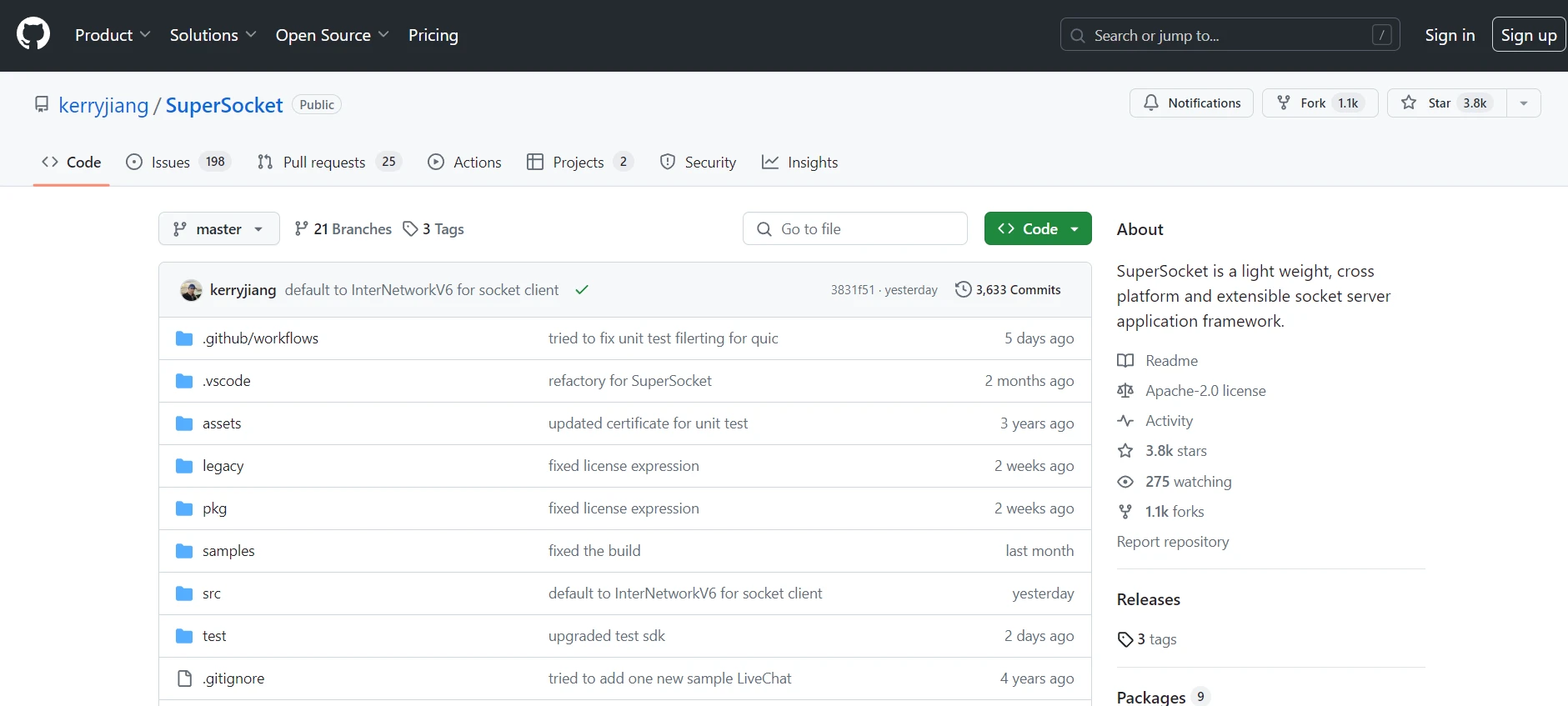
[**SuperSocket C#**](https://github.com/kerryjiang/SuperSocket) ist ein ausgezeichnetes Framework zur Entwicklung serverseitiger Socket-Anwendungen, egal ob Sie an einem GPS-Server oder einem industriellen Steuerungssystem arbeiten. Es unterstützt verschiedene Netzwerkprotokollimplementierungen und sorgt dafür, dass Ihr Socket effizient funktioniert. Dieses leichtgewichtige, plattformübergreifende Framework ist darauf ausgelegt, erweiterbar zu sein und Flexibilität für unterschiedliche Umgebungen zu bieten. Mit SuperSocket können Sie problemlos Daten zwischen Clients und Servern senden, und der Quellcode steht zur Anpassung an spezifische Projektanforderungen zur Verfügung.
Es ist ein Open-Source-Framework, d. h. jeder Entwickler kann es implementieren und über GitHub darauf zugreifen.
[**IronPDF**](/) ist eine leistungsstarke .NET-Bibliothek zum Erstellen, Bearbeiten und Extrahieren von Inhalten aus PDF-Dokumenten. Es ist für Entwickler konzipiert, die PDF-Funktionalität in ihre Anwendungen integrieren müssen. IronPDF unterstützt verschiedene Funktionen wie das Erzeugen von PDFs aus HTML, das Zusammenführen von PDFs und das Extrahieren von Text und Bildern aus PDFs.
Zusammen können SuperSocket und IronPDF komplexe serverseitige Anwendungen betreiben. Sie bieten eine breite Palette von Funktionalitäten, um den Bedürfnissen moderner .NET-Entwickler gerecht zu werden. Diese Bibliotheken sind ideal, egal ob Sie einen Datenerfassungsserver bauen oder einen robusten Spielserver, bei dem Echtzeit-Chat-Anwendungen erforderlich sind.
## Getting Started with SuperSocket C#
### SuperSocket C# in .NET-Projekten einrichten
Um mit der Verwendung von SuperSocket C# zu beginnen, müssen Sie Ihr .NET-Projekt einrichten. Zuerst das SuperSocket NuGet-Paket installieren. Öffnen Sie Ihr Projekt in Visual Studio und führen Sie den folgenden Befehl in der Paket-Manager-Konsole aus:
```shell
:InstallCmd Install-Package SuperSocket
```
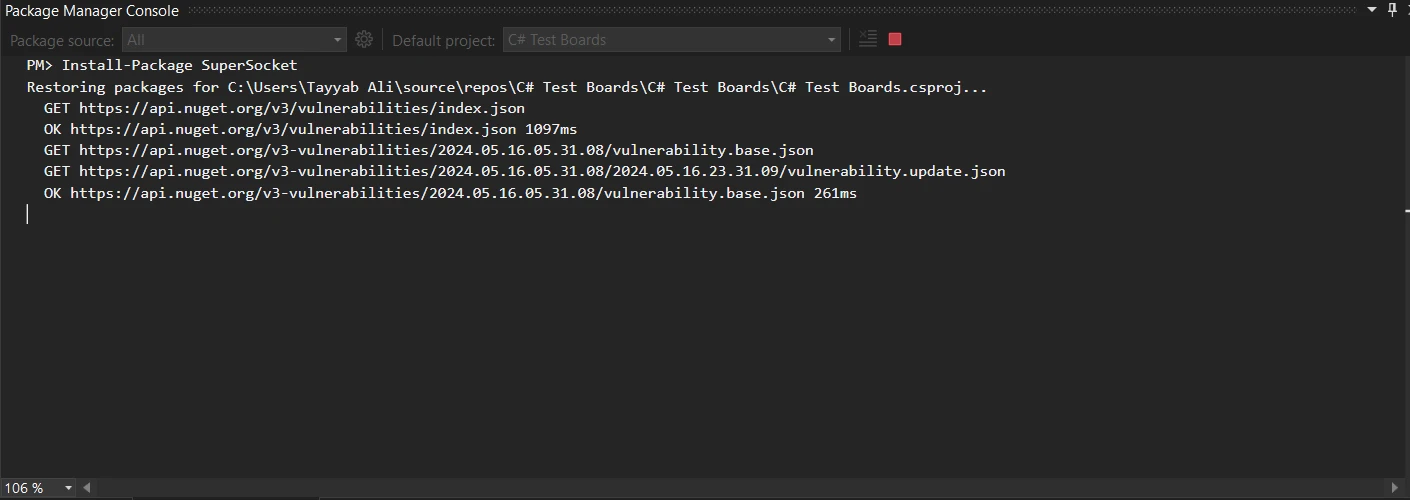
Sobald es installiert ist, können Sie Ihre Instanz des Servers konfigurieren. Erstellen Sie eine neue Konfigurationsdatei namens `appsettings.json`. Diese Datei definiert die Servereinstellungen, einschließlich der Listener und Protokolle.
```json
{
  "serverOptions": {
    "name": "SuperSocketServer",
    "listeners": [
      {
        "ip": "Any",
        "port": 4040
      }
    ]
  }
}
```
Erstellen Sie eine Klasse zur Serverkonfiguration. Diese Klasse wird die Einstellungen aus `appsettings.json` lesen und die Serverinstanz initialisieren.
```csharp
using Microsoft.Extensions.Configuration;
using SuperSocket;
using SuperSocket.Server;

public class ServerConfig
{
    public async Task Configure()
    {
        var host = SuperSocketHostBuilder.Create()
            .UseTcpServer()
            .UseSession<YourSession>()
            .ConfigureAppConfiguration((hostCtx, configApp) =>
            {
                configApp.AddJsonFile("appsettings.json", optional: false, reloadOnChange: true);
            })
            .Build();
        await host.RunAsync();
    }
}
```
### Ein einfaches SuperSocket C# Beispiel
Lassen Sie uns ein einfaches Beispiel für eine SuperSocket C# Anwendung ansehen. Dieses Beispiel demonstriert, wie man einen einfachen Echo-Server erstellt, der alle empfangenen Daten zurücksendet.
Definieren Sie zuerst die Sitzungs-Klasse. Diese Klasse verwaltet die Socketverbindungen und steuert die Datenkommunikation.
```csharp
using SuperSocket;
public class EchoSession : AppSession
{
protected override async ValueTask OnSessionStartedAsync()
{
await base.OnSessionStartedAsync();
Console.WriteLine("New session started.");
}
protected override async ValueTask OnSessionClosedAsync(CloseEventArgs e)
{
await base.OnSessionClosedAsync(e);
Console.WriteLine("Session closed.");
}
protected override async ValueTask OnPackageReceivedAsync(ReadOnlyMemory<byte> package)
{
await SendAsync(package);
}
}
```
Konfigurieren und starten Sie als Nächstes den Server mit der Echo-Sitzung.
```csharp
using Microsoft.Extensions.Configuration;
using SuperSocket;
using SuperSocket.Server;
public class EchoServer
{
public static async Task Main(string[] args)
{
var host = SuperSocketHostBuilder.Create()
.UseTcpServer()
.UseSession<EchoSession>()
.ConfigureAppConfiguration((hostCtx, configApp) =>
{
configApp.AddJsonFile("appsettings.json", optional: false, reloadOnChange: true);
})
.Build();
await host.RunAsync();
}
}
```
Dieses Beispiel zeigt, wie man einen einfachen Echo-Server mit SuperSocket C# erstellt. Der Server lauscht auf Verbindungen und gibt alle empfangenen Daten zurück.
## Implementing Features of SuperSocket C#
### Behandlung mehrerer Listener
SuperSocket C# unterstützt mehrere Listener, sodass Ihr Server verschiedene Protokolle und Ports handhaben kann. Diese Funktion ist nützlich für die Erstellung vielseitiger Anwendungen wie Datenerfassungsserver und GPS-Server.
Aktualisieren Sie zunächst Ihre `appsettings.json`, um mehrere Listener einzuschließen:
```json
{
"serverOptions": {
"name": "MultiListenerServer",
"listeners": [
{
"ip": "Any",
"port": 4040
},
{
"ip": "Any",
"port": 5050
}
]
}
}
```
Konfigurieren Sie als Nächstes den Server, um diese Listener zu verwenden:
```csharp
using Microsoft.Extensions.Configuration;
using SuperSocket;
using SuperSocket.Server;
public class MultiListenerServer
{
public static async Task Main(string[] args)
{
var host = SuperSocketHostBuilder.Create()
.UseTcpServer()
.UseSession<YourSession>()
.ConfigureAppConfiguration((hostCtx, configApp) =>
{
configApp.AddJsonFile("appsettings.json", optional: false, reloadOnChange: true);
})
.Build();
await host.RunAsync();
}
}
```
Mit diesem Setup kann Ihr Server Verbindungen auf beiden Ports 4040 und 5050 handhaben. Diese Fähigkeit ist entscheidend für Anwendungen, die verschiedene Netzwerkprotokolle verwalten müssen.
### Implementierung binärer Datenverarbeitung
SuperSocket C# ist effizient bei der Handhabung von Binärdaten. Dies ist wichtig für Anwendungen, die Binärkompatibilität auf unterster Ebene erfordern, wie industrielle Steuerungssysteme.
Definieren Sie zuerst eine Sitzungs-Klasse, die Binärdaten verarbeitet:
```csharp
using System;
using SuperSocket;
public class BinaryDataSession : AppSession
{
protected override async ValueTask OnPackageReceivedAsync(ReadOnlyMemory<byte> package)
{
var data = package.ToArray();
Console.WriteLine("Received binary data: " + BitConverter.ToString(data));
await SendAsync(data);
}
}
```
Konfigurieren Sie als Nächstes den Server mit der Binärdatensitzung und starten Sie ihn:
```csharp
using Microsoft.Extensions.Configuration;
using SuperSocket;
using SuperSocket.Server;
public class BinaryDataServer
{
public static async Task Main(string[] args)
{
var host = SuperSocketHostBuilder.Create()
.UseTcpServer()
.UseSession<BinaryDataSession>()
.ConfigureAppConfiguration((hostCtx, configApp) =>
{
configApp.AddJsonFile("appsettings.json", optional: false, reloadOnChange: true);
})
.Build();
await host.RunAsync();
}
}
```
Dieses Beispiel demonstriert, wie man Binärdaten mit SuperSocket C# empfängt und sendet. Es ist nützlich für Hochleistungsanwendungen, die Binärprotokolle verarbeiten müssen.
### Verwaltung von Socket-Verbindungen
Die Aufrechterhaltung von Socket-Verbindungen ist entscheidend für die Gewährleistung einer zuverlässigen Kommunikation. SuperSocket C# vereinfacht diesen Prozess.
Definieren Sie zuerst eine Sitzungs-Klasse, die Socket-Verbindungen verwaltet:
```csharp
using SuperSocket;
public class ConnectionSession : AppSession
{
protected override async ValueTask OnSessionStartedAsync()
{
await base.OnSessionStartedAsync();
Console.WriteLine("Connection started.");
}
protected override async ValueTask OnSessionClosedAsync(CloseEventArgs e)
{
await base.OnSessionClosedAsync(e);
Console.WriteLine("Connection closed.");
}
protected override async ValueTask OnPackageReceivedAsync(ReadOnlyMemory<byte> package)
{
await SendAsync(package);
}
}
```
Konfigurieren und starten Sie als Nächstes den Server mit der Verbindungssitzung:
```csharp
using Microsoft.Extensions.Configuration;
using SuperSocket;
using SuperSocket.Server;
public class ConnectionServer
{
public static async Task Main(string[] args)
{
var host = SuperSocketHostBuilder.Create()
.UseTcpServer()
.UseSession<ConnectionSession>()
.ConfigureAppConfiguration((hostCtx, configApp) =>
{
configApp.AddJsonFile("appsettings.json", optional: false, reloadOnChange: true);
})
.Build();
await host.RunAsync();
}
}
```
Dieses Setup hilft bei der Verwaltung von Socket-Verbindungen und stellt sicher, dass Ihr Server robust und zuverlässig bleibt.
### Erstellen eines Befehlszeilenservers
SuperSocket C# unterstützt die Erstellung von Konsolenzeilen-Servern. Diese Funktion ist nützlich für Anwendungen, die einfache textbasierte Protokolle erfordern.
Definieren Sie zuerst eine Befehls-Klasse, die Textbefehle verarbeitet:
```csharp
using System.Text;
using System.Threading.Tasks;
using SuperSocket.Command;
using SuperSocket.ProtoBase;
public class MyCommand : IAsyncCommand<AppSession, StringPackageInfo>
{
public async ValueTask ExecuteAsync(AppSession session, StringPackageInfo package)
{
var commandKey = package.Key;
var parameters = package.Parameters;
await session.SendAsync(Encoding.UTF8.GetBytes($"You said: {string.Join(' ', parameters)}"));
}
}
```
Konfigurieren Sie als Nächstes den Server, um den Befehl zu nutzen:
```csharp
using Microsoft.Extensions.Configuration;
using SuperSocket;
using SuperSocket.Command;
using SuperSocket.ProtoBase;
using SuperSocket.Server;
public class CommandLineServer
{
public static async Task Main(string[] args)
{
var host = SuperSocketHostBuilder.Create()
.UseTcpServer()
.UseSession<AppSession>()
.UseCommand<StringPackageParser>()
.AddCommand<MyCommand>()
.ConfigureAppConfiguration((hostCtx, configApp) =>
{
configApp.AddJsonFile("appsettings.json", optional: false, reloadOnChange: true);
})
.Build();
await host.RunAsync();
}
}
```
Dieses Beispiel zeigt, wie man einen einfachen Konsolenzeilen-Server mit SuperSocket C# erstellt. Es ist ideal für leichte textbasierte Protokolle.
# Integrating SuperSocket C# with IronPDF
Die Integration von IronPDF mit SuperSocket in Ihren C# Anwendungen kann Ihre Serverfähigkeiten erheblich erweitern, insbesondere wenn es um die Handhabung von PDF-Dateien geht. Lassen Sie uns erkunden, wie man diese zwei leistungsstarken Bibliotheken effektiv zusammenführt.
### Einführung in IronPDF
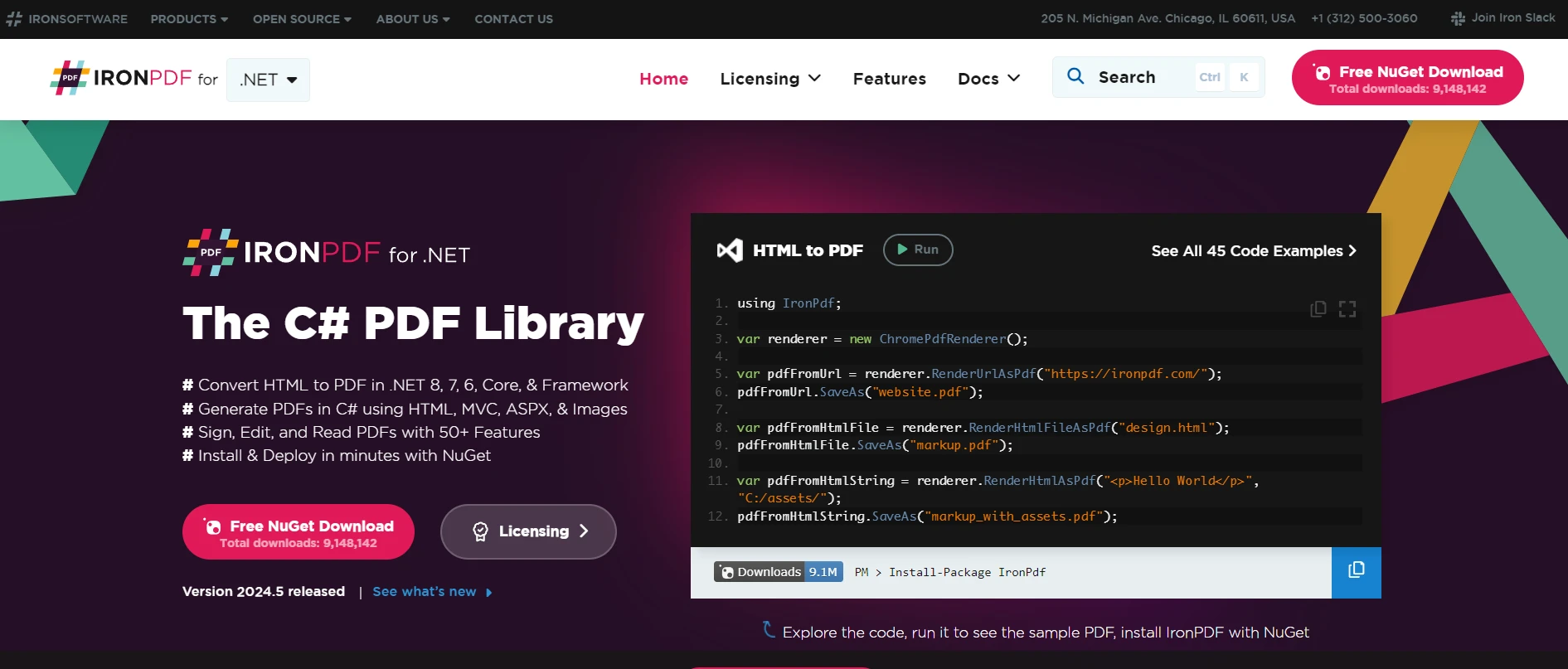
[**IronPDF for .NET-Bibliothek**](/) ist eine vielseitige .NET-Bibliothek, die für das Erstellen, Bearbeiten und Extrahieren von Inhalten aus PDF-Dokumenten entwickelt wurde. Ob Sie Berichte, Rechnungen oder andere PDF-basierte Dokumente erstellen müssen, IronPDF bietet eine einfache API, um diese Aufgaben zu erledigen. Sein Hauptmerkmal ist seine [**HTML-zu-PDF-Konvertierung**](/examples/using-html-to-create-a-pdf/) Fähigkeiten. Es ist ein großartiges Werkzeug für Entwickler, die PDF-Funktionalität in ihre Anwendungen einbauen möchten, ohne sich mit den Komplexitäten der PDF-Spezifikationen auseinanderzusetzen.
IronPDF überzeugt in der [HTML-zu-PDF](/tutorials/html-to-pdf/)-Konvertierung, indem es den originalen Layouts und Stilen präzise erhält. Es ist ideal zur Erstellung von PDFs aus webbasierten Inhalten wie Berichten, Rechnungen und Dokumentationen. Mit Unterstützung für HTML-Dateien, URLs und rohe HTML-Strings erstellt IronPDF problemlos hochwertige PDF-Dokumente.
```csharp
using IronPdf;
class Program
{
static void Main(string[] args)
{
var renderer = new ChromePdfRenderer();
// 1. Convert HTML String to PDF
var htmlContent = "<h1>Hello, IronPDF!</h1><p>This is a PDF from an HTML string.</p>";
var pdfFromHtmlString = renderer.RenderHtmlAsPdf(htmlContent);
pdfFromHtmlString.SaveAs("HTMLStringToPDF.pdf");
// 2. Convert HTML File to PDF
var htmlFilePath = "path_to_your_html_file.html"; // Specify the path to your HTML file
var pdfFromHtmlFile = renderer.RenderHtmlFileAsPdf(htmlFilePath);
pdfFromHtmlFile.SaveAs("HTMLFileToPDF.pdf");
// 3. Convert URL to PDF
var url = "http://ironpdf.com"; // Specify the URL
var pdfFromUrl = renderer.RenderUrlAsPdf(url);
pdfFromUrl.SaveAs("URLToPDF.pdf");
}
}
```
### Use Case of Merging IronPDF with SuperSocket C#
Stellen Sie sich vor, Sie haben einen Server mit SuperSocket erstellt, der Clientanfragen zur dynamischen Erstellung und zum Versand von PDF-Dokumenten bearbeiten muss. Durch die Integration von IronPDF kann Ihr Server diese Anfragen verarbeiten, PDFs im Handumdrehen erstellen und nahtlos an die Clients zurücksenden.
## Code-Beispiel für Anwendungsfall
Hier ist ein vollständiges Codebeispiel, das zeigt, wie man IronPDF mit SuperSocket integriert. Dieses Beispiel richtet einen einfachen SuperSocket-Server ein, der auf Clientverbindungen hört, eine Anfrage zur Erstellung eines PDFs verarbeitet und das erstellte PDF zurück an den Client sendet.
```csharp
using System;
using System.Net;
using System.Text;
using IronPdf;
using SuperSocket.SocketBase;
using SuperSocket.SocketBase.Protocol;
namespace SuperSocket IronPDFExample
{
class Program
{
static void Main(string[] args)
{
var appServer = new AppServer();
var serverConfig = new SuperSocket.SocketBase.Config.ServerConfig
{
Name = "SuperSocketServer",
Ip = "Any",
Port = 2012,
Mode = SuperSocket.SocketBase.SocketMode.Tcp,
MaxConnectionNumber = 100,
};
if (!appServer.Setup(serverConfig))
{
Console.WriteLine("Failed to set up!");
return;
}
appServer.NewSessionConnected += NewSessionConnected;
appServer.NewRequestReceived += (session, requestInfo) =>
{
if (requestInfo.Key == "GENPDF")
{
var pdfDocument = CreatePdfDocument(requestInfo.Body);
var pdfBytes = pdfDocument.BinaryData;
session.Send(pdfBytes, 0, pdfBytes.Length);
Console.WriteLine("PDF document sent to client.");
}
};
if (!appServer.Start())
{
Console.WriteLine("Failed to start!");
return;
}
Console.WriteLine("Server is running. Press any key to stop...");
Console.ReadKey();
appServer.Stop();
}
private static PdfDocument CreatePdfDocument(string content)
{
var pdfRenderer = new ChromePdfRenderer();
var pdfDocument = pdfRenderer.RenderHtmlAsPdf(content);
return pdfDocument;
}
private static void NewSessionConnected(AppSession session)
{
Console.WriteLine($"New session connected: {session.SessionID}");
}
}
public class AppServer : AppServer<AppSession, StringRequestInfo>
{
}
public class AppSession : AppSession<AppSession, StringRequestInfo>
{
}
}
```
Diese Integration ermöglicht es Ihnen, die leistungsstarken Funktionen von IronPDF innerhalb eines SuperSocket-Servers zu nutzen, um dynamische PDF-Generierung und effiziente Client-Server-Kommunikation zu ermöglichen.
## Abschluss
Die Integration von SuperSocket mit [**IronPDF's umfassenden Funktionen**](/) ist eine leistungsstarke Kombination zur Erstellung dynamischer, leistungsfähiger Serveranwendungen, die eine nahtlose PDF-Erstellung und -Verarbeitung ermöglichen. Mit dem robusten Socketserver-Framework von SuperSocket und den umfassenden PDF-Funktionen von IronPDF können Sie skalierbare und vielseitige Anwendungen entwickeln, um verschiedene Anforderungen zu erfüllen, von Datenerfassungssystemen über Spieleserver bis hin zu industriellen Steuerungssystemen.
IronPDF bietet eine [**kostenlose Testversion**](trial-license) an, und seine Lizenzierung beginnt bei `$liteLicense` und bietet ein hervorragendes Preis-Leistungs-Verhältnis für die umfangreichen Fähigkeiten, die es in Ihre Entwicklungsprojekte einbringt. Durch die Zusammenführung dieser beiden Bibliotheken können Sie die Fähigkeit Ihres Servers zur effizienten Handhabung komplexer Aufgaben straffen und sowohl die Funktionalität als auch die Leistung verbessern.
Entwicklung einer serverseitigen Socket-Anwendung mit SuperSocket und Integration von IronPDF
SuperSocket C# ist ein ausgezeichnetes Framework zur Entwicklung serverseitiger Socket-Anwendungen, egal ob Sie an einem GPS-Server oder einem industriellen Steuerungssystem arbeiten. Es unterstützt verschiedene Netzwerkprotokollimplementierungen und sorgt dafür, dass Ihr Socket effizient funktioniert. Dieses leichtgewichtige, plattformübergreifende Framework ist darauf ausgelegt, erweiterbar zu sein und Flexibilität für unterschiedliche Umgebungen zu bieten. Mit SuperSocket können Sie problemlos Daten zwischen Clients und Servern senden, und der Quellcode steht zur Anpassung an spezifische Projektanforderungen zur Verfügung.
Es ist ein Open-Source-Framework, d. h. jeder Entwickler kann es implementieren und über GitHub darauf zugreifen.
IronPDF ist eine leistungsstarke .NET-Bibliothek zum Erstellen, Bearbeiten und Extrahieren von Inhalten aus PDF-Dokumenten. Es ist für Entwickler konzipiert, die PDF-Funktionalität in ihre Anwendungen integrieren müssen. IronPDF unterstützt verschiedene Funktionen wie das Erzeugen von PDFs aus HTML, das Zusammenführen von PDFs und das Extrahieren von Text und Bildern aus PDFs.
Zusammen können SuperSocket und IronPDF komplexe serverseitige Anwendungen betreiben. Sie bieten eine breite Palette von Funktionalitäten, um den Bedürfnissen moderner .NET-Entwickler gerecht zu werden. Diese Bibliotheken sind ideal, egal ob Sie einen Datenerfassungsserver bauen oder einen robusten Spielserver, bei dem Echtzeit-Chat-Anwendungen erforderlich sind.
Getting Started with SuperSocket C#
SuperSocket C# in .NET-Projekten einrichten
Um mit der Verwendung von SuperSocket C# zu beginnen, müssen Sie Ihr .NET-Projekt einrichten. Zuerst das SuperSocket NuGet-Paket installieren. Öffnen Sie Ihr Projekt in Visual Studio und führen Sie den folgenden Befehl in der Paket-Manager-Konsole aus:
PM > Install-Package SuperSocket
Install-Package SuperSocket
Sobald es installiert ist, können Sie Ihre Instanz des Servers konfigurieren. Erstellen Sie eine neue Konfigurationsdatei namens appsettings.json. Diese Datei definiert die Servereinstellungen, einschließlich der Listener und Protokolle.
Erstellen Sie eine Klasse zur Serverkonfiguration. Diese Klasse wird die Einstellungen aus appsettings.json lesen und die Serverinstanz initialisieren.
using Microsoft.Extensions.Configuration;using SuperSocket;using SuperSocket.Server;public class ServerConfig{ public async TaskConfigure() { var host = SuperSocketHostBuilder.Create() .UseTcpServer() .UseSession<YourSession>() .ConfigureAppConfiguration((hostCtx, configApp) => { configApp.AddJsonFile("appsettings.json", optional: false, reloadOnChange: true); }) .Build(); await host.RunAsync(); }}
using Microsoft.Extensions.Configuration;
using SuperSocket;
using SuperSocket.Server;

public class ServerConfig
{
    public async Task Configure()
    {
        var host = SuperSocketHostBuilder.Create()
            .UseTcpServer()
            .UseSession<YourSession>()
            .ConfigureAppConfiguration((hostCtx, configApp) =>
            {
                configApp.AddJsonFile("appsettings.json", optional: false, reloadOnChange: true);
            })
            .Build();
        await host.RunAsync();
    }
}
ImportsMicrosoft.Extensions.ConfigurationImportsSuperSocketImportsSuperSocket.ServerPublic Class ServerConfig PublicAsync Function Configure() AsTask Dim host = SuperSocketHostBuilder.Create().UseTcpServer().UseSession(OfYourSession)().ConfigureAppConfiguration(Sub(hostCtx, configApp) configApp.AddJsonFile("appsettings.json", [optional]:= False, reloadOnChange:= True) End Sub).Build()Await host.RunAsync() End FunctionEnd Class
Imports Microsoft.Extensions.Configuration
Imports SuperSocket
Imports SuperSocket.Server

Public Class ServerConfig
	Public Async Function Configure() As Task
		Dim host = SuperSocketHostBuilder.Create().UseTcpServer().UseSession(Of YourSession)().ConfigureAppConfiguration(Sub(hostCtx, configApp)
				configApp.AddJsonFile("appsettings.json", [optional]:= False, reloadOnChange:= True)
		End Sub).Build()
		Await host.RunAsync()
	End Function
End Class
Ein einfaches SuperSocket C# Beispiel
Lassen Sie uns ein einfaches Beispiel für eine SuperSocket C# Anwendung ansehen. Dieses Beispiel demonstriert, wie man einen einfachen Echo-Server erstellt, der alle empfangenen Daten zurücksendet.
Definieren Sie zuerst die Sitzungs-Klasse. Diese Klasse verwaltet die Socketverbindungen und steuert die Datenkommunikation.
ImportsSuperSocketPublic Class EchoSessionInheritsAppSessionProtectedOverridesAsync Function OnSessionStartedAsync() AsValueTaskAwaitMyBase.OnSessionStartedAsync()Console.WriteLine("New session started.") End FunctionProtectedOverridesAsync Function OnSessionClosedAsync(ByVal e AsCloseEventArgs) AsValueTaskAwaitMyBase.OnSessionClosedAsync(e)Console.WriteLine("Session closed.") End FunctionProtectedOverridesAsync Function OnPackageReceivedAsync(ByVal package AsReadOnlyMemory(OfByte)) AsValueTaskAwaitSendAsync(package) End FunctionEnd Class
Imports SuperSocket

Public Class EchoSession
	Inherits AppSession

	Protected Overrides Async Function OnSessionStartedAsync() As ValueTask
		Await MyBase.OnSessionStartedAsync()
		Console.WriteLine("New session started.")
	End Function

	Protected Overrides Async Function OnSessionClosedAsync(ByVal e As CloseEventArgs) As ValueTask
		Await MyBase.OnSessionClosedAsync(e)
		Console.WriteLine("Session closed.")
	End Function

	Protected Overrides Async Function OnPackageReceivedAsync(ByVal package As ReadOnlyMemory(Of Byte)) As ValueTask
		Await SendAsync(package)
	End Function
End Class
Konfigurieren und starten Sie als Nächstes den Server mit der Echo-Sitzung.
using Microsoft.Extensions.Configuration;using SuperSocket;using SuperSocket.Server;public class EchoServer{ public static async TaskMain(string[] args) { var host = SuperSocketHostBuilder.Create() .UseTcpServer() .UseSession<EchoSession>() .ConfigureAppConfiguration((hostCtx, configApp) => { configApp.AddJsonFile("appsettings.json", optional: false, reloadOnChange: true); }) .Build(); await host.RunAsync(); }}
using Microsoft.Extensions.Configuration;
using SuperSocket;
using SuperSocket.Server;

public class EchoServer
{
    public static async Task Main(string[] args)
    {
        var host = SuperSocketHostBuilder.Create()
            .UseTcpServer()
            .UseSession<EchoSession>()
            .ConfigureAppConfiguration((hostCtx, configApp) =>
            {
                configApp.AddJsonFile("appsettings.json", optional: false, reloadOnChange: true);
            })
            .Build();
        await host.RunAsync();
    }
}
ImportsMicrosoft.Extensions.ConfigurationImportsSuperSocketImportsSuperSocket.ServerPublic Class EchoServer PublicSharedAsync Function Main(ByVal args() AsString) AsTask Dim host = SuperSocketHostBuilder.Create().UseTcpServer().UseSession(OfEchoSession)().ConfigureAppConfiguration(Sub(hostCtx, configApp) configApp.AddJsonFile("appsettings.json", [optional]:= False, reloadOnChange:= True) End Sub).Build()Await host.RunAsync() End FunctionEnd Class
Imports Microsoft.Extensions.Configuration
Imports SuperSocket
Imports SuperSocket.Server

Public Class EchoServer
	Public Shared Async Function Main(ByVal args() As String) As Task
		Dim host = SuperSocketHostBuilder.Create().UseTcpServer().UseSession(Of EchoSession)().ConfigureAppConfiguration(Sub(hostCtx, configApp)
				configApp.AddJsonFile("appsettings.json", [optional]:= False, reloadOnChange:= True)
		End Sub).Build()
		Await host.RunAsync()
	End Function
End Class
Dieses Beispiel zeigt, wie man einen einfachen Echo-Server mit SuperSocket C# erstellt. Der Server lauscht auf Verbindungen und gibt alle empfangenen Daten zurück.
Implementing Features of SuperSocket C#
Behandlung mehrerer Listener
SuperSocket C# unterstützt mehrere Listener, sodass Ihr Server verschiedene Protokolle und Ports handhaben kann. Diese Funktion ist nützlich für die Erstellung vielseitiger Anwendungen wie Datenerfassungsserver und GPS-Server.
Aktualisieren Sie zunächst Ihre appsettings.json, um mehrere Listener einzuschließen:
Konfigurieren Sie als Nächstes den Server, um diese Listener zu verwenden:
using Microsoft.Extensions.Configuration;using SuperSocket;using SuperSocket.Server;public class MultiListenerServer{ public static async TaskMain(string[] args) { var host = SuperSocketHostBuilder.Create() .UseTcpServer() .UseSession<YourSession>() .ConfigureAppConfiguration((hostCtx, configApp) => { configApp.AddJsonFile("appsettings.json", optional: false, reloadOnChange: true); }) .Build(); await host.RunAsync(); }}
using Microsoft.Extensions.Configuration;
using SuperSocket;
using SuperSocket.Server;

public class MultiListenerServer
{
    public static async Task Main(string[] args)
    {
        var host = SuperSocketHostBuilder.Create()
            .UseTcpServer()
            .UseSession<YourSession>()
            .ConfigureAppConfiguration((hostCtx, configApp) =>
            {
                configApp.AddJsonFile("appsettings.json", optional: false, reloadOnChange: true);
            })
            .Build();
        await host.RunAsync();
    }
}
ImportsMicrosoft.Extensions.ConfigurationImportsSuperSocketImportsSuperSocket.ServerPublic Class MultiListenerServer PublicSharedAsync Function Main(ByVal args() AsString) AsTask Dim host = SuperSocketHostBuilder.Create().UseTcpServer().UseSession(OfYourSession)().ConfigureAppConfiguration(Sub(hostCtx, configApp) configApp.AddJsonFile("appsettings.json", [optional]:= False, reloadOnChange:= True) End Sub).Build()Await host.RunAsync() End FunctionEnd Class
Imports Microsoft.Extensions.Configuration
Imports SuperSocket
Imports SuperSocket.Server

Public Class MultiListenerServer
	Public Shared Async Function Main(ByVal args() As String) As Task
		Dim host = SuperSocketHostBuilder.Create().UseTcpServer().UseSession(Of YourSession)().ConfigureAppConfiguration(Sub(hostCtx, configApp)
				configApp.AddJsonFile("appsettings.json", [optional]:= False, reloadOnChange:= True)
		End Sub).Build()
		Await host.RunAsync()
	End Function
End Class
Mit diesem Setup kann Ihr Server Verbindungen auf beiden Ports 4040 und 5050 handhaben. Diese Fähigkeit ist entscheidend für Anwendungen, die verschiedene Netzwerkprotokolle verwalten müssen.
Implementierung binärer Datenverarbeitung
SuperSocket C# ist effizient bei der Handhabung von Binärdaten. Dies ist wichtig für Anwendungen, die Binärkompatibilität auf unterster Ebene erfordern, wie industrielle Steuerungssysteme.
Definieren Sie zuerst eine Sitzungs-Klasse, die Binärdaten verarbeitet:
using System;using SuperSocket;public class BinaryDataSession : AppSession{ protected override async ValueTaskOnPackageReceivedAsync(ReadOnlyMemory<byte> package) { var data = package.ToArray();Console.WriteLine("Received binary data: " + BitConverter.ToString(data)); awaitSendAsync(data); }}
using System;
using SuperSocket;

public class BinaryDataSession : AppSession
{
    protected override async ValueTask OnPackageReceivedAsync(ReadOnlyMemory<byte> package)
    {
        var data = package.ToArray();
        Console.WriteLine("Received binary data: " + BitConverter.ToString(data));
        await SendAsync(data);
    }
}
ImportsSystemImportsSuperSocketPublic Class BinaryDataSessionInheritsAppSessionProtectedOverridesAsync Function OnPackageReceivedAsync(ByVal package AsReadOnlyMemory(OfByte)) AsValueTask Dim data = package.ToArray()Console.WriteLine("Received binary data: " & BitConverter.ToString(data))AwaitSendAsync(data) End FunctionEnd Class
Imports System
Imports SuperSocket

Public Class BinaryDataSession
	Inherits AppSession

	Protected Overrides Async Function OnPackageReceivedAsync(ByVal package As ReadOnlyMemory(Of Byte)) As ValueTask
		Dim data = package.ToArray()
		Console.WriteLine("Received binary data: " & BitConverter.ToString(data))
		Await SendAsync(data)
	End Function
End Class
Konfigurieren Sie als Nächstes den Server mit der Binärdatensitzung und starten Sie ihn:
using Microsoft.Extensions.Configuration;using SuperSocket;using SuperSocket.Server;public class BinaryDataServer{ public static async TaskMain(string[] args) { var host = SuperSocketHostBuilder.Create() .UseTcpServer() .UseSession<BinaryDataSession>() .ConfigureAppConfiguration((hostCtx, configApp) => { configApp.AddJsonFile("appsettings.json", optional: false, reloadOnChange: true); }) .Build(); await host.RunAsync(); }}
using Microsoft.Extensions.Configuration;
using SuperSocket;
using SuperSocket.Server;

public class BinaryDataServer
{
    public static async Task Main(string[] args)
    {
        var host = SuperSocketHostBuilder.Create()
            .UseTcpServer()
            .UseSession<BinaryDataSession>()
            .ConfigureAppConfiguration((hostCtx, configApp) =>
            {
                configApp.AddJsonFile("appsettings.json", optional: false, reloadOnChange: true);
            })
            .Build();
        await host.RunAsync();
    }
}
ImportsMicrosoft.Extensions.ConfigurationImportsSuperSocketImportsSuperSocket.ServerPublic Class BinaryDataServer PublicSharedAsync Function Main(ByVal args() AsString) AsTask Dim host = SuperSocketHostBuilder.Create().UseTcpServer().UseSession(OfBinaryDataSession)().ConfigureAppConfiguration(Sub(hostCtx, configApp) configApp.AddJsonFile("appsettings.json", [optional]:= False, reloadOnChange:= True) End Sub).Build()Await host.RunAsync() End FunctionEnd Class
Imports Microsoft.Extensions.Configuration
Imports SuperSocket
Imports SuperSocket.Server

Public Class BinaryDataServer
	Public Shared Async Function Main(ByVal args() As String) As Task
		Dim host = SuperSocketHostBuilder.Create().UseTcpServer().UseSession(Of BinaryDataSession)().ConfigureAppConfiguration(Sub(hostCtx, configApp)
				configApp.AddJsonFile("appsettings.json", [optional]:= False, reloadOnChange:= True)
		End Sub).Build()
		Await host.RunAsync()
	End Function
End Class
Dieses Beispiel demonstriert, wie man Binärdaten mit SuperSocket C# empfängt und sendet. Es ist nützlich für Hochleistungsanwendungen, die Binärprotokolle verarbeiten müssen.
Verwaltung von Socket-Verbindungen
Die Aufrechterhaltung von Socket-Verbindungen ist entscheidend für die Gewährleistung einer zuverlässigen Kommunikation. SuperSocket C# vereinfacht diesen Prozess.
Definieren Sie zuerst eine Sitzungs-Klasse, die Socket-Verbindungen verwaltet:
ImportsSuperSocketPublic Class ConnectionSessionInheritsAppSessionProtectedOverridesAsync Function OnSessionStartedAsync() AsValueTaskAwaitMyBase.OnSessionStartedAsync()Console.WriteLine("Connection started.") End FunctionProtectedOverridesAsync Function OnSessionClosedAsync(ByVal e AsCloseEventArgs) AsValueTaskAwaitMyBase.OnSessionClosedAsync(e)Console.WriteLine("Connection closed.") End FunctionProtectedOverridesAsync Function OnPackageReceivedAsync(ByVal package AsReadOnlyMemory(OfByte)) AsValueTaskAwaitSendAsync(package) End FunctionEnd Class
Imports SuperSocket

Public Class ConnectionSession
	Inherits AppSession

	Protected Overrides Async Function OnSessionStartedAsync() As ValueTask
		Await MyBase.OnSessionStartedAsync()
		Console.WriteLine("Connection started.")
	End Function

	Protected Overrides Async Function OnSessionClosedAsync(ByVal e As CloseEventArgs) As ValueTask
		Await MyBase.OnSessionClosedAsync(e)
		Console.WriteLine("Connection closed.")
	End Function

	Protected Overrides Async Function OnPackageReceivedAsync(ByVal package As ReadOnlyMemory(Of Byte)) As ValueTask
		Await SendAsync(package)
	End Function
End Class
Konfigurieren und starten Sie als Nächstes den Server mit der Verbindungssitzung:
using Microsoft.Extensions.Configuration;using SuperSocket;using SuperSocket.Server;public class ConnectionServer{ public static async TaskMain(string[] args) { var host = SuperSocketHostBuilder.Create() .UseTcpServer() .UseSession<ConnectionSession>() .ConfigureAppConfiguration((hostCtx, configApp) => { configApp.AddJsonFile("appsettings.json", optional: false, reloadOnChange: true); }) .Build(); await host.RunAsync(); }}
using Microsoft.Extensions.Configuration;
using SuperSocket;
using SuperSocket.Server;

public class ConnectionServer
{
    public static async Task Main(string[] args)
    {
        var host = SuperSocketHostBuilder.Create()
            .UseTcpServer()
            .UseSession<ConnectionSession>()
            .ConfigureAppConfiguration((hostCtx, configApp) =>
            {
                configApp.AddJsonFile("appsettings.json", optional: false, reloadOnChange: true);
            })
            .Build();
        await host.RunAsync();
    }
}
ImportsMicrosoft.Extensions.ConfigurationImportsSuperSocketImportsSuperSocket.ServerPublic Class ConnectionServer PublicSharedAsync Function Main(ByVal args() AsString) AsTask Dim host = SuperSocketHostBuilder.Create().UseTcpServer().UseSession(OfConnectionSession)().ConfigureAppConfiguration(Sub(hostCtx, configApp) configApp.AddJsonFile("appsettings.json", [optional]:= False, reloadOnChange:= True) End Sub).Build()Await host.RunAsync() End FunctionEnd Class
Imports Microsoft.Extensions.Configuration
Imports SuperSocket
Imports SuperSocket.Server

Public Class ConnectionServer
	Public Shared Async Function Main(ByVal args() As String) As Task
		Dim host = SuperSocketHostBuilder.Create().UseTcpServer().UseSession(Of ConnectionSession)().ConfigureAppConfiguration(Sub(hostCtx, configApp)
				configApp.AddJsonFile("appsettings.json", [optional]:= False, reloadOnChange:= True)
		End Sub).Build()
		Await host.RunAsync()
	End Function
End Class
Dieses Setup hilft bei der Verwaltung von Socket-Verbindungen und stellt sicher, dass Ihr Server robust und zuverlässig bleibt.
Erstellen eines Befehlszeilenservers
SuperSocket C# unterstützt die Erstellung von Konsolenzeilen-Servern. Diese Funktion ist nützlich für Anwendungen, die einfache textbasierte Protokolle erfordern.
Definieren Sie zuerst eine Befehls-Klasse, die Textbefehle verarbeitet:
using System.Text;using System.Threading.Tasks;using SuperSocket.Command;using SuperSocket.ProtoBase;public class MyCommand : IAsyncCommand<AppSession, StringPackageInfo>{ public async ValueTaskExecuteAsync(AppSession session, StringPackageInfo package) { var commandKey = package.Key; var parameters = package.Parameters; await session.SendAsync(Encoding.UTF8.GetBytes($"You said: {string.Join(' ', parameters)}")); }}
using System.Text;
using System.Threading.Tasks;
using SuperSocket.Command;
using SuperSocket.ProtoBase;

public class MyCommand : IAsyncCommand<AppSession, StringPackageInfo>
{
    public async ValueTask ExecuteAsync(AppSession session, StringPackageInfo package)
    {
        var commandKey = package.Key;
        var parameters = package.Parameters;
        await session.SendAsync(Encoding.UTF8.GetBytes($"You said: {string.Join(' ', parameters)}"));
    }
}
ImportsSystem.TextImportsSystem.Threading.TasksImportsSuperSocket.CommandImportsSuperSocket.ProtoBasePublic Class MyCommandImplementsIAsyncCommand(OfAppSession, StringPackageInfo) PublicAsync Function ExecuteAsync(ByValsessionAsAppSession, ByVal package AsStringPackageInfo) AsValueTask Dim commandKey = package.Key Dim parameters = package.ParametersAwaitsession.SendAsync(Encoding.UTF8.GetBytes($"You said: {String.Join(" "c, parameters)}")) End FunctionEnd Class
Imports System.Text
Imports System.Threading.Tasks
Imports SuperSocket.Command
Imports SuperSocket.ProtoBase

Public Class MyCommand
	Implements IAsyncCommand(Of AppSession, StringPackageInfo)

	Public Async Function ExecuteAsync(ByVal session As AppSession, ByVal package As StringPackageInfo) As ValueTask
		Dim commandKey = package.Key
		Dim parameters = package.Parameters
		Await session.SendAsync(Encoding.UTF8.GetBytes($"You said: {String.Join(" "c, parameters)}"))
	End Function
End Class
Konfigurieren Sie als Nächstes den Server, um den Befehl zu nutzen:
using Microsoft.Extensions.Configuration;using SuperSocket;using SuperSocket.Command;using SuperSocket.ProtoBase;using SuperSocket.Server;public class CommandLineServer{ public static async TaskMain(string[] args) { var host = SuperSocketHostBuilder.Create() .UseTcpServer() .UseSession<AppSession>() .UseCommand<StringPackageParser>() .AddCommand<MyCommand>() .ConfigureAppConfiguration((hostCtx, configApp) => { configApp.AddJsonFile("appsettings.json", optional: false, reloadOnChange: true); }) .Build(); await host.RunAsync(); }}
using Microsoft.Extensions.Configuration;
using SuperSocket;
using SuperSocket.Command;
using SuperSocket.ProtoBase;
using SuperSocket.Server;

public class CommandLineServer
{
    public static async Task Main(string[] args)
    {
        var host = SuperSocketHostBuilder.Create()
            .UseTcpServer()
            .UseSession<AppSession>()
            .UseCommand<StringPackageParser>()
            .AddCommand<MyCommand>()
            .ConfigureAppConfiguration((hostCtx, configApp) =>
            {
                configApp.AddJsonFile("appsettings.json", optional: false, reloadOnChange: true);
            })
            .Build();
        await host.RunAsync();
    }
}
ImportsMicrosoft.Extensions.ConfigurationImportsSuperSocketImportsSuperSocket.CommandImportsSuperSocket.ProtoBaseImportsSuperSocket.ServerPublic Class CommandLineServer PublicSharedAsync Function Main(ByVal args() AsString) AsTask Dim host = SuperSocketHostBuilder.Create().UseTcpServer().UseSession(OfAppSession)().UseCommand(OfStringPackageParser)().AddCommand(OfMyCommand)().ConfigureAppConfiguration(Sub(hostCtx, configApp) configApp.AddJsonFile("appsettings.json", [optional]:= False, reloadOnChange:= True) End Sub).Build()Await host.RunAsync() End FunctionEnd Class
Imports Microsoft.Extensions.Configuration
Imports SuperSocket
Imports SuperSocket.Command
Imports SuperSocket.ProtoBase
Imports SuperSocket.Server

Public Class CommandLineServer
	Public Shared Async Function Main(ByVal args() As String) As Task
		Dim host = SuperSocketHostBuilder.Create().UseTcpServer().UseSession(Of AppSession)().UseCommand(Of StringPackageParser)().AddCommand(Of MyCommand)().ConfigureAppConfiguration(Sub(hostCtx, configApp)
				configApp.AddJsonFile("appsettings.json", [optional]:= False, reloadOnChange:= True)
		End Sub).Build()
		Await host.RunAsync()
	End Function
End Class
Dieses Beispiel zeigt, wie man einen einfachen Konsolenzeilen-Server mit SuperSocket C# erstellt. Es ist ideal für leichte textbasierte Protokolle.
Integrating SuperSocket C# with IronPDF
Die Integration von IronPDF mit SuperSocket in Ihren C# Anwendungen kann Ihre Serverfähigkeiten erheblich erweitern, insbesondere wenn es um die Handhabung von PDF-Dateien geht. Lassen Sie uns erkunden, wie man diese zwei leistungsstarken Bibliotheken effektiv zusammenführt.
Einführung in IronPDF
IronPDF for .NET-Bibliothek ist eine vielseitige .NET-Bibliothek, die für das Erstellen, Bearbeiten und Extrahieren von Inhalten aus PDF-Dokumenten entwickelt wurde. Ob Sie Berichte, Rechnungen oder andere PDF-basierte Dokumente erstellen müssen, IronPDF bietet eine einfache API, um diese Aufgaben zu erledigen. Sein Hauptmerkmal ist seine HTML-zu-PDF-Konvertierung Fähigkeiten. Es ist ein großartiges Werkzeug für Entwickler, die PDF-Funktionalität in ihre Anwendungen einbauen möchten, ohne sich mit den Komplexitäten der PDF-Spezifikationen auseinanderzusetzen.
IronPDF überzeugt in der HTML-zu-PDF-Konvertierung, indem es den originalen Layouts und Stilen präzise erhält. Es ist ideal zur Erstellung von PDFs aus webbasierten Inhalten wie Berichten, Rechnungen und Dokumentationen. Mit Unterstützung für HTML-Dateien, URLs und rohe HTML-Strings erstellt IronPDF problemlos hochwertige PDF-Dokumente.
using IronPdf;class Program{ static voidMain(string[] args) { var renderer = new ChromePdfRenderer(); // 1. Convert HTML String to PDF var htmlContent = "<h1>Hello, IronPDF!</h1><p>This is a PDF from an HTML string.</p>"; var pdfFromHtmlString = renderer.RenderHtmlAsPdf(htmlContent); pdfFromHtmlString.SaveAs("HTMLStringToPDF.pdf"); // 2. Convert HTML File to PDF var htmlFilePath = "path_to_your_html_file.html"; // Specify the path to your HTML file var pdfFromHtmlFile = renderer.RenderHtmlFileAsPdf(htmlFilePath); pdfFromHtmlFile.SaveAs("HTMLFileToPDF.pdf"); // 3. Convert URL to PDF var url = "http://ironpdf.com"; // Specify the URL var pdfFromUrl = renderer.RenderUrlAsPdf(url); pdfFromUrl.SaveAs("URLToPDF.pdf"); }}
using IronPdf;

class Program
{
    static void Main(string[] args)
    {
        var renderer = new ChromePdfRenderer();

        // 1. Convert HTML String to PDF
        var htmlContent = "<h1>Hello, IronPDF!</h1><p>This is a PDF from an HTML string.</p>";
        var pdfFromHtmlString = renderer.RenderHtmlAsPdf(htmlContent);
        pdfFromHtmlString.SaveAs("HTMLStringToPDF.pdf");

        // 2. Convert HTML File to PDF
        var htmlFilePath = "path_to_your_html_file.html"; // Specify the path to your HTML file
        var pdfFromHtmlFile = renderer.RenderHtmlFileAsPdf(htmlFilePath);
        pdfFromHtmlFile.SaveAs("HTMLFileToPDF.pdf");

        // 3. Convert URL to PDF
        var url = "http://ironpdf.com"; // Specify the URL
        var pdfFromUrl = renderer.RenderUrlAsPdf(url);
        pdfFromUrl.SaveAs("URLToPDF.pdf");
    }
}
ImportsIronPdfFriend Class ProgramShared Sub Main(ByVal args() AsString) Dim renderer = New ChromePdfRenderer() ' 1. Convert HTML String to PDF Dim htmlContent = "<h1>Hello, IronPDF!</h1><p>This is a PDF from an HTML string.</p>" Dim pdfFromHtmlString = renderer.RenderHtmlAsPdf(htmlContent) pdfFromHtmlString.SaveAs("HTMLStringToPDF.pdf") ' 2. Convert HTML File to PDF Dim htmlFilePath = "path_to_your_html_file.html" ' Specify the path to your HTML file Dim pdfFromHtmlFile = renderer.RenderHtmlFileAsPdf(htmlFilePath) pdfFromHtmlFile.SaveAs("HTMLFileToPDF.pdf") ' 3. Convert URL to PDF Dim url = "http://ironpdf.com" ' Specify the URL Dim pdfFromUrl = renderer.RenderUrlAsPdf(url) pdfFromUrl.SaveAs("URLToPDF.pdf") End SubEnd Class
Imports IronPdf

Friend Class Program
	Shared Sub Main(ByVal args() As String)
		Dim renderer = New ChromePdfRenderer()

		' 1. Convert HTML String to PDF
		Dim htmlContent = "<h1>Hello, IronPDF!</h1><p>This is a PDF from an HTML string.</p>"
		Dim pdfFromHtmlString = renderer.RenderHtmlAsPdf(htmlContent)
		pdfFromHtmlString.SaveAs("HTMLStringToPDF.pdf")

		' 2. Convert HTML File to PDF
		Dim htmlFilePath = "path_to_your_html_file.html" ' Specify the path to your HTML file
		Dim pdfFromHtmlFile = renderer.RenderHtmlFileAsPdf(htmlFilePath)
		pdfFromHtmlFile.SaveAs("HTMLFileToPDF.pdf")

		' 3. Convert URL to PDF
		Dim url = "http://ironpdf.com" ' Specify the URL
		Dim pdfFromUrl = renderer.RenderUrlAsPdf(url)
		pdfFromUrl.SaveAs("URLToPDF.pdf")
	End Sub
End Class
Use Case of Merging IronPDF with SuperSocket C#
Stellen Sie sich vor, Sie haben einen Server mit SuperSocket erstellt, der Clientanfragen zur dynamischen Erstellung und zum Versand von PDF-Dokumenten bearbeiten muss. Durch die Integration von IronPDF kann Ihr Server diese Anfragen verarbeiten, PDFs im Handumdrehen erstellen und nahtlos an die Clients zurücksenden.
Code-Beispiel für Anwendungsfall
Hier ist ein vollständiges Codebeispiel, das zeigt, wie man IronPDF mit SuperSocket integriert. Dieses Beispiel richtet einen einfachen SuperSocket-Server ein, der auf Clientverbindungen hört, eine Anfrage zur Erstellung eines PDFs verarbeitet und das erstellte PDF zurück an den Client sendet.
using System;using System.Net;using System.Text;using IronPdf;using SuperSocket.SocketBase;using SuperSocket.SocketBase.Protocol;namespace SuperSocket IronPDFExample{ class Program { static voidMain(string[] args) { var appServer = new AppServer(); var serverConfig = new SuperSocket.SocketBase.Config.ServerConfig {Name = "SuperSocketServer",Ip = "Any",Port = 2012,Mode = SuperSocket.SocketBase.SocketMode.Tcp,MaxConnectionNumber = 100, }; if (!appServer.Setup(serverConfig)) {Console.WriteLine("Failed to set up!"); return; } appServer.NewSessionConnected += NewSessionConnected; appServer.NewRequestReceived += (session, requestInfo) => { if (requestInfo.Key == "GENPDF") { var pdfDocument = CreatePdfDocument(requestInfo.Body); var pdfBytes = pdfDocument.BinaryData; session.Send(pdfBytes, 0, pdfBytes.Length);Console.WriteLine("PDF document sent to client."); } }; if (!appServer.Start()) {Console.WriteLine("Failed to start!"); return; }Console.WriteLine("Server is running. Press any key to stop...");Console.ReadKey(); appServer.Stop(); } private static PdfDocumentCreatePdfDocument(string content) { var pdfRenderer = new ChromePdfRenderer(); var pdfDocument = pdfRenderer.RenderHtmlAsPdf(content); return pdfDocument; } private static voidNewSessionConnected(AppSession session) {Console.WriteLine($"New session connected: {session.SessionID}"); } } public class AppServer : AppServer<AppSession, StringRequestInfo> { } public class AppSession : AppSession<AppSession, StringRequestInfo> { }}
using System;
using System.Net;
using System.Text;
using IronPdf;
using SuperSocket.SocketBase;
using SuperSocket.SocketBase.Protocol;

namespace SuperSocket IronPDFExample
{
    class Program
    {
        static void Main(string[] args)
        {
            var appServer = new AppServer();
            var serverConfig = new SuperSocket.SocketBase.Config.ServerConfig
            {
                Name = "SuperSocketServer",
                Ip = "Any",
                Port = 2012,
                Mode = SuperSocket.SocketBase.SocketMode.Tcp,
                MaxConnectionNumber = 100,
            };

            if (!appServer.Setup(serverConfig))
            {
                Console.WriteLine("Failed to set up!");
                return;
            }

            appServer.NewSessionConnected += NewSessionConnected;
            appServer.NewRequestReceived += (session, requestInfo) =>
            {
                if (requestInfo.Key == "GENPDF")
                {
                    var pdfDocument = CreatePdfDocument(requestInfo.Body);
                    var pdfBytes = pdfDocument.BinaryData;
                    session.Send(pdfBytes, 0, pdfBytes.Length);
                    Console.WriteLine("PDF document sent to client.");
                }
            };

            if (!appServer.Start())
            {
                Console.WriteLine("Failed to start!");
                return;
            }

            Console.WriteLine("Server is running. Press any key to stop...");
            Console.ReadKey();
            appServer.Stop();
        }

        private static PdfDocument CreatePdfDocument(string content)
        {
            var pdfRenderer = new ChromePdfRenderer();
            var pdfDocument = pdfRenderer.RenderHtmlAsPdf(content);
            return pdfDocument;
        }

        private static void NewSessionConnected(AppSession session)
        {
            Console.WriteLine($"New session connected: {session.SessionID}");
        }
    }

    public class AppServer : AppServer<AppSession, StringRequestInfo>
    {
    }

    public class AppSession : AppSession<AppSession, StringRequestInfo>
    {
    }
}
C#
Diese Integration ermöglicht es Ihnen, die leistungsstarken Funktionen von IronPDF innerhalb eines SuperSocket-Servers zu nutzen, um dynamische PDF-Generierung und effiziente Client-Server-Kommunikation zu ermöglichen.
Abschluss
Die Integration von SuperSocket mit IronPDF's umfassenden Funktionen ist eine leistungsstarke Kombination zur Erstellung dynamischer, leistungsfähiger Serveranwendungen, die eine nahtlose PDF-Erstellung und -Verarbeitung ermöglichen. Mit dem robusten Socketserver-Framework von SuperSocket und den umfassenden PDF-Funktionen von IronPDF können Sie skalierbare und vielseitige Anwendungen entwickeln, um verschiedene Anforderungen zu erfüllen, von Datenerfassungssystemen über Spieleserver bis hin zu industriellen Steuerungssystemen.
IronPDF bietet eine kostenlose Testversion an, und seine Lizenzierung beginnt bei $999 und bietet ein hervorragendes Preis-Leistungs-Verhältnis für die umfangreichen Fähigkeiten, die es in Ihre Entwicklungsprojekte einbringt. Durch die Zusammenführung dieser beiden Bibliotheken können Sie die Fähigkeit Ihres Servers zur effizienten Handhabung komplexer Aufgaben straffen und sowohl die Funktionalität als auch die Leistung verbessern.
Jacob Mellor ist Chief Technology Officer bei Iron Software und ein visionärer Ingenieur, der Pionierarbeit in der C# PDF-Technologie leistet. Als der ursprüngliche Entwickler hinter der Kern-Codebasis von Iron Software hat er die Produktarchitektur des Unternehmens seit seiner Gründung geprägt und es zusammen mit CEO Cameron Rimington in ein Unternehmen mit mehr als 50 Mitarbeitern verwandelt, das die NASA, Tesla und globale Regierungsbehörden beliefert.


























