using IronPdf;

// Disable local disk access or cross-origin requests
Installation.EnableWebSecurity = true;

// Instantiate Renderer
var renderer = new ChromePdfRenderer();

// Create a PDF from a HTML string using C#
var pdf = renderer.RenderHtmlAsPdf("<h1>Hello World</h1>");

// Export to a file or Stream
pdf.SaveAs("output.pdf");

// Advanced Example with HTML Assets
// Load external html assets: Images, CSS and JavaScript.
// An optional BasePath 'C:\site\assets\' is set as the file location to load assets from
var myAdvancedPdf = renderer.RenderHtmlAsPdf("<img src='icons/iron.png'>", @"C:\site\assets\");
myAdvancedPdf.SaveAs("html-with-assets.pdf");
using IronPdf;// Disable local disk access or cross-origin requestsInstallation.EnableWebSecurity = true;// Instantiate Renderervar renderer = new ChromePdfRenderer();// Create a PDF from a HTML string using C#var pdf = renderer.RenderHtmlAsPdf("<h1>Hello World</h1>");// Export to a file or Streampdf.SaveAs("output.pdf");// Advanced Example with HTML Assets// Load external html assets: Images, CSS and JavaScript.// An optional BasePath 'C:\site\assets\' is set as the file location to load assets fromvar myAdvancedPdf = renderer.RenderHtmlAsPdf("<img src='icons/iron.png'>", @"C:\site\assets\");myAdvancedPdf.SaveAs("html-with-assets.pdf");
In der Welt der .NET-Entwicklung ist eine effiziente Handhabung von XML-Dokumenten für eine Vielzahl von Anwendungen unerlässlich. Von der Datenspeicherung bis zu Konfigurationsdateien dient XML als vielseitiges Format zur Strukturierung und Organisation von Informationen.
In diesem Artikel werden wir erkunden, wie Entwickler die Leistungsfähigkeit von [`XDocument`](https://learn.microsoft.com/en-us/dotnet/api/system.xml.linq.xdocument?view=net-8.0) und [IronPDF](https://ironpdf.com) nutzen können, um die Bearbeitung von XML-Dokumenten in ihren .NET-Anwendungen zu optimieren.
## Verständnis der XML-Dokumentenstruktur
XML, oder Extensible Markup Language, ist ein vielseitiges Format, das häufig zum Speichern und Austauschen von strukturierten Daten verwendet wird. XML-Dokumente sind als hierarchischer Baum strukturiert, bestehend aus einem einzigen Wurzelknoten, der untergeordnete Knoten enthält, die verschiedene Elemente und Attribute darstellen. Jedes Element im XML-Baum kann untergeordnete Elemente haben, wodurch eine verschachtelte Struktur entsteht, die Daten logisch organisiert. Die XML-Deklaration, die normalerweise am Anfang einer XML-Datei gefunden wird, gibt die verwendete XML-Version und alle zusätzlichen Codierungsinformationen an.
Damit ein XML-Dokument als gültig angesehen wird, muss es den von der XML-Spezifikation definierten Syntaxregeln entsprechen, einschließlich nur eines Wurzelelements. Entwickler können XML-Dokumente mit verschiedenen Programmiersprachen und Bibliotheken analysieren, um Daten effektiv zu extrahieren und zu manipulieren. Insgesamt bietet ein gültiges XML-Dokument einen flexiblen und standardisierten Ansatz zur Darstellung strukturierter Daten, der Interoperabilität und Datenaustausch über verschiedene Systeme und Plattformen hinweg erleichtert.
## Einführung in die `XDocument` Klasse
[`XDocument`](https://learn.microsoft.com/en-us/dotnet/api/system.xml.linq.xdocument?view=net-8.0), ein Teil des `System.Xml` `Linq` Namespace in .NET, ist eine leistungsstarke API zur Arbeit mit XML-Dokumenten. Es bietet eine umfassende Palette von Funktionen zum Analysieren, Abfragen, Ändern und Erstellen von XML-Dokumenten, indem ein einfacheres Programmiermodell übernommen wird. Mit seiner intuitiven Benutzeroberfläche und der umfangreichen Funktionalität vereinfacht `XDocument` den Umgang mit XML-Daten und macht es zu einem unverzichtbaren Werkzeug for .NET-Entwickler.
### Funktionen von `XDocument`
1. **XML-Dokumentenbearbeitung:** `XDocument` ermöglicht es Entwicklern, XML-Dokumente einfach zu laden, zu parsen und zu bearbeiten, was eine nahtlose Integration von XML-Daten in .NET-Anwendungen ermöglicht.
2. **Unterstützung für LINQ zu XML:** `XDocument` nutzt LINQ zu XML, eine Reihe von Erweiterungen der LINQ-Abfragesyntax, um XML-Daten effizient abzufragen und zu transformieren.
3. **Fluent API:** `XDocument` bietet eine Fluent API zum Erstellen und Ändern von XML-Dokumenten, wodurch das Hinzufügen von Elementen, Attributen und Inhalten zu XML-Strukturen einfach wird.
4. **Unterstützung für Namespaces:** `XDocument` unterstützt XML-Namespaces, sodass Entwickler mit XML-Dokumenten arbeiten können, die komplexen Namespace-Schemata entsprechen.
5. **Validierung:** `XDocument` bietet integrierte Unterstützung für die XML-Validierung, sodass Entwickler XML-Dokumente einfach gegen DTDs oder XSD-Schemata validieren können.
## C#-Projekt in Visual Studio erstellen
1. Öffnen Sie Visual Studio und erstellen Sie ein neues C#-Projekt.
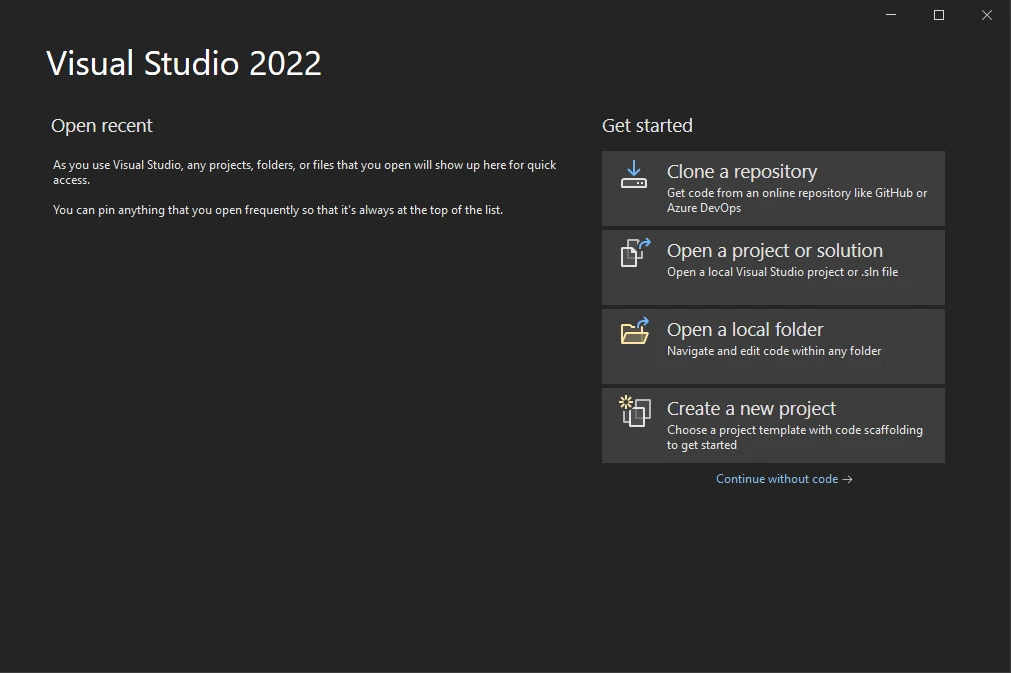
2. Wählen Sie die geeignete Projektvorlage basierend auf Ihren Anforderungen (z.B. Konsolenanwendung, Windows Forms-Anwendung).
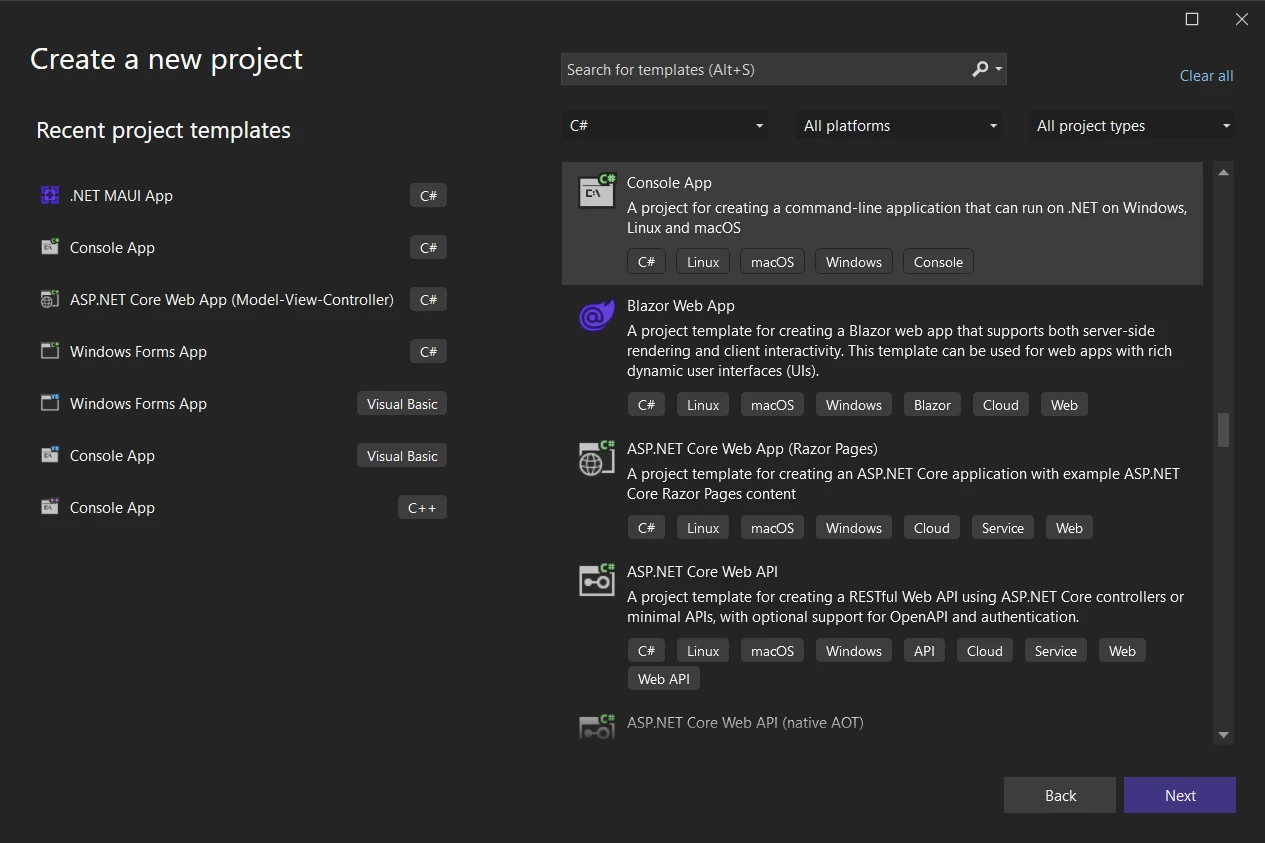
3. Geben Sie den Projektnamen und den Speicherort an und klicken Sie dann auf "Weiter".
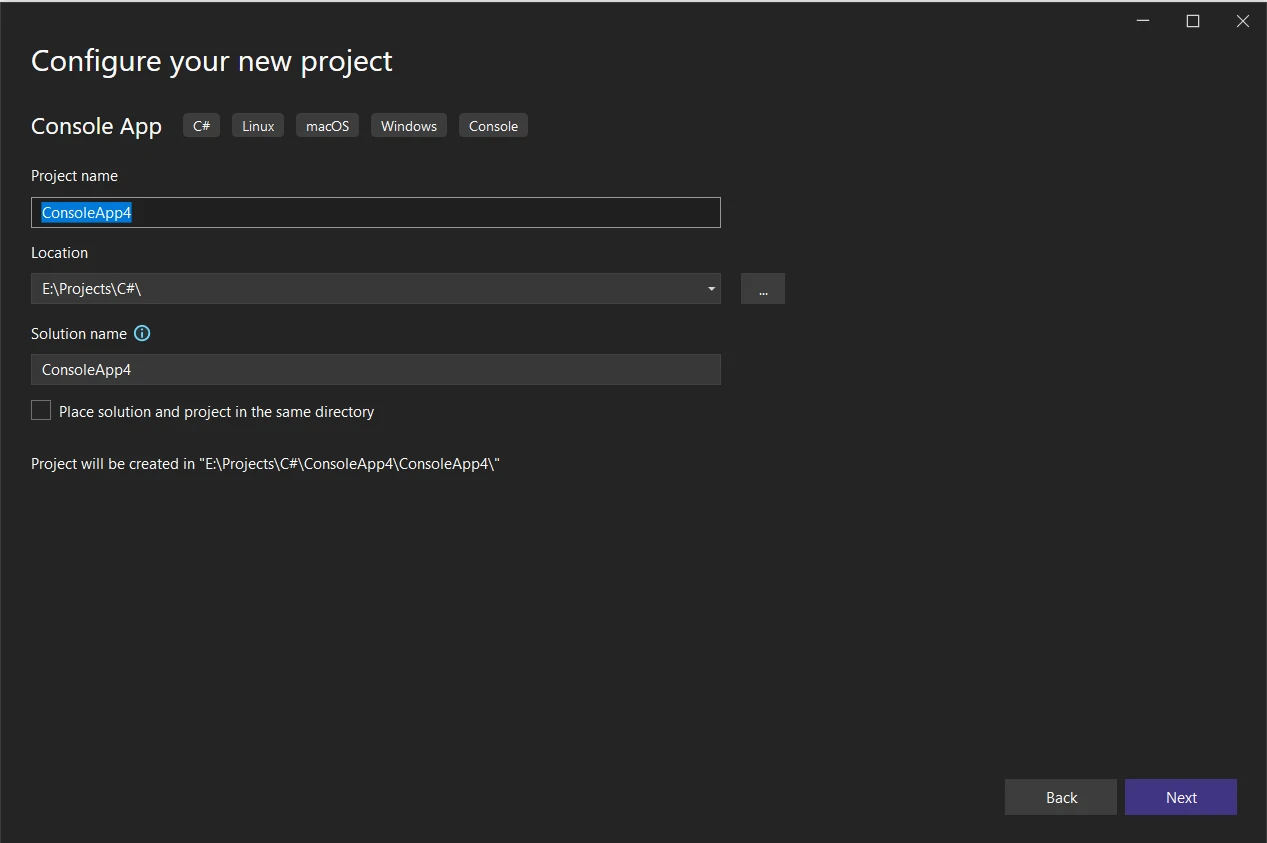
4. Wählen Sie aus den zusätzlichen Informationen das neueste .NET-Framework aus. Klicken Sie auf "Erstellen".
## Installationsprozess
`XDocument` ist Teil des .NET Frameworks und erfordert keine zusätzlichen Installationsschritte. Entwickler können sofort mit der Verwendung von `XDocument` in ihren .NET-Anwendungen beginnen, ohne dass eine gesonderte Installation oder Konfiguration erforderlich ist.
Sie können es einfach verwenden, indem Sie es als Verweis oben in der `Program.cs` Datei hinzufügen:
```csharp
using System.Xml.Linq;
```
`System.Xml.Linq` enthält die `XDocument` Klasse, die jetzt direkt zur Arbeit mit XML-Baumstrukturdateien verwendet werden kann.
## Erstellen von XML-Dokumenten mit `XDocument`
Die Verwendung von `XDocument` zur Erstellung von XML-Dateien ist einfach und intuitiv. Hier ist ein einfaches Beispiel, wie ein XML-Datei mit einem Wurzelelement und seinen untergeordneten Knoten programmatisch mit `XDocument` erstellt wird:
```csharp
using System.Xml.Linq;

class Program
{
    static void Main(string[] args)
    {
        // Create a new XML document
        XDocument doc = new XDocument(
            new XElement("root",
                new XElement("child", "Hello, World!") // Add a child element with a string content
            )
        );

        // Save the XML document to a file
        doc.Save("SampleDocument.xml");
    }
}
```
#### Ausgabe
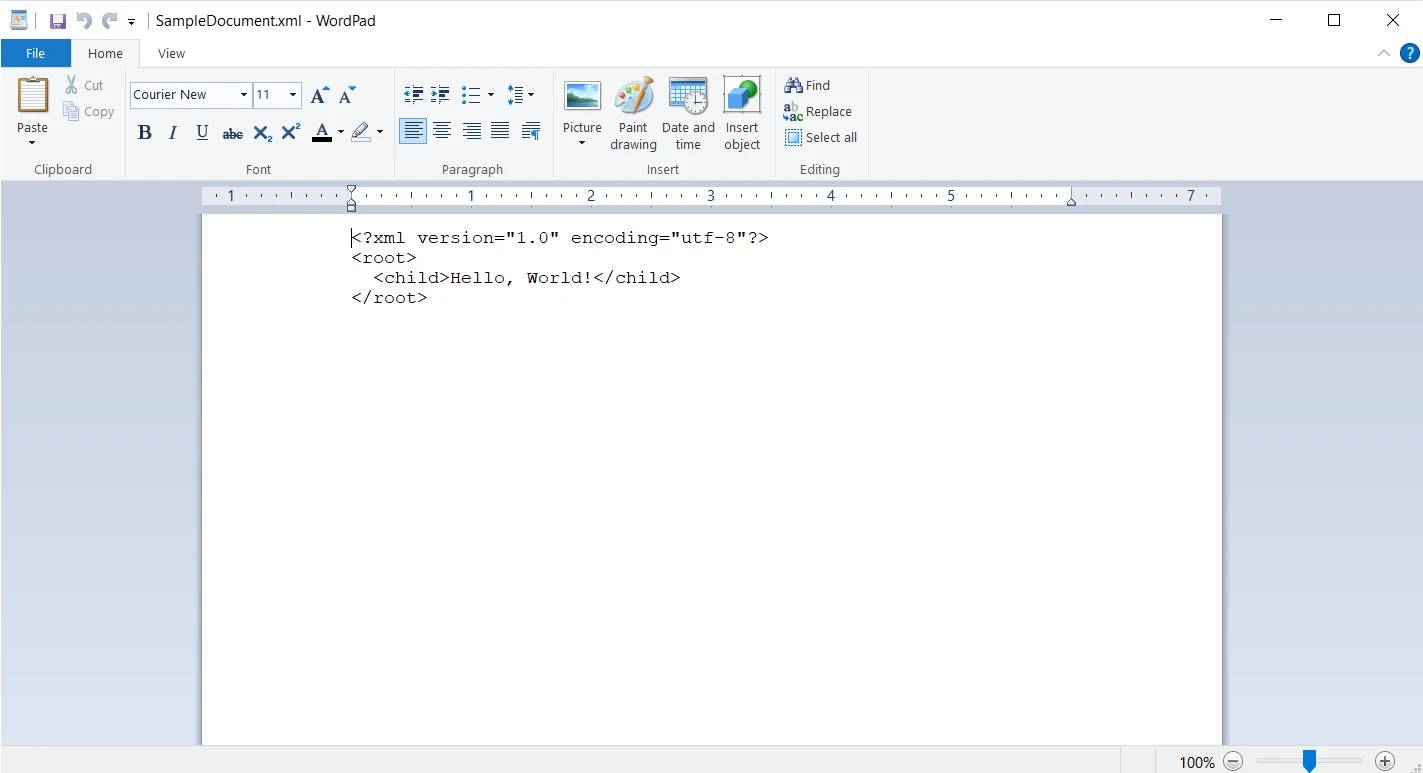
Hier zeigt die folgende Ausgabe die Struktur der generierten XML-Datei:
## Integrating `XDocument` with IronPDF
Die Integration von `XDocument` mit IronPDF ermöglicht es Entwicklern, XML-Dokumente nahtlos in das PDF-Format zu konvertieren.
### IronPDF
[IronPDF](https://ironpdf.com) ist eine leistungsstarke .NET-Bibliothek, die Aufgaben zur PDF-Erstellung, -Manipulation und -Darstellung innerhalb von .NET-Anwendungen vereinfacht. Mit IronPDF können Entwickler PDF-Dokumente einfach programmgesteuert erstellen, ändern und rendern, was dokumentenbezogene Arbeitsabläufe optimiert. Egal, ob es darum geht, PDFs aus HTML, Word-Dokumenten oder Bildern zu generieren, IronPDF bietet ein umfassendes Set an Funktionen zur einfachen Handhabung von PDF-bezogenen Aufgaben. Zusätzlich bietet IronPDF plattformübergreifende Kompatibilität und flexible Lizenzierungsoptionen, wodurch es eine vielseitige Lösung für eine Vielzahl von Anwendungen darstellt.
Hier sind einige Hauptmerkmale von IronPDF:
1. **PDF-Generierung:** IronPDF ermöglicht es Entwicklern, PDF-Dokumente programmatisch aus verschiedenen Quellen wie HTML, Bildern und XML-Daten zu erstellen.
2. **PDF-Manipulation:** Mit IronPDF können Entwickler bestehende PDF-Dokumente bearbeiten, indem sie Seiten, Texte, Bilder und Anmerkungen hinzufügen, ändern oder entfernen.
3. **PDF-Konvertierung:** IronPDF ermöglicht die Konvertierung von HTML, Word-Dokumenten (DOCX) und Bildern in das PDF-Format und bietet so eine nahtlose Interoperabilität zwischen verschiedenen Dokumenttypen.
4. **PDF-Rendering:** IronPDF bietet hochwertige PDF-Rendering-Funktionen, die es Entwicklern ermöglichen, PDF-Dokumente innerhalb ihrer .NET Anwendungen mithilfe anpassbarer Viewer-Komponenten anzuzeigen.
5. **Plattformübergreifende Kompatibilität:** IronPDF ist mit verschiedenen .NET Plattformen kompatibel, darunter Windows Forms, WPF, ASP.NET und .NET Core, wodurch es sich für eine breite Palette von Anwendungen eignet.
6. **Leistungsoptimierung:** IronPDF ist auf Leistung und Skalierbarkeit optimiert und gewährleistet so eine schnelle und effiziente PDF-Generierung und -Darstellung auch für große Dokumente.
Hier sind die Schritte zur Integration von XDocument mit IronPDF:
### 1. IronPDF installieren
* Öffnen Sie [Visual Studio](https://visualstudio.microsoft.com/) oder Ihre bevorzugte IDE.
* Gehen Sie im Menü Werkzeuge zur NuGet-Paket-Manager-Konsole.
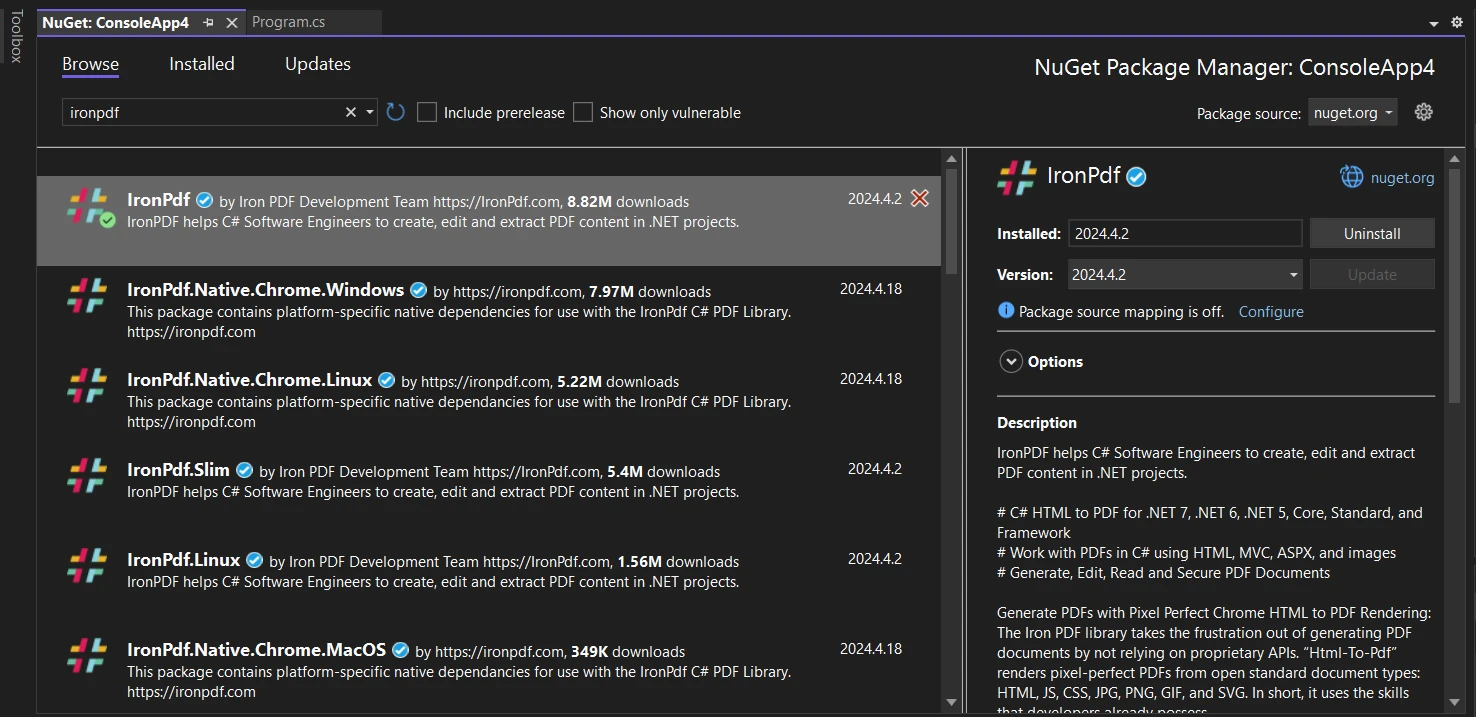
* Wählen Sie IronPDF aus dem NuGet-Browser-Tab und klicken Sie auf Installieren.
```shell
:ProductInstall
```
* Alternativ können Sie es vom NuGet-Pakete-Manager für Lösungen installieren.
* Wählen Sie IronPDF im NuGet-Browsereiter aus und klicken Sie auf Installieren
## 2. die Logik zur Konvertierung von XML-Dokumenten in PDF mit IronPDF implementieren
* Sobald IronPDF installiert ist, können Sie die Logik implementieren, um XML-Dokumente mit IronPDF in PDF zu konvertieren.
* Verwenden Sie `XDocument`, um das XML-Dokument zu laden.
* Nutzen Sie die Fähigkeiten von IronPDF, um ein PDF-Dokument aus den XML-Daten zu generieren.
Hier ist ein Beispiel, um eine [DOCX-Datei in PDF](/examples/docx-to-pdf/) mit IronPDF zu konvertieren:
Hier ist ein Codebeispiel, das zeigt, wie ein XML-Dokument mithilfe von `XDocument` und IronPDF in ein PDF umgewandelt wird:
```csharp
using IronPdf;
using System.Xml.Linq;
class Program
{
static void Main(string[] args)
{
// Load XML document using XDocument
XDocument doc = XDocument.Load("SampleDocument.xml");
// Create an instance of ChromePdfRenderer
ChromePdfRenderer renderer = new ChromePdfRenderer();
// Generate PDF document from XML data using IronPDF
PdfDocument pdf = renderer.RenderHtmlAsPdf(doc.ToString());
// Save the PDF document
pdf.SaveAs("SampleDocument.pdf");
}
}
```
Zuerst wird ein Muster-XML-Dokument "SampleDocument.xml" mit der `XDocument.Load()` Methode geladen. Als Nächstes erstellen wir eine Instanz `renderer` der `ChromePdfRenderer` Klasse von IronPDF. Dann rendern wir mithilfe der `renderer.RenderHtmlAsPdf()` Methode die XML-Zeichenfolge in ein PDF und speichern sie in einer `PdfDocument`-Instanz `pdf`. Schließlich speichern wir das generierte PDF mit der Methode `pdf.SaveAs()`.
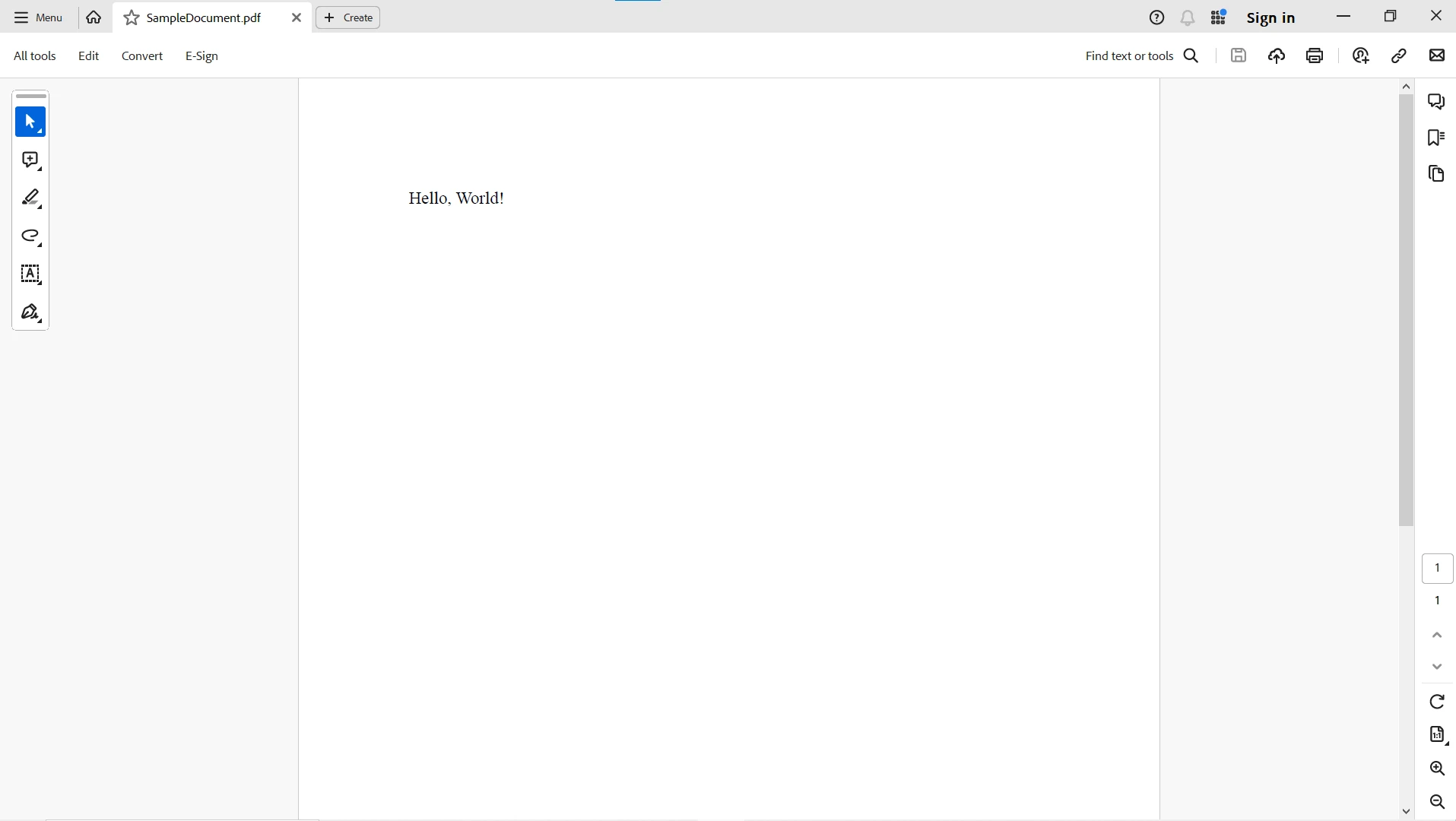
#### Ausgabe
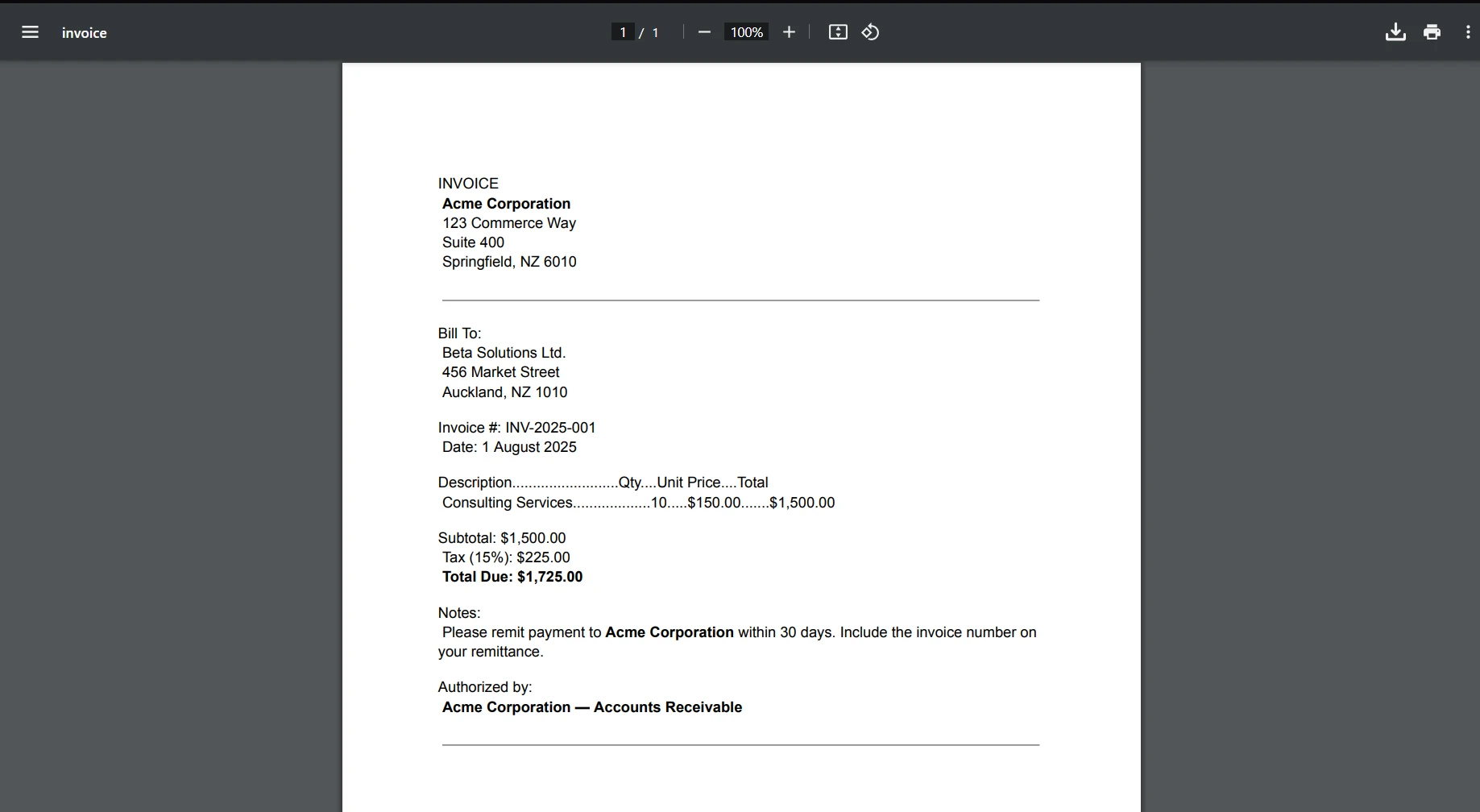
Hier sehen Sie, dass der Inhalt der XML-Datei erfolgreich in einem PDF-Dokument gespeichert ist. Die Daten aus den untergeordneten Knoten werden in einen String umgewandelt und dann als HTML in PDF gerendert.
Für weitere Informationen zu IronPDF und seinen Funktionen besuchen Sie bitte diese [IronPDF-Dokumentationsseite](/docs/). Entdecken Sie gebrauchsfertige [Codebeispiele zum Erstellen von PDFs aus HTML](/examples/using-html-to-create-a-pdf/) und beginnen Sie mit der PDF-Manipulation in Ihren .NET-Framework-Konsole oder Webanwendungen.
## Abschluss
Abschließend bieten [`XDocument`](https://learn.microsoft.com/en-us/dotnet/api/system.xml.linq.xdocument?view=net-8.0) und [IronPDF](https://ironpdf.com) leistungsstarke Lösungen für die Bearbeitung und Konvertierung von XML-Dokumenten in .NET-Anwendungen. `XDocument` vereinfacht den Umgang mit XML-Daten, indem es eine Vielzahl von Funktionen zum Parsen, Abfragen und Modifizieren von XML-Dokumenten bereitstellt. Durch die Integration von `XDocument` mit IronPDF können Entwickler XML-Dokumente nahtlos in das PDF-Format umwandeln und so die Vielseitigkeit und Zugänglichkeit ihrer Anwendungen erweitern. Ob Sie mit Datenspeicherung, Konfigurationsdateien oder Dokumentenerstellung zu tun haben, `XDocument` und IronPDF ermöglichen es Entwicklern, die Bearbeitung von XML-Standarddokumenten in ihren .NET-Anwendungen mühelos zu optimieren.
[IronPDF-Lizenzierungsdetails](/licensing/) sind für die Bereitstellung in kommerziellen Projekten erforderlich. Laden Sie die Bibliothek von der [offiziellen IronPDF-Website](https://ironpdf.com) herunter und probieren Sie es aus.
In der Welt der .NET-Entwicklung ist eine effiziente Handhabung von XML-Dokumenten für eine Vielzahl von Anwendungen unerlässlich. Von der Datenspeicherung bis zu Konfigurationsdateien dient XML als vielseitiges Format zur Strukturierung und Organisation von Informationen.
In diesem Artikel werden wir erkunden, wie Entwickler die Leistungsfähigkeit von XDocument und IronPDF nutzen können, um die Bearbeitung von XML-Dokumenten in ihren .NET-Anwendungen zu optimieren.
Verständnis der XML-Dokumentenstruktur
XML, oder Extensible Markup Language, ist ein vielseitiges Format, das häufig zum Speichern und Austauschen von strukturierten Daten verwendet wird. XML-Dokumente sind als hierarchischer Baum strukturiert, bestehend aus einem einzigen Wurzelknoten, der untergeordnete Knoten enthält, die verschiedene Elemente und Attribute darstellen. Jedes Element im XML-Baum kann untergeordnete Elemente haben, wodurch eine verschachtelte Struktur entsteht, die Daten logisch organisiert. Die XML-Deklaration, die normalerweise am Anfang einer XML-Datei gefunden wird, gibt die verwendete XML-Version und alle zusätzlichen Codierungsinformationen an.
Damit ein XML-Dokument als gültig angesehen wird, muss es den von der XML-Spezifikation definierten Syntaxregeln entsprechen, einschließlich nur eines Wurzelelements. Entwickler können XML-Dokumente mit verschiedenen Programmiersprachen und Bibliotheken analysieren, um Daten effektiv zu extrahieren und zu manipulieren. Insgesamt bietet ein gültiges XML-Dokument einen flexiblen und standardisierten Ansatz zur Darstellung strukturierter Daten, der Interoperabilität und Datenaustausch über verschiedene Systeme und Plattformen hinweg erleichtert.
Einführung in die XDocument Klasse
XDocument, ein Teil des System.XmlLinq Namespace in .NET, ist eine leistungsstarke API zur Arbeit mit XML-Dokumenten. Es bietet eine umfassende Palette von Funktionen zum Analysieren, Abfragen, Ändern und Erstellen von XML-Dokumenten, indem ein einfacheres Programmiermodell übernommen wird. Mit seiner intuitiven Benutzeroberfläche und der umfangreichen Funktionalität vereinfacht XDocument den Umgang mit XML-Daten und macht es zu einem unverzichtbaren Werkzeug for .NET-Entwickler.
Funktionen von XDocument
XML-Dokumentenbearbeitung:XDocument ermöglicht es Entwicklern, XML-Dokumente einfach zu laden, zu parsen und zu bearbeiten, was eine nahtlose Integration von XML-Daten in .NET-Anwendungen ermöglicht.
Unterstützung für LINQ zu XML:XDocument nutzt LINQ zu XML, eine Reihe von Erweiterungen der LINQ-Abfragesyntax, um XML-Daten effizient abzufragen und zu transformieren.
Fluent API:XDocument bietet eine Fluent API zum Erstellen und Ändern von XML-Dokumenten, wodurch das Hinzufügen von Elementen, Attributen und Inhalten zu XML-Strukturen einfach wird.
Unterstützung für Namespaces:XDocument unterstützt XML-Namespaces, sodass Entwickler mit XML-Dokumenten arbeiten können, die komplexen Namespace-Schemata entsprechen.
Validierung:XDocument bietet integrierte Unterstützung für die XML-Validierung, sodass Entwickler XML-Dokumente einfach gegen DTDs oder XSD-Schemata validieren können.
C#-Projekt in Visual Studio erstellen
Öffnen Sie Visual Studio und erstellen Sie ein neues C#-Projekt.
Wählen Sie die geeignete Projektvorlage basierend auf Ihren Anforderungen (z.B. Konsolenanwendung, Windows Forms-Anwendung).
Geben Sie den Projektnamen und den Speicherort an und klicken Sie dann auf "Weiter".
Wählen Sie aus den zusätzlichen Informationen das neueste .NET-Framework aus. Klicken Sie auf "Erstellen".
Installationsprozess
XDocument ist Teil des .NET Frameworks und erfordert keine zusätzlichen Installationsschritte. Entwickler können sofort mit der Verwendung von XDocument in ihren .NET-Anwendungen beginnen, ohne dass eine gesonderte Installation oder Konfiguration erforderlich ist.
Sie können es einfach verwenden, indem Sie es als Verweis oben in der Program.cs Datei hinzufügen:
using System.Xml.Linq;
using System.Xml.Linq;
ImportsSystem.Xml.Linq
Imports System.Xml.Linq
System.Xml.Linq enthält die XDocument Klasse, die jetzt direkt zur Arbeit mit XML-Baumstrukturdateien verwendet werden kann.
Erstellen von XML-Dokumenten mit XDocument
Die Verwendung von XDocument zur Erstellung von XML-Dateien ist einfach und intuitiv. Hier ist ein einfaches Beispiel, wie ein XML-Datei mit einem Wurzelelement und seinen untergeordneten Knoten programmatisch mit XDocument erstellt wird:
using System.Xml.Linq;class Program{ static voidMain(string[] args) { // Create a new XML document XDocument doc = new XDocument( new XElement("root", new XElement("child", "Hello, World!") // Add a child element with a string content ) ); // Save the XML document to a file doc.Save("SampleDocument.xml"); }}
using System.Xml.Linq;

class Program
{
    static void Main(string[] args)
    {
        // Create a new XML document
        XDocument doc = new XDocument(
            new XElement("root",
                new XElement("child", "Hello, World!") // Add a child element with a string content
            )
        );

        // Save the XML document to a file
        doc.Save("SampleDocument.xml");
    }
}
ImportsSystem.Xml.LinqFriend Class ProgramShared Sub Main(ByVal args() AsString) ' Create a new XML document Dim doc As New XDocument(New XElement("root", New XElement("child", "Hello, World!"))) ' Save the XML document to a file doc.Save("SampleDocument.xml") End SubEnd Class
Imports System.Xml.Linq

Friend Class Program
	Shared Sub Main(ByVal args() As String)
		' Create a new XML document
		Dim doc As New XDocument(New XElement("root", New XElement("child", "Hello, World!")))

		' Save the XML document to a file
		doc.Save("SampleDocument.xml")
	End Sub
End Class
Ausgabe
Hier zeigt die folgende Ausgabe die Struktur der generierten XML-Datei:
Integrating XDocument with IronPDF
Die Integration von XDocument mit IronPDF ermöglicht es Entwicklern, XML-Dokumente nahtlos in das PDF-Format zu konvertieren.
IronPDF
IronPDF ist eine leistungsstarke .NET-Bibliothek, die Aufgaben zur PDF-Erstellung, -Manipulation und -Darstellung innerhalb von .NET-Anwendungen vereinfacht. Mit IronPDF können Entwickler PDF-Dokumente einfach programmgesteuert erstellen, ändern und rendern, was dokumentenbezogene Arbeitsabläufe optimiert. Egal, ob es darum geht, PDFs aus HTML, Word-Dokumenten oder Bildern zu generieren, IronPDF bietet ein umfassendes Set an Funktionen zur einfachen Handhabung von PDF-bezogenen Aufgaben. Zusätzlich bietet IronPDF plattformübergreifende Kompatibilität und flexible Lizenzierungsoptionen, wodurch es eine vielseitige Lösung für eine Vielzahl von Anwendungen darstellt.
Hier sind einige Hauptmerkmale von IronPDF:
PDF-Generierung: IronPDF ermöglicht es Entwicklern, PDF-Dokumente programmatisch aus verschiedenen Quellen wie HTML, Bildern und XML-Daten zu erstellen.
PDF-Manipulation: Mit IronPDF können Entwickler bestehende PDF-Dokumente bearbeiten, indem sie Seiten, Texte, Bilder und Anmerkungen hinzufügen, ändern oder entfernen.
PDF-Konvertierung: IronPDF ermöglicht die Konvertierung von HTML, Word-Dokumenten (DOCX) und Bildern in das PDF-Format und bietet so eine nahtlose Interoperabilität zwischen verschiedenen Dokumenttypen.
PDF-Rendering: IronPDF bietet hochwertige PDF-Rendering-Funktionen, die es Entwicklern ermöglichen, PDF-Dokumente innerhalb ihrer .NET Anwendungen mithilfe anpassbarer Viewer-Komponenten anzuzeigen.
Plattformübergreifende Kompatibilität: IronPDF ist mit verschiedenen .NET Plattformen kompatibel, darunter Windows Forms, WPF, ASP.NET und .NET Core, wodurch es sich für eine breite Palette von Anwendungen eignet.
Leistungsoptimierung: IronPDF ist auf Leistung und Skalierbarkeit optimiert und gewährleistet so eine schnelle und effiziente PDF-Generierung und -Darstellung auch für große Dokumente.
Hier sind die Schritte zur Integration von XDocument mit IronPDF:
Gehen Sie im Menü Werkzeuge zur NuGet-Paket-Manager-Konsole.
Wählen Sie IronPDF aus dem NuGet-Browser-Tab und klicken Sie auf Installieren.
PM > Install-Package IronPdf
Install-Package IronPdf
Alternativ können Sie es vom NuGet-Pakete-Manager für Lösungen installieren.
Wählen Sie IronPDF im NuGet-Browsereiter aus und klicken Sie auf Installieren
2. die Logik zur Konvertierung von XML-Dokumenten in PDF mit IronPDF implementieren
Sobald IronPDF installiert ist, können Sie die Logik implementieren, um XML-Dokumente mit IronPDF in PDF zu konvertieren.
Verwenden Sie XDocument, um das XML-Dokument zu laden.
Nutzen Sie die Fähigkeiten von IronPDF, um ein PDF-Dokument aus den XML-Daten zu generieren.
Hier ist ein Beispiel, um eine DOCX-Datei in PDF mit IronPDF zu konvertieren:
Hier ist ein Codebeispiel, das zeigt, wie ein XML-Dokument mithilfe von XDocument und IronPDF in ein PDF umgewandelt wird:
using IronPdf;using System.Xml.Linq;class Program{ static voidMain(string[] args) { // Load XML document using XDocument XDocument doc = XDocument.Load("SampleDocument.xml"); // Create an instance of ChromePdfRenderer ChromePdfRenderer renderer = new ChromePdfRenderer(); // Generate PDF document from XML data using IronPDF PdfDocument pdf = renderer.RenderHtmlAsPdf(doc.ToString()); // Save the PDF document pdf.SaveAs("SampleDocument.pdf"); }}
using IronPdf;
using System.Xml.Linq;

class Program
{
    static void Main(string[] args)
    {
        // Load XML document using XDocument
        XDocument doc = XDocument.Load("SampleDocument.xml");

        // Create an instance of ChromePdfRenderer
        ChromePdfRenderer renderer = new ChromePdfRenderer();

        // Generate PDF document from XML data using IronPDF
        PdfDocument pdf = renderer.RenderHtmlAsPdf(doc.ToString());

        // Save the PDF document
        pdf.SaveAs("SampleDocument.pdf");
    }
}
ImportsIronPdfImportsSystem.Xml.LinqFriend Class ProgramShared Sub Main(ByVal args() AsString) ' Load XML document using XDocument Dim doc AsXDocument = XDocument.Load("SampleDocument.xml") ' Create an instance of ChromePdfRenderer Dim renderer As New ChromePdfRenderer() ' Generate PDF document from XML data using IronPDF Dim pdf AsPdfDocument = renderer.RenderHtmlAsPdf(doc.ToString()) ' Save the PDF document pdf.SaveAs("SampleDocument.pdf") End SubEnd Class
Imports IronPdf
Imports System.Xml.Linq

Friend Class Program
	Shared Sub Main(ByVal args() As String)
		' Load XML document using XDocument
		Dim doc As XDocument = XDocument.Load("SampleDocument.xml")

		' Create an instance of ChromePdfRenderer
		Dim renderer As New ChromePdfRenderer()

		' Generate PDF document from XML data using IronPDF
		Dim pdf As PdfDocument = renderer.RenderHtmlAsPdf(doc.ToString())

		' Save the PDF document
		pdf.SaveAs("SampleDocument.pdf")
	End Sub
End Class
Zuerst wird ein Muster-XML-Dokument "SampleDocument.xml" mit der XDocument.Load() Methode geladen. Als Nächstes erstellen wir eine Instanz renderer der ChromePdfRenderer Klasse von IronPDF. Dann rendern wir mithilfe der renderer.RenderHtmlAsPdf() Methode die XML-Zeichenfolge in ein PDF und speichern sie in einer PdfDocument-Instanz pdf. Schließlich speichern wir das generierte PDF mit der Methode pdf.SaveAs().
Ausgabe
Hier sehen Sie, dass der Inhalt der XML-Datei erfolgreich in einem PDF-Dokument gespeichert ist. Die Daten aus den untergeordneten Knoten werden in einen String umgewandelt und dann als HTML in PDF gerendert.
Abschließend bieten XDocument und IronPDF leistungsstarke Lösungen für die Bearbeitung und Konvertierung von XML-Dokumenten in .NET-Anwendungen. XDocument vereinfacht den Umgang mit XML-Daten, indem es eine Vielzahl von Funktionen zum Parsen, Abfragen und Modifizieren von XML-Dokumenten bereitstellt. Durch die Integration von XDocument mit IronPDF können Entwickler XML-Dokumente nahtlos in das PDF-Format umwandeln und so die Vielseitigkeit und Zugänglichkeit ihrer Anwendungen erweitern. Ob Sie mit Datenspeicherung, Konfigurationsdateien oder Dokumentenerstellung zu tun haben, XDocument und IronPDF ermöglichen es Entwicklern, die Bearbeitung von XML-Standarddokumenten in ihren .NET-Anwendungen mühelos zu optimieren.
Jacob Mellor ist Chief Technology Officer bei Iron Software und ein visionärer Ingenieur, der Pionierarbeit in der C# PDF-Technologie leistet. Als der ursprüngliche Entwickler hinter der Kern-Codebasis von Iron Software hat er die Produktarchitektur des Unternehmens seit seiner Gründung geprägt und es zusammen mit CEO Cameron Rimington in ein Unternehmen mit mehr als 50 Mitarbeitern verwandelt, das die NASA, Tesla und globale Regierungsbehörden beliefert.