


Aktualisiert 21. April 2026
Wie man TIFF in PDF in Java konvertiert
Dieser umfassende Leitfaden führt Sie durch die Schritte, wie Sie ein TIFF-Bild nahtlos in PDF in Java mit IronPDF konvertieren.
Weiterlesen

Eine der herausragenden Eigenschaften von IronPDF for Java ist die Möglichkeit, mit PDF-Vorlagen zu arbeiten. Ein PDF-Template ist eine vorgefertigte PDF-Datei, die Platzhalter für dynamische Inhalte enthält. Mit IronPDF können Sie diese Platzhalter einfach durch tatsächliche Daten ersetzen, um ein individuelles neues Dokument im PDF-Format zu erstellen.
PdfDocument.fromFile.PdfDoc.replaceText.SaveAs.IronPDF ist eine Java-Bibliothek, die von Iron Software entwickelt und gepflegt wird. Sie bietet eine benutzerfreundliche Oberfläche, die viele der komplexen Vorgänge bei der PDF-Erzeugung abstrahiert, so dass sich die Entwickler auf den Inhalt ihrer PDFs konzentrieren können, anstatt sich mit den Details der Dateierzeugung zu beschäftigen. IronPDF bietet auch eine Reihe von Funktionen, die die Arbeit mit PDF-Vorlagen, ausfüllbaren Formularen und digitalen Unterschriften erleichtern.
Dieses Tutorial führt Sie durch die Schritte, die erforderlich sind, um eine PDF-Datei aus einer Vorlage mit IronPDF in Java zu erstellen.
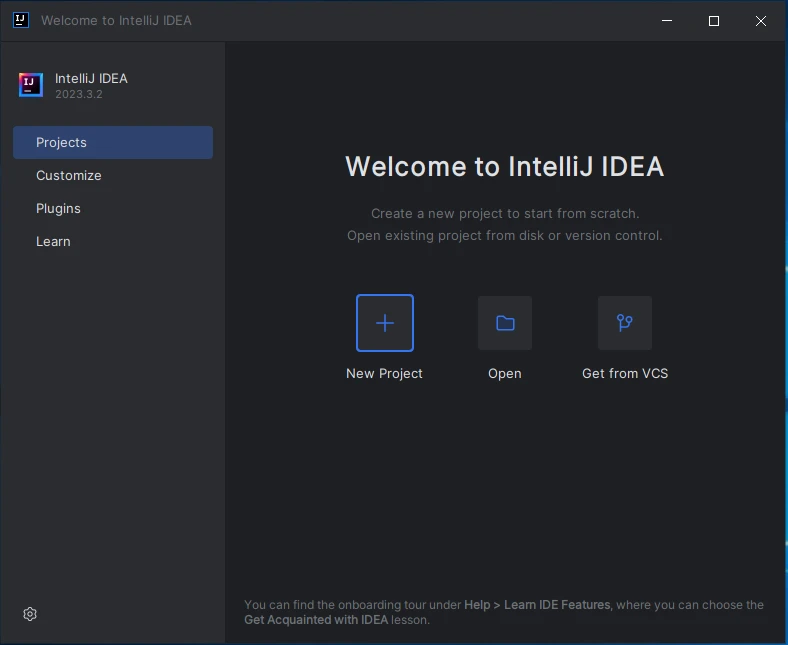
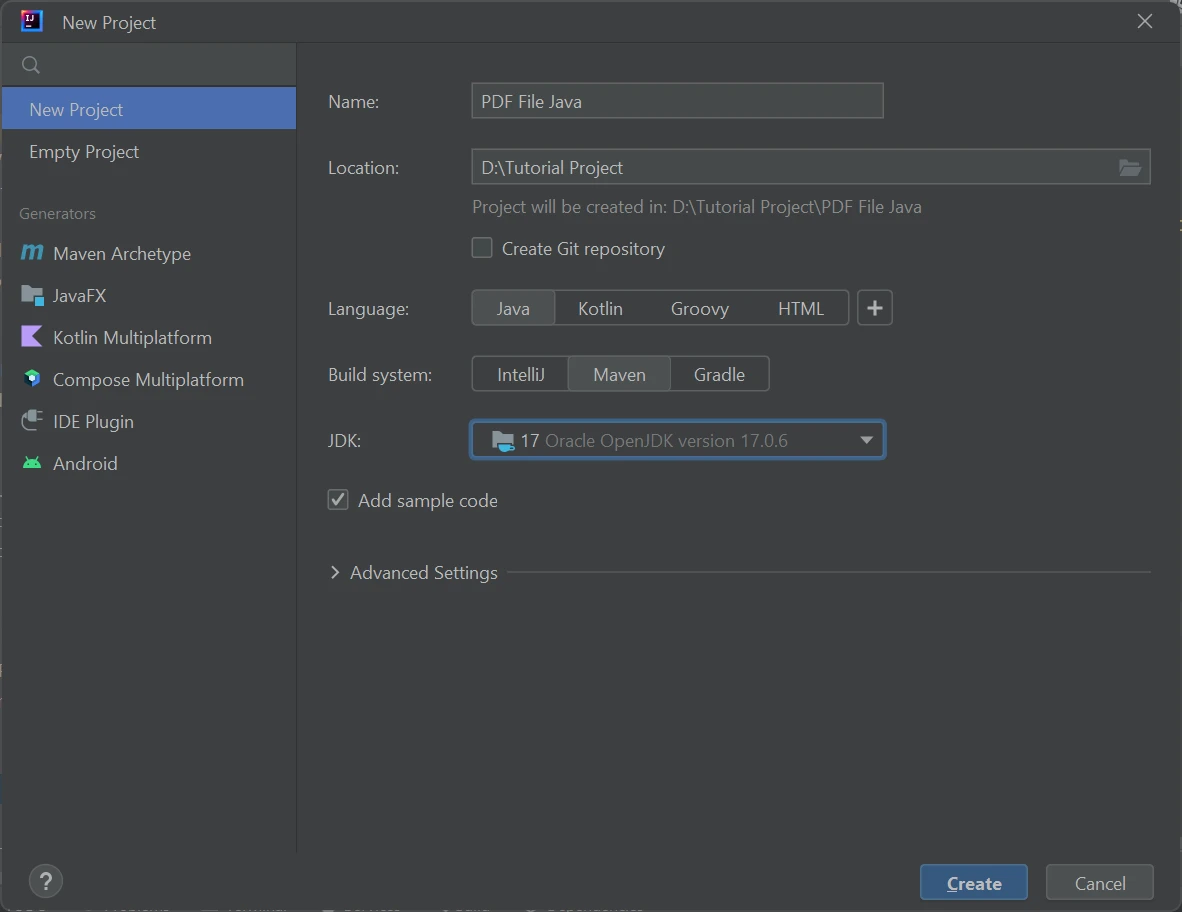
Der erste Schritt besteht darin, ein Projekt zu erstellen.
Hier sind die Schritte zum Erstellen eines neuen Java-Projekts mit IntelliJ IDEA:
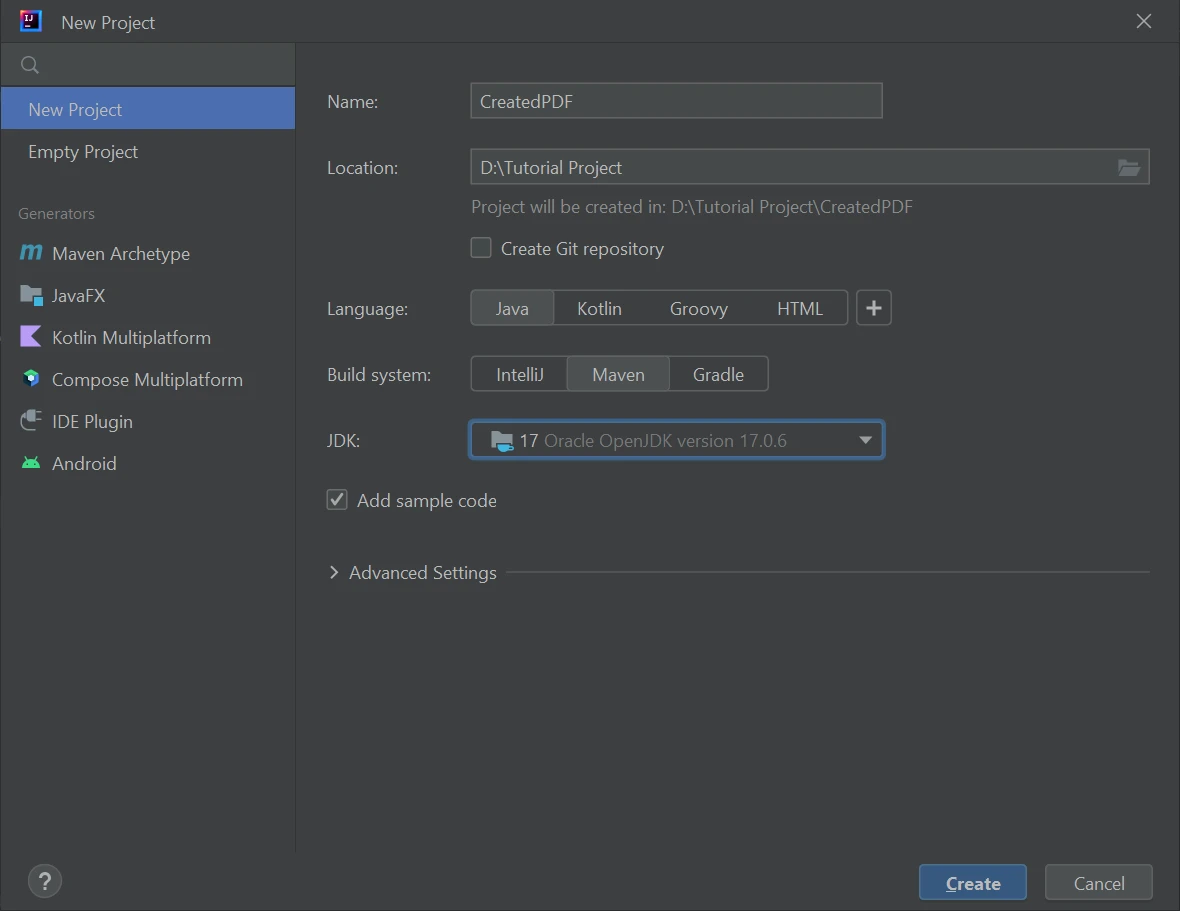 Erstellen eines neuen Java-Projekts mit IntelliJ IDEA
Der zweite Schritt besteht darin, die IronPDF-Bibliothek zu Ihrem Java-Projekt mithilfe einer XML-Datei hinzuzufügen. Sie können dies tun, indem Sie die folgende Abhängigkeit in Ihrer Projekt-pom.xml-Datei hinzufügen:
<!-- Add this dependency to use IronPDF in your Java project -->
<dependency>
    <groupId>com.ironsoftware</groupId>
    <artifactId>ironpdf</artifactId>
    <version>VERSION_NUMBER</version> <!-- Specify the version number -->
</dependency>Als Nächstes müssen Sie eine PDF-Vorlage erstellen, die Sie zur Generierung Ihrer PDF-Datei verwenden werden. Sie können Ihre PDF-Vorlage mit einem beliebigen PDF-Editor erstellen. Die Vorlage kann Platzhalter enthalten, die zur Laufzeit durch dynamische Daten ersetzt werden.
Nehmen wir einen Anwendungsfall an, bei dem eine Reihe von Zertifikaten für 50 Studenten ausgestellt wird. Nun ist es eine sehr hektische Aufgabe, für jeden Benutzer ein eigenes Zertifikat zu erstellen. Es wird also eine Vorlage verwendet, und Sie ändern einfach einen Namen mit diesem Demoprogramm, wie unten gezeigt.
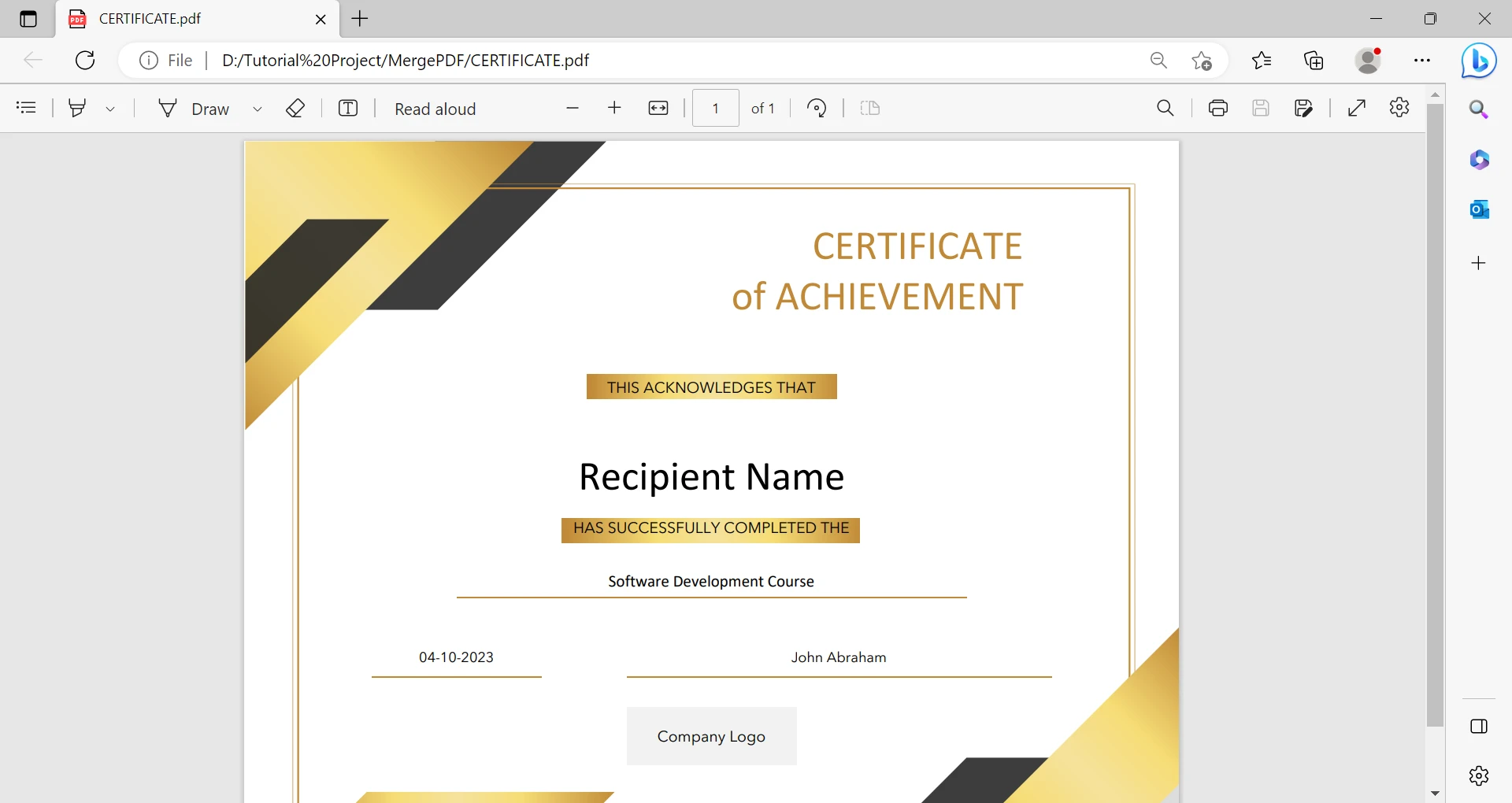 Zertifikatvorlage Bildinstanz
Nach der Erstellung des PDF-Vorlagenzertifikats muss es zunächst in die Java-Anwendung geladen werden. Die IronPDF PdfDocument Klasse wird verwendet, um die PDF-Vorlage in den Speicher zu laden. Das folgende Beispiel zeigt, wie man mit IronPDF ein PDF-Template lädt:
// Load the PDF template into memory using IronPDF
PdfDocument pdfDoc = PdfDocument.fromFile(Paths.get("CERTIFICATE.pdf"));Lassen Sie uns nun ein Codebeispiel schreiben, das 5 Zertifikate auf der Grundlage der gegebenen Vorlage erstellt.
import com.ironsoftware.ironpdf.PageSelection;
import com.ironsoftware.ironpdf.PdfDocument;

import java.io.IOException;
import java.nio.file.Paths;

public class CertificateGenerator {
    public static void main(String[] args) throws IOException {
        // Array of student names
        String[] studentNames = {"Georgia Wade", "Juliet Dave", "Olive Seth", "Miles Jorg", "Oscar Den"};

        // Iterate through each student's name
        for (String name : studentNames) {
            // Load the PDF template
            PdfDocument pdfDoc = PdfDocument.fromFile(Paths.get("CERTIFICATE.pdf"));

            // Replace the placeholder text with the student's name
            pdfDoc.replaceText(PageSelection.firstPage(), "Recipient Name", name);

            // Save the new PDF with the student's name as the file name
            pdfDoc.saveAs(Paths.get("Certificate/" + name + ".pdf"));
        }
    }
}Im Folgenden finden Sie die Ausgabeprotokolle:
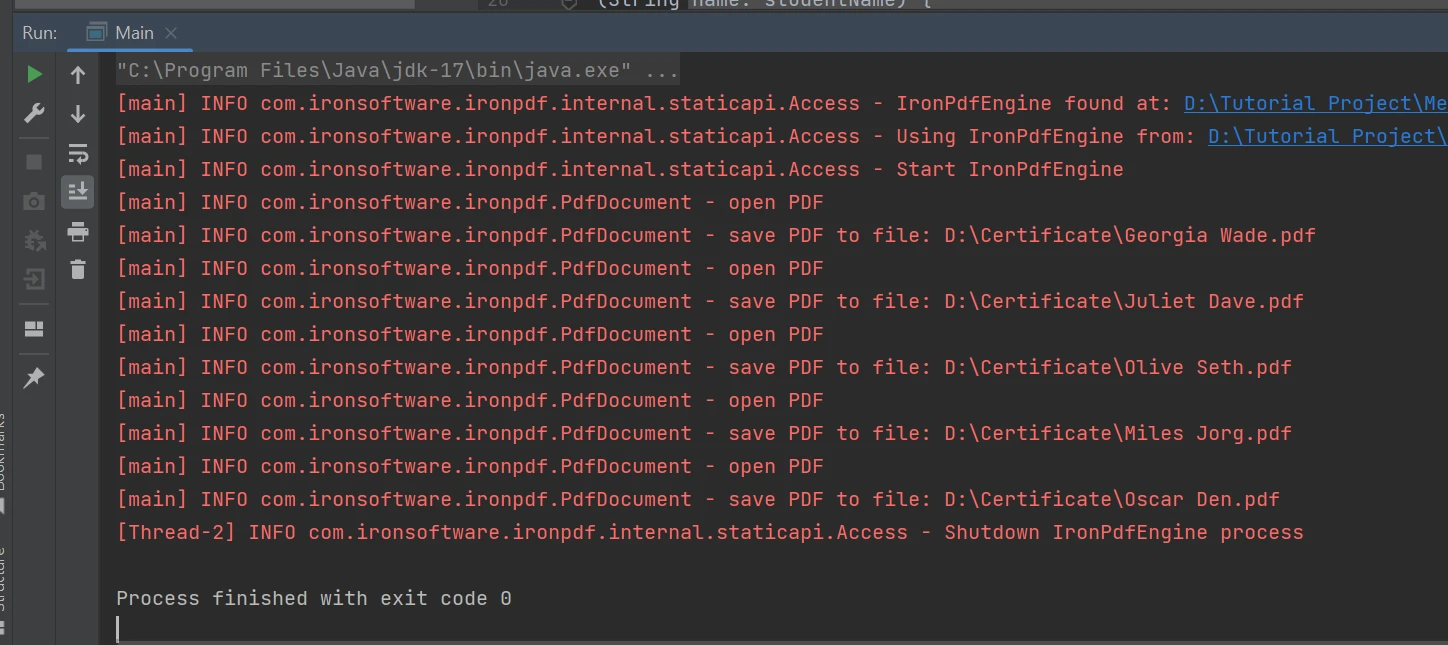 Ausgabe
Der obige Code erstellt ein Array von Schülernamen und verwendet dann die IronPDF-Bibliothek, um einen Platzhaltertext in einer bereits vorhandenen PDF-Vorlage durch den Namen des jeweiligen Schülers zu ersetzen und dann eine neue Kopie der PDF-Datei mit dem Namen des Schülers als Dateinamen zu speichern.
So funktioniert der Code:
studentNames Array wird definiert und mit fünf Studierendennamen initialisiert.for Schleife durchläuft jeden Namen im studentNames Array.PdfDocument.fromFile](/java/object-reference/api/com/ironsoftware/ironpdf/PdfDocument.html#fromFile(java.nio.file.Path) method loads the PDF template file named "CERTIFICATE.pdf" into a PdfDocument object.PdfDocument.replaceText Methode wird verwendet, um den Text "Recipient Name" in der PDF-Vorlage durch den aktuellen Studierendennamen zu ersetzen.PdfDocument.saveAs](/java/object-reference/api/com/ironsoftware/ironpdf/PdfDocument.html#saveAs(java.lang.String) Methode speichert die modifizierte PDF-Datei mit dem Studierendennamen als Dateinamen im "Certificate"-Verzeichnis.Auf diese Weise werden auf der Grundlage einer einzigen PDF-Vorlage mehrere Zertifikate generiert, jedes mit einem eindeutigen Schülernamen. Der gleiche Ansatz kann verwendet werden, um PDF-Dokumente mit einer beliebigen Vorlage zu erstellen.
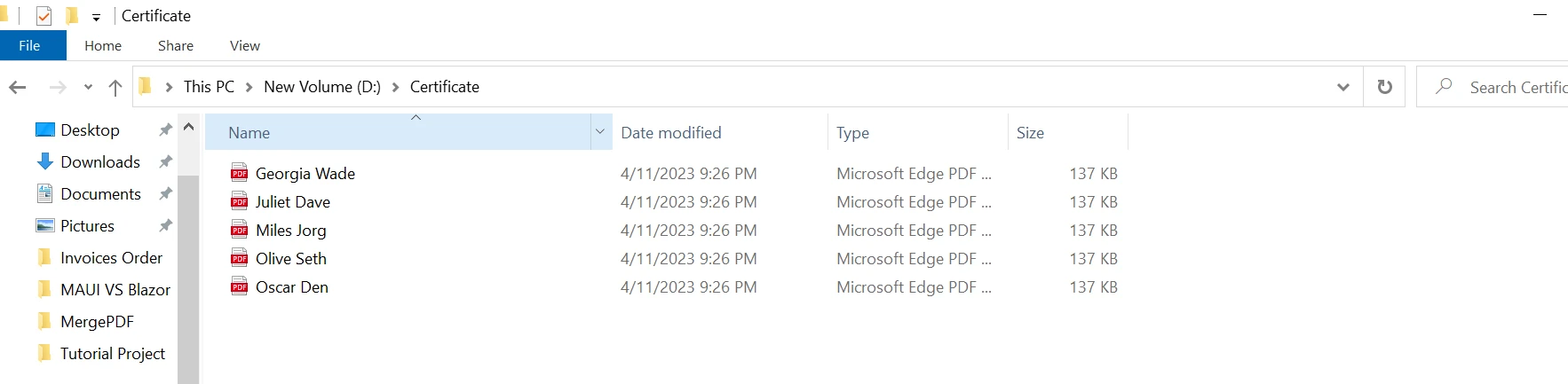 PDF-Ausgaben
Im Folgenden finden Sie das von diesem Demoprogramm erstellte Zertifikat.
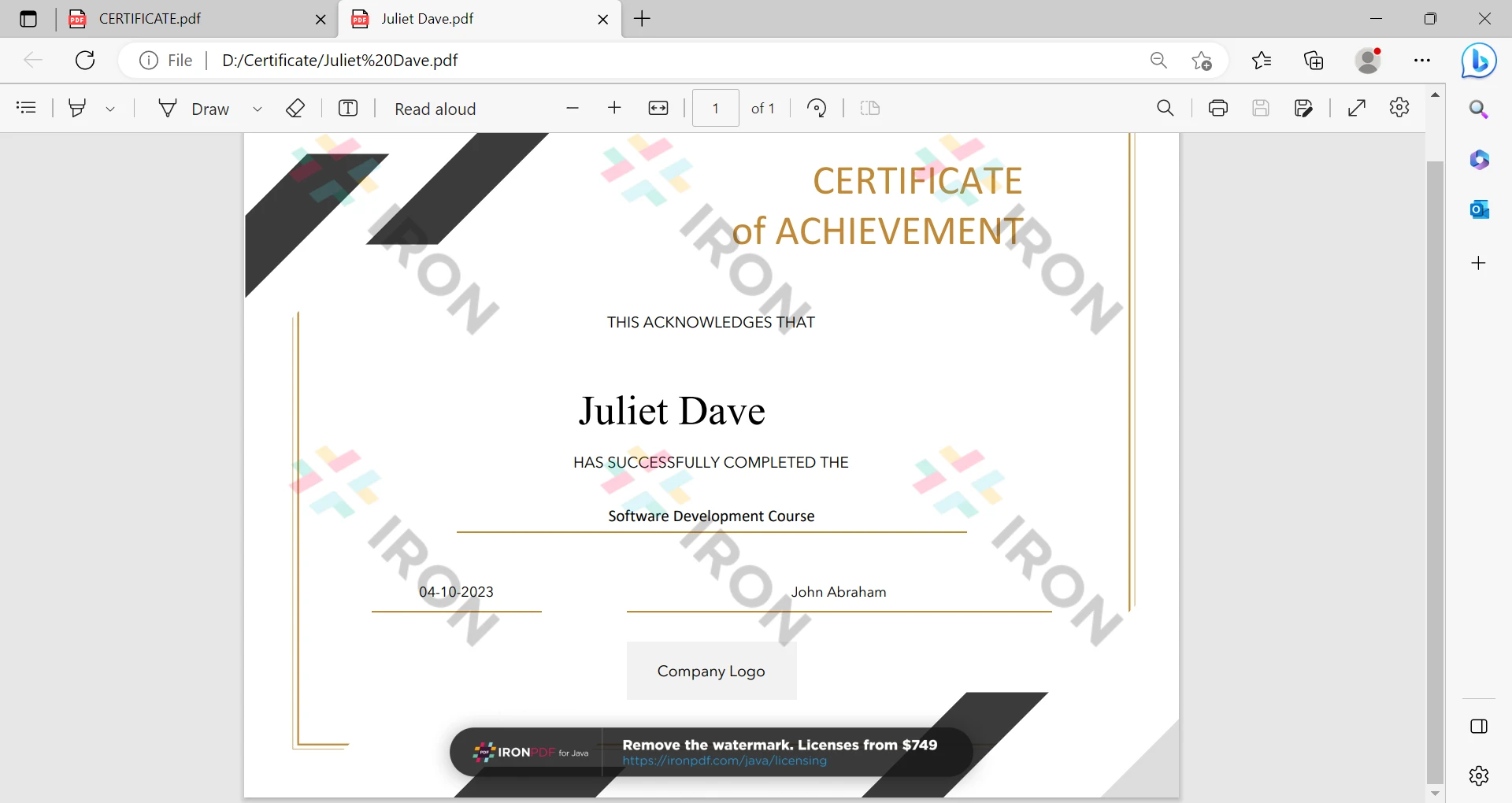 Zertifikat-Ausgabe
In diesem Beispiel wird die HTML-Datei verwendet, um eine PDF-Vorlage zu erstellen, die dann zur Generierung eines PDF-Dokuments verwendet wird.
Dies ist die HTML-Datei zur Demonstration im Beispiel.
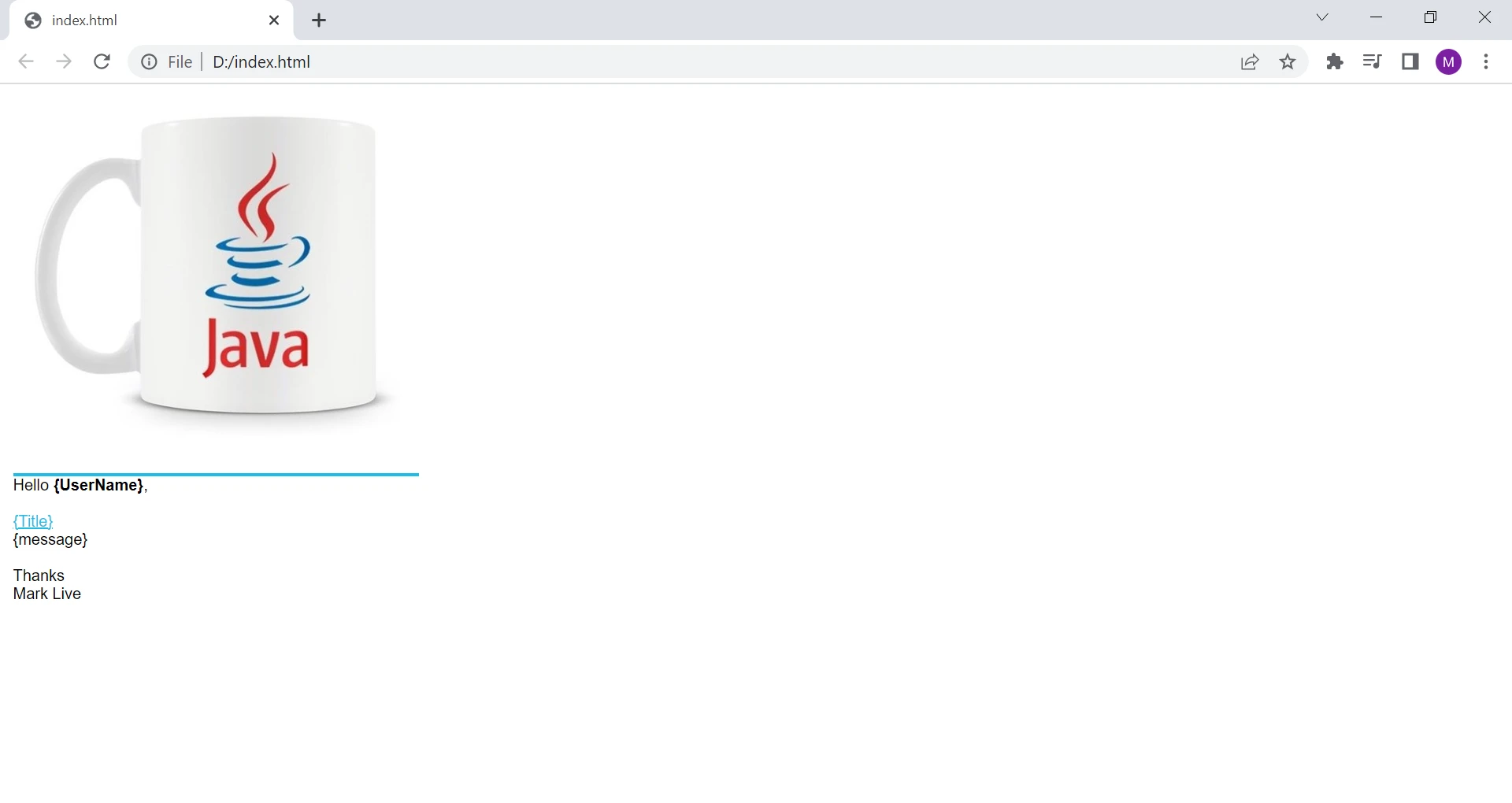 HTML-Ausgabe
Betrachten Sie das folgende Codebeispiel, um ein neues Dokument aus dem gegebenen HTML-Format zu erstellen.
import com.ironsoftware.ironpdf.PdfDocument;

import java.io.IOException;
import java.nio.file.Files;
import java.nio.file.Path;
import java.nio.file.Paths;

public class HtmlToPdfExample {
    public static void main(String[] args) throws IOException {
        // Path to the HTML template
        Path fileName = Path.of("D:\\index.html");

        // Dynamic data to replace placeholders in the template
        String userName = "Mike";
        String title = "Sample PDF File";
        String body = "This is the body of our template PDF";

        // Read the HTML file content as a string
        String htmlStr = Files.readString(fileName);

        // Replace placeholders with actual data
        htmlStr = htmlStr.replace("{UserName}", userName);
        htmlStr = htmlStr.replace("{Title}", title);
        htmlStr = htmlStr.replace("{message}", body);

        // Render the HTML as a PDF document using IronPDF
        PdfDocument pdfDoc = PdfDocument.renderHtmlAsPdf(htmlStr);

        // Save the generated PDF document in the specified directory
        pdfDoc.saveAs(Paths.get("htmlTemplate/" + userName + ".pdf"));
    }
}Der obige Code liest den Inhalt einer HTML-Datei, ersetzt Platzhalter in der HTML-Datei durch dynamische Daten, rendert das HTML als PDF-Dokument mit Hilfe der IronPDF-Bibliothek und speichert das generierte PDF-Dokument in einem bestimmten Verzeichnis.
Hier ist eine schrittweise Erklärung, was der Code macht:
Path Objekts, das auf eine HTML-Datei im lokalen Dateisystem verweist. In diesem Fall befindet sich die Datei unter "D:\index.html".htmlStr unter Verwendung der Files.readString Methode eingelesen.String.replace Methode wird verwendet, um drei Platzhalter ({UserName}, {Title} und {message}) in der HTML-Datei durch die entsprechenden dynamischen Daten zu ersetzen.PdfDocument.renderHtmlAsPdf](/java/object-reference/api/com/ironsoftware/ironpdf/PdfDocument.html#renderHtmlAsPdf(java.lang.String) Methode wird mit der modifizierten HTML-Zeichenfolge als Argument aufgerufen, um das HTML als PDF-Dokument zu rendern. Das resultierende PDF-Dokument wird in einem PdfDocument Objekt namens pdfDoc gespeichert.pdfDoc.saveAs Methode wird aufgerufen, um das generierte PDF-Dokument in einem Verzeichnis namens "htmlTemplate" im lokalen Dateisystem zu speichern, der Dateiname wird aus der userName-Variable konstruiert.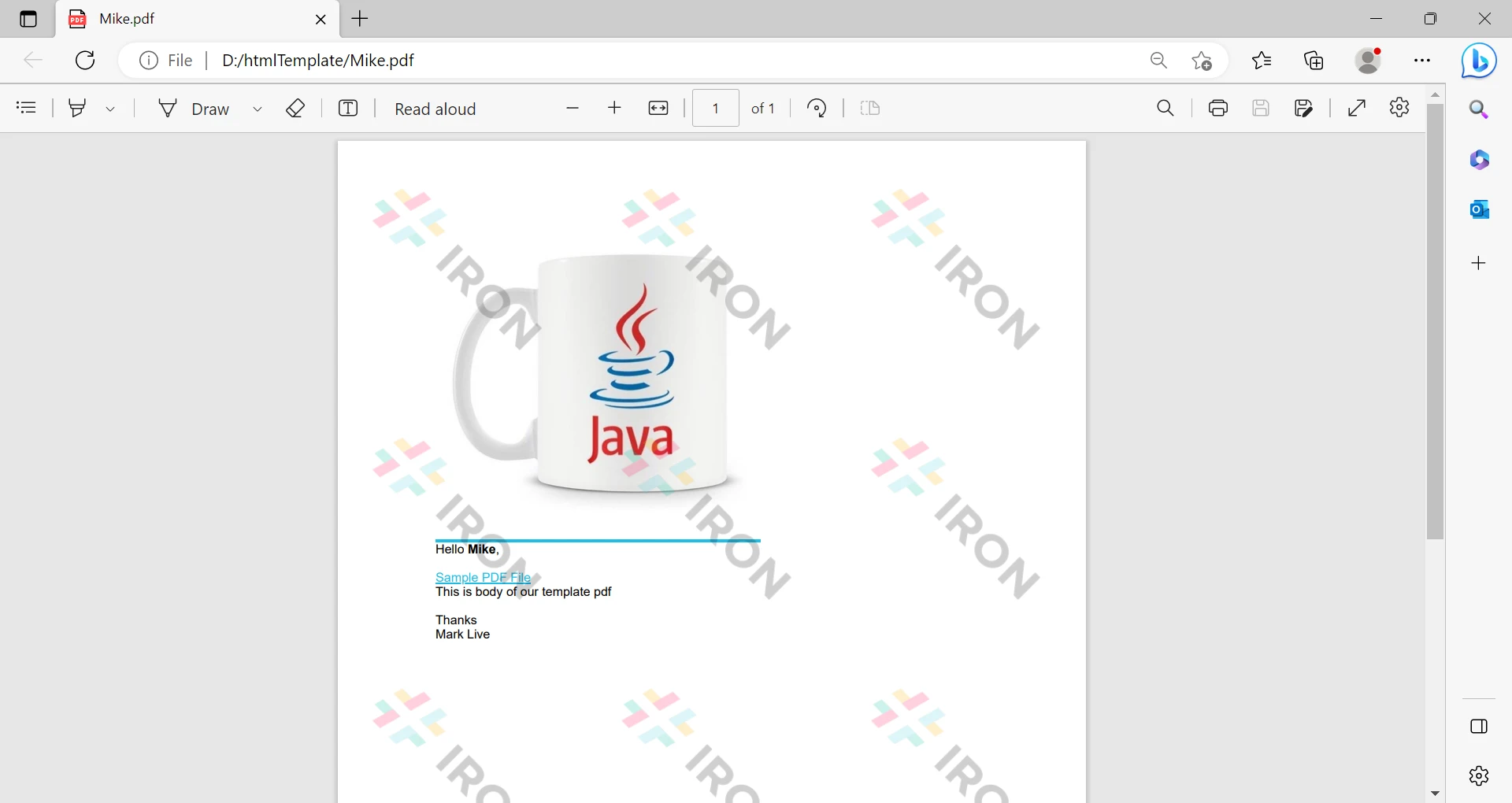 Ausgabe
Auf diese Weise ist es einfach, PDF-Dateien aus HTML-Vorlagen programmatisch zu erstellen.
Es ist möglich, dieses Wasserzeichen durch eine kostenlose Testversion oder den Erwerb einer kommerziellen Lizenz zu ersetzen.
In diesem Artikel wurde untersucht, wie IronPDF for Java zur Erzeugung von PDF-Dateien verwendet werden kann. IronPDF bietet eine einfache und leistungsstarke Schnittstelle, mit der Sie PDF-Dateien mühelos erstellen und bearbeiten können. Mit IronPDF können Sie auf einfache Weise professionell aussehende PDF-Dokumente erstellen, die für eine Vielzahl von Zwecken verwendet werden können, z. B. zur Erstellung von Berichten, Rechnungen und anderen Dokumenten.
IronPDF ist außerdem in hohem Maße anpassbar und bietet Optionen zur Steuerung des Erscheinungsbilds und des Layouts von PDF-Dateien. Entwickler können Seitenränder, Schriftgrößen, Farben und andere Eigenschaften festlegen, um PDF-Dateien zu erstellen, die ihren spezifischen Anforderungen entsprechen.
Insgesamt ist IronPDF eine leistungsstarke und flexible Bibliothek für die PDF-Erzeugung in Java. Mit seiner benutzerfreundlichen Oberfläche und der großen Bandbreite an Funktionen ist IronPDF eine gute Wahl für jede Anwendung, die eine PDF-Erzeugung erfordert.
Download IronPDF for Java, das Softwareprodukt.

Curtis Chau hat einen Bachelor-Abschluss in Informatik von der Carleton University und ist spezialisiert auf Frontend-Entwicklung mit Expertise in Node.js, TypeScript, JavaScript und React. Leidenschaftlich widmet er sich der Erstellung intuitiver und ästhetisch ansprechender Benutzerschnittstellen und arbeitet gerne mit modernen Frameworks sowie der Erstellung gut strukturierter, optisch ansprechender Handbücher.

IronPDF ist ein Teil der IRONSUITE
10 .NET-API-Produkte für Ihre Bürodokumente











Wenn Ihr PDF wie HTML aussehen soll, schnell.

