from ironpdf import *

# Instantiate Renderer
renderer = ChromePdfRenderer()

# Create a PDF from a HTML string using Python
pdf = renderer.RenderHtmlAsPdf("<h1>Hello World</h1>")

# Export to a file or Stream
pdf.SaveAs("output.pdf")

# Advanced Example with HTML Assets
# Load external html assets: Images, CSS and JavaScript.
# An optional BasePath 'C:\site\assets\' is set as the file location to load assets from
myAdvancedPdf = renderer.RenderHtmlAsPdf("<img src='icons/iron.png'>", r"C:\site\assets")
myAdvancedPdf.SaveAs("html-with-assets.pdf")
from ironpdf import *# Instantiate Rendererrenderer = ChromePdfRenderer()# Create a PDF from a HTML string using Pythonpdf = renderer.RenderHtmlAsPdf("<h1>Hello World</h1>")# Export to a file or Streampdf.SaveAs("output.pdf")# Advanced Example with HTML Assets# Load external html assets: Images, CSS and JavaScript.# An optional BasePath 'C:\site\assets\' is set as the file location to load assets frommyAdvancedPdf = renderer.RenderHtmlAsPdf("<img src='icons/iron.png'>", r"C:\site\assets")myAdvancedPdf.SaveAs("html-with-assets.pdf")
In der heutigen datengetriebenen Welt ist die Erstellung umfassender und visuell ansprechender [Berichte](https://en.wikipedia.org/wiki/Reporting) für Unternehmen und Organisationen von entscheidender Bedeutung, um Erkenntnisse effektiv zu kommunizieren. Python bietet mit seinen unzähligen Bibliotheken und seiner Flexibilität eine solide Grundlage für die Datenanalyse und -manipulation. Allerdings suchen Entwickler häufig nach leistungsstarken Werkzeugen, um den Prozess der Erstellung professioneller Berichte zu vereinfachen. IronPDF bietet eine Lösung, um die Lücke bei der PDF-Dateierstellung zu schließen. In diesem Beitrag wird erläutert, wie man mit IronPDF und Python PDFs erstellen kann, und es werden Forschungsarbeiten zu dieser Python-Bibliothek vorgestellt.
## Wie man mit Python PDF-Berichte erstellt
1. Erstelle ein neues Python-Projekt.
2. Laden Sie die IronPDF-Bibliothek herunter und importieren Sie IronPDF.
3. Erstellen Sie eine Instanz von IronPDF.
4. Hypertext Markup Language als PDF rendern.
5. Speichern Sie die PDF-Datei.
6. Optional können Sie die PDF-Datei im Standard-Viewer öffnen.
## IronPDF
Mit [IronPDF](/python/) können Datenwissenschaftler die Berichtserstellung beschleunigen, die traditionell eine zeitaufwändige Aufgabe ist. IronPDF ermöglicht die Umwandlung eines DataFrames in ästhetisch ansprechende PDF-Berichte, sodass Ergebnisse effizient und ohne aufwendige Formatierung kommuniziert werden können.
Dies beschleunigt den Entdeckungsprozess, da sich die Datenwissenschaftler auf die Analyse und Erkundung konzentrieren können. Die Nutzung von IronPDF beseitigt die Notwendigkeit für statische Bilder und manuelle Dateivorbereitung, öffnet die Tür für das Potenzial zur Einbindung interaktiver Grafiken in PDF-Berichte (obgleich IronPDF diese Funktionalität nicht nativ bereitstellt). Dies birgt das Potenzial, die Interaktion der Nutzer mit Berichten und der Datenpräsentation noch weiter zu verbessern.
Das IronPDF-Paket for Python vereinfacht das Erstellen und Bearbeiten von PDF-Berichten in Python-Anwendungen. Es fungiert als Brücke, indem es HTML-Code, Webseiteninhalte (URLs) oder sogar bestehende HTML-Dateien in korrekt formatierte PDF-Dokumente umwandelt. Für zusätzliche Sicherheit können Sie Layouts anpassen, Tabellen und Bilder einfügen und sogar wichtige Berichte mit einem Passwort schützen. Durch die nahtlose Integration in Python-Skripte wird IronPDF zu einem wertvollen Werkzeug für die Erstellung aussagekräftiger und professioneller PDF-Berichte.
### Funktionen von IronPDF
* **PDF-Generierung:** Mithilfe von Python-Code ermöglicht IronPDF die dynamische Erstellung von PDF-Dokumenten. Sie können entweder von Grund auf neu beginnen oder bestehende HTML-Informationen, einschließlich Webseiten oder Vorlagen, in das PDF-Format konvertieren.
* **HTML-zu-PDF-Konvertierung:** IronPDF behält das ursprüngliche HTML-Layout, die Stile und Elemente bei der Konvertierung in das PDF-Format bei. Diese Funktionalität ermöglicht die Erstellung von PDF-Rechnungen, Berichten und anderen Dokumenten mithilfe von HTML-Vorlagen.
* **PDF-Manipulation:** IronPDF kann PDF-Dokumente bearbeiten. Es kann mehrere PDFs zu einer einzigen zusammenführen, eine PDF-Datei in verschiedene Dokumente aufteilen, Seiten extrahieren sowie Seiten hinzufügen oder entfernen.
* **Text- und Bildwiedergabe:** Mit IronPDF können Sie Texte und Bilder in PDF-Dokumenten rendern. Dies umfasst das Einbetten von Text mit festgelegten Schriftarten, Größen und Farben sowie das Hinzufügen von Bildern.
* **Sicherheit und Verschlüsselung:** IronPDF bietet Funktionen zum Schutz von PDF-Dokumenten. Durch passwortgeschützte Verschlüsselung kann der Zugriff kontrolliert, das Drucken oder Kopieren eingeschränkt und weitere Sicherheitsoptionen konfiguriert werden.
Beachten Sie, dass sich die Verfügbarkeit und Funktionalität von IronPDF in Python im Laufe der Zeit ändern können. Konsultieren Sie daher die offizielle [Dokumentation](/python/docs/) von IronPDF oder andere Quellen, um die genauesten und aktuellsten Informationen zu erhalten.
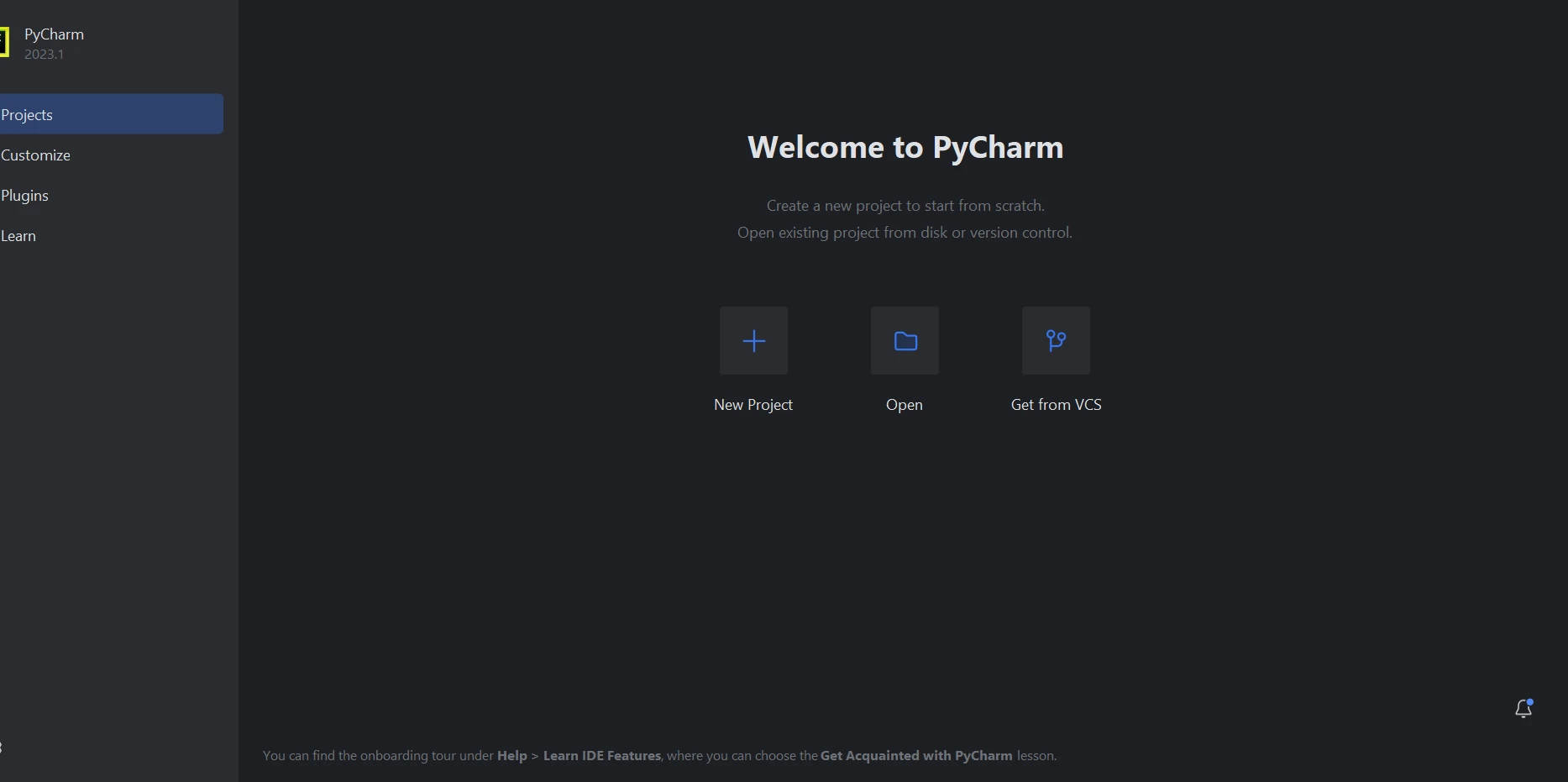
### Neues Projekt in PyCharm
In dieser Sitzung wird PyCharm verwendet, eine IDE zur Entwicklung von Python-Programmen.
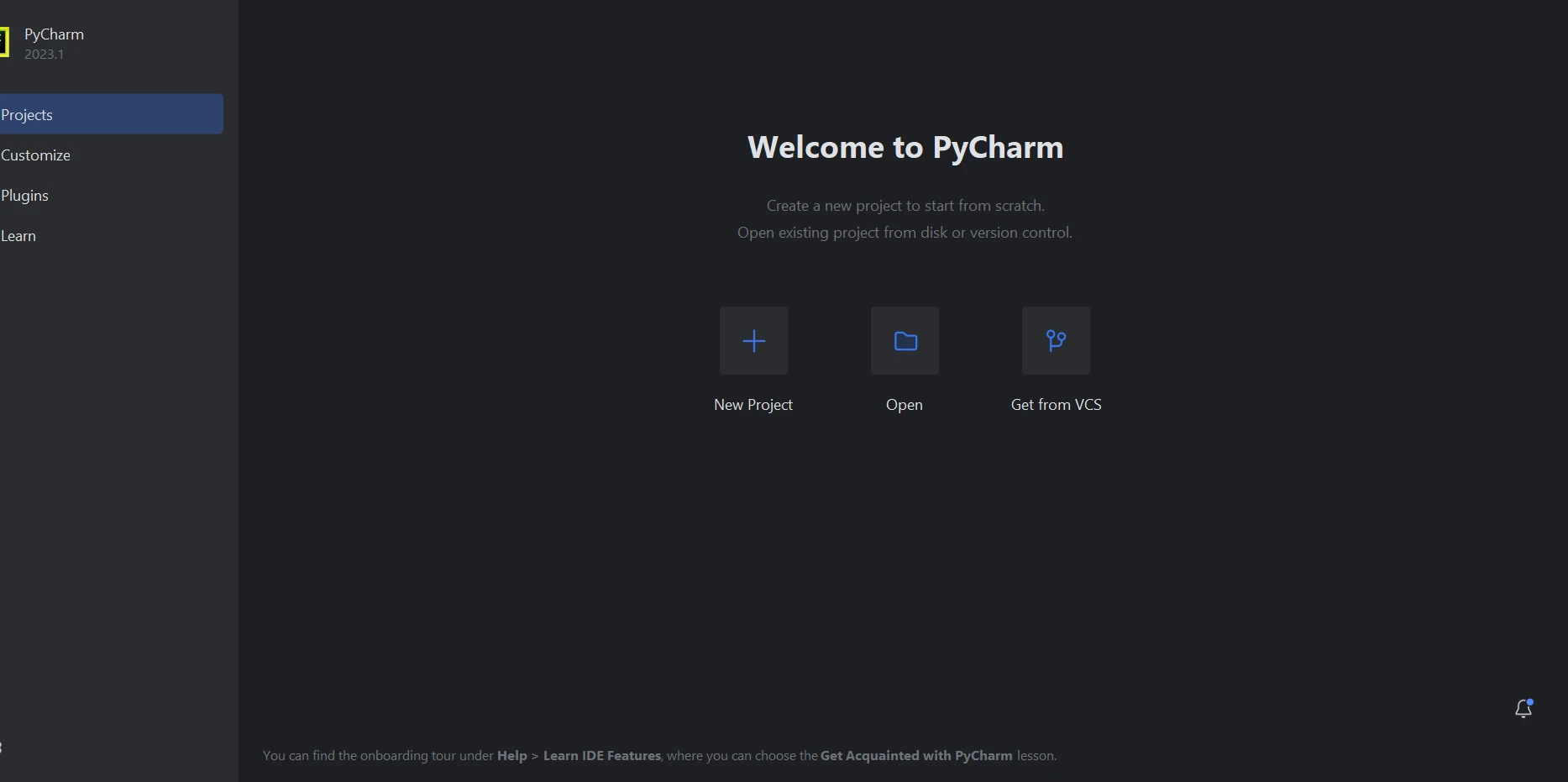
Nach dem Start der PyCharm IDE wählen Sie "Neues Projekt".
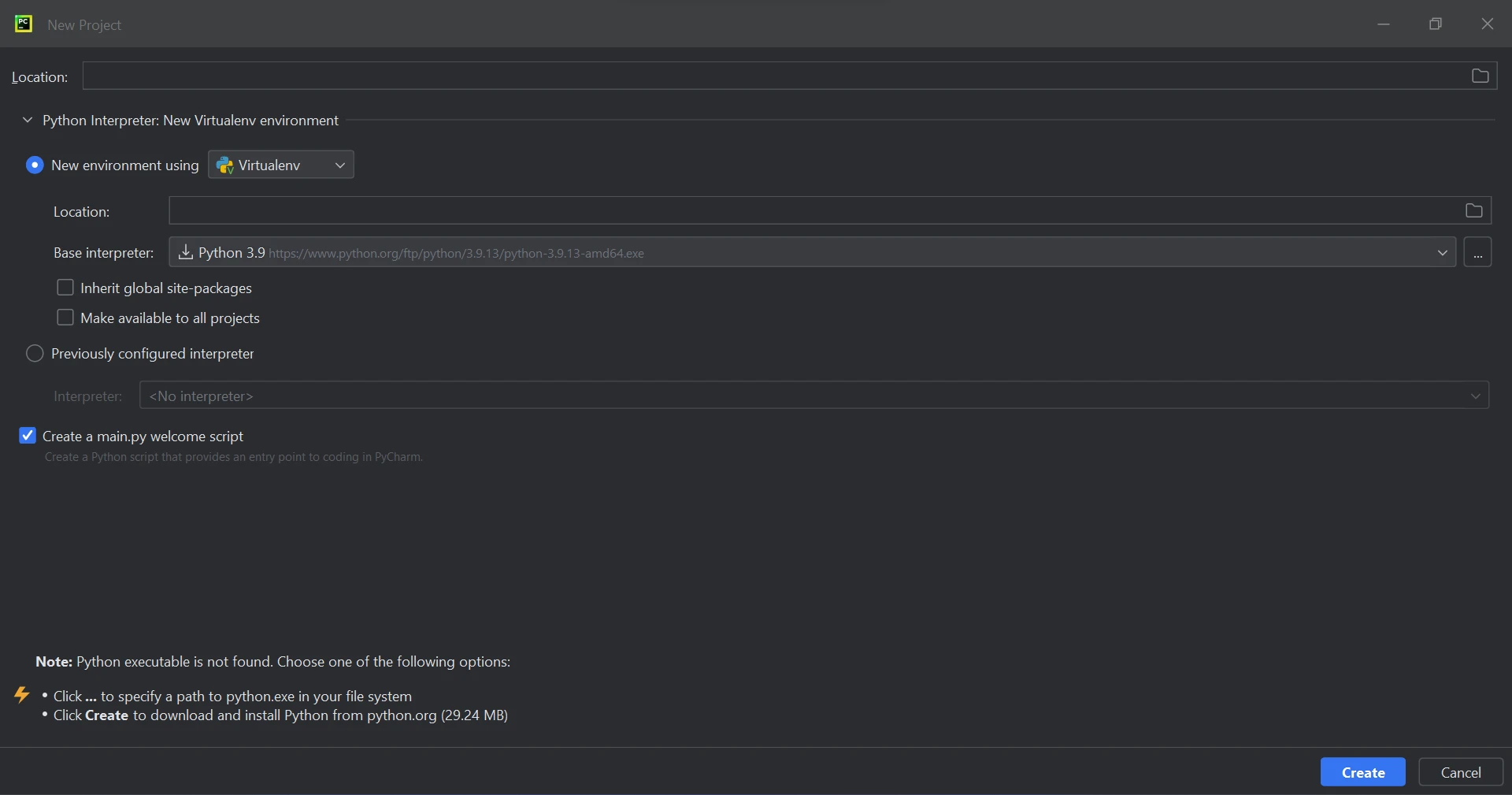
Durch Auswahl von "Neues Projekt" können Sie den Standort und die Umgebung des Projekts in einem neuen Fenster anpassen. Der folgende Screenshot zeigt dieses neue Fenster in Aktion.
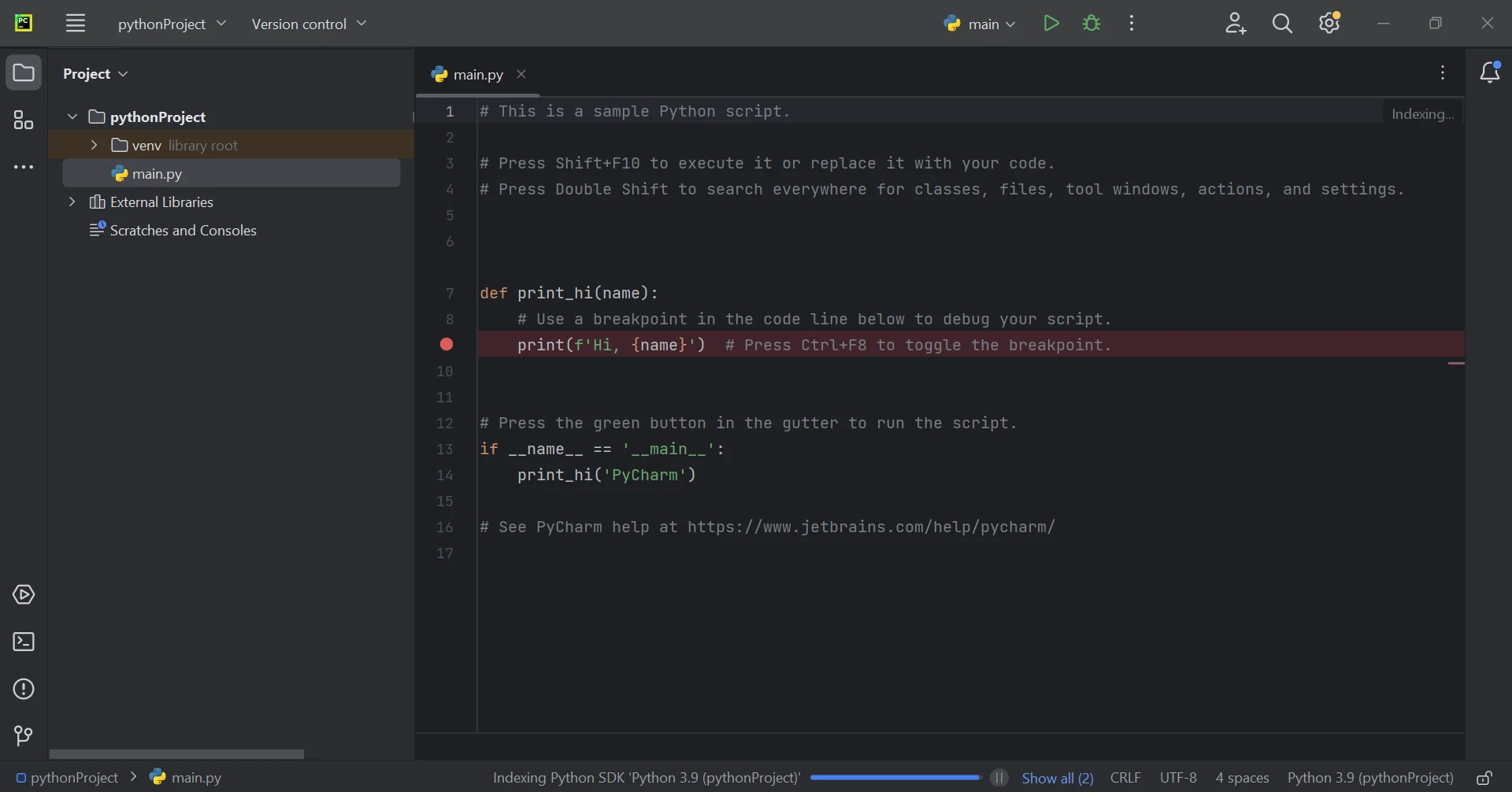
Klicken Sie auf die Schaltfläche "Erstellen", um ein neues Projekt zu starten, nachdem Sie den Projektspeicherort ausgewählt und die Python-Umgebung eingerichtet haben. Nach der Erstellung wird das Projekt in einem neuen Tab geöffnet.
## Voraussetzungen für die Nutzung von IronPDF
Bevor Sie die Codebeispiele überprüfen, stellen Sie bitte sicher, dass die folgenden Voraussetzungen erfüllt sind:
* **Python:** IronPDF benötigt Python Version 3.7 oder höher.
* **.NET 6.0 Runtime:** Die Kernfunktionen von IronPDF basieren auf der .NET 6.0 Runtime-Umgebung. Laden Sie die passende Laufzeitumgebung von der offiziellen .NET-Website herunter und installieren Sie sie entsprechend Ihrem Betriebssystem.
* **Installation der IronPDF -Bibliothek:** Installieren Sie die IronPDF Bibliothek in Ihrer Python-Umgebung mithilfe des Paketmanagers pip. Führen Sie folgenden Befehl in einem geöffneten Terminal oder einer Eingabeaufforderung aus:
```shell
:ProductInstall
```
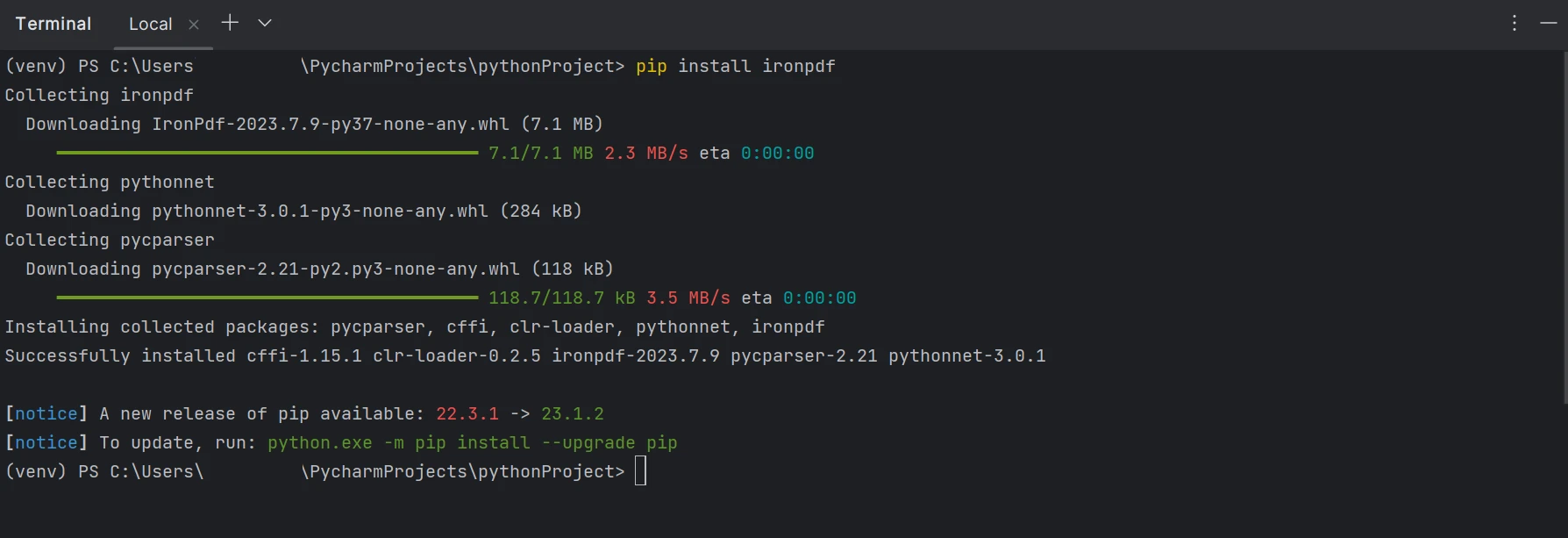
Der folgende Screenshot zeigt, wie das 'IronPDF'-Paket konfiguriert ist.
## Erstellen eines einfachen PDF-Berichts aus einer HTML-Zeichenkette
Beginnen wir mit einem einfachen Beispiel, das zeigt, wie man eine HTML-Zeichenkette in einen PDF-Bericht umwandelt. Hier ist der Python-Code:
```python
from ironpdf import ChromePdfRenderer

# Define the HTML content of your report
html_content = """
<h1>Sales Report - Q1 2024</h1>
<p>This report summarizes sales figures for the first quarter of 2024.</p>
<table>
    <thead>
        <tr>
            <th>Product</th>
            <th>Quantity Sold</th>
            <th>Total Revenue</th>
        </tr>
    </thead>
    <tbody>
        <tr>
            <td>Widget A</td>
            <td>100</td>
            <td>$1000</td>
        </tr>
        <tr>
            <td>Widget B</td>
            <td>75</td>
            <td>$750</td>
        </tr>
    </tbody>
</table>
"""

# Create a ChromePdfRenderer instance
renderer = ChromePdfRenderer()

# Render the HTML string as a PDF document
pdf = renderer.RenderHtmlAsPdf(html_content)

# Save the PDF document with a filename
pdf.saveAs("sales_report.pdf")
print("PDF report generated successfully!")
```
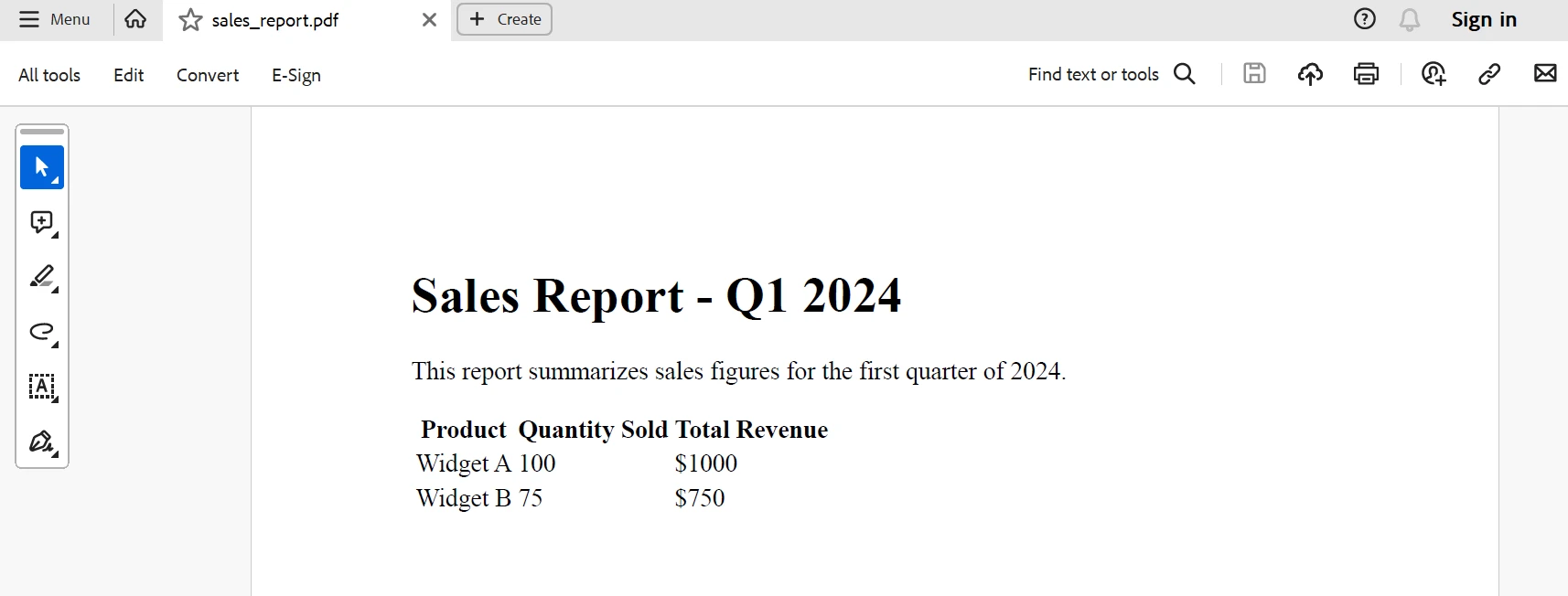
Dieser Code beginnt mit der Definition der HTML-Zeichenkette, die die Struktur und die Daten des Berichts umreißt. Als nächstes wird eine `ChromePdfRenderer` Instanz erstellt, die als Umwandlungsmaschine von HTML zu PDF dient. Die `RenderHtmlAsPdf` Funktion erstellt dann ein PDF-Dokument aus dem HTML-String. Abschließend wird das erstellte PDF mit einem bestimmten Dateinamen unter Verwendung der `saveAs` Funktion gespeichert.
Nachfolgend finden Sie den Ausgabereport, der aus dem obigen Code generiert wurde.
## Erstellen eines PDF-Berichts aus einer HTML-Datei
IronPDF ist eine praktische Option, wenn Sie den Berichtsinhalt lieber in einer separaten HTML-Datei speichern möchten. Hier ist ein Beispiel für ein Python-Skript:
```python
from ironpdf import ChromePdfRenderer
# Define the path to your HTML report file
html_file_path = "report.html"
# Create a ChromePdfRenderer instance
renderer = ChromePdfRenderer()
# Render the HTML file as a PDF document
pdf = renderer.RenderHtmlFileAsPdf(html_file_path)
# Save the PDF document with a filename
pdf.saveAs("report.pdf")
print("PDF report generated from HTML file!")
```
Dieser Code gibt die HTML-Datei an, die das Layout und die Daten für Ihren Bericht enthält. Als nächstes wird die `RenderHtmlFileAsPdf` Funktion aufgerufen, wobei der Dateipfad übergeben wird. Die weiteren Schritte zum Speichern der PDF-Datei sind identisch mit denen im vorherigen Beispiel.
## Erstellen eines PDF-Berichts aus einer URL
Mit IronPDF können Sie PDF-Berichte aus Inhalten von Websites generieren. So gelingt es:
```python
from ironpdf import ChromePdfRenderer
# Define the URL of the web page you want to convert
url = "https://www.example.com/report"
# Create a ChromePdfRenderer instance
renderer = ChromePdfRenderer()
# Render the URL content as a PDF
pdf = renderer.RenderUrlAsPdf(url)
# Save the PDF document with a filename
pdf.saveAs("web_report.pdf")
print("PDF report generated from URL!")
```
Um mehr über den IronPDF-Code zu erfahren, folgen Sie [diesem Link](/python/examples/using-html-to-create-a-pdf/) .
## Abschluss
Für Python-Entwickler, die auf einfache und professionelle Weise PDF-Berichte erstellen möchten, eröffnet IronPDF eine Welt voller Möglichkeiten. Durch die Integration von Python und IronPDF können Entwickler die Leistungsfähigkeit von .NET innerhalb ihrer Python-Umgebung nutzen, was eine nahtlose Integration und robuste PDF-Generierungsfunktionen ermöglicht. Ob Rechnungen, Finanzberichte oder Geschäftseinblicke – IronPDF ermöglicht es Python-Entwicklern, ansprechende PDF-Berichte zu erstellen, die Informationen klar und professionell vermitteln. Dank seiner Leistungsfähigkeit, Vielseitigkeit und Benutzerfreundlichkeit ist IronPDF ein zentrales Werkzeug zur Verbesserung der Dokumentengenerierung in Python-Anwendungen.
Das `$liteLicense` Lite-Paket beinhaltet eine permanente Lizenz, ein Jahr Softwaresupport und bietet Upgrade-Optionen, mit Einschränkungen bei Weiterverbreitung und Zeit. Für weitere Informationen über die Kosten der Testversion und Lizenzierung besuchen Sie die IronPDF [Website](licensing). Erfahren Sie mehr über das Angebot von Iron Software, indem Sie [hier](https://ironsoftware.com/) klicken.
In der heutigen datengetriebenen Welt ist die Erstellung umfassender und visuell ansprechender Berichte für Unternehmen und Organisationen von entscheidender Bedeutung, um Erkenntnisse effektiv zu kommunizieren. Python bietet mit seinen unzähligen Bibliotheken und seiner Flexibilität eine solide Grundlage für die Datenanalyse und -manipulation. Allerdings suchen Entwickler häufig nach leistungsstarken Werkzeugen, um den Prozess der Erstellung professioneller Berichte zu vereinfachen. IronPDF bietet eine Lösung, um die Lücke bei der PDF-Dateierstellung zu schließen. In diesem Beitrag wird erläutert, wie man mit IronPDF und Python PDFs erstellen kann, und es werden Forschungsarbeiten zu dieser Python-Bibliothek vorgestellt.
Wie man mit Python PDF-Berichte erstellt
Erstelle ein neues Python-Projekt.
Laden Sie die IronPDF-Bibliothek herunter und importieren Sie IronPDF.
Erstellen Sie eine Instanz von IronPDF.
Hypertext Markup Language als PDF rendern.
Speichern Sie die PDF-Datei.
Optional können Sie die PDF-Datei im Standard-Viewer öffnen.
IronPDF
Mit IronPDF können Datenwissenschaftler die Berichtserstellung beschleunigen, die traditionell eine zeitaufwändige Aufgabe ist. IronPDF ermöglicht die Umwandlung eines DataFrames in ästhetisch ansprechende PDF-Berichte, sodass Ergebnisse effizient und ohne aufwendige Formatierung kommuniziert werden können.
Dies beschleunigt den Entdeckungsprozess, da sich die Datenwissenschaftler auf die Analyse und Erkundung konzentrieren können. Die Nutzung von IronPDF beseitigt die Notwendigkeit für statische Bilder und manuelle Dateivorbereitung, öffnet die Tür für das Potenzial zur Einbindung interaktiver Grafiken in PDF-Berichte (obgleich IronPDF diese Funktionalität nicht nativ bereitstellt). Dies birgt das Potenzial, die Interaktion der Nutzer mit Berichten und der Datenpräsentation noch weiter zu verbessern.
Das IronPDF-Paket for Python vereinfacht das Erstellen und Bearbeiten von PDF-Berichten in Python-Anwendungen. Es fungiert als Brücke, indem es HTML-Code, Webseiteninhalte (URLs) oder sogar bestehende HTML-Dateien in korrekt formatierte PDF-Dokumente umwandelt. Für zusätzliche Sicherheit können Sie Layouts anpassen, Tabellen und Bilder einfügen und sogar wichtige Berichte mit einem Passwort schützen. Durch die nahtlose Integration in Python-Skripte wird IronPDF zu einem wertvollen Werkzeug für die Erstellung aussagekräftiger und professioneller PDF-Berichte.
Funktionen von IronPDF
PDF-Generierung: Mithilfe von Python-Code ermöglicht IronPDF die dynamische Erstellung von PDF-Dokumenten. Sie können entweder von Grund auf neu beginnen oder bestehende HTML-Informationen, einschließlich Webseiten oder Vorlagen, in das PDF-Format konvertieren.
HTML-zu-PDF-Konvertierung: IronPDF behält das ursprüngliche HTML-Layout, die Stile und Elemente bei der Konvertierung in das PDF-Format bei. Diese Funktionalität ermöglicht die Erstellung von PDF-Rechnungen, Berichten und anderen Dokumenten mithilfe von HTML-Vorlagen.
PDF-Manipulation: IronPDF kann PDF-Dokumente bearbeiten. Es kann mehrere PDFs zu einer einzigen zusammenführen, eine PDF-Datei in verschiedene Dokumente aufteilen, Seiten extrahieren sowie Seiten hinzufügen oder entfernen.
Text- und Bildwiedergabe: Mit IronPDF können Sie Texte und Bilder in PDF-Dokumenten rendern. Dies umfasst das Einbetten von Text mit festgelegten Schriftarten, Größen und Farben sowie das Hinzufügen von Bildern.
Sicherheit und Verschlüsselung: IronPDF bietet Funktionen zum Schutz von PDF-Dokumenten. Durch passwortgeschützte Verschlüsselung kann der Zugriff kontrolliert, das Drucken oder Kopieren eingeschränkt und weitere Sicherheitsoptionen konfiguriert werden.
Beachten Sie, dass sich die Verfügbarkeit und Funktionalität von IronPDF in Python im Laufe der Zeit ändern können. Konsultieren Sie daher die offizielle Dokumentation von IronPDF oder andere Quellen, um die genauesten und aktuellsten Informationen zu erhalten.
Neues Projekt in PyCharm
In dieser Sitzung wird PyCharm verwendet, eine IDE zur Entwicklung von Python-Programmen.
Nach dem Start der PyCharm IDE wählen Sie "Neues Projekt".
Durch Auswahl von "Neues Projekt" können Sie den Standort und die Umgebung des Projekts in einem neuen Fenster anpassen. Der folgende Screenshot zeigt dieses neue Fenster in Aktion.
Klicken Sie auf die Schaltfläche "Erstellen", um ein neues Projekt zu starten, nachdem Sie den Projektspeicherort ausgewählt und die Python-Umgebung eingerichtet haben. Nach der Erstellung wird das Projekt in einem neuen Tab geöffnet.
Voraussetzungen für die Nutzung von IronPDF
Bevor Sie die Codebeispiele überprüfen, stellen Sie bitte sicher, dass die folgenden Voraussetzungen erfüllt sind:
Python: IronPDF benötigt Python Version 3.7 oder höher.
.NET 6.0 Runtime: Die Kernfunktionen von IronPDF basieren auf der .NET 6.0 Runtime-Umgebung. Laden Sie die passende Laufzeitumgebung von der offiziellen .NET-Website herunter und installieren Sie sie entsprechend Ihrem Betriebssystem.
Installation der IronPDF -Bibliothek: Installieren Sie die IronPDF Bibliothek in Ihrer Python-Umgebung mithilfe des Paketmanagers pip. Führen Sie folgenden Befehl in einem geöffneten Terminal oder einer Eingabeaufforderung aus:
> pip install ironpdf
pip install ironpdf
Der folgende Screenshot zeigt, wie das 'IronPDF'-Paket konfiguriert ist.
Erstellen eines einfachen PDF-Berichts aus einer HTML-Zeichenkette
Beginnen wir mit einem einfachen Beispiel, das zeigt, wie man eine HTML-Zeichenkette in einen PDF-Bericht umwandelt. Hier ist der Python-Code:
from ironpdf importChromePdfRenderer# Define the HTML content of your reporthtml_content = """<h1>Sales Report - Q1 2024</h1><p>This report summarizes sales figures for the first quarter of 2024.</p><table> <thead> <tr> <th>Product</th> <th>Quantity Sold</th> <th>Total Revenue</th> </tr> </thead> <tbody> <tr> <td>Widget A</td> <td>100</td> <td>$1000</td> </tr> <tr> <td>Widget B</td> <td>75</td> <td>$750</td> </tr> </tbody></table>"""# Create a ChromePdfRenderer instancerenderer = ChromePdfRenderer()# Render the HTML string as a PDF documentpdf = renderer.RenderHtmlAsPdf(html_content)# Save the PDF document with a filenamepdf.saveAs("sales_report.pdf")print("PDF report generated successfully!")
from ironpdf import ChromePdfRenderer

# Define the HTML content of your report
html_content = """
<h1>Sales Report - Q1 2024</h1>
<p>This report summarizes sales figures for the first quarter of 2024.</p>
<table>
    <thead>
        <tr>
            <th>Product</th>
            <th>Quantity Sold</th>
            <th>Total Revenue</th>
        </tr>
    </thead>
    <tbody>
        <tr>
            <td>Widget A</td>
            <td>100</td>
            <td>$1000</td>
        </tr>
        <tr>
            <td>Widget B</td>
            <td>75</td>
            <td>$750</td>
        </tr>
    </tbody>
</table>
"""

# Create a ChromePdfRenderer instance
renderer = ChromePdfRenderer()

# Render the HTML string as a PDF document
pdf = renderer.RenderHtmlAsPdf(html_content)

# Save the PDF document with a filename
pdf.saveAs("sales_report.pdf")
print("PDF report generated successfully!")
Python
Dieser Code beginnt mit der Definition der HTML-Zeichenkette, die die Struktur und die Daten des Berichts umreißt. Als nächstes wird eine ChromePdfRenderer Instanz erstellt, die als Umwandlungsmaschine von HTML zu PDF dient. Die RenderHtmlAsPdf Funktion erstellt dann ein PDF-Dokument aus dem HTML-String. Abschließend wird das erstellte PDF mit einem bestimmten Dateinamen unter Verwendung der saveAs Funktion gespeichert.
Nachfolgend finden Sie den Ausgabereport, der aus dem obigen Code generiert wurde.
Erstellen eines PDF-Berichts aus einer HTML-Datei
IronPDF ist eine praktische Option, wenn Sie den Berichtsinhalt lieber in einer separaten HTML-Datei speichern möchten. Hier ist ein Beispiel für ein Python-Skript:
from ironpdf importChromePdfRenderer# Define the path to your HTML report filehtml_file_path = "report.html"# Create a ChromePdfRenderer instancerenderer = ChromePdfRenderer()# Render the HTML file as a PDF documentpdf = renderer.RenderHtmlFileAsPdf(html_file_path)# Save the PDF document with a filenamepdf.saveAs("report.pdf")print("PDF report generated from HTML file!")
from ironpdf import ChromePdfRenderer

# Define the path to your HTML report file
html_file_path = "report.html"

# Create a ChromePdfRenderer instance
renderer = ChromePdfRenderer()

# Render the HTML file as a PDF document
pdf = renderer.RenderHtmlFileAsPdf(html_file_path)

# Save the PDF document with a filename
pdf.saveAs("report.pdf")
print("PDF report generated from HTML file!")
Python
Dieser Code gibt die HTML-Datei an, die das Layout und die Daten für Ihren Bericht enthält. Als nächstes wird die RenderHtmlFileAsPdf Funktion aufgerufen, wobei der Dateipfad übergeben wird. Die weiteren Schritte zum Speichern der PDF-Datei sind identisch mit denen im vorherigen Beispiel.
Erstellen eines PDF-Berichts aus einer URL
Mit IronPDF können Sie PDF-Berichte aus Inhalten von Websites generieren. So gelingt es:
from ironpdf importChromePdfRenderer# Define the URL of the web page you want to converturl = "https://www.example.com/report"# Create a ChromePdfRenderer instancerenderer = ChromePdfRenderer()# Render the URL content as a PDFpdf = renderer.RenderUrlAsPdf(url)# Save the PDF document with a filenamepdf.saveAs("web_report.pdf")print("PDF report generated from URL!")
from ironpdf import ChromePdfRenderer

# Define the URL of the web page you want to convert
url = "https://www.example.com/report"

# Create a ChromePdfRenderer instance
renderer = ChromePdfRenderer()

# Render the URL content as a PDF
pdf = renderer.RenderUrlAsPdf(url)

# Save the PDF document with a filename
pdf.saveAs("web_report.pdf")
print("PDF report generated from URL!")
Python
Um mehr über den IronPDF-Code zu erfahren, folgen Sie diesem Link .
Abschluss
Für Python-Entwickler, die auf einfache und professionelle Weise PDF-Berichte erstellen möchten, eröffnet IronPDF eine Welt voller Möglichkeiten. Durch die Integration von Python und IronPDF können Entwickler die Leistungsfähigkeit von .NET innerhalb ihrer Python-Umgebung nutzen, was eine nahtlose Integration und robuste PDF-Generierungsfunktionen ermöglicht. Ob Rechnungen, Finanzberichte oder Geschäftseinblicke – IronPDF ermöglicht es Python-Entwicklern, ansprechende PDF-Berichte zu erstellen, die Informationen klar und professionell vermitteln. Dank seiner Leistungsfähigkeit, Vielseitigkeit und Benutzerfreundlichkeit ist IronPDF ein zentrales Werkzeug zur Verbesserung der Dokumentengenerierung in Python-Anwendungen.
Das $999 Lite-Paket beinhaltet eine permanente Lizenz, ein Jahr Softwaresupport und bietet Upgrade-Optionen, mit Einschränkungen bei Weiterverbreitung und Zeit. Für weitere Informationen über die Kosten der Testversion und Lizenzierung besuchen Sie die IronPDF Website. Erfahren Sie mehr über das Angebot von Iron Software, indem Sie hier klicken.
Curtis Chau hat einen Bachelor-Abschluss in Informatik von der Carleton University und ist spezialisiert auf Frontend-Entwicklung mit Expertise in Node.js, TypeScript, JavaScript und React. Leidenschaftlich widmet er sich der Erstellung intuitiver und ästhetisch ansprechender Benutzerschnittstellen und arbeitet gerne mit modernen Frameworks sowie der Erstellung gut strukturierter, optisch ansprechender Handbücher.