En el vasto panorama de la computación en la nube, el almacenamiento de datos juega un papel fundamental en la configuración de la arquitectura y la escalabilidad de las aplicaciones modernas. Azure Table Storage, un almacén de datos NoSQL completamente administrado proporcionado por Microsoft Azure, ofrece a los desarrolladores una solución versátil para almacenar datos estructurados en la nube. Emprendamos un viaje para explorar las capacidades, casos de uso y beneficios de Azure Table Storage.
Comprensión de Azure Table Storage
Azure Table Storage es un servicio de base de datos NoSQL basado en la nube que proporciona almacenamiento sin esquema de datos estructurados. Las tablas de Azure ofrecen un modelo de datos basado en pares clave-valor, donde cada entidad está identificada de manera única por una clave de partición y una clave de fila. Este diseño permite la consulta y recuperación eficiente de datos, lo que lo hace ideal para escenarios que requieren acceso rápido a grandes conjuntos de datos.
Si estás tratando de decidir entre Azure Table Storage o una base de datos relacional para gestionar tus datos estructurados, la capacidad de Azure Table Storage para manejar grandes conjuntos de datos e integrarse con el ecosistema Azure hace que Azure Table Storage sea útil para tener en tu caja de herramientas de desarrollador.
Características principales y capacidades
-
Diseño sin esquema: A diferencia de las bases de datos relacionales tradicionales, Azure Table Storage no impone un esquema en los datos. Esta flexibilidad permite a los desarrolladores almacenar entidades con estructuras variables dentro de la misma tabla, facilitando un desarrollo ágil y acomodando requisitos de datos en evolución.
-
Escalabilidad y rendimiento: Azure Table Storage está diseñado para escalar, capaz de manejar grandes cantidades de datos con facilidad. Se escala automáticamente para acomodar cargas de trabajo crecientes y proporciona un rendimiento predecible, lo que lo hace adecuado para aplicaciones de alto rendimiento y escenarios que requieren acceso a datos de baja latencia.
-
Particionamiento y balanceo de carga: Los datos en Azure Table Storage se particionan según la clave de partición, lo que permite una distribución eficiente de datos a través de múltiples nodos de almacenamiento. Esta estrategia de particionamiento permite la escalabilidad horizontal y el balanceo de carga, asegurando un rendimiento óptimo y una utilización de recursos eficiente.
-
Índices secundarios: Aunque Azure Table Storage utiliza principalmente la clave de partición y la clave de fila para la recuperación de datos, también soporta índices secundarios mediante el uso de claves compuestas y proyecciones de consultas. Esta característica permite a los desarrolladores realizar consultas de rango eficientes y filtrar datos basándose en atributos secundarios, mejorando la flexibilidad de los patrones de acceso a datos.
-
Integración con el ecosistema Azure: Azure Table Storage se integra sin problemas con otros servicios de Azure, como Azure Functions, Azure Cosmos DB y Azure Logic Apps, lo que permite a los desarrolladores construir soluciones de extremo a extremo con facilidad. Ya sea procesando flujos de datos con funciones sin servidor o analizando datos con herramientas de análisis avanzadas, Azure Table Storage sirve como un componente fundamental para construir aplicaciones escalables y resilientes.
Casos prácticos
Azure Table Storage atiende a una amplia gama de casos de uso en diversas industrias, incluyendo:
-
Internet de las cosas (IoT): Azure Table Storage es adecuado para almacenar datos de telemetría de dispositivos IoT, permitiendo la ingestión, análisis y visualización de datos en tiempo real. Su escalabilidad y rendimiento lo hacen ideal para manejar los volúmenes masivos de datos generados por implementaciones de IoT.
-
Gestión de contenido: Para aplicaciones que requieren almacenamiento estructurado de metadatos de contenido, como blogs, artículos y contenido generado por usuarios, Azure Table Storage proporciona una solución rentable y escalable. Su diseño sin esquema permite una evolución flexible del esquema, acomodando cambios en la estructura del contenido a lo largo del tiempo.
-
Gestión del estado de la sesión: Azure Table Storage se puede utilizar para almacenar datos de estado de sesión para aplicaciones web, proporcionando una solución de gestión de sesiones distribuida y escalable. Al descargar el estado de la sesión a Azure Table Storage, los desarrolladores pueden lograr una mejor escalabilidad, tolerancia a fallos y afinidad de sesión en entornos balanceados.
-
Sistemas distribuidos: En arquitecturas de sistemas distribuidos, Azure Table Storage sirve como un almacén de datos fundamental para mantener el estado compartido y la coordinación entre componentes. Sus características de particionamiento y escalabilidad lo hacen adecuado para escenarios que requieren almacenamiento en caché distribuido, gestión de configuraciones y coordinación entre microservicios.
Introducción a IronPDF
IronPDF es una biblioteca PDF de C# que permite generar, gestionar y extraer contenido de documentos PDF en proyectos .NET. Aquí algunas características clave:
-
Conversión de HTML a PDF:
- Convertir contenido HTML, CSS y JavaScript a documentos PDF.
- Motor de renderizado de Chrome para PDFs de calidad pixel-perfect.
- Generar PDFs desde URLs, archivos HTML o cadenas HTML como entrada.
-
Conversión de imágenes y contenidos:
- Convertir imágenes a y desde PDFs.
- Extraer texto e imágenes de documentos PDF existentes.
- Soporte para varios formatos de imagen como JPG, PNG, etc.
-
Edición y manipulación:
- Establecer propiedades, seguridad y permisos para PDFs.
- Añadir firmas digitales.
- Editar metadatos y el historial de revisiones.
-
Compatibilidad multiplataforma:
- Funciona con .NET Core (8, 7, 6, 5 y 3.1+), .NET Standard (2.0+) y .NET Framework (4.6.2+).
- Compatible con Windows, Linux y macOS.
- Disponible en NuGet para una fácil instalación.
Generar un documento PDF con IronPDF y Azure Tables
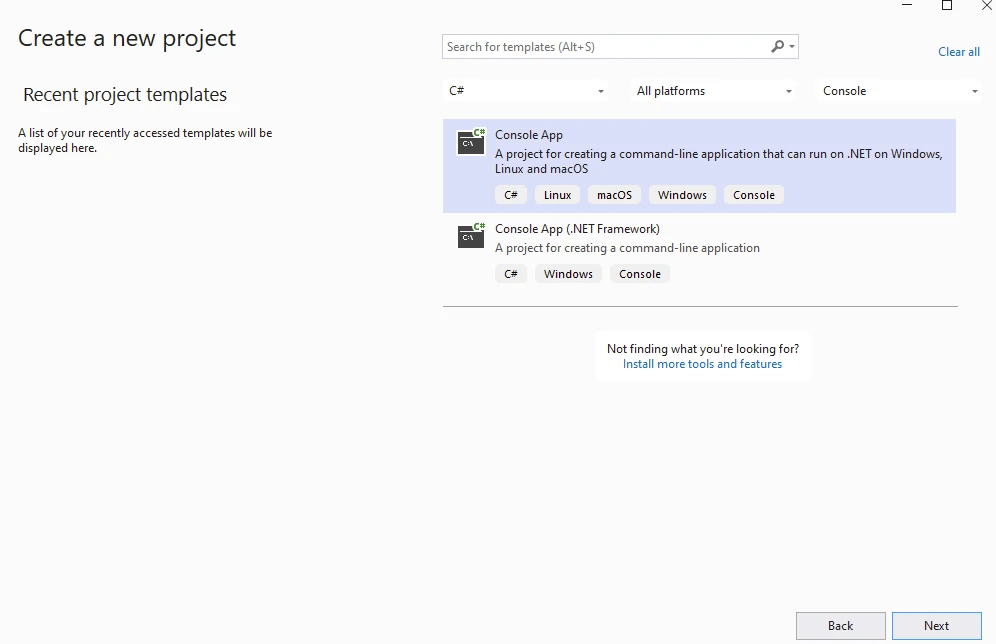
Para comenzar, crea una aplicación de consola usando Visual Studio como se muestra a continuación:
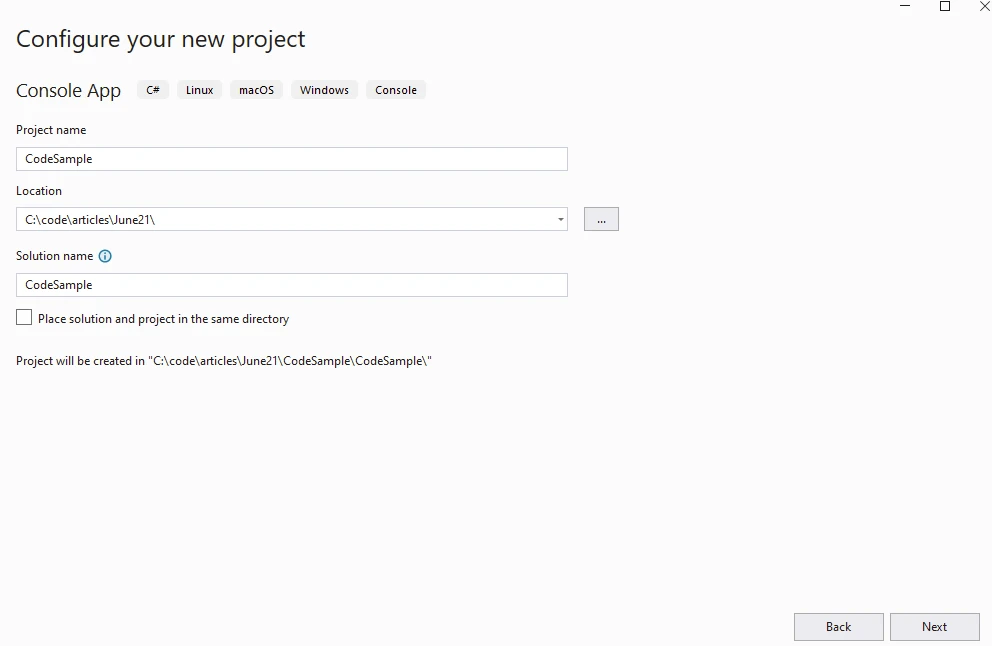
Nombre del proyecto:
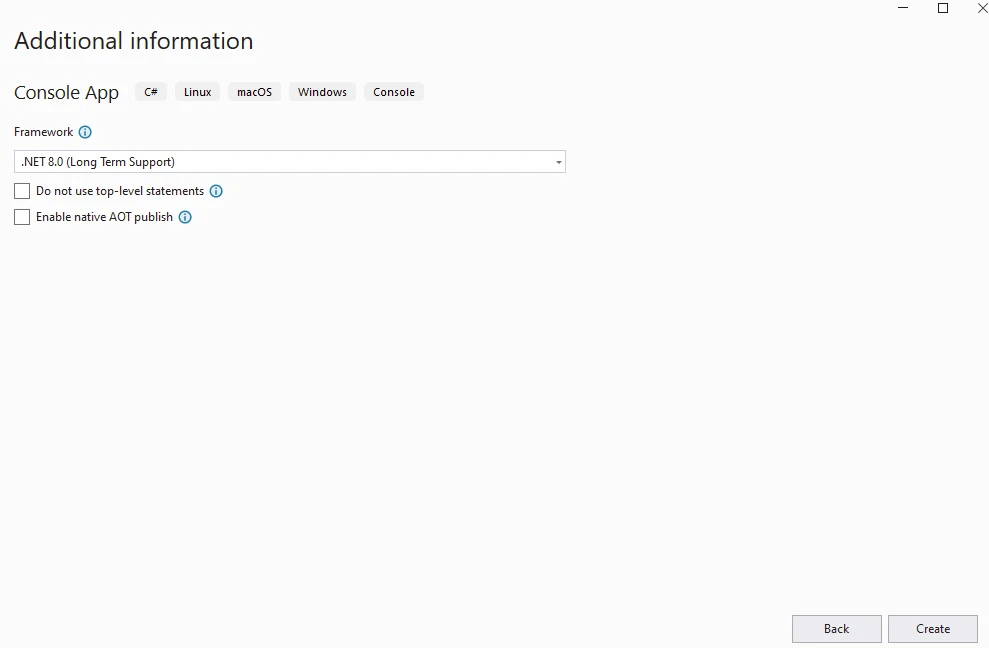
Proporciona la versión .NET:
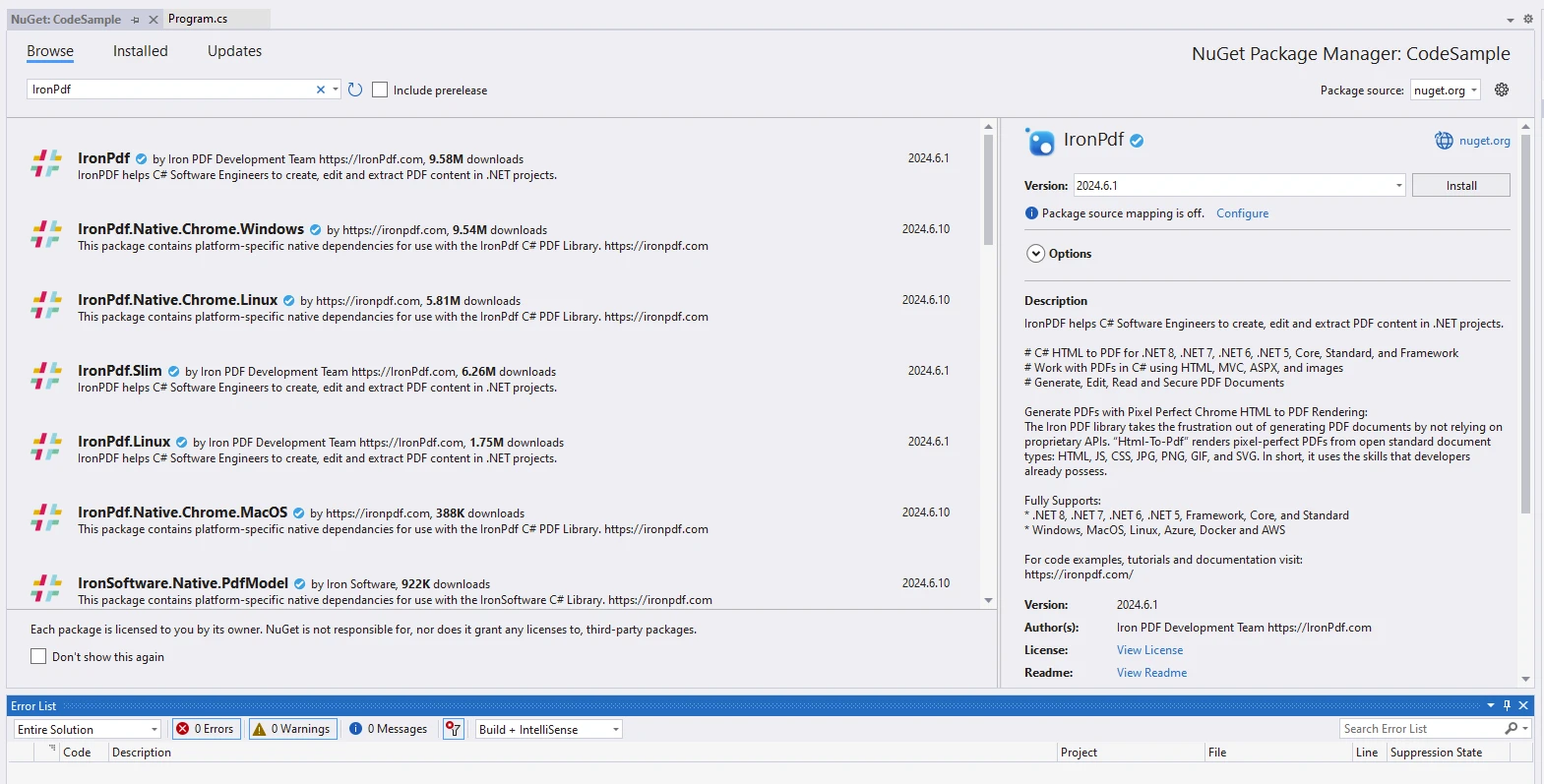
Instala el paquete IronPDF desde el Administrador de Paquetes NuGet:
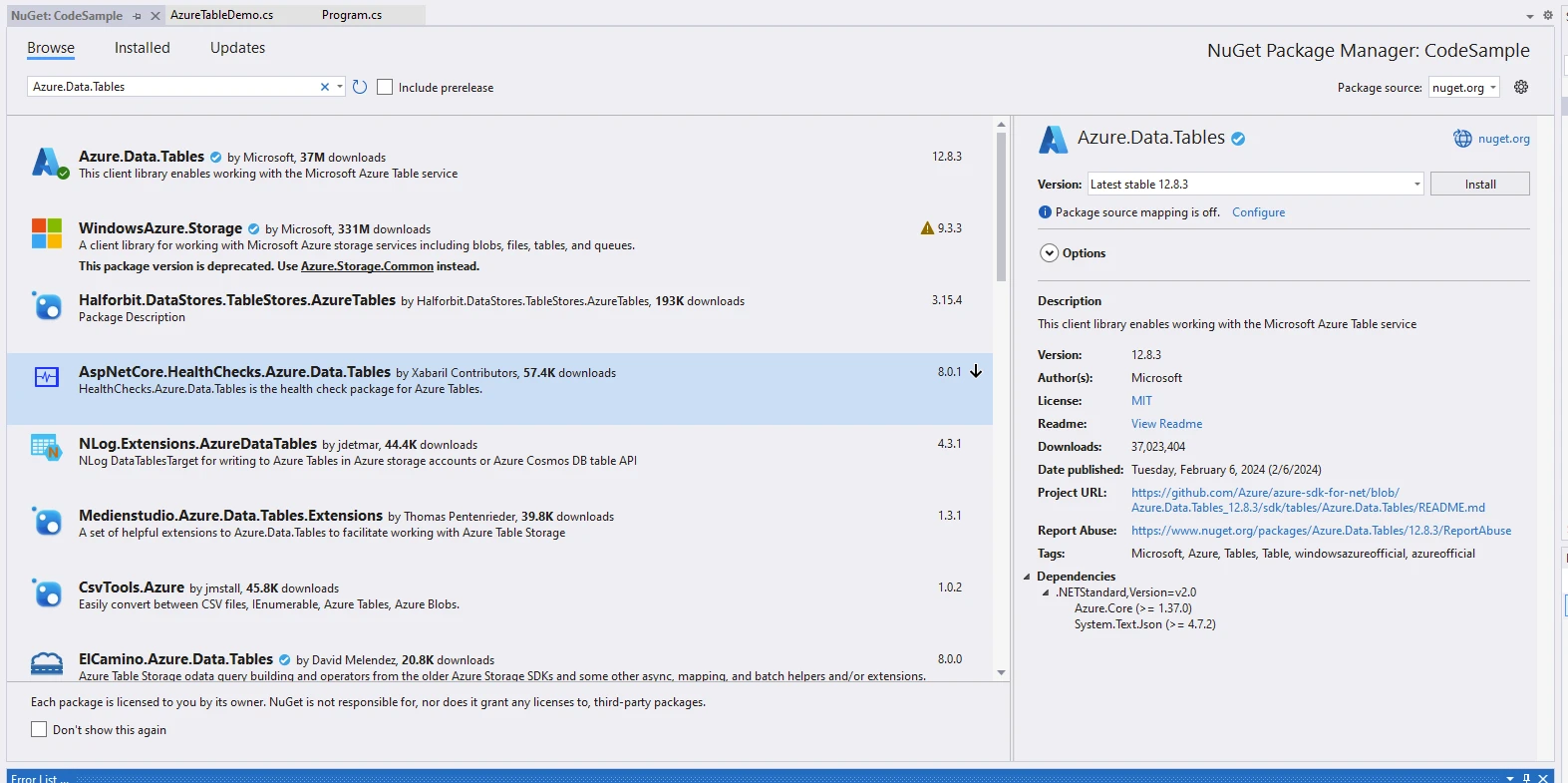
Para acceder a la biblioteca Azure Tables, utilizaremos la biblioteca cliente Azure Tables llamada Azure.Data.Tables, que se puede encontrar en el Administrador de Paquetes NuGet. El cliente del Servicio de Tabla de Azure proporciona funcionalidades para interactuar con Azure Table Storage.
Crea una cuenta de almacenamiento de Azure para comenzar con Azure Tables:
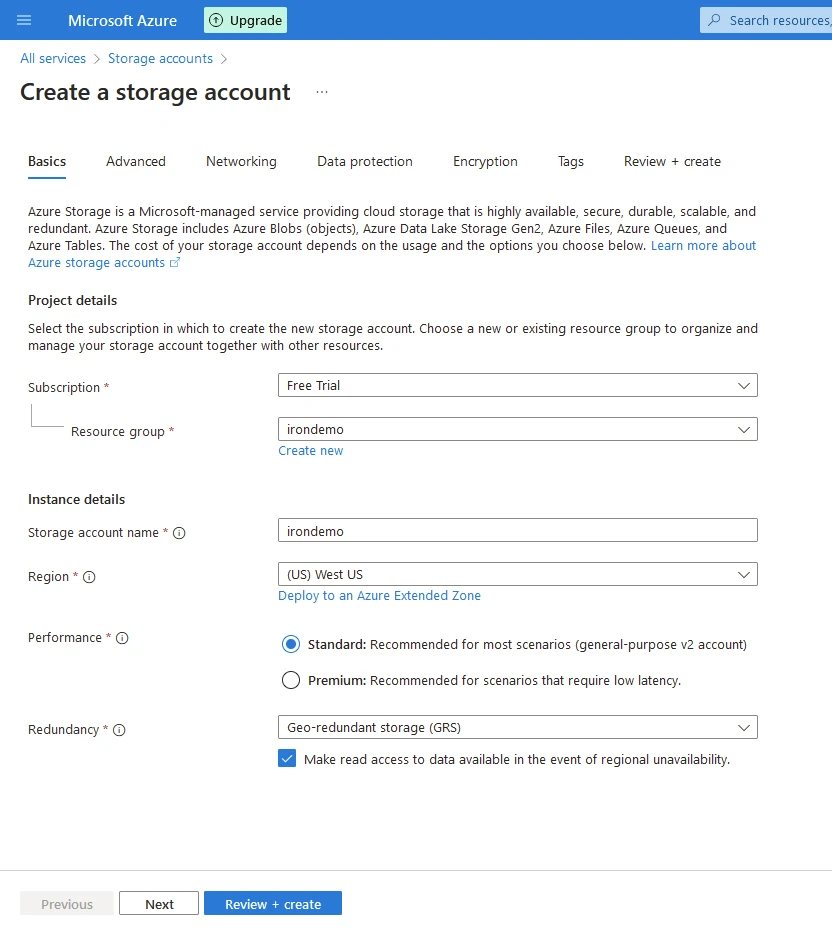
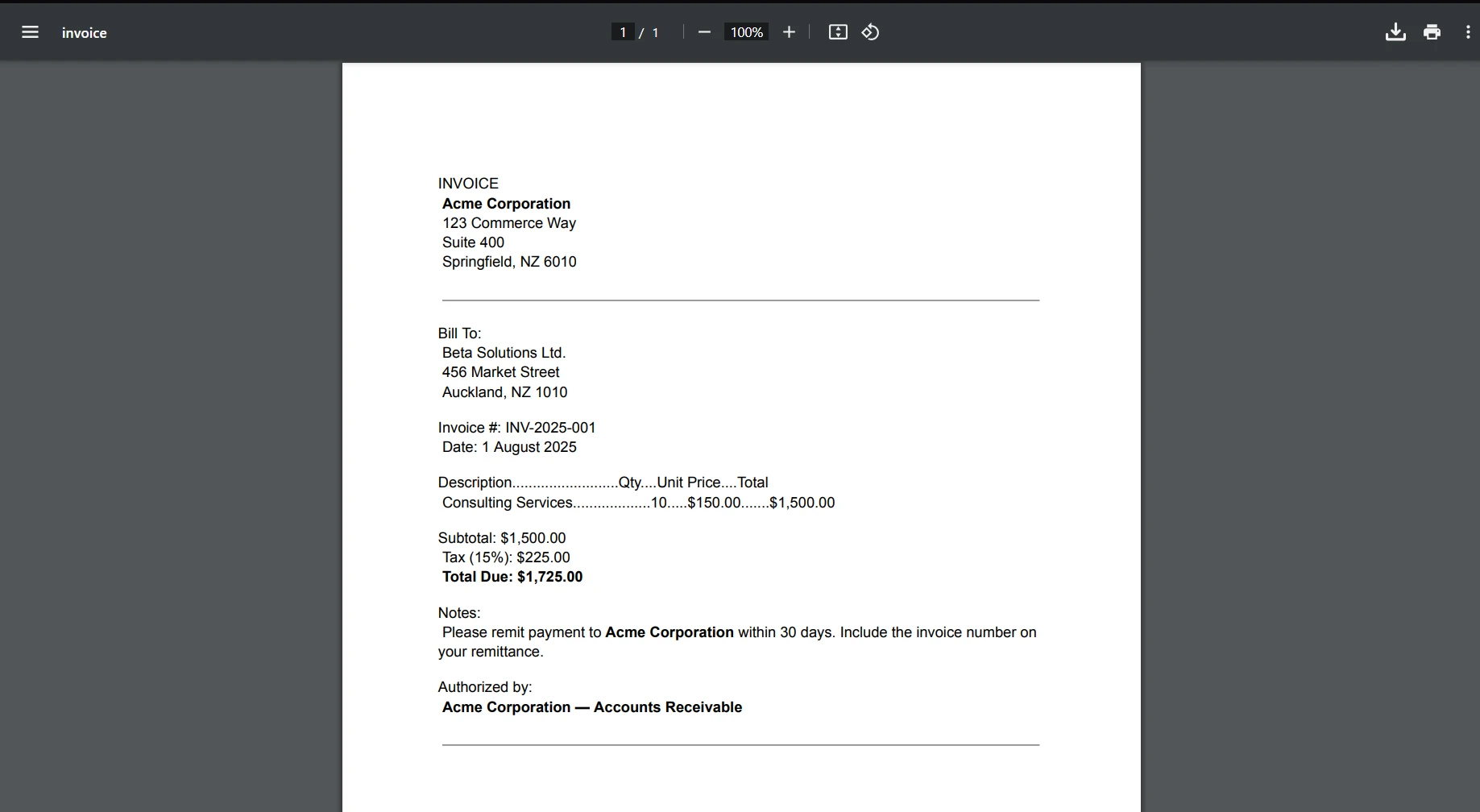
Haz clic en revisar y crear. Ingresa el código a continuación en tu programa para usar Azure Tables para generar un documento PDF.
using Azure;
using Azure.Data.Tables;
using Azure.Data.Tables.Models;
using IronPdf;
using System;
using System.Linq;
using System.Threading.Tasks;

namespace CodeSample
{
    public static class AzureTableDemo
    {
        public static async Task Execute()
        {
            var tableName = "IronDemo";
            var connectionString = "DefaultEndpointsProtocol=https;AccountName=irondemo;AccountKey=9Pe6LJlkjA721VgWvSuRCMk+WJR5/kFoyPtR1ewjRsNbGJNJOmWYhCB32fakANmWeAcfyIg++iHl+AStDNYlGw==;EndpointSuffix=core.windows.net";
            Console.WriteLine("Demo IronPDF with Azure.Data.Tables");

            // Enable web security for PDF rendering
            Installation.EnableWebSecurity = true;

            // Instantiate PDF renderer
            var renderer = new ChromePdfRenderer();

            // HTML content for the PDF
            var content = "<h1>Demo IronPDF with Azure.Data.Tables</h1>";

            // Create a TableServiceClient using the connection string
            content += "<h2>Create TableServiceClient</h2>";
            var serviceClient = new TableServiceClient(connectionString);
            content += "<p>var serviceClient = new TableServiceClient(connectionString);</p>";

            // Create the table if it does not exist
            content += "<h2>Create Table</h2>";
            TableItem table = await serviceClient.CreateTableIfNotExistsAsync(tableName);
            Console.WriteLine($"Created table: {table.Name}.");
            content += $"<p>Created table: {table.Name}.</p>";

            // Placeholder for delete table logic
            content += "<h2>Deletes If Required</h2>";
            // serviceClient.DeleteTable(tableName);
            content += "<p>serviceClient.DeleteTable(tableName);</p>";

            // Get a client reference to interact with the table
            content += "<h2>Get Table Client</h2>";
            var tableClient = serviceClient.GetTableClient(tableName);
            content += "<p>var tableClient = serviceClient.GetTableClient(tableName);</p>";

            // Define and add a new entity to the table
            content += "<h2>Add Table Entity</h2>";
            var tableEntity = new TableEntity { { "Book", "Awesome IronPDF Package" }, { "Price", 5.00 }, { "Quantity", 21 } };
            tableEntity.PartitionKey = tableEntity["Book"].ToString();
            tableEntity.RowKey = tableEntity["Price"].ToString();
            content += "<p>new TableEntity() { { \"Book\", \"Awesome IronPDF Package\" }, { \"Price\", 5.00 }, { \"Quantity\", 21 } }</p>";

            content += $"<p>tableEntity.PartitionKey = {tableEntity["Book"]}</p>";
            content += $"<p>tableEntity.RowKey = {tableEntity["Price"]}</p>";

            Console.WriteLine($"{tableEntity.RowKey}: {tableEntity["Book"]} costs ${tableEntity.GetDouble("Price")}.");
            content += $"<p>{tableEntity.RowKey}: {tableEntity["Book"]} costs ${tableEntity.GetDouble("Price")}</p>";

            // Add the entity to the table
            tableClient.AddEntity(tableEntity);
            content += "<p>Entity added.</p>";

            // Query the table
            content += "<h2>Query Table</h2>";
            Pageable<TableEntity> queryResultsFilter = tableClient.Query<TableEntity>(filter: $"PartitionKey eq '{tableEntity.PartitionKey}'");
            content += "<p>Using tableClient.Query<TableEntity></p>";

            // Iterate and display queried entities
            foreach (TableEntity qEntity in queryResultsFilter)
            {
                content += $"<p>{qEntity.GetString("Book")}: {qEntity.GetDouble("Price")}</p>";
                Console.WriteLine($"{qEntity.GetString("Book")}: {qEntity.GetDouble("Price")}");
            }
            Console.WriteLine($"The query returned {queryResultsFilter.Count()} entities.");
            content += $"<p>The query returned {queryResultsFilter.Count()} entities.</p>";

            // Render HTML content as PDF
            var pdf = renderer.RenderHtmlAsPdf(content);

            // Save the PDF to a file
            pdf.SaveAs("AwesomeAzureDataTables.pdf");
        }
    }
}
using Azure;
using Azure.Data.Tables;
using Azure.Data.Tables.Models;
using IronPdf;
using System;
using System.Linq;
using System.Threading.Tasks;

namespace CodeSample
{
    public static class AzureTableDemo
    {
        public static async Task Execute()
        {
            var tableName = "IronDemo";
            var connectionString = "DefaultEndpointsProtocol=https;AccountName=irondemo;AccountKey=9Pe6LJlkjA721VgWvSuRCMk+WJR5/kFoyPtR1ewjRsNbGJNJOmWYhCB32fakANmWeAcfyIg++iHl+AStDNYlGw==;EndpointSuffix=core.windows.net";
            Console.WriteLine("Demo IronPDF with Azure.Data.Tables");

            // Enable web security for PDF rendering
            Installation.EnableWebSecurity = true;

            // Instantiate PDF renderer
            var renderer = new ChromePdfRenderer();

            // HTML content for the PDF
            var content = "<h1>Demo IronPDF with Azure.Data.Tables</h1>";

            // Create a TableServiceClient using the connection string
            content += "<h2>Create TableServiceClient</h2>";
            var serviceClient = new TableServiceClient(connectionString);
            content += "<p>var serviceClient = new TableServiceClient(connectionString);</p>";

            // Create the table if it does not exist
            content += "<h2>Create Table</h2>";
            TableItem table = await serviceClient.CreateTableIfNotExistsAsync(tableName);
            Console.WriteLine($"Created table: {table.Name}.");
            content += $"<p>Created table: {table.Name}.</p>";

            // Placeholder for delete table logic
            content += "<h2>Deletes If Required</h2>";
            // serviceClient.DeleteTable(tableName);
            content += "<p>serviceClient.DeleteTable(tableName);</p>";

            // Get a client reference to interact with the table
            content += "<h2>Get Table Client</h2>";
            var tableClient = serviceClient.GetTableClient(tableName);
            content += "<p>var tableClient = serviceClient.GetTableClient(tableName);</p>";

            // Define and add a new entity to the table
            content += "<h2>Add Table Entity</h2>";
            var tableEntity = new TableEntity { { "Book", "Awesome IronPDF Package" }, { "Price", 5.00 }, { "Quantity", 21 } };
            tableEntity.PartitionKey = tableEntity["Book"].ToString();
            tableEntity.RowKey = tableEntity["Price"].ToString();
            content += "<p>new TableEntity() { { \"Book\", \"Awesome IronPDF Package\" }, { \"Price\", 5.00 }, { \"Quantity\", 21 } }</p>";

            content += $"<p>tableEntity.PartitionKey = {tableEntity["Book"]}</p>";
            content += $"<p>tableEntity.RowKey = {tableEntity["Price"]}</p>";

            Console.WriteLine($"{tableEntity.RowKey}: {tableEntity["Book"]} costs ${tableEntity.GetDouble("Price")}.");
            content += $"<p>{tableEntity.RowKey}: {tableEntity["Book"]} costs ${tableEntity.GetDouble("Price")}</p>";

            // Add the entity to the table
            tableClient.AddEntity(tableEntity);
            content += "<p>Entity added.</p>";

            // Query the table
            content += "<h2>Query Table</h2>";
            Pageable<TableEntity> queryResultsFilter = tableClient.Query<TableEntity>(filter: $"PartitionKey eq '{tableEntity.PartitionKey}'");
            content += "<p>Using tableClient.Query<TableEntity></p>";

            // Iterate and display queried entities
            foreach (TableEntity qEntity in queryResultsFilter)
            {
                content += $"<p>{qEntity.GetString("Book")}: {qEntity.GetDouble("Price")}</p>";
                Console.WriteLine($"{qEntity.GetString("Book")}: {qEntity.GetDouble("Price")}");
            }
            Console.WriteLine($"The query returned {queryResultsFilter.Count()} entities.");
            content += $"<p>The query returned {queryResultsFilter.Count()} entities.</p>";

            // Render HTML content as PDF
            var pdf = renderer.RenderHtmlAsPdf(content);

            // Save the PDF to a file
            pdf.SaveAs("AwesomeAzureDataTables.pdf");
        }
    }
}
Imports Azure
Imports Azure.Data.Tables
Imports Azure.Data.Tables.Models
Imports IronPdf
Imports System
Imports System.Linq
Imports System.Threading.Tasks
Namespace CodeSample
Public Module AzureTableDemo
Public Async Function Execute() As Task
Dim tableName = "IronDemo"
Dim connectionString = "DefaultEndpointsProtocol=https;AccountName=irondemo;AccountKey=9Pe6LJlkjA721VgWvSuRCMk+WJR5/kFoyPtR1ewjRsNbGJNJOmWYhCB32fakANmWeAcfyIg++iHl+AStDNYlGw==;EndpointSuffix=core.windows.net"
Console.WriteLine("Demo IronPDF with Azure.Data.Tables")
' Enable web security for PDF rendering
Installation.EnableWebSecurity = True
' Instantiate PDF renderer
Dim renderer = New ChromePdfRenderer()
' HTML content for the PDF
Dim content = "<h1>Demo IronPDF with Azure.Data.Tables</h1>"
' Create a TableServiceClient using the connection string
content &= "<h2>Create TableServiceClient</h2>"
Dim serviceClient = New TableServiceClient(connectionString)
content &= "<p>var serviceClient = new TableServiceClient(connectionString);</p>"
' Create the table if it does not exist
content &= "<h2>Create Table</h2>"
Dim table As TableItem = Await serviceClient.CreateTableIfNotExistsAsync(tableName)
Console.WriteLine($"Created table: {table.Name}.")
content &= $"<p>Created table: {table.Name}.</p>"
' Placeholder for delete table logic
content &= "<h2>Deletes If Required</h2>"
' serviceClient.DeleteTable(tableName);
content &= "<p>serviceClient.DeleteTable(tableName);</p>"
' Get a client reference to interact with the table
content &= "<h2>Get Table Client</h2>"
Dim tableClient = serviceClient.GetTableClient(tableName)
content &= "<p>var tableClient = serviceClient.GetTableClient(tableName);</p>"
' Define and add a new entity to the table
content &= "<h2>Add Table Entity</h2>"
Dim tableEntity As New TableEntity From {
{ "Book", "Awesome IronPDF Package" },
{ "Price", 5.00 },
{ "Quantity", 21 }
}
tableEntity.PartitionKey = tableEntity("Book").ToString()
tableEntity.RowKey = tableEntity("Price").ToString()
content &= "<p>new TableEntity() { { ""Book"", ""Awesome IronPDF Package"" }, { ""Price"", 5.00 }, { ""Quantity"", 21 } }</p>"
content &= $"<p>tableEntity.PartitionKey = {tableEntity("Book")}</p>"
content &= $"<p>tableEntity.RowKey = {tableEntity("Price")}</p>"
Console.WriteLine($"{tableEntity.RowKey}: {tableEntity("Book")} costs ${tableEntity.GetDouble("Price")}.")
content &= $"<p>{tableEntity.RowKey}: {tableEntity("Book")} costs ${tableEntity.GetDouble("Price")}</p>"
' Add the entity to the table
tableClient.AddEntity(tableEntity)
content &= "<p>Entity added.</p>"
' Query the table
content &= "<h2>Query Table</h2>"
Dim queryResultsFilter As Pageable(Of TableEntity) = tableClient.Query(Of TableEntity)(filter:= $"PartitionKey eq '{tableEntity.PartitionKey}'")
content &= "<p>Using tableClient.Query<TableEntity></p>"
' Iterate and display queried entities
For Each qEntity As TableEntity In queryResultsFilter
content &= $"<p>{qEntity.GetString("Book")}: {qEntity.GetDouble("Price")}</p>"
Console.WriteLine($"{qEntity.GetString("Book")}: {qEntity.GetDouble("Price")}")
Next qEntity
Console.WriteLine($"The query returned {queryResultsFilter.Count()} entities.")
content &= $"<p>The query returned {queryResultsFilter.Count()} entities.</p>"
' Render HTML content as PDF
Dim pdf = renderer.RenderHtmlAsPdf(content)
' Save the PDF to a file
pdf.SaveAs("AwesomeAzureDataTables.pdf")
End Function
End Module
End Namespace
Imports Azure
Imports Azure.Data.Tables
Imports Azure.Data.Tables.Models
Imports IronPdf
Imports System
Imports System.Linq
Imports System.Threading.Tasks

Namespace CodeSample
	Public Module AzureTableDemo
		Public Async Function Execute() As Task
			Dim tableName = "IronDemo"
			Dim connectionString = "DefaultEndpointsProtocol=https;AccountName=irondemo;AccountKey=9Pe6LJlkjA721VgWvSuRCMk+WJR5/kFoyPtR1ewjRsNbGJNJOmWYhCB32fakANmWeAcfyIg++iHl+AStDNYlGw==;EndpointSuffix=core.windows.net"
			Console.WriteLine("Demo IronPDF with Azure.Data.Tables")

			' Enable web security for PDF rendering
			Installation.EnableWebSecurity = True

			' Instantiate PDF renderer
			Dim renderer = New ChromePdfRenderer()

			' HTML content for the PDF
			Dim content = "<h1>Demo IronPDF with Azure.Data.Tables</h1>"

			' Create a TableServiceClient using the connection string
			content &= "<h2>Create TableServiceClient</h2>"
			Dim serviceClient = New TableServiceClient(connectionString)
			content &= "<p>var serviceClient = new TableServiceClient(connectionString);</p>"

			' Create the table if it does not exist
			content &= "<h2>Create Table</h2>"
			Dim table As TableItem = Await serviceClient.CreateTableIfNotExistsAsync(tableName)
			Console.WriteLine($"Created table: {table.Name}.")
			content &= $"<p>Created table: {table.Name}.</p>"

			' Placeholder for delete table logic
			content &= "<h2>Deletes If Required</h2>"
			' serviceClient.DeleteTable(tableName);
			content &= "<p>serviceClient.DeleteTable(tableName);</p>"

			' Get a client reference to interact with the table
			content &= "<h2>Get Table Client</h2>"
			Dim tableClient = serviceClient.GetTableClient(tableName)
			content &= "<p>var tableClient = serviceClient.GetTableClient(tableName);</p>"

			' Define and add a new entity to the table
			content &= "<h2>Add Table Entity</h2>"
			Dim tableEntity As New TableEntity From {
				{ "Book", "Awesome IronPDF Package" },
				{ "Price", 5.00 },
				{ "Quantity", 21 }
			}
			tableEntity.PartitionKey = tableEntity("Book").ToString()
			tableEntity.RowKey = tableEntity("Price").ToString()
			content &= "<p>new TableEntity() { { ""Book"", ""Awesome IronPDF Package"" }, { ""Price"", 5.00 }, { ""Quantity"", 21 } }</p>"

			content &= $"<p>tableEntity.PartitionKey = {tableEntity("Book")}</p>"
			content &= $"<p>tableEntity.RowKey = {tableEntity("Price")}</p>"

			Console.WriteLine($"{tableEntity.RowKey}: {tableEntity("Book")} costs ${tableEntity.GetDouble("Price")}.")
			content &= $"<p>{tableEntity.RowKey}: {tableEntity("Book")} costs ${tableEntity.GetDouble("Price")}</p>"

			' Add the entity to the table
			tableClient.AddEntity(tableEntity)
			content &= "<p>Entity added.</p>"

			' Query the table
			content &= "<h2>Query Table</h2>"
			Dim queryResultsFilter As Pageable(Of TableEntity) = tableClient.Query(Of TableEntity)(filter:= $"PartitionKey eq '{tableEntity.PartitionKey}'")
			content &= "<p>Using tableClient.Query<TableEntity></p>"

			' Iterate and display queried entities
			For Each qEntity As TableEntity In queryResultsFilter
				content &= $"<p>{qEntity.GetString("Book")}: {qEntity.GetDouble("Price")}</p>"
				Console.WriteLine($"{qEntity.GetString("Book")}: {qEntity.GetDouble("Price")}")
			Next qEntity
			Console.WriteLine($"The query returned {queryResultsFilter.Count()} entities.")
			content &= $"<p>The query returned {queryResultsFilter.Count()} entities.</p>"

			' Render HTML content as PDF
			Dim pdf = renderer.RenderHtmlAsPdf(content)

			' Save the PDF to a file
			pdf.SaveAs("AwesomeAzureDataTables.pdf")
		End Function
	End Module
End Namespace
Explicación del código
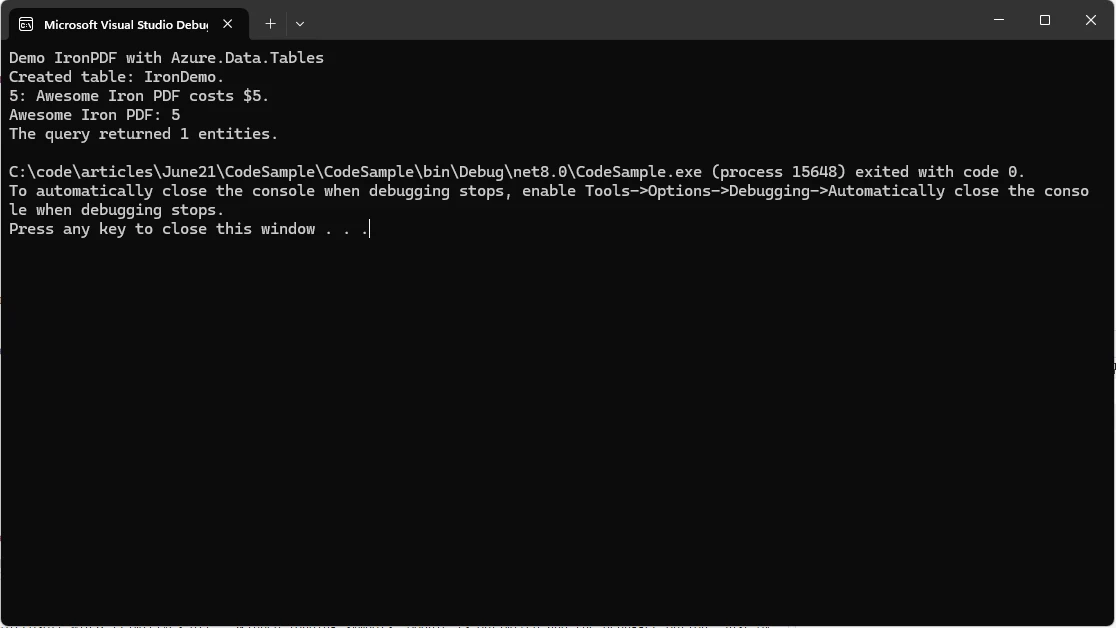
El código demuestra cómo interactuar con Azure Table Storage y generar un PDF usando IronPDF:
- Interacción con el almacenamiento de tablas de Azure:
- Utiliza el SDK de Azure for .NET (Azure.Data.Tables) para conectar con Azure Table Storage.
- Luego verifica si existe una tabla llamada "IronDemo"; si no, la crea.
- Agrega una nueva entidad (similar a una fila de base de datos) a la tabla, especificando propiedades como "Book", "Price" y "Quantity".
- Consulta la tabla para recuperar entidades basadas en una condición de filtro.
- Generación de PDF con IronPDF:
- Utiliza ChromePdfRenderer de IronPDF para renderizar contenido HTML en un archivo PDF.
- Genera el PDF a partir de contenido HTML dinámico que incluye detalles sobre las operaciones de Azure Table Storage.
Licencias de IronPDF
El paquete IronPDF requiere una licencia para funcionar. Agrega el código a continuación al inicio de la aplicación antes de acceder al paquete
IronPdf.License.LicenseKey = "IRONPDF-KEY";
IronPdf.License.LicenseKey = "IRONPDF-KEY";
Imports IronPdf

IronPdf.License.LicenseKey = "IRONPDF-KEY"
Imports IronPdf

IronPdf.License.LicenseKey = "IRONPDF-KEY"
Una licencia de prueba está disponible aquí.
Conclusión
Azure Table Storage se erige como un testimonio del compromiso de Microsoft de ofrecer a los desarrolladores soluciones de almacenamiento de datos escalables, flexibles y rentables en la nube. Con su diseño sin esquema, escalabilidad horizontal y una integración perfecta con el ecosistema Azure, Azure Table Storage empodera a los desarrolladores para construir aplicaciones resilientes y ágiles que pueden adaptarse a las demandas dinámicas de los entornos empresariales modernos.
Ya sea gestionando flujos de datos de IoT, almacenando metadatos de contenido u orquestando sistemas distribuidos, Azure Table Storage ofrece una plataforma versátil para desbloquear todo el potencial de las aplicaciones nativas de la nube. A medida que las organizaciones continúan adoptando iniciativas de transformación digital y migran a la nube, Azure Table Storage sigue siendo una piedra angular de las arquitecturas modernas de almacenamiento de datos, impulsando la innovación y permitiendo a las empresas prosperar en un mundo cada vez más impulsado por los datos.
IronPDF es una biblioteca .NET utilizada para crear y manipular documentos PDF de manera programática. Permite a los desarrolladores convertir HTML, páginas ASPX, imágenes y texto en archivos PDF. Las características clave incluyen la conversión de HTML a PDF, capacidades de edición de PDF y soporte para varios entornos .NET, lo que lo convierte en una herramienta versátil para generar y manejar documentos PDF dentro de aplicaciones .NET.