using IronPdf;

// Disable local disk access or cross-origin requests
Installation.EnableWebSecurity = true;

// Instantiate Renderer
var renderer = new ChromePdfRenderer();

// Create a PDF from a HTML string using C#
var pdf = renderer.RenderHtmlAsPdf("<h1>Hello World</h1>");

// Export to a file or Stream
pdf.SaveAs("output.pdf");

// Advanced Example with HTML Assets
// Load external html assets: Images, CSS and JavaScript.
// An optional BasePath 'C:\site\assets\' is set as the file location to load assets from
var myAdvancedPdf = renderer.RenderHtmlAsPdf("<img src='icons/iron.png'>", @"C:\site\assets\");
myAdvancedPdf.SaveAs("html-with-assets.pdf");
using IronPdf;// Disable local disk access or cross-origin requestsInstallation.EnableWebSecurity = true;// Instantiate Renderervar renderer = new ChromePdfRenderer();// Create a PDF from a HTML string using C#var pdf = renderer.RenderHtmlAsPdf("<h1>Hello World</h1>");// Export to a file or Streampdf.SaveAs("output.pdf");// Advanced Example with HTML Assets// Load external html assets: Images, CSS and JavaScript.// An optional BasePath 'C:\site\assets\' is set as the file location to load assets fromvar myAdvancedPdf = renderer.RenderHtmlAsPdf("<img src='icons/iron.png'>", @"C:\site\assets\");myAdvancedPdf.SaveAs("html-with-assets.pdf");
## Introducción a la conversión en C#
[La conversión](https://learn.microsoft.com/en-us/dotnet/csharp/programming-guide/types/casting-and-type-conversions) en C# es una característica poderosa que permite a los desarrolladores convertir una variable de un tipo de dato a otro. Juega un papel crucial en la programación orientada a objetos, especialmente al tratar con jerarquías de herencia o trabajar con interfaces. Al utilizar bibliotecas como [IronPDF](https://ironpdf.com) para la manipulación de PDF, entender la conversión se vuelve esencial para manejar efectivamente varios tipos de elementos y operaciones de PDF.
En este artículo, exploraremos el concepto de conversión en C#, su importancia y cómo se puede aplicar cuando se trabaja con IronPDF. Al final, verá cómo el uso de la conversión puede mejorar sus capacidades de manejo de PDF y optimizar su proceso de desarrollo. Le animamos a probar la versión de prueba gratuita de IronPDF para experimentar estos beneficios de primera mano.
## Understanding Casting in C#
### Casting implícito frente a explícito
En C#, la conversión se puede categorizar ampliamente en dos tipos: **conversión implícita** y **conversión explícita**.
* **Conversión implícita:** esto ocurre cuando el compilador realiza una conversión automáticamente. Es segura y no conduce a la pérdida de datos. Por ejemplo, convertir un tipo de dato más pequeño (como una variable entera) a un tipo más grande (como una variable doble) es implícito:
```csharp
int myInt = 10; // Integer variable
double myDouble = myInt; // Implicit casting from int to double
```
Este proceso a menudo se denomina conversión automática, ya que el compilador de C# lo maneja sin ninguna instrucción explícita del desarrollador.
* **Conversión explícita:** esto requiere una operación de conversión y es necesario cuando se convierte de un tipo más grande a un tipo más pequeño, ya que puede provocar pérdida de datos. Por ejemplo:
```csharp
double myDouble = 9.78;
int myInt = (int)myDouble; // Explicit casting from double to int
```
En este caso, el desarrollador debe indicar su intención de convertir el tipo de dato a otro tipo, de ahí el término conversión de tipo explícita.
### Escenarios comunes de fundición
La conversión se utiliza comúnmente en escenarios que involucran clases base y derivadas. Por ejemplo, al trabajar con una jerarquía de clases, puede convertir un objeto de clase derivada a su tipo de clase base:
```csharp
class Base { }
class Derived : Base { }
Derived derived = new Derived();
Base baseRef = derived; // Implicit casting to base class
```
Al usar IronPDF, la conversión es esencial al tratar con varias clases relacionadas con PDF, como cuando desea convertir un objeto PDF genérico a un tipo más específico para acceder a ciertas propiedades o métodos.
## Casting con IronPDF
### Instalación de IronPDF
Para comenzar a usar [IronPDF](https://ironpdf.com), primero deberá instalarlo. Si ya está instalado, puede pasar a la siguiente sección; de lo contrario, los siguientes pasos cubren cómo instalar la biblioteca IronPDF.
#### A través de la consola del gestor de paquetes NuGet
Para [instalar IronPDF](https://www.nuget.org/packages/IronPdf/) utilizando la Consola del Administrador de Paquetes NuGet, abra Visual Studio y navegue a la Consola del Administrador de Paquetes. Luego ejecute el siguiente comando:
```shell
:ProductInstall
```
#### Mediante el gestor de paquetes NuGet para la solución
Abriendo Visual Studio, vaya a "Herramientas -> Administrador de Paquetes NuGet -> Administrar Paquetes NuGet para la Solución" y busque IronPDF. Desde aquí, todo lo que necesita hacer es seleccionar su proyecto y hacer clic en "Instalar," y IronPDF se agregará a su proyecto.
Una vez que haya instalado IronPDF, todo lo que necesita agregar para comenzar a usar IronPDF es la declaración correcta de using en la parte superior de su código:
```csharp
using IronPdf;
```
### Trabajar con objetos de documentos PDF
IronPDF proporciona varias clases para manipular documentos PDF, tales como [PdfDocument](/object-reference/api/IronPdf.PdfDocument.html), [ChromePdfRenderer](/object-reference/api/IronPdf.ChromePdfRenderer.html) y [PdfPage](/object-reference/api/IronPdf.Pages.PdfPage.html). Entender cómo estos tipos interactúan a través de la conversión es crucial para una manipulación efectiva de PDF.
Por ejemplo, puede tener una colección de objetos **PdfDocument** genéricos y necesitar trabajar con un objeto **PdfPage** específico. Puede lograr esto mediante la conversión:
```csharp
PdfDocument pdfDoc = new PdfDocument(210, 297);
PdfPage page = (PdfPage)pdfDoc.Pages[0]; // Casting a generic PDF page to a specific type
```
Esta conversión le permite acceder a las propiedades y métodos específicos de **PdfPage**, mejorando su control sobre el contenido PDF.
### Ejemplo: Casting en acción
Veamos el siguiente ejemplo, donde necesitamos extraer texto de un PDF y convertir objetos apropiadamente:
```csharp
using IronPdf;
using IronPdf.Pages;
using System;
public static void Main(string[] args)
{
PdfDocument pdf = PdfDocument.FromFile("example.pdf");
foreach (PdfPage page in pdf.Pages)
{
PdfPage pdfPage = (PdfPage)page;
string text = pdfPage.Text;
Console.WriteLine($"Text from Page {pdfPage.PageIndex}: {text}");
}
}
```
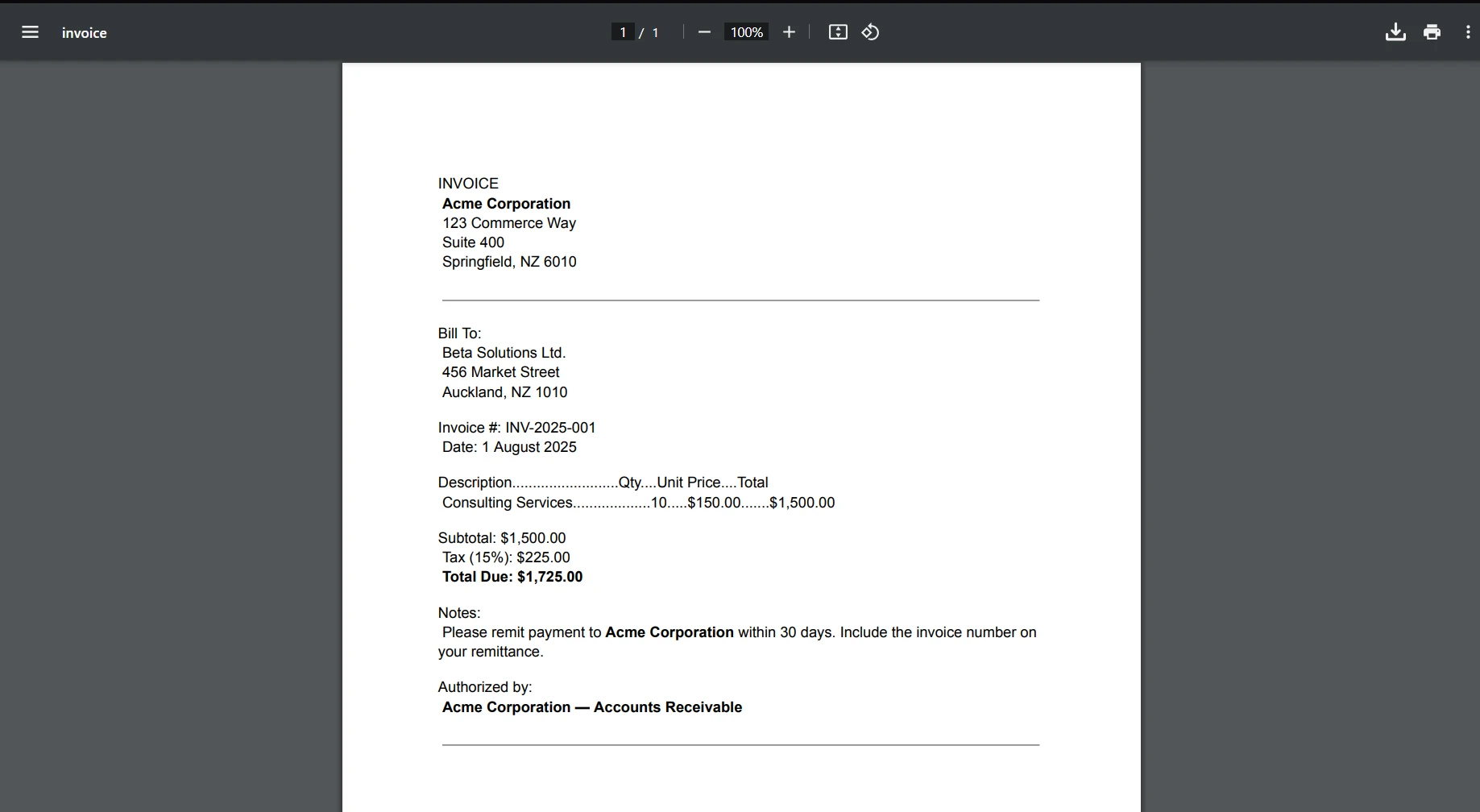
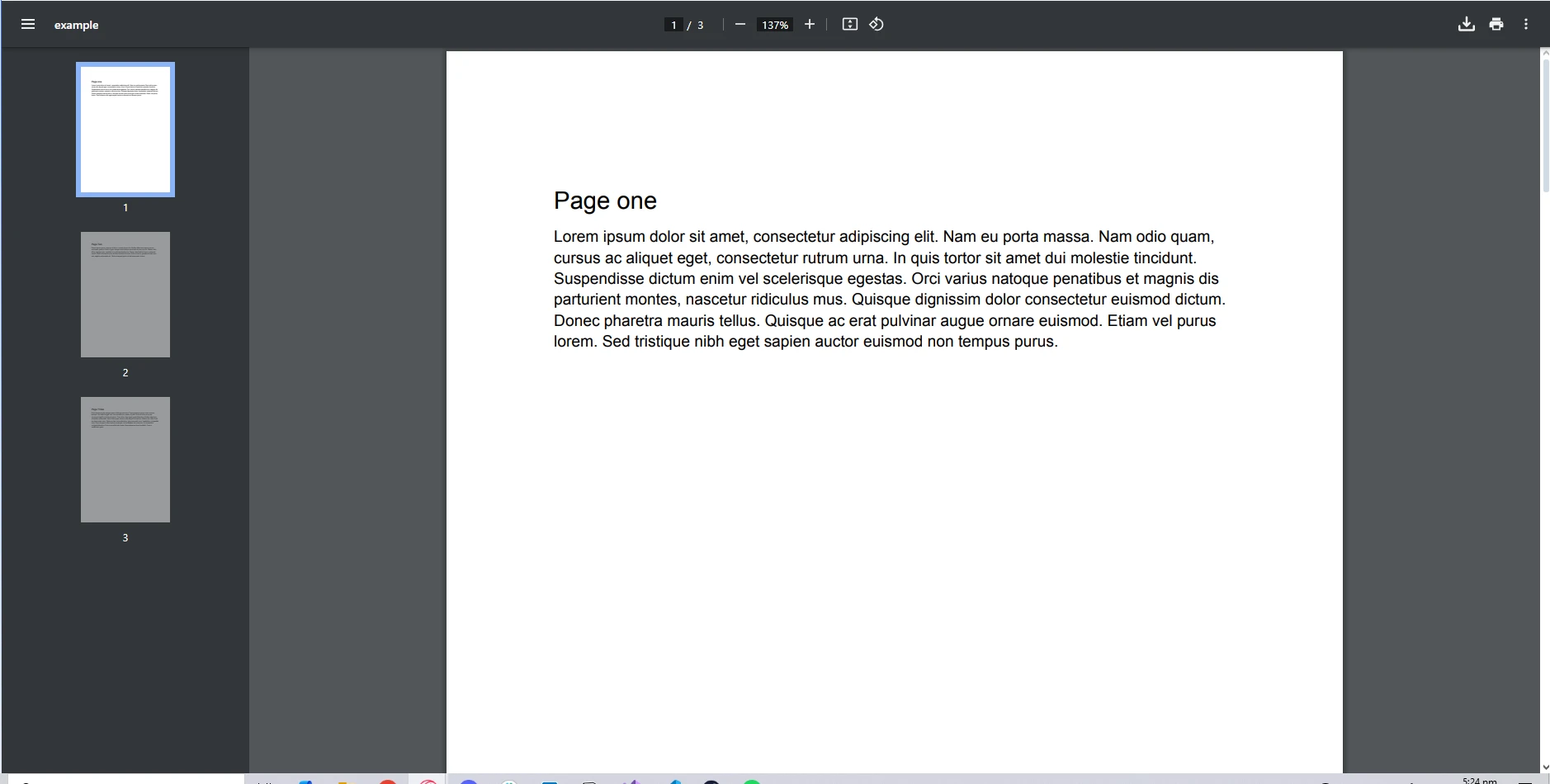
**PDF de Entrada:**
**Salida de Consola:**
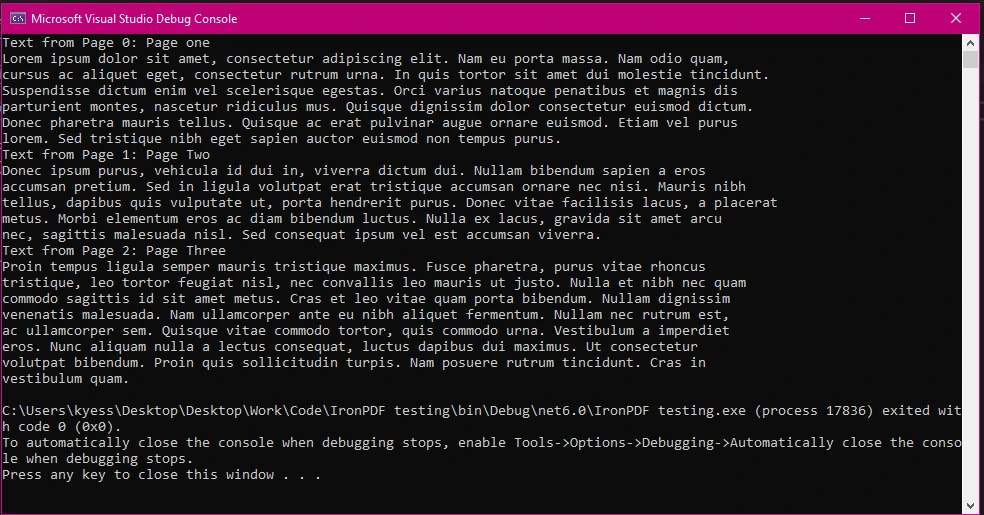
En este ejemplo, cargamos un documento PDF, iteramos a través de sus páginas y convertimos cada página a **PdfPage** para extraer contenido textual. Esto destaca cómo la conversión le permite trabajar con las propiedades y métodos específicos de las clases de IronPDF.
## Best Practices for Casting in C#
### Evitar InvalidCastException
Al convertir, es importante asegurarse de que la conversión sea válida para evitar una InvalidCastException en tiempo de ejecución. Aquí hay algunas mejores prácticas:
1. **Utilice la palabra clave `as`:** Esta palabra clave le permite intentar una conversión sin lanzar una excepción si falla. En su lugar, devuelve null.
```csharp
PdfPage pdfPage = page as PdfPage; // Safe cast
if (pdfPage != null)
{
// Proceed with pdfPage
}
```
2. **Verificación de tipo con `is`:** Antes de realizar una conversión, puede verificar el tipo del objeto utilizando la palabra clave `is`.
```csharp
if (page is PdfPage)
{
PdfPage pdfPage = (PdfPage)page; // Safe cast after type check
}
```
3. **Conversiones definidas por el usuario:** C# permite a los desarrolladores definir sus propias reglas de conversión para clases personalizadas a través de conversiones definidas por el usuario. Esto puede ser particularmente útil cuando desea facilitar una forma más intuitiva de convertir entre diferentes tipos definidos por el usuario.
```csharp
public class MyCustomType
{
public static explicit operator MyCustomType(int value)
{
return new MyCustomType(/* conversion logic */);
}
}
int myInt = 5;
MyCustomType myCustomType = (MyCustomType)myInt; // Using explicit user-defined conversion
```
### Consideraciones sobre el rendimiento
Mientras que la conversión es generalmente eficiente, la conversión excesiva o innecesaria puede llevar a problemas de rendimiento, especialmente en escenarios que involucran colecciones grandes o objetos complejos. Para optimizar el rendimiento:
* Minimize la conversión trabajando con los tipos más específicos siempre que sea posible.
* Evite la conversión en bucles críticos para el rendimiento, y en su lugar, almacene en caché los resultados donde sea factible.
* Aproveche los métodos integrados para la conversión de tipos cuando sea posible, ya que a menudo pueden proporcionar un rendimiento más optimizado.
## Conclusión
La conversión es un aspecto esencial de la programación en C#, especialmente al trabajar con bibliotecas como IronPDF para la manipulación de PDF. Al entender la conversión implícita y explícita, así como emplear mejores prácticas, puede mejorar su capacidad para manejar objetos PDF efectivamente.
Usar las capacidades de IronPDF con la conversión adecuada permite flujos de trabajo optimizados, lo que le permite manipular el contenido del PDF con facilidad y precisión. Para comenzar a explorar la amplia gama de características de IronPDF por usted mismo, asegúrese de revisar la [versión de prueba gratuita](trial-license).
La conversión en C# es una característica poderosa que permite a los desarrolladores convertir una variable de un tipo de dato a otro. Juega un papel crucial en la programación orientada a objetos, especialmente al tratar con jerarquías de herencia o trabajar con interfaces. Al utilizar bibliotecas como IronPDF para la manipulación de PDF, entender la conversión se vuelve esencial para manejar efectivamente varios tipos de elementos y operaciones de PDF.
En este artículo, exploraremos el concepto de conversión en C#, su importancia y cómo se puede aplicar cuando se trabaja con IronPDF. Al final, verá cómo el uso de la conversión puede mejorar sus capacidades de manejo de PDF y optimizar su proceso de desarrollo. Le animamos a probar la versión de prueba gratuita de IronPDF para experimentar estos beneficios de primera mano.
Understanding Casting in C#
Casting implícito frente a explícito
En C#, la conversión se puede categorizar ampliamente en dos tipos: conversión implícita y conversión explícita.
Conversión implícita: esto ocurre cuando el compilador realiza una conversión automáticamente. Es segura y no conduce a la pérdida de datos. Por ejemplo, convertir un tipo de dato más pequeño (como una variable entera) a un tipo más grande (como una variable doble) es implícito:
int myInt = 10; // Integer variabledouble myDouble = myInt; // Implicit casting from int to double
int myInt = 10; // Integer variable
double myDouble = myInt; // Implicit casting from int to double
Dim myInt AsInteger = 10 ' Integer variableDim myDouble AsDouble = myInt ' Implicit casting from int to double
Dim myInt As Integer = 10 ' Integer variable
Dim myDouble As Double = myInt ' Implicit casting from int to double
Este proceso a menudo se denomina conversión automática, ya que el compilador de C# lo maneja sin ninguna instrucción explícita del desarrollador.
Conversión explícita: esto requiere una operación de conversión y es necesario cuando se convierte de un tipo más grande a un tipo más pequeño, ya que puede provocar pérdida de datos. Por ejemplo:
double myDouble = 9.78;int myInt = (int)myDouble; // Explicit casting from double to int
double myDouble = 9.78;
int myInt = (int)myDouble; // Explicit casting from double to int
ImportsSystemDim myDouble AsDouble = 9.78Dim myInt AsInteger = CInt(Math.Truncate(myDouble)) ' Explicit casting from double to int
Imports System

Dim myDouble As Double = 9.78
Dim myInt As Integer = CInt(Math.Truncate(myDouble)) ' Explicit casting from double to int
En este caso, el desarrollador debe indicar su intención de convertir el tipo de dato a otro tipo, de ahí el término conversión de tipo explícita.
Escenarios comunes de fundición
La conversión se utiliza comúnmente en escenarios que involucran clases base y derivadas. Por ejemplo, al trabajar con una jerarquía de clases, puede convertir un objeto de clase derivada a su tipo de clase base:
class Base { }class Derived : Base { }Derived derived = new Derived();Base baseRef = derived; // Implicit casting to base class
class Base { }
class Derived : Base { }
Derived derived = new Derived();
Base baseRef = derived; // Implicit casting to base class
Friend Class BaseEnd ClassFriend Class DerivedInheritsBaseEnd ClassPrivate derived As New Derived()Private baseRef AsBase = derived ' Implicit casting to base class
Friend Class Base
End Class
Friend Class Derived
	Inherits Base

End Class
Private derived As New Derived()
Private baseRef As Base = derived ' Implicit casting to base class
Al usar IronPDF, la conversión es esencial al tratar con varias clases relacionadas con PDF, como cuando desea convertir un objeto PDF genérico a un tipo más específico para acceder a ciertas propiedades o métodos.
Casting con IronPDF
Instalación de IronPDF
Para comenzar a usar IronPDF, primero deberá instalarlo. Si ya está instalado, puede pasar a la siguiente sección; de lo contrario, los siguientes pasos cubren cómo instalar la biblioteca IronPDF.
A través de la consola del gestor de paquetes NuGet
Para instalar IronPDF utilizando la Consola del Administrador de Paquetes NuGet, abra Visual Studio y navegue a la Consola del Administrador de Paquetes. Luego ejecute el siguiente comando:
PM > Install-Package IronPdf
Install-Package IronPdf
Mediante el gestor de paquetes NuGet para la solución
Abriendo Visual Studio, vaya a "Herramientas -> Administrador de Paquetes NuGet -> Administrar Paquetes NuGet para la Solución" y busque IronPDF. Desde aquí, todo lo que necesita hacer es seleccionar su proyecto y hacer clic en "Instalar," y IronPDF se agregará a su proyecto.
Una vez que haya instalado IronPDF, todo lo que necesita agregar para comenzar a usar IronPDF es la declaración correcta de using en la parte superior de su código:
using IronPdf;
using IronPdf;
ImportsIronPdf
Imports IronPdf
Trabajar con objetos de documentos PDF
IronPDF proporciona varias clases para manipular documentos PDF, tales como PdfDocument, ChromePdfRenderer y PdfPage. Entender cómo estos tipos interactúan a través de la conversión es crucial para una manipulación efectiva de PDF.
Por ejemplo, puede tener una colección de objetos PdfDocument genéricos y necesitar trabajar con un objeto PdfPage específico. Puede lograr esto mediante la conversión:
PdfDocument pdfDoc = new PdfDocument(210, 297);PdfPage page = (PdfPage)pdfDoc.Pages[0]; // Casting a generic PDF page to a specific type
PdfDocument pdfDoc = new PdfDocument(210, 297);
PdfPage page = (PdfPage)pdfDoc.Pages[0]; // Casting a generic PDF page to a specific type
Dim pdfDoc As New PdfDocument(210, 297)Dim page AsPdfPage = CType(pdfDoc.Pages(0), PdfPage) ' Casting a generic PDF page to a specific type
Dim pdfDoc As New PdfDocument(210, 297)
Dim page As PdfPage = CType(pdfDoc.Pages(0), PdfPage) ' Casting a generic PDF page to a specific type
Esta conversión le permite acceder a las propiedades y métodos específicos de PdfPage, mejorando su control sobre el contenido PDF.
Ejemplo: Casting en acción
Veamos el siguiente ejemplo, donde necesitamos extraer texto de un PDF y convertir objetos apropiadamente:
using IronPdf;using IronPdf.Pages;using System;public static voidMain(string[] args){ PdfDocument pdf = PdfDocument.FromFile("example.pdf"); foreach (PdfPage page in pdf.Pages) { PdfPage pdfPage = (PdfPage)page; string text = pdfPage.Text;Console.WriteLine($"Text from Page {pdfPage.PageIndex}: {text}"); }}
using IronPdf;
using IronPdf.Pages;
using System;

public static void Main(string[] args)
{
    PdfDocument pdf = PdfDocument.FromFile("example.pdf");
    foreach (PdfPage page in pdf.Pages)
    {
        PdfPage pdfPage = (PdfPage)page;
        string text = pdfPage.Text;
        Console.WriteLine($"Text from Page {pdfPage.PageIndex}: {text}");
    }
}
ImportsIronPdfImportsIronPdf.PagesImportsSystemPublicShared Sub Main(ByVal args() AsString) Dim pdf AsPdfDocument = PdfDocument.FromFile("example.pdf") For Each page AsPdfPageIn pdf.Pages Dim pdfPage AsPdfPage = CType(page, PdfPage) Dim text AsString = pdfPage.TextConsole.WriteLine($"Text from Page {pdfPage.PageIndex}: {text}") Next pageEnd Sub
Imports IronPdf
Imports IronPdf.Pages
Imports System

Public Shared Sub Main(ByVal args() As String)
	Dim pdf As PdfDocument = PdfDocument.FromFile("example.pdf")
	For Each page As PdfPage In pdf.Pages
		Dim pdfPage As PdfPage = CType(page, PdfPage)
		Dim text As String = pdfPage.Text
		Console.WriteLine($"Text from Page {pdfPage.PageIndex}: {text}")
	Next page
End Sub
PDF de Entrada:
Salida de Consola:
En este ejemplo, cargamos un documento PDF, iteramos a través de sus páginas y convertimos cada página a PdfPage para extraer contenido textual. Esto destaca cómo la conversión le permite trabajar con las propiedades y métodos específicos de las clases de IronPDF.
Best Practices for Casting in C#
Evitar InvalidCastException
Al convertir, es importante asegurarse de que la conversión sea válida para evitar una InvalidCastException en tiempo de ejecución. Aquí hay algunas mejores prácticas:
Utilice la palabra clave as: Esta palabra clave le permite intentar una conversión sin lanzar una excepción si falla. En su lugar, devuelve null.
PdfPage pdfPage = page as PdfPage; // Safe castif (pdfPage != null){ // Proceed with pdfPage}
PdfPage pdfPage = page as PdfPage; // Safe cast
if (pdfPage != null)
{
    // Proceed with pdfPage
}
Dim pdfPage AsPdfPage = TryCast(page, PdfPage) ' Safe castIf pdfPage IsNot Nothing Then ' Proceed with pdfPageEnd If
Dim pdfPage As PdfPage = TryCast(page, PdfPage) ' Safe cast
If pdfPage IsNot Nothing Then
	' Proceed with pdfPage
End If
Verificación de tipo con is: Antes de realizar una conversión, puede verificar el tipo del objeto utilizando la palabra clave is.
if (page is PdfPage){ PdfPage pdfPage = (PdfPage)page; // Safe cast after type check}
if (page is PdfPage)
{
    PdfPage pdfPage = (PdfPage)page; // Safe cast after type check
}
IfTypeOf page IsPdfPageThen Dim pdfPage AsPdfPage = CType(page, PdfPage) ' Safe cast after type checkEnd If
If TypeOf page Is PdfPage Then
	Dim pdfPage As PdfPage = CType(page, PdfPage) ' Safe cast after type check
End If
Conversiones definidas por el usuario: C# permite a los desarrolladores definir sus propias reglas de conversión para clases personalizadas a través de conversiones definidas por el usuario. Esto puede ser particularmente útil cuando desea facilitar una forma más intuitiva de convertir entre diferentes tipos definidos por el usuario.
public class MyCustomType{ public static explicit operator MyCustomType(int value) { return new MyCustomType(/* conversion logic */); }}int myInt = 5;MyCustomType myCustomType = (MyCustomType)myInt; // Using explicit user-defined conversion
public class MyCustomType
{
    public static explicit operator MyCustomType(int value)
    {
        return new MyCustomType(/* conversion logic */);
    }
}

int myInt = 5;
MyCustomType myCustomType = (MyCustomType)myInt; // Using explicit user-defined conversion
Public Class MyCustomType PublicSharedNarrowingOperatorCType(ByVal value AsInteger) AsMyCustomType Return New MyCustomType()EndOperatorEnd ClassPrivate myInt AsInteger = 5Private myCustomType AsMyCustomType = CType(myInt, MyCustomType) ' Using explicit user-defined conversion
Public Class MyCustomType
	Public Shared Narrowing Operator CType(ByVal value As Integer) As MyCustomType
		Return New MyCustomType()
	End Operator
End Class

Private myInt As Integer = 5
Private myCustomType As MyCustomType = CType(myInt, MyCustomType) ' Using explicit user-defined conversion
Consideraciones sobre el rendimiento
Mientras que la conversión es generalmente eficiente, la conversión excesiva o innecesaria puede llevar a problemas de rendimiento, especialmente en escenarios que involucran colecciones grandes o objetos complejos. Para optimizar el rendimiento:
Minimize la conversión trabajando con los tipos más específicos siempre que sea posible.
Evite la conversión en bucles críticos para el rendimiento, y en su lugar, almacene en caché los resultados donde sea factible.
Aproveche los métodos integrados para la conversión de tipos cuando sea posible, ya que a menudo pueden proporcionar un rendimiento más optimizado.
Conclusión
La conversión es un aspecto esencial de la programación en C#, especialmente al trabajar con bibliotecas como IronPDF para la manipulación de PDF. Al entender la conversión implícita y explícita, así como emplear mejores prácticas, puede mejorar su capacidad para manejar objetos PDF efectivamente.
Usar las capacidades de IronPDF con la conversión adecuada permite flujos de trabajo optimizados, lo que le permite manipular el contenido del PDF con facilidad y precisión. Para comenzar a explorar la amplia gama de características de IronPDF por usted mismo, asegúrese de revisar la versión de prueba gratuita.
Jacob Mellor es Director de Tecnología de Iron Software y un ingeniero visionario pionero en la tecnología C# PDF. Como desarrollador original de la base de código principal de Iron Software, ha dado forma a la arquitectura de productos de la empresa desde su creación, transformándola, junto con el director ejecutivo Cameron Rimington, en una empresa de más de 50 personas que presta servicios a la NASA, Tesla y organismos gubernamentales de todo el mundo.