OAuth2 es un protocolo poderoso para asegurar tus aplicaciones web manejando la autenticación y autorización de usuarios. En el ámbito del desarrollo en C#, entender OAuth2 puede mejorar enormemente la seguridad y funcionalidad de tus aplicaciones.
Esta guía está orientada a principiantes, con un enfoque en los conceptos clave, ejemplos prácticos y explicaciones fáciles de entender. También aprenderemos un caso de uso para utilizar OAuth2 con la biblioteca IronPDF.
Entender OAuth2 y su importancia
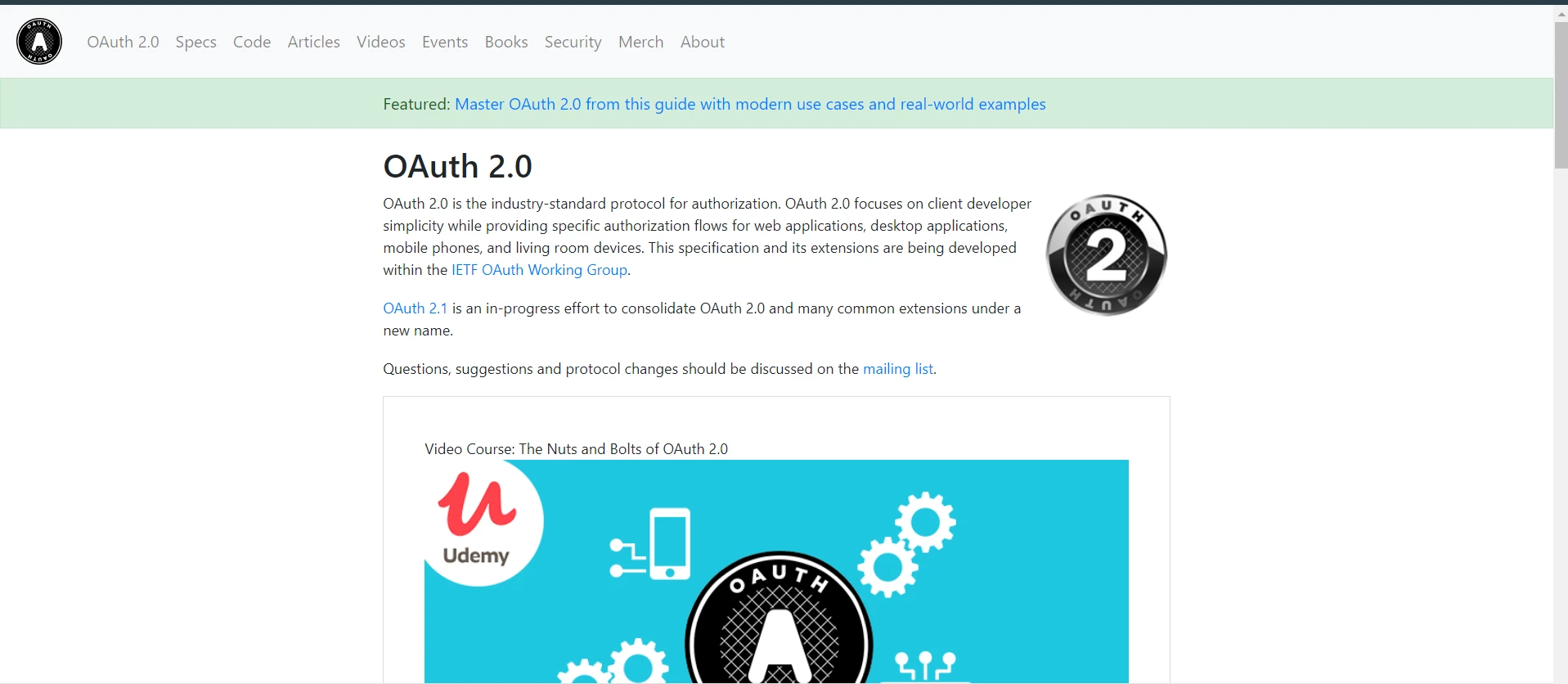
OAuth2 es un protocolo que permite a una aplicación cliente solicitar acceso a recursos alojados por un servidor de autorización, en nombre de un usuario. Es un método común para manejar la autenticación y autorización de usuarios en aplicaciones web modernas.
El objetivo principal de OAuth2 es proporcionar acceso seguro y efectivo a recursos sin compartir directamente las credenciales del usuario (como nombre de usuario y contraseña) con la aplicación cliente.
Conceptos clave de OAuth2
Antes de sumergirse en la implementación, aclaremos algunos términos esenciales de OAuth2:
- Aplicación cliente: La aplicación que solicita acceso a la cuenta del usuario.
- Servidor de autorización: el servidor que autentica al usuario y emite tokens de acceso a la aplicación cliente.
- Token de acceso: un token que otorga a la aplicación cliente acceso a la cuenta del usuario por un tiempo limitado.
- Token de actualización: Token utilizado para obtener un nuevo token de acceso cuando el actual expira sin requerir nuevamente las credenciales del usuario.
- ID de cliente y secreto de cliente: credenciales que identifican la aplicación cliente ante el servidor de autorización.
- URI de redireccionamiento: un URI que el servidor de autorización enviará al usuario después de conceder o denegar acceso a la aplicación cliente.
- Flujo de código de autorización: un método seguro donde la aplicación cliente recibe un código de autorización como paso intermedio antes de intercambiarlo por un token de acceso.
Implementación de OAuth2 en C#: Un Ejemplo Básico
Vamos a crear una aplicación simple en C# que utiliza OAuth2 para la autenticación de usuarios. Este ejemplo te guiará a través de la configuración de un cliente OAuth2, la obtención de un token de acceso, y cómo realizar una solicitud a un recurso protegido.
Cómo configurar tu cliente OAuth2
Primero, necesitas registrar tu aplicación C# con el servidor de autorización OAuth2. Este proceso varía dependiendo del servidor, pero generalmente recibirás un ID de cliente y un secreto de cliente, que son cruciales para el flujo de OAuth2.
Paso 1: Defina las credenciales de su aplicación
Como primer paso, configura las credenciales de tu cliente como el ID de cliente y el secreto de cliente. Aquí está el código de ejemplo:
// Define your client credentials
class Program
{
    private static string clientId = "your-client-id"; // Your client ID
    private static string clientSecret = "your-client-secret"; // Your client secret
    private static string redirectUri = "your-redirect-uri"; // Your redirect URI
    static void Main(string[] args)
    {
        // OAuth2 implementation will go here
    }
}
// Define your client credentials
class Program
{
    private static string clientId = "your-client-id"; // Your client ID
    private static string clientSecret = "your-client-secret"; // Your client secret
    private static string redirectUri = "your-redirect-uri"; // Your redirect URI
    static void Main(string[] args)
    {
        // OAuth2 implementation will go here
    }
}
' Define your client credentials
Friend Class Program
Private Shared clientId As String = "your-client-id" ' Your client ID
Private Shared clientSecret As String = "your-client-secret" ' Your client secret
Private Shared redirectUri As String = "your-redirect-uri" ' Your redirect URI
Shared Sub Main(ByVal args() As String)
' OAuth2 implementation will go here
End Sub
End Class
' Define your client credentials
Friend Class Program
	Private Shared clientId As String = "your-client-id" ' Your client ID
	Private Shared clientSecret As String = "your-client-secret" ' Your client secret
	Private Shared redirectUri As String = "your-redirect-uri" ' Your redirect URI
	Shared Sub Main(ByVal args() As String)
		' OAuth2 implementation will go here
	End Sub
End Class
Paso 2: Solicitar la autorización del usuario
Para iniciar el flujo OAuth2, redirige al usuario al endpoint de autorización del servidor de autorización. Aquí está cómo construir la URL para la solicitud de autorización:
static void Main(string[] args)
{
    var authorizationEndpoint = "https://authorization-server.com/auth"; // Authorization server endpoint
    var responseType = "code"; // Response type for authorization
    var scope = "email profile"; // Scopes for the authorization request
    var authorizationUrl = $"{authorizationEndpoint}?response_type={responseType}&client_id={clientId}&redirect_uri={redirectUri}&scope={scope}";
    // Redirect the user to authorizationUrl
}
static void Main(string[] args)
{
    var authorizationEndpoint = "https://authorization-server.com/auth"; // Authorization server endpoint
    var responseType = "code"; // Response type for authorization
    var scope = "email profile"; // Scopes for the authorization request
    var authorizationUrl = $"{authorizationEndpoint}?response_type={responseType}&client_id={clientId}&redirect_uri={redirectUri}&scope={scope}";
    // Redirect the user to authorizationUrl
}
Shared Sub Main(ByVal args() As String)
Dim authorizationEndpoint = "https://authorization-server.com/auth" ' Authorization server endpoint
Dim responseType = "code" ' Response type for authorization
Dim scope = "email profile" ' Scopes for the authorization request
Dim authorizationUrl = $"{authorizationEndpoint}?response_type={responseType}&client_id={clientId}&redirect_uri={redirectUri}&scope={scope}"
' Redirect the user to authorizationUrl
End Sub
Shared Sub Main(ByVal args() As String)
	Dim authorizationEndpoint = "https://authorization-server.com/auth" ' Authorization server endpoint
	Dim responseType = "code" ' Response type for authorization
	Dim scope = "email profile" ' Scopes for the authorization request
	Dim authorizationUrl = $"{authorizationEndpoint}?response_type={responseType}&client_id={clientId}&redirect_uri={redirectUri}&scope={scope}"
	' Redirect the user to authorizationUrl
End Sub
Paso 3: Gestión de la respuesta de autorización
Después de que el usuario concede o niega el permiso, el servidor de autorización los redirige de nuevo a tu aplicación con un código de autorización o un mensaje de error. Necesitas capturar este código de los parámetros de consulta del URI de redirección.
Paso 4: Intercambio del código de autorización
Ahora, intercambiarás el código de autorización por un token de acceso. Esto requiere una solicitud POST al endpoint del token del servidor de autorización.
using System.IO;
using System.Net;
using System.Text;
using System.Threading.Tasks;

// Method to exchange authorization code for an access token
public static async Task<string> ExchangeAuthorizationCodeForAccessToken(string authorizationCode)
{
    var tokenEndpoint = "https://authorization-server.com/token"; // Token endpoint
    var postData = $"grant_type=authorization_code&code={authorizationCode}&redirect_uri={redirectUri}&client_id={clientId}&client_secret={clientSecret}";
    var data = Encoding.ASCII.GetBytes(postData);
    var request = WebRequest.Create(tokenEndpoint);
    request.Method = "POST"; // Use post method to request the access token
    request.ContentType = "application/x-www-form-urlencoded"; // Content type
    request.ContentLength = data.Length;
    using (var stream = request.GetRequestStream())
    {
        stream.Write(data, 0, data.Length);
    }
    var response = (HttpWebResponse)request.GetResponse();
    var responseString = new StreamReader(response.GetResponseStream()).ReadToEnd();
    // Extract and return the access token from the response
    var token = ExtractAccessTokenFromResponse(responseString);
    return token;
}
using System.IO;
using System.Net;
using System.Text;
using System.Threading.Tasks;

// Method to exchange authorization code for an access token
public static async Task<string> ExchangeAuthorizationCodeForAccessToken(string authorizationCode)
{
    var tokenEndpoint = "https://authorization-server.com/token"; // Token endpoint
    var postData = $"grant_type=authorization_code&code={authorizationCode}&redirect_uri={redirectUri}&client_id={clientId}&client_secret={clientSecret}";
    var data = Encoding.ASCII.GetBytes(postData);
    var request = WebRequest.Create(tokenEndpoint);
    request.Method = "POST"; // Use post method to request the access token
    request.ContentType = "application/x-www-form-urlencoded"; // Content type
    request.ContentLength = data.Length;
    using (var stream = request.GetRequestStream())
    {
        stream.Write(data, 0, data.Length);
    }
    var response = (HttpWebResponse)request.GetResponse();
    var responseString = new StreamReader(response.GetResponseStream()).ReadToEnd();
    // Extract and return the access token from the response
    var token = ExtractAccessTokenFromResponse(responseString);
    return token;
}
Imports System.IO
Imports System.Net
Imports System.Text
Imports System.Threading.Tasks
' Method to exchange authorization code for an access token
Public Shared Async Function ExchangeAuthorizationCodeForAccessToken(ByVal authorizationCode As String) As Task(Of String)
Dim tokenEndpoint = "https://authorization-server.com/token" ' Token endpoint
Dim postData = $"grant_type=authorization_code&code={authorizationCode}&redirect_uri={redirectUri}&client_id={clientId}&client_secret={clientSecret}"
Dim data = Encoding.ASCII.GetBytes(postData)
Dim request = WebRequest.Create(tokenEndpoint)
request.Method = "POST" ' Use post method to request the access token
request.ContentType = "application/x-www-form-urlencoded" ' Content type
request.ContentLength = data.Length
Using stream = request.GetRequestStream()
stream.Write(data, 0, data.Length)
End Using
Dim response = CType(request.GetResponse(), HttpWebResponse)
Dim responseString = (New StreamReader(response.GetResponseStream())).ReadToEnd()
' Extract and return the access token from the response
Dim token = ExtractAccessTokenFromResponse(responseString)
Return token
End Function
Imports System.IO
Imports System.Net
Imports System.Text
Imports System.Threading.Tasks

' Method to exchange authorization code for an access token
Public Shared Async Function ExchangeAuthorizationCodeForAccessToken(ByVal authorizationCode As String) As Task(Of String)
	Dim tokenEndpoint = "https://authorization-server.com/token" ' Token endpoint
	Dim postData = $"grant_type=authorization_code&code={authorizationCode}&redirect_uri={redirectUri}&client_id={clientId}&client_secret={clientSecret}"
	Dim data = Encoding.ASCII.GetBytes(postData)
	Dim request = WebRequest.Create(tokenEndpoint)
	request.Method = "POST" ' Use post method to request the access token
	request.ContentType = "application/x-www-form-urlencoded" ' Content type
	request.ContentLength = data.Length
	Using stream = request.GetRequestStream()
		stream.Write(data, 0, data.Length)
	End Using
	Dim response = CType(request.GetResponse(), HttpWebResponse)
	Dim responseString = (New StreamReader(response.GetResponseStream())).ReadToEnd()
	' Extract and return the access token from the response
	Dim token = ExtractAccessTokenFromResponse(responseString)
	Return token
End Function
Esta función envía una solicitud POST al endpoint del token con los datos necesarios y devuelve el token de acceso extraído de la respuesta.
Paso 5: Realizar solicitudes autorizadas
Con el token de acceso, ahora puedes hacer solicitudes a recursos que requieren autenticación. Adjunta el token de acceso a tus solicitudes en el encabezado de autorización como un token Bearer.
using System.Net.Http;
using System.Threading.Tasks;

// Method to make authorized requests
public static async Task<string> MakeAuthorizedRequest(string accessToken, string apiUrl)
{
    var httpClient = new HttpClient();
    httpClient.DefaultRequestHeaders.Authorization = new System.Net.Http.Headers.AuthenticationHeaderValue("Bearer", accessToken);
    // Make the request to the API
    var response = await httpClient.GetAsync(apiUrl);
    response.EnsureSuccessStatusCode();
    var responseString = await response.Content.ReadAsStringAsync();
    return responseString;
}
using System.Net.Http;
using System.Threading.Tasks;

// Method to make authorized requests
public static async Task<string> MakeAuthorizedRequest(string accessToken, string apiUrl)
{
    var httpClient = new HttpClient();
    httpClient.DefaultRequestHeaders.Authorization = new System.Net.Http.Headers.AuthenticationHeaderValue("Bearer", accessToken);
    // Make the request to the API
    var response = await httpClient.GetAsync(apiUrl);
    response.EnsureSuccessStatusCode();
    var responseString = await response.Content.ReadAsStringAsync();
    return responseString;
}
Imports System.Net.Http
Imports System.Threading.Tasks
' Method to make authorized requests
Public Shared Async Function MakeAuthorizedRequest(ByVal accessToken As String, ByVal apiUrl As String) As Task(Of String)
Dim httpClient As New HttpClient()
httpClient.DefaultRequestHeaders.Authorization = New System.Net.Http.Headers.AuthenticationHeaderValue("Bearer", accessToken)
' Make the request to the API
Dim response = Await httpClient.GetAsync(apiUrl)
response.EnsureSuccessStatusCode()
Dim responseString = Await response.Content.ReadAsStringAsync()
Return responseString
End Function
Imports System.Net.Http
Imports System.Threading.Tasks

' Method to make authorized requests
Public Shared Async Function MakeAuthorizedRequest(ByVal accessToken As String, ByVal apiUrl As String) As Task(Of String)
	Dim httpClient As New HttpClient()
	httpClient.DefaultRequestHeaders.Authorization = New System.Net.Http.Headers.AuthenticationHeaderValue("Bearer", accessToken)
	' Make the request to the API
	Dim response = Await httpClient.GetAsync(apiUrl)
	response.EnsureSuccessStatusCode()
	Dim responseString = Await response.Content.ReadAsStringAsync()
	Return responseString
End Function
Introducción a IronPDF
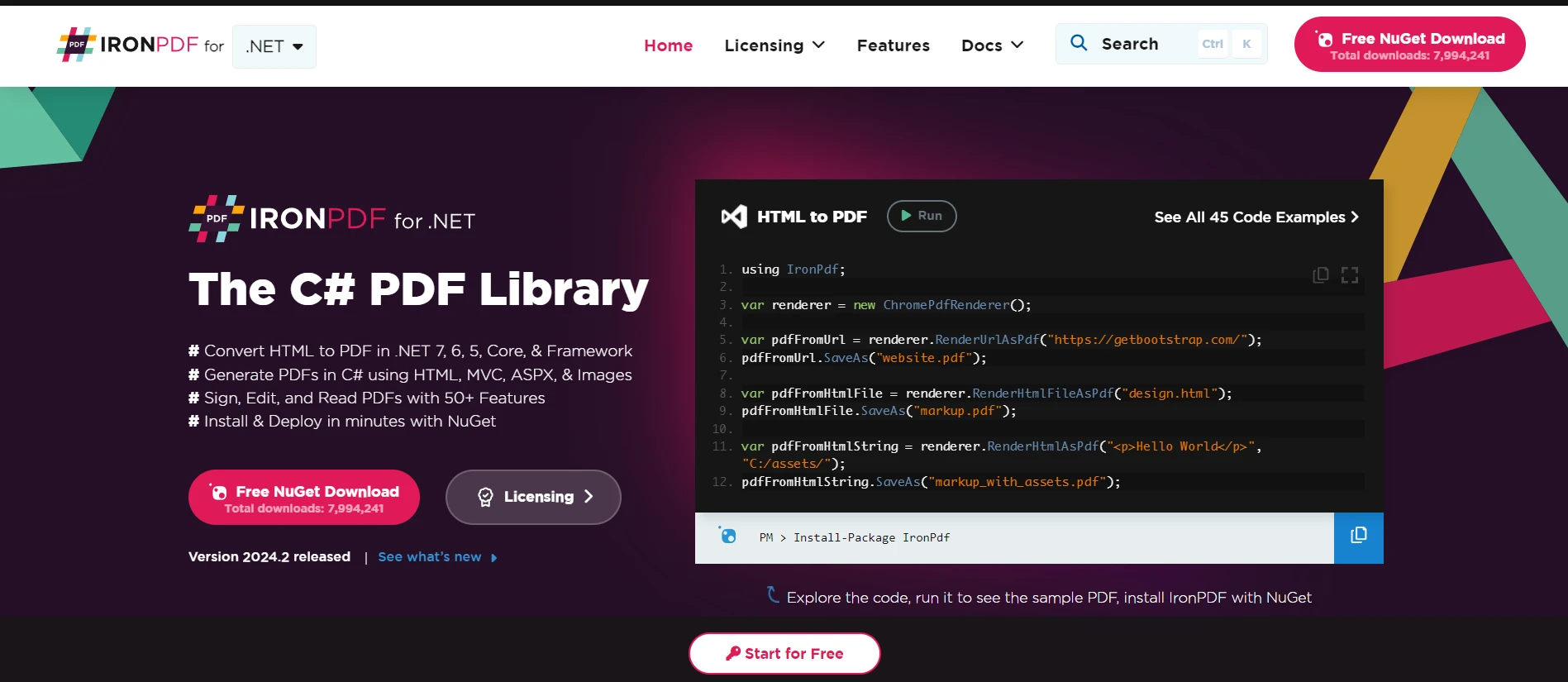
IronPDF es una biblioteca versátil para desarrolladores de C# que permite la generación, manipulación y renderización de documentos PDF directamente en aplicaciones .NET. Esta poderosa herramienta simplifica el trabajo con archivos PDF, haciendo fácil crear documentos complejos, convertir HTML a PDF sin esfuerzo, extraer texto de PDFs y mucho más. Su API sencilla permite a los desarrolladores integrar funcionalidades de PDF en sus aplicaciones rápidamente, sin necesitar un conocimiento profundo de las especificaciones de PDF.
IronPDF sobresale en la conversión de HTML a PDF, manteniendo intactos los diseños y los estilos. Esta característica permite generar PDFs desde contenido web, útil para informes, facturas y documentación. Soporta la conversión de archivos HTML, URLs y cadenas de HTML a PDF.
using IronPdf;

class Program
{
    static void Main(string[] args)
    {
        var renderer = new ChromePdfRenderer(); // Create an instance of the PDF renderer

        // 1. Convert HTML String to PDF
        var htmlContent = "<h1>Hello, IronPDF!</h1><p>This is a PDF from an HTML string.</p>"; // HTML content as string
        var pdfFromHtmlString = renderer.RenderHtmlAsPdf(htmlContent);
        pdfFromHtmlString.SaveAs("HTMLStringToPDF.pdf"); // Save the PDF

        // 2. Convert HTML File to PDF
        var htmlFilePath = "path_to_your_html_file.html"; // Specify the path to your HTML file
        var pdfFromHtmlFile = renderer.RenderHtmlFileAsPdf(htmlFilePath);
        pdfFromHtmlFile.SaveAs("HTMLFileToPDF.pdf"); // Save the PDF

        // 3. Convert URL to PDF
        var url = "http://ironpdf.com"; // Specify the URL
        var pdfFromUrl = renderer.RenderUrlAsPdf(url);
        pdfFromUrl.SaveAs("URLToPDF.pdf"); // Save the PDF
    }
}
using IronPdf;

class Program
{
    static void Main(string[] args)
    {
        var renderer = new ChromePdfRenderer(); // Create an instance of the PDF renderer

        // 1. Convert HTML String to PDF
        var htmlContent = "<h1>Hello, IronPDF!</h1><p>This is a PDF from an HTML string.</p>"; // HTML content as string
        var pdfFromHtmlString = renderer.RenderHtmlAsPdf(htmlContent);
        pdfFromHtmlString.SaveAs("HTMLStringToPDF.pdf"); // Save the PDF

        // 2. Convert HTML File to PDF
        var htmlFilePath = "path_to_your_html_file.html"; // Specify the path to your HTML file
        var pdfFromHtmlFile = renderer.RenderHtmlFileAsPdf(htmlFilePath);
        pdfFromHtmlFile.SaveAs("HTMLFileToPDF.pdf"); // Save the PDF

        // 3. Convert URL to PDF
        var url = "http://ironpdf.com"; // Specify the URL
        var pdfFromUrl = renderer.RenderUrlAsPdf(url);
        pdfFromUrl.SaveAs("URLToPDF.pdf"); // Save the PDF
    }
}
Imports IronPdf
Friend Class Program
Shared Sub Main(ByVal args() As String)
Dim renderer = New ChromePdfRenderer() ' Create an instance of the PDF renderer
' 1. Convert HTML String to PDF
Dim htmlContent = "<h1>Hello, IronPDF!</h1><p>This is a PDF from an HTML string.</p>" ' HTML content as string
Dim pdfFromHtmlString = renderer.RenderHtmlAsPdf(htmlContent)
pdfFromHtmlString.SaveAs("HTMLStringToPDF.pdf") ' Save the PDF
' 2. Convert HTML File to PDF
Dim htmlFilePath = "path_to_your_html_file.html" ' Specify the path to your HTML file
Dim pdfFromHtmlFile = renderer.RenderHtmlFileAsPdf(htmlFilePath)
pdfFromHtmlFile.SaveAs("HTMLFileToPDF.pdf") ' Save the PDF
' 3. Convert URL to PDF
Dim url = "http://ironpdf.com" ' Specify the URL
Dim pdfFromUrl = renderer.RenderUrlAsPdf(url)
pdfFromUrl.SaveAs("URLToPDF.pdf") ' Save the PDF
End Sub
End Class
Imports IronPdf

Friend Class Program
	Shared Sub Main(ByVal args() As String)
		Dim renderer = New ChromePdfRenderer() ' Create an instance of the PDF renderer

		' 1. Convert HTML String to PDF
		Dim htmlContent = "<h1>Hello, IronPDF!</h1><p>This is a PDF from an HTML string.</p>" ' HTML content as string
		Dim pdfFromHtmlString = renderer.RenderHtmlAsPdf(htmlContent)
		pdfFromHtmlString.SaveAs("HTMLStringToPDF.pdf") ' Save the PDF

		' 2. Convert HTML File to PDF
		Dim htmlFilePath = "path_to_your_html_file.html" ' Specify the path to your HTML file
		Dim pdfFromHtmlFile = renderer.RenderHtmlFileAsPdf(htmlFilePath)
		pdfFromHtmlFile.SaveAs("HTMLFileToPDF.pdf") ' Save the PDF

		' 3. Convert URL to PDF
		Dim url = "http://ironpdf.com" ' Specify the URL
		Dim pdfFromUrl = renderer.RenderUrlAsPdf(url)
		pdfFromUrl.SaveAs("URLToPDF.pdf") ' Save the PDF
	End Sub
End Class
Ejemplo de código: Generación de un PDF a partir de contenido protegido
Imagina que tienes un endpoint que devuelve contenido HTML accesible solo para usuarios autenticados. Podrías usar IronPDF para convertir este contenido HTML en un documento PDF, aprovechando el token de acceso obtenido a través de OAuth2.
Primero, definamos un método para obtener el contenido HTML protegido usando un token de acceso:
using System.Net.Http;
using System.Threading.Tasks;

// Method to fetch protected content
public static async Task<string> FetchProtectedContent(string accessToken, string apiUrl)
{
    var httpClient = new HttpClient();
    httpClient.DefaultRequestHeaders.Authorization = new System.Net.Http.Headers.AuthenticationHeaderValue("Bearer", accessToken);
    var response = await httpClient.GetAsync(apiUrl); // Make the request to the protected API
    response.EnsureSuccessStatusCode();
    return await response.Content.ReadAsStringAsync(); // Return the HTML content
}
using System.Net.Http;
using System.Threading.Tasks;

// Method to fetch protected content
public static async Task<string> FetchProtectedContent(string accessToken, string apiUrl)
{
    var httpClient = new HttpClient();
    httpClient.DefaultRequestHeaders.Authorization = new System.Net.Http.Headers.AuthenticationHeaderValue("Bearer", accessToken);
    var response = await httpClient.GetAsync(apiUrl); // Make the request to the protected API
    response.EnsureSuccessStatusCode();
    return await response.Content.ReadAsStringAsync(); // Return the HTML content
}
Imports System.Net.Http
Imports System.Threading.Tasks
' Method to fetch protected content
Public Shared Async Function FetchProtectedContent(ByVal accessToken As String, ByVal apiUrl As String) As Task(Of String)
Dim httpClient As New HttpClient()
httpClient.DefaultRequestHeaders.Authorization = New System.Net.Http.Headers.AuthenticationHeaderValue("Bearer", accessToken)
Dim response = Await httpClient.GetAsync(apiUrl) ' Make the request to the protected API
response.EnsureSuccessStatusCode()
Return Await response.Content.ReadAsStringAsync() ' Return the HTML content
End Function
Imports System.Net.Http
Imports System.Threading.Tasks

' Method to fetch protected content
Public Shared Async Function FetchProtectedContent(ByVal accessToken As String, ByVal apiUrl As String) As Task(Of String)
	Dim httpClient As New HttpClient()
	httpClient.DefaultRequestHeaders.Authorization = New System.Net.Http.Headers.AuthenticationHeaderValue("Bearer", accessToken)
	Dim response = Await httpClient.GetAsync(apiUrl) ' Make the request to the protected API
	response.EnsureSuccessStatusCode()
	Return Await response.Content.ReadAsStringAsync() ' Return the HTML content
End Function
Ahora, usemos IronPDF para convertir el contenido HTML obtenido en un documento PDF:
using IronPdf;

// Method to convert HTML content to PDF
public static async Task ConvertHtmlToPdf(string accessToken, string apiUrl, string outputPdfPath)
{
    // Fetch protected content using the access token
    string htmlContent = await FetchProtectedContent(accessToken, apiUrl);
    // Use IronPDF to convert the HTML content to a PDF document
    var renderer = new IronPdf.HtmlToPdf();
    var pdf = renderer.RenderHtmlAsPdf(htmlContent);
    // Save the generated PDF to a file
    pdf.SaveAs(outputPdfPath);
}
using IronPdf;

// Method to convert HTML content to PDF
public static async Task ConvertHtmlToPdf(string accessToken, string apiUrl, string outputPdfPath)
{
    // Fetch protected content using the access token
    string htmlContent = await FetchProtectedContent(accessToken, apiUrl);
    // Use IronPDF to convert the HTML content to a PDF document
    var renderer = new IronPdf.HtmlToPdf();
    var pdf = renderer.RenderHtmlAsPdf(htmlContent);
    // Save the generated PDF to a file
    pdf.SaveAs(outputPdfPath);
}
Imports IronPdf
' Method to convert HTML content to PDF
Public Shared Async Function ConvertHtmlToPdf(ByVal accessToken As String, ByVal apiUrl As String, ByVal outputPdfPath As String) As Task
' Fetch protected content using the access token
Dim htmlContent As String = Await FetchProtectedContent(accessToken, apiUrl)
' Use IronPDF to convert the HTML content to a PDF document
Dim renderer = New IronPdf.HtmlToPdf()
Dim pdf = renderer.RenderHtmlAsPdf(htmlContent)
' Save the generated PDF to a file
pdf.SaveAs(outputPdfPath)
End Function
Imports IronPdf

' Method to convert HTML content to PDF
Public Shared Async Function ConvertHtmlToPdf(ByVal accessToken As String, ByVal apiUrl As String, ByVal outputPdfPath As String) As Task
	' Fetch protected content using the access token
	Dim htmlContent As String = Await FetchProtectedContent(accessToken, apiUrl)
	' Use IronPDF to convert the HTML content to a PDF document
	Dim renderer = New IronPdf.HtmlToPdf()
	Dim pdf = renderer.RenderHtmlAsPdf(htmlContent)
	' Save the generated PDF to a file
	pdf.SaveAs(outputPdfPath)
End Function
En el código anterior, FetchProtectedContent es responsable de recuperar contenido HTML de un recurso protegido usando un token de acceso OAuth2. Una vez que el contenido HTML es obtenido, se pasa al renderizador HtmlToPdf de IronPDF para generar un documento PDF, que luego se guarda en la ruta especificada.
Conclusión
Esta guía introdujo los principios básicos del uso de OAuth2 en aplicaciones C#, cubriendo conceptos clave, terminología y un ejemplo de implementación sencillo. OAuth2 juega un papel vital en la seguridad de aplicaciones web manejando eficientemente la autenticación y autorización de usuarios. Aunque este ejemplo demuestra el Flujo de Código de Autorización, OAuth2 admite otros flujos adecuados para diferentes tipos de aplicaciones.
Al integrar IronPDF para Manipulación Avanzada de PDF, los desarrolladores de C# pueden extender las capacidades de sus aplicaciones para incluir generación y manipulación de PDF, enriqueciendo las características disponibles para usuarios autenticados. La facilidad de uso de IronPDF y sus completas capacidades de manipulación de PDF la hacen una excelente herramienta para desarrolladores .NET que buscan trabajar con archivos PDF en sus proyectos. Ofrece una prueba gratuita para explorar todas las funciones y sus licencias comienzan desde $999.