using IronPdf;

// Disable local disk access or cross-origin requests
Installation.EnableWebSecurity = true;

// Instantiate Renderer
var renderer = new ChromePdfRenderer();

// Create a PDF from a HTML string using C#
var pdf = renderer.RenderHtmlAsPdf("<h1>Hello World</h1>");

// Export to a file or Stream
pdf.SaveAs("output.pdf");

// Advanced Example with HTML Assets
// Load external html assets: Images, CSS and JavaScript.
// An optional BasePath 'C:\site\assets\' is set as the file location to load assets from
var myAdvancedPdf = renderer.RenderHtmlAsPdf("<img src='icons/iron.png'>", @"C:\site\assets\");
myAdvancedPdf.SaveAs("html-with-assets.pdf");
using IronPdf;// Disable local disk access or cross-origin requestsInstallation.EnableWebSecurity = true;// Instantiate Renderervar renderer = new ChromePdfRenderer();// Create a PDF from a HTML string using C#var pdf = renderer.RenderHtmlAsPdf("<h1>Hello World</h1>");// Export to a file or Streampdf.SaveAs("output.pdf");// Advanced Example with HTML Assets// Load external html assets: Images, CSS and JavaScript.// An optional BasePath 'C:\site\assets\' is set as the file location to load assets fromvar myAdvancedPdf = renderer.RenderHtmlAsPdf("<img src='icons/iron.png'>", @"C:\site\assets\");myAdvancedPdf.SaveAs("html-with-assets.pdf");
PM >Install-Package IronPdf
Install-Package IronPdf
ACTUALIZACIONES PARA DESARROLLADORES
Supersocket C# Ejemplo (Cómo Funciona para Desarrolladores)
## Desarrollo de una aplicación de socket del lado del servidor con SuperSocket e integración de IronPDF
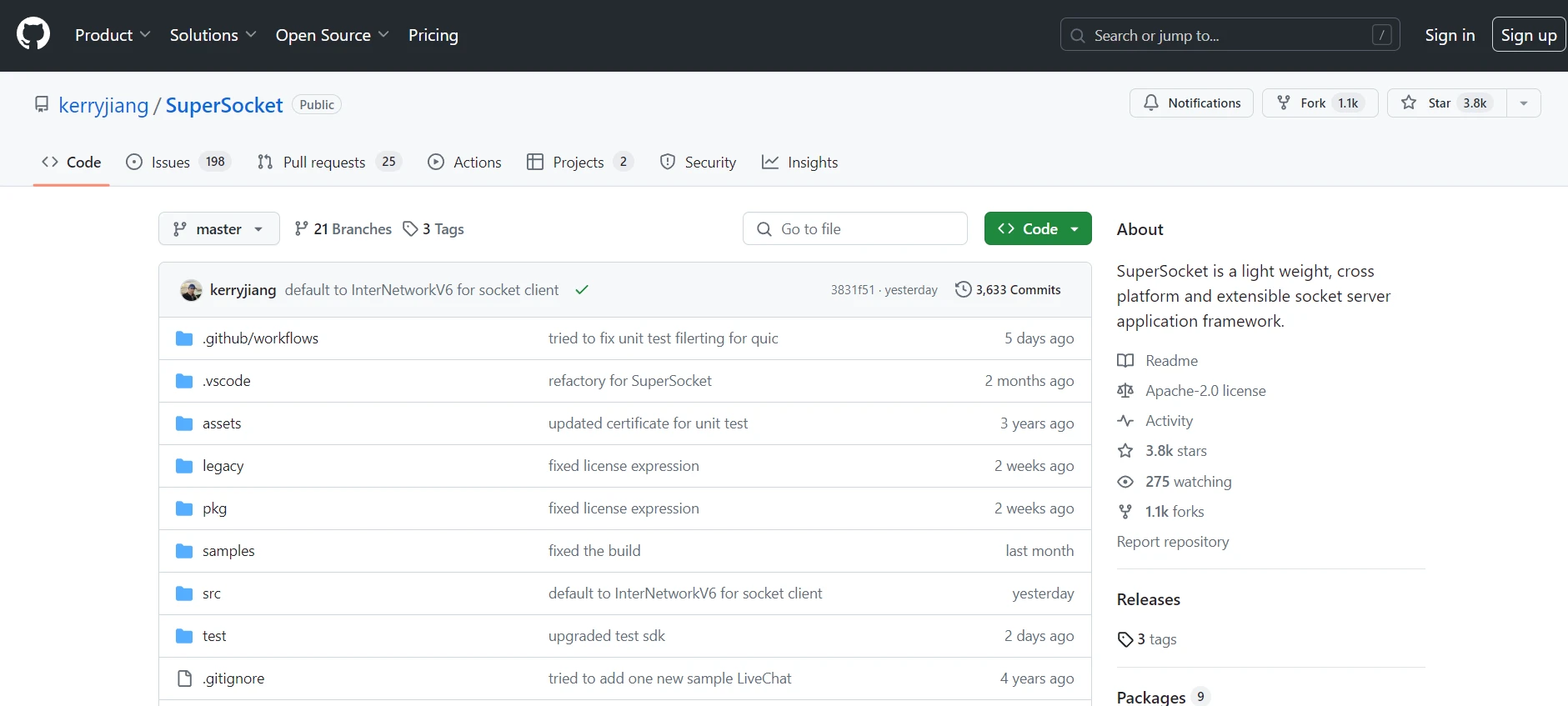
[**SuperSocket C#**](https://github.com/kerryjiang/SuperSocket) es un excelente marco para desarrollar una aplicación de socket del lado del servidor, ya sea que estés trabajando en un servidor GPS o en un sistema de control industrial. Admite varias implementaciones de protocolos de red y asegura que tu socket funcione eficientemente. Este ligero marco multiplataforma está diseñado para ser extensible, proporcionando flexibilidad para diferentes entornos. Con SuperSocket, puedes enviar fácilmente datos entre clientes y servidores, y su código fuente está disponible para personalización según los requisitos específicos del proyecto.
Es un marco de código abierto, por lo que cualquier desarrollador puede implementarlo y acceder a él a través de GitHub.
[**IronPDF**](/) es una potente biblioteca .NET para crear, editar y extraer contenido de documentos PDF. Está diseñado para desarrolladores que necesitan integrar funcionalidad PDF en sus aplicaciones. IronPDF admite varias características como generar PDFs desde HTML, fusionar PDFs, y extraer texto e imágenes de PDFs.
SuperSocket e IronPDF juntos pueden potenciar aplicaciones complejas del lado del servidor. Ofrecen una amplia gama de funcionalidades para satisfacer las necesidades de los desarrolladores modernos de .NET. Estas bibliotecas son perfectas, ya sea que estés creando un servidor de adquisición de datos o un robusto servidor de juegos donde las aplicaciones de chat en tiempo real son necesarias.
## Getting Started with SuperSocket C#
### Configuración de SuperSocket C# en Proyectos .NET
Para comenzar a usar SuperSocket C#, debes configurar tu proyecto .NET. Primero, instala el paquete SuperSocket NuGet. Abre tu proyecto en Visual Studio y ejecuta el siguiente comando en la Consola del Administrador de Paquetes:
```shell
:InstallCmd Install-Package SuperSocket
```
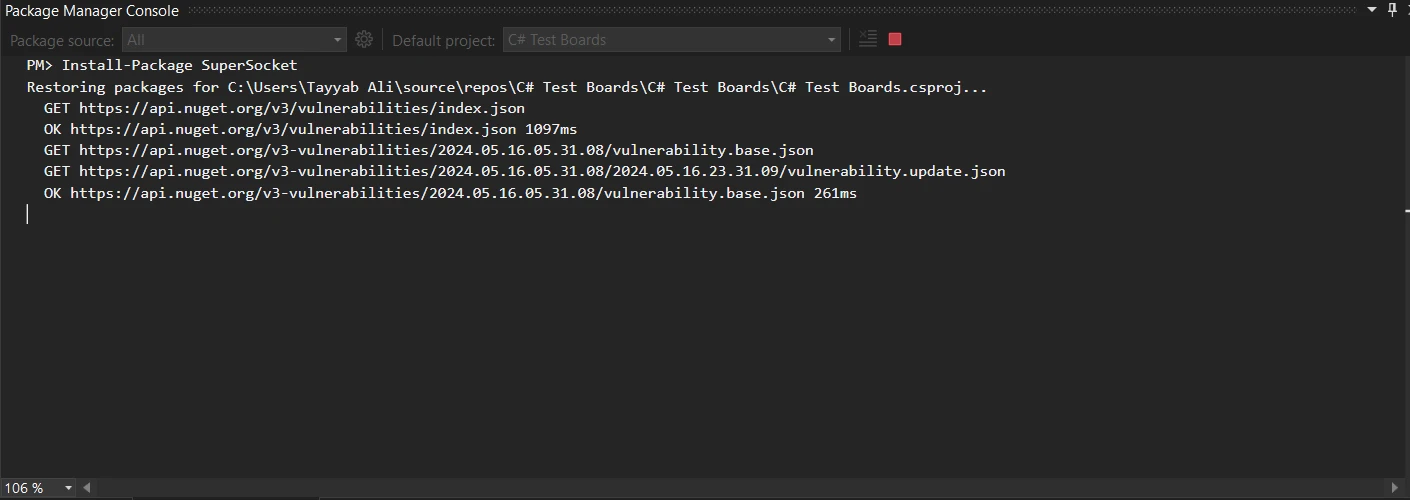
Una vez instalado, puedes configurar tu instancia de servidor. Cree un nuevo archivo de configuración llamado `appsettings.json`. Este archivo definirá la configuración del servidor, incluidos los oyentes y protocolos.
```json
{
  "serverOptions": {
    "name": "SuperSocketServer",
    "listeners": [
      {
        "ip": "Any",
        "port": 4040
      }
    ]
  }
}
```
Luego, crea una clase para configurar el servidor. Esta clase leerá la configuración desde `appsettings.json` e inicializará la instancia del servidor.
```csharp
using Microsoft.Extensions.Configuration;
using SuperSocket;
using SuperSocket.Server;

public class ServerConfig
{
    public async Task Configure()
    {
        var host = SuperSocketHostBuilder.Create()
            .UseTcpServer()
            .UseSession<YourSession>()
            .ConfigureAppConfiguration((hostCtx, configApp) =>
            {
                configApp.AddJsonFile("appsettings.json", optional: false, reloadOnChange: true);
            })
            .Build();
        await host.RunAsync();
    }
}
```
### Un Ejemplo Básico de SuperSocket C#
Veamos un ejemplo básico de una aplicación SuperSocket C#. Este ejemplo demuestra cómo crear un servidor de eco simple que envía de vuelta cualquier dato recibido.
Primero, define la clase de sesión. Esta clase manejará las conexiones de socket y administrará la comunicación de datos.
```csharp
using SuperSocket;
public class EchoSession : AppSession
{
protected override async ValueTask OnSessionStartedAsync()
{
await base.OnSessionStartedAsync();
Console.WriteLine("New session started.");
}
protected override async ValueTask OnSessionClosedAsync(CloseEventArgs e)
{
await base.OnSessionClosedAsync(e);
Console.WriteLine("Session closed.");
}
protected override async ValueTask OnPackageReceivedAsync(ReadOnlyMemory<byte> package)
{
await SendAsync(package);
}
}
```
Luego, configura y ejecuta el servidor con la sesión de eco.
```csharp
using Microsoft.Extensions.Configuration;
using SuperSocket;
using SuperSocket.Server;
public class EchoServer
{
public static async Task Main(string[] args)
{
var host = SuperSocketHostBuilder.Create()
.UseTcpServer()
.UseSession<EchoSession>()
.ConfigureAppConfiguration((hostCtx, configApp) =>
{
configApp.AddJsonFile("appsettings.json", optional: false, reloadOnChange: true);
})
.Build();
await host.RunAsync();
}
}
```
Este ejemplo muestra cómo crear un servidor de eco simple usando SuperSocket C#. El servidor escucha las conexiones y devuelve cualquier dato que recibe.
## Implementing Features of SuperSocket C#
### Manejo de múltiples receptores
SuperSocket C# admite múltiples oyentes, lo que permite a tu servidor manejar diferentes protocolos y puertos. Esta función es útil para crear aplicaciones versátiles como servidores de adquisición de datos y servidores GPS.
Primero, actualice su `appsettings.json` para incluir múltiples escuchas:
```json
{
"serverOptions": {
"name": "MultiListenerServer",
"listeners": [
{
"ip": "Any",
"port": 4040
},
{
"ip": "Any",
"port": 5050
}
]
}
}
```
A continuación, configura el servidor para usar estos oyentes:
```csharp
using Microsoft.Extensions.Configuration;
using SuperSocket;
using SuperSocket.Server;
public class MultiListenerServer
{
public static async Task Main(string[] args)
{
var host = SuperSocketHostBuilder.Create()
.UseTcpServer()
.UseSession<YourSession>()
.ConfigureAppConfiguration((hostCtx, configApp) =>
{
configApp.AddJsonFile("appsettings.json", optional: false, reloadOnChange: true);
})
.Build();
await host.RunAsync();
}
}
```
Con esta configuración, tu servidor puede manejar conexiones en ambos puertos 4040 y 5050. Esta capacidad es crucial para aplicaciones que necesitan gestionar varios protocolos de red.
### Implementación del manejo de datos binarios
SuperSocket C# es eficiente en el manejo de datos binarios. Esto es importante para aplicaciones que requieren compatibilidad a nivel binario, como sistemas de control industrial.
Primero, define una clase de sesión que procese datos binarios:
```csharp
using System;
using SuperSocket;
public class BinaryDataSession : AppSession
{
protected override async ValueTask OnPackageReceivedAsync(ReadOnlyMemory<byte> package)
{
var data = package.ToArray();
Console.WriteLine("Received binary data: " + BitConverter.ToString(data));
await SendAsync(data);
}
}
```
A continuación, configura y ejecuta el servidor con la sesión de datos binarios:
```csharp
using Microsoft.Extensions.Configuration;
using SuperSocket;
using SuperSocket.Server;
public class BinaryDataServer
{
public static async Task Main(string[] args)
{
var host = SuperSocketHostBuilder.Create()
.UseTcpServer()
.UseSession<BinaryDataSession>()
.ConfigureAppConfiguration((hostCtx, configApp) =>
{
configApp.AddJsonFile("appsettings.json", optional: false, reloadOnChange: true);
})
.Build();
await host.RunAsync();
}
}
```
Este ejemplo demuestra cómo recibir y enviar datos binarios usando SuperSocket C#. Es útil para aplicaciones de alto rendimiento que necesitan procesar protocolos binarios.
### Gestión de conexiones de socket
Mantener conexiones de socket es esencial para asegurar una comunicación confiable. SuperSocket C# simplifica este proceso.
Primero, define una clase de sesión que gestione las conexiones de socket:
```csharp
using SuperSocket;
public class ConnectionSession : AppSession
{
protected override async ValueTask OnSessionStartedAsync()
{
await base.OnSessionStartedAsync();
Console.WriteLine("Connection started.");
}
protected override async ValueTask OnSessionClosedAsync(CloseEventArgs e)
{
await base.OnSessionClosedAsync(e);
Console.WriteLine("Connection closed.");
}
protected override async ValueTask OnPackageReceivedAsync(ReadOnlyMemory<byte> package)
{
await SendAsync(package);
}
}
```
A continuación, configura y ejecuta el servidor con la sesión de conexión:
```csharp
using Microsoft.Extensions.Configuration;
using SuperSocket;
using SuperSocket.Server;
public class ConnectionServer
{
public static async Task Main(string[] args)
{
var host = SuperSocketHostBuilder.Create()
.UseTcpServer()
.UseSession<ConnectionSession>()
.ConfigureAppConfiguration((hostCtx, configApp) =>
{
configApp.AddJsonFile("appsettings.json", optional: false, reloadOnChange: true);
})
.Build();
await host.RunAsync();
}
}
```
Esta configuración ayuda a gestionar las conexiones de socket, asegurando que tu servidor permanezca robusto y confiable.
### Creación de un servidor de línea de comandos
SuperSocket C# admite la creación de servidores de línea de comandos. Esta función es útil para aplicaciones que requieren protocolos simples basados en texto.
Primero, define una clase de comando que procese comandos de texto:
```csharp
using System.Text;
using System.Threading.Tasks;
using SuperSocket.Command;
using SuperSocket.ProtoBase;
public class MyCommand : IAsyncCommand<AppSession, StringPackageInfo>
{
public async ValueTask ExecuteAsync(AppSession session, StringPackageInfo package)
{
var commandKey = package.Key;
var parameters = package.Parameters;
await session.SendAsync(Encoding.UTF8.GetBytes($"You said: {string.Join(' ', parameters)}"));
}
}
```
A continuación, configura el servidor para usar el comando:
```csharp
using Microsoft.Extensions.Configuration;
using SuperSocket;
using SuperSocket.Command;
using SuperSocket.ProtoBase;
using SuperSocket.Server;
public class CommandLineServer
{
public static async Task Main(string[] args)
{
var host = SuperSocketHostBuilder.Create()
.UseTcpServer()
.UseSession<AppSession>()
.UseCommand<StringPackageParser>()
.AddCommand<MyCommand>()
.ConfigureAppConfiguration((hostCtx, configApp) =>
{
configApp.AddJsonFile("appsettings.json", optional: false, reloadOnChange: true);
})
.Build();
await host.RunAsync();
}
}
```
Este ejemplo muestra cómo crear un servidor de línea de comandos simple usando SuperSocket C#. Es ideal para protocolos ligeros basados en texto.
# Integrating SuperSocket C# with IronPDF
Integrar IronPDF con SuperSocket en tus aplicaciones C# puede mejorar significativamente las capacidades de tu servidor, especialmente cuando se trata de manejar archivos PDF. Exploremos cómo fusionar efectivamente estas dos poderosas bibliotecas.
### Introducción a IronPDF
[**IronPDF for .NET Library**](/) es una versátil biblioteca .NET diseñada para crear, editar y extraer contenido de documentos PDF. Ya sea que necesites generar informes, facturas u otros documentos basados en PDF, IronPDF proporciona una API fácil de usar para realizar estas tareas. Su característica principal son sus capacidades de [**Conversión de HTML a PDF**](/examples/using-html-to-create-a-pdf/). Es una gran herramienta para desarrolladores que buscan incorporar funcionalidad PDF en sus aplicaciones sin lidiar con las complejidades de las especificaciones PDF.
IronPDF se destaca en la conversión de [HTML a PDF](/tutorials/html-to-pdf/), asegurando la preservación precisa de los diseños y estilos originales. Es perfecto para crear PDFs a partir de contenido basado en la web como informes, facturas y documentación. Con soporte para archivos HTML, URLs y cadenas HTML en bruto, IronPDF produce fácilmente documentos PDF de alta calidad.
```csharp
using IronPdf;
class Program
{
static void Main(string[] args)
{
var renderer = new ChromePdfRenderer();
// 1. Convert HTML String to PDF
var htmlContent = "<h1>Hello, IronPDF!</h1><p>This is a PDF from an HTML string.</p>";
var pdfFromHtmlString = renderer.RenderHtmlAsPdf(htmlContent);
pdfFromHtmlString.SaveAs("HTMLStringToPDF.pdf");
// 2. Convert HTML File to PDF
var htmlFilePath = "path_to_your_html_file.html"; // Specify the path to your HTML file
var pdfFromHtmlFile = renderer.RenderHtmlFileAsPdf(htmlFilePath);
pdfFromHtmlFile.SaveAs("HTMLFileToPDF.pdf");
// 3. Convert URL to PDF
var url = "http://ironpdf.com"; // Specify the URL
var pdfFromUrl = renderer.RenderUrlAsPdf(url);
pdfFromUrl.SaveAs("URLToPDF.pdf");
}
}
```
### Use Case of Merging IronPDF with SuperSocket C#
Imagina que tienes un servidor construido con SuperSocket que necesita manejar solicitudes de clientes para generar y enviar documentos PDF de manera dinámica. Al integrar IronPDF, tu servidor puede procesar estas solicitudes, crear PDFs al instante y enviarlos de vuelta a los clientes de forma fluida.
## Ejemplo de código del caso de uso
Aquí tienes un ejemplo de código completo que demuestra cómo integrar IronPDF con SuperSocket. Este ejemplo configura un servidor SuperSocket simple que escucha conexiones de clientes, procesa una solicitud para generar un PDF, y envía el PDF generado de regreso al cliente.
```csharp
using System;
using System.Net;
using System.Text;
using IronPdf;
using SuperSocket.SocketBase;
using SuperSocket.SocketBase.Protocol;
namespace SuperSocket IronPDFExample
{
class Program
{
static void Main(string[] args)
{
var appServer = new AppServer();
var serverConfig = new SuperSocket.SocketBase.Config.ServerConfig
{
Name = "SuperSocketServer",
Ip = "Any",
Port = 2012,
Mode = SuperSocket.SocketBase.SocketMode.Tcp,
MaxConnectionNumber = 100,
};
if (!appServer.Setup(serverConfig))
{
Console.WriteLine("Failed to set up!");
return;
}
appServer.NewSessionConnected += NewSessionConnected;
appServer.NewRequestReceived += (session, requestInfo) =>
{
if (requestInfo.Key == "GENPDF")
{
var pdfDocument = CreatePdfDocument(requestInfo.Body);
var pdfBytes = pdfDocument.BinaryData;
session.Send(pdfBytes, 0, pdfBytes.Length);
Console.WriteLine("PDF document sent to client.");
}
};
if (!appServer.Start())
{
Console.WriteLine("Failed to start!");
return;
}
Console.WriteLine("Server is running. Press any key to stop...");
Console.ReadKey();
appServer.Stop();
}
private static PdfDocument CreatePdfDocument(string content)
{
var pdfRenderer = new ChromePdfRenderer();
var pdfDocument = pdfRenderer.RenderHtmlAsPdf(content);
return pdfDocument;
}
private static void NewSessionConnected(AppSession session)
{
Console.WriteLine($"New session connected: {session.SessionID}");
}
}
public class AppServer : AppServer<AppSession, StringRequestInfo>
{
}
public class AppSession : AppSession<AppSession, StringRequestInfo>
{
}
}
```
Esta integración te permite aprovechar las poderosas características de IronPDF dentro de un servidor SuperSocket, habilitando la generación dinámica de PDF y una comunicación cliente-servidor eficiente.
## Conclusión
Integrar SuperSocket con las [**Características Completas de IronPDF**](/) es una combinación poderosa para crear aplicaciones de servidor dinámicas y de alto rendimiento que pueden manejar la generación y el procesamiento de PDF de manera fluida. Con el robusto marco de servidor de socket de SuperSocket y las amplias funcionalidades de PDF de IronPDF, puedes desarrollar aplicaciones escalables y versátiles para satisfacer diversas necesidades, desde sistemas de adquisición de datos hasta servidores de juegos y sistemas de control industrial.
IronPDF ofrece una [**prueba gratuita**](trial-license), y sus licencias comienzan desde `$liteLicense`, proporcionando un excelente valor por las amplias capacidades que brinda a sus proyectos de desarrollo. Al fusionar estas dos bibliotecas, puedes simplificar la capacidad de tu servidor para manejar tareas complejas de manera eficiente, mejorando tanto la funcionalidad como el rendimiento.
Desarrollo de una aplicación de socket del lado del servidor con SuperSocket e integración de IronPDF
SuperSocket C# es un excelente marco para desarrollar una aplicación de socket del lado del servidor, ya sea que estés trabajando en un servidor GPS o en un sistema de control industrial. Admite varias implementaciones de protocolos de red y asegura que tu socket funcione eficientemente. Este ligero marco multiplataforma está diseñado para ser extensible, proporcionando flexibilidad para diferentes entornos. Con SuperSocket, puedes enviar fácilmente datos entre clientes y servidores, y su código fuente está disponible para personalización según los requisitos específicos del proyecto.
Es un marco de código abierto, por lo que cualquier desarrollador puede implementarlo y acceder a él a través de GitHub.
IronPDF es una potente biblioteca .NET para crear, editar y extraer contenido de documentos PDF. Está diseñado para desarrolladores que necesitan integrar funcionalidad PDF en sus aplicaciones. IronPDF admite varias características como generar PDFs desde HTML, fusionar PDFs, y extraer texto e imágenes de PDFs.
SuperSocket e IronPDF juntos pueden potenciar aplicaciones complejas del lado del servidor. Ofrecen una amplia gama de funcionalidades para satisfacer las necesidades de los desarrolladores modernos de .NET. Estas bibliotecas son perfectas, ya sea que estés creando un servidor de adquisición de datos o un robusto servidor de juegos donde las aplicaciones de chat en tiempo real son necesarias.
Getting Started with SuperSocket C#
Configuración de SuperSocket C# en Proyectos .NET
Para comenzar a usar SuperSocket C#, debes configurar tu proyecto .NET. Primero, instala el paquete SuperSocket NuGet. Abre tu proyecto en Visual Studio y ejecuta el siguiente comando en la Consola del Administrador de Paquetes:
PM > Install-Package SuperSocket
Install-Package SuperSocket
Una vez instalado, puedes configurar tu instancia de servidor. Cree un nuevo archivo de configuración llamado appsettings.json. Este archivo definirá la configuración del servidor, incluidos los oyentes y protocolos.
Luego, crea una clase para configurar el servidor. Esta clase leerá la configuración desde appsettings.json e inicializará la instancia del servidor.
using Microsoft.Extensions.Configuration;using SuperSocket;using SuperSocket.Server;public class ServerConfig{ public async TaskConfigure() { var host = SuperSocketHostBuilder.Create() .UseTcpServer() .UseSession<YourSession>() .ConfigureAppConfiguration((hostCtx, configApp) => { configApp.AddJsonFile("appsettings.json", optional: false, reloadOnChange: true); }) .Build(); await host.RunAsync(); }}
using Microsoft.Extensions.Configuration;
using SuperSocket;
using SuperSocket.Server;

public class ServerConfig
{
    public async Task Configure()
    {
        var host = SuperSocketHostBuilder.Create()
            .UseTcpServer()
            .UseSession<YourSession>()
            .ConfigureAppConfiguration((hostCtx, configApp) =>
            {
                configApp.AddJsonFile("appsettings.json", optional: false, reloadOnChange: true);
            })
            .Build();
        await host.RunAsync();
    }
}
ImportsMicrosoft.Extensions.ConfigurationImportsSuperSocketImportsSuperSocket.ServerPublic Class ServerConfig PublicAsync Function Configure() AsTask Dim host = SuperSocketHostBuilder.Create().UseTcpServer().UseSession(OfYourSession)().ConfigureAppConfiguration(Sub(hostCtx, configApp) configApp.AddJsonFile("appsettings.json", [optional]:= False, reloadOnChange:= True) End Sub).Build()Await host.RunAsync() End FunctionEnd Class
Imports Microsoft.Extensions.Configuration
Imports SuperSocket
Imports SuperSocket.Server

Public Class ServerConfig
	Public Async Function Configure() As Task
		Dim host = SuperSocketHostBuilder.Create().UseTcpServer().UseSession(Of YourSession)().ConfigureAppConfiguration(Sub(hostCtx, configApp)
				configApp.AddJsonFile("appsettings.json", [optional]:= False, reloadOnChange:= True)
		End Sub).Build()
		Await host.RunAsync()
	End Function
End Class
Un Ejemplo Básico de SuperSocket C#
Veamos un ejemplo básico de una aplicación SuperSocket C#. Este ejemplo demuestra cómo crear un servidor de eco simple que envía de vuelta cualquier dato recibido.
Primero, define la clase de sesión. Esta clase manejará las conexiones de socket y administrará la comunicación de datos.
ImportsSuperSocketPublic Class EchoSessionInheritsAppSessionProtectedOverridesAsync Function OnSessionStartedAsync() AsValueTaskAwaitMyBase.OnSessionStartedAsync()Console.WriteLine("New session started.") End FunctionProtectedOverridesAsync Function OnSessionClosedAsync(ByVal e AsCloseEventArgs) AsValueTaskAwaitMyBase.OnSessionClosedAsync(e)Console.WriteLine("Session closed.") End FunctionProtectedOverridesAsync Function OnPackageReceivedAsync(ByVal package AsReadOnlyMemory(OfByte)) AsValueTaskAwaitSendAsync(package) End FunctionEnd Class
Imports SuperSocket

Public Class EchoSession
	Inherits AppSession

	Protected Overrides Async Function OnSessionStartedAsync() As ValueTask
		Await MyBase.OnSessionStartedAsync()
		Console.WriteLine("New session started.")
	End Function

	Protected Overrides Async Function OnSessionClosedAsync(ByVal e As CloseEventArgs) As ValueTask
		Await MyBase.OnSessionClosedAsync(e)
		Console.WriteLine("Session closed.")
	End Function

	Protected Overrides Async Function OnPackageReceivedAsync(ByVal package As ReadOnlyMemory(Of Byte)) As ValueTask
		Await SendAsync(package)
	End Function
End Class
Luego, configura y ejecuta el servidor con la sesión de eco.
using Microsoft.Extensions.Configuration;using SuperSocket;using SuperSocket.Server;public class EchoServer{ public static async TaskMain(string[] args) { var host = SuperSocketHostBuilder.Create() .UseTcpServer() .UseSession<EchoSession>() .ConfigureAppConfiguration((hostCtx, configApp) => { configApp.AddJsonFile("appsettings.json", optional: false, reloadOnChange: true); }) .Build(); await host.RunAsync(); }}
using Microsoft.Extensions.Configuration;
using SuperSocket;
using SuperSocket.Server;

public class EchoServer
{
    public static async Task Main(string[] args)
    {
        var host = SuperSocketHostBuilder.Create()
            .UseTcpServer()
            .UseSession<EchoSession>()
            .ConfigureAppConfiguration((hostCtx, configApp) =>
            {
                configApp.AddJsonFile("appsettings.json", optional: false, reloadOnChange: true);
            })
            .Build();
        await host.RunAsync();
    }
}
ImportsMicrosoft.Extensions.ConfigurationImportsSuperSocketImportsSuperSocket.ServerPublic Class EchoServer PublicSharedAsync Function Main(ByVal args() AsString) AsTask Dim host = SuperSocketHostBuilder.Create().UseTcpServer().UseSession(OfEchoSession)().ConfigureAppConfiguration(Sub(hostCtx, configApp) configApp.AddJsonFile("appsettings.json", [optional]:= False, reloadOnChange:= True) End Sub).Build()Await host.RunAsync() End FunctionEnd Class
Imports Microsoft.Extensions.Configuration
Imports SuperSocket
Imports SuperSocket.Server

Public Class EchoServer
	Public Shared Async Function Main(ByVal args() As String) As Task
		Dim host = SuperSocketHostBuilder.Create().UseTcpServer().UseSession(Of EchoSession)().ConfigureAppConfiguration(Sub(hostCtx, configApp)
				configApp.AddJsonFile("appsettings.json", [optional]:= False, reloadOnChange:= True)
		End Sub).Build()
		Await host.RunAsync()
	End Function
End Class
Este ejemplo muestra cómo crear un servidor de eco simple usando SuperSocket C#. El servidor escucha las conexiones y devuelve cualquier dato que recibe.
Implementing Features of SuperSocket C#
Manejo de múltiples receptores
SuperSocket C# admite múltiples oyentes, lo que permite a tu servidor manejar diferentes protocolos y puertos. Esta función es útil para crear aplicaciones versátiles como servidores de adquisición de datos y servidores GPS.
Primero, actualice su appsettings.json para incluir múltiples escuchas:
A continuación, configura el servidor para usar estos oyentes:
using Microsoft.Extensions.Configuration;using SuperSocket;using SuperSocket.Server;public class MultiListenerServer{ public static async TaskMain(string[] args) { var host = SuperSocketHostBuilder.Create() .UseTcpServer() .UseSession<YourSession>() .ConfigureAppConfiguration((hostCtx, configApp) => { configApp.AddJsonFile("appsettings.json", optional: false, reloadOnChange: true); }) .Build(); await host.RunAsync(); }}
using Microsoft.Extensions.Configuration;
using SuperSocket;
using SuperSocket.Server;

public class MultiListenerServer
{
    public static async Task Main(string[] args)
    {
        var host = SuperSocketHostBuilder.Create()
            .UseTcpServer()
            .UseSession<YourSession>()
            .ConfigureAppConfiguration((hostCtx, configApp) =>
            {
                configApp.AddJsonFile("appsettings.json", optional: false, reloadOnChange: true);
            })
            .Build();
        await host.RunAsync();
    }
}
ImportsMicrosoft.Extensions.ConfigurationImportsSuperSocketImportsSuperSocket.ServerPublic Class MultiListenerServer PublicSharedAsync Function Main(ByVal args() AsString) AsTask Dim host = SuperSocketHostBuilder.Create().UseTcpServer().UseSession(OfYourSession)().ConfigureAppConfiguration(Sub(hostCtx, configApp) configApp.AddJsonFile("appsettings.json", [optional]:= False, reloadOnChange:= True) End Sub).Build()Await host.RunAsync() End FunctionEnd Class
Imports Microsoft.Extensions.Configuration
Imports SuperSocket
Imports SuperSocket.Server

Public Class MultiListenerServer
	Public Shared Async Function Main(ByVal args() As String) As Task
		Dim host = SuperSocketHostBuilder.Create().UseTcpServer().UseSession(Of YourSession)().ConfigureAppConfiguration(Sub(hostCtx, configApp)
				configApp.AddJsonFile("appsettings.json", [optional]:= False, reloadOnChange:= True)
		End Sub).Build()
		Await host.RunAsync()
	End Function
End Class
Con esta configuración, tu servidor puede manejar conexiones en ambos puertos 4040 y 5050. Esta capacidad es crucial para aplicaciones que necesitan gestionar varios protocolos de red.
Implementación del manejo de datos binarios
SuperSocket C# es eficiente en el manejo de datos binarios. Esto es importante para aplicaciones que requieren compatibilidad a nivel binario, como sistemas de control industrial.
Primero, define una clase de sesión que procese datos binarios:
using System;using SuperSocket;public class BinaryDataSession : AppSession{ protected override async ValueTaskOnPackageReceivedAsync(ReadOnlyMemory<byte> package) { var data = package.ToArray();Console.WriteLine("Received binary data: " + BitConverter.ToString(data)); awaitSendAsync(data); }}
using System;
using SuperSocket;

public class BinaryDataSession : AppSession
{
    protected override async ValueTask OnPackageReceivedAsync(ReadOnlyMemory<byte> package)
    {
        var data = package.ToArray();
        Console.WriteLine("Received binary data: " + BitConverter.ToString(data));
        await SendAsync(data);
    }
}
ImportsSystemImportsSuperSocketPublic Class BinaryDataSessionInheritsAppSessionProtectedOverridesAsync Function OnPackageReceivedAsync(ByVal package AsReadOnlyMemory(OfByte)) AsValueTask Dim data = package.ToArray()Console.WriteLine("Received binary data: " & BitConverter.ToString(data))AwaitSendAsync(data) End FunctionEnd Class
Imports System
Imports SuperSocket

Public Class BinaryDataSession
	Inherits AppSession

	Protected Overrides Async Function OnPackageReceivedAsync(ByVal package As ReadOnlyMemory(Of Byte)) As ValueTask
		Dim data = package.ToArray()
		Console.WriteLine("Received binary data: " & BitConverter.ToString(data))
		Await SendAsync(data)
	End Function
End Class
A continuación, configura y ejecuta el servidor con la sesión de datos binarios:
using Microsoft.Extensions.Configuration;using SuperSocket;using SuperSocket.Server;public class BinaryDataServer{ public static async TaskMain(string[] args) { var host = SuperSocketHostBuilder.Create() .UseTcpServer() .UseSession<BinaryDataSession>() .ConfigureAppConfiguration((hostCtx, configApp) => { configApp.AddJsonFile("appsettings.json", optional: false, reloadOnChange: true); }) .Build(); await host.RunAsync(); }}
using Microsoft.Extensions.Configuration;
using SuperSocket;
using SuperSocket.Server;

public class BinaryDataServer
{
    public static async Task Main(string[] args)
    {
        var host = SuperSocketHostBuilder.Create()
            .UseTcpServer()
            .UseSession<BinaryDataSession>()
            .ConfigureAppConfiguration((hostCtx, configApp) =>
            {
                configApp.AddJsonFile("appsettings.json", optional: false, reloadOnChange: true);
            })
            .Build();
        await host.RunAsync();
    }
}
ImportsMicrosoft.Extensions.ConfigurationImportsSuperSocketImportsSuperSocket.ServerPublic Class BinaryDataServer PublicSharedAsync Function Main(ByVal args() AsString) AsTask Dim host = SuperSocketHostBuilder.Create().UseTcpServer().UseSession(OfBinaryDataSession)().ConfigureAppConfiguration(Sub(hostCtx, configApp) configApp.AddJsonFile("appsettings.json", [optional]:= False, reloadOnChange:= True) End Sub).Build()Await host.RunAsync() End FunctionEnd Class
Imports Microsoft.Extensions.Configuration
Imports SuperSocket
Imports SuperSocket.Server

Public Class BinaryDataServer
	Public Shared Async Function Main(ByVal args() As String) As Task
		Dim host = SuperSocketHostBuilder.Create().UseTcpServer().UseSession(Of BinaryDataSession)().ConfigureAppConfiguration(Sub(hostCtx, configApp)
				configApp.AddJsonFile("appsettings.json", [optional]:= False, reloadOnChange:= True)
		End Sub).Build()
		Await host.RunAsync()
	End Function
End Class
Este ejemplo demuestra cómo recibir y enviar datos binarios usando SuperSocket C#. Es útil para aplicaciones de alto rendimiento que necesitan procesar protocolos binarios.
Gestión de conexiones de socket
Mantener conexiones de socket es esencial para asegurar una comunicación confiable. SuperSocket C# simplifica este proceso.
Primero, define una clase de sesión que gestione las conexiones de socket:
ImportsSuperSocketPublic Class ConnectionSessionInheritsAppSessionProtectedOverridesAsync Function OnSessionStartedAsync() AsValueTaskAwaitMyBase.OnSessionStartedAsync()Console.WriteLine("Connection started.") End FunctionProtectedOverridesAsync Function OnSessionClosedAsync(ByVal e AsCloseEventArgs) AsValueTaskAwaitMyBase.OnSessionClosedAsync(e)Console.WriteLine("Connection closed.") End FunctionProtectedOverridesAsync Function OnPackageReceivedAsync(ByVal package AsReadOnlyMemory(OfByte)) AsValueTaskAwaitSendAsync(package) End FunctionEnd Class
Imports SuperSocket

Public Class ConnectionSession
	Inherits AppSession

	Protected Overrides Async Function OnSessionStartedAsync() As ValueTask
		Await MyBase.OnSessionStartedAsync()
		Console.WriteLine("Connection started.")
	End Function

	Protected Overrides Async Function OnSessionClosedAsync(ByVal e As CloseEventArgs) As ValueTask
		Await MyBase.OnSessionClosedAsync(e)
		Console.WriteLine("Connection closed.")
	End Function

	Protected Overrides Async Function OnPackageReceivedAsync(ByVal package As ReadOnlyMemory(Of Byte)) As ValueTask
		Await SendAsync(package)
	End Function
End Class
A continuación, configura y ejecuta el servidor con la sesión de conexión:
using Microsoft.Extensions.Configuration;using SuperSocket;using SuperSocket.Server;public class ConnectionServer{ public static async TaskMain(string[] args) { var host = SuperSocketHostBuilder.Create() .UseTcpServer() .UseSession<ConnectionSession>() .ConfigureAppConfiguration((hostCtx, configApp) => { configApp.AddJsonFile("appsettings.json", optional: false, reloadOnChange: true); }) .Build(); await host.RunAsync(); }}
using Microsoft.Extensions.Configuration;
using SuperSocket;
using SuperSocket.Server;

public class ConnectionServer
{
    public static async Task Main(string[] args)
    {
        var host = SuperSocketHostBuilder.Create()
            .UseTcpServer()
            .UseSession<ConnectionSession>()
            .ConfigureAppConfiguration((hostCtx, configApp) =>
            {
                configApp.AddJsonFile("appsettings.json", optional: false, reloadOnChange: true);
            })
            .Build();
        await host.RunAsync();
    }
}
ImportsMicrosoft.Extensions.ConfigurationImportsSuperSocketImportsSuperSocket.ServerPublic Class ConnectionServer PublicSharedAsync Function Main(ByVal args() AsString) AsTask Dim host = SuperSocketHostBuilder.Create().UseTcpServer().UseSession(OfConnectionSession)().ConfigureAppConfiguration(Sub(hostCtx, configApp) configApp.AddJsonFile("appsettings.json", [optional]:= False, reloadOnChange:= True) End Sub).Build()Await host.RunAsync() End FunctionEnd Class
Imports Microsoft.Extensions.Configuration
Imports SuperSocket
Imports SuperSocket.Server

Public Class ConnectionServer
	Public Shared Async Function Main(ByVal args() As String) As Task
		Dim host = SuperSocketHostBuilder.Create().UseTcpServer().UseSession(Of ConnectionSession)().ConfigureAppConfiguration(Sub(hostCtx, configApp)
				configApp.AddJsonFile("appsettings.json", [optional]:= False, reloadOnChange:= True)
		End Sub).Build()
		Await host.RunAsync()
	End Function
End Class
Esta configuración ayuda a gestionar las conexiones de socket, asegurando que tu servidor permanezca robusto y confiable.
Creación de un servidor de línea de comandos
SuperSocket C# admite la creación de servidores de línea de comandos. Esta función es útil para aplicaciones que requieren protocolos simples basados en texto.
Primero, define una clase de comando que procese comandos de texto:
using System.Text;using System.Threading.Tasks;using SuperSocket.Command;using SuperSocket.ProtoBase;public class MyCommand : IAsyncCommand<AppSession, StringPackageInfo>{ public async ValueTaskExecuteAsync(AppSession session, StringPackageInfo package) { var commandKey = package.Key; var parameters = package.Parameters; await session.SendAsync(Encoding.UTF8.GetBytes($"You said: {string.Join(' ', parameters)}")); }}
using System.Text;
using System.Threading.Tasks;
using SuperSocket.Command;
using SuperSocket.ProtoBase;

public class MyCommand : IAsyncCommand<AppSession, StringPackageInfo>
{
    public async ValueTask ExecuteAsync(AppSession session, StringPackageInfo package)
    {
        var commandKey = package.Key;
        var parameters = package.Parameters;
        await session.SendAsync(Encoding.UTF8.GetBytes($"You said: {string.Join(' ', parameters)}"));
    }
}
ImportsSystem.TextImportsSystem.Threading.TasksImportsSuperSocket.CommandImportsSuperSocket.ProtoBasePublic Class MyCommandImplementsIAsyncCommand(OfAppSession, StringPackageInfo) PublicAsync Function ExecuteAsync(ByValsessionAsAppSession, ByVal package AsStringPackageInfo) AsValueTask Dim commandKey = package.Key Dim parameters = package.ParametersAwaitsession.SendAsync(Encoding.UTF8.GetBytes($"You said: {String.Join(" "c, parameters)}")) End FunctionEnd Class
Imports System.Text
Imports System.Threading.Tasks
Imports SuperSocket.Command
Imports SuperSocket.ProtoBase

Public Class MyCommand
	Implements IAsyncCommand(Of AppSession, StringPackageInfo)

	Public Async Function ExecuteAsync(ByVal session As AppSession, ByVal package As StringPackageInfo) As ValueTask
		Dim commandKey = package.Key
		Dim parameters = package.Parameters
		Await session.SendAsync(Encoding.UTF8.GetBytes($"You said: {String.Join(" "c, parameters)}"))
	End Function
End Class
A continuación, configura el servidor para usar el comando:
using Microsoft.Extensions.Configuration;using SuperSocket;using SuperSocket.Command;using SuperSocket.ProtoBase;using SuperSocket.Server;public class CommandLineServer{ public static async TaskMain(string[] args) { var host = SuperSocketHostBuilder.Create() .UseTcpServer() .UseSession<AppSession>() .UseCommand<StringPackageParser>() .AddCommand<MyCommand>() .ConfigureAppConfiguration((hostCtx, configApp) => { configApp.AddJsonFile("appsettings.json", optional: false, reloadOnChange: true); }) .Build(); await host.RunAsync(); }}
using Microsoft.Extensions.Configuration;
using SuperSocket;
using SuperSocket.Command;
using SuperSocket.ProtoBase;
using SuperSocket.Server;

public class CommandLineServer
{
    public static async Task Main(string[] args)
    {
        var host = SuperSocketHostBuilder.Create()
            .UseTcpServer()
            .UseSession<AppSession>()
            .UseCommand<StringPackageParser>()
            .AddCommand<MyCommand>()
            .ConfigureAppConfiguration((hostCtx, configApp) =>
            {
                configApp.AddJsonFile("appsettings.json", optional: false, reloadOnChange: true);
            })
            .Build();
        await host.RunAsync();
    }
}
ImportsMicrosoft.Extensions.ConfigurationImportsSuperSocketImportsSuperSocket.CommandImportsSuperSocket.ProtoBaseImportsSuperSocket.ServerPublic Class CommandLineServer PublicSharedAsync Function Main(ByVal args() AsString) AsTask Dim host = SuperSocketHostBuilder.Create().UseTcpServer().UseSession(OfAppSession)().UseCommand(OfStringPackageParser)().AddCommand(OfMyCommand)().ConfigureAppConfiguration(Sub(hostCtx, configApp) configApp.AddJsonFile("appsettings.json", [optional]:= False, reloadOnChange:= True) End Sub).Build()Await host.RunAsync() End FunctionEnd Class
Imports Microsoft.Extensions.Configuration
Imports SuperSocket
Imports SuperSocket.Command
Imports SuperSocket.ProtoBase
Imports SuperSocket.Server

Public Class CommandLineServer
	Public Shared Async Function Main(ByVal args() As String) As Task
		Dim host = SuperSocketHostBuilder.Create().UseTcpServer().UseSession(Of AppSession)().UseCommand(Of StringPackageParser)().AddCommand(Of MyCommand)().ConfigureAppConfiguration(Sub(hostCtx, configApp)
				configApp.AddJsonFile("appsettings.json", [optional]:= False, reloadOnChange:= True)
		End Sub).Build()
		Await host.RunAsync()
	End Function
End Class
Este ejemplo muestra cómo crear un servidor de línea de comandos simple usando SuperSocket C#. Es ideal para protocolos ligeros basados en texto.
Integrating SuperSocket C# with IronPDF
Integrar IronPDF con SuperSocket en tus aplicaciones C# puede mejorar significativamente las capacidades de tu servidor, especialmente cuando se trata de manejar archivos PDF. Exploremos cómo fusionar efectivamente estas dos poderosas bibliotecas.
Introducción a IronPDF
IronPDF for .NET Library es una versátil biblioteca .NET diseñada para crear, editar y extraer contenido de documentos PDF. Ya sea que necesites generar informes, facturas u otros documentos basados en PDF, IronPDF proporciona una API fácil de usar para realizar estas tareas. Su característica principal son sus capacidades de Conversión de HTML a PDF. Es una gran herramienta para desarrolladores que buscan incorporar funcionalidad PDF en sus aplicaciones sin lidiar con las complejidades de las especificaciones PDF.
IronPDF se destaca en la conversión de HTML a PDF, asegurando la preservación precisa de los diseños y estilos originales. Es perfecto para crear PDFs a partir de contenido basado en la web como informes, facturas y documentación. Con soporte para archivos HTML, URLs y cadenas HTML en bruto, IronPDF produce fácilmente documentos PDF de alta calidad.
using IronPdf;class Program{ static voidMain(string[] args) { var renderer = new ChromePdfRenderer(); // 1. Convert HTML String to PDF var htmlContent = "<h1>Hello, IronPDF!</h1><p>This is a PDF from an HTML string.</p>"; var pdfFromHtmlString = renderer.RenderHtmlAsPdf(htmlContent); pdfFromHtmlString.SaveAs("HTMLStringToPDF.pdf"); // 2. Convert HTML File to PDF var htmlFilePath = "path_to_your_html_file.html"; // Specify the path to your HTML file var pdfFromHtmlFile = renderer.RenderHtmlFileAsPdf(htmlFilePath); pdfFromHtmlFile.SaveAs("HTMLFileToPDF.pdf"); // 3. Convert URL to PDF var url = "http://ironpdf.com"; // Specify the URL var pdfFromUrl = renderer.RenderUrlAsPdf(url); pdfFromUrl.SaveAs("URLToPDF.pdf"); }}
using IronPdf;

class Program
{
    static void Main(string[] args)
    {
        var renderer = new ChromePdfRenderer();

        // 1. Convert HTML String to PDF
        var htmlContent = "<h1>Hello, IronPDF!</h1><p>This is a PDF from an HTML string.</p>";
        var pdfFromHtmlString = renderer.RenderHtmlAsPdf(htmlContent);
        pdfFromHtmlString.SaveAs("HTMLStringToPDF.pdf");

        // 2. Convert HTML File to PDF
        var htmlFilePath = "path_to_your_html_file.html"; // Specify the path to your HTML file
        var pdfFromHtmlFile = renderer.RenderHtmlFileAsPdf(htmlFilePath);
        pdfFromHtmlFile.SaveAs("HTMLFileToPDF.pdf");

        // 3. Convert URL to PDF
        var url = "http://ironpdf.com"; // Specify the URL
        var pdfFromUrl = renderer.RenderUrlAsPdf(url);
        pdfFromUrl.SaveAs("URLToPDF.pdf");
    }
}
ImportsIronPdfFriend Class ProgramShared Sub Main(ByVal args() AsString) Dim renderer = New ChromePdfRenderer() ' 1. Convert HTML String to PDF Dim htmlContent = "<h1>Hello, IronPDF!</h1><p>This is a PDF from an HTML string.</p>" Dim pdfFromHtmlString = renderer.RenderHtmlAsPdf(htmlContent) pdfFromHtmlString.SaveAs("HTMLStringToPDF.pdf") ' 2. Convert HTML File to PDF Dim htmlFilePath = "path_to_your_html_file.html" ' Specify the path to your HTML file Dim pdfFromHtmlFile = renderer.RenderHtmlFileAsPdf(htmlFilePath) pdfFromHtmlFile.SaveAs("HTMLFileToPDF.pdf") ' 3. Convert URL to PDF Dim url = "http://ironpdf.com" ' Specify the URL Dim pdfFromUrl = renderer.RenderUrlAsPdf(url) pdfFromUrl.SaveAs("URLToPDF.pdf") End SubEnd Class
Imports IronPdf

Friend Class Program
	Shared Sub Main(ByVal args() As String)
		Dim renderer = New ChromePdfRenderer()

		' 1. Convert HTML String to PDF
		Dim htmlContent = "<h1>Hello, IronPDF!</h1><p>This is a PDF from an HTML string.</p>"
		Dim pdfFromHtmlString = renderer.RenderHtmlAsPdf(htmlContent)
		pdfFromHtmlString.SaveAs("HTMLStringToPDF.pdf")

		' 2. Convert HTML File to PDF
		Dim htmlFilePath = "path_to_your_html_file.html" ' Specify the path to your HTML file
		Dim pdfFromHtmlFile = renderer.RenderHtmlFileAsPdf(htmlFilePath)
		pdfFromHtmlFile.SaveAs("HTMLFileToPDF.pdf")

		' 3. Convert URL to PDF
		Dim url = "http://ironpdf.com" ' Specify the URL
		Dim pdfFromUrl = renderer.RenderUrlAsPdf(url)
		pdfFromUrl.SaveAs("URLToPDF.pdf")
	End Sub
End Class
Use Case of Merging IronPDF with SuperSocket C#
Imagina que tienes un servidor construido con SuperSocket que necesita manejar solicitudes de clientes para generar y enviar documentos PDF de manera dinámica. Al integrar IronPDF, tu servidor puede procesar estas solicitudes, crear PDFs al instante y enviarlos de vuelta a los clientes de forma fluida.
Ejemplo de código del caso de uso
Aquí tienes un ejemplo de código completo que demuestra cómo integrar IronPDF con SuperSocket. Este ejemplo configura un servidor SuperSocket simple que escucha conexiones de clientes, procesa una solicitud para generar un PDF, y envía el PDF generado de regreso al cliente.
using System;using System.Net;using System.Text;using IronPdf;using SuperSocket.SocketBase;using SuperSocket.SocketBase.Protocol;namespace SuperSocket IronPDFExample{ class Program { static voidMain(string[] args) { var appServer = new AppServer(); var serverConfig = new SuperSocket.SocketBase.Config.ServerConfig {Name = "SuperSocketServer",Ip = "Any",Port = 2012,Mode = SuperSocket.SocketBase.SocketMode.Tcp,MaxConnectionNumber = 100, }; if (!appServer.Setup(serverConfig)) {Console.WriteLine("Failed to set up!"); return; } appServer.NewSessionConnected += NewSessionConnected; appServer.NewRequestReceived += (session, requestInfo) => { if (requestInfo.Key == "GENPDF") { var pdfDocument = CreatePdfDocument(requestInfo.Body); var pdfBytes = pdfDocument.BinaryData; session.Send(pdfBytes, 0, pdfBytes.Length);Console.WriteLine("PDF document sent to client."); } }; if (!appServer.Start()) {Console.WriteLine("Failed to start!"); return; }Console.WriteLine("Server is running. Press any key to stop...");Console.ReadKey(); appServer.Stop(); } private static PdfDocumentCreatePdfDocument(string content) { var pdfRenderer = new ChromePdfRenderer(); var pdfDocument = pdfRenderer.RenderHtmlAsPdf(content); return pdfDocument; } private static voidNewSessionConnected(AppSession session) {Console.WriteLine($"New session connected: {session.SessionID}"); } } public class AppServer : AppServer<AppSession, StringRequestInfo> { } public class AppSession : AppSession<AppSession, StringRequestInfo> { }}
using System;
using System.Net;
using System.Text;
using IronPdf;
using SuperSocket.SocketBase;
using SuperSocket.SocketBase.Protocol;

namespace SuperSocket IronPDFExample
{
    class Program
    {
        static void Main(string[] args)
        {
            var appServer = new AppServer();
            var serverConfig = new SuperSocket.SocketBase.Config.ServerConfig
            {
                Name = "SuperSocketServer",
                Ip = "Any",
                Port = 2012,
                Mode = SuperSocket.SocketBase.SocketMode.Tcp,
                MaxConnectionNumber = 100,
            };

            if (!appServer.Setup(serverConfig))
            {
                Console.WriteLine("Failed to set up!");
                return;
            }

            appServer.NewSessionConnected += NewSessionConnected;
            appServer.NewRequestReceived += (session, requestInfo) =>
            {
                if (requestInfo.Key == "GENPDF")
                {
                    var pdfDocument = CreatePdfDocument(requestInfo.Body);
                    var pdfBytes = pdfDocument.BinaryData;
                    session.Send(pdfBytes, 0, pdfBytes.Length);
                    Console.WriteLine("PDF document sent to client.");
                }
            };

            if (!appServer.Start())
            {
                Console.WriteLine("Failed to start!");
                return;
            }

            Console.WriteLine("Server is running. Press any key to stop...");
            Console.ReadKey();
            appServer.Stop();
        }

        private static PdfDocument CreatePdfDocument(string content)
        {
            var pdfRenderer = new ChromePdfRenderer();
            var pdfDocument = pdfRenderer.RenderHtmlAsPdf(content);
            return pdfDocument;
        }

        private static void NewSessionConnected(AppSession session)
        {
            Console.WriteLine($"New session connected: {session.SessionID}");
        }
    }

    public class AppServer : AppServer<AppSession, StringRequestInfo>
    {
    }

    public class AppSession : AppSession<AppSession, StringRequestInfo>
    {
    }
}
C#
Esta integración te permite aprovechar las poderosas características de IronPDF dentro de un servidor SuperSocket, habilitando la generación dinámica de PDF y una comunicación cliente-servidor eficiente.
Conclusión
Integrar SuperSocket con las Características Completas de IronPDF es una combinación poderosa para crear aplicaciones de servidor dinámicas y de alto rendimiento que pueden manejar la generación y el procesamiento de PDF de manera fluida. Con el robusto marco de servidor de socket de SuperSocket y las amplias funcionalidades de PDF de IronPDF, puedes desarrollar aplicaciones escalables y versátiles para satisfacer diversas necesidades, desde sistemas de adquisición de datos hasta servidores de juegos y sistemas de control industrial.
IronPDF ofrece una prueba gratuita, y sus licencias comienzan desde $999, proporcionando un excelente valor por las amplias capacidades que brinda a sus proyectos de desarrollo. Al fusionar estas dos bibliotecas, puedes simplificar la capacidad de tu servidor para manejar tareas complejas de manera eficiente, mejorando tanto la funcionalidad como el rendimiento.
Jacob Mellor es Director de Tecnología de Iron Software y un ingeniero visionario pionero en la tecnología C# PDF. Como desarrollador original de la base de código principal de Iron Software, ha dado forma a la arquitectura de productos de la empresa desde su creación, transformándola, junto con el director ejecutivo Cameron Rimington, en una empresa de más de 50 personas que presta servicios a la NASA, Tesla y organismos gubernamentales de todo el mundo.