


Actualizado 21 de abril de 2026
Cómo Convertir TIFF A PDF en Java
Esta guía integral te llevará a través de los pasos sobre cómo convertir imágenes TIFF a PDF sin problemas en Java usando IronPDF.
Leer más

Si eres un desarrollador de Java, probablemente hayas oído hablar de Maven. Maven es una poderosa herramienta de automatización de compilación que ayuda a simplificar el proceso de construcción y gestión de proyectos Java. Este artículo explorará qué es Maven, cómo funciona y por qué es una herramienta importante para los desarrolladores de Java.
Maven es una herramienta de automatización de compilación que se utiliza principalmente para proyectos Java. Fue creada por Jason van Zyl en 2002 y desde entonces se ha convertido en una de las herramientas de compilación más utilizadas en la comunidad Java. Maven se basa en el concepto de un modelo de objeto del proyecto (POM), que es un archivo XML que describe las dependencias del proyecto, el proceso de compilación y otra información importante.
Maven está diseñado para automatizar muchas de las tareas tediosas y propensas a errores asociadas con la construcción de proyectos Java. Por ejemplo, Maven puede descargar e instalar automáticamente las dependencias del proyecto, compilar el código fuente y generar la documentación del proyecto. También facilita empaquetar y desplegar tu proyecto, ya sea una aplicación independiente o una biblioteca que sea utilizada por otros desarrolladores.
En el núcleo de Maven se encuentra el archivo POM. Este archivo describe las dependencias del proyecto, el proceso de compilación y otra información importante. Cuando ejecutas una compilación de Maven, Maven lee el archivo POM y lo utiliza para determinar qué se debe hacer.
Una de las características clave de Maven es su sistema de gestión de dependencias. Cuando especificas una dependencia en tu archivo POM, Maven la descargará automáticamente de un repositorio central de Maven o uno local y la añadirá al classpath de tu proyecto. Esto puede ahorrarte mucho tiempo y esfuerzo en comparación con descargar e instalar manualmente las dependencias.
Maven también utiliza una arquitectura de plugins para realizar varias tareas durante el proceso de compilación. Los plugins son pequeños programas que pueden añadirse al archivo POM de tu proyecto para realizar tareas como compilar el código fuente, generar documentación y empaquetar tu proyecto. Hay cientos de plugins disponibles para Maven, e incluso puedes crear los tuyos si necesitas realizar una tarea personalizada.
Maven es una herramienta esencial para los desarrolladores de Java por varias razones:
Comenzar con Maven es fácil. Aquí están los pasos básicos:
Maven puede descargarse desde el sitio web oficial de Apache Maven. Una vez que hayas descargado Maven, puedes instalarlo siguiendo las instrucciones proporcionadas.
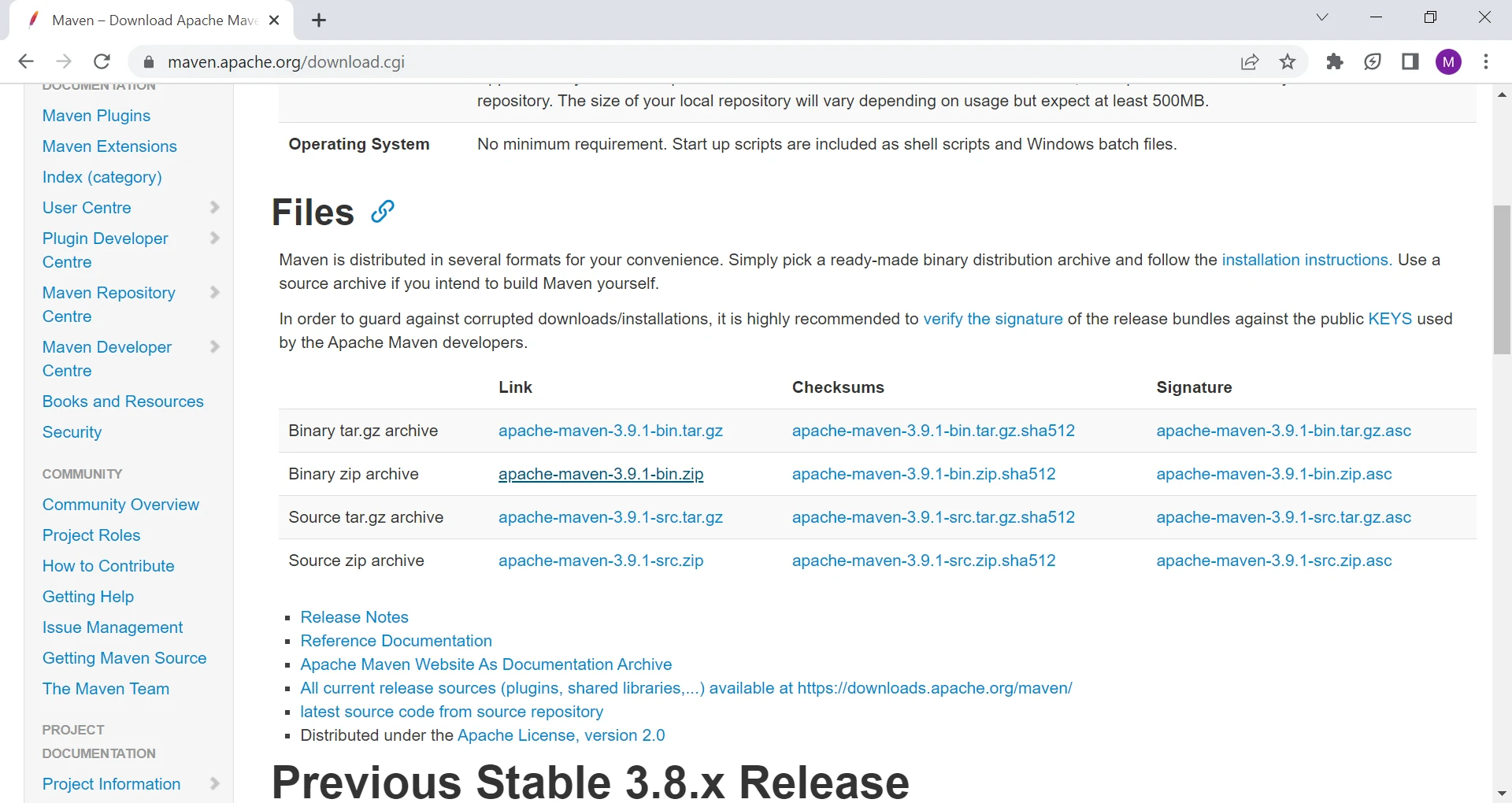 El sitio web de instalación de Maven
Para crear un nuevo proyecto Maven, puedes usar el siguiente comando:
mvn archetype:generateEsto generará una estructura básica de proyecto Maven que puedes personalizar para satisfacer tus necesidades.
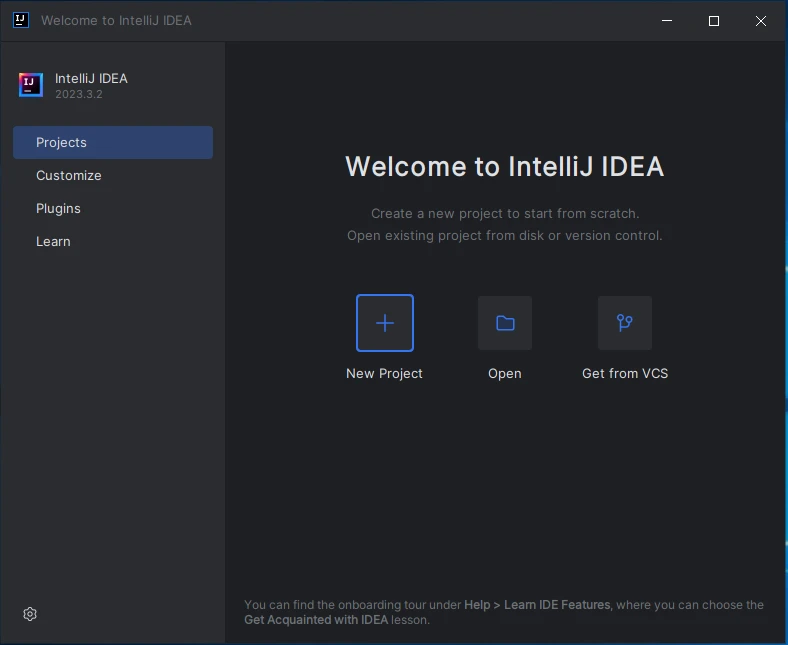
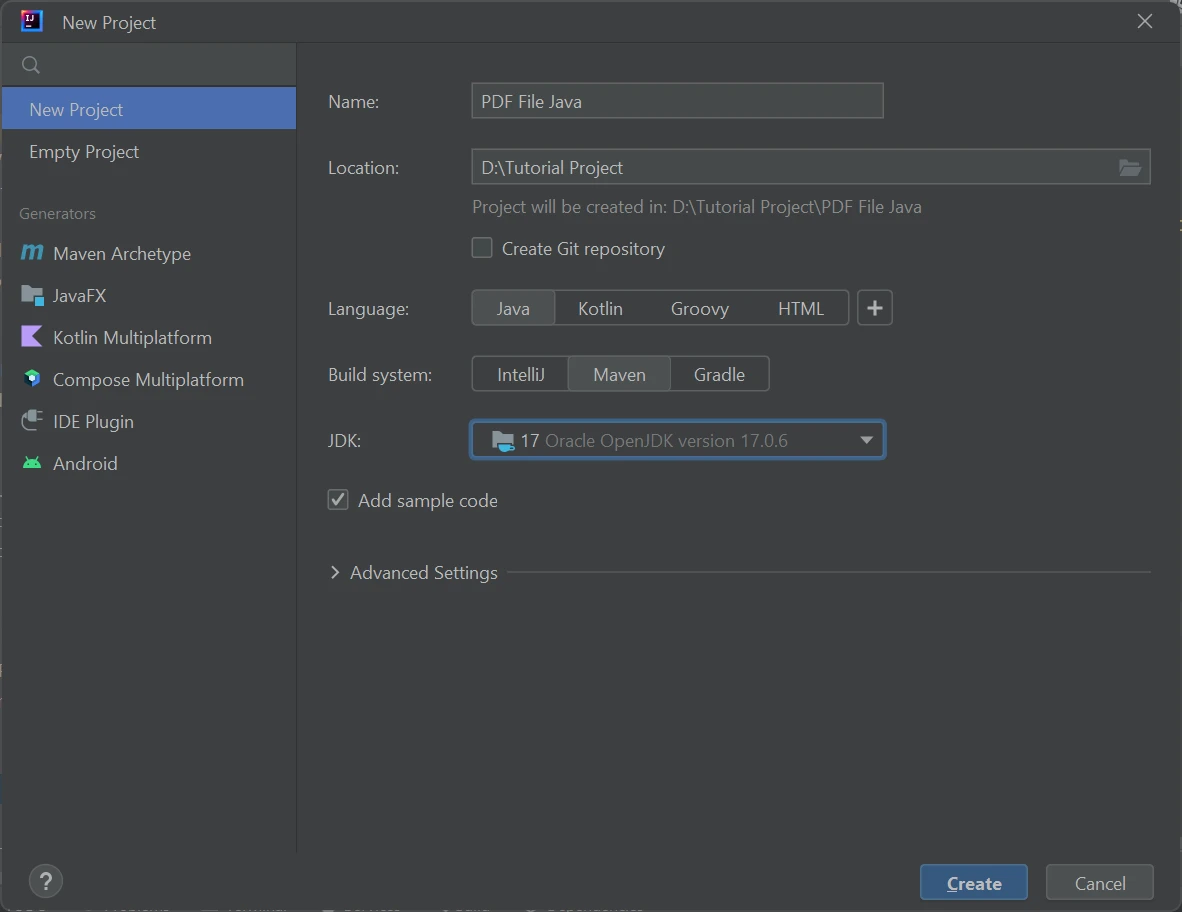
También puedes crear tu proyecto Maven utilizando un IDE. Yo estoy utilizando el IDE IntelliJ, pero puedes usar cualquier otro según tu preferencia.
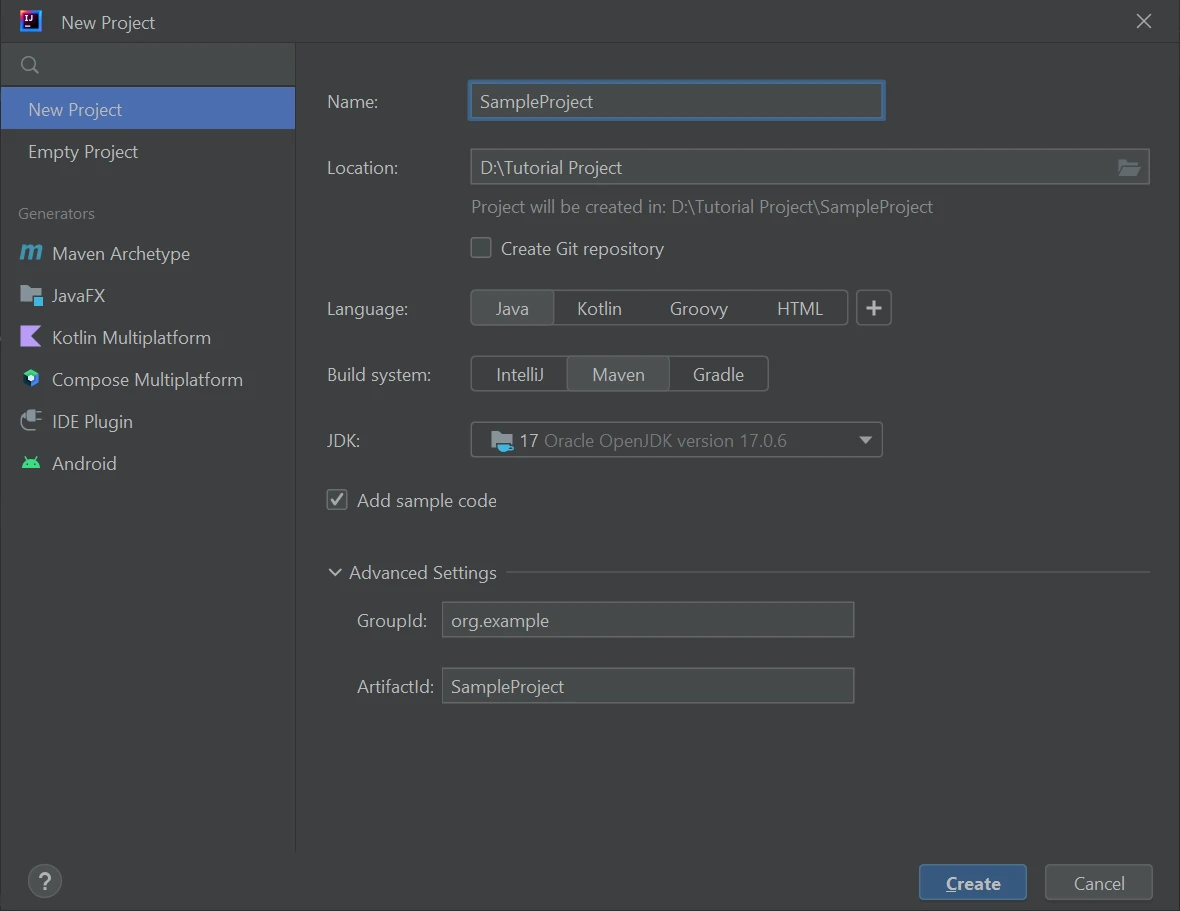 Crear un nuevo proyecto Maven
El siguiente paso es configurar el archivo POM de tu proyecto. Este archivo describe las dependencias del proyecto, el proceso de construcción y otra información importante. Considere el siguiente ejemplo del archivo pom.xml.
<?xml version="1.0" encoding="UTF-8"?>
<project xmlns="http://maven.apache.org/POM/4.0.0"
         xmlns:xsi="http://www.w3.org/2001/XMLSchema-instance"
         xsi:schemaLocation="http://maven.apache.org/POM/4.0.0 http://maven.apache.org/xsd/maven-4.0.0.xsd">
    <modelVersion>4.0.0</modelVersion>

    <groupId>org.example</groupId>
    <artifactId>SampleProject</artifactId>
    <version>1.0-SNAPSHOT</version>

    <properties>
        <maven.compiler.source>17</maven.compiler.source>
        <maven.compiler.target>17</maven.compiler.target>
        <project.build.sourceEncoding>UTF-8</project.build.sourceEncoding>
    </properties>
    <dependencies>
        <dependency>
            <groupId>com.ironsoftware</groupId>
            <artifactId>ironpdf</artifactId>
            <version>2024.9.1</version>
        </dependency>
        <dependency>
            <groupId>org.slf4j</groupId>
            <artifactId>slf4j-simple</artifactId>
            <version>2.0.5</version>
        </dependency>
    </dependencies>
</project>El archivo pom.xml anterior define un proyecto Maven con los siguientes detalles:
org.exampleSampleProject1.0-SNAPSHOTEste archivo pom.xml también incluye una sección para definir propiedades a nivel de proyecto a las que se puede hacer referencia en otras partes del archivo pom.xml. En este ejemplo, la propiedad del proyecto build.sourceEncoding está establecida en UTF-8.
Define un proyecto con dos dependencias:
com.ironsoftware.org.slf4j.Además de las dependencias, el archivo pom.xml también establece las versiones de origen y destino del compilador de Java en 17, utilizando las propiedades maven.compiler.source y maven.compiler.target.
Tenga en cuenta que esto es solo un ejemplo, y los archivos pom.xml pueden variar mucho en cuanto a contenido y complejidad dependiendo de las necesidades del proyecto.
Una vez que tu proyecto esté configurado, puedes construirlo usando el siguiente comando:
mvn clean installMaven descargará e instalará automáticamente las dependencias necesarias, compilará tu código fuente y generará los artefactos necesarios, como archivos JAR o WAR. En este caso, se instalará IronPDF.
Una vez que hayas instalado la dependencia IronPDF, puedes usarla en tu proyecto importando las clases y métodos necesarios. A continuación se muestra un ejemplo de cómo usar IronPDF para generar un documento PDF a partir de una cadena de HTML.
import com.ironsoftware.ironpdf.PdfDocument; // Import necessary class from IronPDF

public class PDFGenerator {

    public static void main(String[] args) {
        // Create a PDF document from an HTML string
        PdfDocument pdf = PdfDocument.renderHtmlAsPdf("<h1>What is MVN in Java.?</h1><p>Sample PDF file</p>");

        // Save the PDF document to a file
        pdf.saveAs("MVN.pdf");
    }
}Este código utiliza la biblioteca IronPDF para generar un documento PDF a partir de una cadena HTML y guardarlo en un archivo. Así es como funciona:
PdfDocument de la biblioteca IronPDF.PdfDocument llamando al método renderHtmlAsPdf de la clase PdfDocument. Pasamos una cadena HTML en este método. La cadena HTML en este caso contiene un encabezado y un párrafo que dice "Archivo PDF de ejemplo".renderHtmlAsPdf genera un documento PDF a partir de la cadena HTML utilizando la biblioteca IronPDF.saveAs de la clase PdfDocument. En este caso, especificamos el nombre de archivo "MVN.pdf" como argumento del método saveAs.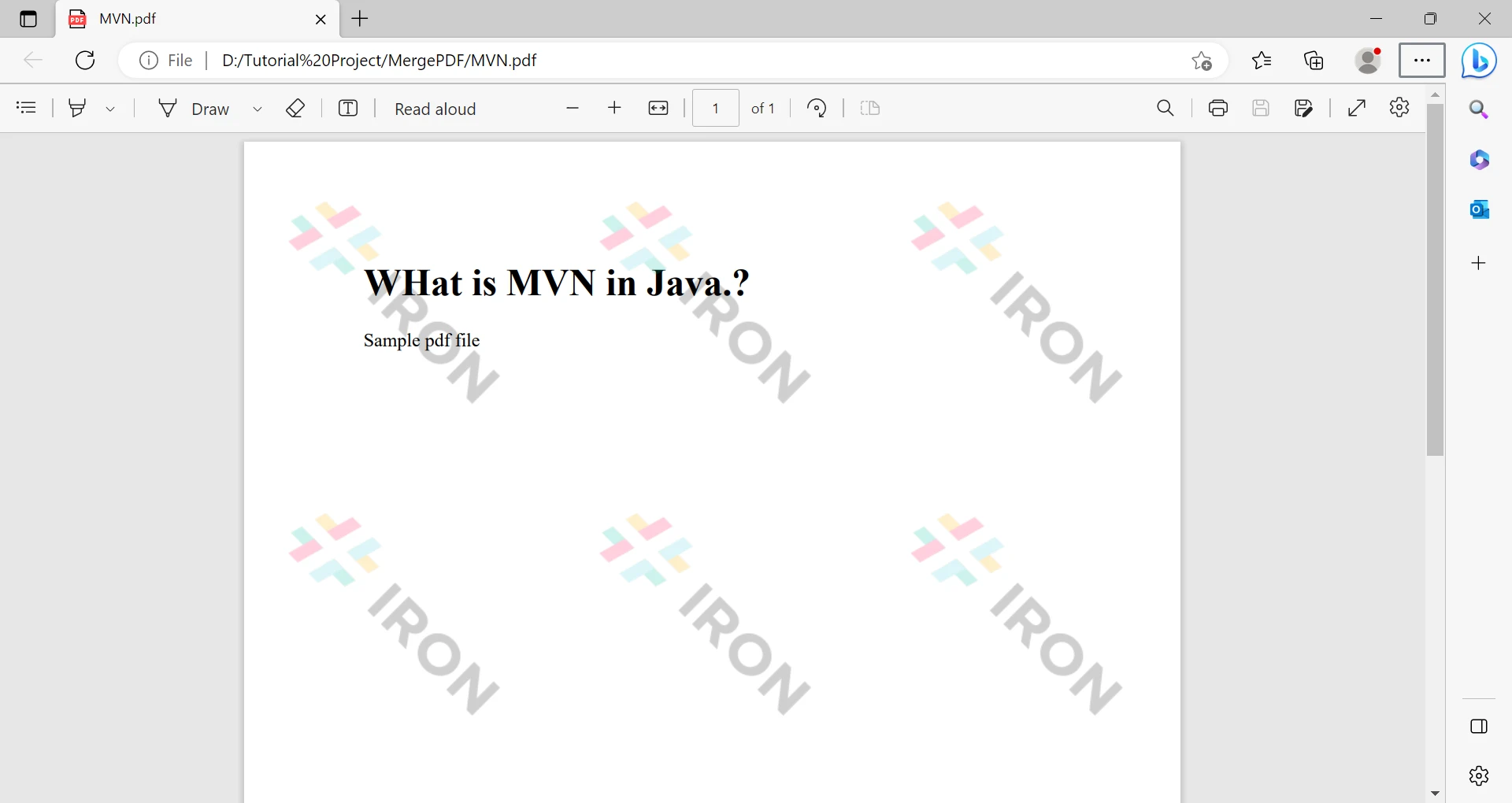 El archivo PDF de salida de una cadena HTML
Si necesitas realizar tareas personalizadas durante el proceso de construcción, puedes añadir plugins al archivo POM de tu proyecto. Hay muchos plugins de Maven disponibles, e incluso puedes crear los tuyos si es necesario.
Una vez que tu proyecto esté construido, puedes implementarlo en un repositorio remoto o local o empaquetarlo para su distribución a otros desarrolladores.
IronPDF es gratuito para usar con fines de desarrollo. Sin embargo, si planeas implementarlo o usarlo con fines comerciales, necesitarás obtener una licencia de prueba gratuita o una licencia comercial. Si estás interesado en adquirir IronPDF, puedes obtenerlo a un precio reducido comprando la completa Iron Suite.
Iron Suite es un conjunto completo de herramientas de desarrollo de software desarrolladas por Iron Software. La suite incluye IronPDF, IronXL, IronOCR y IronBarcode, que ofrecen a los desarrolladores potentes capacidades para generar PDFs y Excels, realizar OCR en documentos escaneados y generar códigos de barras en sus aplicaciones. La suite está diseñada para ser fácil de usar y adaptable, haciendo que sea fácil para los desarrolladores integrarla en sus proyectos de manera fluida y eficiente.
 Explora el Iron Suite
Maven es una poderosa herramienta de automatización de compilación que simplifica el proceso de construcción de proyectos Java. Gestiona dependencias, plugins y ciclos de vida de compilación, y utiliza un archivo POM para describir la configuración del proyecto. IronPDF es una popular biblioteca para generar documentos PDF a partir de contenido HTML en Java. Al usar Maven e IronPDF juntos, puedes generar fácilmente documentos PDF a partir de contenido HTML en tu proyecto Java.
En general, usar IronPDF con Maven puede ahorrarte mucho tiempo y esfuerzo al automatizar el proceso de generar documentos PDF a partir de contenido HTML. Con sus potentes características y API fácil de usar, IronPDF es una gran herramienta para cualquier desarrollador de Java que necesite generar documentos PDF a partir de contenido HTML en su proyecto basado en Java.

Curtis Chau tiene una licenciatura en Ciencias de la Computación (Carleton University) y se especializa en el desarrollo front-end con experiencia en Node.js, TypeScript, JavaScript y React. Apasionado por crear interfaces de usuario intuitivas y estéticamente agradables, disfruta trabajando con frameworks modernos y creando manuales bien estructurados y visualmente atractivos.

IronPDF es parte de IRONSUITE
10 productos API .NET para tus documentos de oficina











Cuando necesitas que tu PDF se parezca al HTML, rápido.

