



업데이트됨 2026년 4월 23일
.NET에서 Microsoft.Extensions.AI로 LLM 통합 간소화
AI는 소프트웨어 개발을 변혁하고 있으나, 대규모 언어 모델(LLM)을 .NET에 통합하는 것은 지금까지 복잡했습니다. 현대에는 OpenAI 기반 PDF 파싱, 데이터 추출 및 콘텐츠 요약을 .NET 애플리케이션에 가져오는 IronPdf.AI로 AI 통합을 더욱 확장하세요.
더 읽어보기

C#에서는 Substring 메서드가 문자열을 조작하기 위한 필수 도구입니다. 이 기능을 통해 개발자는 특정 문자 위치를 기반으로 문자열의 일부를 추출할 수 있습니다. 이 가이드는 공개 문자열 Substring 메서드와 IronPDF 라이브러리를 철저히 설명하여 초보자가 그 사용법과 기능을 완전히 이해할 수 있도록 자세한 예제와 설명을 제공합니다.
String 클래스의 멤버인 C#의 Substring 메서드는 지정된 매개변수에 따라 첫 번째 문자부터 조작을 시작할 수 있습니다. 이 메서드는 지정된 인덱스에서 시작하여 필요에 따라 지정된 길이의 문자열 부분을 검색하는 데 사용됩니다. 이 메서드의 문법은 명확하여 문자열 조작이 필요한 모든 코딩 시나리오에 쉽게 적용할 수 있습니다.
Substring 메서드에는 두 가지 주요 형태가 있습니다:
public string Substring(int startIndex);
public string Substring(int startIndex, int length);
public String Substring(Integer startIndex)
public String Substring(Integer startIndex, Integer length)관련 매개변수는 다음과 같습니다:
Substring 메서드의 프로세스는 직관적입니다. 호출되면 지정된 인덱스(startIndex)에서 원래 문자열에서 문자를 추출합니다. 만약 length 매개변수가 제공되면, 메서드는 지정된 수의 문자를 반환합니다. length 매개변수 없이 문자열 끝까지 계속됩니다. C#의 Substring을 사용하면 두 매개변수(startIndex와 length)가 정수로 처리되어 타입 안전성을 확보하고 잠재적 런타임 오류를 방지할 수 있습니다.
Substring 메서드 구현 방법을 더 잘 이해하기 위해 실질적인 용도를 보여주는 몇 가지 예제를 고려해봅시다.
문자열을 가지고 특정 인덱스에서 문자열 끝까지 부분 문자열을 추출해야 한다고 가정해 보겠습니다. 다음은 이를 수행하는 방법입니다:
// Main method demonstrating substring extraction
public static void Main(string[] args)
{
    string text = "Hello, 세상!";
    string substring = text.Substring(7); // Extract from index 7 to the end
    Console.WriteLine(substring);
}Option Strict On
Option Infer On
Public Module Program
' Main method demonstrating substring extraction
Public Sub Main(args As String())
Dim text As String = "Hello, 세상!"
Dim substring As String = text.Substring(7) ' Extract from index 7 to the end
Console.WriteLine(substring)
End Sub
End Module산출:
세상!이 예에서 Substring 메소드는 인덱스 7에서 시작하여, 이는 'w'에 해당하며, 문자열 끝까지 모든 문자를 검색합니다. 서브스트링의 길이가 동적이거나 사전에 결정되지 않은 경우 특히 유용합니다.
이제, 시작 인덱스와 서브스트링의 길이가 모두 지정된 시나리오를 살펴보겠습니다:
// Main method demonstrating substring extraction with specified length
public static void Main(string[] args)
{
    string text = "Hello, 세상!";
    string substring = text.Substring(7, 5); // Starts at index 7, length of 5
    Console.WriteLine(substring);
}Option Strict On
Option Infer On
Public Module Program
' Main method demonstrating substring extraction with specified length
Public Sub Main(args As String())
Dim text As String = "Hello, 세상!"
Dim substring As String = text.Substring(7, 5) ' Starts at index 7, length of 5
Console.WriteLine(substring)
End Sub
End Module산출:
world여기서 서브스트링은 일곱 번째 문자에서 시작하여 다섯 문자로 이루어져 있습니다. 이 방법은 서브스트링의 경계를 정확하게 제어해야 할 때 매우 유용합니다.
문자열 배열이 있고 각 문자열에서 지정된 문자 위치와 길이를 기반으로 서브스트링을 추출하려고 한다고 가정해 봅시다. 각 문자열에 Substring 메소드를 적용하여 배열을 반복하는 foreach 루프를 사용할 수 있습니다.
// Example of extracting substrings from an array of strings
string[] array = { "apple", "banana", "orange" };
foreach (string str in array)
{
    string substring = str.Substring(1, 3); // Substring starts from index 1
    Console.WriteLine(substring);
}' Example of extracting substrings from an array of strings
Dim array() As String = { "apple", "banana", "orange" }
For Each str As String In array
Dim substring As String = str.Substring(1, 3) ' Substring starts from index 1
Console.WriteLine(substring)
Next str이 코드는 다음을 출력합니다:
ppl
ana
ran런타임 오류, 예를 들어 ArgumentOutOfRangeException을 피하기 위해서는 여러 경우를 고려하는 것이 중요합니다. Substring 메소드를 사용할 때 지정된 문자 위치와 길이가 원래 문자열의 경계 내에 있는지 확인하는 것이 필수적입니다. 그렇지 않으면 인덱스 범위 밖 예외가 발생할 수 있습니다. 이러한 예외를 피하기 위해 원래 문자열의 길이를 확인할 수 있습니다. 다음은 주요 사항입니다:
서브스트링 추출 중 오류를 발생시키지 않도록 하기 위해 확인을 추가할 수 있습니다:
// Main method with checks to avoid ArgumentOutOfRangeException
public static void Main(string[] args)
{
    string text = "Hello, 세상!";
    int startIndex = 7;
    int length = 5;
    if (startIndex >= 0 && startIndex < text.Length && startIndex + length <= text.Length)
    {
        string substring = text.Substring(startIndex, length);
        Console.WriteLine(substring);
    }
    else
    {
        Console.WriteLine("Invalid substring parameters.");
    }
}Option Strict On
Option Infer On
Public Module Program
' Main method with checks to avoid ArgumentOutOfRangeException
Public Sub Main(args As String())
Dim text As String = "Hello, 세상!"
Dim startIndex As Integer = 7
Dim length As Integer = 5
If startIndex >= 0 AndAlso startIndex < text.Length AndAlso startIndex + length <= text.Length Then
Dim substring As String = text.Substring(startIndex, length)
Console.WriteLine(substring)
Else
Console.WriteLine("Invalid substring parameters.")
End If
End Sub
End Module이 코드 블록은 서브스트링 매개변수가 유효한지 확인한 다음 서브스트링을 추출하려 하여 잠재적 런타임 오류를 방지합니다.
IronPDF는 개발자가 .NET 애플리케이션 내에서 PDF 문서를 생성, 조작, 렌더링할 수 있게 하는 강력한 PDF 라이브러리입니다. 맞춤형이고 아름다운 PDF 문서를 만드는 데 도움이 되는 HTML에서 PDF로 변환을 허용합니다. IronPDF는 HTML에서 PDF 생성, PDF 내보내기, 기존 PDF 편집 등 다양한 PDF 작업을 지원하여 .NET 환경에서 PDF 파일을 다루기 위한 종합적인 도구 세트를 제공합니다.
IronPDF는 레이아웃과 스타일을 그대로 유지하면서 HTML을 PDF로 쉽게 변환합니다. 보고서, 송장, 문서 등 웹 기반 콘텐츠로부터 PDF를 생성하기에 좋은 도구입니다. HTML 파일, URL 및 HTML 문자열을 PDF 파일로 매끄럽게 변환할 수 있습니다.
using IronPdf;

class Program
{
    static void Main(string[] args)
    {
        var renderer = new ChromePdfRenderer();

        // 1. Convert HTML String to PDF
        var htmlContent = "<h1>Hello, IronPDF!</h1><p>This is a PDF from an HTML string.</p>";
        var pdfFromHtmlString = renderer.RenderHtmlAsPdf(htmlContent);
        pdfFromHtmlString.SaveAs("HTMLStringToPDF.pdf");

        // 2. Convert HTML File to PDF
        var htmlFilePath = "path_to_your_html_file.html"; // Specify the path to your HTML file
        var pdfFromHtmlFile = renderer.RenderHtmlFileAsPdf(htmlFilePath);
        pdfFromHtmlFile.SaveAs("HTMLFileToPDF.pdf");

        // 3. Convert URL to PDF
        var url = "https://ironpdf.com"; // Specify the URL
        var pdfFromUrl = renderer.RenderUrlAsPdf(url);
        pdfFromUrl.SaveAs("URLToPDF.pdf");
    }
}Imports IronPdf
Module Program
Sub Main(args As String())
Dim renderer = New ChromePdfRenderer()
' 1. Convert HTML String to PDF
Dim htmlContent = "<h1>Hello, IronPDF!</h1><p>This is a PDF from an HTML string.</p>"
Dim pdfFromHtmlString = renderer.RenderHtmlAsPdf(htmlContent)
pdfFromHtmlString.SaveAs("HTMLStringToPDF.pdf")
' 2. Convert HTML File to PDF
Dim htmlFilePath = "path_to_your_html_file.html" ' Specify the path to your HTML file
Dim pdfFromHtmlFile = renderer.RenderHtmlFileAsPdf(htmlFilePath)
pdfFromHtmlFile.SaveAs("HTMLFileToPDF.pdf")
' 3. Convert URL to PDF
Dim url = "https://ironpdf.com" ' Specify the URL
Dim pdfFromUrl = renderer.RenderUrlAsPdf(url)
pdfFromUrl.SaveAs("URLToPDF.pdf")
End Sub
End ModuleIronPDF를 C#의 Substring 메소드와 결합하면 PDF 변환 전에 텍스트 조작 및 추출이 필요한 PDF 문서를 생성하는 데 매우 유용할 수 있습니다. 예를 들어, 커다란 텍스트 블록에서 특정 정보를 추출하고 이를 PDF 형식으로 제시해야하는 경우, Substring 메소드를 사용하여 원하는 텍스트를 고립시키고 IronPDF를 사용해 이 텍스트를 PDF 문서로 변환할 수 있습니다.
지정된 인덱스에 중요한 정보가 포함된 큰 텍스트가 있고 이 정보를 추출하여 PDF 파일로 생성해야 하는 시나리오를 고려해 봅시다. 아래는 IronPDF와 C#의 Substring 메소드를 모두 사용하여 이를 달성하는 단계별 예제입니다.
using IronPdf;
using System;

public class PdfGenerator
{
    public static void Main(string[] args)
    {
        // Applying your license for IronPDF
        License.LicenseKey = "License-Key";
        // Original large text from which we need to extract information
        string originalText = "IronPDF helps you generate PDF documents in .NET applications easily. Discover more about IronPDF at the official site.";
        // Using the Substring method to extract the part of the string that talks about IronPDF
        string importantInfo = originalText.Substring(0, 65);  // Extracts the first sentence

        // Create a PDF document with IronPDF
        var renderer = new ChromePdfRenderer();
        // Convert the extracted text to PDF
        PdfDocument pdf = renderer.RenderHtmlAsPdf($"<h1>Extracted Information</h1><p>{importantInfo}</p>");
        // Save the PDF to a file
        pdf.SaveAs("ExtractedInfo.pdf");
        // Confirmation output
        Console.WriteLine("PDF generated successfully with extracted information.");
    }
}Imports IronPdf
Imports System
Public Class PdfGenerator
Public Shared Sub Main(ByVal args As String())
' Applying your license for IronPDF
License.LicenseKey = "License-Key"
' Original large text from which we need to extract information
Dim originalText As String = "IronPDF helps you generate PDF documents in .NET applications easily. Discover more about IronPDF at the official site."
' Using the Substring method to extract the part of the string that talks about IronPDF
Dim importantInfo As String = originalText.Substring(0, 65) ' Extracts the first sentence
' Create a PDF document with IronPDF
Dim renderer = New ChromePdfRenderer()
' Convert the extracted text to PDF
Dim pdf As PdfDocument = renderer.RenderHtmlAsPdf($"<h1>Extracted Information</h1><p>{importantInfo}</p>")
' Save the PDF to a file
pdf.SaveAs("ExtractedInfo.pdf")
' Confirmation output
Console.WriteLine("PDF generated successfully with extracted information.")
End Sub
End Class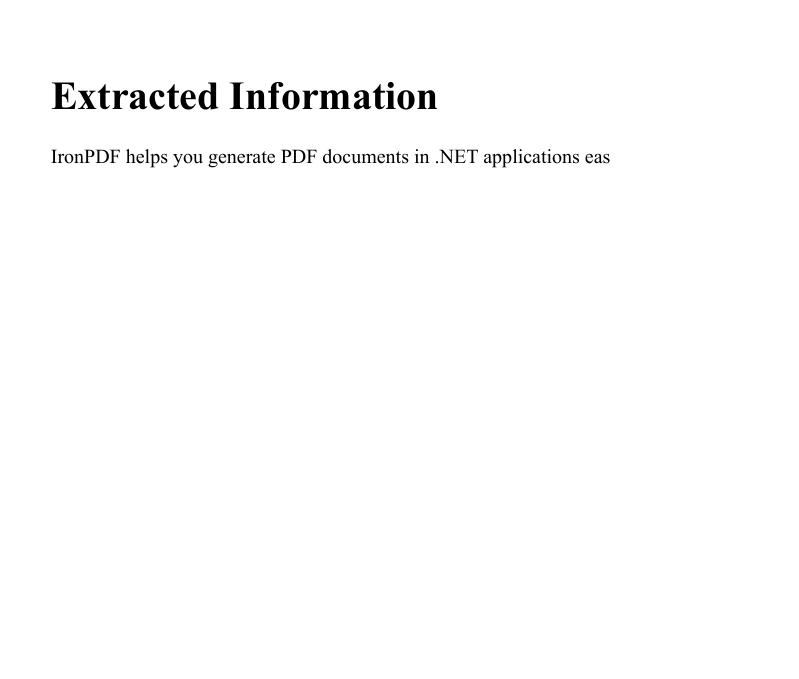
이 과정은 텍스트 조작과 PDF 생성 통합의 간단한 방법을 보여주며, 특히 더 큰 텍스트에서 특정 정보를 추출하고 제시해야 하는 보고서나 문서화를 생성하는 데 유용할 수 있습니다.
C#의 Substring 메소드는 문자열 조작을 위한 강력한 도구로, 개발자가 지정된 문자 위치에 따라 텍스트의 일부를 쉽게 추출할 수 있습니다. 이 메소드를 이해하고 활용함으로써 넓은 범위의 텍스트 처리 작업을 효과적으로 처리할 수 있습니다. 여러 경우를 고려하고 인덱스를 확인하여 애플리케이션의 견고함을 유지하십시오. IronPDF는 개발자가 기능을 탐색할 수 있도록 무료 체험판을 제공하며, 제품의 라이선스는 $999부터 시작합니다.

제이콥 멜러는 Iron Software의 최고 기술 책임자(CTO)이자 C# PDF 기술을 개척한 선구적인 엔지니어입니다. Iron Software의 핵심 코드베이스를 최초로 개발한 그는 창립 초기부터 회사의 제품 아키텍처를 설계해 왔으며, CEO인 캐머런 리밍턴과 함께 회사를 NASA, 테슬라, 그리고 전 세계 정부 기관에 서비스를 제공하는 50명 이상의 직원을 보유한 기업으로 성장시켰습니다.

IronPDF는 IRON SUITE 의 일부입니다.
10개의 .NET API 제품, 당신의 사무 문서를 위해











PDF 파일을 HTML처럼 빠르게 변환해야 할 때.


