업데이트됨 2026년 4월 23일
.NET에서 Microsoft.Extensions.AI로 LLM 통합 간소화
AI는 소프트웨어 개발을 변혁하고 있으나, 대규모 언어 모델(LLM)을 .NET에 통합하는 것은 지금까지 복잡했습니다. 현대에는 OpenAI 기반 PDF 파싱, 데이터 추출 및 콘텐츠 요약을 .NET 애플리케이션에 가져오는 IronPdf.AI로 AI 통합을 더욱 확장하세요.
더 읽어보기

이 초급 튜토리얼은 수학적 작업을 위한 Math.NET과 PDF 문서를 작성하기 위한 IronPDF라는 두 가지 강력한 라이브러리를 통합하는 방법을 안내하기 위해 설계되었습니다. 과학 연구에서 재무 분석에 이르기까지 다양한 응용 프로그램에 이상적인 이러한 도구는 복잡한 데이터를 처리하고 효과적으로 제시하는 포괄적인 접근 방식을 제공합니다.
Math.NET은 .NET 생태계에서 유명한 라이브러리로, 광범위한 수학적 기능을 제공합니다. 선형 대수, 통계 또는 수치 해석을 다루든 Math.NET은 복잡한 계산을 쉽게 수행할 수 있는 도구를 제공합니다.
IronPDF 기능 탐색을 통해 복잡한 수학적 계산이나 Math.NET 조사를 잘 구조화된 PDF 문서로 변환하는 방법을 알아보세요. 결과 보고, 결과 공유 또는 데이터를 보관할 필요가 있을 때 특히 유용한 기능입니다.
Math.NET은 .NET Framework에서 수학적 계산을 위한 강력한 도구로, 다양한 수학적 작업을 처리할 수 있습니다. 이 섹션에서는 C# 프로젝트에 Math.NET을 설정하는 기본 사항을 소개하고 시작하는 데 필요한 몇 가지 초기 작업을 시연합니다.
단계별 설치: Math.NET을 C# 프로젝트에 통합하려면 NuGet 패키지 관리자를 사용하십시오. 'MathNET.Numerics'를 검색하고 프로젝트에 설치하세요. 이 프로세스를 통해 응용 프로그램에 복잡한 수학적 계산을 수행하는 데 필요한 라이브러리를 장착합니다.
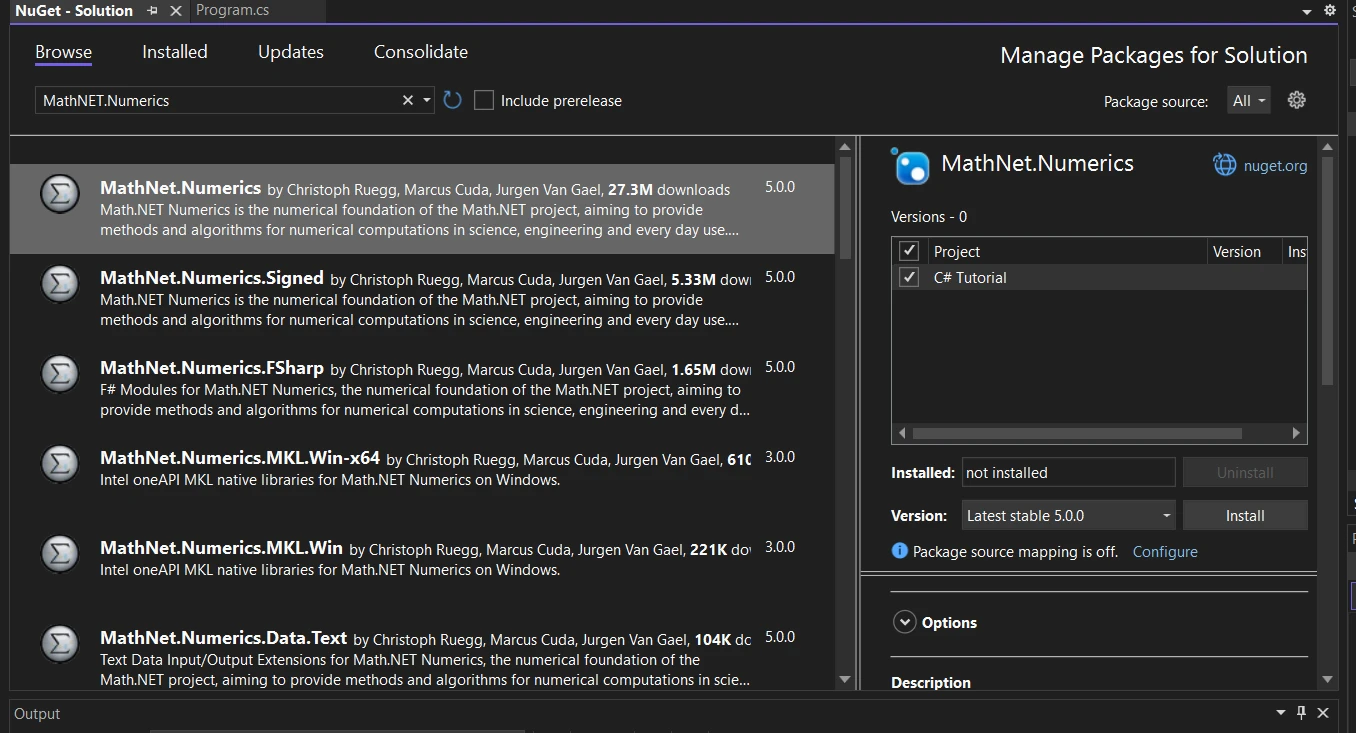
간단한 계산: Math.NET의 인터페이스에 익숙해지기 위해 기본 수학 연산부터 시작합니다. 예를 들어, 라이브러리에서 제공하는 간단한 산술 및 통계 기능을 탐색하세요.
데이터 및 수학 함수 탐색: 행렬 연산 또는 통계 분석과 같은 더 복잡한 기능을 실험하여 Math.NET의 기능 범위를 이해합니다.
using MathNet.Numerics;

public class BasicMathOperations
{
    public void PerformCalculations()
    {
        // Example of basic arithmetic operation
        // Using basic trigonometric function from Math.NET
        double result = 2 * MathNet.Numerics.Trig.Cos(45);
        Console.WriteLine($"The result is: {result}");
    }
}Imports MathNet.Numerics
Public Class BasicMathOperations
Public Sub PerformCalculations()
' Example of basic arithmetic operation
' Using basic trigonometric function from Math.NET
Dim result As Double = 2 * MathNet.Numerics.Trig.Cos(45)
Console.WriteLine($"The result is: {result}")
End Sub
End Class이 예에서는 Math.NET의 기본 삼각 함수 중 하나를 사용하여 계산을 수행하여 C# 응용 프로그램에 수학적 논리를 통합하기 얼마나 간단한지 보여줍니다.
기본 사항에 익숙해진 후 Math.NET의 고급 기능 중 일부를 탐색할 때입니다. 이러한 기능은 더 복잡한 데이터 분석 및 다양한 응용 프로그램에서의 문제 해결을 위한 정교한 수학적 작업을 가능하게 합니다.
선형 대수: 많은 과학적 계산에 필수적인 선형 대수 연산에 뛰어드세요. Math.NET은 행렬 및 벡터를 위한 클래스를 제공하여 행렬 곱셈, 역행렬, 분해 등의 작업을 가능하게 합니다.
통계 함수: Math.NET의 통계 도구를 활용하여 데이터 분석을 수행하세요. 함수에는 통계 평가의 기본인 평균, 중앙값, 분산 및 표준 편차 계산이 포함됩니다.
여기에서 Math.NET의 통계 함수는 범죄 데이터를 분석하고 패턴을 밝혀내며 수사관의 조사에 도움을 주는데 중요한 역할을 합니다. 뉴욕 시 경찰서와 로스앤젤레스 경찰서가 협력하여 일련의 범죄를 해결하는 시나리오를 상상해보세요. 여기서 Math.NET의 통계 함수가 중요한 역할을 합니다.
using MathNet.Numerics.Statistics;
using System;

public class CrimeDataAnalysis
{
    public void AnalyzeCrimeData()
    {
        // Hypothetical crime rate data for a series of districts
        var crimeRates = new double[] { 5.2, 3.8, 4.6, 2.9, 3.5 };

        // Calculating statistical metrics to understand crime trends
        double meanCrimeRate = Statistics.Mean(crimeRates);
        double varianceCrimeRate = Statistics.Variance(crimeRates);

        // Outputting the analysis results
        Console.WriteLine($"Average Crime Rate: {meanCrimeRate}, Variance in Crime Rate: {varianceCrimeRate}");

        // Additional analysis can be added here to further assist in the crime-solving process
        // For instance, correlating crime rates with different variables (like time, location, etc.)
    }
}

class Program
{
    static void Main(string[] args)
    {
        // Simulating a scenario where LAPD and New York City start collaborating using statistical analysis
        Console.WriteLine("Los Angeles Police Department and New York City Precinct Collaboration:");
        CrimeDataAnalysis crimeDataAnalysis = new CrimeDataAnalysis();
        crimeDataAnalysis.AnalyzeCrimeData();
    }
}Imports MathNet.Numerics.Statistics
Imports System
Public Class CrimeDataAnalysis
Public Sub AnalyzeCrimeData()
' Hypothetical crime rate data for a series of districts
Dim crimeRates As Double() = {5.2, 3.8, 4.6, 2.9, 3.5}
' Calculating statistical metrics to understand crime trends
Dim meanCrimeRate As Double = Statistics.Mean(crimeRates)
Dim varianceCrimeRate As Double = Statistics.Variance(crimeRates)
' Outputting the analysis results
Console.WriteLine($"Average Crime Rate: {meanCrimeRate}, Variance in Crime Rate: {varianceCrimeRate}")
' Additional analysis can be added here to further assist in the crime-solving process
' For instance, correlating crime rates with different variables (like time, location, etc.)
End Sub
End Class
Module Program
Sub Main(args As String())
' Simulating a scenario where LAPD and New York City start collaborating using statistical analysis
Console.WriteLine("Los Angeles Police Department and New York City Precinct Collaboration:")
Dim crimeDataAnalysis As New CrimeDataAnalysis()
crimeDataAnalysis.AnalyzeCrimeData()
End Sub
End Module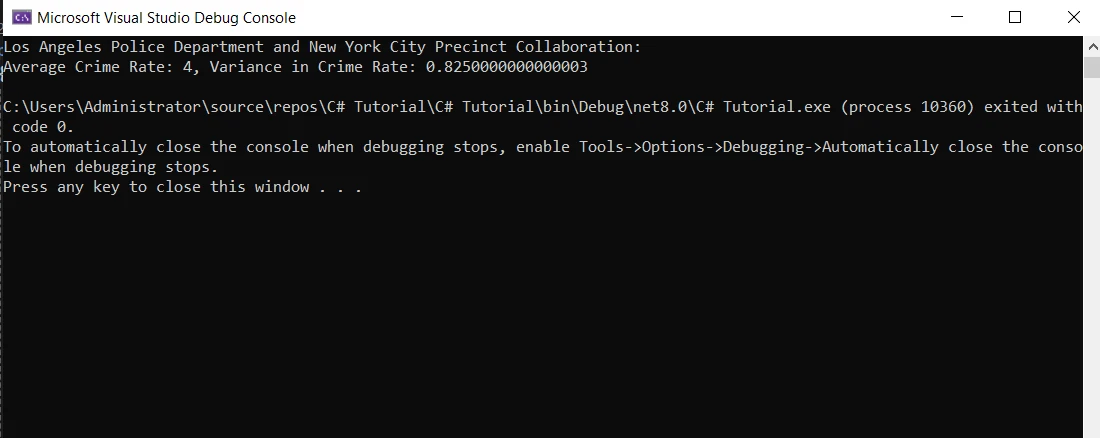
이 예제에서는 데이터 세트의 평균 및 분산을 계산하여 Math.NET이 복잡한 통계 작업을 어떻게 간소화하는지 보여줍니다.
IronPDF는 C# 개발자를 위한 강력한 도구로, .NET 애플리케이션 내에서 PDF 문서 생성 및 조작을 가능하게 합니다. 이것은 복잡한 수학적 보고서 및 데이터 시각화를 접근 가능하고 공유 가능한 PDF 형식으로 변환할 수 있게 합니다.
웹페이지나 URL을 원본과 동일하게 보이는 PDF로 변환하고 싶으신가요? IronPDF가 도와드립니다! 보고서, 송장 및 저장해야 하는 모든 온라인 콘텐츠의 PDF 생성에 이상적입니다. HTML을 PDF로 변환할 준비가 되셨다면, 이 도구를 사용해보세요.
using IronPdf;

class Program
{
    static void Main(string[] args)
    {
        // Create an instance of ChromePdfRenderer
        var renderer = new ChromePdfRenderer();

        // 1. Convert HTML String to PDF
        var htmlContent = "<h1>Hello, IronPDF!</h1><p>This is a PDF from an HTML string.</p>";
        var pdfFromHtmlString = renderer.RenderHtmlAsPdf(htmlContent);
        pdfFromHtmlString.SaveAs("HTMLStringToPDF.pdf");

        // 2. Convert HTML File to PDF
        var htmlFilePath = "path_to_your_html_file.html"; // Specify the path to your HTML file
        var pdfFromHtmlFile = renderer.RenderHtmlFileAsPdf(htmlFilePath);
        pdfFromHtmlFile.SaveAs("HTMLFileToPDF.pdf");

        // 3. Convert URL to PDF
        var url = "http://ironpdf.com"; // Specify the URL
        var pdfFromUrl = renderer.RenderUrlAsPdf(url);
        pdfFromUrl.SaveAs("URLToPDF.pdf");
    }
}Imports IronPdf
Friend Class Program
Shared Sub Main(ByVal args() As String)
' Create an instance of ChromePdfRenderer
Dim renderer = New ChromePdfRenderer()
' 1. Convert HTML String to PDF
Dim htmlContent = "<h1>Hello, IronPDF!</h1><p>This is a PDF from an HTML string.</p>"
Dim pdfFromHtmlString = renderer.RenderHtmlAsPdf(htmlContent)
pdfFromHtmlString.SaveAs("HTMLStringToPDF.pdf")
' 2. Convert HTML File to PDF
Dim htmlFilePath = "path_to_your_html_file.html" ' Specify the path to your HTML file
Dim pdfFromHtmlFile = renderer.RenderHtmlFileAsPdf(htmlFilePath)
pdfFromHtmlFile.SaveAs("HTMLFileToPDF.pdf")
' 3. Convert URL to PDF
Dim url = "http://ironpdf.com" ' Specify the URL
Dim pdfFromUrl = renderer.RenderUrlAsPdf(url)
pdfFromUrl.SaveAs("URLToPDF.pdf")
End Sub
End ClassNuGet 패키지 관리자를 사용하여 Math.NET C# 프로젝트에 IronPDF를 통합하려면 다음 단계를 따르세요:
패키지 관리자 콘솔을 통해 프로젝트에 IronPDF를 포함시키고 싶다면, 패키지 관리자 콘솔에서 다음 명령어를 실행하세요:
이는 프로젝트에 IronPDF를 가져와 설치합니다.
IronPDF의 기능, 호환성 및 추가 다운로드 옵션을 포함한 자세한 개요를 보려면 IronPDF NuGet 페이지를 방문하세요.
또는 IronPDF의 dll 파일을 프로젝트에 직접 통합할 수 있습니다. IronPDF 다운로드 페이지에서 DLL이 포함된 ZIP 파일을 다운로드하세요. 압축을 풀고, DLL을 프로젝트에 포함하세요.
using IronPdf;

public class PdfGenerator
{
    public void CreatePdf()
    {
        // Create an instance of ChromePdfRenderer for PDF generation
        var Renderer = new ChromePdfRenderer();
        // Render a simple HTML string as a PDF
        var PDF = Renderer.RenderHtmlAsPdf("<h1>Hello, IronPDF!</h1>");
        // Save the generated PDF to a file
        PDF.SaveAs("HelloIronPDF.pdf");
    }
}Imports IronPdf
Public Class PdfGenerator
Public Sub CreatePdf()
' Create an instance of ChromePdfRenderer for PDF generation
Dim Renderer = New ChromePdfRenderer()
' Render a simple HTML string as a PDF
Dim PDF = Renderer.RenderHtmlAsPdf("<h1>Hello, IronPDF!</h1>")
' Save the generated PDF to a file
PDF.SaveAs("HelloIronPDF.pdf")
End Sub
End Class이 예제에서는 간단한 HTML 문자열이 PDF 문서로 변환되어 IronPDF로 PDF를 쉽게 생성할 수 있음을 보여줍니다.
수학적 계산을 위한 Math.NET과 PDF 생성을 위한 IronPDF에 익숙해졌으니, 이제 이 두 라이브러리를 통합하는 방법을 탐구해봅시다. 이 조합은 수학적 분석을 기반으로 보고서 및 문서를 작성하는 데 특히 유용합니다.
복잡한 계산: Math.NET을 활용하여 복잡한 계산이나 데이터 분석을 수행하세요. 이것은 통계 계산부터 행렬 연산까지의 범위를 포함할 수 있습니다.
IronPDF를 통한 문서화: Math.NET으로 데이터를 처리한 후, IronPDF를 사용하여 결과 및 관련 차트나 그래프를 PDF 문서로 변환하세요.
유익한 보고서 생성: 상세한 분석, 차트 및 설명 중인 텍스트를 PDF에 포함시켜, 이를 포괄적이고 발표나 기록 보관에 준비된 상태로 만드세요.
using MathNet.Numerics.Statistics;
using IronPdf;

public class StatisticalReport
{
    public void CreateReport(double[] data)
    {
        // Calculate statistical metrics from data
        double mean = Statistics.Mean(data);
        double variance = Statistics.Variance(data);

        // Create a PDF renderer
        var Renderer = new ChromePdfRenderer();
        // Render statistical metrics as HTML and convert it to a PDF
        var PDF = Renderer.RenderHtmlAsPdf($"<h1>Statistical Report</h1><p>Mean: {mean}</p><p>Variance: {variance}</p>");
        // Save the generated PDF
        PDF.SaveAs("StatisticalReport.pdf");
    }
}Imports MathNet.Numerics.Statistics
Imports IronPdf
Public Class StatisticalReport
Public Sub CreateReport(data As Double())
' Calculate statistical metrics from data
Dim mean As Double = Statistics.Mean(data)
Dim variance As Double = Statistics.Variance(data)
' Create a PDF renderer
Dim Renderer = New ChromePdfRenderer()
' Render statistical metrics as HTML and convert it to a PDF
Dim PDF = Renderer.RenderHtmlAsPdf($"<h1>Statistical Report</h1><p>Mean: {mean}</p><p>Variance: {variance}</p>")
' Save the generated PDF
PDF.SaveAs("StatisticalReport.pdf")
End Sub
End Class여기 IronPDF로 생성된 PDF 보고서가 있습니다:
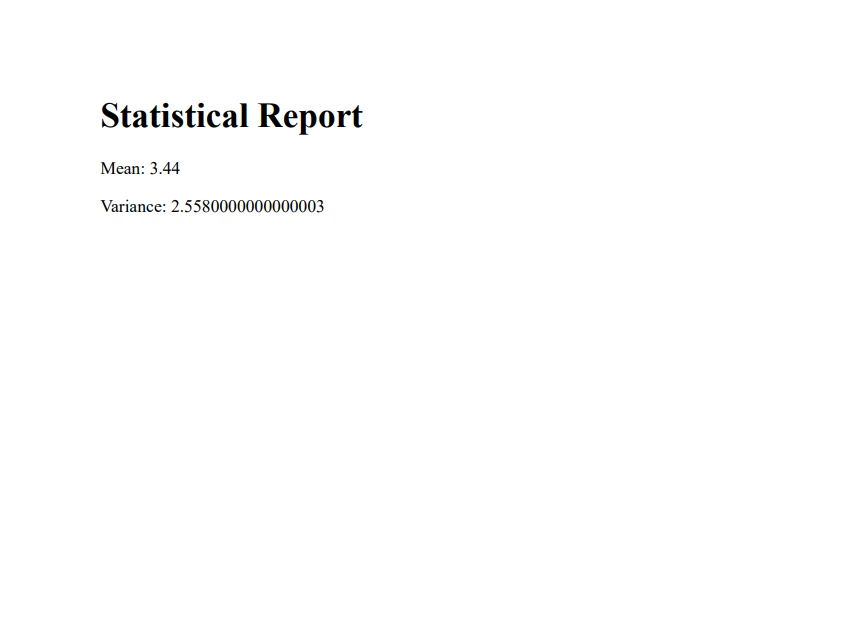
이 예제에서는 먼저 Math.NET을 사용하여 통계 값을 계산한 후, IronPDF로 PDF 보고서를 생성하여 분석 계산과 문서 생성 간의 시너지를 보여줍니다.
튜토리얼을 마치면서, 이제 고급 수학적 계산을 위해 Math.NET의 기능과 효율적인 PDF 생성을 위해 IronPDF의 기능을 활용하는 방법에 대한 기본적인 이해를 갖게 되었습니다. 이 강력한 조합은 데이터 분석, 보고서 작성 및 문서화에 대한 여러 가능성을 열어줍니다.
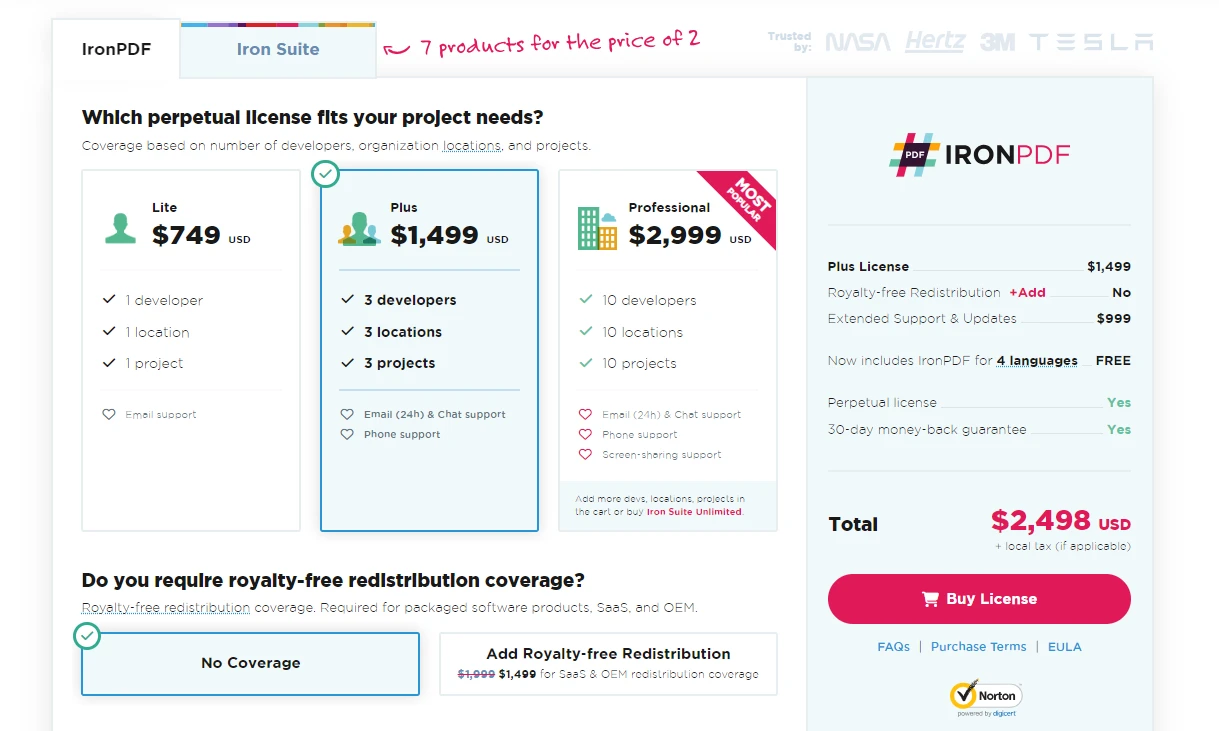
IronPDF는 관심 있는 분들이 기능을 탐색할 수 있도록 IronPDF 무료 체험판을 제공하며, 확장된 사용을 위해 IronPDF 라이선스는 $999부터 시작합니다.

제이콥 멜러는 Iron Software의 최고 기술 책임자(CTO)이자 C# PDF 기술을 개척한 선구적인 엔지니어입니다. Iron Software의 핵심 코드베이스를 최초로 개발한 그는 창립 초기부터 회사의 제품 아키텍처를 설계해 왔으며, CEO인 캐머런 리밍턴과 함께 회사를 NASA, 테슬라, 그리고 전 세계 정부 기관에 서비스를 제공하는 50명 이상의 직원을 보유한 기업으로 성장시켰습니다.

IronPDF는 IRON SUITE 의 일부입니다.
10개의 .NET API 제품, 당신의 사무 문서를 위해











PDF 파일을 HTML처럼 빠르게 변환해야 할 때.