



업데이트됨 2026년 4월 23일
.NET에서 Microsoft.Extensions.AI로 LLM 통합 간소화
AI는 소프트웨어 개발을 변혁하고 있으나, 대규모 언어 모델(LLM)을 .NET에 통합하는 것은 지금까지 복잡했습니다. 현대에는 OpenAI 기반 PDF 파싱, 데이터 추출 및 콘텐츠 요약을 .NET 애플리케이션에 가져오는 IronPdf.AI로 AI 통합을 더욱 확장하세요.
더 읽어보기

데이터 관리가 최우선인 오늘날의 디지털 환경에서 압축 및 압축 해제를 위한 효율적인 도구를 갖추는 것은 중요합니다. .NET 생태계에서 주목할 만한 도구 중 하나는 SharpZipLib입니다. 이 기사에서는 SharpZipLib의 기능, 응용 프로그램, 그리고 .NET 프로젝트에 통합하는 방법에 대해 깊이 있게 탐구할 것입니다.
SharpZipLib는 완전한 C#로 작성된 기능이 풍부한 오픈 소스 .NET 압축 라이브러리입니다. ZIP, GZip, Tar 등의 다양한 압축 형식에 대한 종합적인 지원을 제공합니다. SharpZipLib는 헌신적인 커뮤니티에 의해 개발되었으며, 파일을 효율적으로 압축하고 압축 해제하기 위한 광범위한 기능을 제공합니다.
Visual Studio를 열고 '새로운 프로젝트 생성' 옵션을 클릭합니다.
요구 사항에 따라 적절한 프로젝트 템플릿을 선택합니다 (예: 콘솔 애플리케이션, Windows Forms 애플리케이션).
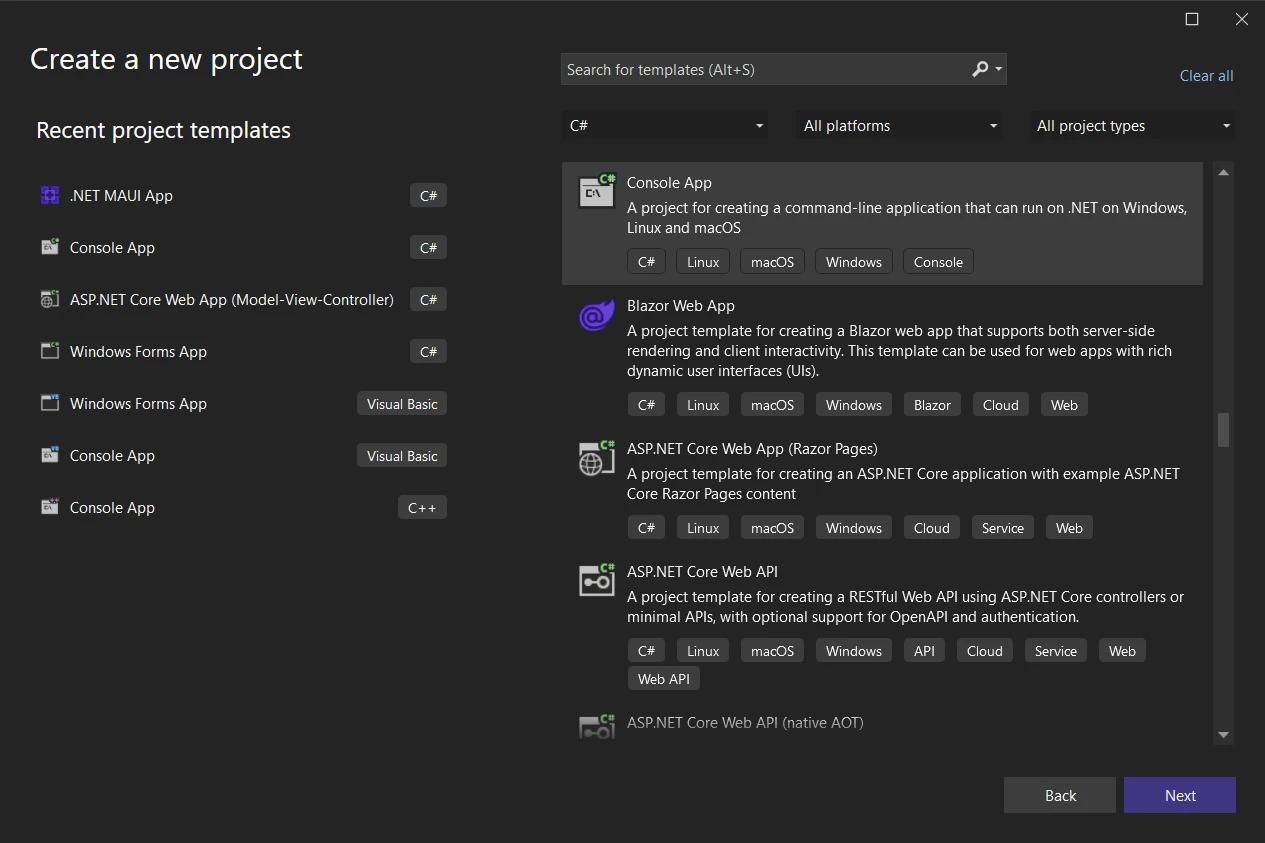
프로젝트 이름과 위치를 지정한 후 "다음"을 클릭합니다.

.NET 프로젝트에 SharpZipLib를 통합하려면 다음을 수행하세요:
Visual Studio IDE의 C# ConsoleApp에서 솔루션 탐색기에서 프로젝트를 마우스 오른쪽 버튼으로 클릭하고 "NuGet 패키지 관리..."를 선택합니다.
NuGet 패키지 관리자 창에서 "SharpZipLib"를 검색합니다.
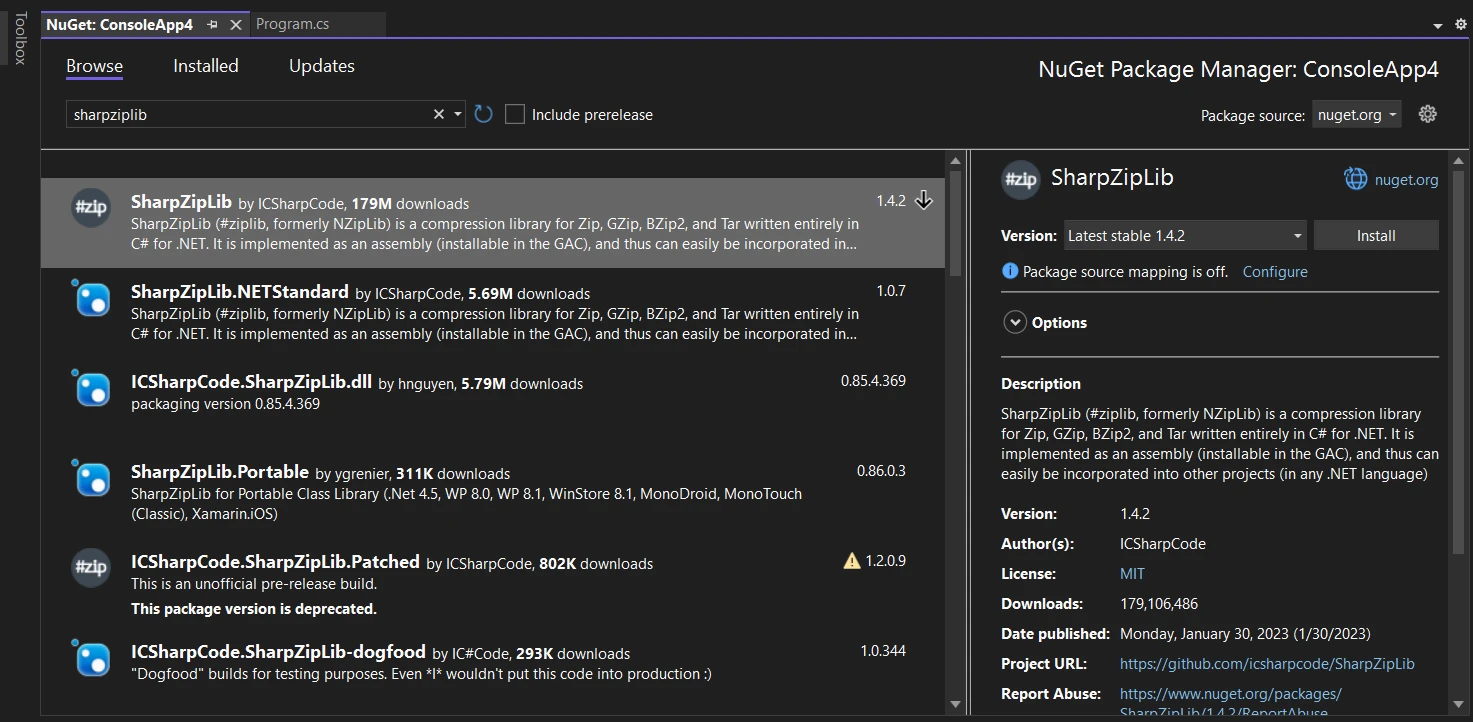
검색 결과에서 "SharpZipLib"를 선택하고 "설치" 버튼을 클릭하세요.
NuGet은 자동으로 프로젝트에 필요한 종속성을 다운로드하고 추가합니다.
SharpZipLib를 사용하여 파일을 압축 및 압축 해제하는 방법을 보여주는 간단한 예는 다음과 같습니다:
using ICSharpCode.SharpZipLib.Zip;
using System;
using System.IO;

namespace SharpZipLibExample
{
    class Program
    {
        static void Main(string[] args)
        {
            string sourceDirectory = @"C:\SourceDirectory";     // Source directory containing files to compress
            string zipFilePath = @"C:\OutputDirectory\compressed.zip"; // Output path for the compressed ZIP file

            // Compress files from the source directory
            CompressDirectory(sourceDirectory, zipFilePath);
            Console.WriteLine("Files compressed successfully.");

            string extractPath = @"C:\OutputDirectory\extracted"; // Path to extract the decompressed files

            // Decompress files from the ZIP archive
            Decompress(zipFilePath, extractPath);
            Console.WriteLine("Files decompressed successfully.");
        }

        // Method to compress all files in a directory to a ZIP file
        static void CompressDirectory(string sourceDirectory, string zipFilePath)
        {
            using (var zipOutputStream = new ZipOutputStream(File.Create(zipFilePath)))
            {
                zipOutputStream.SetLevel(5); // Set compression level (0-9), 5 as a mid-range

                // Recursively add files in the source directory to the ZIP file
                AddDirectoryFilesToZip(sourceDirectory, zipOutputStream);

                zipOutputStream.Finish();
                zipOutputStream.Close();
            }
        }

        // Method to add files from a directory to a ZIP output stream
        static void AddDirectoryFilesToZip(string sourceDirectory, ZipOutputStream zipOutputStream)
        {
            // Get list of files in the directory
            string[] files = Directory.GetFiles(sourceDirectory);

            foreach (string file in files)
            {
                var entry = new ZipEntry(Path.GetFileName(file)); // Create a new entry for each file
                zipOutputStream.PutNextEntry(entry);

                using (var fileStream = File.OpenRead(file))
                {
                    // Buffer for reading files
                    byte[] buffer = new byte[4096];
                    int sourceBytes;

                    // Read file and write to ZIP stream
                    while ((sourceBytes = fileStream.Read(buffer, 0, buffer.Length)) > 0)
                    {
                        zipOutputStream.Write(buffer, 0, sourceBytes);
                    }
                }
            }

            // Handle subdirectories recursively
            string[] subdirectories = Directory.GetDirectories(sourceDirectory);
            foreach (string subdirectory in subdirectories)
            {
                AddDirectoryFilesToZip(subdirectory, zipOutputStream);
            }
        }

        // Method to decompress files from a ZIP file
        static void Decompress(string zipFilePath, string extractPath)
        {
            using (var zipInputStream = new ZipInputStream(File.OpenRead(zipFilePath)))
            {
                ZipEntry entry;
                // Read entries from the ZIP archive
                while ((entry = zipInputStream.GetNextEntry()) != null)
                {
                    string entryPath = Path.Combine(extractPath, entry.Name);

                    // Process files
                    if (entry.IsFile)
                    {
                        string directoryName = Path.GetDirectoryName(entryPath);
                        if (!Directory.Exists(directoryName))
                            Directory.CreateDirectory(directoryName);

                        using (var fileStream = File.Create(entryPath))
                        {
                            // Buffer for reading entries
                            byte[] buffer = new byte[4096];
                            int bytesRead;
                            // Read from ZIP stream and write to file
                            while ((bytesRead = zipInputStream.Read(buffer, 0, buffer.Length)) > 0)
                            {
                                fileStream.Write(buffer, 0, bytesRead);
                            }
                        }
                    }
                    else if (entry.IsDirectory) // Process directories
                    {
                        Directory.CreateDirectory(entryPath);
                    }
                }
            }
        }
    }
}Imports ICSharpCode.SharpZipLib.Zip
Imports System
Imports System.IO
Namespace SharpZipLibExample
Friend Class Program
Shared Sub Main(ByVal args() As String)
Dim sourceDirectory As String = "C:\SourceDirectory" ' Source directory containing files to compress
Dim zipFilePath As String = "C:\OutputDirectory\compressed.zip" ' Output path for the compressed ZIP file
' Compress files from the source directory
CompressDirectory(sourceDirectory, zipFilePath)
Console.WriteLine("Files compressed successfully.")
Dim extractPath As String = "C:\OutputDirectory\extracted" ' Path to extract the decompressed files
' Decompress files from the ZIP archive
Decompress(zipFilePath, extractPath)
Console.WriteLine("Files decompressed successfully.")
End Sub
' Method to compress all files in a directory to a ZIP file
Private Shared Sub CompressDirectory(ByVal sourceDirectory As String, ByVal zipFilePath As String)
Using zipOutputStream As New ZipOutputStream(File.Create(zipFilePath))
zipOutputStream.SetLevel(5) ' Set compression level (0-9), 5 as a mid-range
' Recursively add files in the source directory to the ZIP file
AddDirectoryFilesToZip(sourceDirectory, zipOutputStream)
zipOutputStream.Finish()
zipOutputStream.Close()
End Using
End Sub
' Method to add files from a directory to a ZIP output stream
Private Shared Sub AddDirectoryFilesToZip(ByVal sourceDirectory As String, ByVal zipOutputStream As ZipOutputStream)
' Get list of files in the directory
Dim files() As String = Directory.GetFiles(sourceDirectory)
For Each file As String In files
Dim entry = New ZipEntry(Path.GetFileName(file)) ' Create a new entry for each file
zipOutputStream.PutNextEntry(entry)
Using fileStream = System.IO.File.OpenRead(file)
' Buffer for reading files
Dim buffer(4095) As Byte
Dim sourceBytes As Integer
' Read file and write to ZIP stream
sourceBytes = fileStream.Read(buffer, 0, buffer.Length)
'INSTANT VB WARNING: An assignment within expression was extracted from the following statement:
'ORIGINAL LINE: while ((sourceBytes = fileStream.Read(buffer, 0, buffer.Length)) > 0)
Do While sourceBytes > 0
zipOutputStream.Write(buffer, 0, sourceBytes)
sourceBytes = fileStream.Read(buffer, 0, buffer.Length)
Loop
End Using
Next file
' Handle subdirectories recursively
Dim subdirectories() As String = Directory.GetDirectories(sourceDirectory)
For Each subdirectory As String In subdirectories
AddDirectoryFilesToZip(subdirectory, zipOutputStream)
Next subdirectory
End Sub
' Method to decompress files from a ZIP file
Private Shared Sub Decompress(ByVal zipFilePath As String, ByVal extractPath As String)
Using zipInputStream As New ZipInputStream(File.OpenRead(zipFilePath))
Dim entry As ZipEntry
' Read entries from the ZIP archive
entry = zipInputStream.GetNextEntry()
'INSTANT VB WARNING: An assignment within expression was extracted from the following statement:
'ORIGINAL LINE: while ((entry = zipInputStream.GetNextEntry()) != null)
Do While entry IsNot Nothing
Dim entryPath As String = Path.Combine(extractPath, entry.Name)
' Process files
If entry.IsFile Then
Dim directoryName As String = Path.GetDirectoryName(entryPath)
If Not Directory.Exists(directoryName) Then
Directory.CreateDirectory(directoryName)
End If
Using fileStream = File.Create(entryPath)
' Buffer for reading entries
Dim buffer(4095) As Byte
Dim bytesRead As Integer
' Read from ZIP stream and write to file
bytesRead = zipInputStream.Read(buffer, 0, buffer.Length)
'INSTANT VB WARNING: An assignment within expression was extracted from the following statement:
'ORIGINAL LINE: while ((bytesRead = zipInputStream.Read(buffer, 0, buffer.Length)) > 0)
Do While bytesRead > 0
fileStream.Write(buffer, 0, bytesRead)
bytesRead = zipInputStream.Read(buffer, 0, buffer.Length)
Loop
End Using
ElseIf entry.IsDirectory Then ' Process directories
Directory.CreateDirectory(entryPath)
End If
entry = zipInputStream.GetNextEntry()
Loop
End Using
End Sub
End Class
End NamespaceSharpZipLib는 ZIP, GZip, Tar, BZip2와 같은 압축 아카이브를 다루는 필수 기능을 제공하여 오랫동안 .NET 언어 개발 커뮤니티에서 중요한 역할을 했습니다. 그러나 기술이 발전하고 개발자가 더 발전된 솔루션을 찾으면서, SharpZipLib의 특정 한계가 명확해졌습니다.
IronZIP 문서는 Iron Software 개요에서 개발한 .NET 애플리케이션에서 ZIP 아카이브를 관리하기 위한 현대적이고 효율적인 솔루션입니다. 직관적인 API를 통해 개발자는 ZIP 파일을 간단히 생성, 읽기, 조작할 수 있습니다. IronZIP는 사용자 정의 가능한 압축 수준과 암호 보호와 같은 고급 기능을 제공하여 유연성과 데이터 보안을 보장합니다. 최신 .NET 버전과 호환되며 성능을 최적화한 IronZIP는 아카이브 관리 작업을 용이하고 효율적으로 단순화합니다.
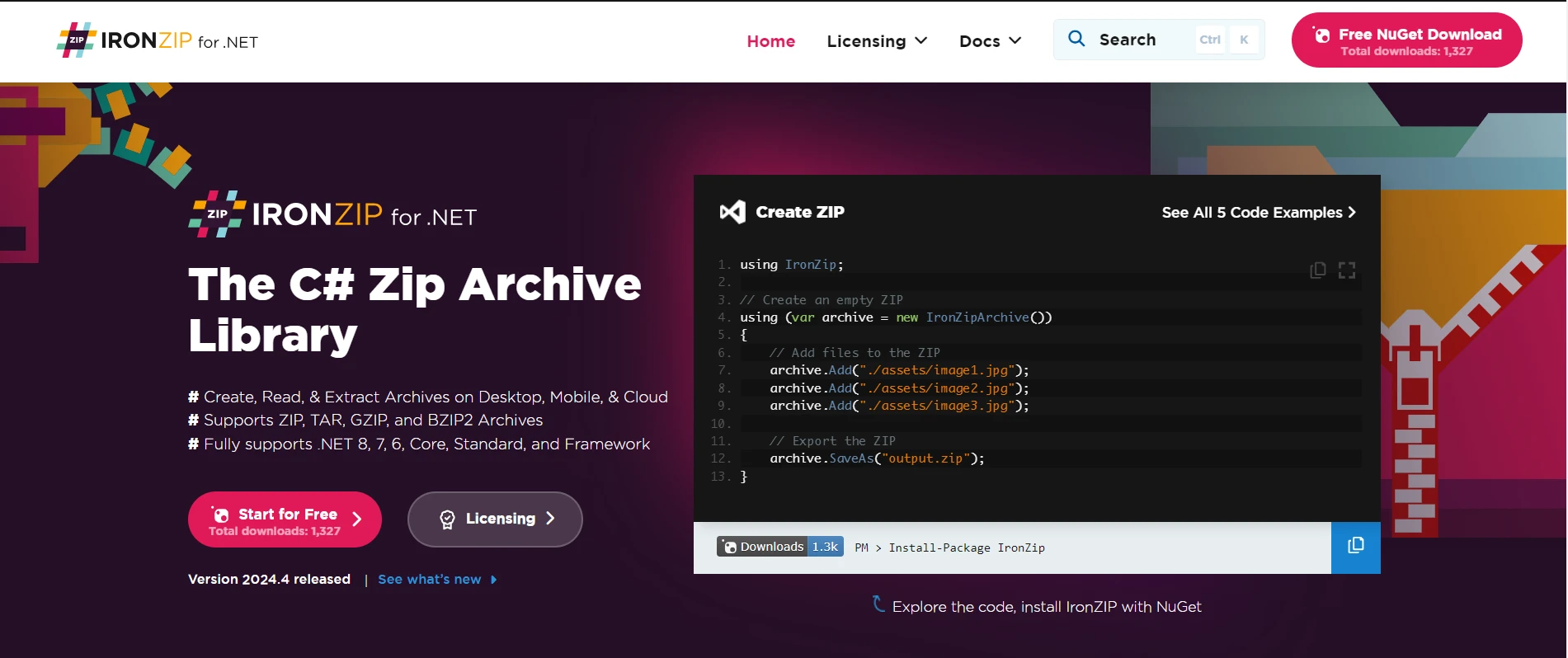
IronZIP 기능은 SharpZipLib의 한계를 해결하는 강력하고 현대적인 솔루션으로 떠오릅니다. 다음은 IronZIP가 어떻게 격차를 메우는지 보여줍니다:
IronZIP 문서를 참고하여 IronZIP 시작 방법을 알아보십시오. IronZIP 코드 예제를 통해 쉽게 시작할 수 있습니다.
다음은 XDocument를 IronPDF와 통합하는 단계입니다:
Visual Studio IDE 또는 선호하는 IDE를 엽니다.
도구 메뉴에서 NuGet 패키지 관리 콘솔로 이동합니다.
IronZIP 패키지를 설치하려면 다음 명령을 실행합니다:
또는 솔루션을 위한 NuGet 패키지 관리자에서 설치할 수 있습니다.
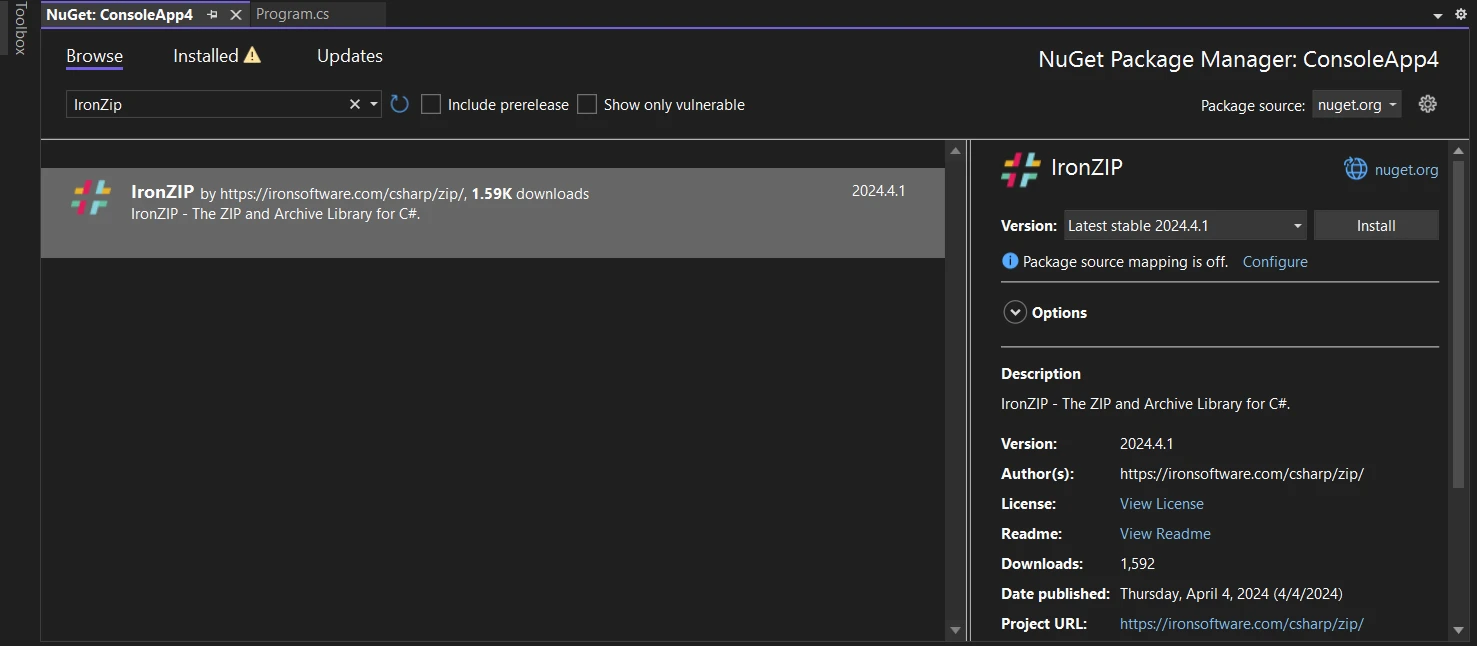
NuGet 검색 탭에서 IronZIP를 선택하고 설치를 클릭합니다:
다음 소스 코드는 IronZIP로 ZIP 파일을 쉽게 몇 줄의 코드만으로 효율적으로 생성하는 방법을 보여줍니다. 여기에서는 지정된 폴더에 파일 이름을 제공하여 암호로 보호된 ZIP 아카이브에 여러 파일을 추가할 수 있습니다. IronZipArchive 객체를 생성할 때 출력 파일의 공간 크기를 줄이기 위해 압축 수준을 지정할 수도 있습니다.
using IronZip;
using IronZip.Enum;

class Program
{
    static void Main()
    {
        // Create an empty ZIP with the highest compression
        using (var archive = new IronZipArchive(9))
        {
            // Password protect the ZIP (Support AES128 & AES256)
            archive.SetPassword("P@ssw0rd", EncryptionMethods.Traditional);
            archive.AddArchiveEntry("./assets/file1.txt");
            archive.AddArchiveEntry("./assets/file2.txt");
            // Export the ZIP
            archive.SaveAs("output.zip");
        }
    }
}Imports IronZip
Imports IronZip.Enum
Friend Class Program
Shared Sub Main()
' Create an empty ZIP with the highest compression
Using archive = New IronZipArchive(9)
' Password protect the ZIP (Support AES128 & AES256)
archive.SetPassword("P@ssw0rd", EncryptionMethods.Traditional)
archive.AddArchiveEntry("./assets/file1.txt")
archive.AddArchiveEntry("./assets/file2.txt")
' Export the ZIP
archive.SaveAs("output.zip")
End Using
End Sub
End Class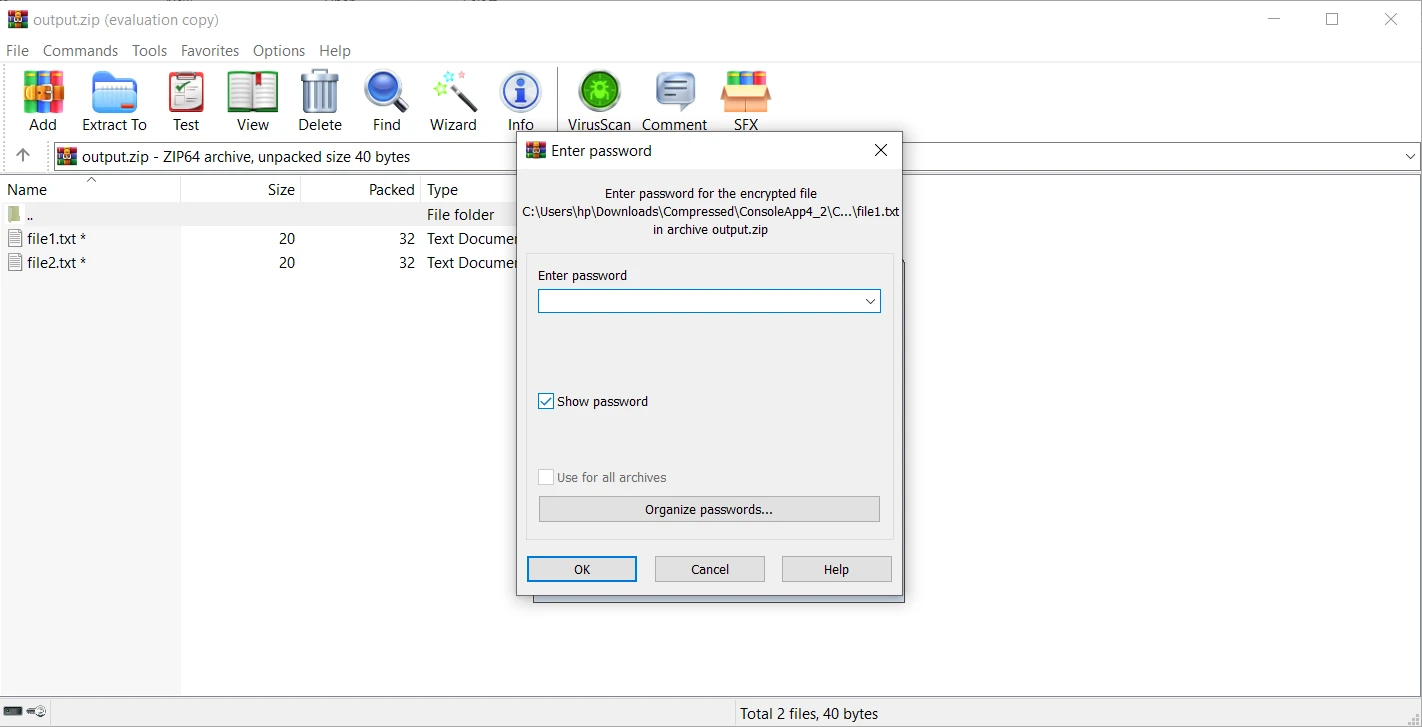
SharpZipLib 개요는 강력한 압축 라이브러리로 등장하여 .NET에서 효율적으로 압축 파일을 처리하기 위한 풍부한 기능과 능력을 제공합니다. 데이터를 저장하기 위한 압축, 파일 아카이브, 웹 서비스의 대역폭 사용 최적화 등 어떠한 경우에도 SharpZipLib는 압축 및 압축 해제 작업을 간소화하는 데 필요한 도구를 제공합니다. 오픈 소스의 특성, 크로스 플랫폼 호환성, 강력한 기능을 갖춘 SharpZipLib는 .NET 애플리케이션에서 압축 작업을 위한 신뢰할 수 있는 솔루션을 찾는 개발자들에게 여전히 최고의 선택입니다.
.NET 애플리케이션에서 압축 아카이브와 작업하는 데 있어 신뢰할 수 있는 선택이었던 SharpZipLib의 한계가 오늘날의 개발 환경에서 점점 더 뚜렷해졌습니다. IronZIP API 탐색 이 SharpZipLib가 남긴 격차를 메워, 사용 편의성, 성능, 호환성을 우선순위로 하는 현대적이고 기능이 풍부한 대안을 제공합니다. IronZIP 사용으로 개발자들은 아카이브 관리에서 새로운 가능성을 열고 고급 기능과 직관적 API로 개발 워크플로를 간소화할 수 있습니다.
IronZIP는 무료 체험판 라이선스 개요를 제공합니다. 라이브러리를 IronZIP 다운로드에서 다운로드하고 사용해 보세요.

제이콥 멜러는 Iron Software의 최고 기술 책임자(CTO)이자 C# PDF 기술을 개척한 선구적인 엔지니어입니다. Iron Software의 핵심 코드베이스를 최초로 개발한 그는 창립 초기부터 회사의 제품 아키텍처를 설계해 왔으며, CEO인 캐머런 리밍턴과 함께 회사를 NASA, 테슬라, 그리고 전 세계 정부 기관에 서비스를 제공하는 50명 이상의 직원을 보유한 기업으로 성장시켰습니다.

IronPDF는 IRON SUITE 의 일부입니다.
10개의 .NET API 제품, 당신의 사무 문서를 위해

PDF 파일을 HTML처럼 빠르게 변환해야 할 때.


