




已更新 2026年4月23日
在 .NET 中用 Microsoft.Extensions.AI 簡化 LLM 整合
AI 正在改變軟體開發,但將大型語言模型 (LLM) 整合到 .NET 中一直很複雜。利用 IronPdf.AI 將 AI 整合推向更遠,為 .NET 應用程式帶來由 OpenAI 驅動的 PDF 解析、資料擷取和內容總結。
閱讀更多

在C#程式設計中,理解委派對於撰寫靈活且可擴展的程式碼至關重要。 委派作為強大的實體,有助於在語言中實現回調、事件處理和函式式程式設計範例。 Microsoft的委派指南提供了有關在C#應用程式中使用Delegate實例的全面概述。
在本綜合指南中,我們將深入探討C#委派的複雜性,探索其功能、使用案例以及它們如何賦能開發人員撰寫更模組化和可擴展的程式碼。
從本質上講,C#中的委派是一個型別安全的物件,也稱為函式指標,可以封裝一個或多個方法。 委派使得可以建立對函式的引用,提供了一種將方法作為參數傳遞、將其儲存在資料結構中並動態調用它們的方法。 這使得委派成為實現回調機制和事件驅動架構的基石。
使用委派的基本步驟包括使用委派型別和參數聲明、實例化以及通過定義回調方法進行調用。 這裡有一個基本範例:
// Delegate declaration
public delegate void MyDelegate(string message);

class Program
{
    static void Main(string[] args)
    {
        // Instantiation
        MyDelegate myDelegate = DisplayMessage;

        // Invocation
        myDelegate("Hello, Delegates!");
    }

    // Method to be referenced
    static void DisplayMessage(string message)
    {
        Console.WriteLine(message);
    }
}' Delegate declaration
Public Delegate Sub MyDelegate(message As String)
Class Program
Shared Sub Main(args As String())
' Instantiation
Dim myDelegate As MyDelegate = AddressOf DisplayMessage
' Invocation
myDelegate("Hello, Delegates!")
End Sub
' Method to be referenced
Shared Sub DisplayMessage(message As String)
Console.WriteLine(message)
End Sub
End Class委派的主要使用案例之一是實現回調。 考慮需要在特定事件發生時通知外部組件的方法場景。 委派提供了一個清晰而模組化的解決方案:
using System;

class Program
{
    static void Main(string[] args)
    {
        EventPublisher publisher = new EventPublisher();
        EventSubscriber subscriber = new EventSubscriber(publisher);

        publisher.SimulateEvent("Test Event");
    }
}

public class EventPublisher
{
    // Declare a delegate type
    public delegate void EventHandler(string eventName);

    // Create an instance of the delegate
    public event EventHandler EventOccurred;

    // Simulate an event
    public void SimulateEvent(string eventName)
    {
        // Invoke the delegate to notify subscribers
        EventOccurred?.Invoke(eventName);
    }
}

public class EventSubscriber
{
    public EventSubscriber(EventPublisher eventPublisher)
    {
        // Subscribe to the event using the delegate
        eventPublisher.EventOccurred += HandleEvent;
    }

    // Method to be invoked when the event occurs
    private void HandleEvent(string eventName)
    {
        Console.WriteLine($"Event handled: {eventName}");
    }
}Imports System
Module Program
Sub Main(args As String())
Dim publisher As New EventPublisher()
Dim subscriber As New EventSubscriber(publisher)
publisher.SimulateEvent("Test Event")
End Sub
End Module
Public Class EventPublisher
' Declare a delegate type
Public Delegate Sub EventHandler(eventName As String)
' Create an instance of the delegate
Public Event EventOccurred As EventHandler
' Simulate an event
Public Sub SimulateEvent(eventName As String)
' Invoke the delegate to notify subscribers
RaiseEvent EventOccurred(eventName)
End Sub
End Class
Public Class EventSubscriber
Public Sub New(eventPublisher As EventPublisher)
' Subscribe to the event using the delegate
AddHandler eventPublisher.EventOccurred, AddressOf HandleEvent
End Sub
' Method to be invoked when the event occurs
Private Sub HandleEvent(eventName As String)
Console.WriteLine($"Event handled: {eventName}")
End Sub
End Class委派在接受C#中的函式式程式設計概念方面具有重要作用。 使用具有高階函式的委派,開發人員可以將函式作為參數傳遞、返回函式,並創造更具表達力和簡潔的程式碼:
public delegate int MyDelegate(int x, int y);

public class Calculator
{
    public int PerformOperation(MyDelegate operation, int operand1, int operand2)
    {
        // Execute the operation method reference through the passed delegate
        return operation(operand1, operand2);
    }
}

// Usage
var calculator = new Calculator();
int result = calculator.PerformOperation((x, y) => x + y, 5, 3); // Adds 5 and 3
Console.WriteLine(result); // Outputs: 8Public Delegate Function MyDelegate(ByVal x As Integer, ByVal y As Integer) As Integer
Public Class Calculator
Public Function PerformOperation(ByVal operation As MyDelegate, ByVal operand1 As Integer, ByVal operand2 As Integer) As Integer
' Execute the operation method reference through the passed delegate
Return operation(operand1, operand2)
End Function
End Class
' Usage
Private calculator = New Calculator()
Private result As Integer = calculator.PerformOperation(Function(x, y) x + y, 5, 3) ' Adds 5 and 3
Console.WriteLine(result) ' Outputs: 8
了解更多關於IronPDF的功能,它是一個功能豐富的程式庫,旨在促進C#應用程式中的PDF生成、操作和交互。 無論您需要從零開始建立PDF、將HTML轉換為PDF,或從現有PDF中提取內容,IronPDF提供了一套全面的工具來簡化這些任務。 其多樣性使其成為開發人員在各種專案中工作的有價資產。
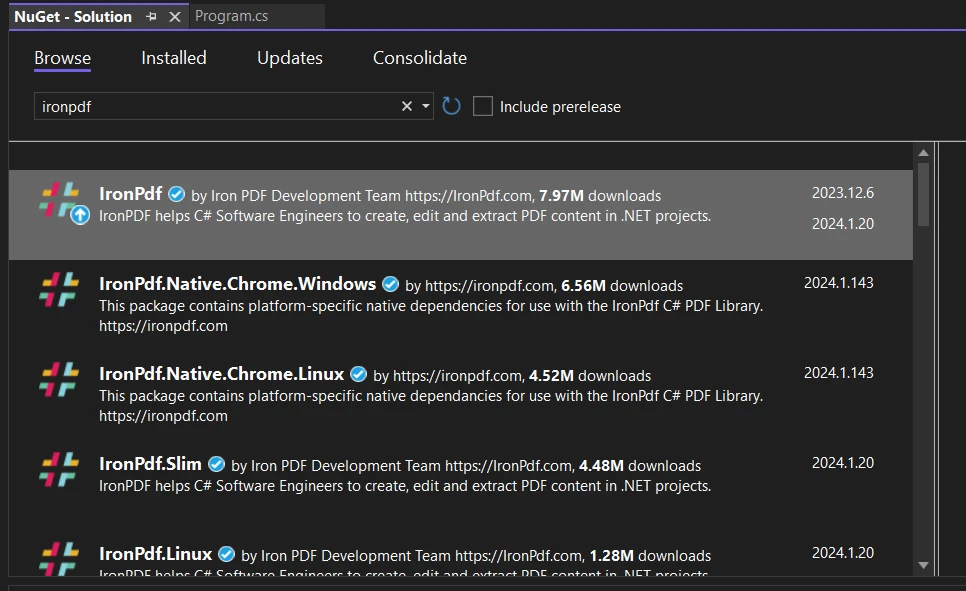
要在您的C#項目中開始使用IronPDF程式庫,您可以輕鬆地安裝IronPDF的NuGet包。 在您的套件管理器控制台中使用以下命令:
或者,您可以在NuGet套件管理器中搜尋"IronPDF"並從那裡安裝。
在C#中,委派作為型別安全的函式指標,允許方法被引用並作為參數傳遞。 委派在上面提到的不同場景中起著關鍵作用。 現在,問題來了:C#委派如何適應IronPDF的環境,並能否有效結合使用?
利用委派與IronPDF的一種方法是通過文件事件的回調。 IronPDF提供的事件,您可以使用委派訂閱,允許您在文件生成過程中的特定時間點執行自定義邏輯。 例如:
using IronPdf;

public delegate string AddPasswordEventHandler(PdfDocument e);

string AddPassword(PdfDocument document)
{
    string password = "";
    if (document.Password == "")
    {
        password = "Iron123";
    }
    return password;
}

PdfDocument document = new PdfDocument("StyledDocument.pdf");
AddPasswordEventHandler handler = AddPassword;
document.Password = handler.Invoke(document); // Subscribe to the event
document.SaveAs("PasswordProtected.pdf");Imports IronPdf
Public Delegate Function AddPasswordEventHandler(ByVal e As PdfDocument) As String
Private Function AddPassword(ByVal document As PdfDocument) As String
Dim password As String = ""
If document.Password = "" Then
password = "Iron123"
End If
Return password
End Function
Private document As New PdfDocument("StyledDocument.pdf")
Private handler As AddPasswordEventHandler = AddressOf AddPassword
document.Password = handler.Invoke(document) ' Subscribe to the event
document.SaveAs("PasswordProtected.pdf")在這個C#程式碼片段中,定義一個名為PdfDocument作為參數並返回一個字串。 在此方法中,初始化一個名為Password屬性進行條件檢查。 如果密碼為空字串,將值 "Iron123" 分配給password變數,並返回它。
接下來,建立一個PdfDocument實例,使用檔名"StyledDocument.pdf"。 宣告一個命名為AddPassword方法相同。 將此委派的實例命名為AddPassword方法。 然後使用Password屬性。
最後,在SaveAs方法,將其儲存為 "PasswordProtected.pdf"。 此程式碼有效地使用委派來動態確定並設定基於PdfDocument的密碼。
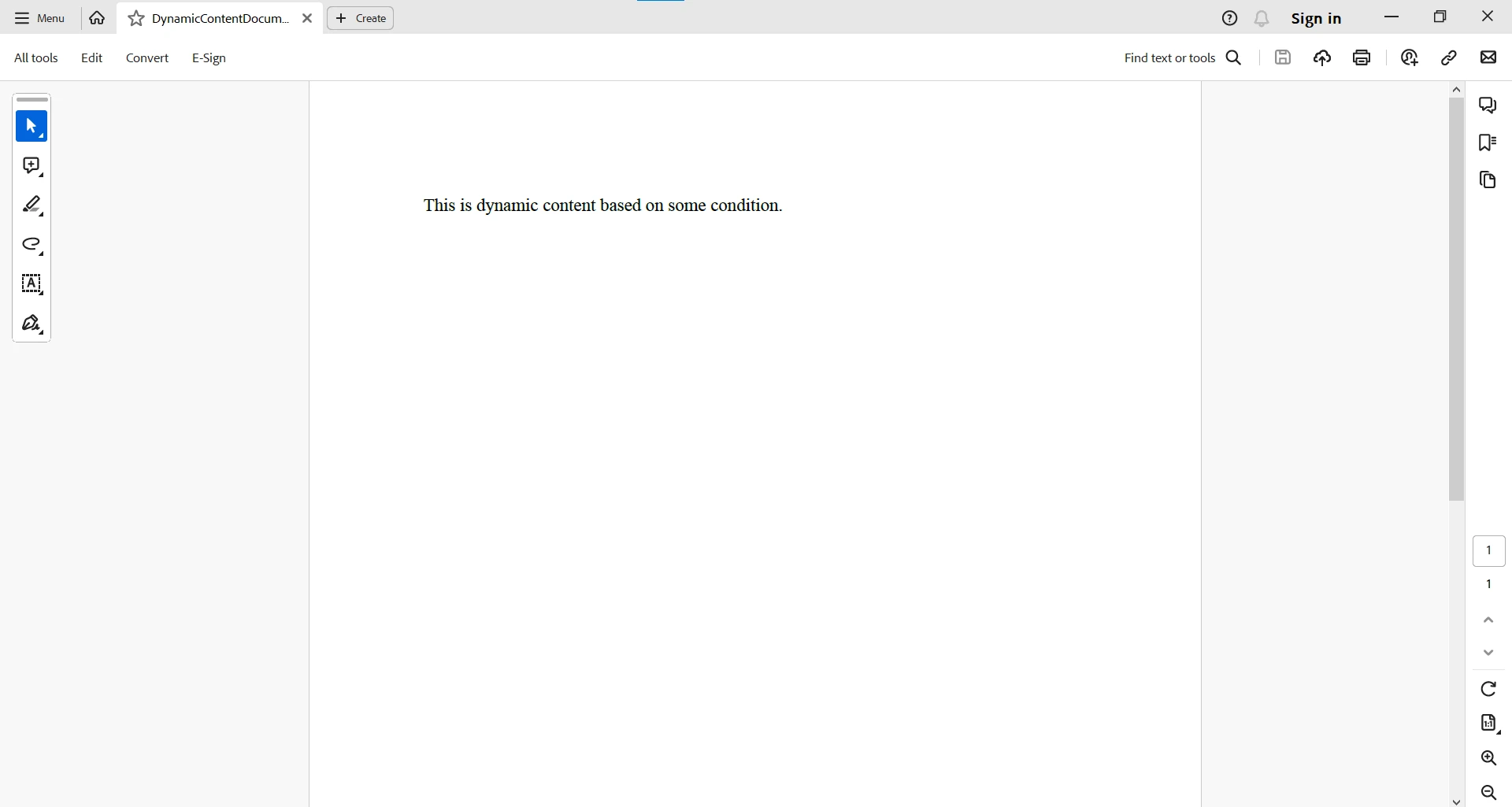
委派也可以用來將動態內容插入到PDF文件中。 IronPDF支援插入HTML內容以從HTML生成PDF,開發人員可以使用委派根據某些條件或資料動態生成HTML:
// Assuming GetDynamicContent is a delegate that generates dynamic HTML content
Func<string> getDynamicContent = () =>
{
    // Custom logic to generate dynamic content
    return "<p>This is dynamic content based on some condition.</p>";
};

// Incorporate dynamic HTML into the PDF
var pdfRenderer = new ChromePdfRenderer();
var pdfDocument = pdfRenderer.RenderHtmlAsPdf($"<html><body>{getDynamicContent()}</body></html>");
pdfDocument.SaveAs("DynamicContentDocument.pdf");' Assuming GetDynamicContent is a delegate that generates dynamic HTML content
Dim getDynamicContent As Func(Of String) = Function()
' Custom logic to generate dynamic content
Return "<p>This is dynamic content based on some condition.</p>"
End Function
' Incorporate dynamic HTML into the PDF
Dim pdfRenderer = New ChromePdfRenderer()
Dim pdfDocument = pdfRenderer.RenderHtmlAsPdf($"<html><body>{getDynamicContent()}</body></html>")
pdfDocument.SaveAs("DynamicContentDocument.pdf")在這個例子中,getDynamicContent委派動態生成HTML內容,然後嵌入到PDF文件中。
為了有效而高效地使用IronPDF,請瀏覽IronPDF文件。
總而言之,C#委派是程式碼靈活性和模組化的支柱。 它們使開發人員能夠實現回調、處理事件並擁抱函式式程式設計範例,例如以編程方式改變方法調用的能力。 作為C#工具箱中的一個多功能工具,委派賦予開發人員建立更易於維護、可擴展且更具表現力的程式碼。 無論您是在構建事件驅動應用程式、實現回調機制還是探索函式式程式設計,C#委派都是您編程旅程中的強大盟友。
C#委派和IronPDF可以形成合作的雙雄,增強您應用程式中文字生成的能力。 無論您是自定義文件事件還是插入動態內容,委派提供了一種靈活的機制,以擴展IronPDF的功能。 在探索可能性時,請考慮您專案的具體需求,以及委派如何有助於通過IronPDF進行更量身定制和動態的PDF生成過程。
Jacob Mellor是Iron Software的首席技術官,一位在C# PDF技術上開創先河的遠見工程師。作為Iron Software核心程式碼庫的原開發者,他從創立以來就一直在塑造公司的產品架構,與首席執行官Cameron Rimington一起將公司轉變為服務於NASA、特斯拉和全球政府公司的50多名人員的公司。

IronPDF 是 IRONSUITE 的一部分
10 款適用於辦公室文件的 .NET API 產品

當您需要您的PDF看起來像HTML一樣快速。


