已更新 2026年4月21日
linkify-react(使用方法:開發者指南)
Linkify React 是一個輕量和容易使用的 npm 套件,能自動將含有 URLs 的純文字轉換
閱讀更多

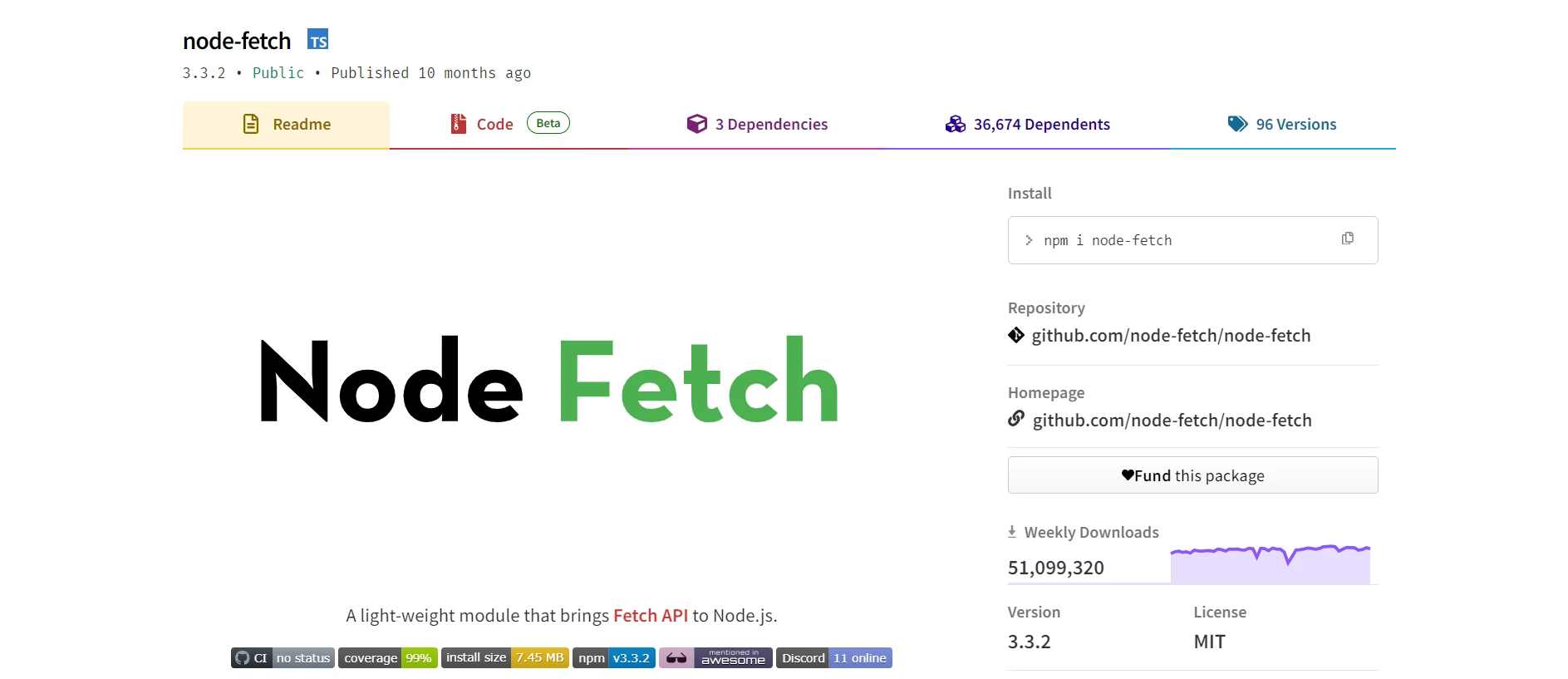
Node Fetch 是 Node.js 生態系統中的一個流行輕量模組,旨在使 HTTP 請求變得簡單且直觀。它提供了一種輕量且熟悉的方式來與網頁 API 互動,靈感來自於瀏覽器環境中的 Fetch API。 Node-fetch 在 Node.js 中提供 Fetch API 支援,使服務工作者能夠有效地處理 HTTP 標頭並執行 HTTPS 請求。
本文將幫助您探索 Node-fetch 的主要功能和用法,為尋求簡化其 Node.js 中 HTTP 請求處理的開發者提供全面指南。 我們還將使用 IronPDF,這是 Node.js 的 PDF 程式庫,使程式設計師能建立和編輯 PDF、將 HTML 內容轉換為 PDF 等更多功能。
Node fetch 是將 Fetch API 引入到 Node.js 的一個模組。 Fetch API 是一個現代介面常用於網頁瀏覽器中進行 HTTP 請求。 Node.js fetch 複製了這種功能,使 Node.js 應用程式也能夠用同樣的輕鬆和簡單進行 HTTP 請求。 這讓它成為已經熟悉 Fetch API 的開發者或那些尋求簡單方法來處理其 Node.js 應用程式中 HTTP 請求的人的出色選擇。
Node.js fetch 模仿了瀏覽器中的 Fetch API,為開發者提供一個簡單且熟悉的介面。
像 Fetch API 一樣,Node.js fetch 是基於 Promise,讓開發者能以更易讀和可管理的方式撰寫非同步程式碼。
Node.js fetch 是一個極簡程式庫,使其快速高效。 它不會帶有大型 HTTP 程式庫的負擔,保持您的應用程式精簡。
Node.js fetch 支援多種 HTTP 方法、標頭和響應型別,使其高度多功能。
它支援流式傳輸響應,這對於高效處理大負載非常有用。
要開始使用 Node-fetch,您需要透過 npm(Node Package Manager)安裝它。 在您的專案目錄中運行以下命令:
npm install node-fetch以下是一個如何使用 Node.js fetch 進行 GET 請求的基本範例:
import fetch from 'node-fetch';

const url = 'https://jsonplaceholder.typicode.com/posts';

// Make a GET request to fetch data
fetch(url)
    .then(response => {
        // Check if the response status is OK
        if (!response.ok) {
            throw new Error('Network response was not ok');
        }
        // Parse the response as JSON
        return response.json();
    })
    .then(data => {
        // Process the JSON data
        console.log(data);
    })
    .catch(error => {
        // Handle any errors that occur during the fetch
        console.error('There has been a problem with your fetch operation:', error);
});此程式碼片段演示了一個簡單的 GET 請求,從 API 獲取 JSON 資料。 fetch 函式返回一個 promise,該 promise 解決為響應物件。 然後您可以調用返回響應的方法,如 json() 以解析響應主體。
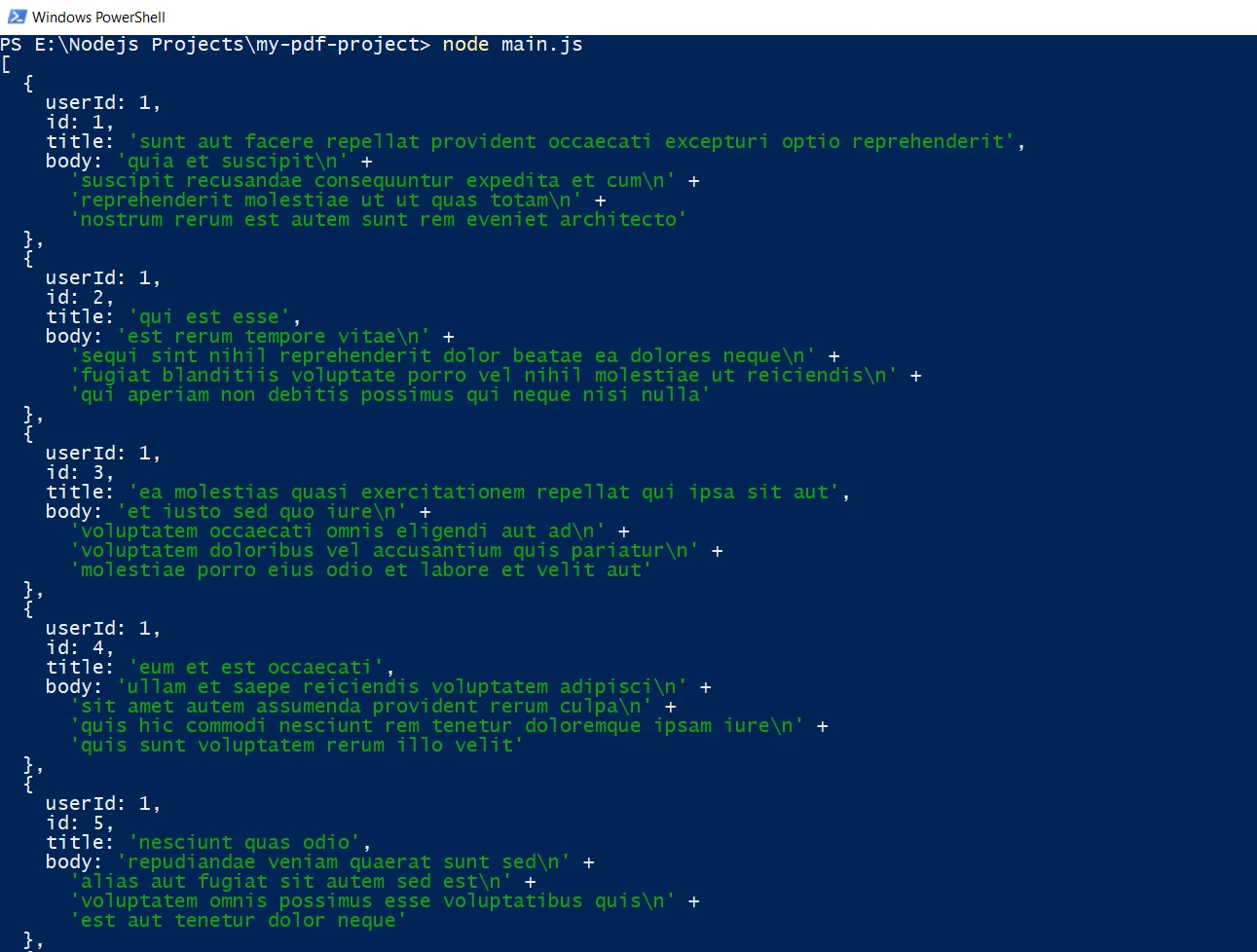
Node.js fetch 還支援更高級的功能,例如進行 POST 請求、設置自定義請求標頭以及處理不同的響應型別。
import fetch from 'node-fetch';

const url = 'https://jsonplaceholder.typicode.com/posts';
const data = { key: 'value' };

// Make a POST request with JSON payload
fetch(url, {
    method: 'POST',
    headers: {
        // Specify content type as JSON
        'Content-Type': 'application/json'
    },
    body: JSON.stringify(data)
})
    .then(response => {
        // Check if the response status is OK
        if (!response.ok) {
            throw new Error('Network response was not ok');
        }
        // Parse the response as JSON
        return response.json();
    })
    .then(data => {
        // Process the JSON data
        console.log(data);
    })
    .catch(error => {
        // Handle any errors that occur during the fetch
        console.error('There has been a problem with your fetch operation:', error);
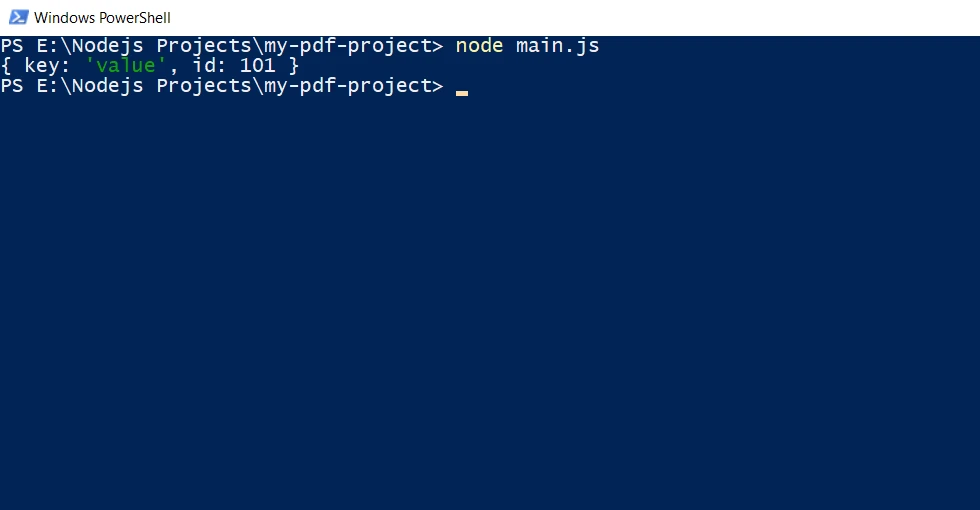
});這個例子顯示了如何發送一個帶有 JSON 負載的 POST 請求。 headers 選項用於指定響應的內容型別,而 body 選項包含序列化的 JSON 資料。
import fetch from 'node-fetch';
import fs from 'fs';

const url = 'https://jsonplaceholder.typicode.com/posts';

// Make a GET request to fetch data and stream it to a file
fetch(url)
    .then(response => {
        // Check if the response status is OK
        if (!response.ok) {
            throw new Error('Network response was not ok');
        }
        // Pipe the response body as a file stream to 'large-data.json'
        const dest = fs.createWriteStream('./large-data.json');
        response.body.pipe(dest);
    })
    .catch(error => {
        // Handle any errors that occur during the fetch
        console.error('There has been a problem with your fetch operation:', error);
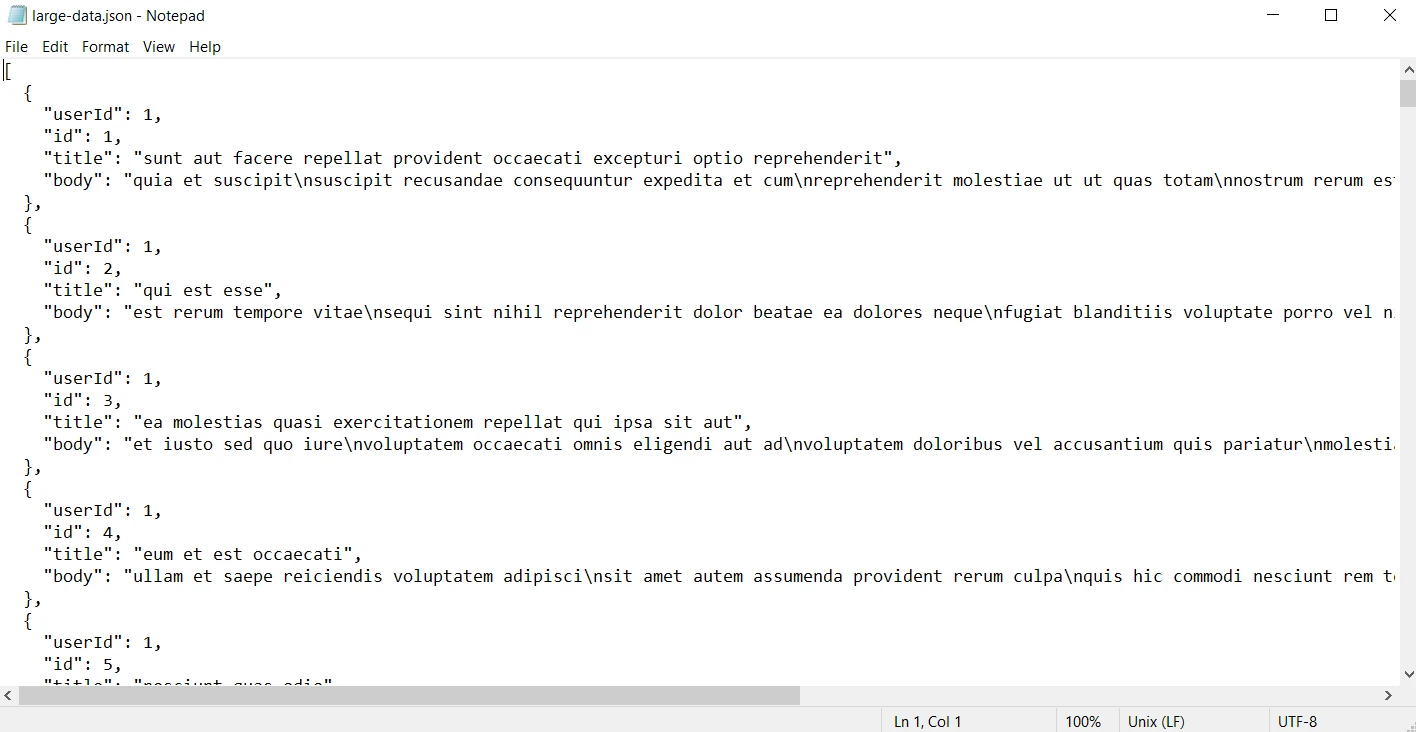
});在這個例子中,響應主體被作為文件流導入伺服器,展示瞭如何有效地處理大型響應。
在處理 HTTP 請求時,正確的錯誤處理至關重要。 Node.js fetch 提供了一種直接的方式來使用 promises 捕捉和處理錯誤。
fetch(url)
    .then(response => {
        // Check if the response status is OK
        if (!response.ok) {
            throw new Error(`HTTP error! status: ${response.status}`);
        }
        // Parse the response as JSON
        return response.json();
    })
    .then(data => {
        // Process the JSON data
        console.log(data);
    })
    .catch(error => {
        // Handle any errors that occur during the fetch
        console.error('Fetch error:', error);
});這裡,如果響應狀態不在 200-299 範圍內,則會拋出一個錯誤,而 catch 塊處理請求期間發生的任何錯誤。否則,會返回有效的 JSON 響應。
Node fetch 是 Node.js 生態系統中用於進行 HTTP fetch 請求的流行程式庫。 當與 IronPDF 這個強大的 PDF 生成程式庫結合使用時,它成為從各種網頁資源建立 PDF 的多功能工具。
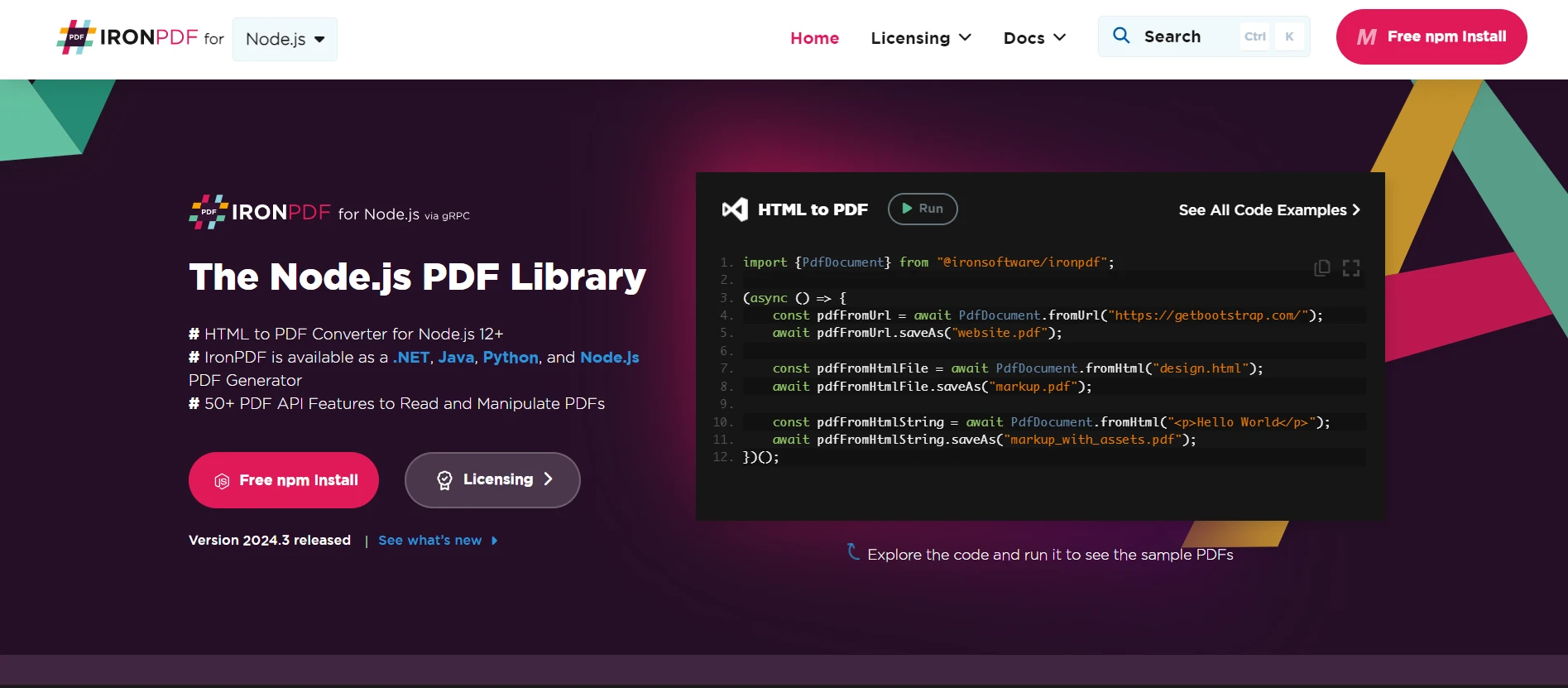
IronPDF 是一個強大的程式庫,允許開發者輕鬆高效地建立、編輯和提取 PDF 內容。 IronPDF 適用於 C#、Python、Java 和 Node.js,以其直觀的 API 使 PDF 操作變得簡單。
首先,您需要在專案中安裝 IronPDF。 使用以下 npm 指令來安裝程式庫:
讓我們來探討如何使用 Node.js fetch 與 IronPDF 從網頁內容來源生成 PDF。
您可以運用 Node.js fetch 和 IronPDF 的力量來動態獲取網頁內容並生成 PDF。 例如,您可能會獲取 API 端點的資料,生成動態 HTML,然後 將其轉換為 PDF。 以下範例說明如何完成此任務:
import fetch from 'node-fetch';
import { PdfDocument } from '@ironsoftware/ironpdf';

(async () => {
    // Replace the apiUrl with the actual URL
    const apiUrl = "https://jsonplaceholder.typicode.com/posts";

    // Fetch data from API
    const response = await fetch(apiUrl);
    const data = await response.json();

    // Create dynamic HTML content with a table
    const htmlContent = `
        <!DOCTYPE html>
        <html>
        <head>
            <title>Data Report</title>
            <style>
                body {
                    font-family: Arial, sans-serif;
                    margin: 40px;
                }
                table {
                    width: 100%;
                    border-collapse: collapse;
                }
                table, th, td {
                    border: 1px solid black;
                }
                th, td {
                    padding: 10px;
                    text-align: left;
                }
                th {
                    background-color: #f2f2f2;
                }
                h1 {
                    text-align: center;
                }
            </style>
        </head>
        <body>
            <h1>Data Report</h1>
            <table>
                <tr>
                    <th>User ID</th>
                    <th>ID</th>
                    <th>Title</th>
                    <th>Body</th>
                </tr>
                ${data.map(item => `
                    <tr>
                        <td>${item.userId}</td>
                        <td>${item.id}</td>
                        <td>${item.title}</td>
                        <td>${item.body}</td>
                    </tr>
                `).join('')}
            </table>
        </body>
        </html>
    `;

    // Generate PDF from the HTML string
    const pdfFromHtmlString = await PdfDocument.fromHtml(htmlContent);
    await pdfFromHtmlString.saveAs("dynamic_report.pdf");
    console.log("PDF generated from API data successfully!");
})();JSON 響應輸出優雅地映射到 HTML 表格,IronPDF 精確地將其轉換為帶有所有樣式的 PDF。
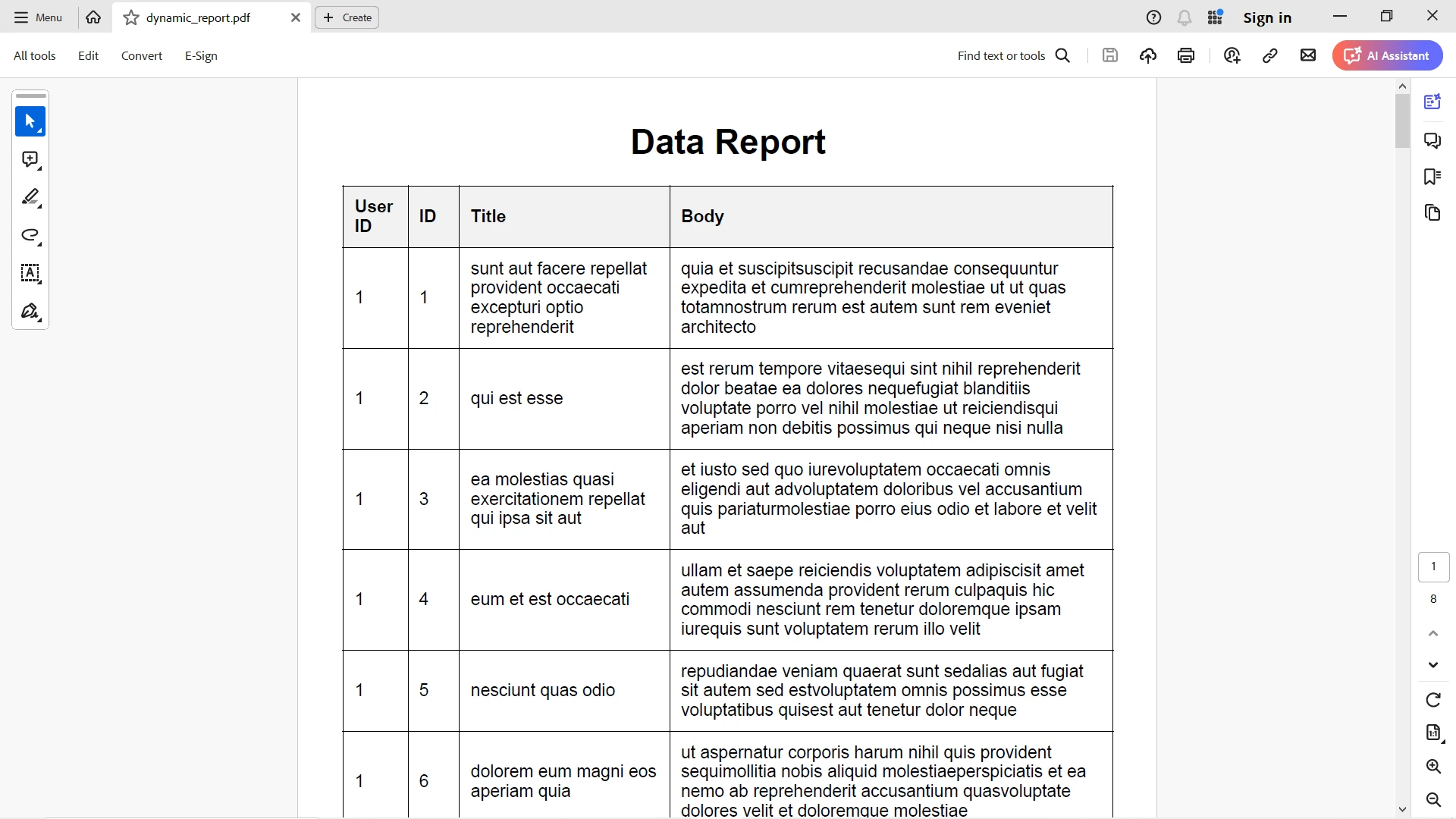
有關 IronPDF 及其功能的更多詳細資訊,請參閱此 文件頁。
Node fetch 是在 Node.js 中進行 HTTP 請求的強大且簡單的工具。 其熟悉的 API、基於承諾的方法和輕量級自然令其成為初學者和有經驗的開發者的絕佳選擇。 無論您是在執行基本的 GET 請求還是處理帶有自定義標頭的複雜 POST 請求,Node fetch 提供了一種乾淨且高效的方式來與網頁 API 互動。
結合 Node fetch 與 IronPDF 提供了一種強大且靈活的方式來在 Node.js 中從各種網頁內容來源生成 PDF。 透過整合這兩個程式庫,您可以輕鬆利用網頁資料建立專業 PDF 的強大應用程式。
IronPDF 從 $999 開始。 請免風險體驗其強大 PDF 生成功能。 今天就試試看,親眼目睹它的不同!

Curtis Chau擁有Carleton大學的電腦科學學士學位,專精於前端開發,擁有Node.js、TypeScript、JavaScript和React的專業知識。Curtis熱衷於建立直觀且美觀的使用者介面,喜愛使用現代框架並建立結構良好、視覺吸引力的手冊。

IronPDF 是 IRONSUITE 的一部分
10 款適用於辦公室文件的 .NET API 產品

當您需要您的PDF看起來像HTML一樣快速。