已更新 2026年4月21日
linkify-react(使用方法:開發者指南)
Linkify React 是一個輕量和容易使用的 npm 套件,能自動將含有 URLs 的純文字轉換
閱讀更多

Ramda 是一個實用的 JavaScript 函式式程式庫,專為構建模塊化、可重用的程式碼而設計。 它強調不變性和純函式,使其成為管理 JavaScript 應用程式中狀態和資料轉換的強大工具。 與其他庫如 Lodash 或 Underscore 不同, Ramda 採用更加函式式的範式,提供許多實用工具以促進函式式程式風格。
不變性是 Ramda 的一個關鍵原則。 Ramda 的函式不修改輸入資料,而是返回新的資料結構。 這種方法減少了副作用的風險,使程式碼更可預測且更易於除錯。
JavaScript 程式員的 Ramda 程式庫鼓勵使用純函式,這些函式在相同輸入的情況下提供相同的輸出,無副作用。 純函式提高程式碼的可靠性,並使其更易於測試。
Ramda 提供了組合函式的工具,允許開發人員通過組合較簡單的函式來構建複雜的操作。 這種可組合性使建立函式式、更具可讀性和可維護性的程式碼變得容易。
所有 Ramda 函式都自動進行柯里化。 柯里化涉及將接受多個參數的函式分解成一系列函式,每個函式只接受一個參數。 此功能可實現部分應用,其中函式的一些參數可以被固定,建立一個接受剩餘參數的新函式。
要開始使用 Ramda,通過 npm 安裝它:
npm install ramda安裝完成後,您可以將其導入到您的 JavaScript 文件中:
const R = require('ramda');或者如果您使用的是 ES6 模組:
import * as R from 'ramda';這裡有一些例子顯示了 Ramda 的主要顯著特徵。
以下範例展示了 Ramda 的不變性特徵。 它永遠不會改變使用者資料; 而是將內容新增到原始資料結構:
const originalArray = [1, 2, 3, 4];
const newArray = R.append(5, originalArray);

// Log the original array and the new augmented array
console.log(originalArray); // [1, 2, 3, 4]
console.log(newArray); // [1, 2, 3, 4, 5]考慮一個增加兩個數字的函式:
const add = R.add;
console.log(add(2, 3)); // 5因為R.add是純函式,對於相同的輸入,它將始終返回相同的結果。
函式組合允許從較簡單的函式中構建複雜的操作。 Ramda 提供了 R.compose 和 R.pipe 用於此目的:
const multiplyBy2 = R.multiply(2);
const subtract1 = R.subtract(R.__, 1);
const multiplyAndSubtract = R.compose(subtract1, multiplyBy2);

// First multiply by 2, then subtract 1
console.log(multiplyAndSubtract(5)); // 9柯里化將函式轉換,使其可以用比預期更少的參數調用。 Ramda 預設對所有函式進行柯里化:
// A function to add three numbers
const addThreeNumbers = (a, b, c) => a + b + c;

// Currying the function using Ramda's R.curry
const curriedAddThreeNumbers = R.curry(addThreeNumbers);

// Create a new function by partially applying two arguments
const add5And10 = curriedAddThreeNumbers(5)(10);

// Call the new function with the remaining argument
console.log(add5And10(2)); // 17Ramda 的鏡頭是一種強大的功能,用於不變資料操作。 它們提供了一種專注於基本資料結構特定部分的方式,允許安全地讀取和更新。
const person = { name: 'John', address: { city: 'New York', zip: 10001 } };

// Create a lens that focuses on the 'address' property
const addressLens = R.lensProp('address');

// Create a lens that focuses on the 'city' within the 'address' object
const cityLens = R.lensPath(['address', 'city']);

// Update city to 'Los Angeles' immutably
const updatedPerson = R.set(cityLens, 'Los Angeles', person);

// Retrieve the updated city from the new person object
console.log(R.view(cityLens, updatedPerson)); // Los Angeles

// Verify no mutation occurred on the original object
console.log(person.address.city); // New York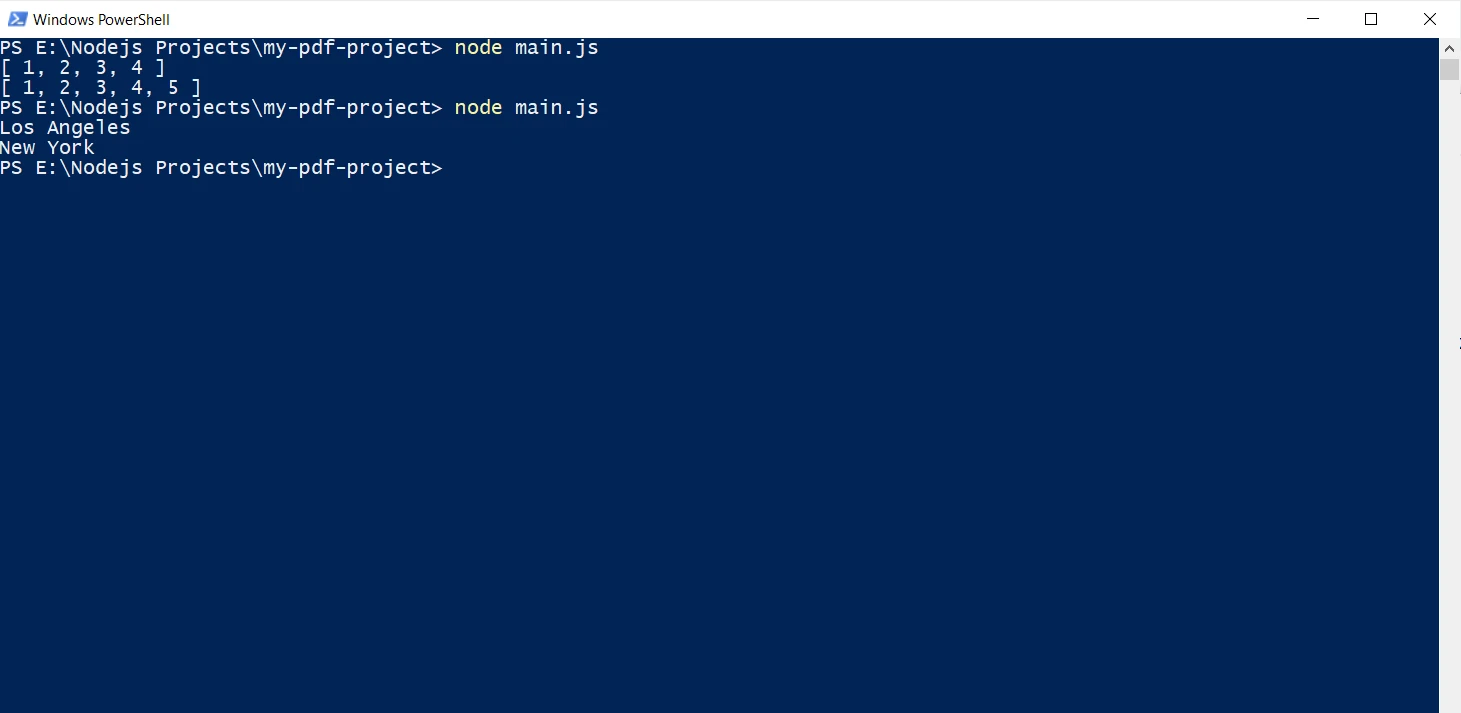
變換器允許通過結合過濾、映射和減少的步驟成為對資料的單次遍歷來實現有效的資料轉換管道。
const numbers = [1, 2, 3, 4, 5];

// Define functions to identify even numbers and double any number
const isEven = x => x % 2 === 0;
const double = x => x * 2;

// Create a transducer combining filtering and mapping operations
const transducer = R.compose(R.filter(isEven), R.map(double));

// Apply the transducer to transform the list
const result = R.transduce(transducer, R.flip(R.append), [], numbers);

console.log(result); // [4, 8]Ramda 鼓勵使用無參函式式編程風格,其中函式是在未明確提及其參數的情況下定義的。 這導致程式碼更乾淨和更簡潔。
// Calculate the sum of elements in a list
const sum = R.reduce(R.add, 0);

// Calculate the average value using sum and length
const average = R.converge(R.divide, [sum, R.length]);

console.log(average([1, 2, 3, 4, 5])); // 3將 Ramda JS 的函式式編程能力與 IronPDF 在 Node.js 中的 PDF 生成功能結合使用,可以寫出更易於維護、閱讀和效率更高的程式碼。
IronPDF for Node.js 是由 Iron Software 開發的一個強大的庫,允許開發人員在 Node.js 環境中直接建立、操作和渲染 PDF 文件。 它提供了全面的功能集合,能從 URL、HTML 文件和 HTML 字串等各種來源生成 PDF,使其成為網頁應用程式的一大靈活工具。 該庫簡化了複雜的 PDF 操作,允許使用簡單的程式碼進行直接轉換和渲染。
 using IronPDF,開發人員可以輕鬆地在工作流程中整合 PDF 生成功能,受益於其強大的功能和易用性,這對於在現代網頁應用程式中建立動態報告、發票和其他基於文件的功能特別實用。
首先,使用 npm 安裝 IronPDF for Node.js package:
要將 IronPDF 與 Ramda 結合使用,請導入所需模塊:
import { PdfDocument } from "@ironsoftware/ironpdf";
import * as R from "ramda";我們可以使用 Ramda 建立函式管道,按順序執行所有 PDF 生成操作。 在這裡,我們從 URL、HTML 字串和 HTML 文件建立 PDF,並使用 Ramda 函式式 JavaScript 風格進行管道化:
// Function to generate PDF from a URL
const generatePdfFromUrl = (url) => {
  return PdfDocument.fromUrl(url)
    .then(pdf => pdf.saveAs("website.pdf"));
};

// Function to generate PDF from an HTML file
const generatePdfFromHtmlFile = (filePath) => {
  return PdfDocument.fromHtml(filePath)
    .then(pdf => pdf.saveAs("markup.pdf"));
};

// Function to generate PDF from an HTML string
const generatePdfFromHtmlString = (htmlString) => {
  return PdfDocument.fromHtml(htmlString)
    .then(pdf => pdf.saveAs("markup_with_assets.pdf"));
};

// Main function to generate all PDFs using Ramda's pipe
const generatePdfs = async () => {
  const generateFromUrl = R.pipe(
    generatePdfFromUrl
  );
  const generateFromHtmlFile = R.pipe(
    generatePdfFromHtmlFile
  );
  const generateFromHtmlString = R.pipe(
    generatePdfFromHtmlString
  );

  // Await the generation of PDFs from various sources
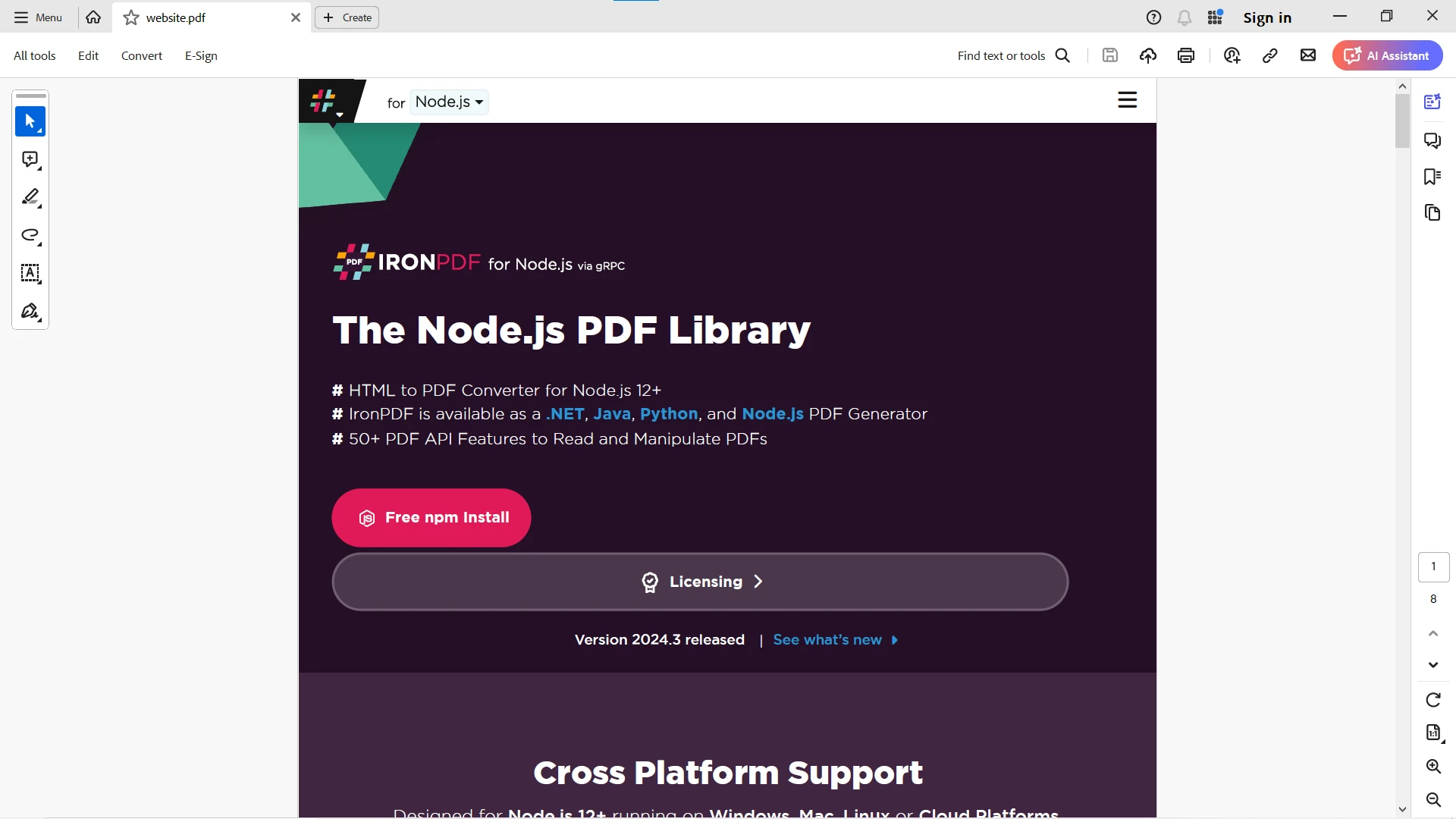
  await generateFromUrl("https://ironpdf.com/nodejs/");
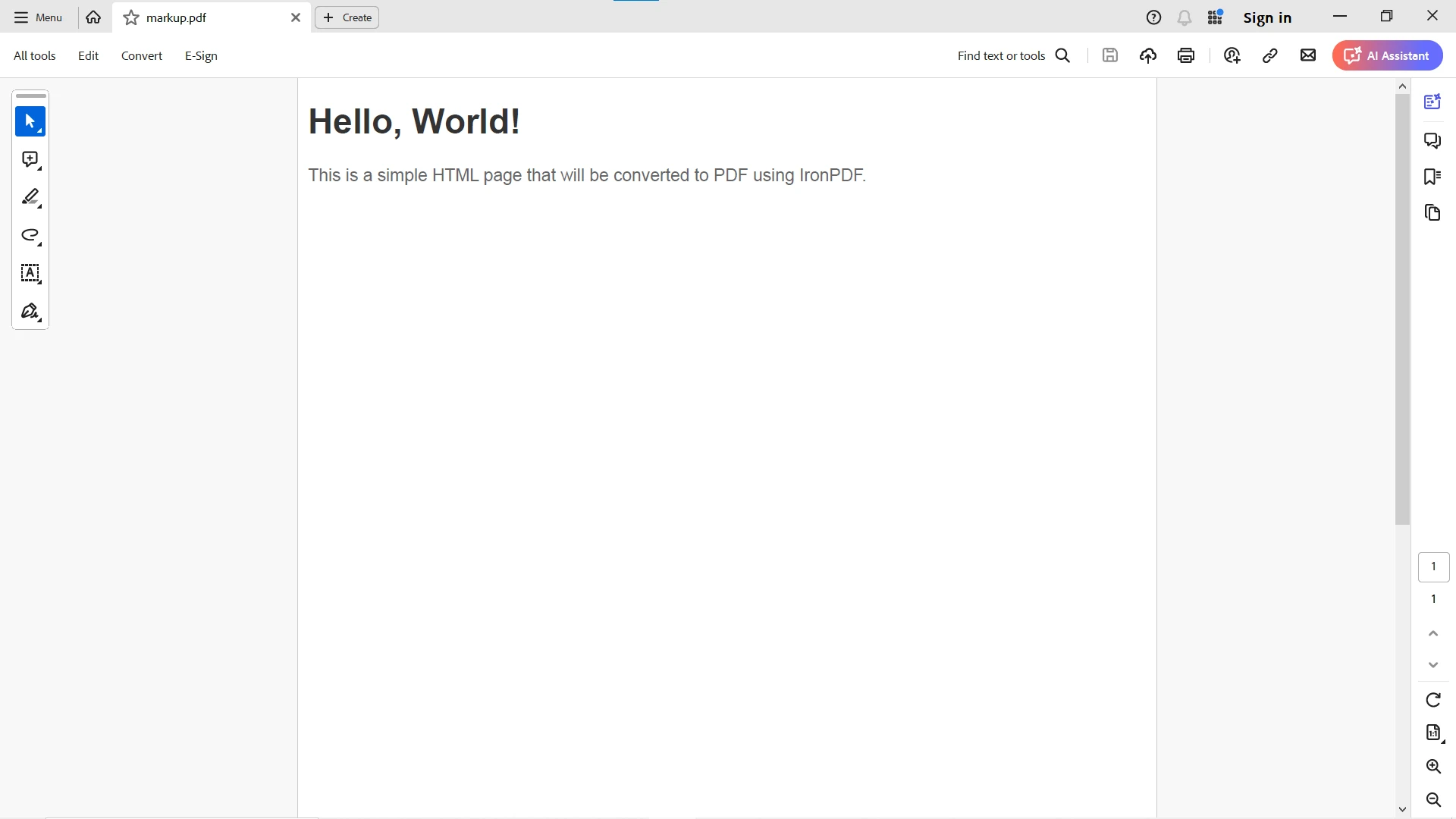
  await generateFromHtmlFile("design.html");
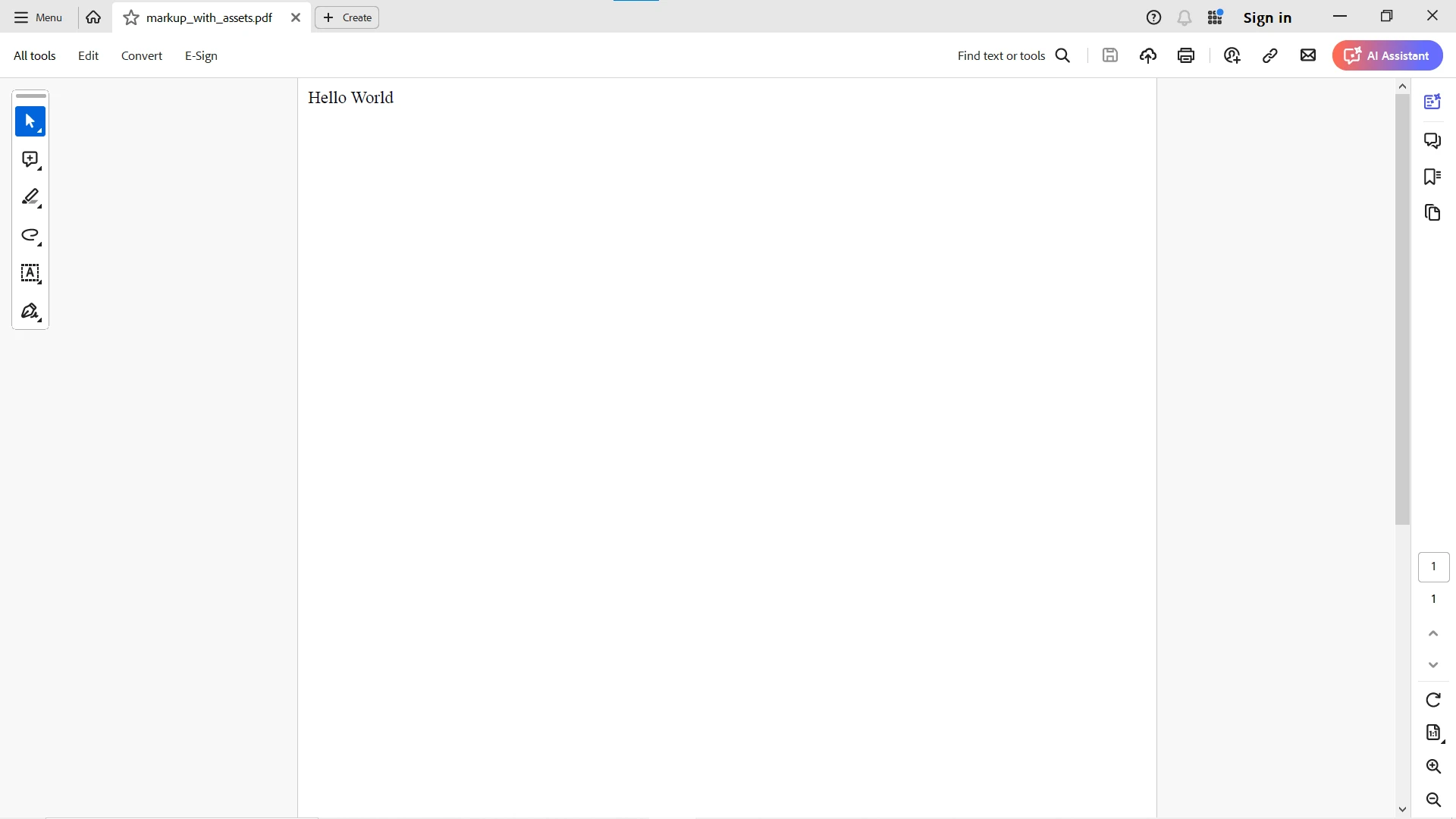
  await generateFromHtmlString("<p>Hello World</p>");

  console.log("PDFs generated successfully");
};

// Execute the PDF generation
generatePdfs();URL 至 PDF 輸出:
HTML 文件到 PDF 輸出:
HTML 字串到 PDF 輸出:
欲了解有關 IronPDF 的更多詳細資訊,請存取文件和API 參考頁面。
Ramda 是一個專門為 JavaScript 中的函式式編程設計的多功能強大庫。 通過強調不變性、純函式和函式組合,Ramda 幫助開發人員編寫更可靠和可維護的程式碼。
通過在 Node.js 中將 Ramda JS 與 IronPDF 整合,您可以建立一個生成 PDF 的函式化和有組織的方法。 Ramda 的函式式編程工具提高了程式碼的可讀性和可維護性,而 IronPDF 提供了強大的 PDF 生成能力。 這種組合能夠從各種來源有效率和可擴展地建立 PDF,增強您的 Node.js 應用程式。
從$999開始試用 IronPDF。 發現強大的功能,看看它為何值得投資。 今天就試試吧!

Curtis Chau擁有Carleton大學的電腦科學學士學位,專精於前端開發,擁有Node.js、TypeScript、JavaScript和React的專業知識。Curtis熱衷於建立直觀且美觀的使用者介面,喜愛使用現代框架並建立結構良好、視覺吸引力的手冊。

IronPDF 是 IRONSUITE 的一部分
10 款適用於辦公室文件的 .NET API 產品
當您需要您的PDF看起來像HTML一樣快速。