已更新 2026年4月23日
深流 io (开发者如何使用)
在本文中,我们将学习如何使用开放实时服务器深流和 IronPDF 生成 PDF。
阅读更多

在数字化转型的时代,强大的加密机制的重要性不可低估。 加密技术确保了数据在各种网络和系统中传输时的安全性和隐私。 PyCryptodome 是一个在加密领域中脱颖而出的 Python 库,提供丰富的功能以促进安全数据处理,如认证加密模式 (GCM, CCM, EAX, SIV, OCB) 和一流支持的加速 AES。 本文探讨了 PyCryptodome 的最后一个官方版本,探索其功能、使用案例、简化的安装过程及其在各种应用中的有效利用。 我们还将使用一个单独的 C# 库,IronPDF,与 PyCryptodome 一起创建加密的 PDF 文件。
PyCryptodome 是一个自包含的低级加密原语 Python 包。 它旨在成为旧 PyCrypto 库的即插即用替代品,解决了其许多限制并扩展了其功能。 它提供了广泛的加密算法和协议,使其成为需要在应用程序中实现安全功能的开发人员的宝贵工具。
1.广泛的算法支持: PyCryptodome 支持全面的加密算法,包括 AES、RSA、DSA 等。 这种广泛的支持确保开发人员能够找到满足各种加密需求的必要工具。 2.**易用性:**该库的设计以用户友好为目标,具有清晰简洁的 API,即使是密码学知识有限的人也能有效地实现安全功能。 3.**积极维护:**与前身 PyCrypto 不同,PyCryptodome 会进行积极维护,定期更新和改进,确保与最新的 Python 版本和安全标准兼容。 4.自包含: PyCryptodome 不需要任何外部依赖项,因此可以轻松地在不同环境中安装和使用。 5.与现有库的集成: PyCryptodome 可以与其他 Python 库和框架无缝集成,增强其在各种应用程序中的实用性。
由于其自包含特性,安装 PyCryptodome 是一个简单的过程。 可以通过pip,Python的包安装器,使用以下命令进行安装:
pip install pycryptodomePyCryptodome 组织为多个模块,每个模块都涉及加密的不同方面。 了解这些模块对于有效利用该库至关重要。
哈希函数是加密的基础,提供了一种从任意数据生成固定大小哈希值的方法。 PyCryptodome通过Crypto.Hash模块支持多种哈希算法。
from Crypto.Hash import SHA256

# Create a new SHA-256 hash object
hash_object = SHA256.new(data=b'Hello, PyCryptodome!')

# Output the hexadecimal digest of the hash
print(hash_object.hexdigest())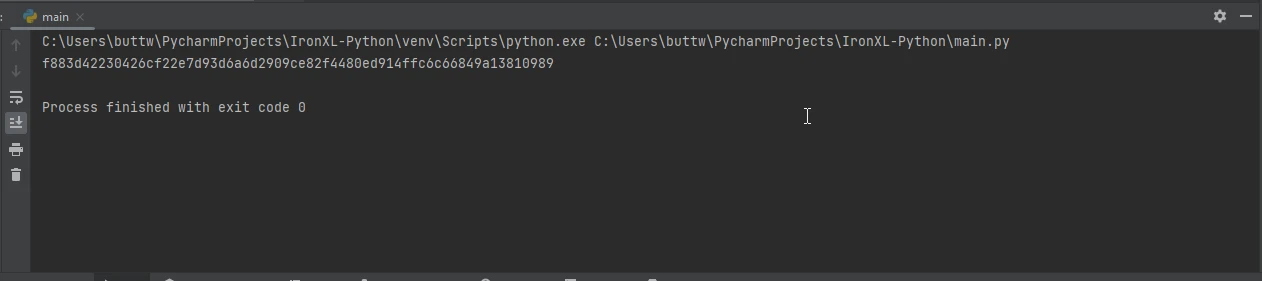
对称加密使用相同的密钥进行加密和解密。 PyCryptodome的Crypto.Cipher模块支持几种对称密码,包括AES、DES等。
from Crypto.Cipher import AES
from Crypto.Random import get_random_bytes

# Generate a random AES key
key = get_random_bytes(16)  # 16 bytes for AES-128

# Create a new AES cipher in EAX mode for encryption
cipher = AES.new(key, AES.MODE_EAX)
data = b'Secret Message'

# Encrypt the data and get the nonce, ciphertext and tag
nonce = cipher.nonce
ciphertext, tag = cipher.encrypt_and_digest(data)

# Create a new AES cipher in EAX mode for decryption
cipher = AES.new(key, AES.MODE_EAX, nonce=nonce)
plaintext = cipher.decrypt(ciphertext)

# Verify the authenticity of the message
try:
    cipher.verify(tag)
    print("The message is authentic:", plaintext)
except ValueError:
    print("Key incorrect or message corrupted")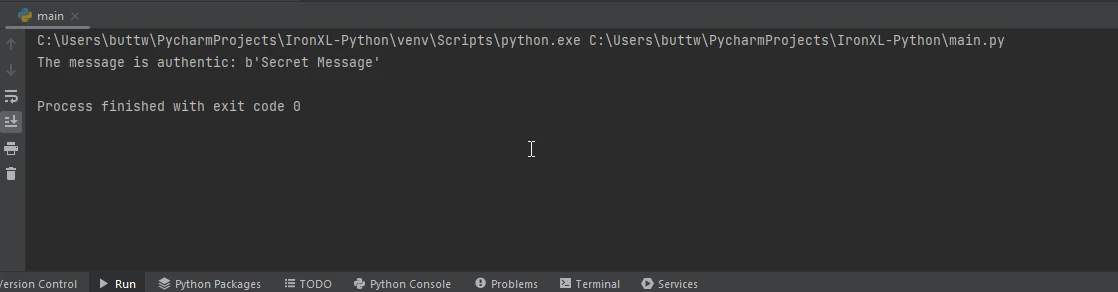
非对称加密使用一对密钥:用于加密的公钥和用于解密的私钥。 PyCryptodome的Crypto.PublicKey模块提供对RSA、DSA和ECC(椭圆曲线加密)的支持。
from Crypto.PublicKey import RSA
from Crypto.Cipher import PKCS1_OAEP

# Generate an RSA key pair
key = RSA.generate(2048)
public_key = key.publickey()

# Encrypt the message using the public key
cipher = PKCS1_OAEP.new(public_key)
ciphertext = cipher.encrypt(b'Secret Message')

# Decrypt the message using the private key
cipher = PKCS1_OAEP.new(key)
plaintext = cipher.decrypt(ciphertext)
print(plaintext)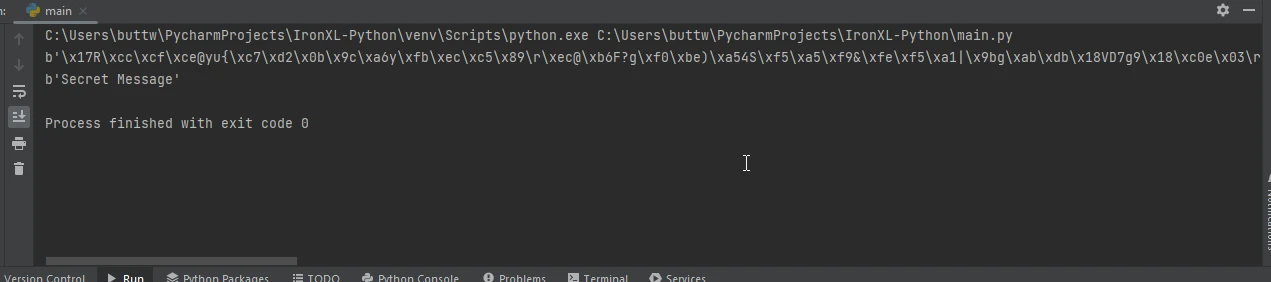
密钥衍生函数根据密码或密钥短语生成加密密钥。 这在基于密码的加密中特别有用。 PyCryptodome 支持 PBKDF2、scrypt 和其他密钥衍生算法。
from Crypto.Protocol.KDF import PBKDF2
from Crypto.Random import get_random_bytes

# Define a password and generate a salt
password = b'my secret password'
salt = get_random_bytes(16)

# Derive a key from the password and salt using PBKDF2
key = PBKDF2(password, salt, dkLen=32, count=1000000)
print(key)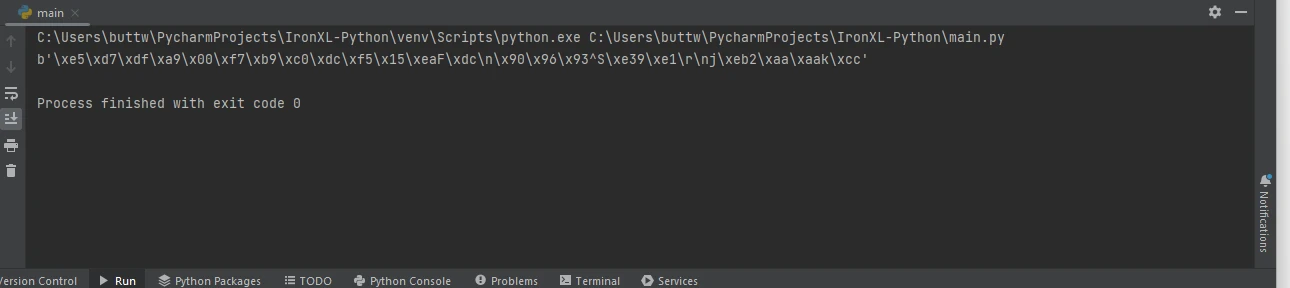
密码管理软件从 PyCryptodome 的密钥派生功能中受益,能够安全地存储和检索用户密码。 通过使用强大的密钥派生算法如 PBKDF2,开发人员可以确保存储的密码能够抵御暴力攻击。
from Crypto.Protocol.KDF import PBKDF2
from Crypto.Random import get_random_bytes
from Crypto.Cipher import AES

# Derive a strong key from a password
password = b'user_password'
salt = get_random_bytes(16)
key = PBKDF2(password, salt, dkLen=32, count=1000000)

# Encrypt the password before storing
cipher = AES.new(key, AES.MODE_EAX)
stored_password = b'ActualPassword'
nonce = cipher.nonce
ciphertext, tag = cipher.encrypt_and_digest(stored_password)

# Store ciphertext, nonce, salt, and tag securely
password_data = {
    'ciphertext': ciphertext,
    'nonce': nonce,
    'salt': salt,
    'tag': tag
}

# Decrypt the password when needed
key = PBKDF2(password, password_data['salt'], dkLen=32, count=1000000)
cipher = AES.new(key, AES.MODE_EAX, nonce=password_data['nonce'])
plaintext = cipher.decrypt(password_data['ciphertext'])

# Verify the authenticity of the password
try:
    cipher.verify(password_data['tag'])
    print("The stored password is authentic:", plaintext)
except ValueError:
    print("Key incorrect or password corrupted")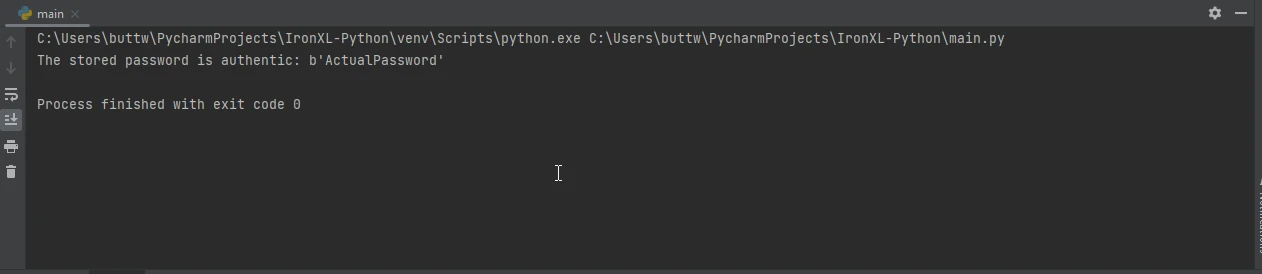
IronPDF 是一个功能强大的 PDF 生成库,适用于 Python,让开发人员能够轻松创建、编辑和操作 PDF 文档。 它提供了广泛的功能,从将 HTML 转换为 PDF 到合并多个 PDF,使其成为自动化文档工作流程的理想选择。 结合 PyCryptodome 这一强大的加密操作库,开发人员可以向他们的 PDF 文档添加安全功能,如加密和数字签名。 这种集成对于需要高安全性和数据完整性的应用特别有用,如金融、法律或机密环境。
要安装IronPDF,可以使用pip,Python包管理器。 以下是开始工作的方法:
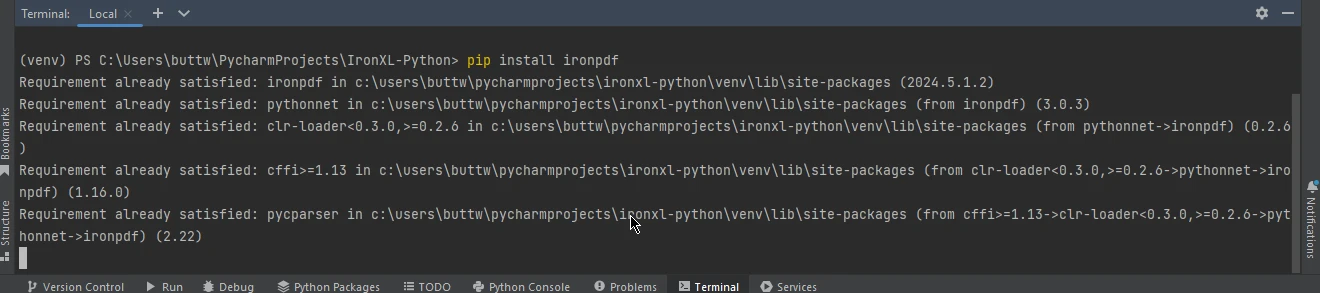
安装后,可以开始使用 IronPDF 创建和处理 PDF 文件。 以下是展示如何使用 IronPDF 创建 PDF 并使用 PyCryptodome 加密它的简单示例:
from ironpdf import ChromePdfRenderer
from Crypto.Cipher import AES
from Crypto.Util.Padding import pad
import os

# Create a new PDF renderer
renderer = ChromePdfRenderer()

# Render a URL as a PDF and save it
pdfFromUrl = renderer.RenderUrlAsPdf("https://ironpdf.com/")
pdfFromUrl.SaveAs("output.pdf")

# Function to encrypt a file using AES
def encrypt_file(file_name, key):
    cipher = AES.new(key, AES.MODE_CBC)  # Use AES in CBC mode
    iv = cipher.iv
    with open(file_name, 'rb') as f:
        data = f.read()
    encrypted_data = iv + cipher.encrypt(pad(data, AES.block_size))
    with open(file_name + '.enc', 'wb') as f:
        f.write(encrypted_data)

# Example usage
key = os.urandom(16)  # AES key must be either 16, 24, or 32 bytes long
encrypt_file("output.pdf", key)此脚本展示了使用 IronPDF 创建简易 PDF,然后使用 PyCryptodome 中的 AES 加密它,为构建更复杂和安全的 PDF 处理应用程序奠定基础。
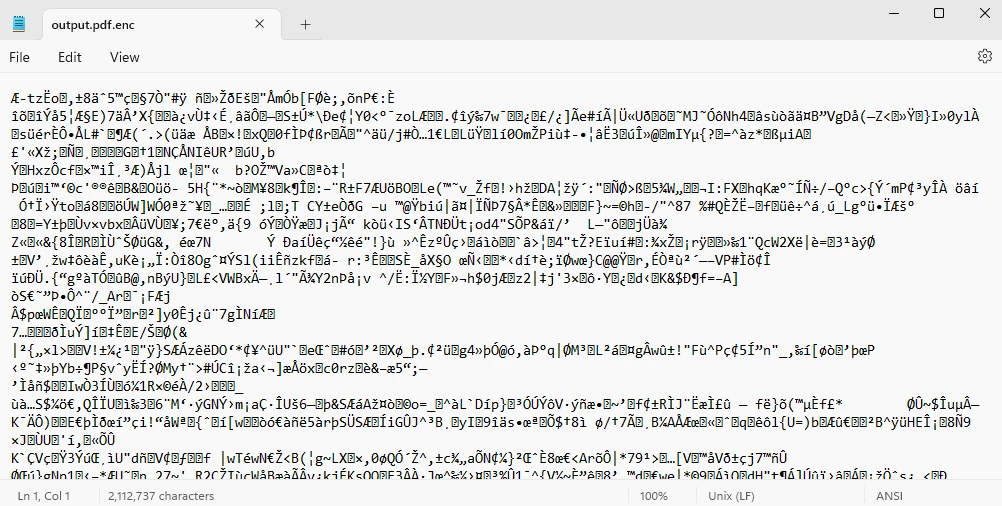
总结来说,PyCryptodome 是一个强大而灵活的 Python 库,大大增强了开发人员的加密操作,提供了丰富的算法和与其他工具如 IronPDF 的轻松集成。 凭借其全面的功能,包括支持认证加密模式、对称和非对称加密、哈希和密钥衍生,PyCryptodome 满足了现代应用对强大安全措施的需求。 其易用性、活跃的维护和自包含特性使其成为在各种场景中实现安全数据处理的不可或缺的工具,从密码管理到安全文档生成和加密,确保在日益数字化的世界中数据的完整性和保密性。
有关 IronPDF 许可的详细信息,请参见 IronPDF 许可页面。 如需进一步探索,请查看我们关于将 HTML 转换为 PDF 的深入教程。

Curtis Chau 拥有卡尔顿大学的计算机科学学士学位,专注于前端开发,精通 Node.js、TypeScript、JavaScript 和 React。他热衷于打造直观且美观的用户界面,喜欢使用现代框架并创建结构良好、视觉吸引力强的手册。
当您需要PDF看起来像HTML时,速度快。