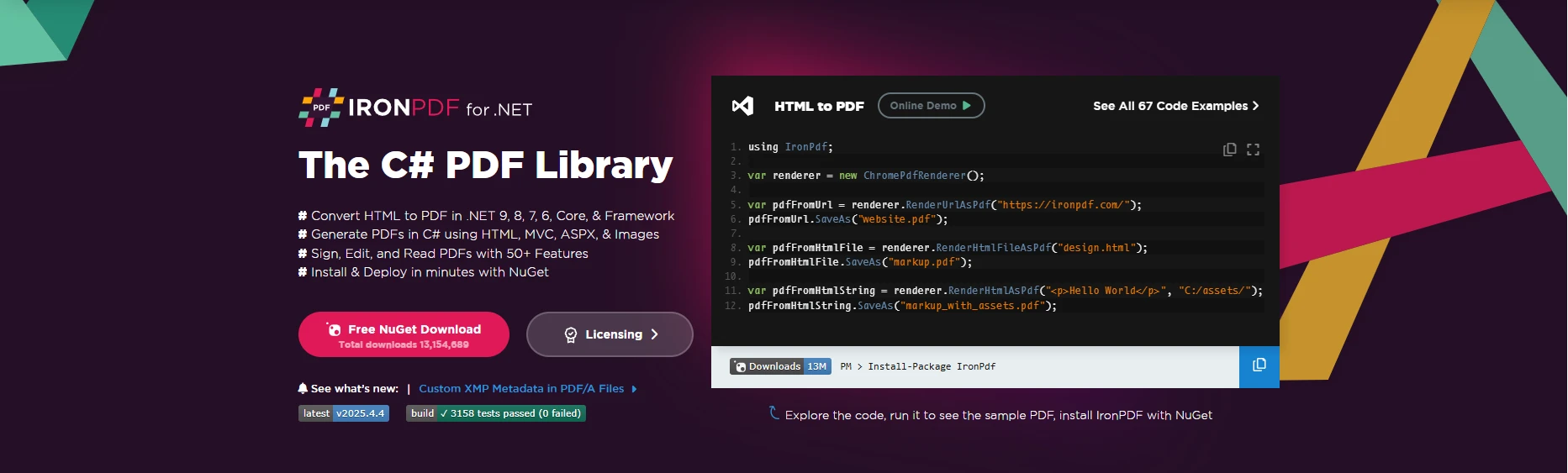
using IronPdf;

// Disable local disk access or cross-origin requests
Installation.EnableWebSecurity = true;

// Instantiate Renderer
var renderer = new ChromePdfRenderer();

// Create a PDF from a HTML string using C#
var pdf = renderer.RenderHtmlAsPdf("<h1>Hello World</h1>");

// Export to a file or Stream
pdf.SaveAs("output.pdf");

// Advanced Example with HTML Assets
// Load external html assets: Images, CSS and JavaScript.
// An optional BasePath 'C:\site\assets\' is set as the file location to load assets from
var myAdvancedPdf = renderer.RenderHtmlAsPdf("<img src='icons/iron.png'>", @"C:\site\assets\");
myAdvancedPdf.SaveAs("html-with-assets.pdf");
using IronPdf;// Disable local disk access or cross-origin requestsInstallation.EnableWebSecurity = true;// Instantiate Renderervar renderer = new ChromePdfRenderer();// Create a PDF from a HTML string using C#var pdf = renderer.RenderHtmlAsPdf("<h1>Hello World</h1>");// Export to a file or Streampdf.SaveAs("output.pdf");// Advanced Example with HTML Assets// Load external html assets: Images, CSS and JavaScript.// An optional BasePath 'C:\site\assets\' is set as the file location to load assets fromvar myAdvancedPdf = renderer.RenderHtmlAsPdf("<img src='icons/iron.png'>", @"C:\site\assets\");myAdvancedPdf.SaveAs("html-with-assets.pdf");
PM >
Install-Package IronPdf
PRODUCT COMPARISONS
PDFsharp vs iTextSharp (C# PDF Library Comparison)
Whether you're building a document-heavy enterprise solution, generating invoices in a SaaS app, or exporting reports from a .NET dashboard, one question always arises:
"Which C# PDF library should I use?"
In the .NET ecosystem, three libraries stand out: PDFSharp, iText, and IronPDF. Each has its strengths, quirks, and best-use cases. But which one is truly the best choice for modern developers working with PDF files within the .NET 6+, .NET Core, or even traditional .NET Framework?
This comprehensive guide dives deep into each library, comparing features, installation, usability, and output quality. We'll walk through working code examples, the pros and cons of each library, and offer practical recommendations based on real-world development needs.
Let's get started.
PDFSharp Overview
What is PDFSharp?
PDFSharp is an open-source library that allows developers to create and process PDF documents on the fly using C#. It supports PDF creation from scratch and the ability to modify existing PDF files. Its clean, object-oriented API is ideal for developers looking for a lightweight and easy-to-integrate solution.
Despite being community-driven, it enjoys a loyal user base and remains a go-to choice for simple PDF tasks that don't require advanced rendering or dynamic content from HTML.
Installing PDFSharp
Installation is straightforward via NuGet:
PM > Install-Package PDFsharp
Install-Package PDFsharp
It's also compatible with PdfSharpCore for .NET Core environments.
Sample Code: Creating a Simple PDF
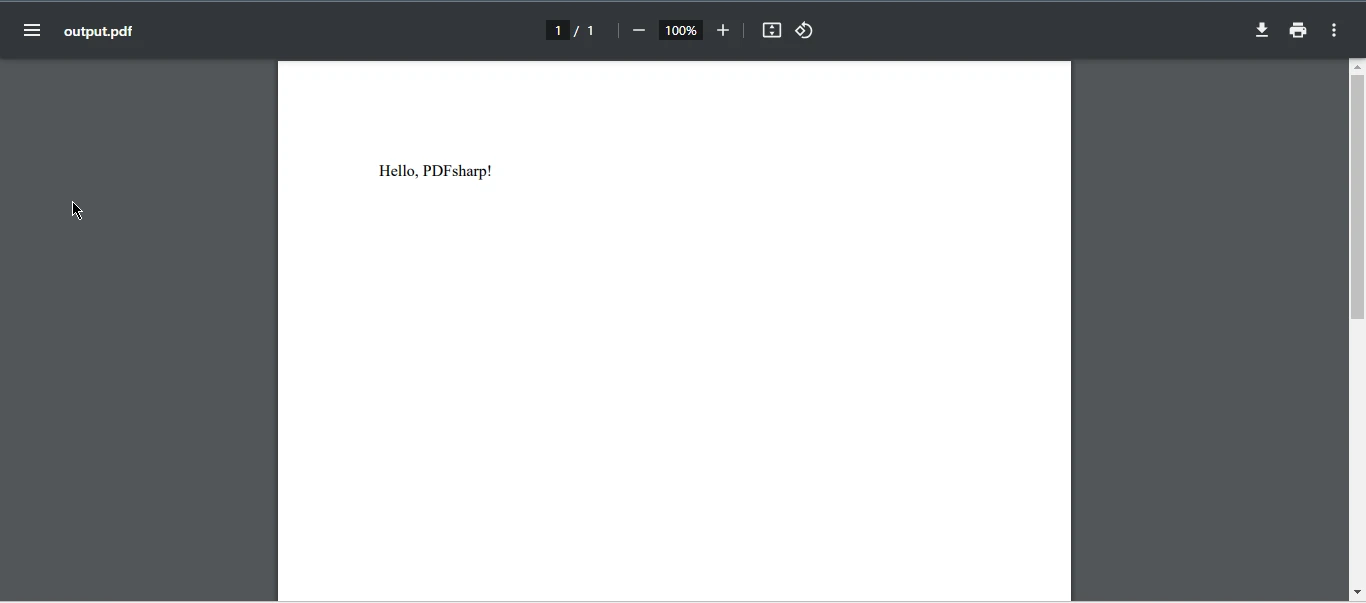
using PdfSharp.Pdf;using PdfSharp.Drawing;// Create a new PDF documentvar document = new PdfDocument();document.Info.Title = "Created with PDFsharp";// Create an empty pagePdfPage page = document.AddPage();// Get an XGraphics object for drawingXGraphics gfx = XGraphics.FromPdfPage(page);// Create a fontXFont font = new XFont("Verdana", 20, XFontStyle.Bold);// Draw the textgfx.DrawString("Hello, PDFsharp!", font, XBrushes.Black, new XRect(0, 0, page.Width, page.Height), XStringFormats.Center);// Save the documentdocument.Save("HelloWorld.pdf");
using PdfSharp.Pdf;
using PdfSharp.Drawing;

// Create a new PDF document
var document = new PdfDocument();
document.Info.Title = "Created with PDFsharp";

// Create an empty page
PdfPage page = document.AddPage();

// Get an XGraphics object for drawing
XGraphics gfx = XGraphics.FromPdfPage(page);

// Create a font
XFont font = new XFont("Verdana", 20, XFontStyle.Bold);

// Draw the text
gfx.DrawString("Hello, PDFsharp!", font, XBrushes.Black, new XRect(0, 0, page.Width, page.Height), XStringFormats.Center);

// Save the document
document.Save("HelloWorld.pdf");
ImportsPdfSharp.PdfImportsPdfSharp.Drawing' Create a new PDF documentPrivate document = New PdfDocument()document.Info.Title = "Created with PDFsharp"' Create an empty pageDim page AsPdfPage = document.AddPage()' Get an XGraphics object for drawingDim gfx AsXGraphics = XGraphics.FromPdfPage(page)' Create a fontDim font As New XFont("Verdana", 20, XFontStyle.Bold)' Draw the textgfx.DrawString("Hello, PDFsharp!", font, XBrushes.Black, New XRect(0, 0, page.Width, page.Height), XStringFormats.Center)' Save the documentdocument.Save("HelloWorld.pdf")
Imports PdfSharp.Pdf
Imports PdfSharp.Drawing

' Create a new PDF document
Private document = New PdfDocument()
document.Info.Title = "Created with PDFsharp"

' Create an empty page
Dim page As PdfPage = document.AddPage()

' Get an XGraphics object for drawing
Dim gfx As XGraphics = XGraphics.FromPdfPage(page)

' Create a font
Dim font As New XFont("Verdana", 20, XFontStyle.Bold)

' Draw the text
gfx.DrawString("Hello, PDFsharp!", font, XBrushes.Black, New XRect(0, 0, page.Width, page.Height), XStringFormats.Center)

' Save the document
document.Save("HelloWorld.pdf")
Output
Please note: Note: PDFSharp doesn't support HTML rendering or CSS parsing out of the box, so it's best used for drawing-based document generation. For HTML to PDF rendering, you need the HtmlRenderer for PDFSharp.
Pros and Cons of PDFSharp
Pros:
Free and open source PDF library (MIT license)
Great for low-level drawing and simple text-based PDF documents
Lightweight and easy to install
Cons:
No native HTML to PDF support
Rendering capabilities are limited
Not actively maintained for advanced use cases
iText Detailed Analysis
What is iText?
iText is the .NET port of iText, a robust Java-based PDF library. It offers advanced functionality, including digital signatures, form fields, barcodes, and more. iText is highly customizable and best suited for enterprises with legal or regulatory documentation needs.
However, it comes with a catch - licensing. iText is AGPL-licensed, which means you must open-source your project unless you purchase a commercial license.
Installing iText
PM > Install-Package itext
Install-Package itext
The newer versions use the iText Core namespace. Be sure to review the licensing terms before integration.
Sample Code: Basic PDF Generation
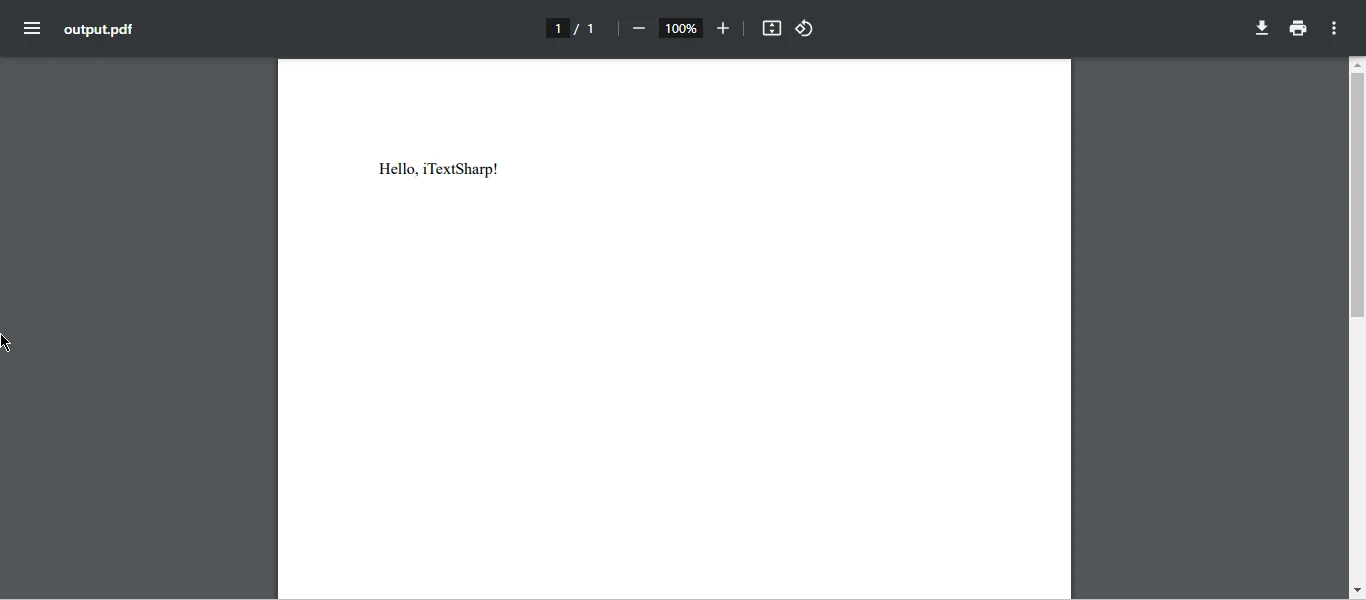
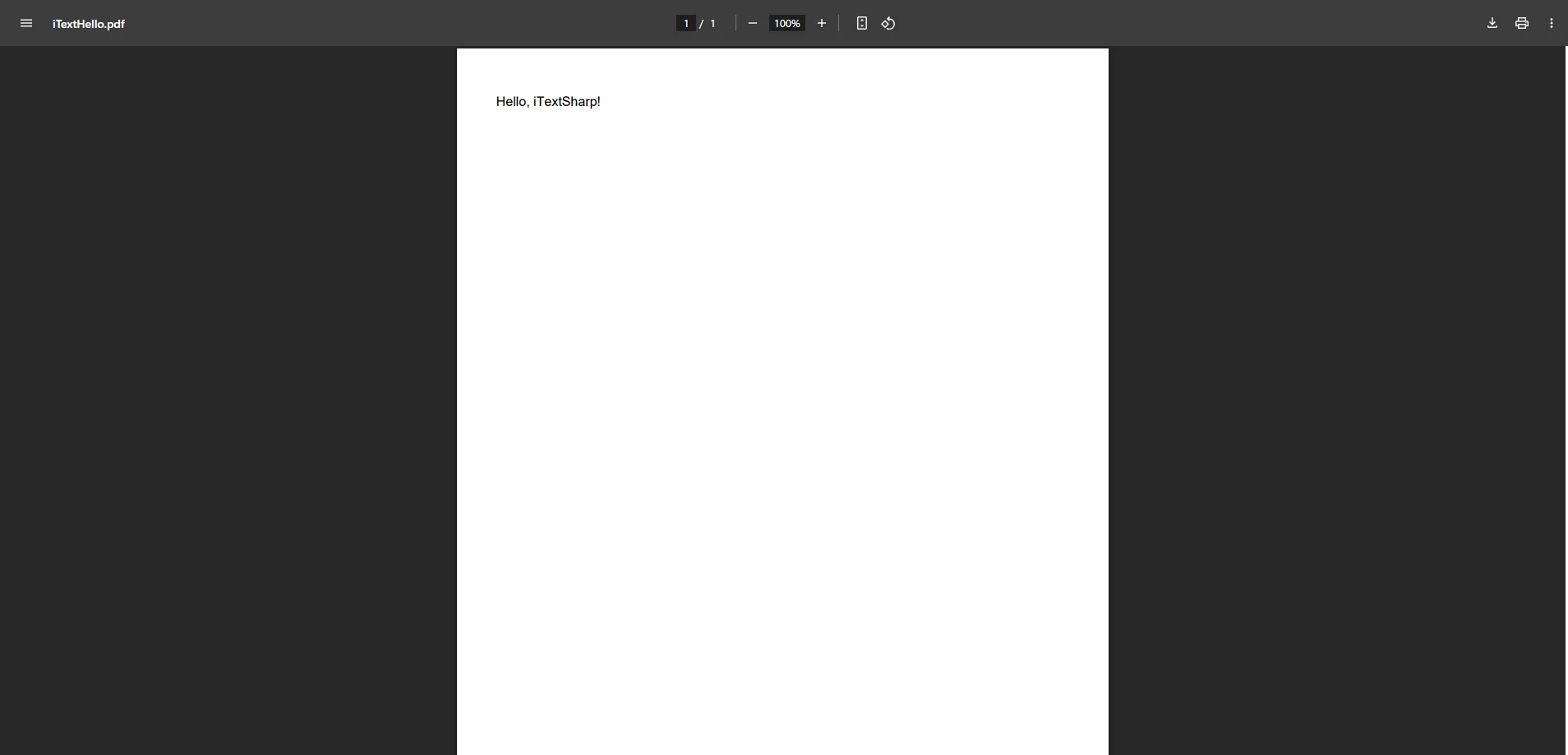
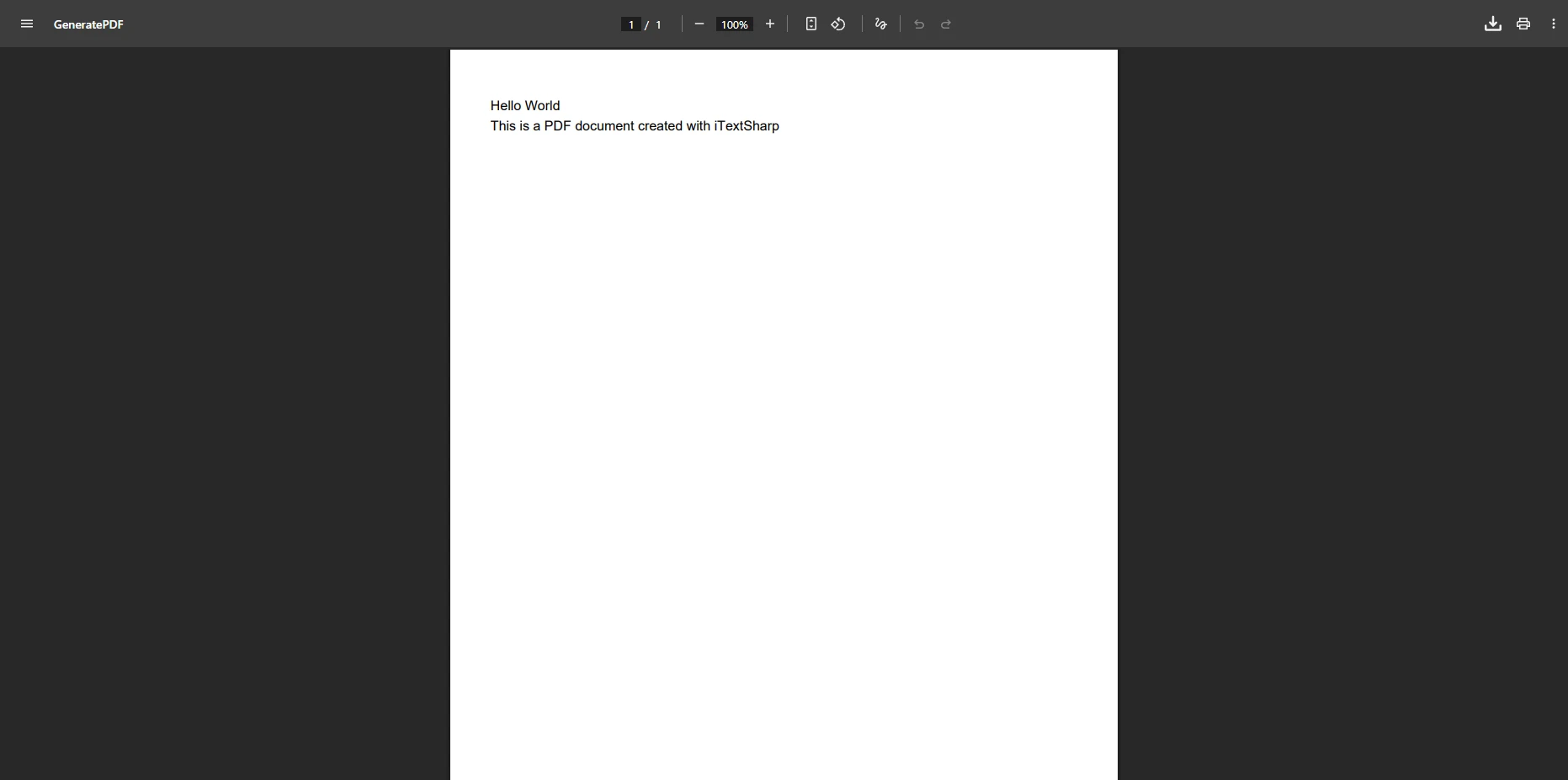
using iText.Kernel.Pdf;using iText.Layout;using iText.Layout.Element;// Create a PdfWriter object to write to a filePdfWriter writer = new PdfWriter("iTextHello.pdf");// Create a PDF document with the PdfWritervar pdf = new PdfDocument(writer);// Initialize the documentDocument document = new Document(pdf);// Add a paragraph to the documentdocument.Add(new Paragraph("Hello, iTextSharp!"));// Finalize the documentdocument.Close();
using iText.Kernel.Pdf;
using iText.Layout;
using iText.Layout.Element;

// Create a PdfWriter object to write to a file
PdfWriter writer = new PdfWriter("iTextHello.pdf");
// Create a PDF document with the PdfWriter
var pdf = new PdfDocument(writer);
// Initialize the document
Document document = new Document(pdf);

// Add a paragraph to the document
document.Add(new Paragraph("Hello, iTextSharp!"));

// Finalize the document
document.Close();
Imports iText.Kernel.PdfImports iText.LayoutImports iText.Layout.Element' Create a PdfWriter object to write to a filePrivate writer As New PdfWriter("iTextHello.pdf")' Create a PDF document with the PdfWriterPrivate pdf = New PdfDocument(writer)' Initialize the documentPrivate document As New Document(pdf)' Add a paragraph to the documentdocument.Add(New Paragraph("Hello, iTextSharp!"))' Finalize the documentdocument.Close()
Imports iText.Kernel.Pdf
Imports iText.Layout
Imports iText.Layout.Element

' Create a PdfWriter object to write to a file
Private writer As New PdfWriter("iTextHello.pdf")
' Create a PDF document with the PdfWriter
Private pdf = New PdfDocument(writer)
' Initialize the document
Private document As New Document(pdf)

' Add a paragraph to the document
document.Add(New Paragraph("Hello, iTextSharp!"))

' Finalize the document
document.Close()
Output
Tips: iText’s iText 9 version is modular. For HTML conversion or barcode generation, install additional NuGet packages, such as the paid add-on pdfHTML.
Strengths and Weaknesses of iText
Strengths:
Powerful and enterprise-grade
Supports PDF/A, encryption, form filling, and digital signatures
Modular architecture with plugins
Weaknesses:
AGPL license or expensive commercial license
Steeper learning curve
Verbose syntax compared to competitors
IronPDF: The Comprehensive Choice for C#
Why IronPDF Stands Out
IronPDF is a commercial-grade, .NET library that emphasizes simplicity, rendering accuracy, and feature richness. It's especially strong if you want to convert HTML to PDF with full CSS, JavaScript, and web-font support - making it ideal for modern, responsive PDF document generation. Whether you're looking to create PDF documents from scratch, generate PDF documents from HTML, or just need a tool that is great at manipulating PDF files, IronPDF has you covered.
With support for .NET Core, .NET Framework, Azure, and Docker, IronPDF is well-suited for both startups and enterprise-grade apps. With powerful features, good documentation, and the ability to perform within various platforms, IronPDF is a solid choice for generating PDFs.
Installing IronPDF
PM > Install-Package IronPdf
Install-Package IronPdf
Or use the Visual Studio NuGet UI. IronPDF provides a free trial and flexible licensing for commercial use without AGPL restrictions.
IronPDF Sample Code: HTML to PDF in 5 Lines
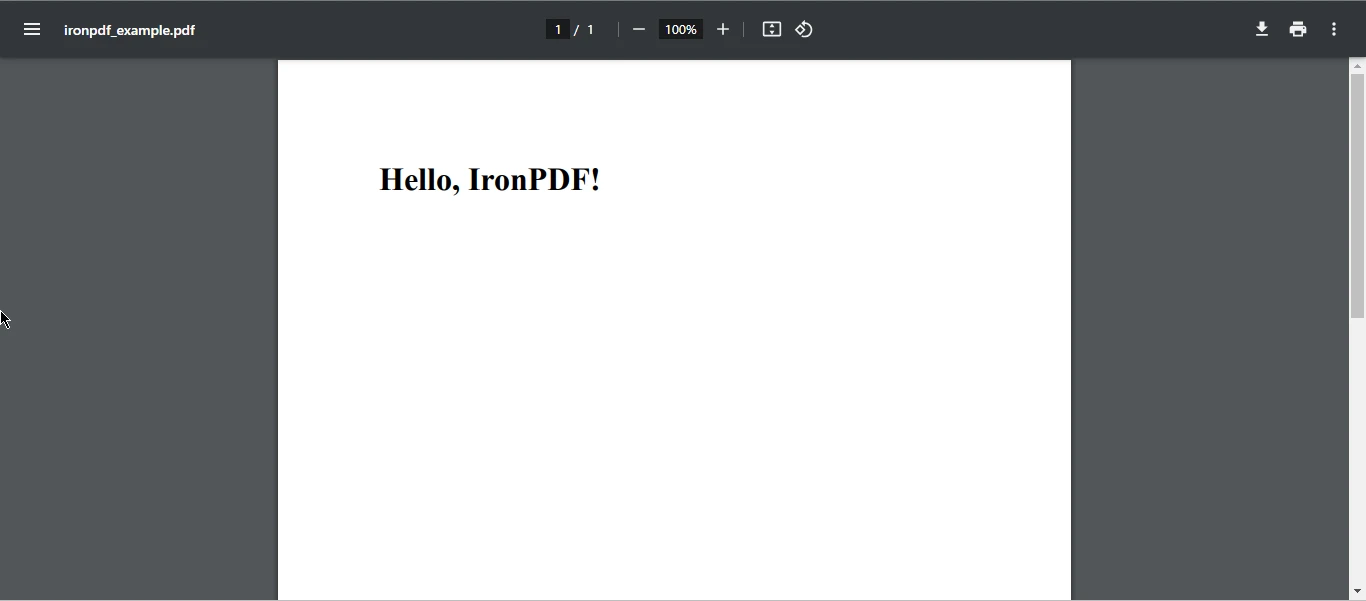
using IronPdf;// Create a PDF renderer that uses Chrome for renderingvarRenderer = new ChromePdfRenderer();// Render an HTML string as a PDFvar pdf = Renderer.RenderHtmlAsPdf("<h1>Hello from IronPDF!</h1><p>This was rendered using Chrome.</p>");// Save the PDF documentpdf.SaveAs("IronPdfHello.pdf");
using IronPdf;

// Create a PDF renderer that uses Chrome for rendering
var Renderer = new ChromePdfRenderer();
// Render an HTML string as a PDF
var pdf = Renderer.RenderHtmlAsPdf("<h1>Hello from IronPDF!</h1><p>This was rendered using Chrome.</p>");
// Save the PDF document
pdf.SaveAs("IronPdfHello.pdf");
ImportsIronPdf' Create a PDF renderer that uses Chrome for renderingPrivateRenderer = New ChromePdfRenderer()' Render an HTML string as a PDFPrivate pdf = Renderer.RenderHtmlAsPdf("<h1>Hello from IronPDF!</h1><p>This was rendered using Chrome.</p>")' Save the PDF documentpdf.SaveAs("IronPdfHello.pdf")
Imports IronPdf

' Create a PDF renderer that uses Chrome for rendering
Private Renderer = New ChromePdfRenderer()
' Render an HTML string as a PDF
Private pdf = Renderer.RenderHtmlAsPdf("<h1>Hello from IronPDF!</h1><p>This was rendered using Chrome.</p>")
' Save the PDF document
pdf.SaveAs("IronPdfHello.pdf")
Output
This simple example uses the full power of a headless Chromium engine to render HTML/CSS exactly as a browser would - something PDFSharp and iText struggle with.
Performance and Developer Experience
IronPDF is widely regarded for its:
Accuracy: Pixel-perfect rendering using a Chromium engine for generating PDFs
Ease of Use: No need to manage page sizes, margins, or fonts manually
Speed: Fast generation with multithreading support
Support: Active documentation, samples, and customer support
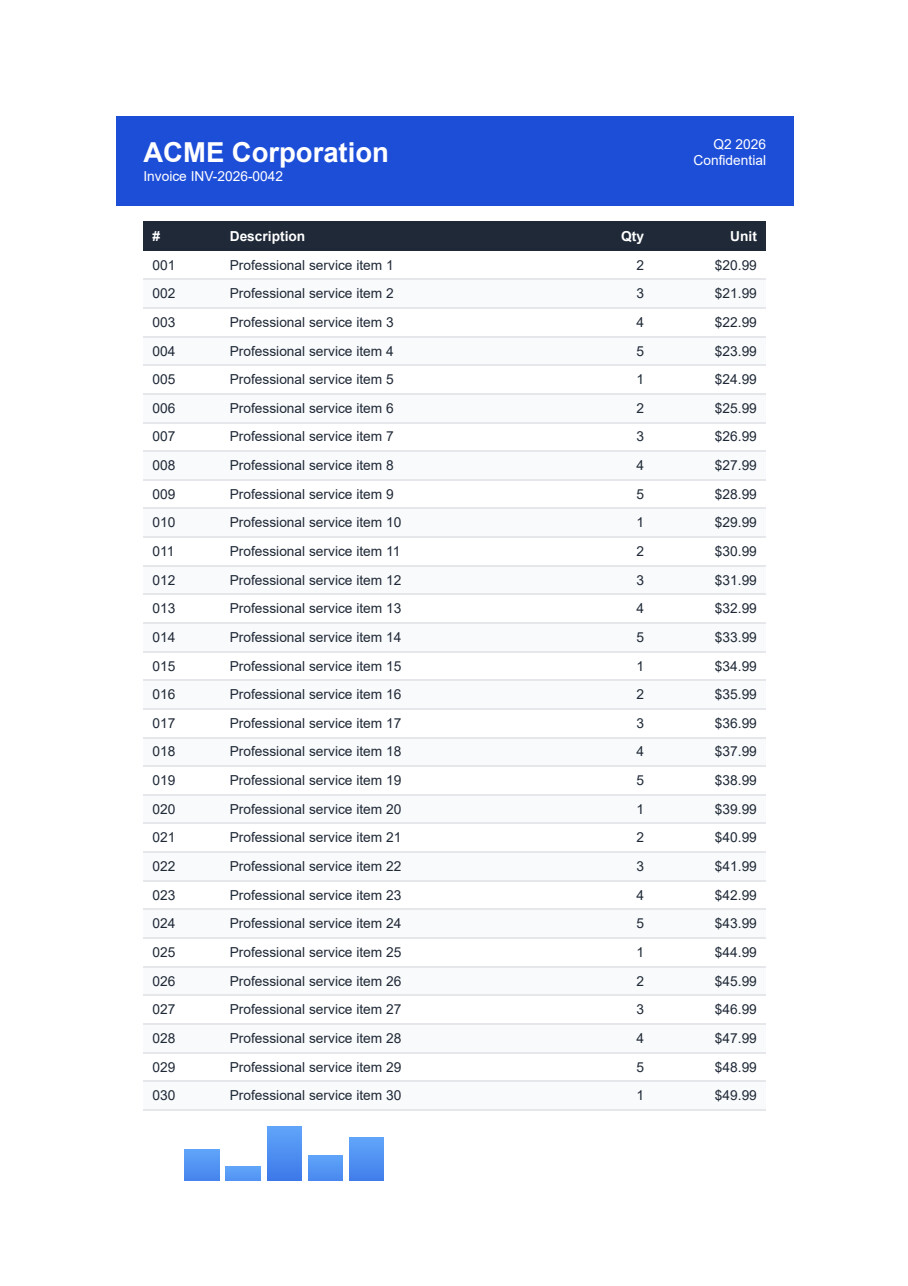
Benchmarks show that IronPDF can generate a complex HTML invoice with images, CSS, and JavaScript in under 2 seconds on a standard machine - far outperforming iText's HTML add-ons or PDFSharp's manual drawing methods.
Why Choose IronPDF?
IronPDF delivers a modern development experience, complete with key features such as:
Full HTML5, CSS3, JS, Bootstrap, and responsive design support for PDF conversion with accurate rendering
Have access to advanced features such as PDF/A, digital signatures, watermarking, merging, and splitting
Licensing suited to commercial products - no AGPL worries
Superior documentation and sample-rich support
Extract data from PDF documents with minimal effort
Isn't limited to just the C# programming language, IronPDF also offers Java, Node.js, and Python versions
Whether you're building an invoice generator, report engine, or browser-based documentation system, IronPDF makes it simple and professional.
Final Thoughts: Which C# PDF Library Should You Choose?
The world of C# PDF libraries is diverse, and each tool we've explored - PDFSharp, iText, and IronPDF - brings its own strengths, weaknesses, and ideal use cases. So which one should you choose for your .NET applications?
PDFSharp: Lightweight and DIY
If you're building a small-scale application, have basic document rendering needs, and prefer full control over PDF drawing operations, PDFSharp is a reliable starting point. Its open-source nature and low overhead make it ideal for projects where licensing and simplicity are key. However, the trade-off is manual effort: no HTML support, no modern web rendering, and limited active development.
Use PDFSharp if:
You're looking to create PDF files programmatically with lines, text, and simple layout.
Your app doesn't require HTML to PDF, CSS styling, or JavaScript.
Open-source compatibility (MIT license) is essential.
iText: Powerful but Complex
iText sits at the enterprise end of the spectrum. It's powerful, secure, and well-suited for complex PDF manipulation such as:
Filling out forms
Generating barcodes
Securing files with digital signatures
Compliance with formats like PDF/A and PDF/UA
However, its AGPL license can be restrictive unless you're prepared to either open-source your code or pay for a commercial license - which isn't cheap. Additionally, the learning curve is steeper, and HTML rendering is an add-on rather than a core feature.
Use iText if:
You're building government or regulatory systems with form filling or secure PDFs.
You need granular control over low-level PDF operations.
You have the budget for commercial licensing.
IronPDF: Modern, Intuitive, and Feature-Rich
In contrast, IronPDF is designed to solve real-world problems with elegance and speed. It combines the familiarity of web technologies (HTML, CSS, JavaScript) with the power of Chromium rendering, enabling developers to convert complex layouts into beautiful PDFs effortlessly.
It handles:
Pixel-perfect HTML to PDF rendering
JavaScript execution (great for charts and dynamic data)
PDF merging, splitting, watermarking, signing, and other various options for PDF document manipulation
Integration with .NET 6, 7, and beyond
Easy deployment to Azure, Docker, and CI/CD pipelines
Most importantly, IronPDF focuses on developer experience: clean syntax, rapid rendering, rich documentation, and responsive support.
Choose IronPDF if:
You want a valuable tool for HTML-to-PDF rendering that looks like a browser print preview.
Your documents rely on web styling (Bootstrap, Flexbox, Google Fonts).
You need a commercial license with flexibility, support, and updates.
You value time-to-market and developer productivity.
Verdict: IronPDF Wins for Most .NET Developers
While PDFSharp is a great option for barebones use, and iText serves niche compliance-heavy industries, IronPDF stands out as the all-in-one PDF solution for modern C# developers. It strikes a perfect balance between power, simplicity, and real-world usability.
Whether you're rendering dynamic reports, generating client invoices from web templates, or exporting rich documentation, IronPDF lets you focus on your application - not the nuances of PDF rendering.
Ready to Try It Out?
Don't take our word for it - explore IronPDF for yourself:
With IronPDF, you're not just generating PDFs - you're building polished, professional, production-ready documents that look exactly the way you designed them. Cut development time, eliminate rendering headaches, and ship faster.
Please note: PDFSharp and iText are registered trademarks of their respective owners. This site is not affiliated with, endorsed by, or sponsored by PDFSharp or iText. All product names, logos, and brands are property of their respective owners. Comparisons are for informational purposes only and reflect publicly available information at the time of writing.
Curtis Chau holds a Bachelor’s degree in Computer Science (Carleton University) and specializes in front-end development with expertise in Node.js, TypeScript, JavaScript, and React. Passionate about crafting intuitive and aesthetically pleasing user interfaces, Curtis enjoys working with modern frameworks and creating well-structured, visually appealing manuals.